Text description provided by the architects
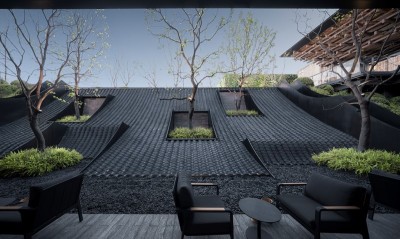
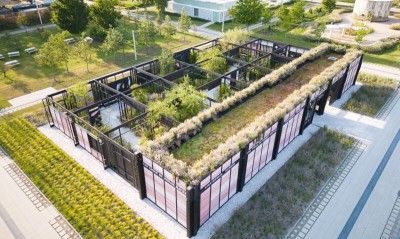
Forested House is a private residence in Bangkok, Thailand, designed in 2015-2016 and completed in 2017 on a 50-square-metre site, photographed by Openspace and winner of a 2017 LILA award. The project responds directly to Bangkok's urban condition: rapid urbanisation has produced high density, green space has been sacrificed for housing, and lost green space degrades the environment, most visibly through air pollution. In recent years Bangkok's PM 2.5 levels have risen sharply and affected public health; because trees capture particulates and produce oxygen, reintegrating green space into the city is urgent. Forested House seeks a sustainable, low-maintenance way to bring a forest back to a private house while maximising usable ground area, so that a lush green roof hosts trees that re-enter the city. The planters average one to 1.5 metres deep by two by four metres; only one- to two-year-old trees with a one-inch trunk diameter are chosen, because young root systems adapt better to limited soil, and each box is filled with high-nutrient topsoil. To maximise the number of trees in a small grove, only columnar species are selected; native species common to mixed deciduous forest are preferred because they drop fewer leaves, saving maintenance, and more than twenty species of evergreen, flowering, fruit and edible trees create urban biodiversity. The design process allows trees to mature over years rather than creating an instant forest that may not survive; within ten months of completion, the trees doubled in size. The roof is also an urban farm: its exposure to strong sunlight suits herbs and vegetables, so Thai fruit trees such as golden apple, rose apple and gooseberry are randomly mixed with other trees to deter insects, while a 400-millimetre-deep series of planters holds traditional Thai herbs. Sustainability is built into the private-house logic: drip irrigation slowly releases water at root level through porous tubes running through the topsoil, producing less runoff than sprinklers. Beneath the trees no shrubs or ground cover are planted, leaving bare soil covered by leaf litter; dry leaves are collected back onto the forest floor rather than removed, and microbes decompose them into natural fertiliser. Because different species consume and return different nutrients, species diversity balances nutrient distribution, and because faster-growing trees can shade slower ones, quarterly pruning keeps space for all. The project argues for bringing back a healthy city and a healthy life, one private forest roof at a time.




 Editor's Pick
 Latest Design