Text description provided by the architects
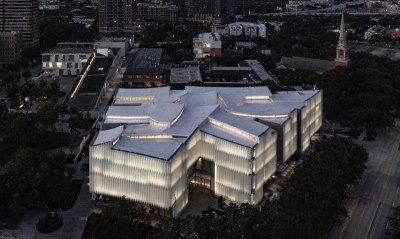
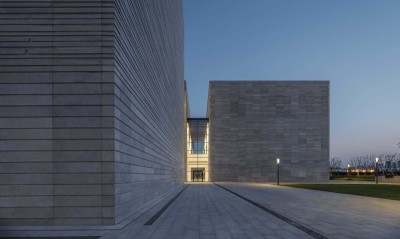
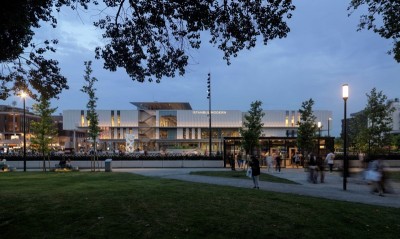
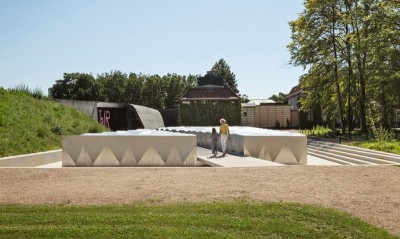
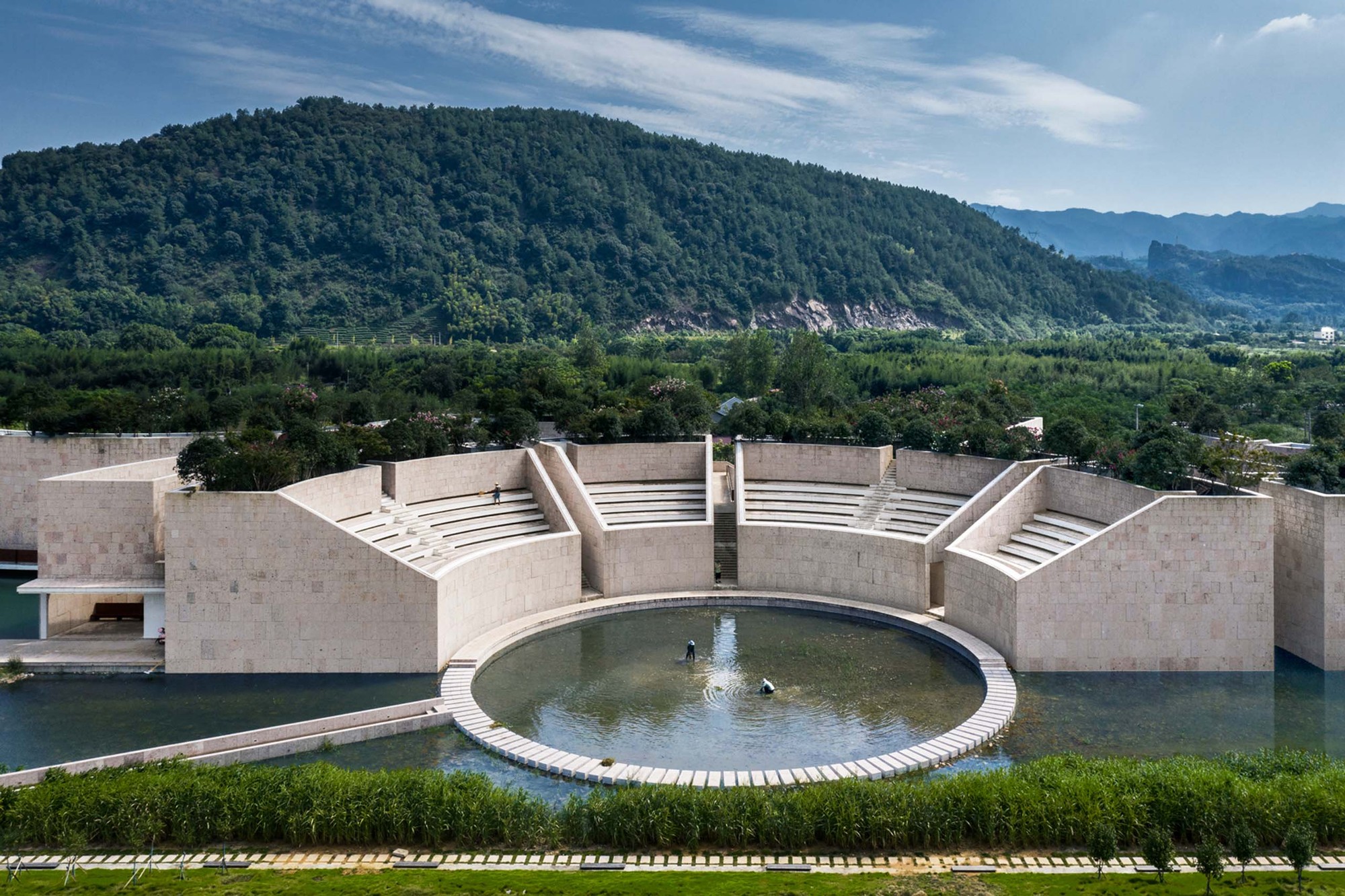
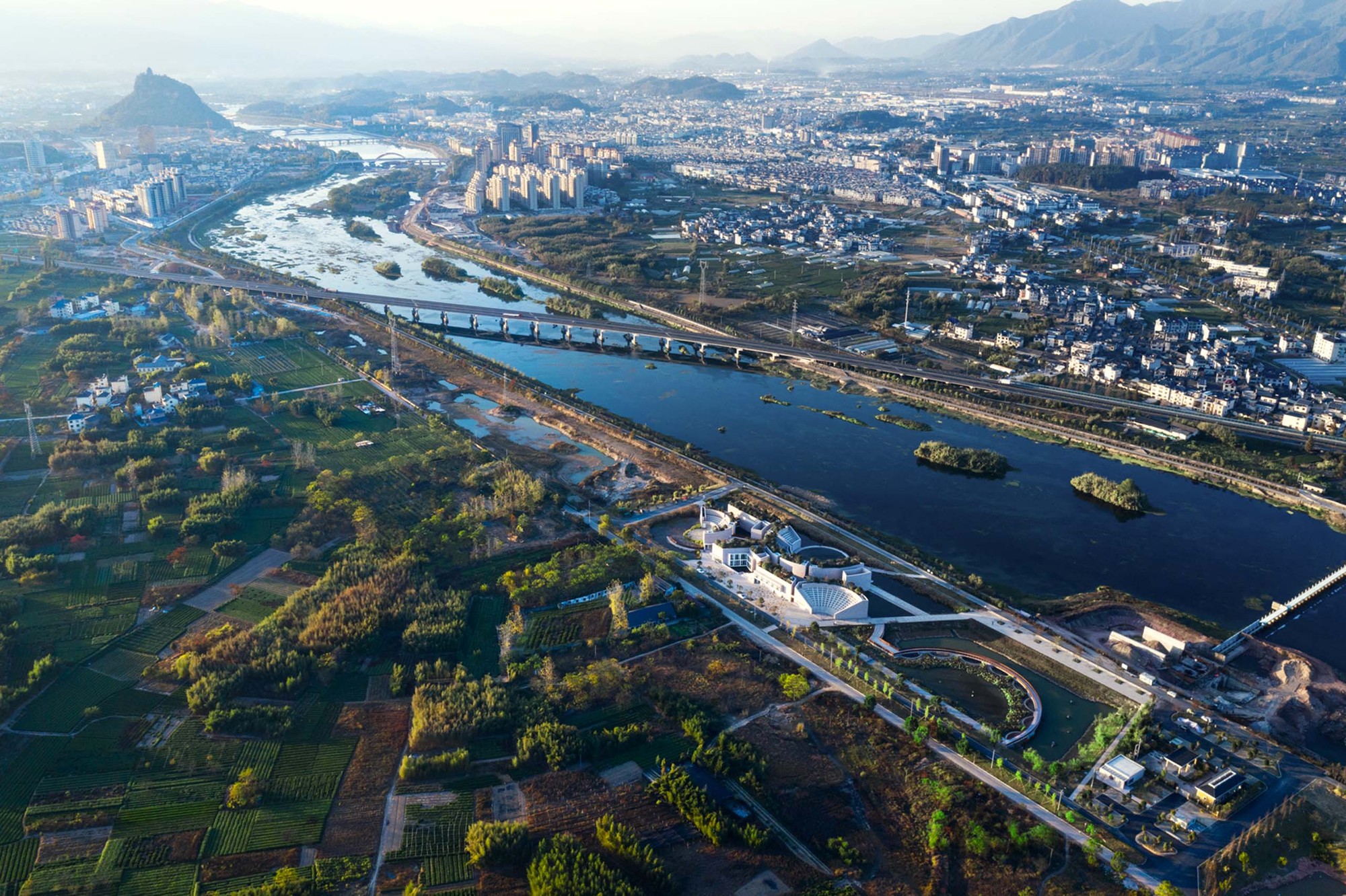
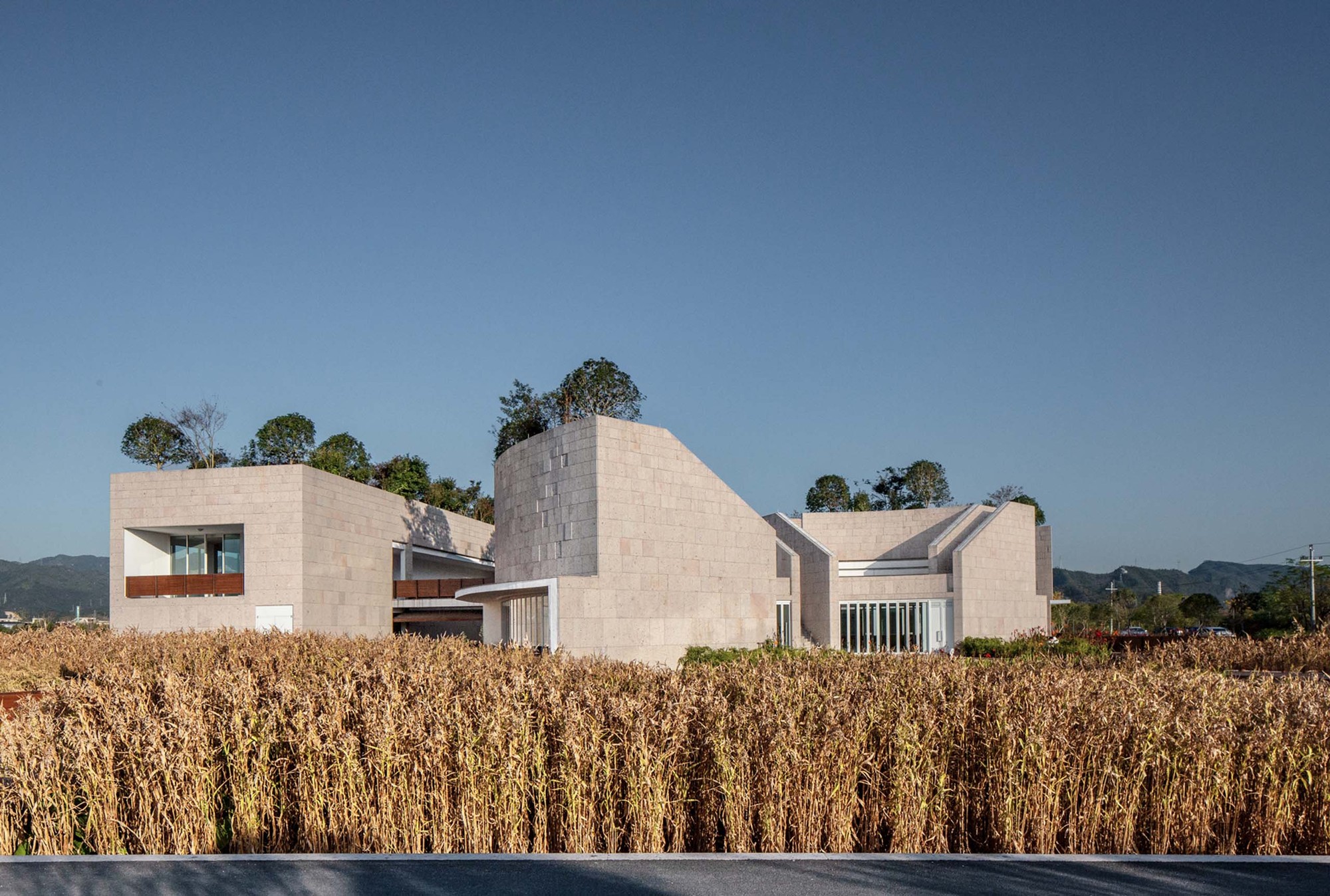
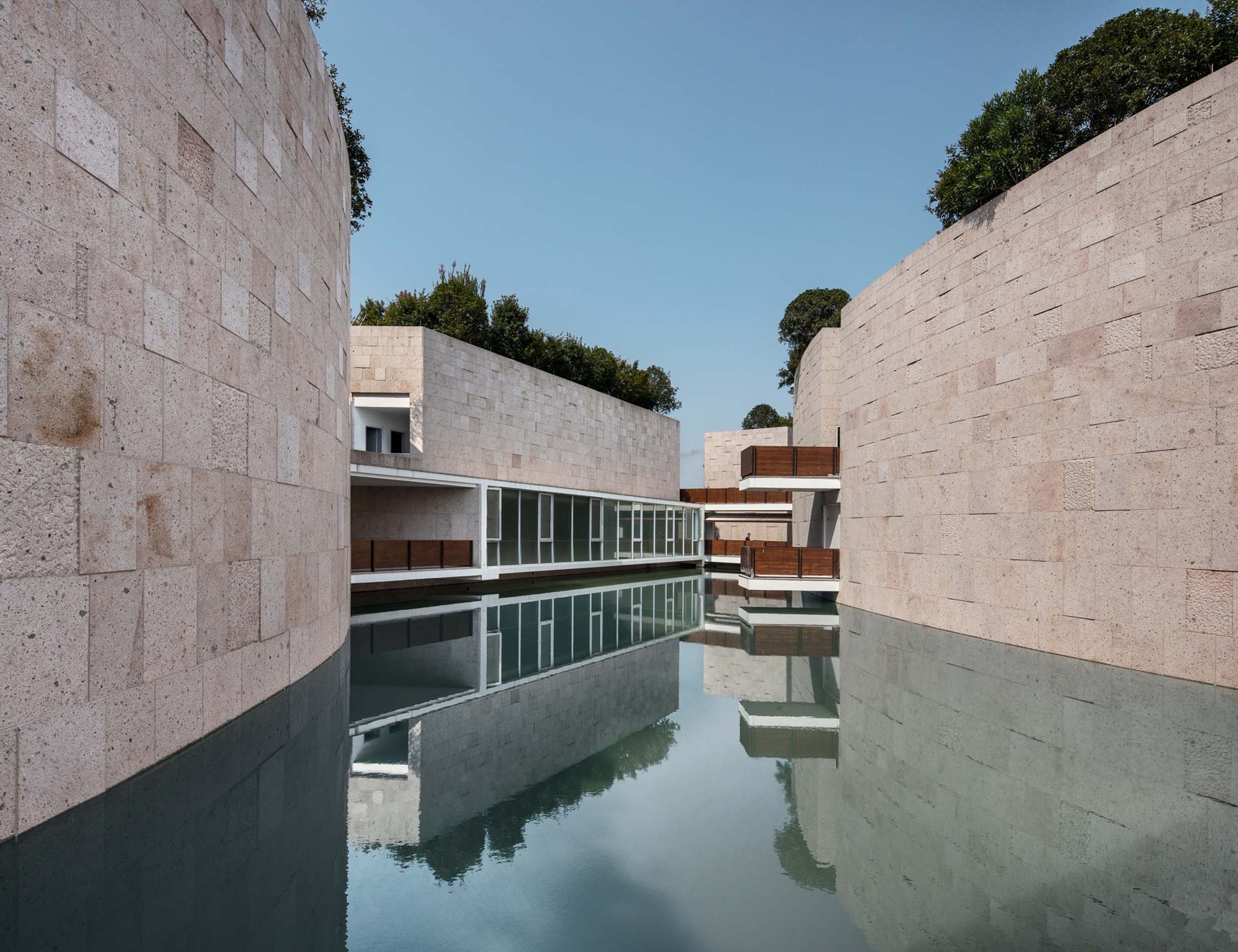
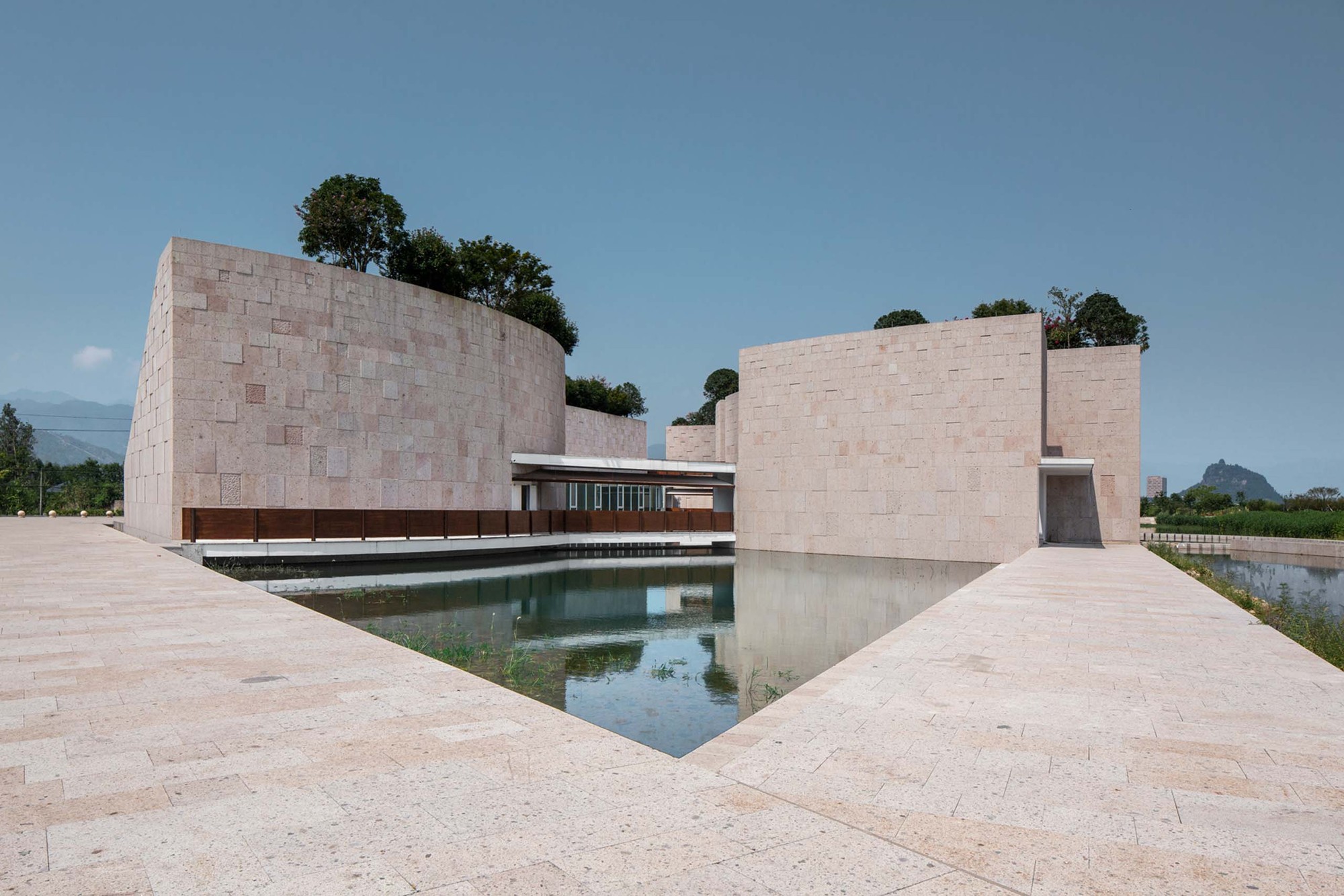
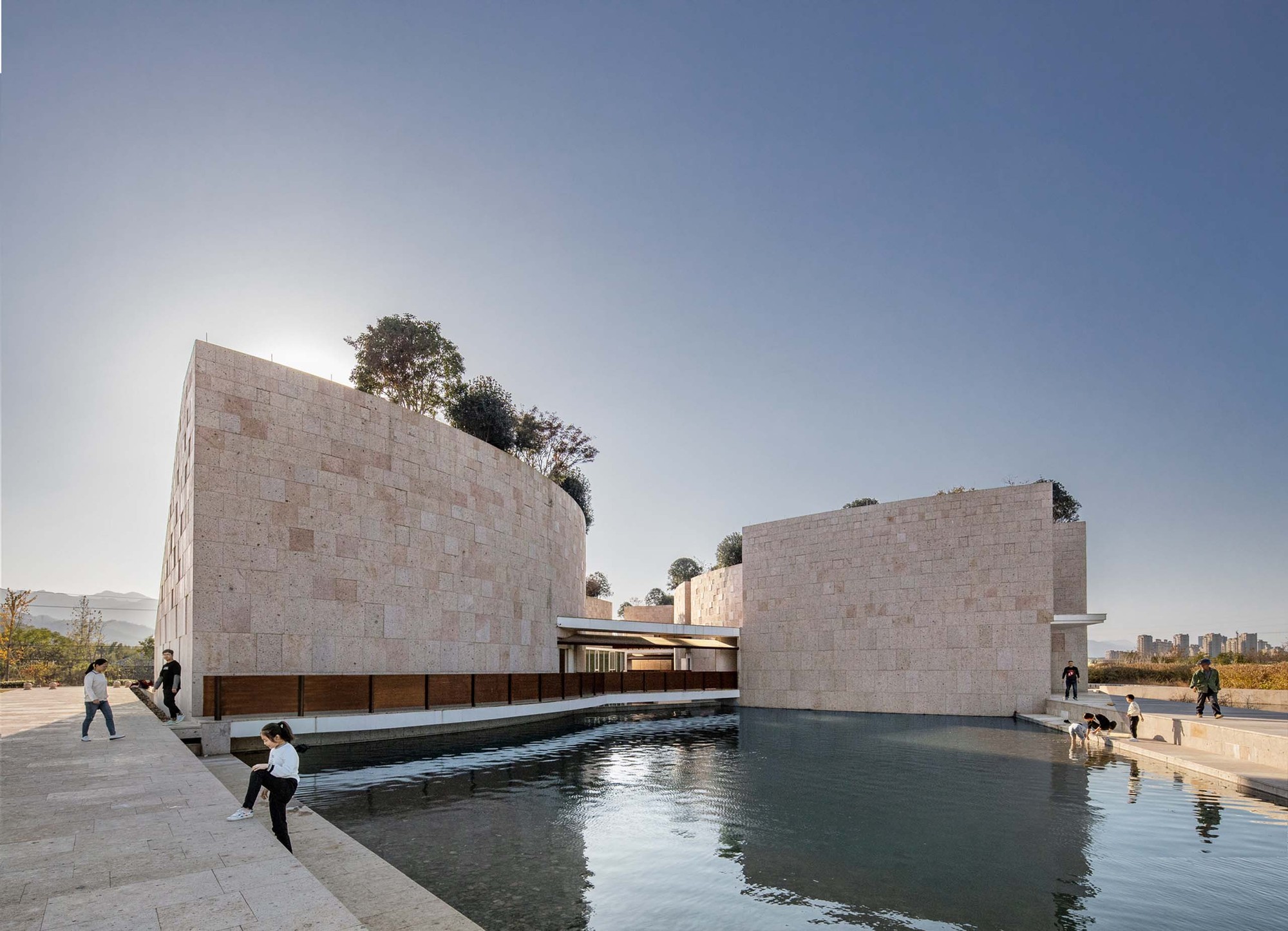
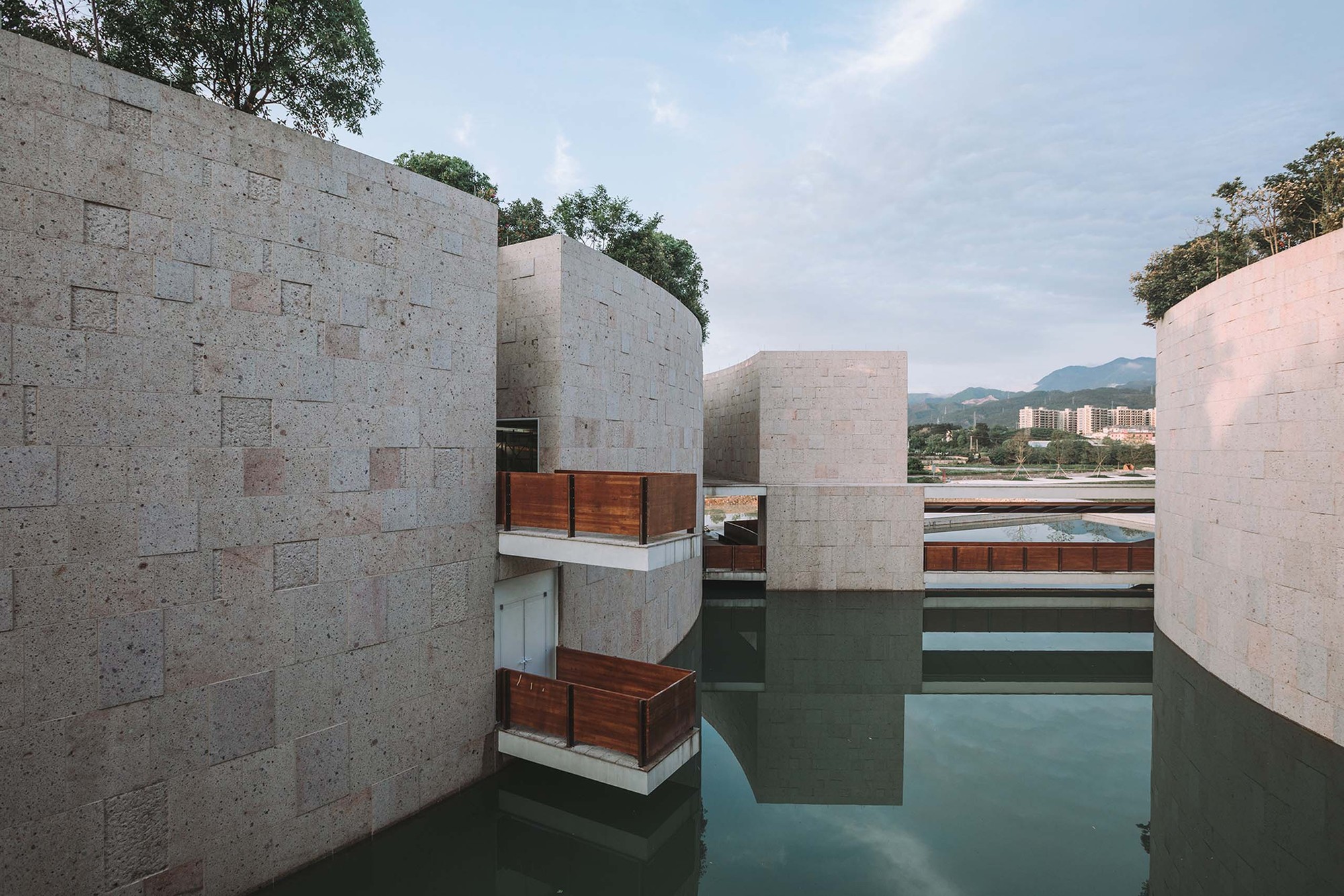
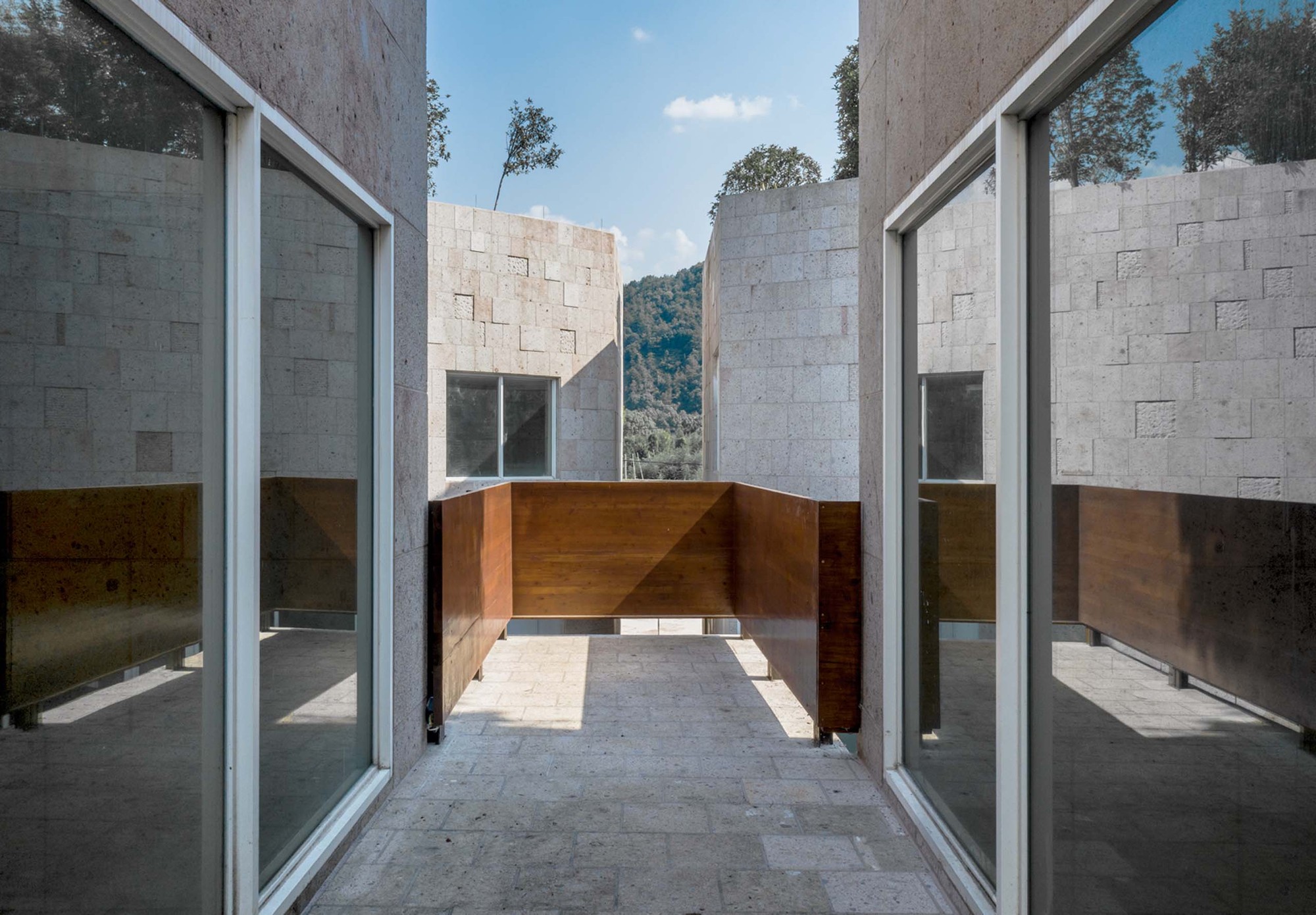
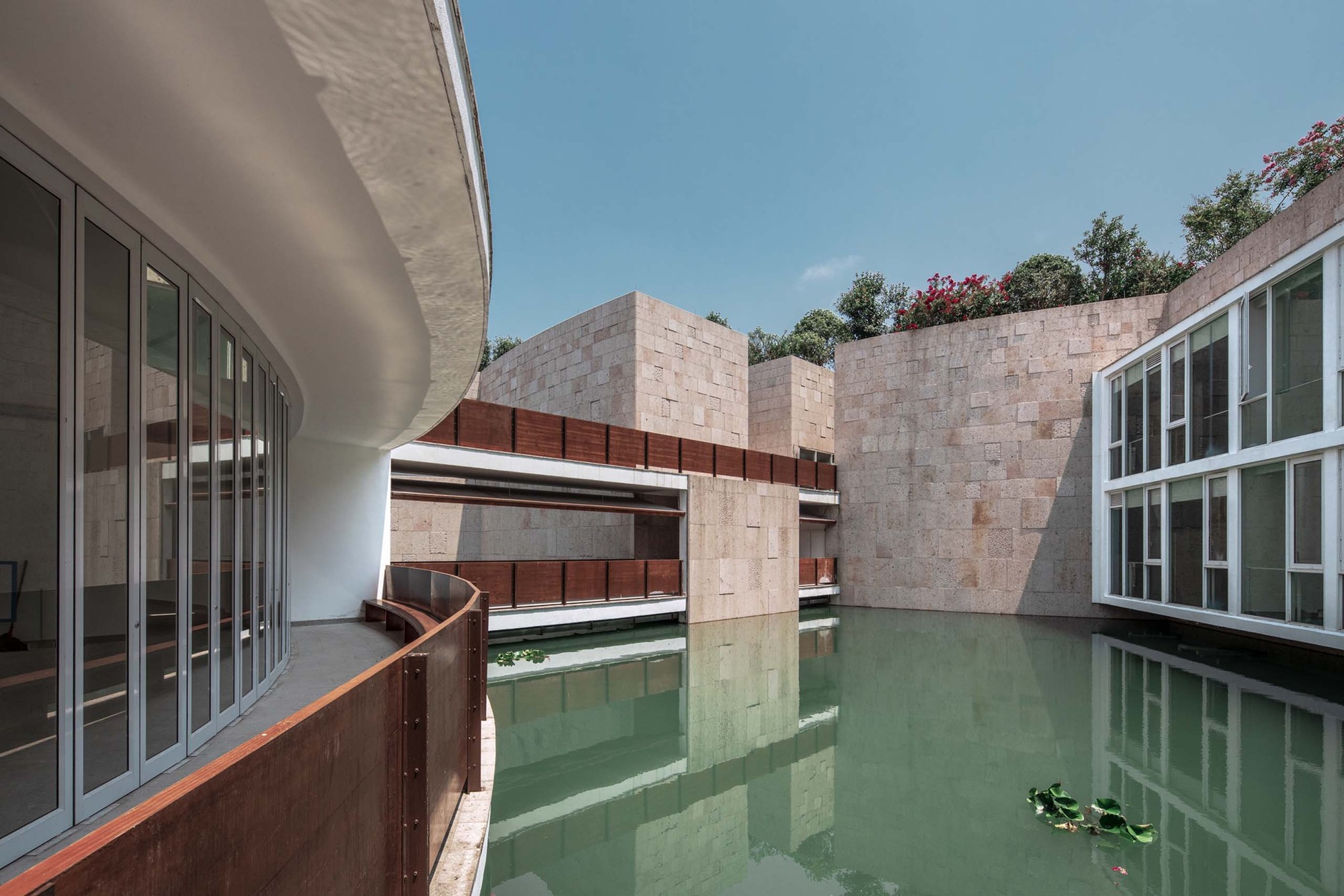
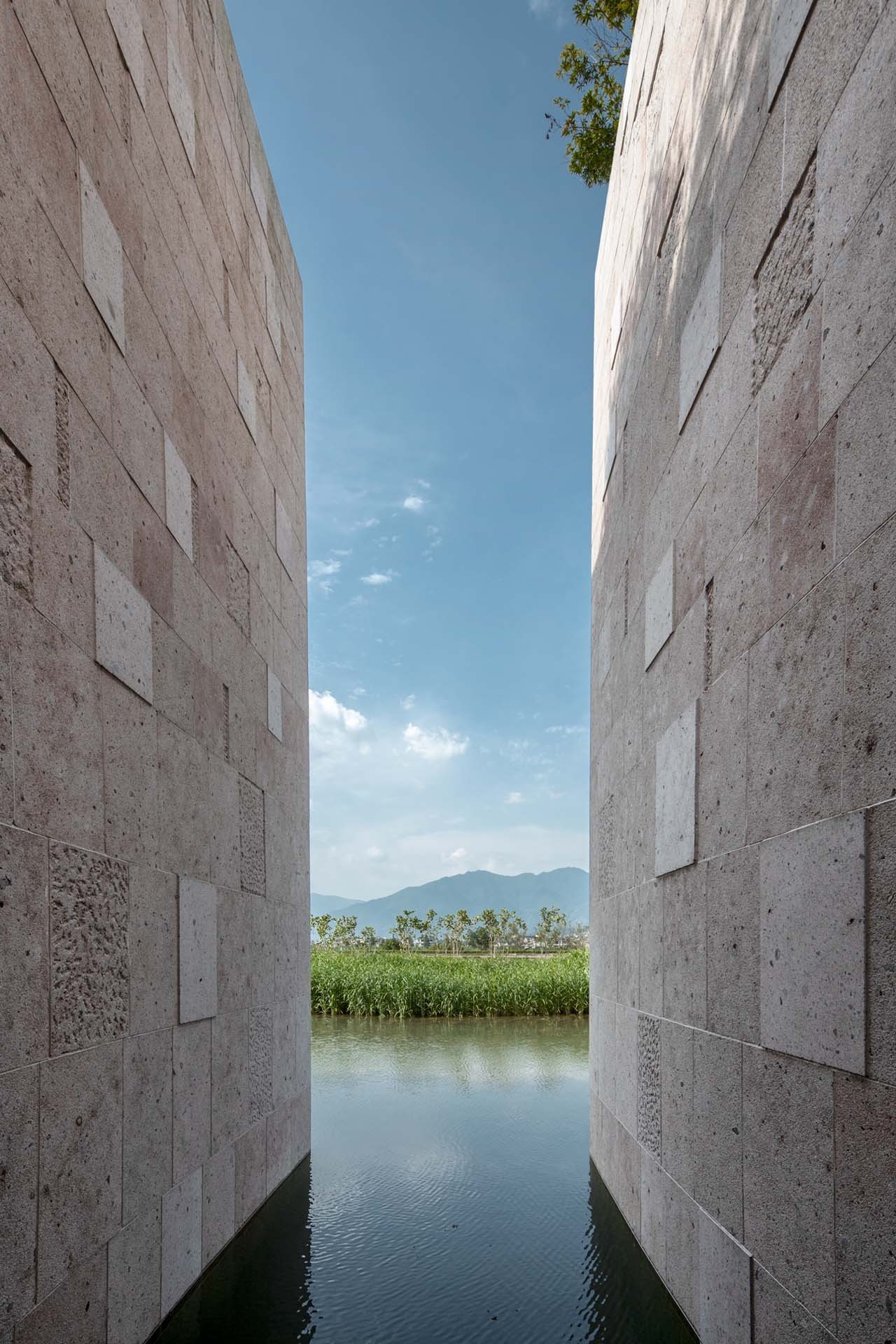
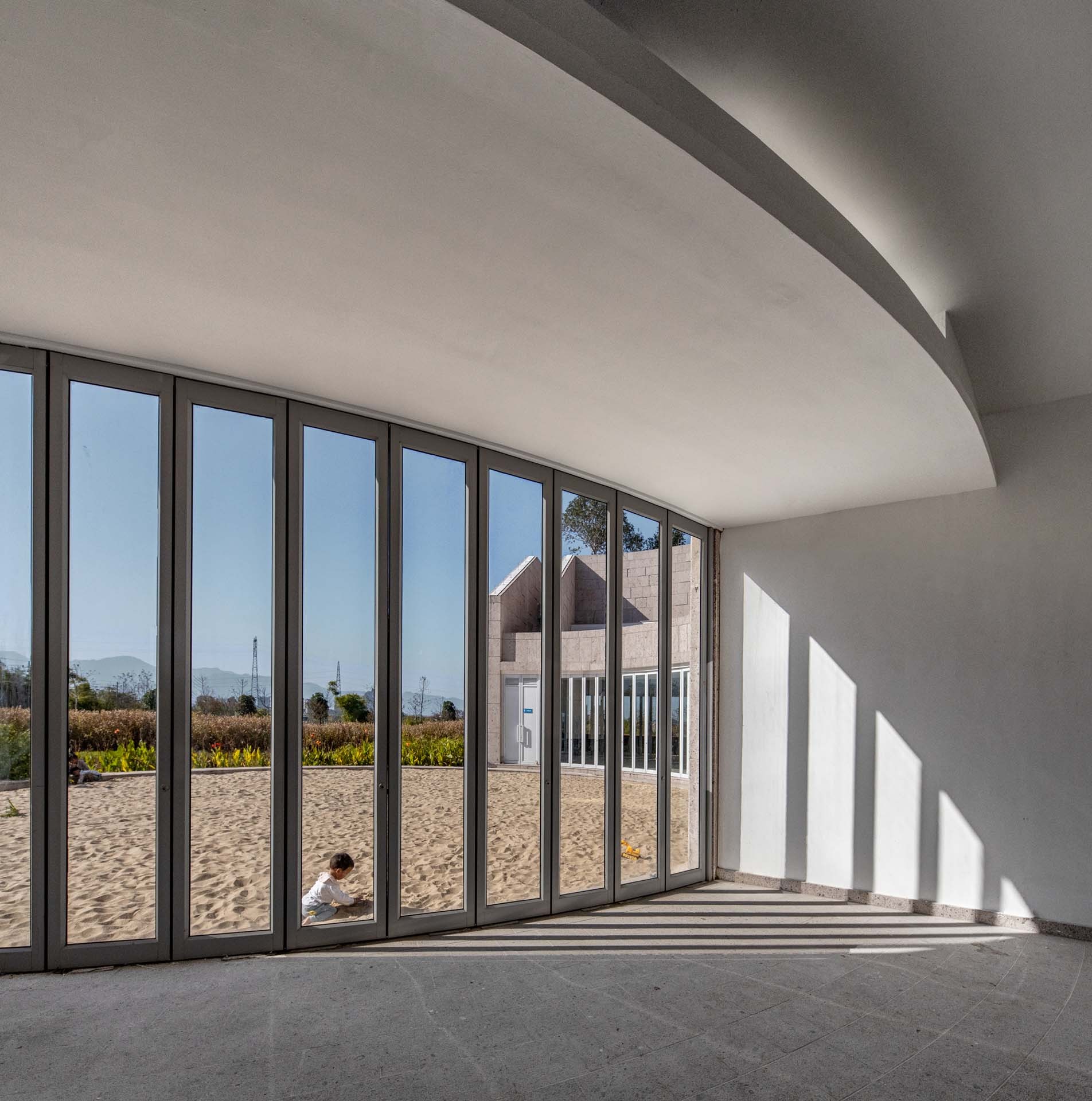
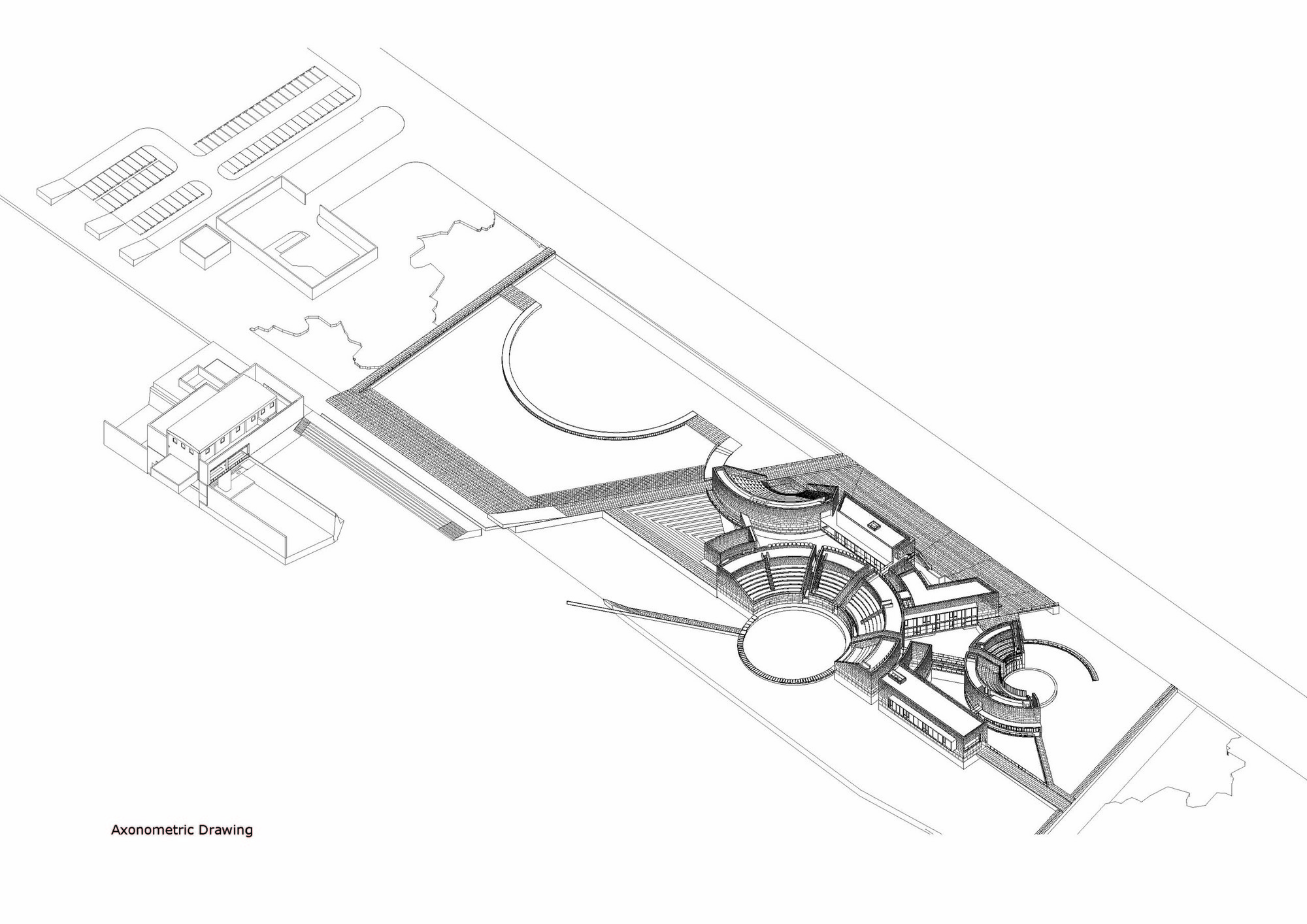
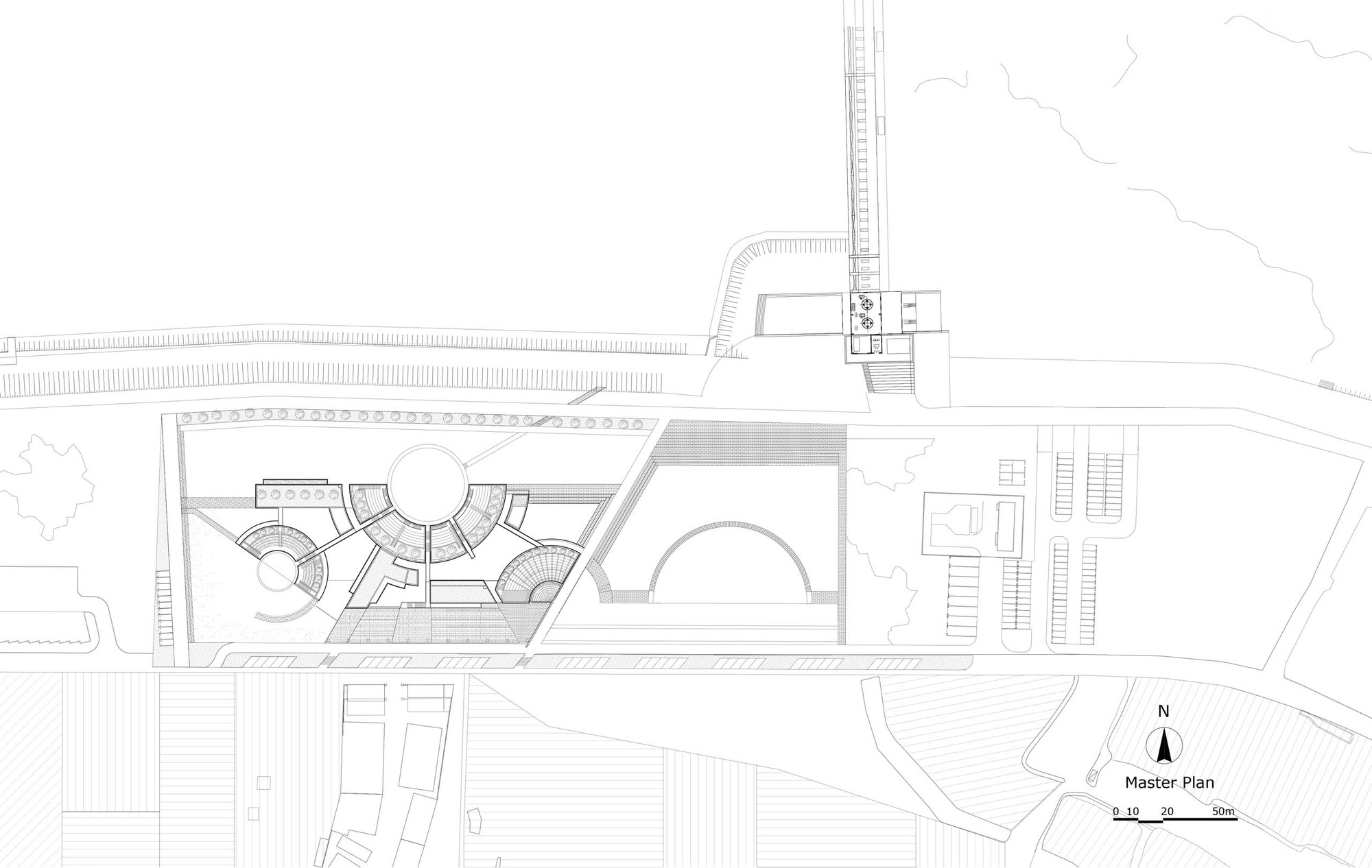
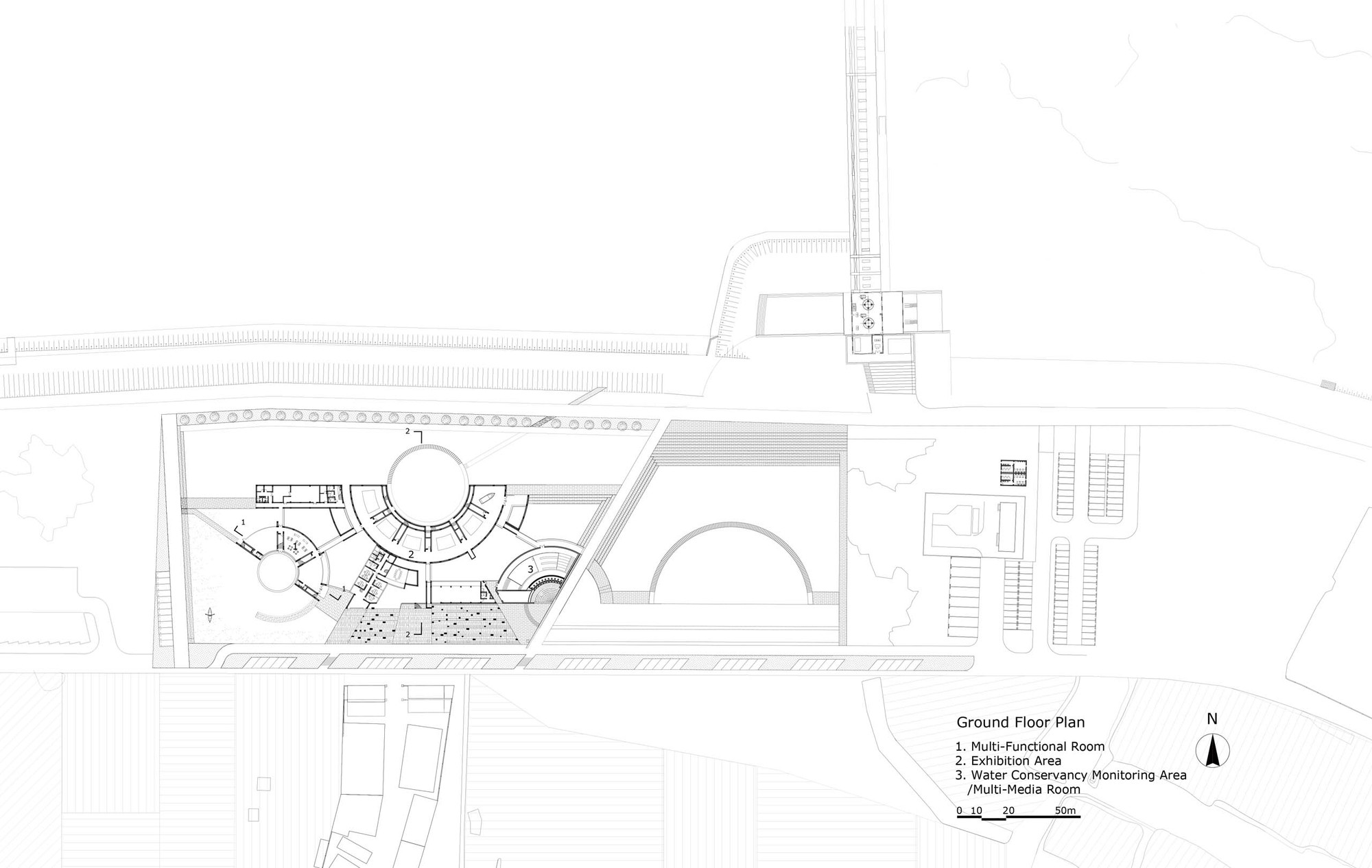
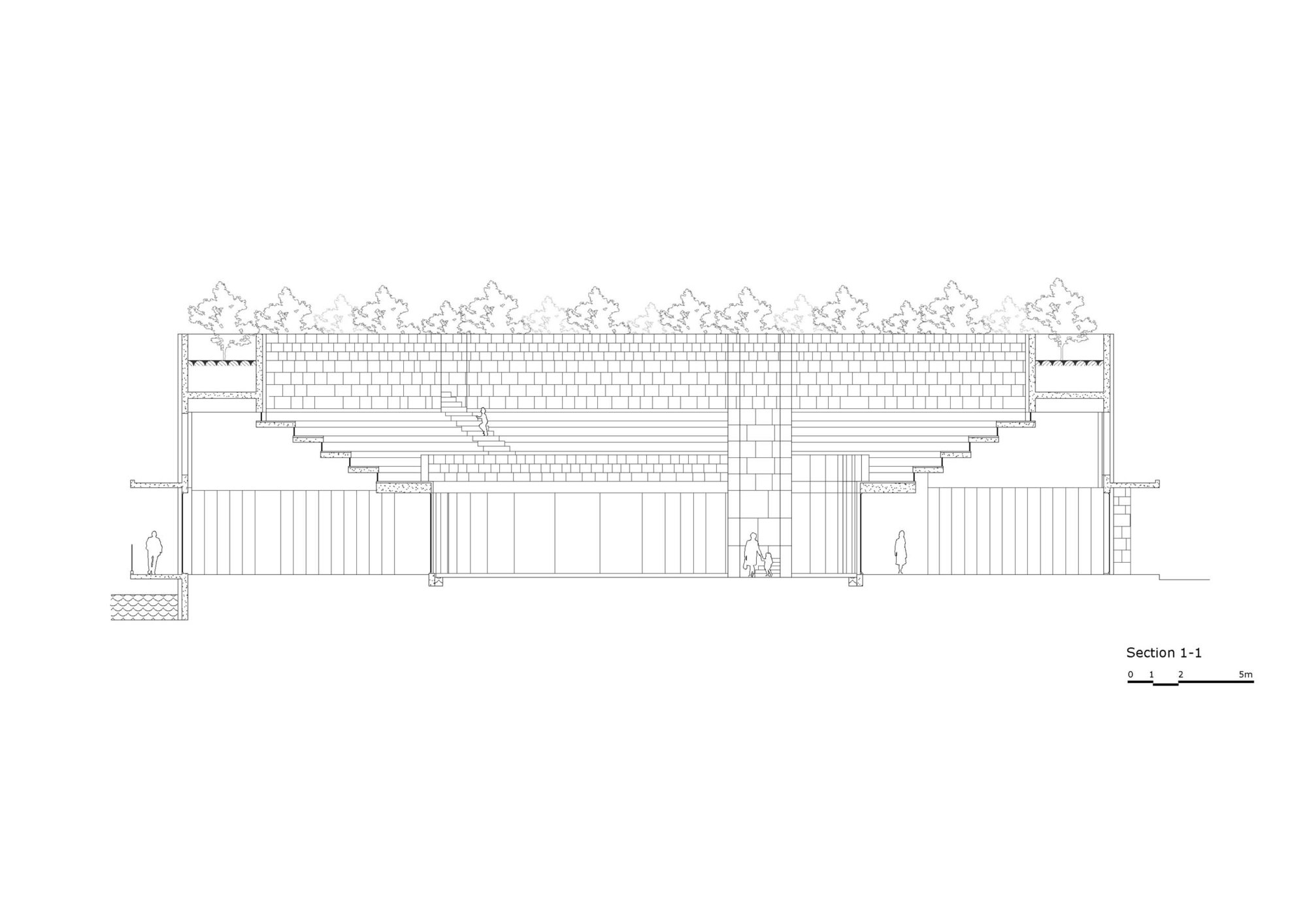
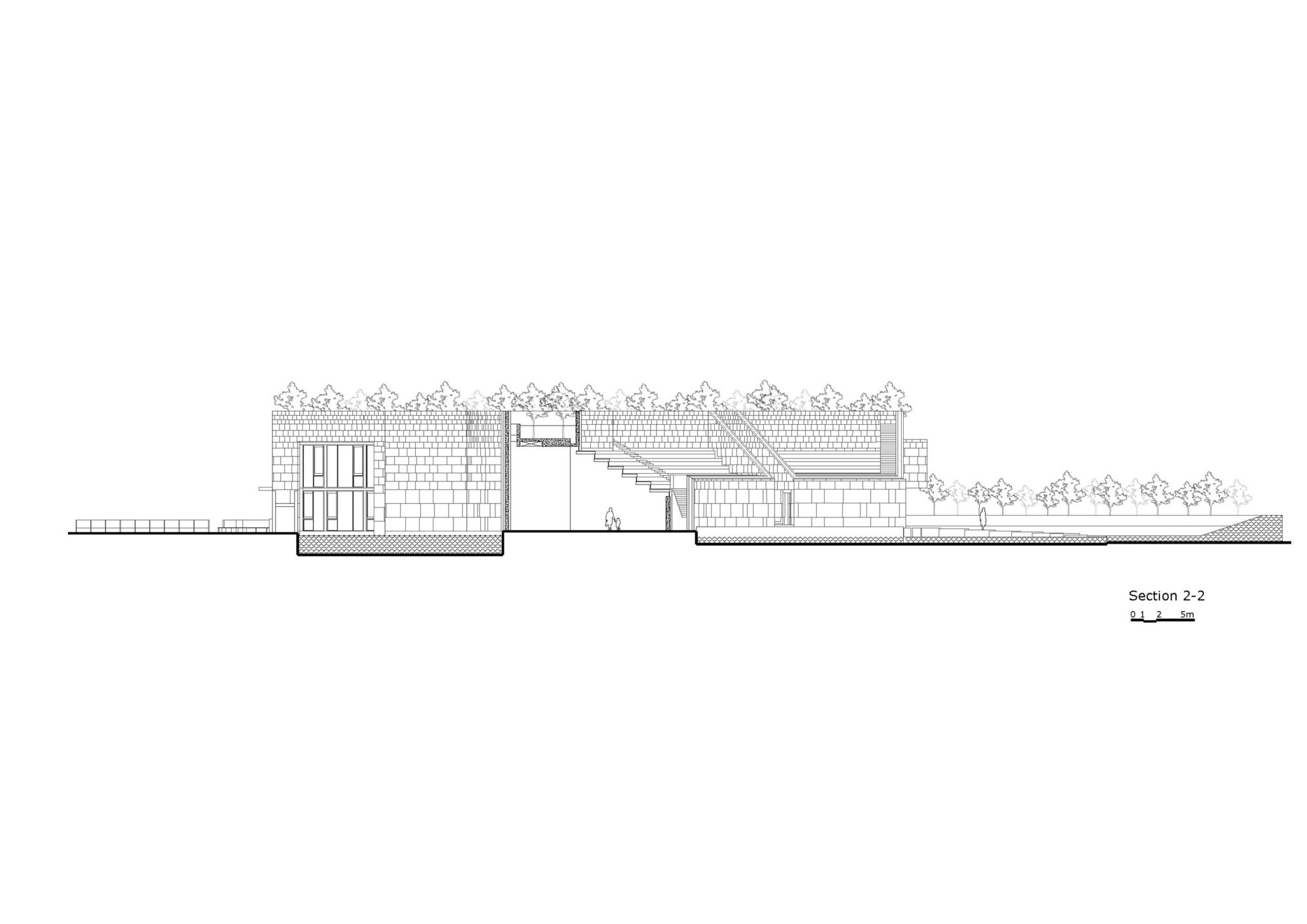
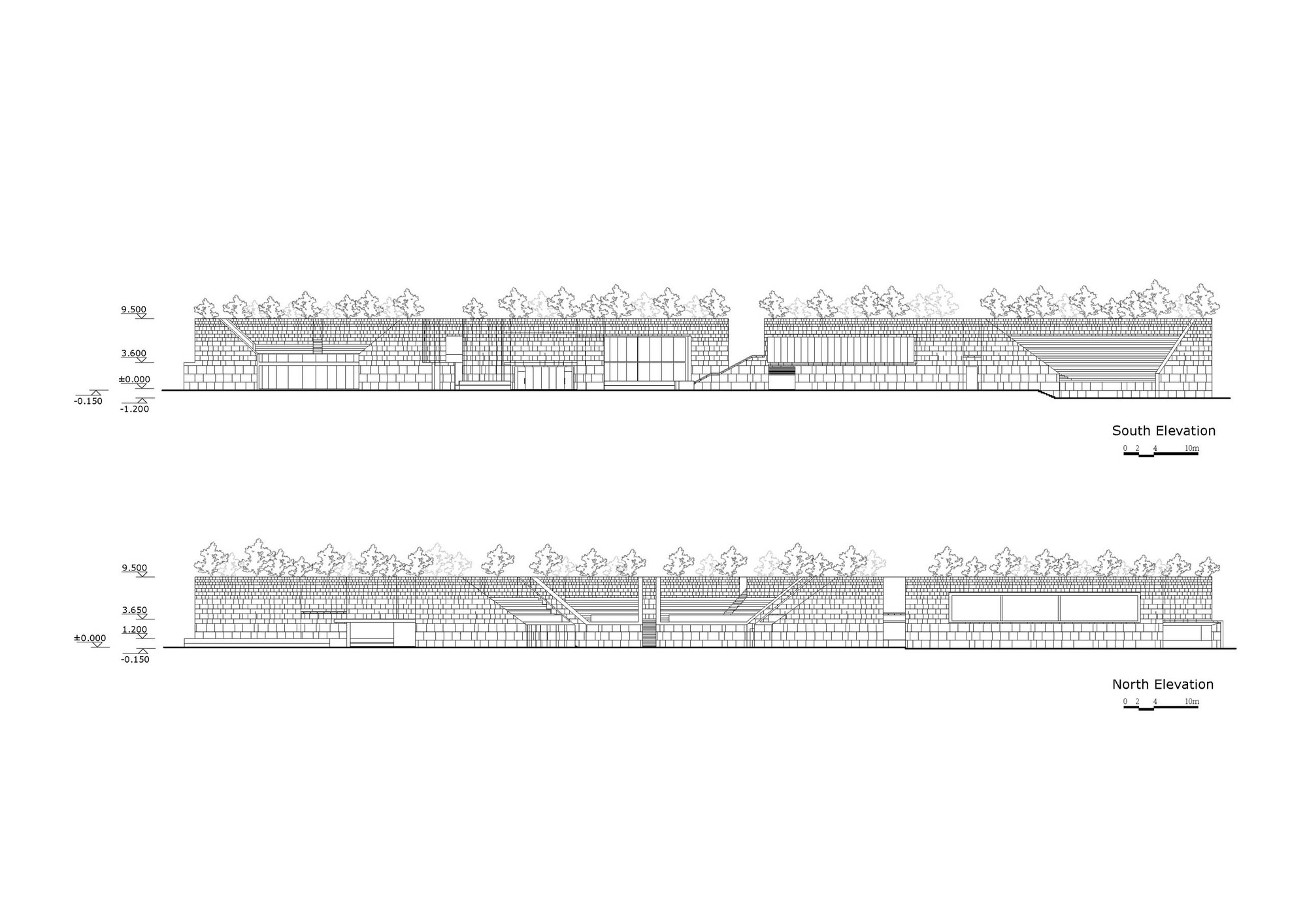
The Songyin Stream is the most important water resource of the Songgu Basin, with a long history of water conservancy that has prevented droughts and floods, supporting irrigation, transport, fishery, food production and daily water use. The Water Conservancy Museum, originally the Songyang River Embankment and Reservoir Safety Monitoring Center, included a monitoring hall, water-authority offices, canteen, archives and flood-control storage. In 2016, tied to the Songyin Stream scenic development, it was expanded into a hydrology park on the greenway, a key node for cultural and leisure services. Functions are reorganized: monitoring, archives and canteen open to the public; the archives expand into a hydrology-history exhibition hall; the monitoring center offers visits and teaching; the canteen serves as leisure dining and a youth activity area. Volumes express their functions through form: public functions unfold as curved, dam-like masses facing the main landscape, while office and service functions occupy a long bar on the west near the service entrance and rear logistics plaza. The curved public blocks emphasize mass like water-engineering structures, and the facade becomes an amphitheater adding outdoor activity layers; walkways lead to a rooftop garden with panoramic views. The resulting interiors, in spatial form, sequence, enclosure and natural light, carry a specific identity tied to the region's water story.















 Editor's Pick
 Latest Design