Text description provided by the architects
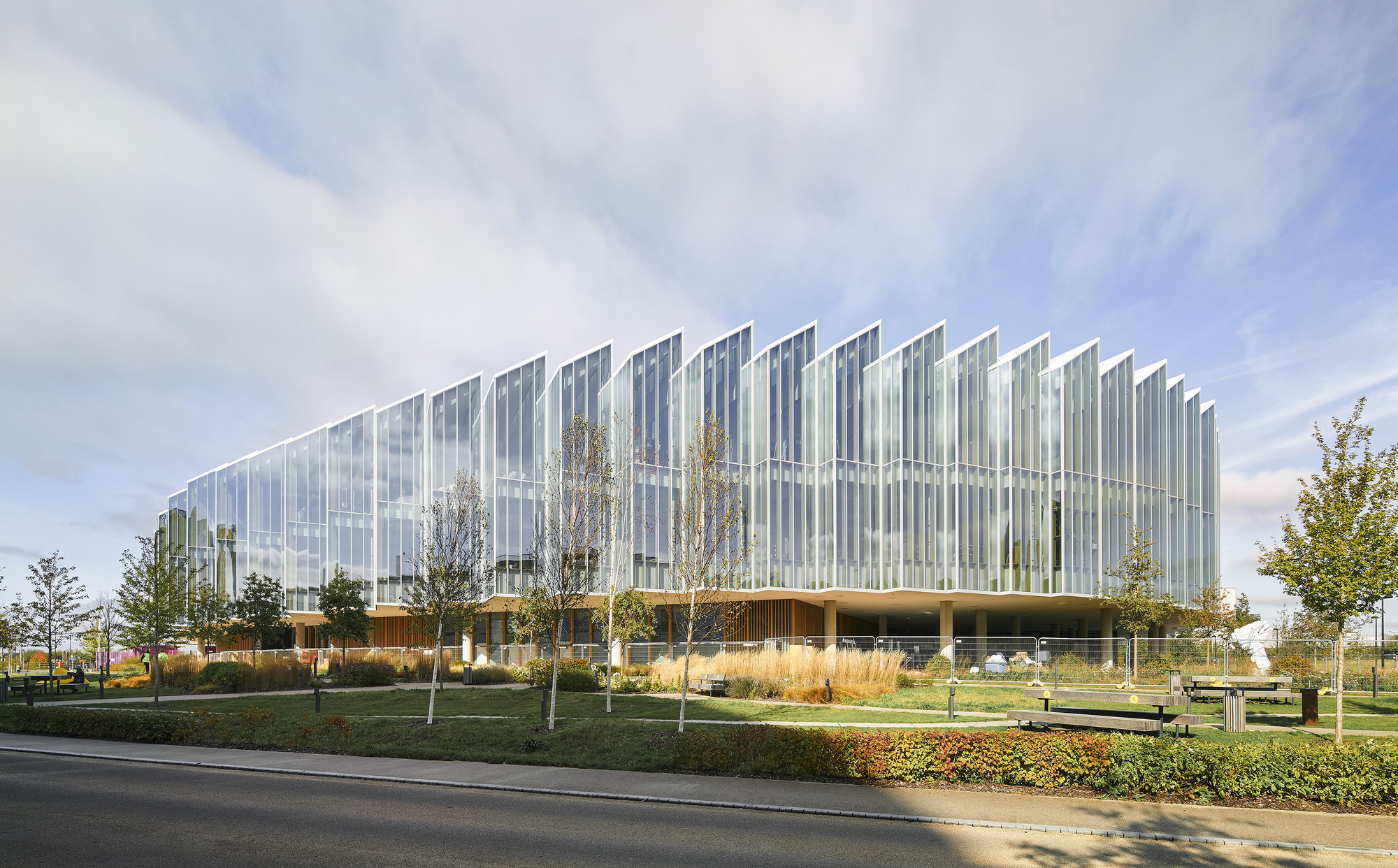
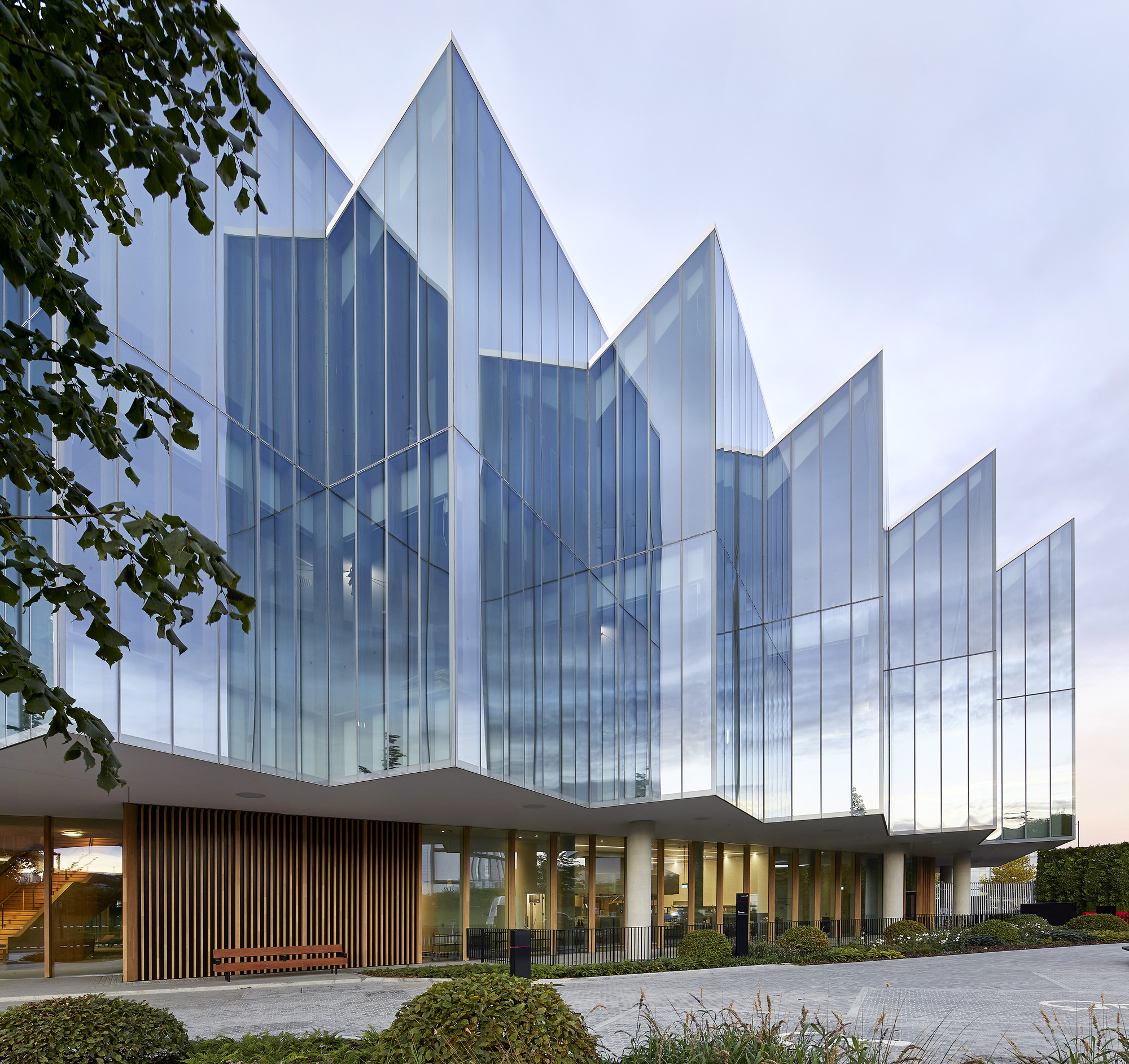
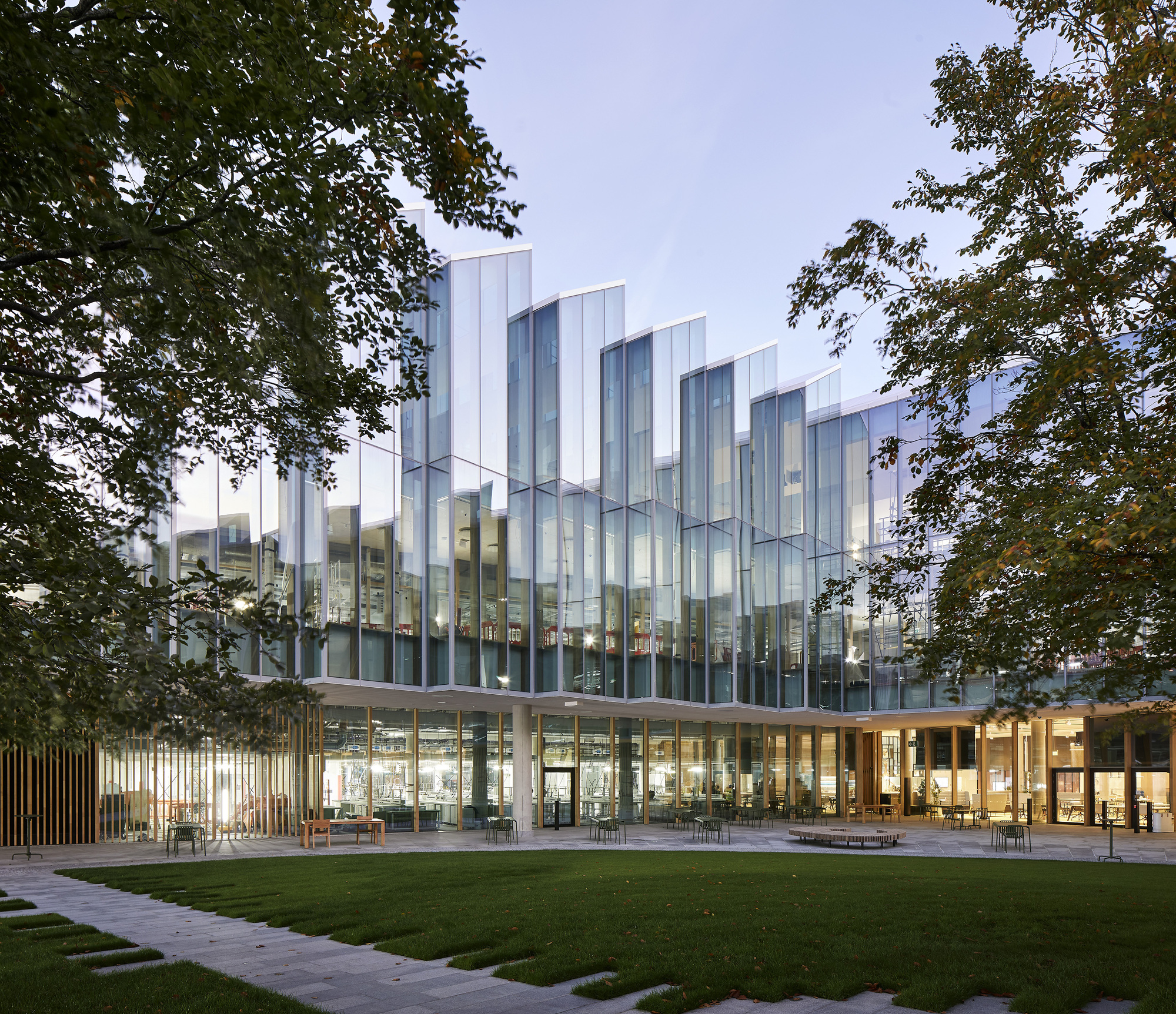
AstraZeneca has built a new research and development building at the Cambridge Biomedical Campus on the southern edge of Cambridge, named the Discovery Centre, or DISC. As part of the broader development at the southern edge of Cambridge, the Cambridge Biomedical Campus is positioned to become a leading center for biomedical research and development, fostering collaboration with institutions and companies across education, healthcare, science, and research. DISC sits at the heart of the campus, and its central location reflects AstraZeneca's ambition to be a key hub of exchange and collaboration at CBC. At the same time, DISC builds on the company's existing partnerships with Cambridge life science teams such as the MRC Laboratory of Molecular Biology and Cancer Research UK, using architecture to embody these driving forces. DISC is conceived as a porous building accessible from three directions, making it a distinctive R&D center. The building mass roughly follows the shape of the site, with the main body composed of a glass disk encircled by triangular prisms. The east-west sawtooth roof defines the overall design language and provides optimal natural light to the interior. The sawtooth roof extends down to the facade, creating a tighter, more monumental vertical sawtooth form on the outer ring. The disk arrangement allows for flexible laboratory and office spaces that can adapt to evolving research needs. The building's transparency and connectivity reflect AstraZeneca's commitment to open science and cross-disciplinary collaboration, serving as a physical manifestation of the company's mission to push the boundaries of medical research.








 Editor's Pick
 Latest Design