Text description provided by the architects
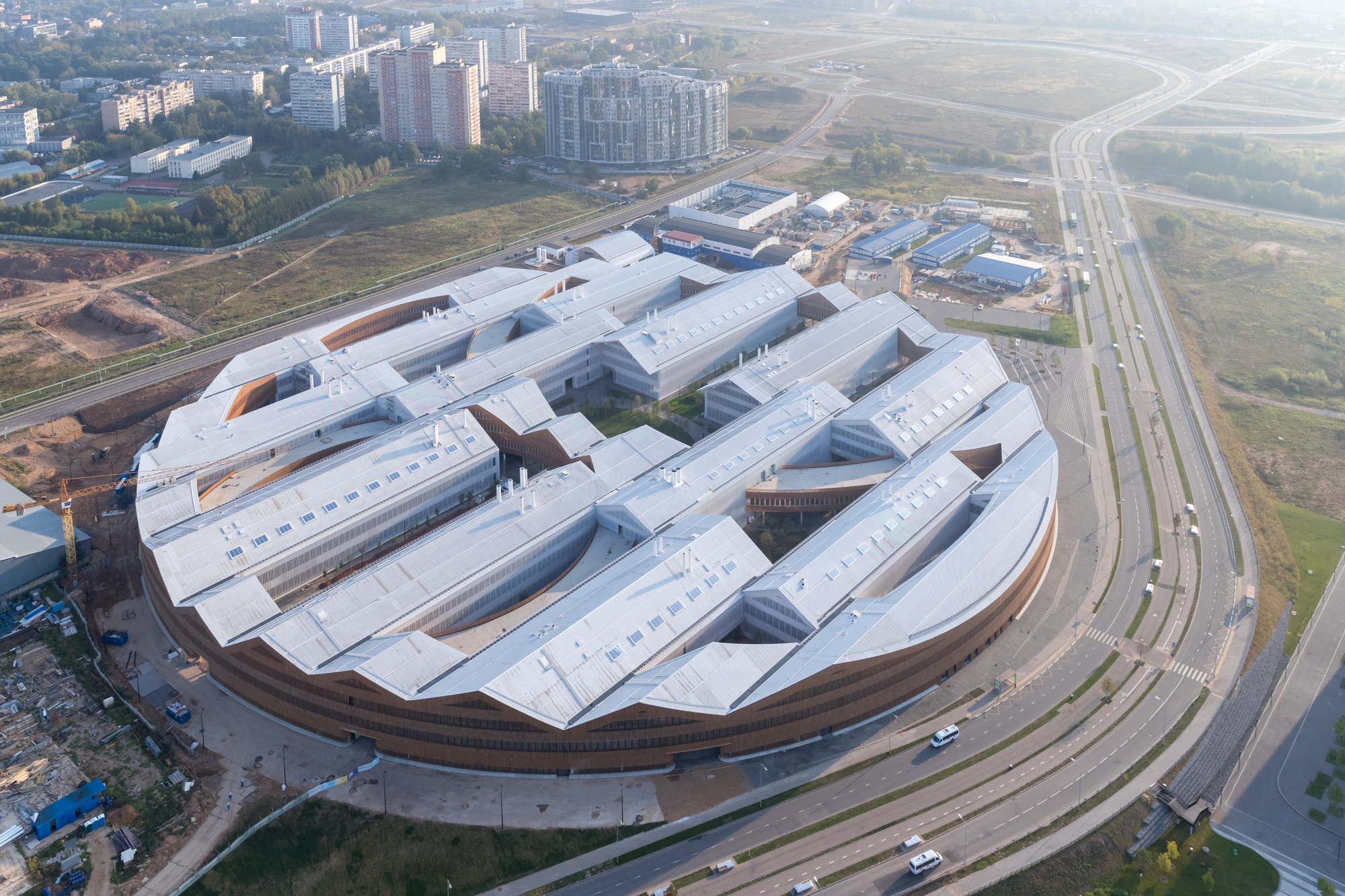
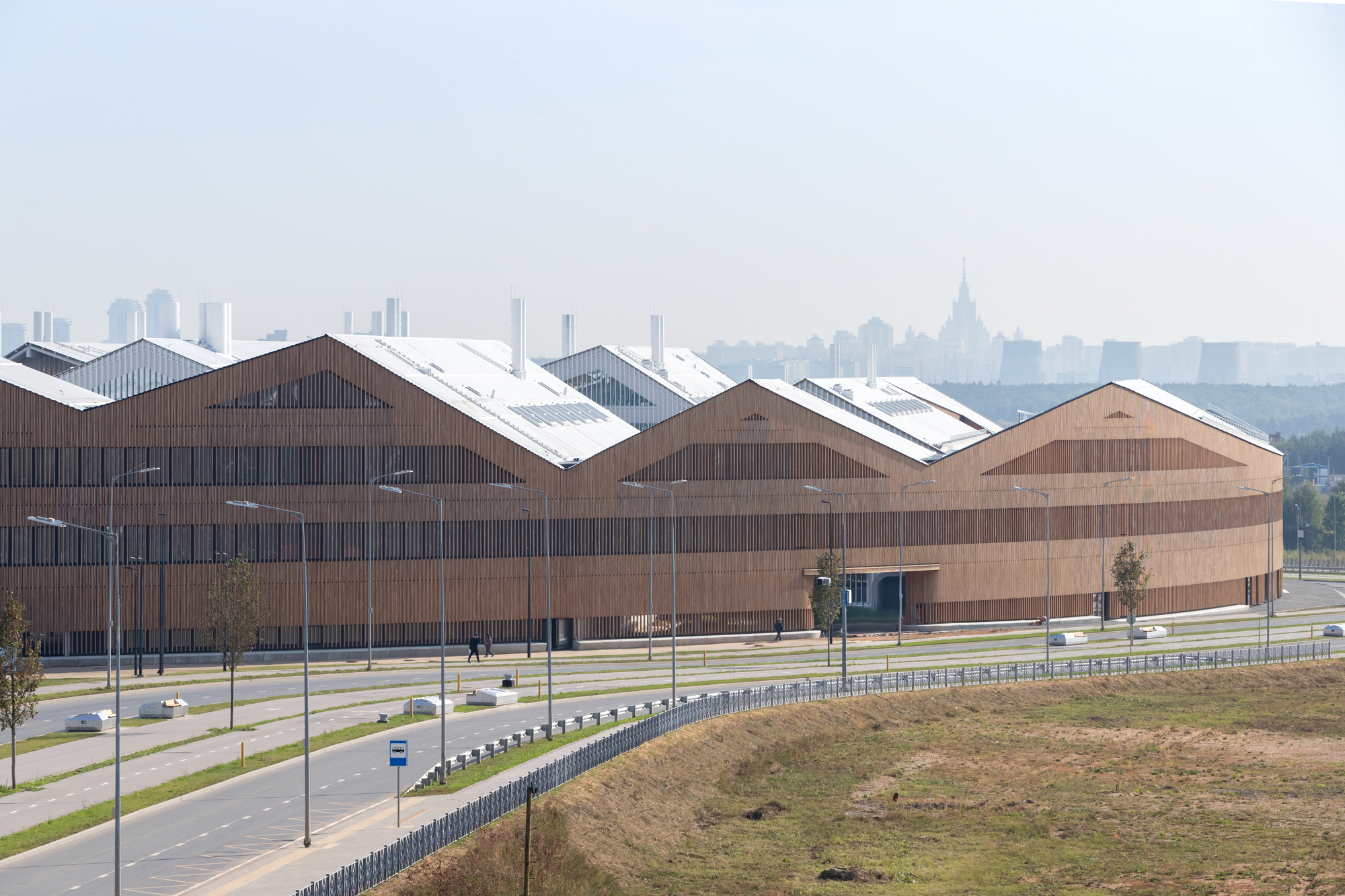
The master plan for Skolkovo is located within Moscow's Third Ring Road, seventeen kilometers west of the Kremlin, as a government-planned new urban district. The goal of Skolkovo is to establish a globally recognized innovation technology center that integrates research and production institutions, providing headquarters for both large corporations and startups. The campus also hosts Russia's Skoltech University, which, although newly established, is growing alongside Skolkovo and aims to become a distinguished educational and research center in Moscow, Russia, and the world. The initial master plan for Skolkovo seeks to create high-quality urban living through vibrant civic amenities, including comfortable spaces for studying, working, commuting, and shopping. Unlike closed satellite towns from the Soviet era, Skolkovo sits within Moscow's radius and can fully leverage the city's infrastructure while benefiting from the capital's rich cultural life. The urban plan is organized around five distinct districts, like urban islands inserted into the picturesque local landscape. Each of the five zones has its own unique shape and specific spatial configuration. They will be designed and planned by different architects, giving each district a distinct personality and atmosphere. Herzog & de Meuron, centered on the Skoltech University, led the master planning for District 3. The plan is structured in three phases that will gradually build out the academic and research campus. The design prioritizes connectivity, sustainability, and the kind of collaborative environments that drive innovation, reflecting Skolkovo's ambition to become Russia's leading technology hub.
TEAM
Design Director: Tomislav Dushanov, Tobias Winkelmann; Project Manager: Olga Bolshanina, Ilia Tsachev; Client: LLC UDPC Skolkovo, Moscow, Russia, Alexey Savchenko; Design Team: Alexandria Algard, Florian Becker, Marcelo Bernardi, Mathieu Bujnowskyj, Ignacio Cabezas, Delphine Camus, Sergio Cobos Alvarez, Blazej Piotr Czuba, Inga Federe, Diogo Figueiredo, Argel Padilla Figueroa, Stefan Goeddertz (Associate), Beatriz Pérez Pérez de Iriarte, Volker Jacob, Artem Kitaev, Petr Khraptovich, Osma Lindroos, Frank Loer, Maria Vega Lopez, Udayan Mazumdar, David Goncalves Monteiro, Martina Palocci, Svetlin Peev, Pedro Polónia, Martin Raub, Mònica Ors Romagosa, Elias Sanez, Harald Schmidt, Leonid Slonimskiy, Jan Skuratowski, Alexander Stern, Ida Sze, Raha Talebi, Miruna Tutoveanu, Toru Wada, Liang Wang, Jean-Paul Willemse, Zeng Zhibin,Farhad Ahmad (Visualisations), Massimo Corradi (Digital Technologies), Vasilis Kalisperakis (Visualisations), Christina Liao (Digital Technologies), aron Lőrincz (Visualisations), Raúl Torres Martín (Visualisations), Bruno de Ameida Martins (Visualisations), Felipe Pecegueiro (Digital Technologies), Kai Strehlke (Digital Technologies); Landscape Design: Vogt Landschaftsarchitekten







 Editor's Pick
 Latest Design