Text description provided by the architects
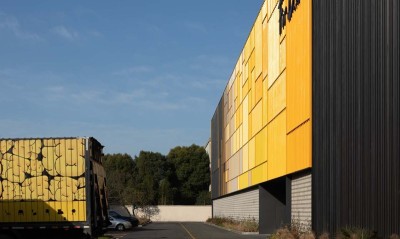
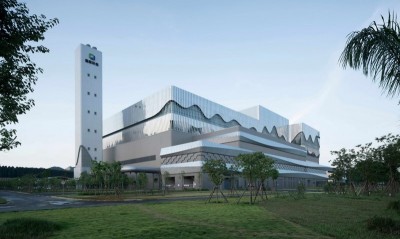
The Liuzhou Kangheng waste-to-energy plant is designed by UUA Architects under partners Li Yongzheng and Li Qizhi, with client Shanghai Kangheng Environment and Liuzhou Sanitation Environment Construction, and facade consultant Shanghai Jingteng. Liuzhou, Guangxi's largest industrial city, has transformed itself from heavily polluted to livable, and this clean, sustainable power plant turns waste into energy while carrying a green message; the abstracted bauhinia flower on the facade echoes the city's garden-like image and closes the distance with the public. The project won the 2023 DNA Paris Design Awards grand prize in the infrastructure and transportation category, awarded by the Farmani Group and In Between. Liuzhou sits among karst hills encircled by the Liu River, and the plant occupies a rolling valley roughly 14 kilometers southeast of the city center. Because waste-to-energy plants are usually sited far outside cities and rarely given architectural attention, the team set out to change that fixed image and let the facility enter public life. The bauhinia was introduced to Liuzhou in the 1930s; nearly 300,000 trees now bloom across the city, and in April the streets flow with purple. The facade merges the bauhinia with a honeycomb, a Bees in Bauhinia allegory in which the flower stands for Liuzhou and the honey-making process mirrors the plant's waste-to-energy flow. The main volume is wrapped in a honeycomb texture punctuated by colorful petals; six hexagonal modules form a random gradient at the podium, four diminishing hexagonal windows create a falling-petals effect above, and the gas-tight waste-pool section is closed with a regular hexagonal aluminum-panel grid. White, silver and dark gray differentiate the volumes, and red, orange, yellow and green accents line the honeycomb openings. The 56,000-square-meter plant processes 3,000 tons of waste per day and was built from 2019 to 2022; the east facade facing the city road carries the more complex honeycomb, while the other sides use economical corrugated aluminum-magnesium-manganese panels, and the chimney's top is punched with gradient hexagonal openings. The result is a warm engineering that uses local cultural and geographic symbols to give infrastructure an emotional voice.




 Editor's Pick
 Latest Design