Text description provided by the architects
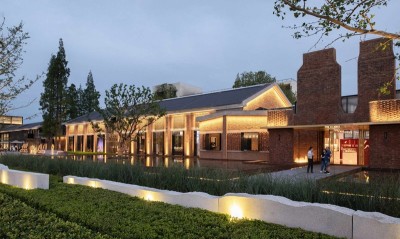
The Zhongshan Guanhua landscape restoration is set on Huaihai Zhong Road in Shanghai, a street comparable to Fifth Avenue, hidden inside an ordinary lilong lane. In December 1911, Sun Yat-sen stayed here on his way to Nanjing to become provisional president, using the house to organize the new government and meet political figures and journalists; the site thus bears witness to the first democratic republican government in Chinese history. The landscape was designed by Shanghai Wubei Landscape Design (design director Tian Zheng) for owner Sinan Yonghui Business Exhibition Services; the 2,172-square-metre garden was designed in December 2021 and completed in October 2022. Because the building is a protected historic structure, every move was constrained by heritage regulations and a tight budget, yet the design aimed not for an internet-famous photo spot but for a culturally driven urban renewal that lets the city read its own history. Existing mature trees were preserved, and new small trees and shrubs were chosen to echo Dr. Sun's life and the estate's history, while terrain, paving and a less-is-more restraint lift the garden's horticultural, functional and historical value. From the west entrance, subtle paving sets the tone; a preserved banyan tree and replanted understory guide visitors in, while semi-transparent perforated metal screens separate the functional west side from the inward, restrained eastern garden. A broad lawn fronts the historic main building, and preserved native trees plus new red oaks act as connectors, with a themed ground sculpture and night lighting drawing visitors toward the eastern Oriental Court, the southern wild garden and the building itself. The wild garden uses micro-terrain and sedum to create continuous, layered outdoor rooms, with wandering stepping stones and crafted paving supporting a varied seasonal planting palette. The Oriental Court, enclosed between the main building, annex and tea house, draws on traditional garden techniques but drops ornament: three stone lanterns, three double-petal Yoshino cherries and three golden osmanthus metaphorize Sun Yat-sen's Three Principles of the People, three lamps shining on the people; a shallow reflecting pool extends the red brick walls and ancient pines. The project is an exercise in craft under pandemic and budget pressure, pushing satisfaction from 99 percent toward 99.99 percent.




 Editor's Pick
 Latest Design