Text description provided by the architects
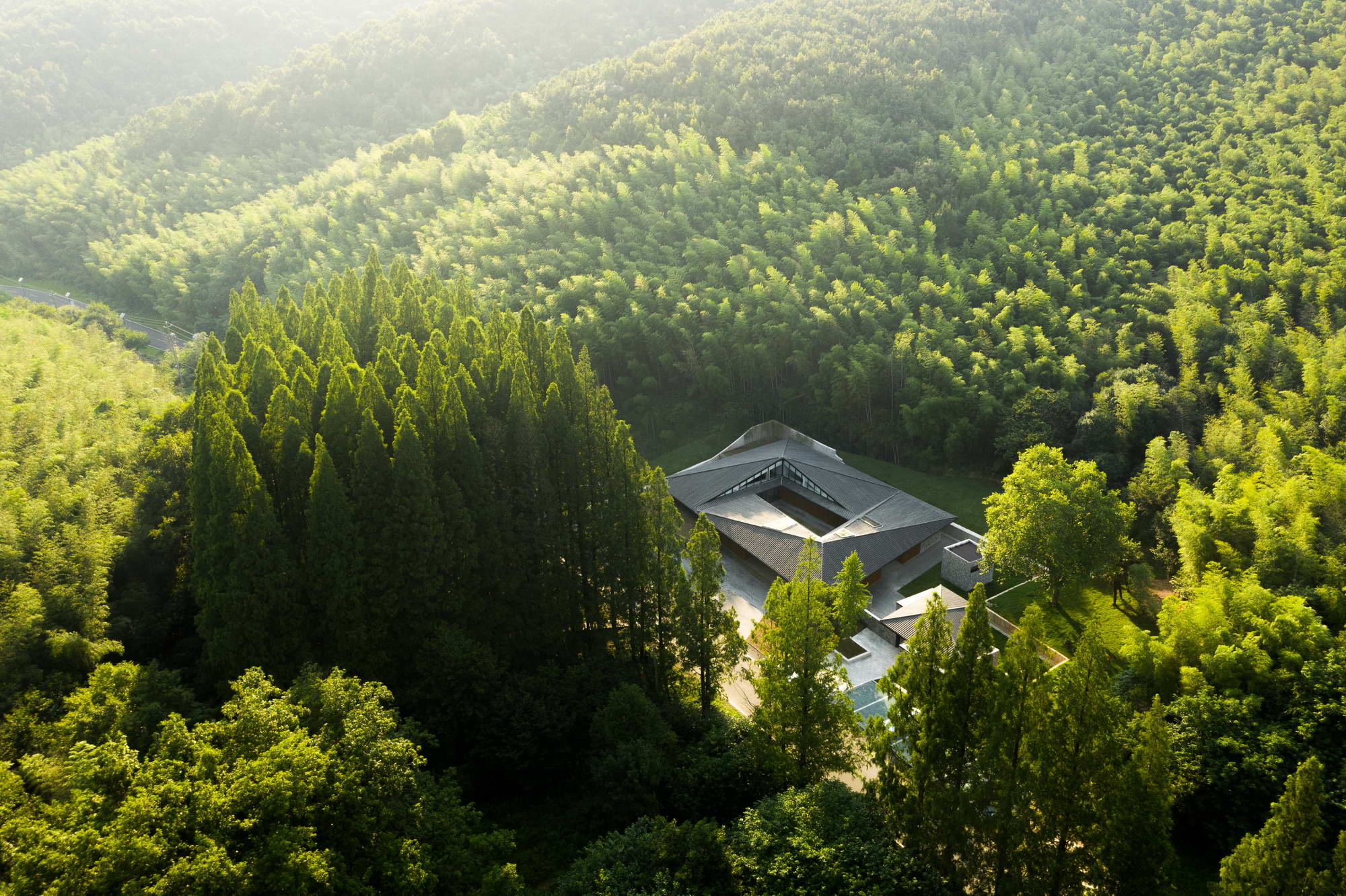
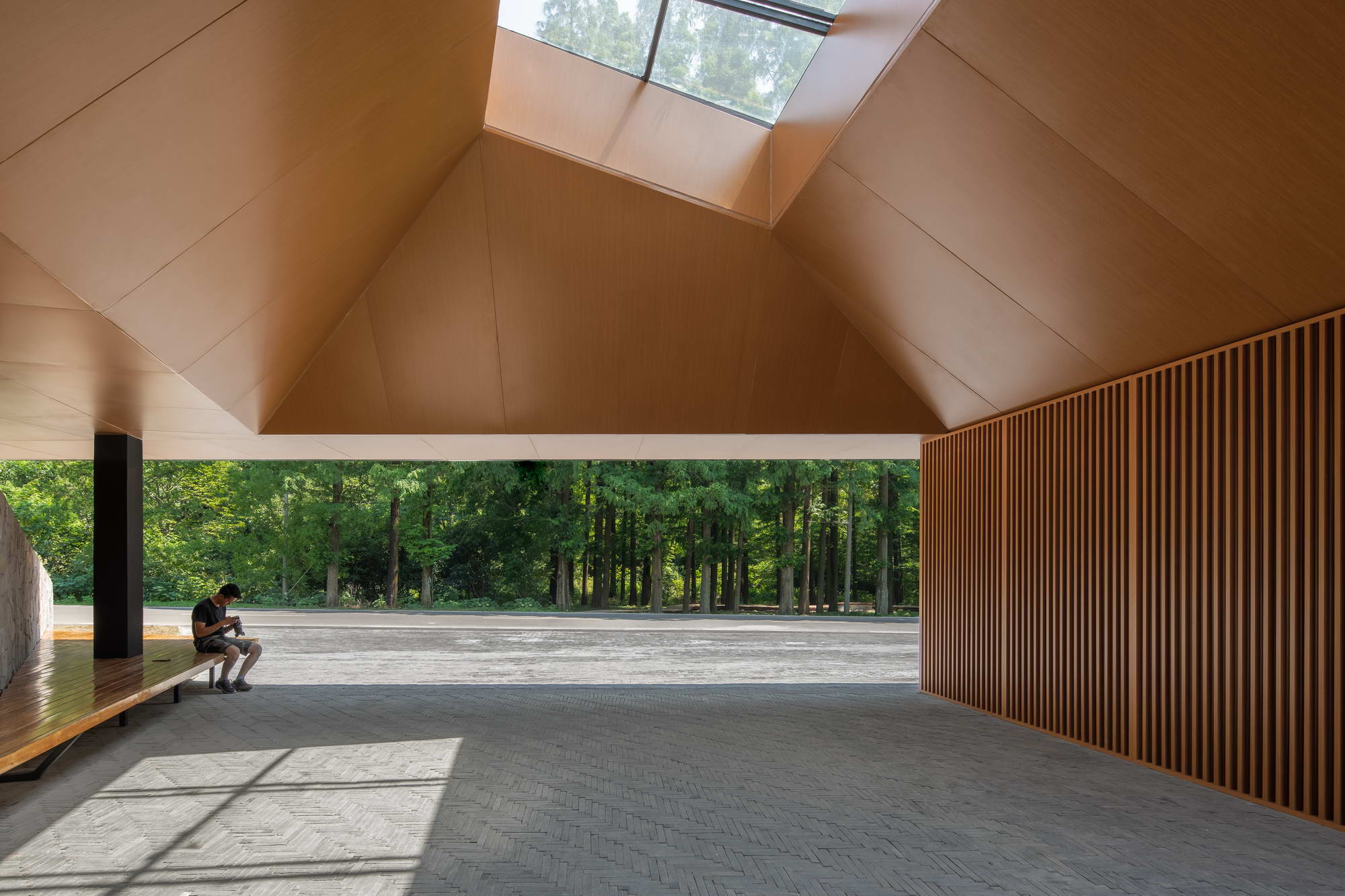
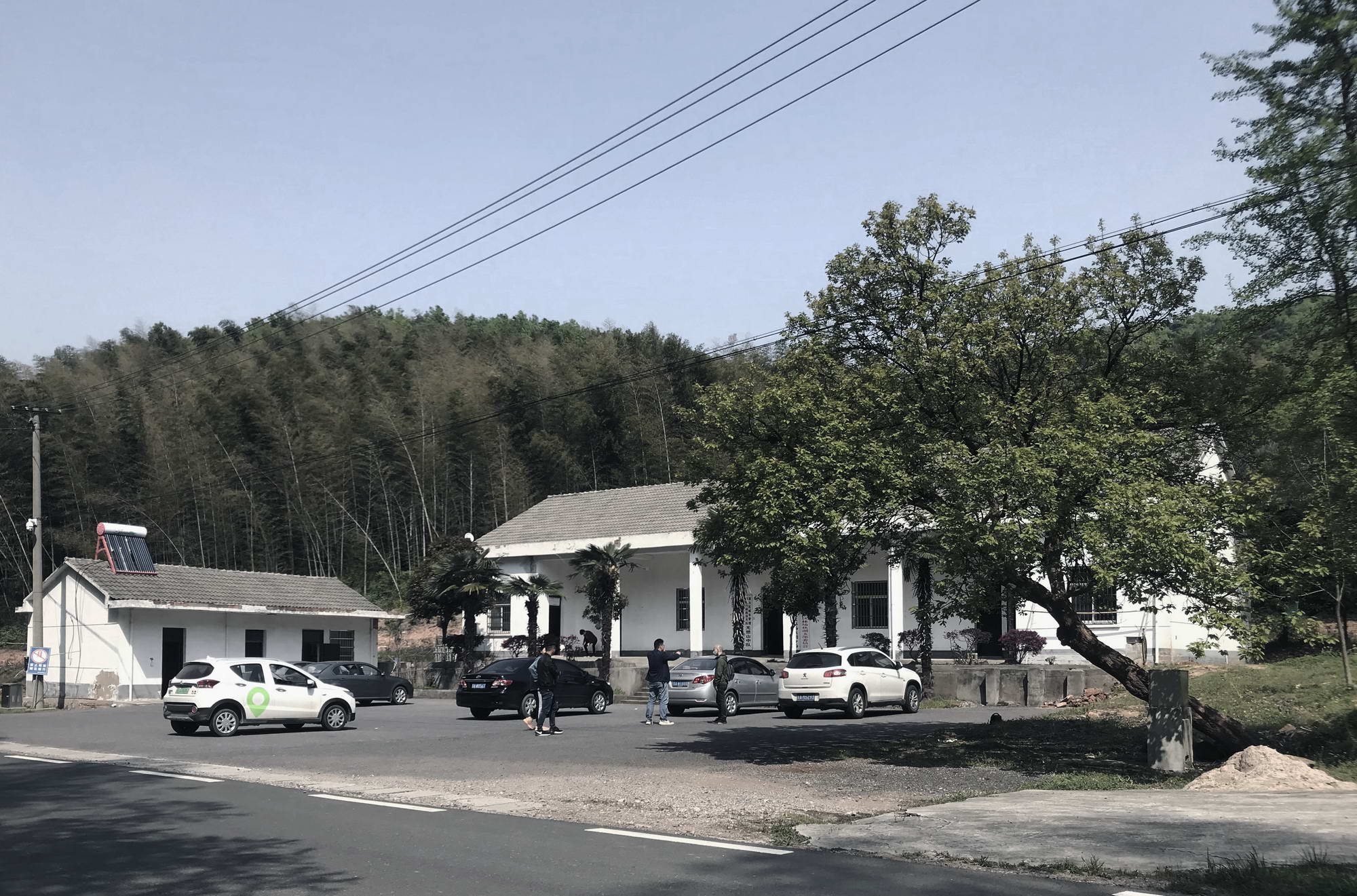
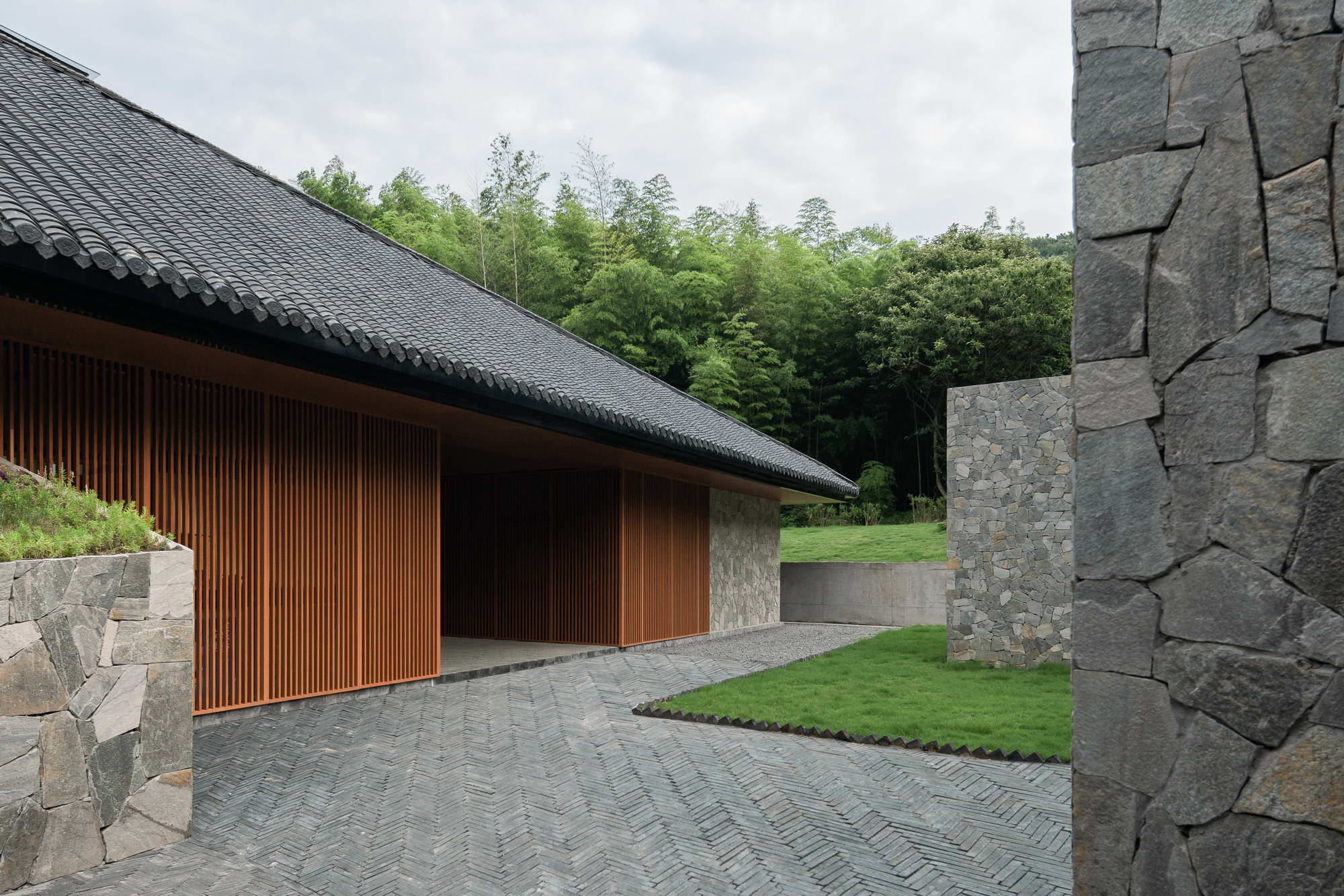
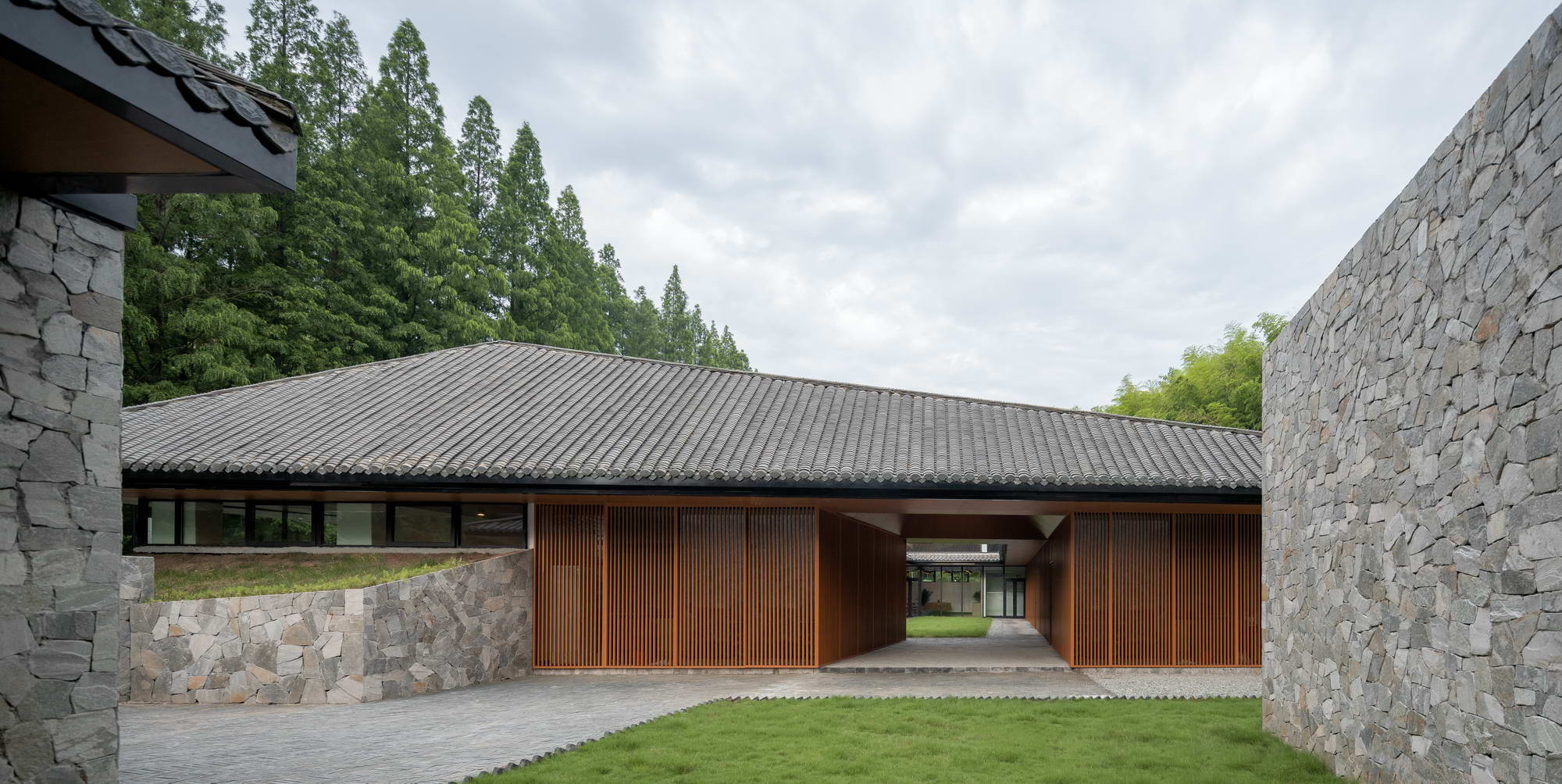
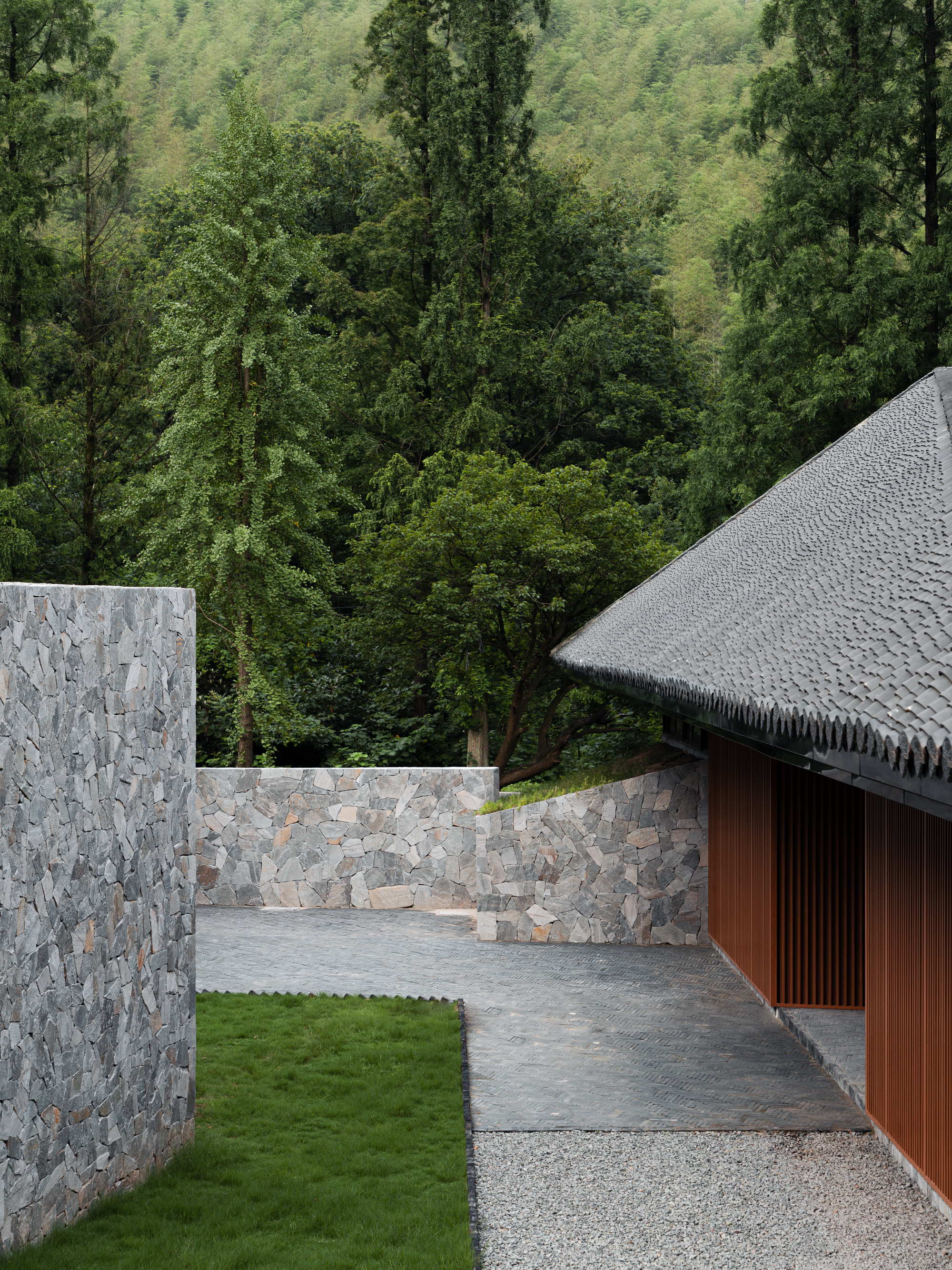
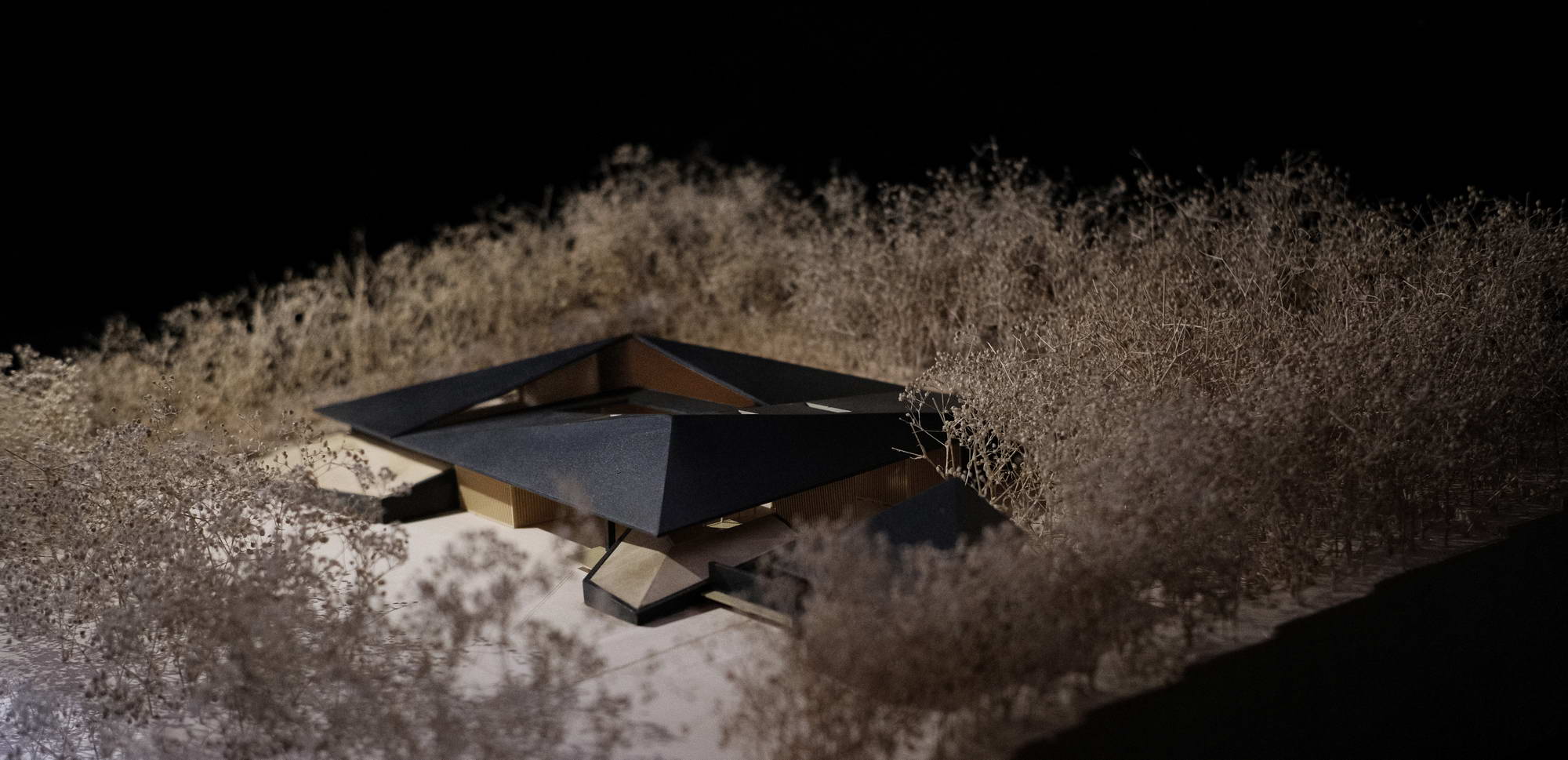
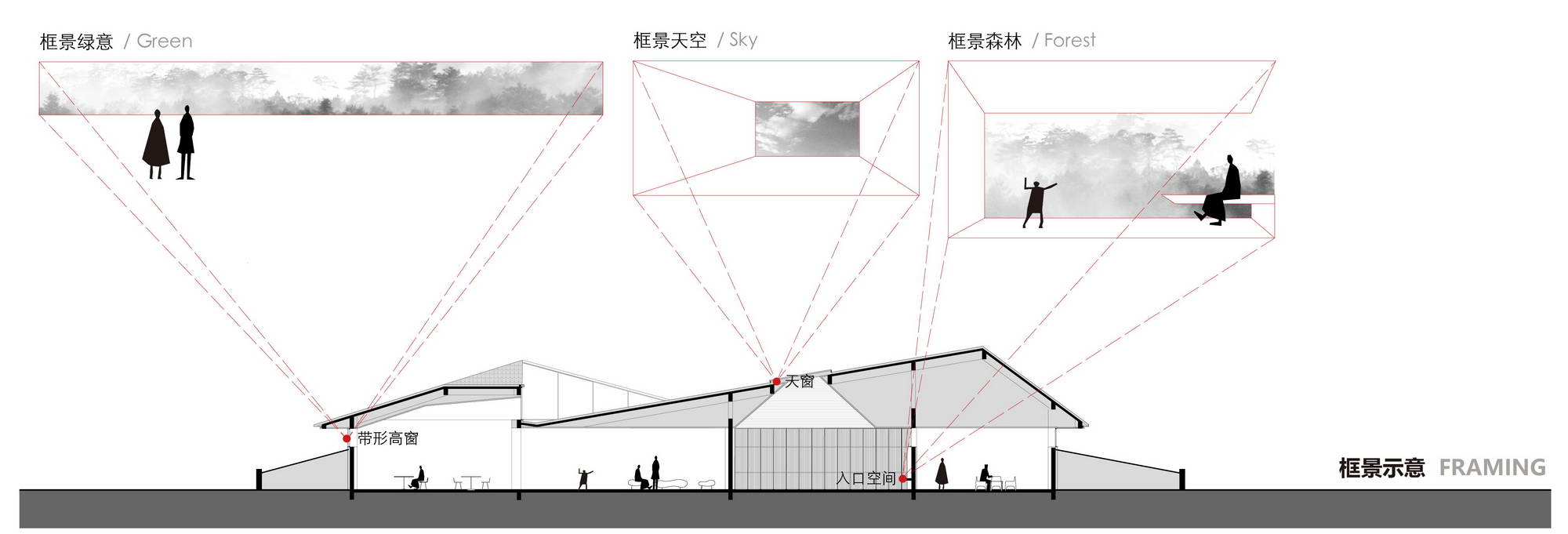
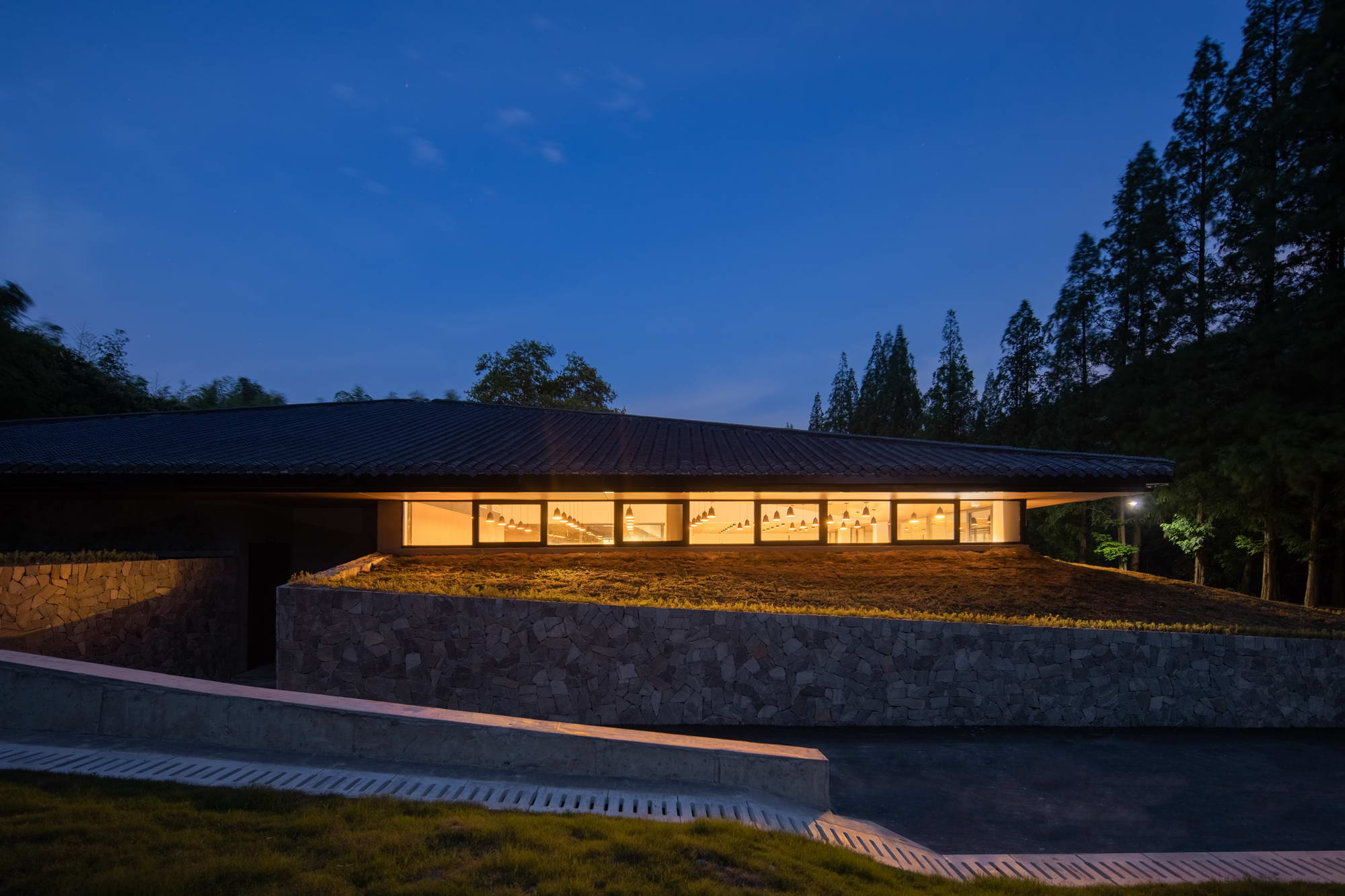
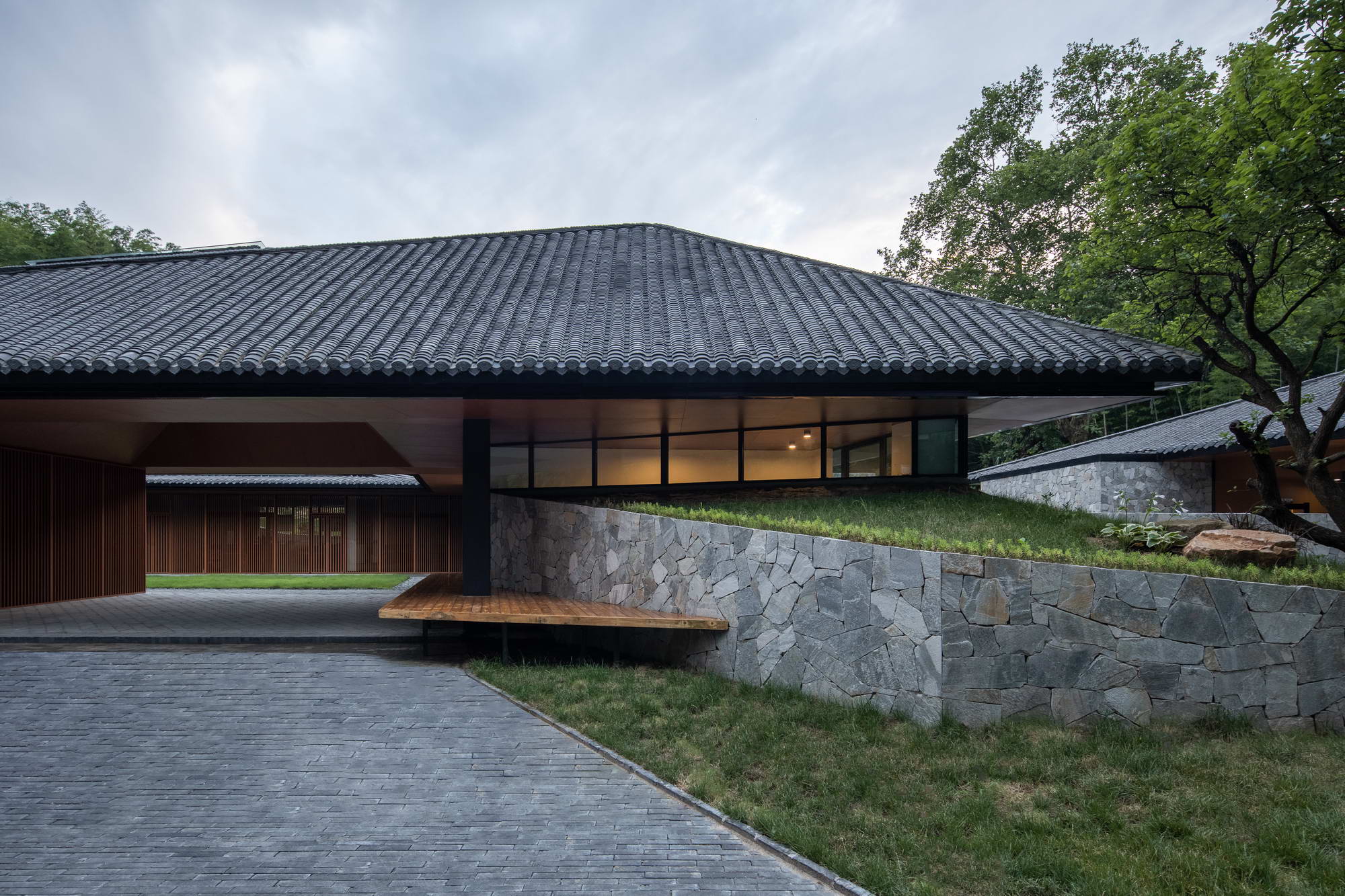
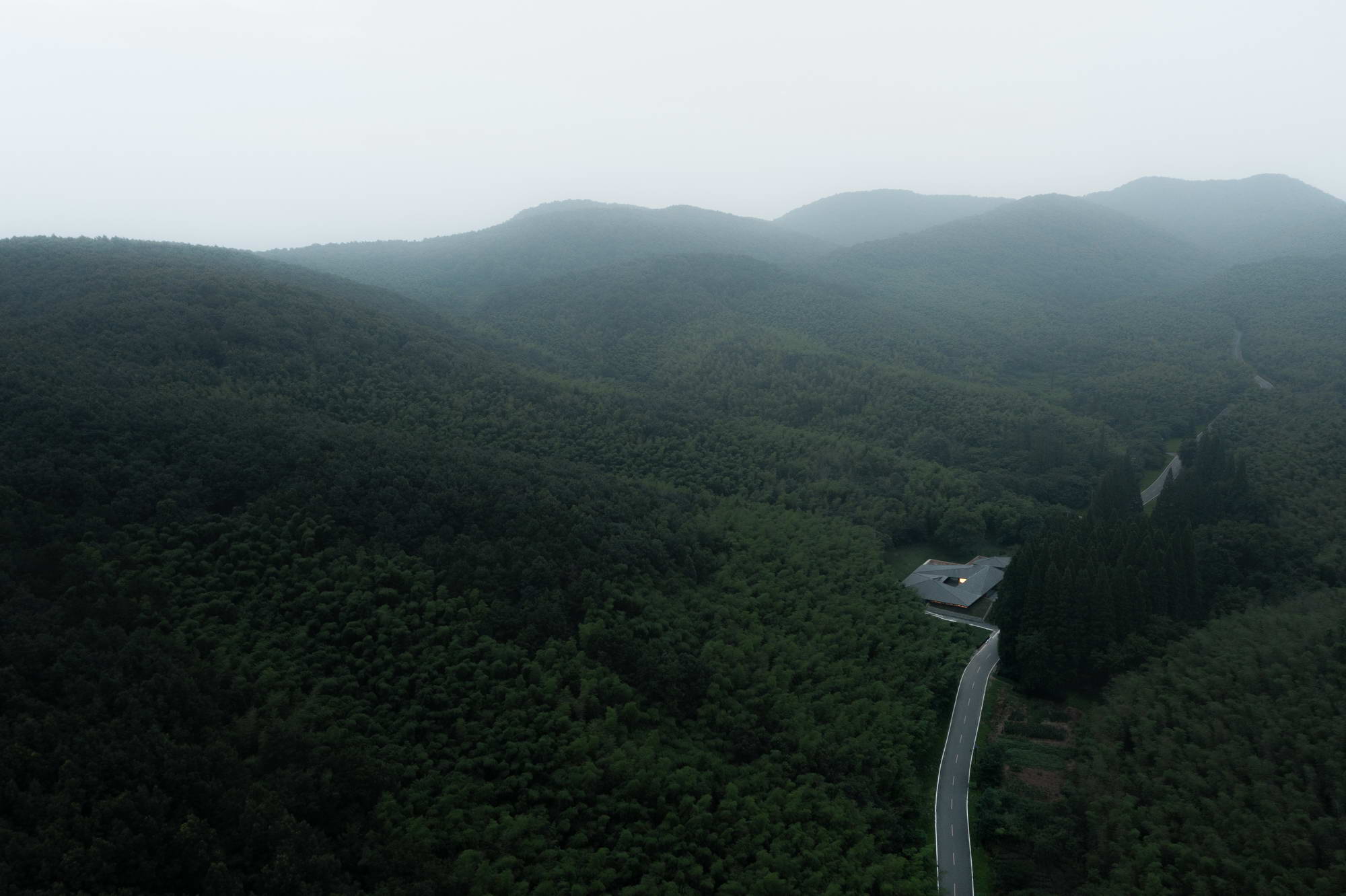
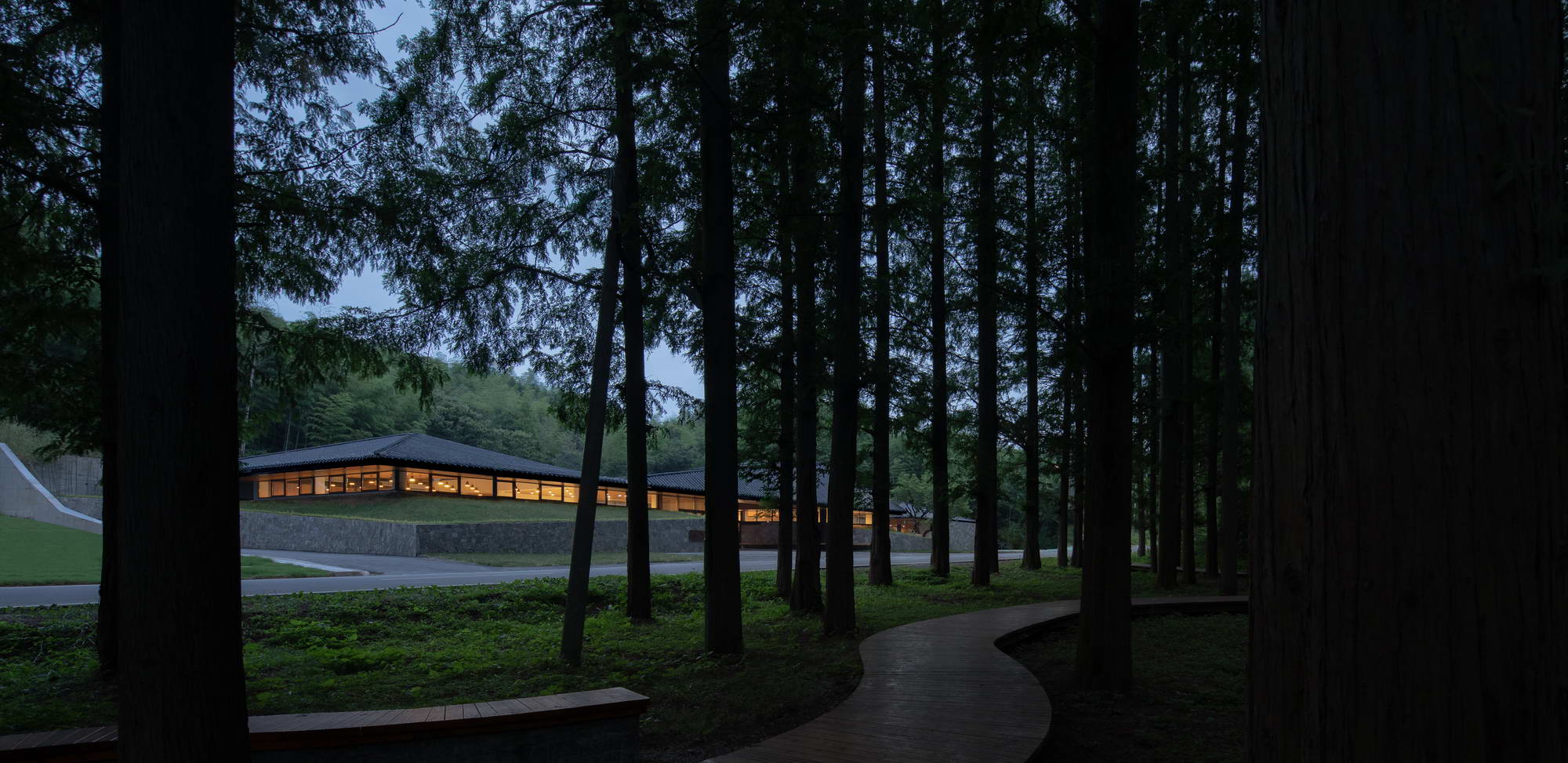
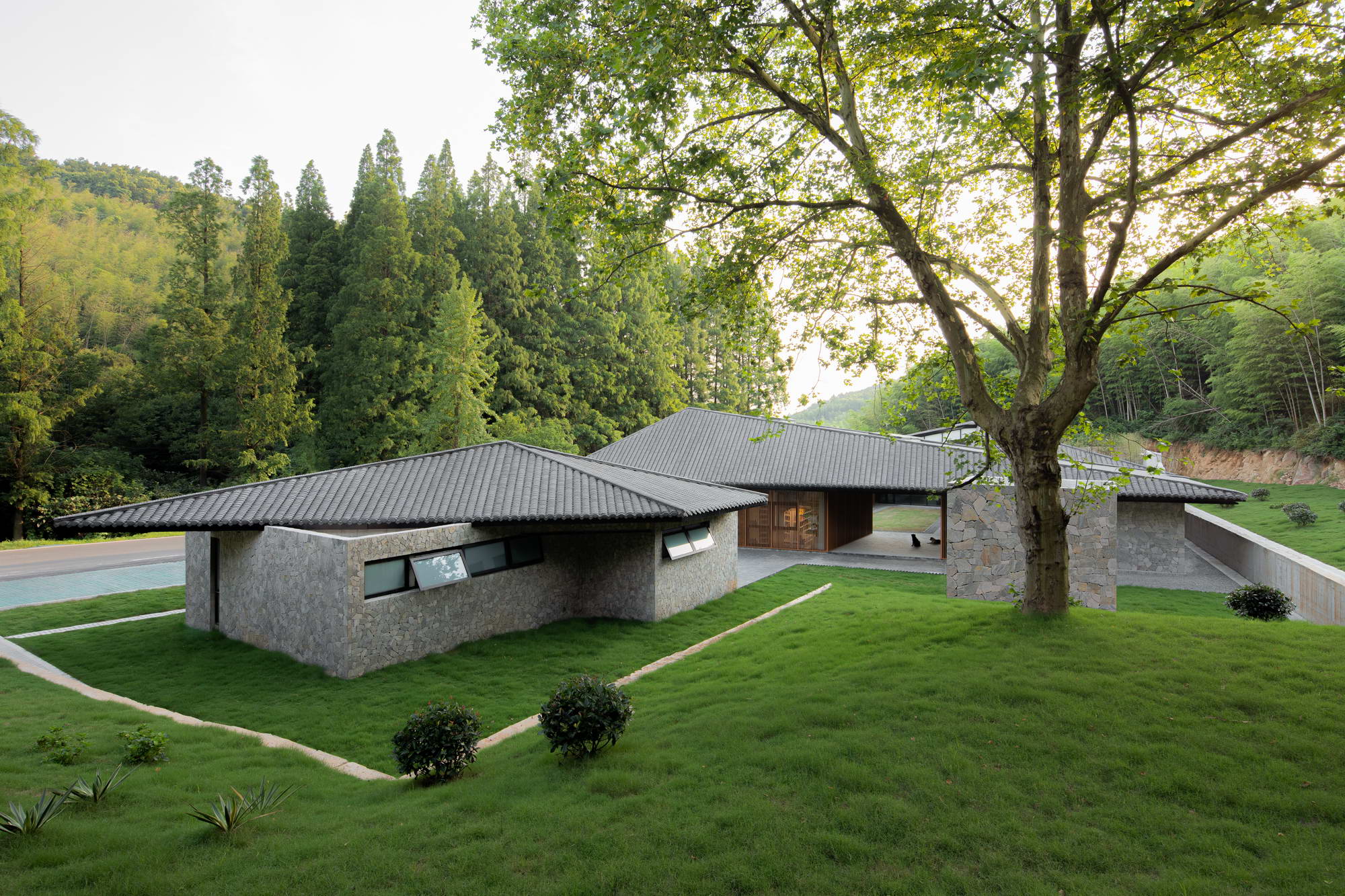
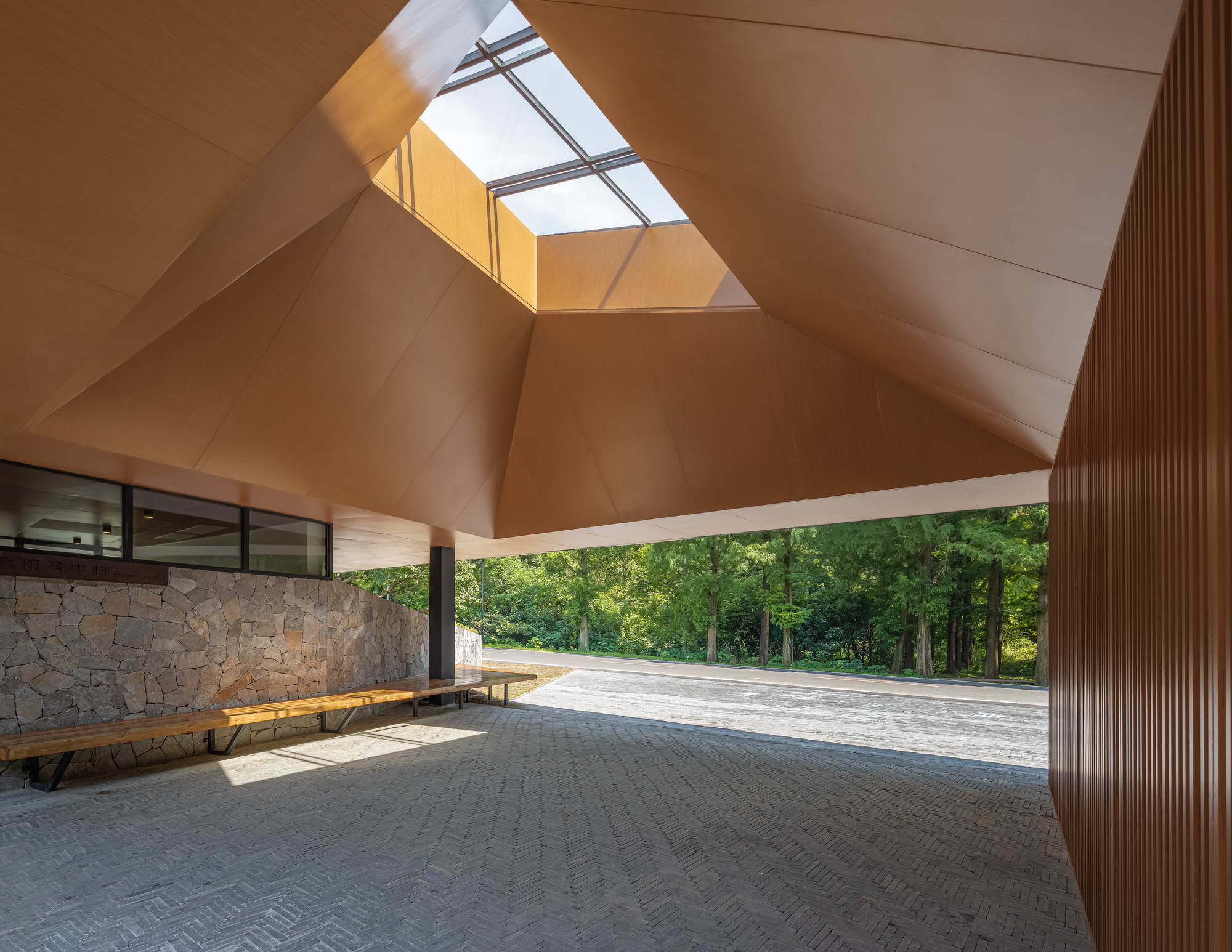
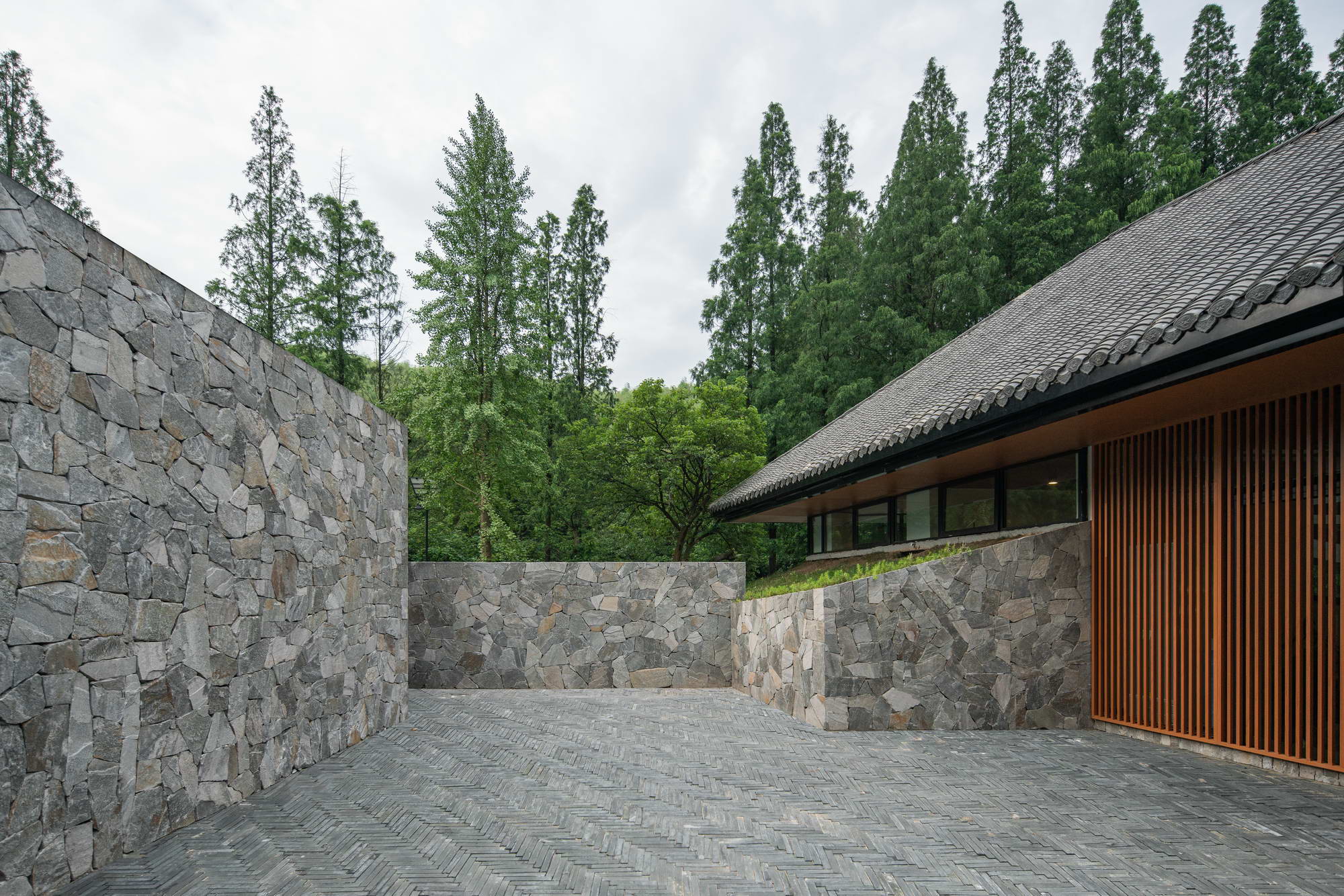
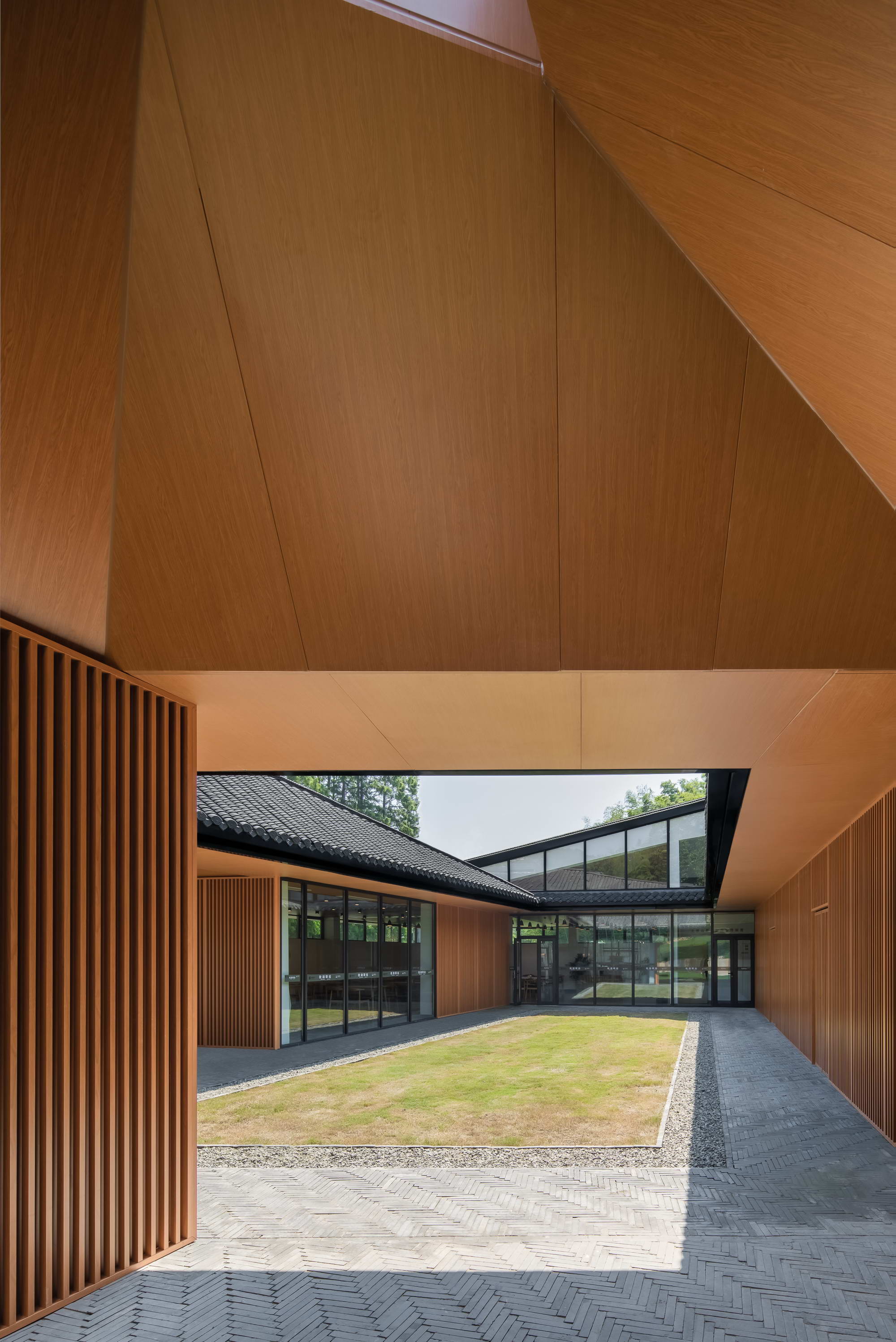
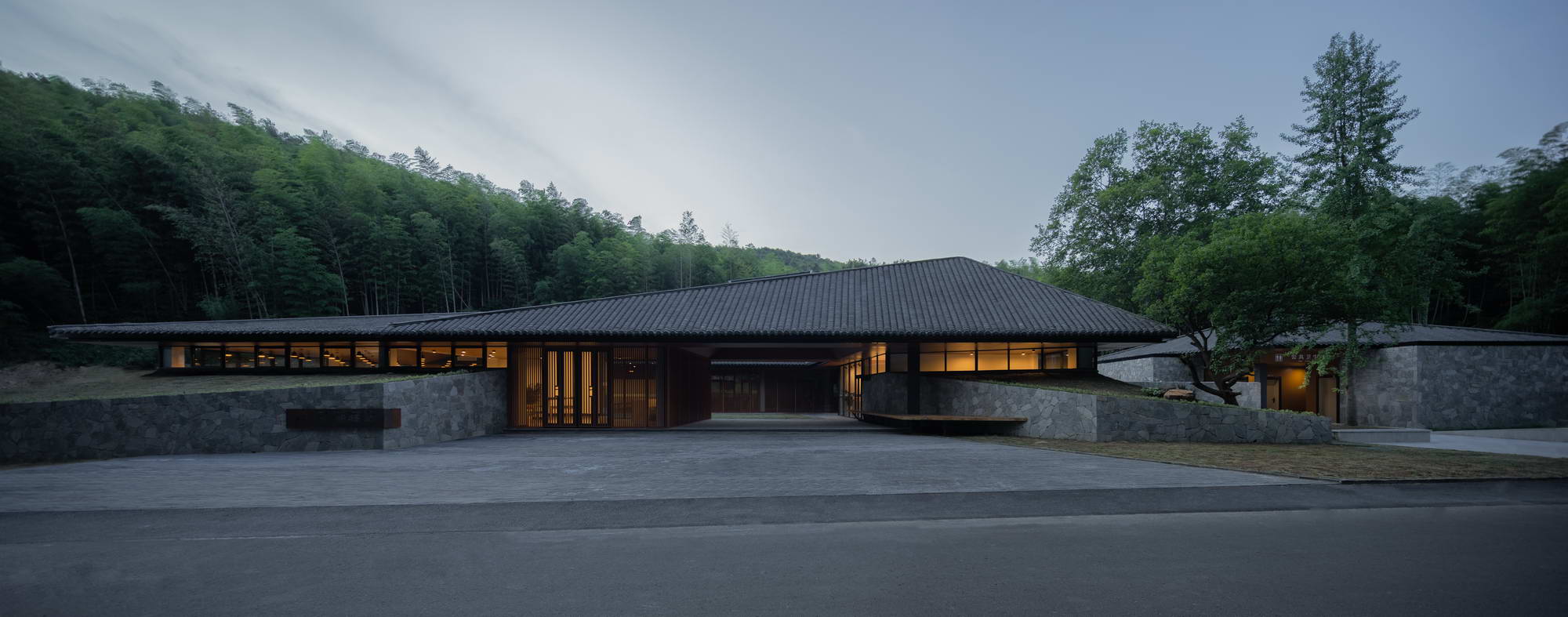
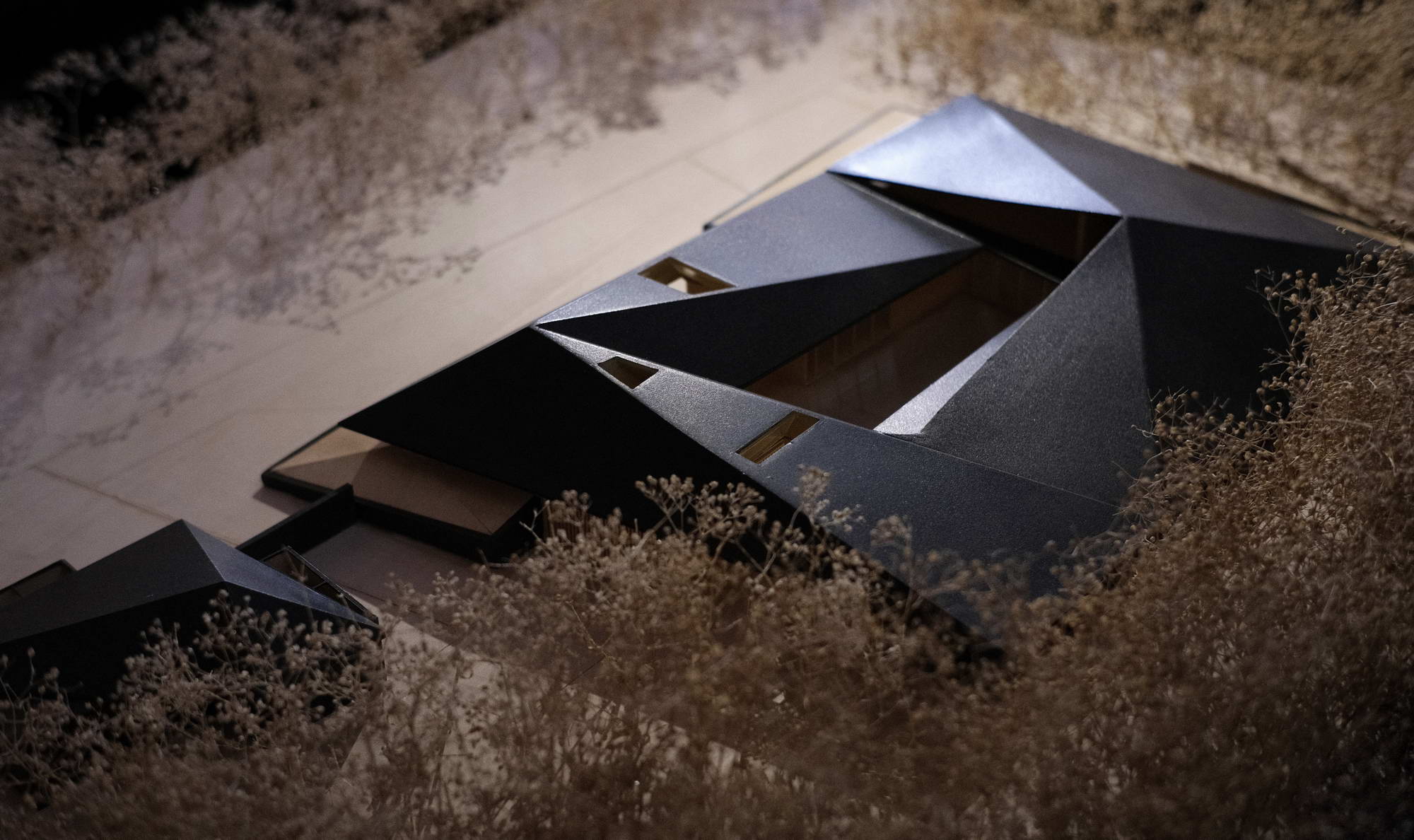
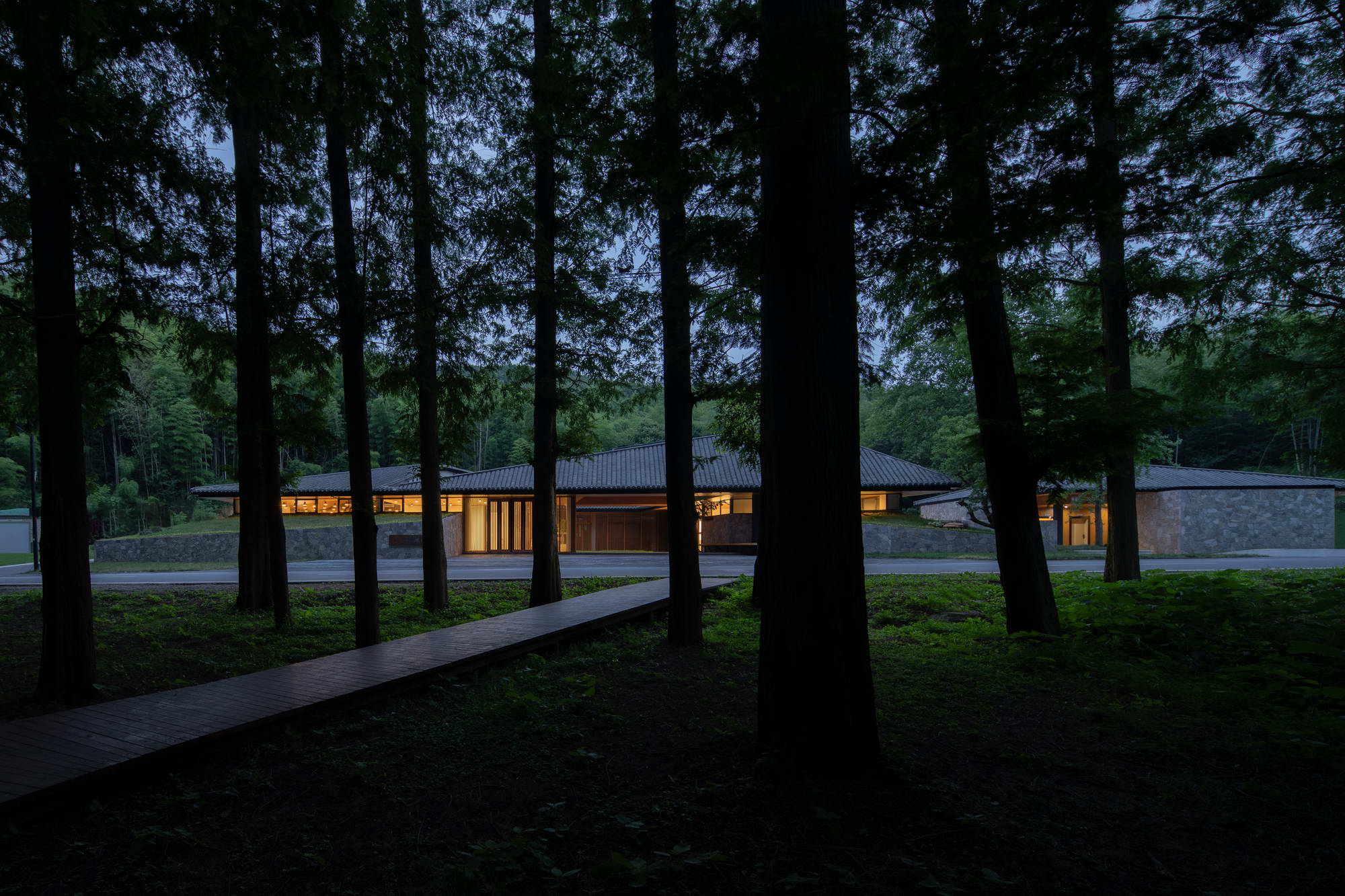
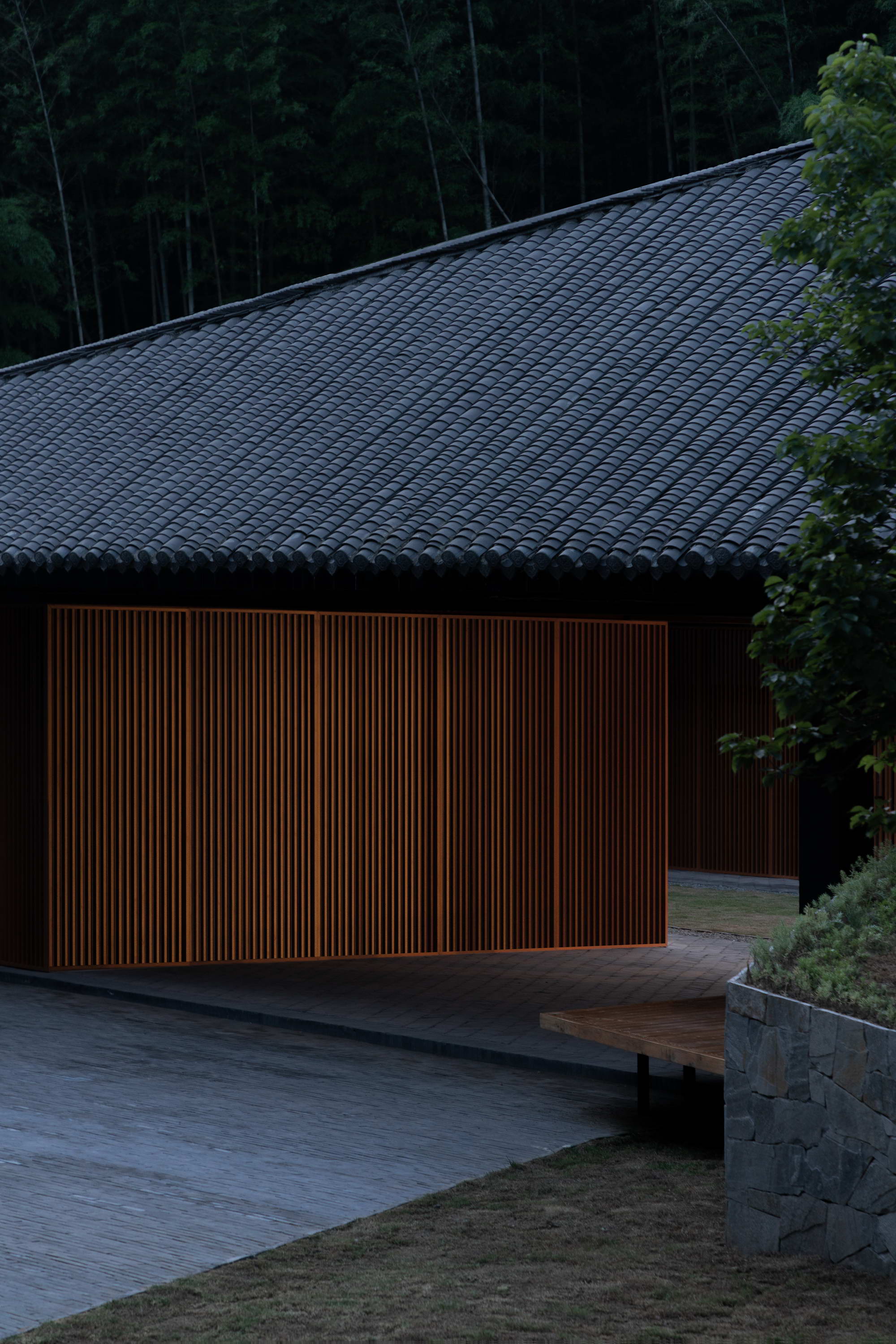
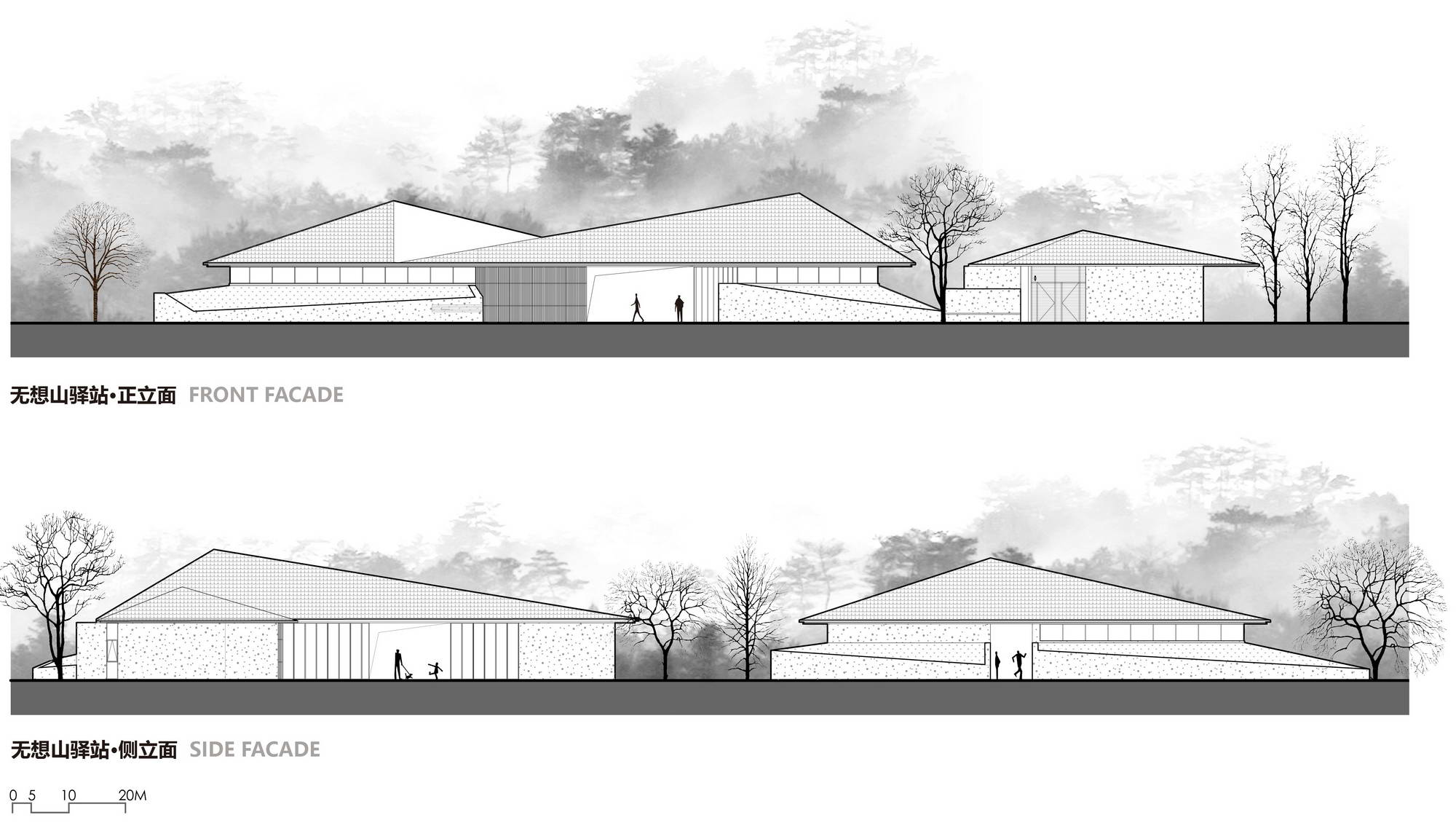
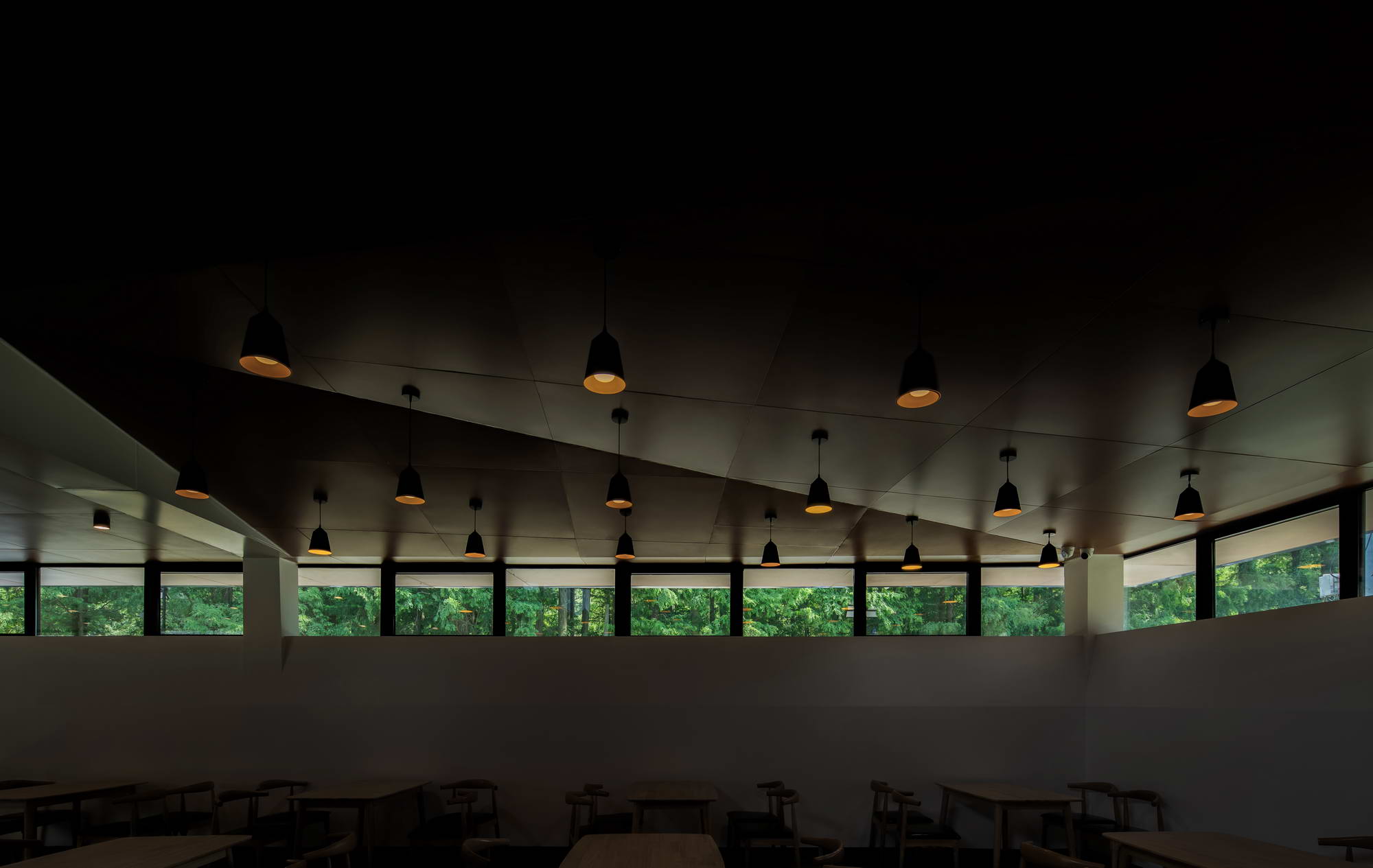
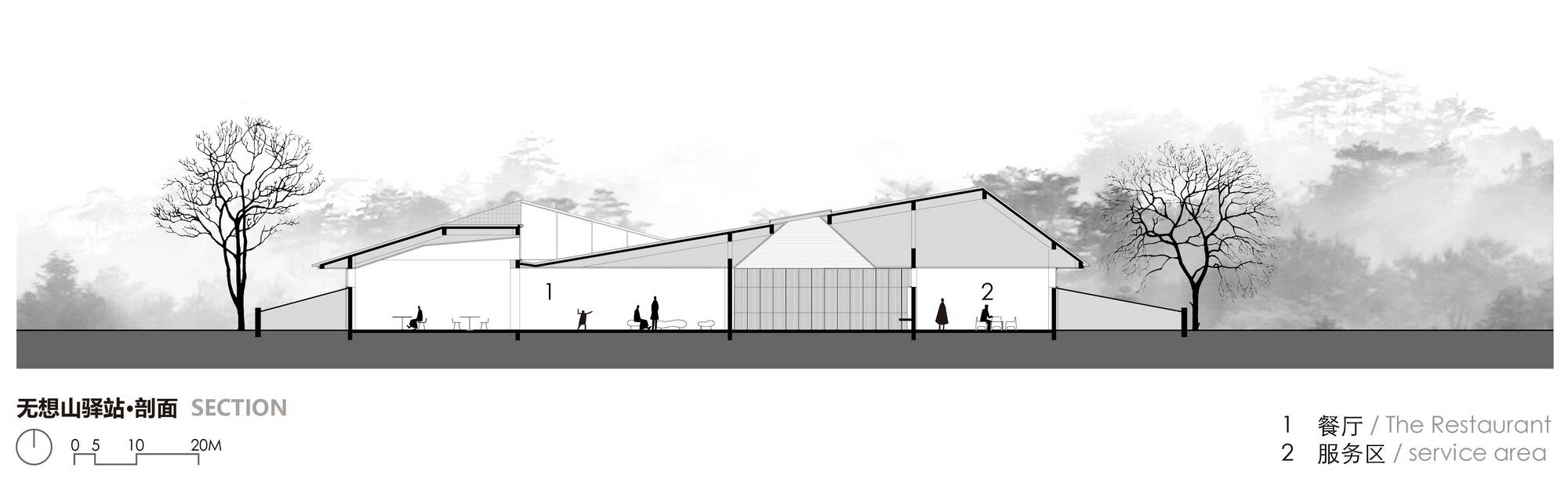
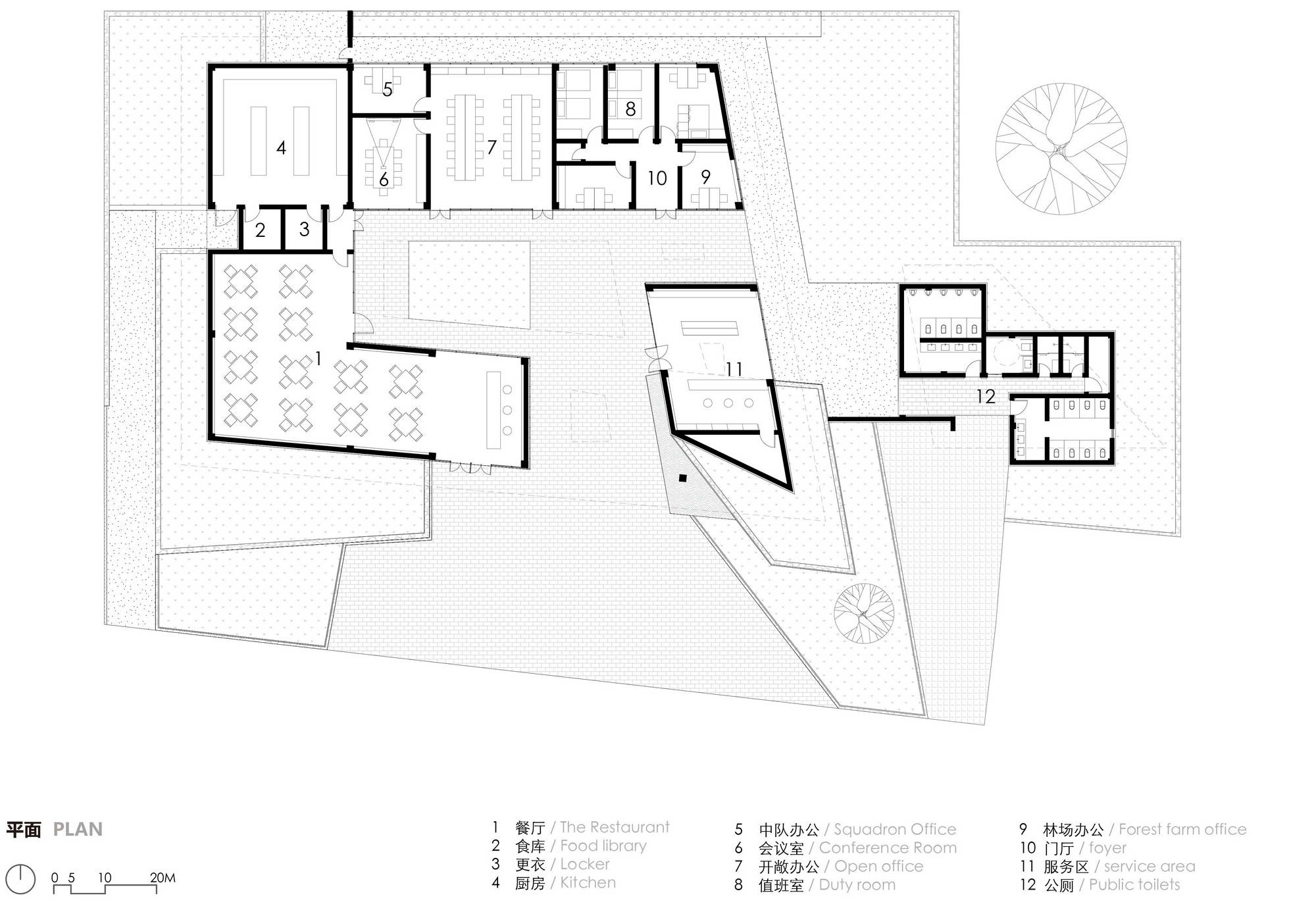
The project lies in Wuxiang Mountain National Forest Park, Lishui, Nanjing, on a lush site bordered by a mountain road and towering metasequoia forest on one side and bamboo-covered slopes on the other. To support scenic-area renewal, the former forestry station office is rebuilt and expanded with small retail, tourist information, and rest functions to become a node for park management and visitation. The owner requested a courtyard prototype. The design splits the work into two L-shaped volumes: an internal office side and an external visitor-service side, unified by two upward-canted L-shaped pitched roofs that interlock and twist into an eaves corridor in the inner courtyard, producing a layered roofscape evoking traditional mountain architecture. Landscape terraces that gradually rise and conceal walls, together with the folded roofs, retreat and offset with the back hill, compensating for the site's mountain deficiency and creating near, middle, and far depth so that building and environment merge. Under this treatment, the facade effectively disappears, and visitors perceive the building as terrain-adapted terraces and floating layered roofs. Skylights guide space: flat and trapezoidal openings introduce daylight in the entrance and public volumes to clarify circulation despite weak facades, while side skylights serve offices and dining rooms to admit light while reducing glare. Given tight schedule and uncertain construction craft, the building uses a common concrete frame, with the large void between roof and ceiling absorbing structural depth, tolerances, and equipment. For the visually critical roof and terraces, stacked materials of grey tile and rubble stone hide the more precise glass and window details in shadow, ensuring that even at limited construction quality, a fine accumulated material texture emerges. The completed building extends space and weakens mass, while gaps between eaves and terraces limit the field of view so that users focus on natural greenery rather than the road, standing as a station of traditional atmosphere and contemporary experience woven into the forest.




 Editor's Pick
 Latest Design
 Best Idea
 Hottest of Week