Text description provided by the architects
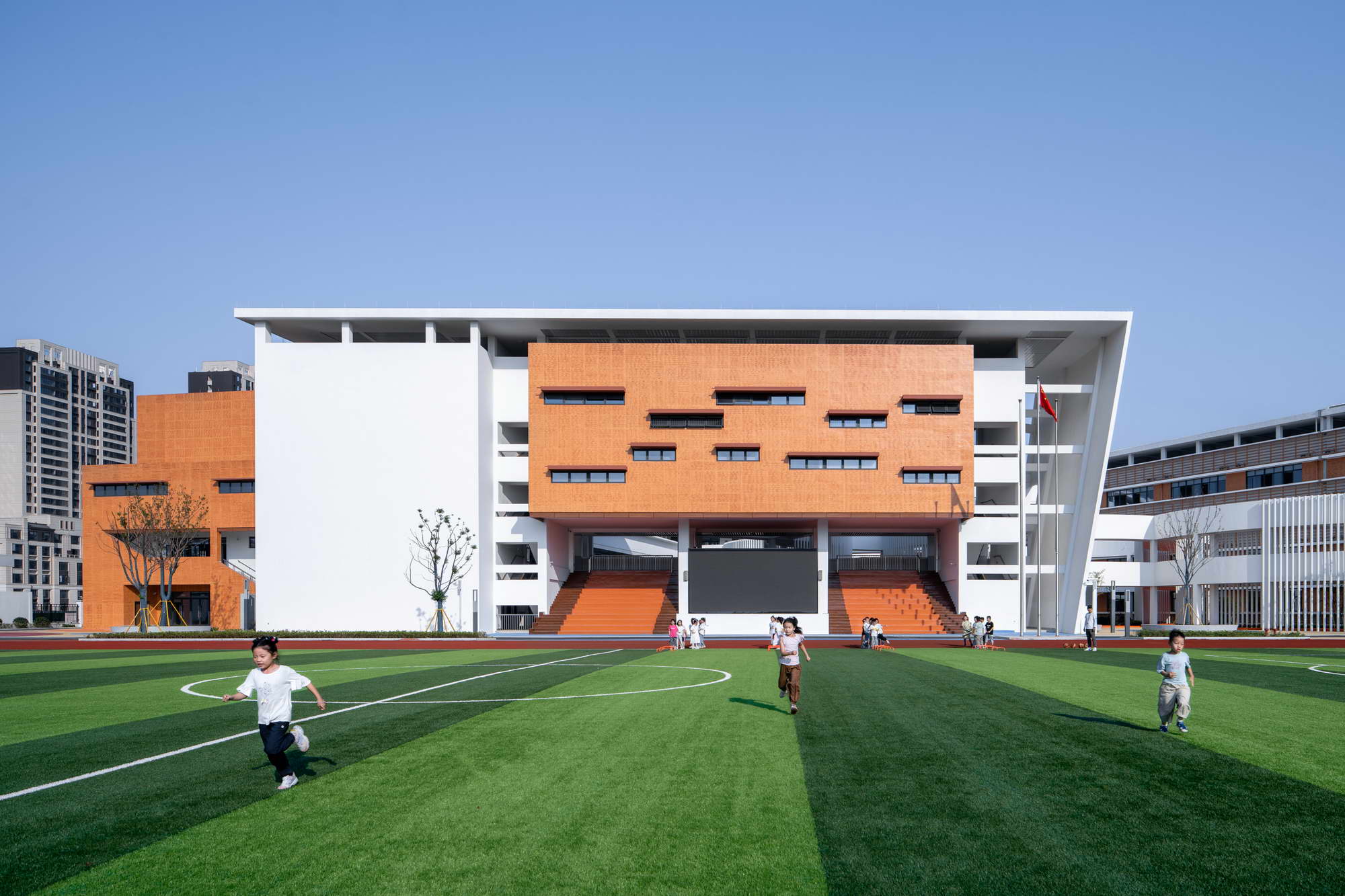
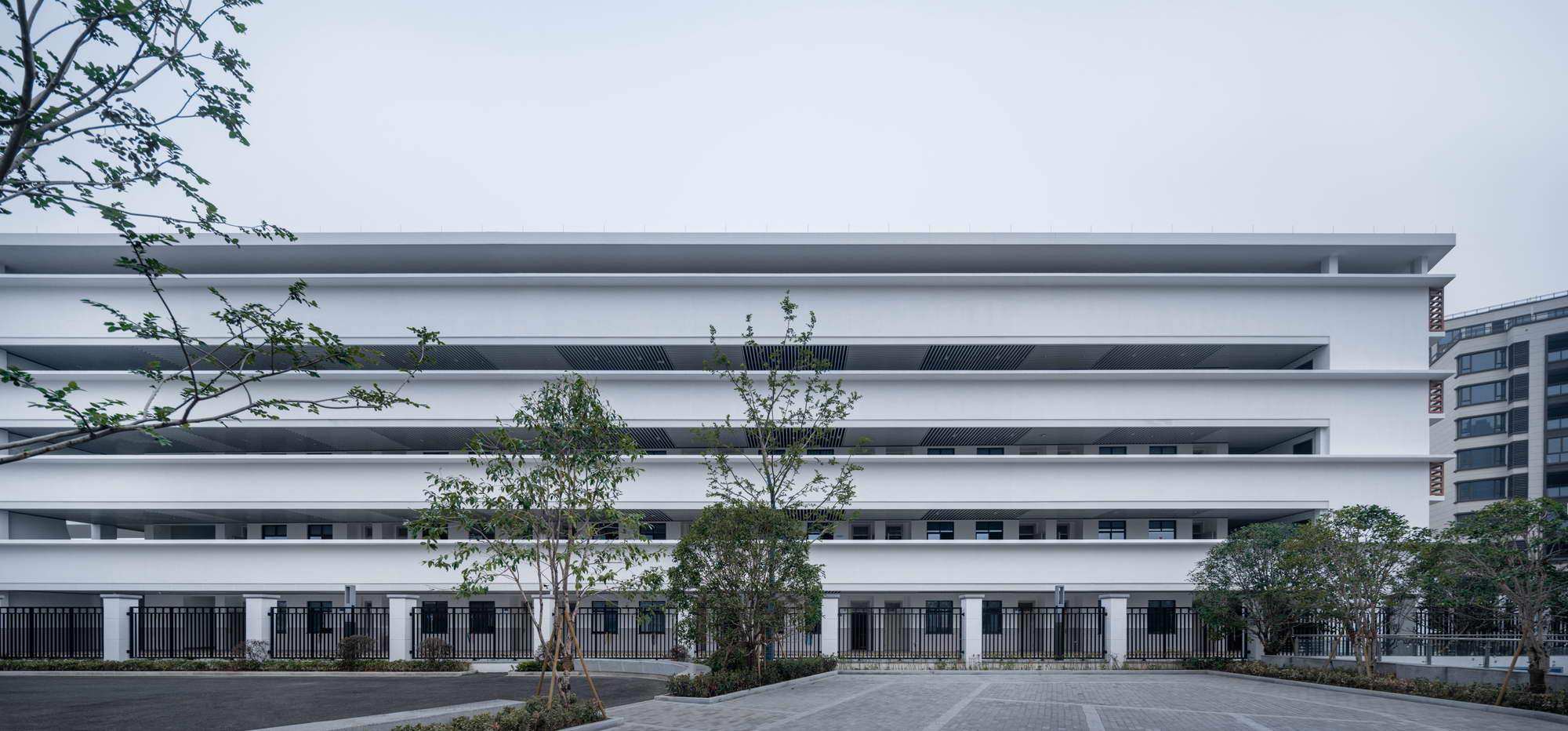
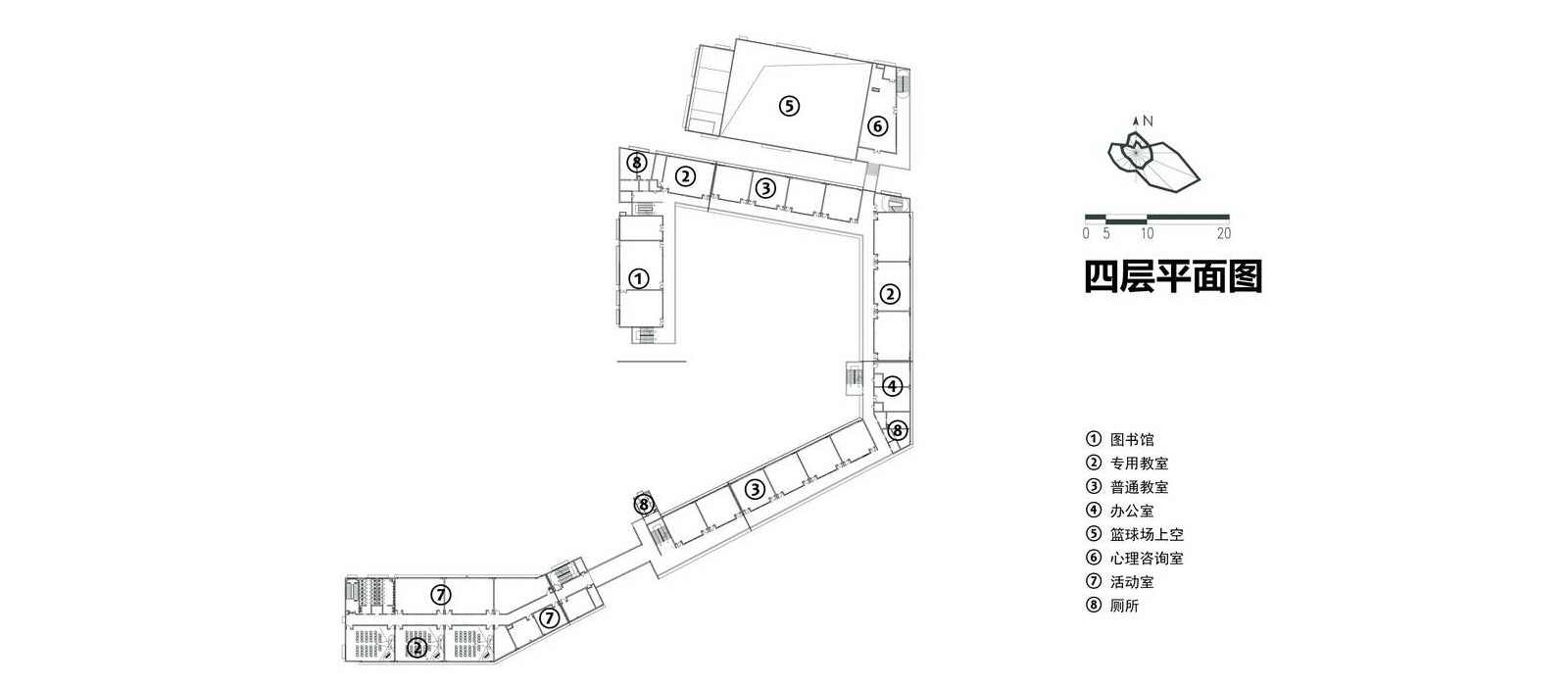
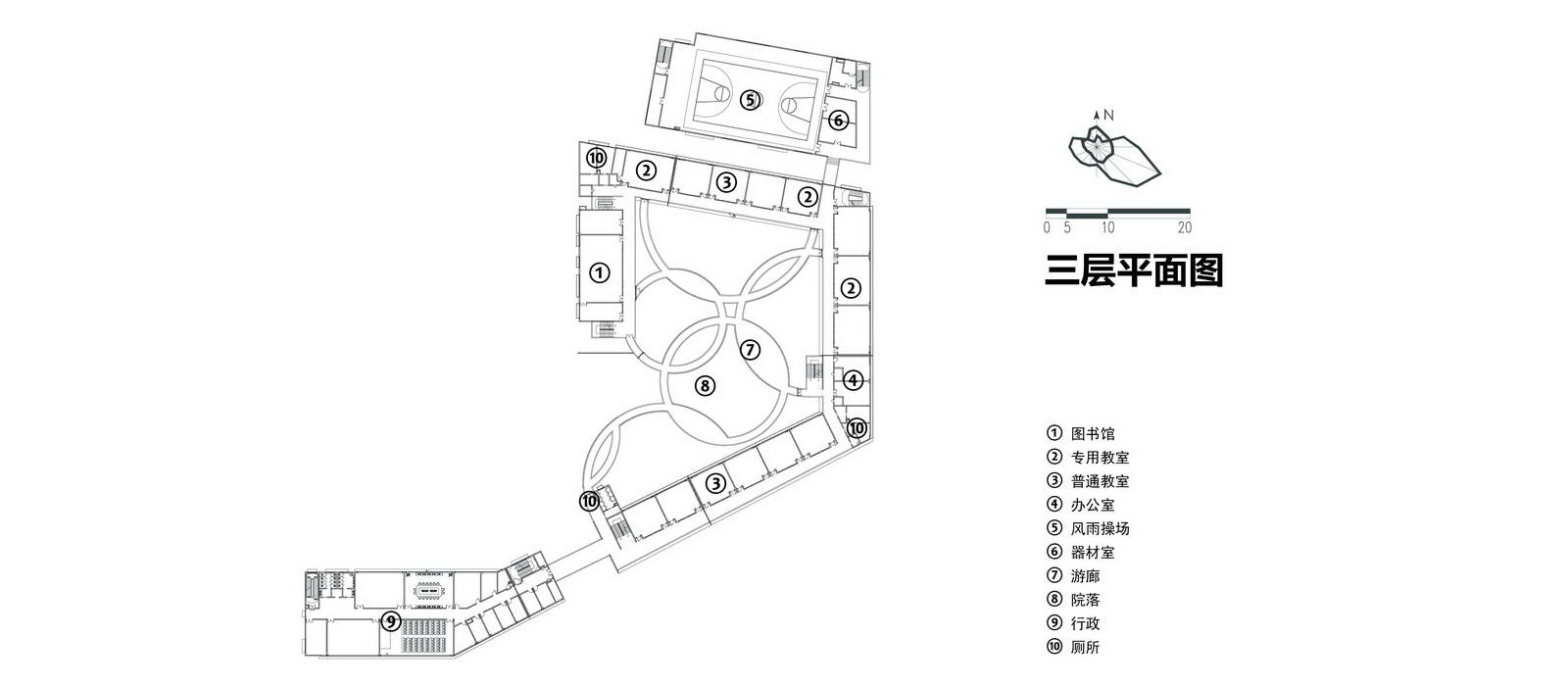
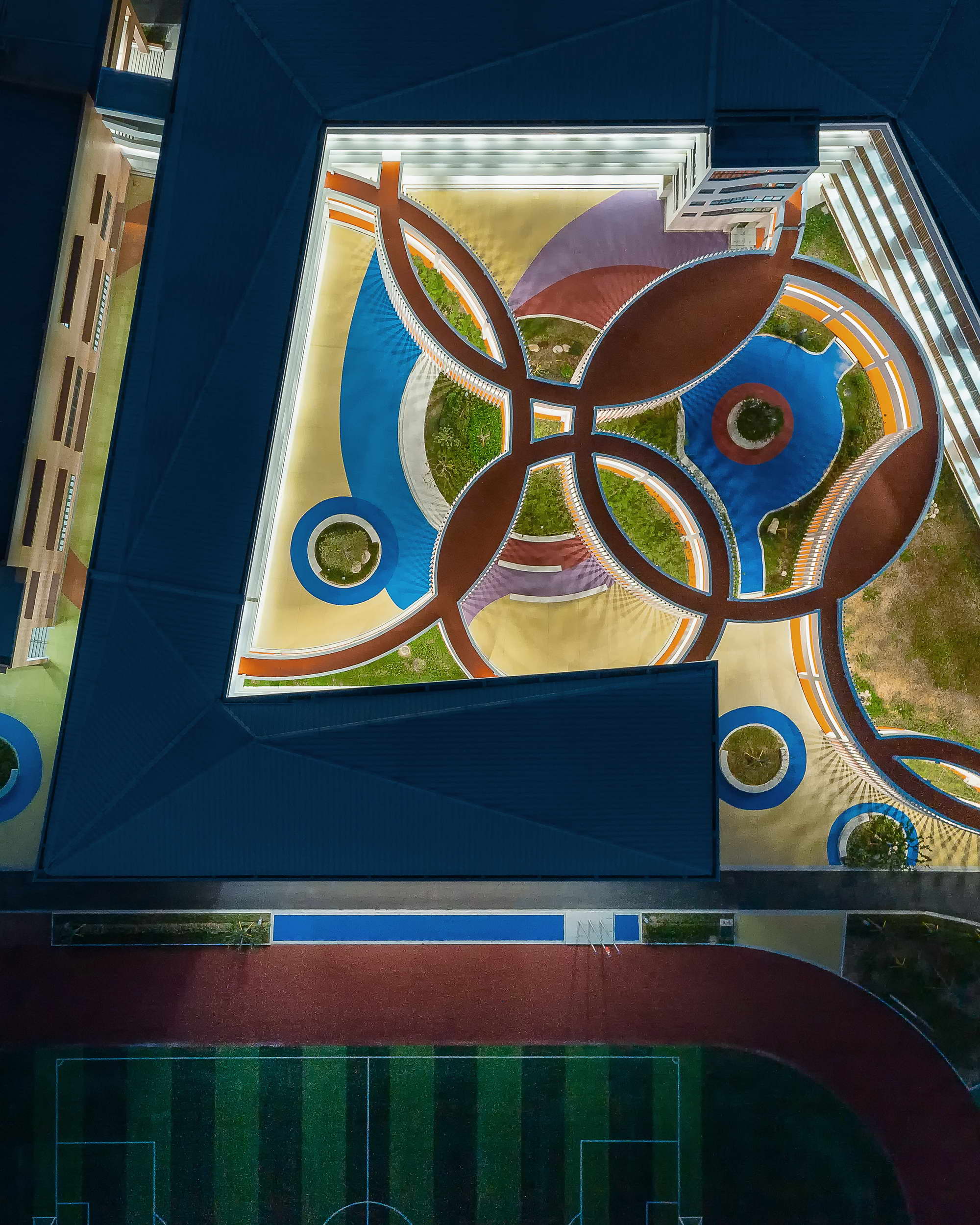
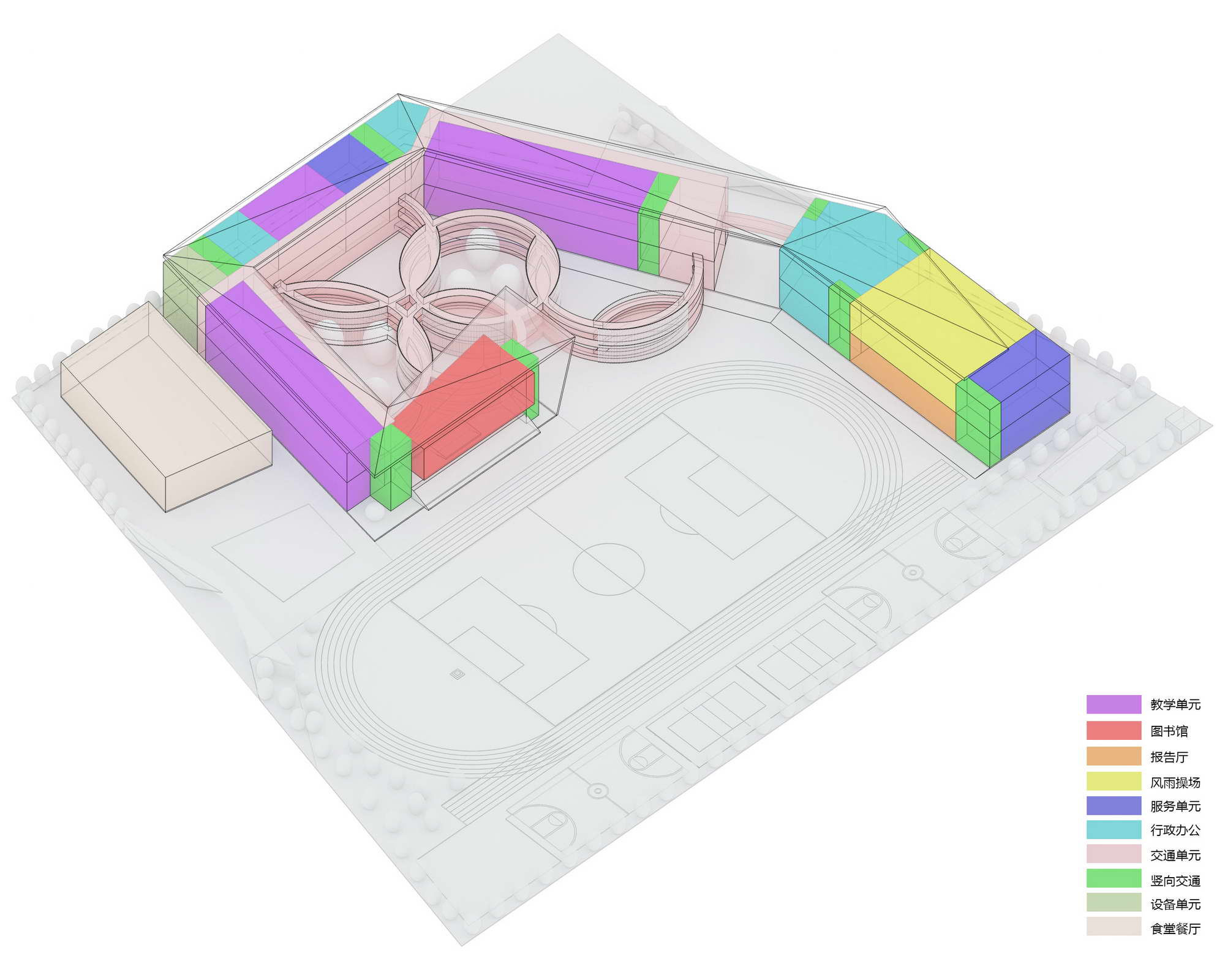
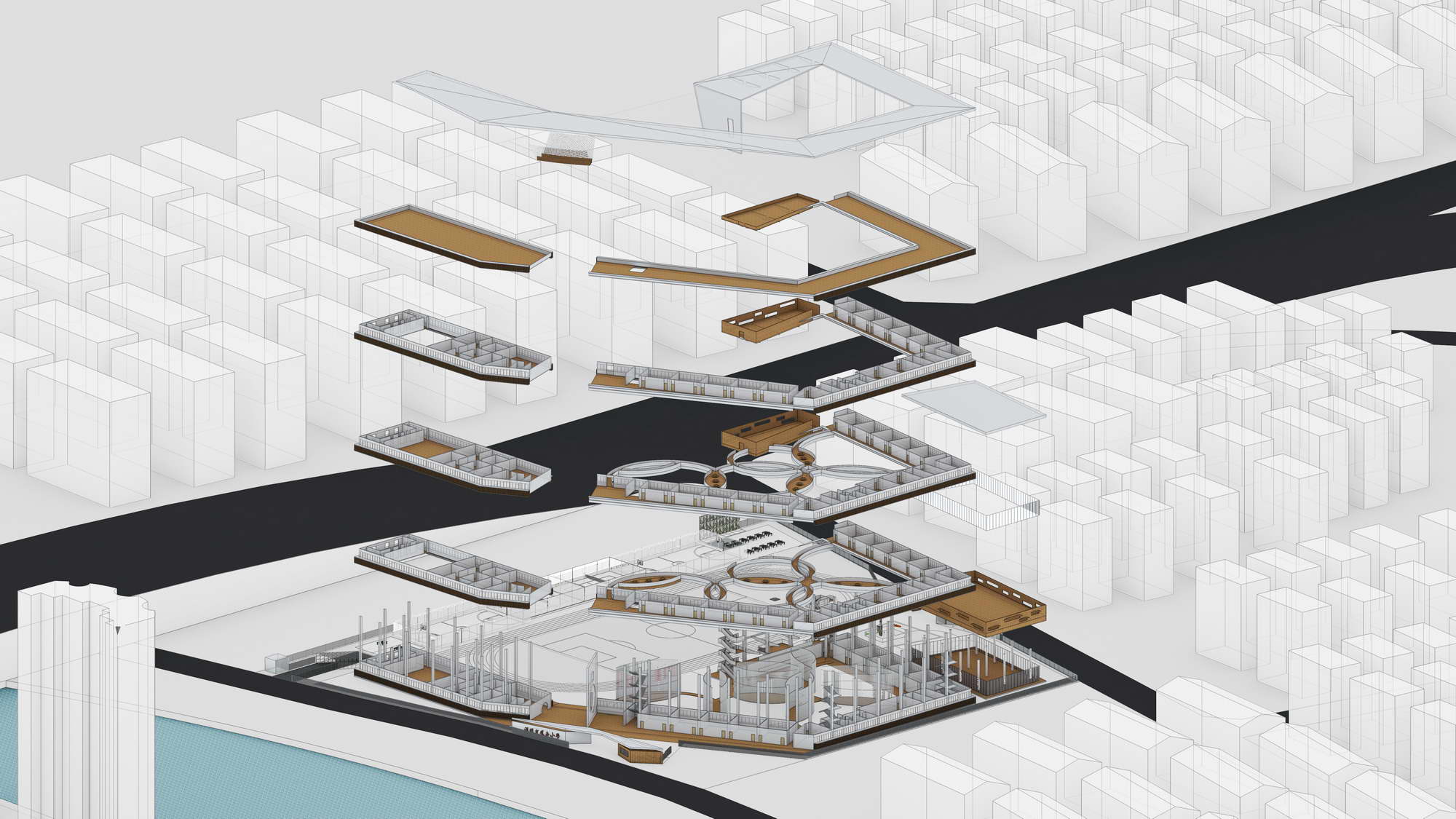
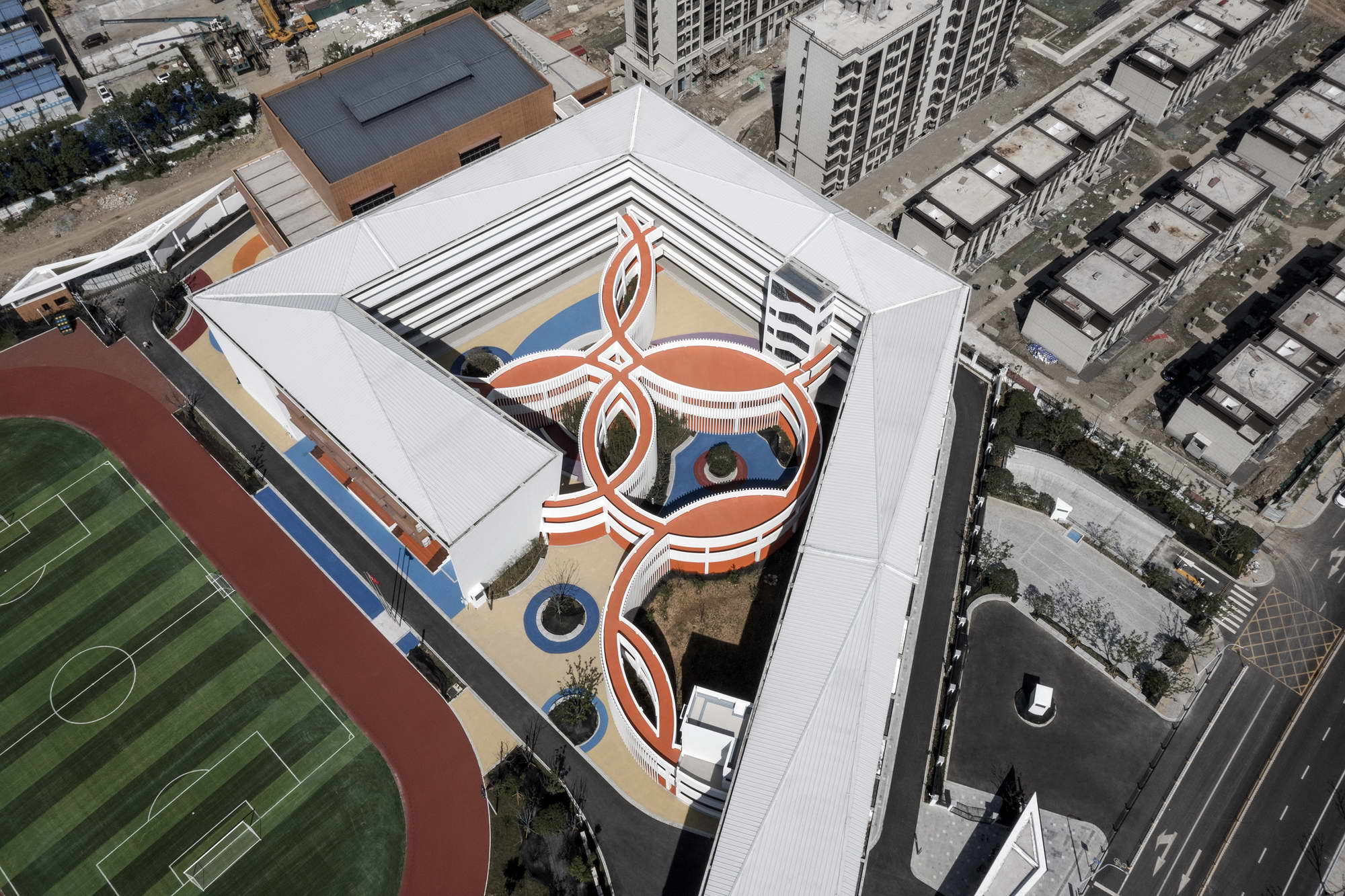
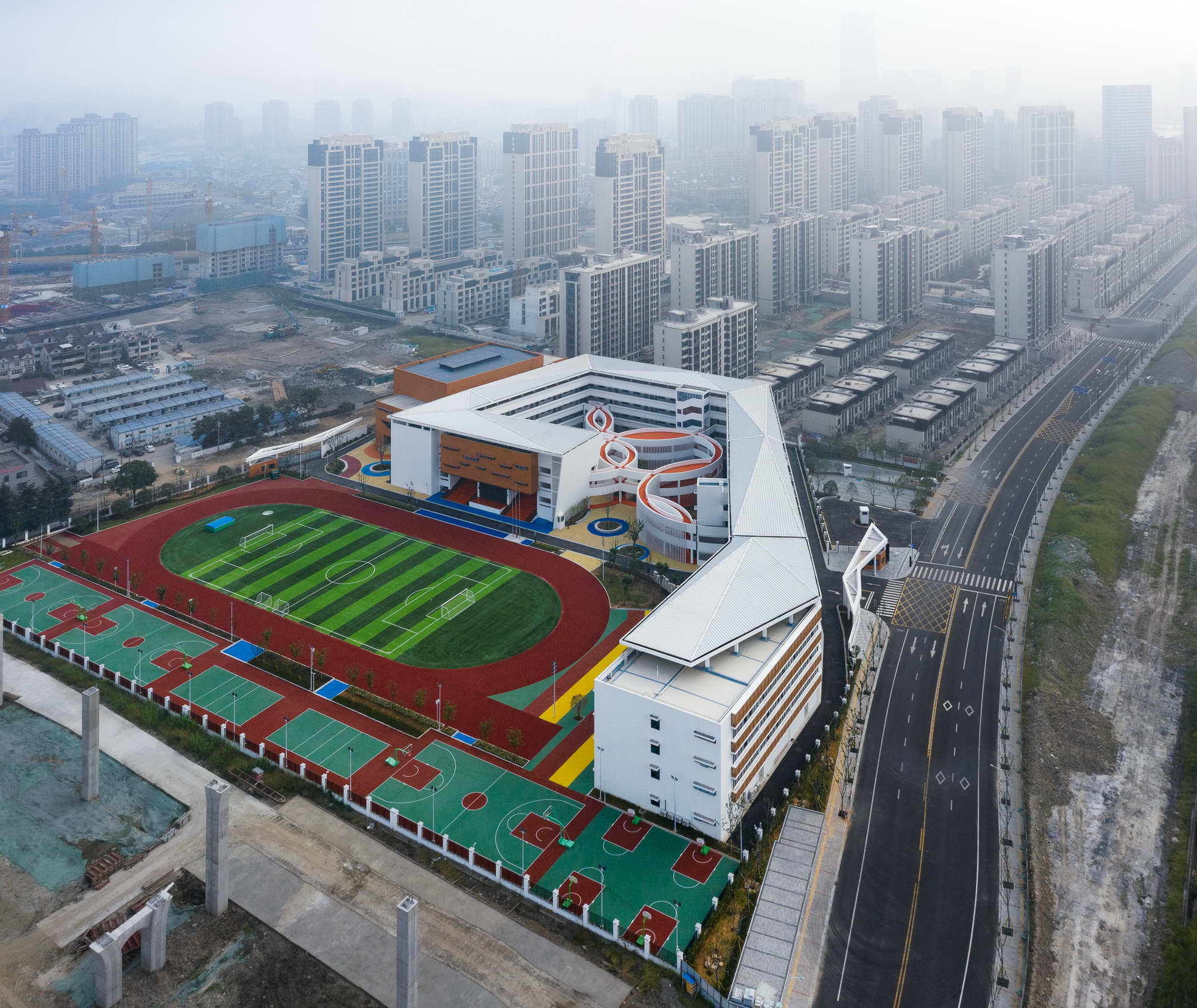
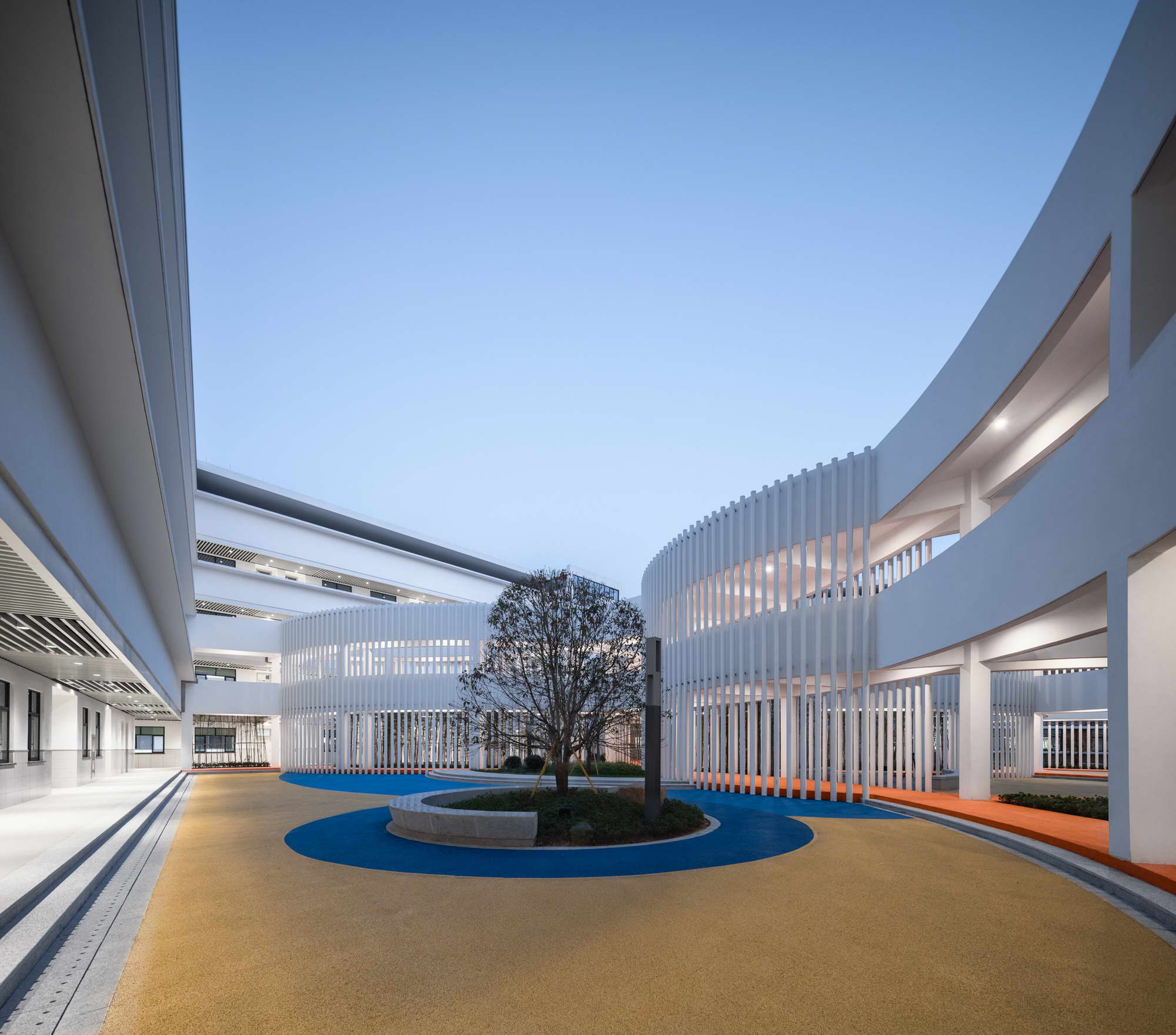
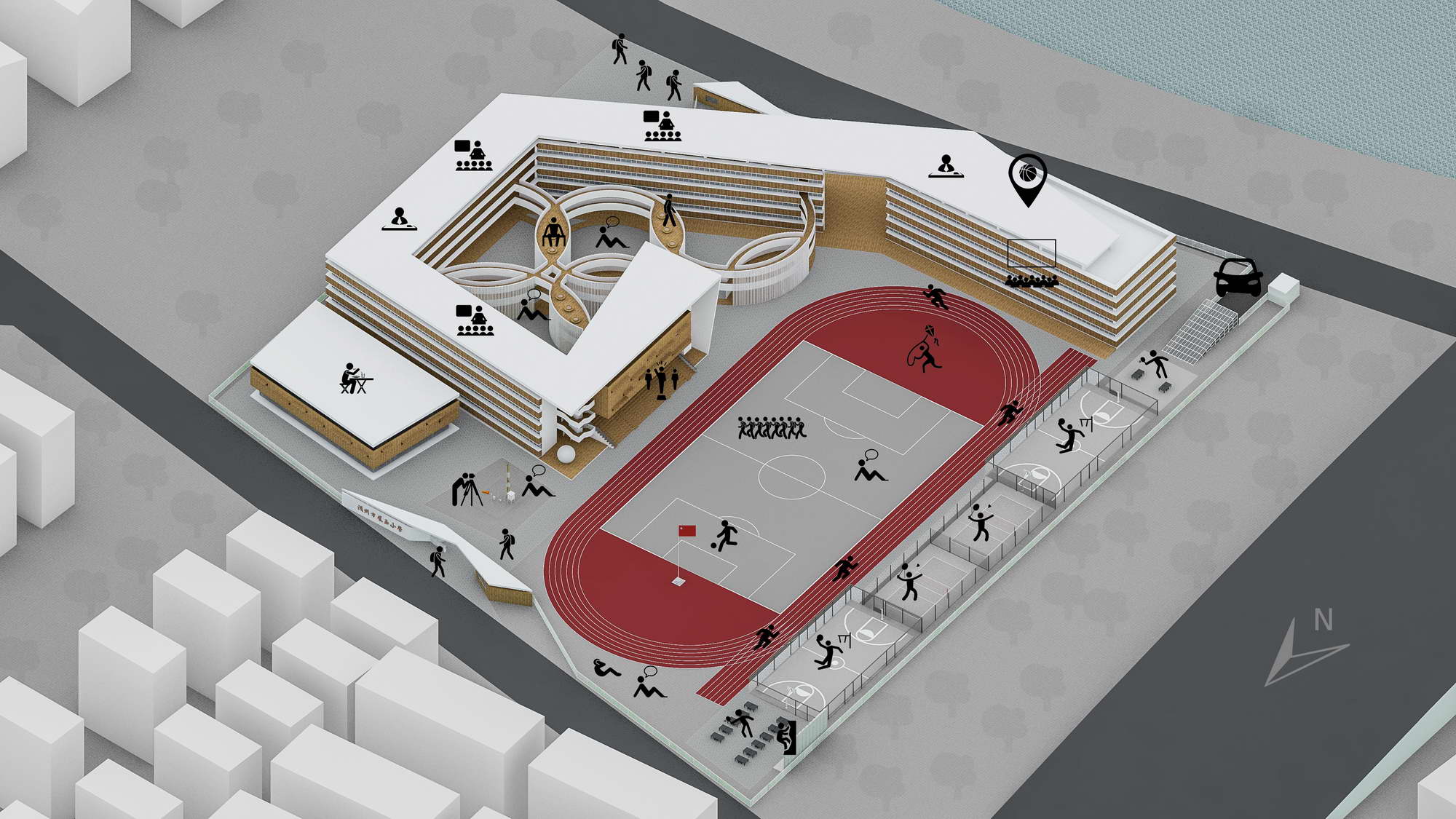
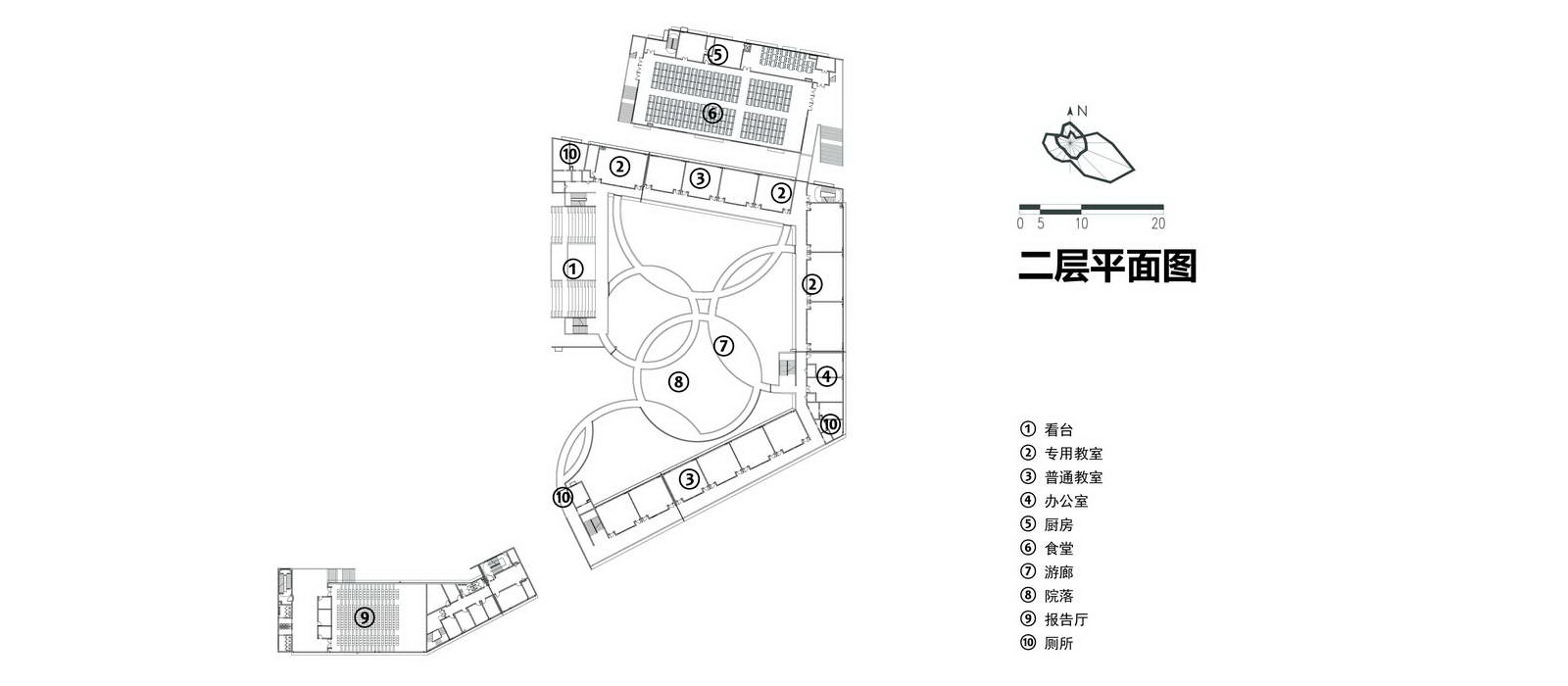
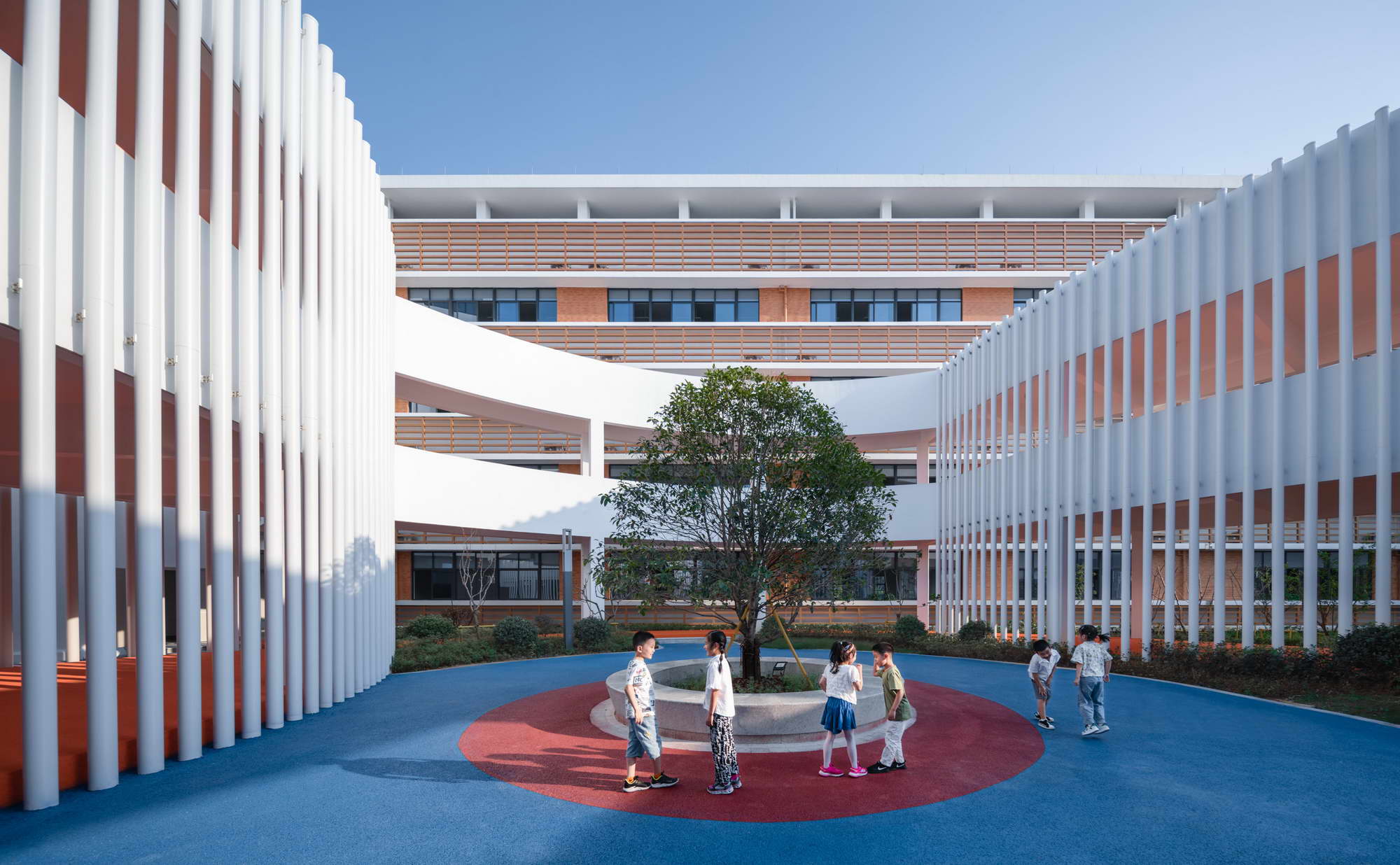
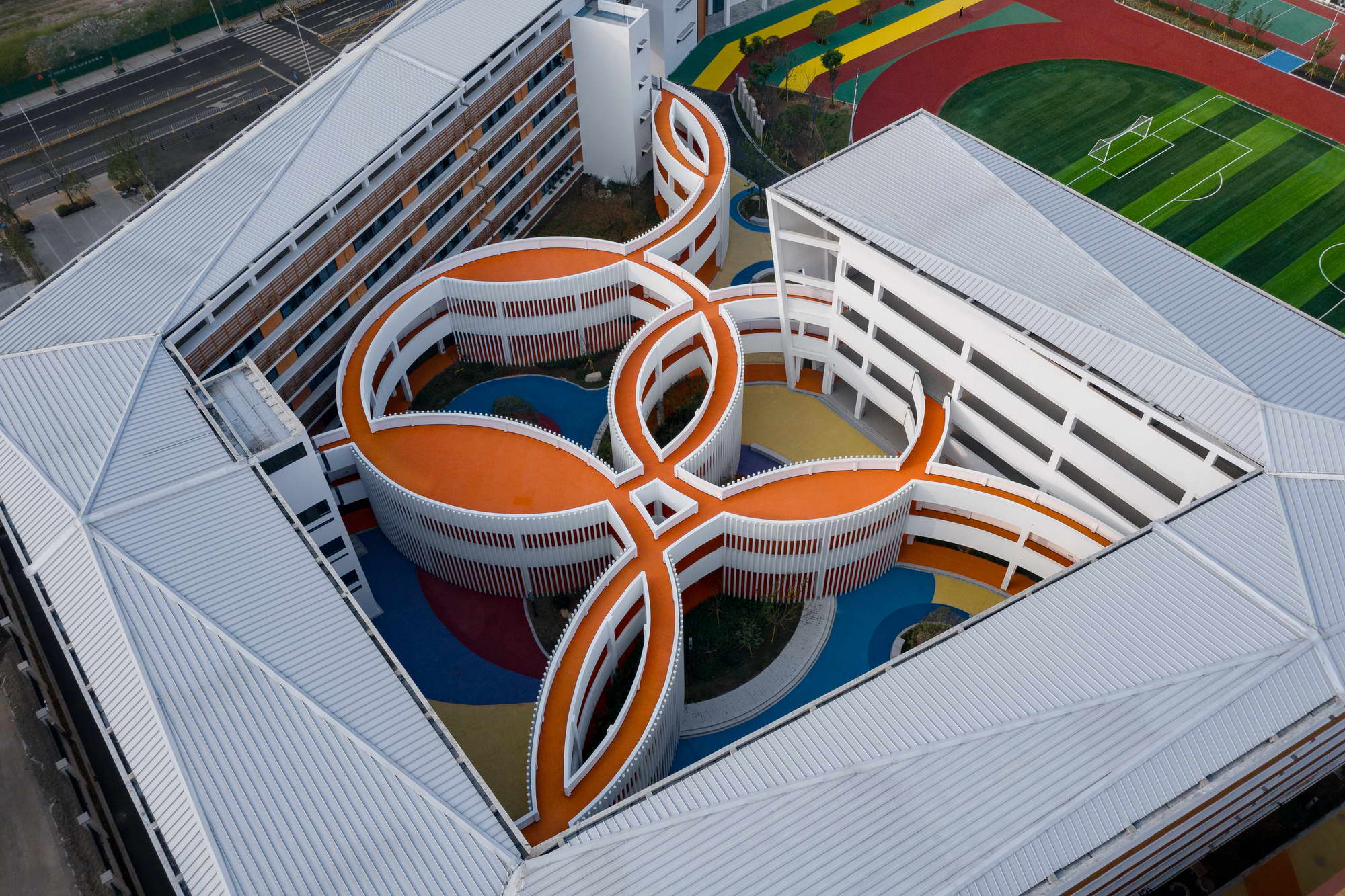
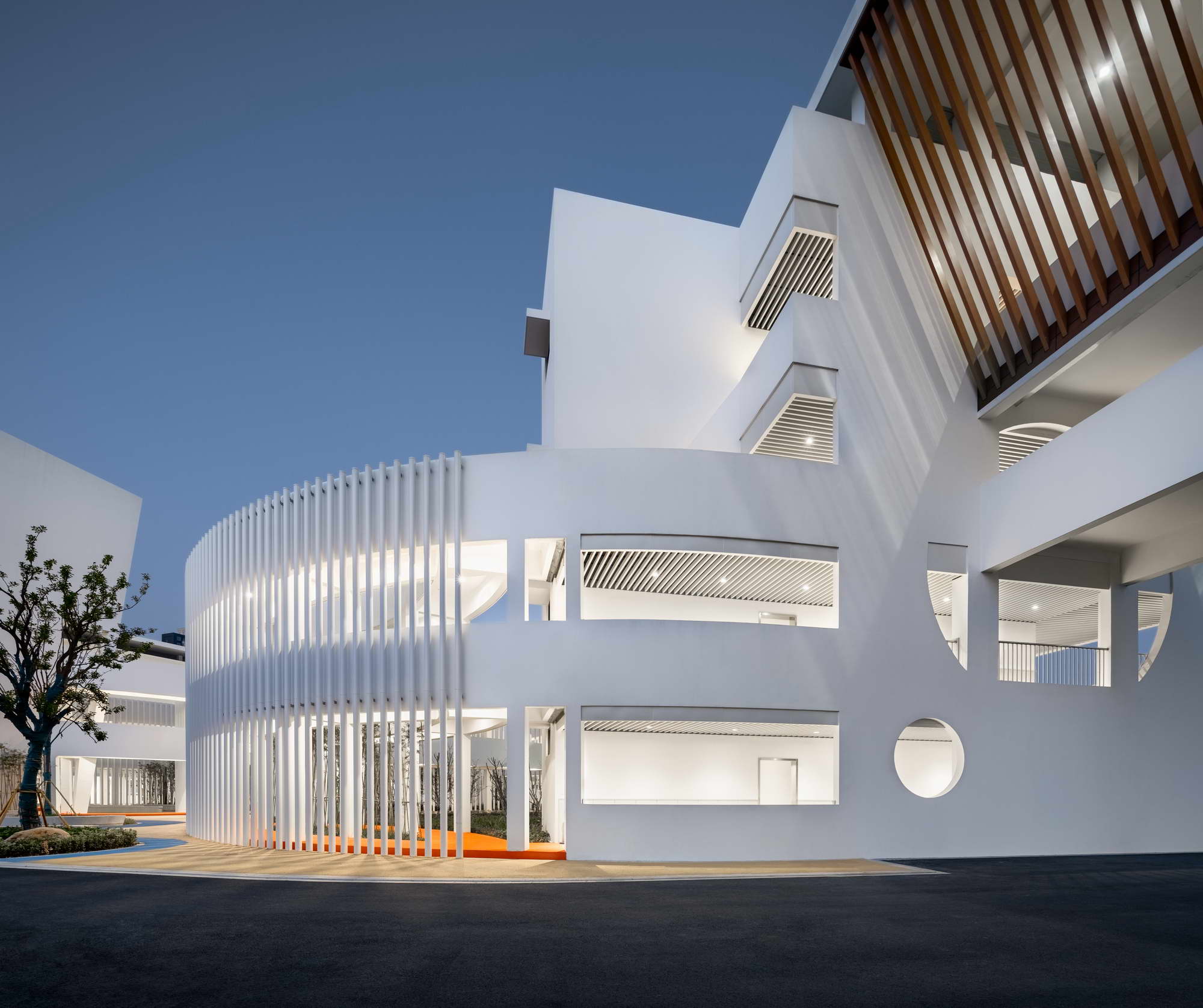
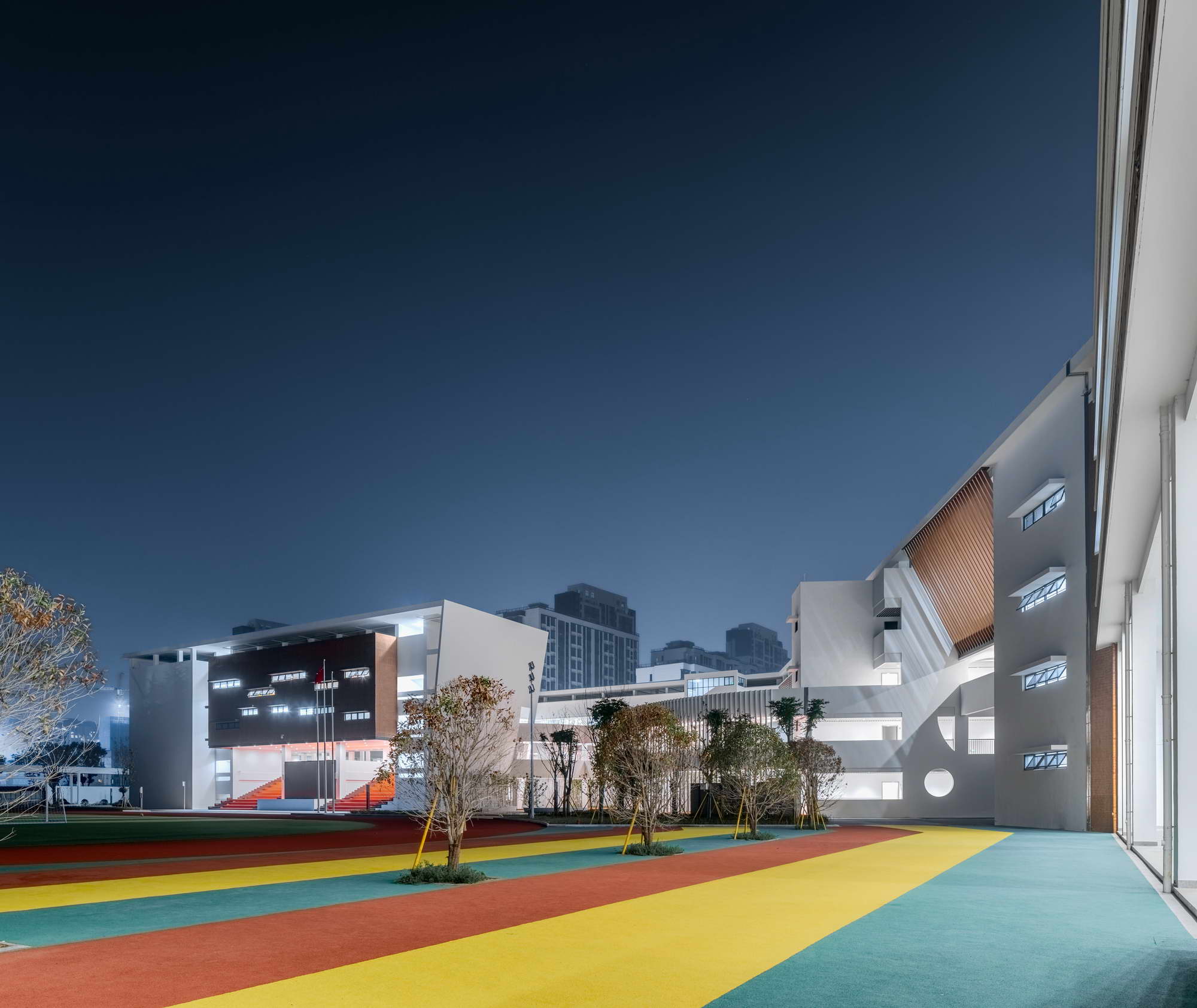
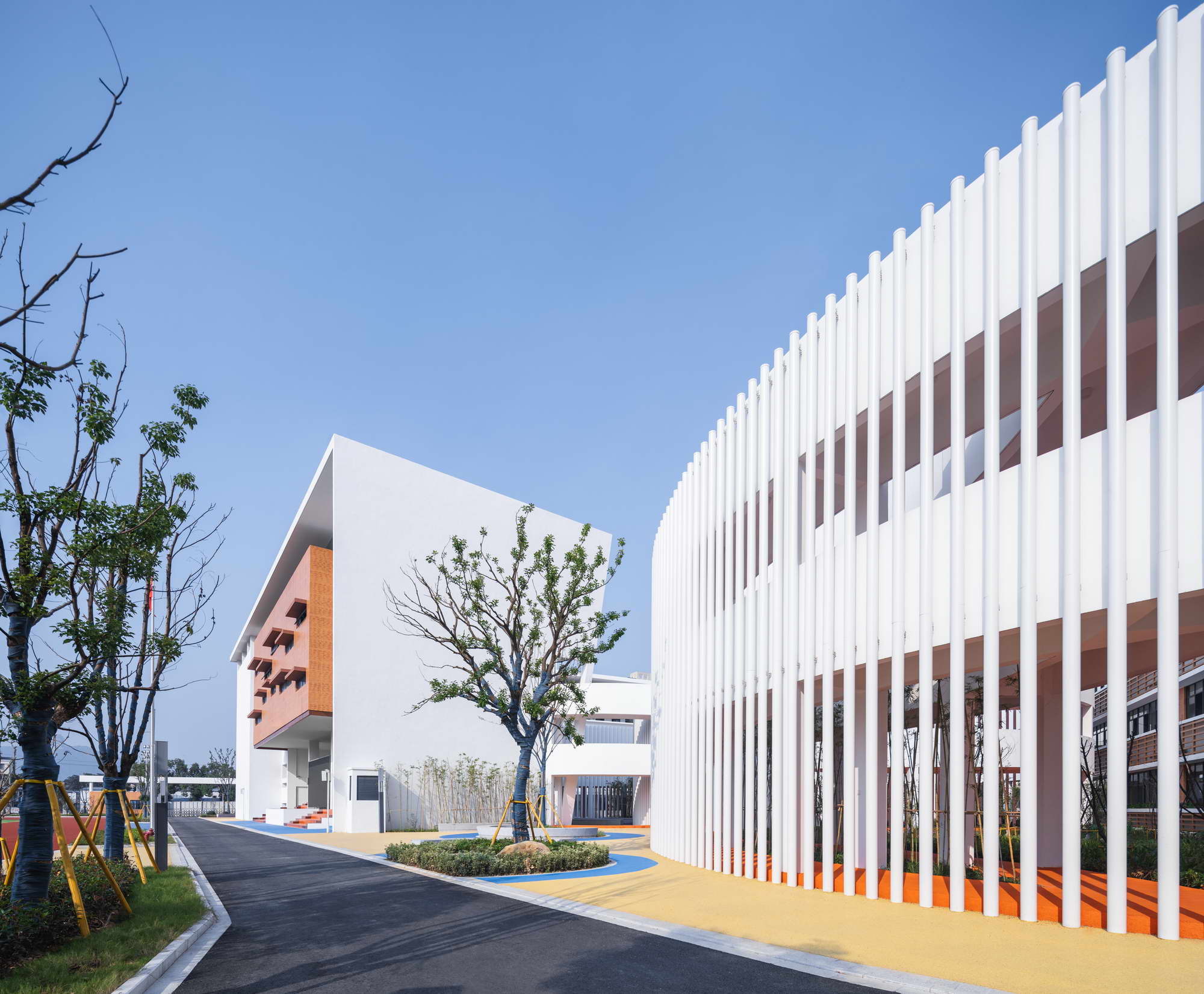
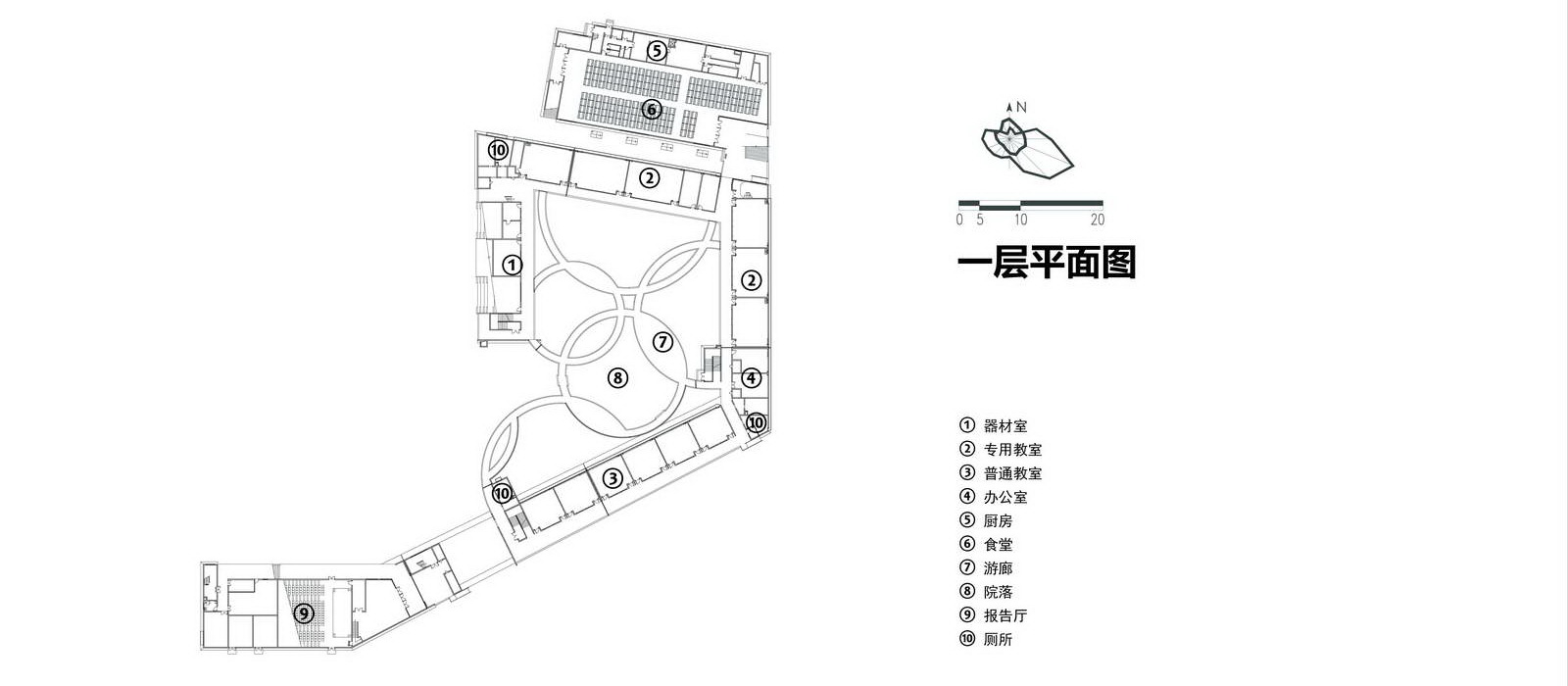
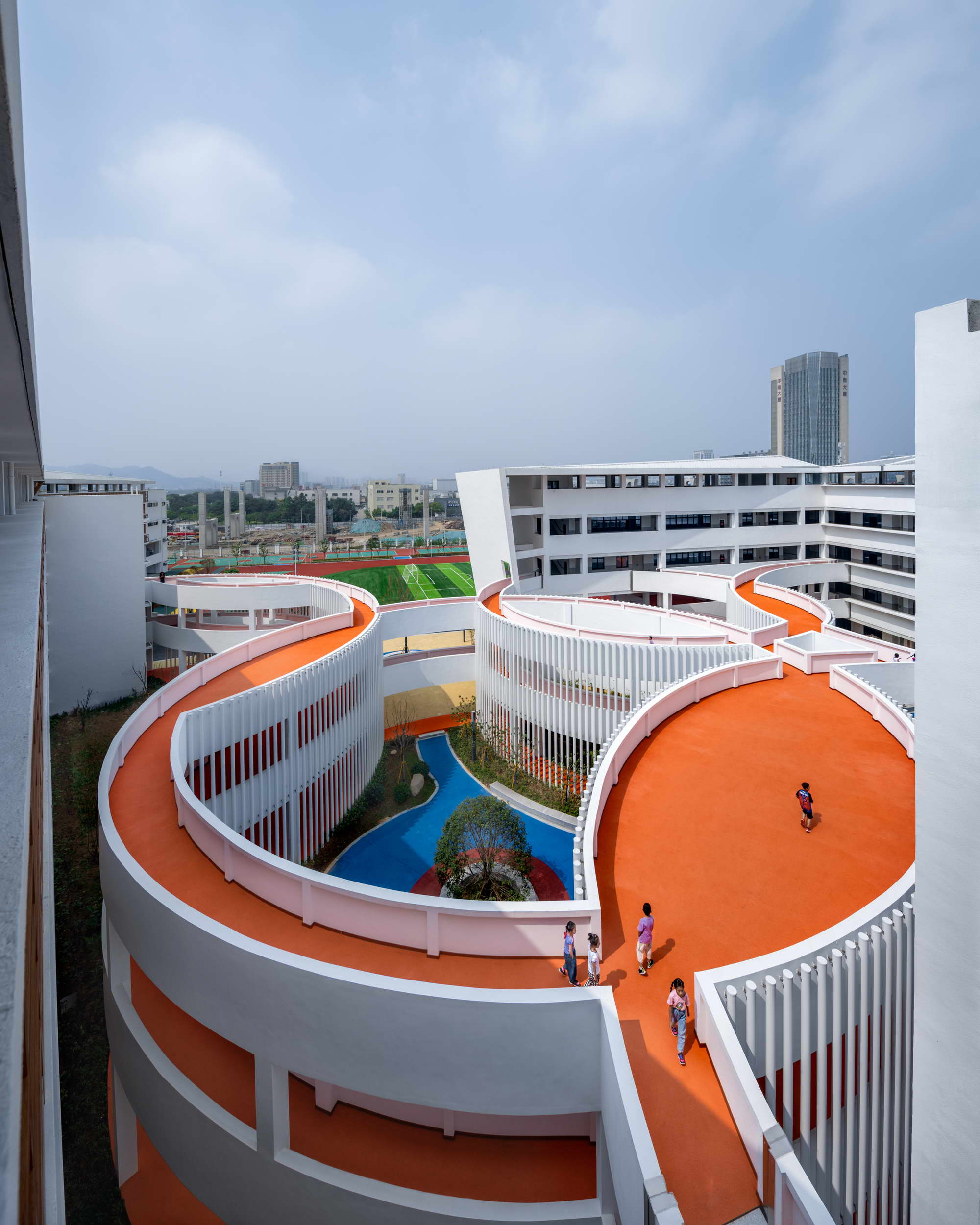
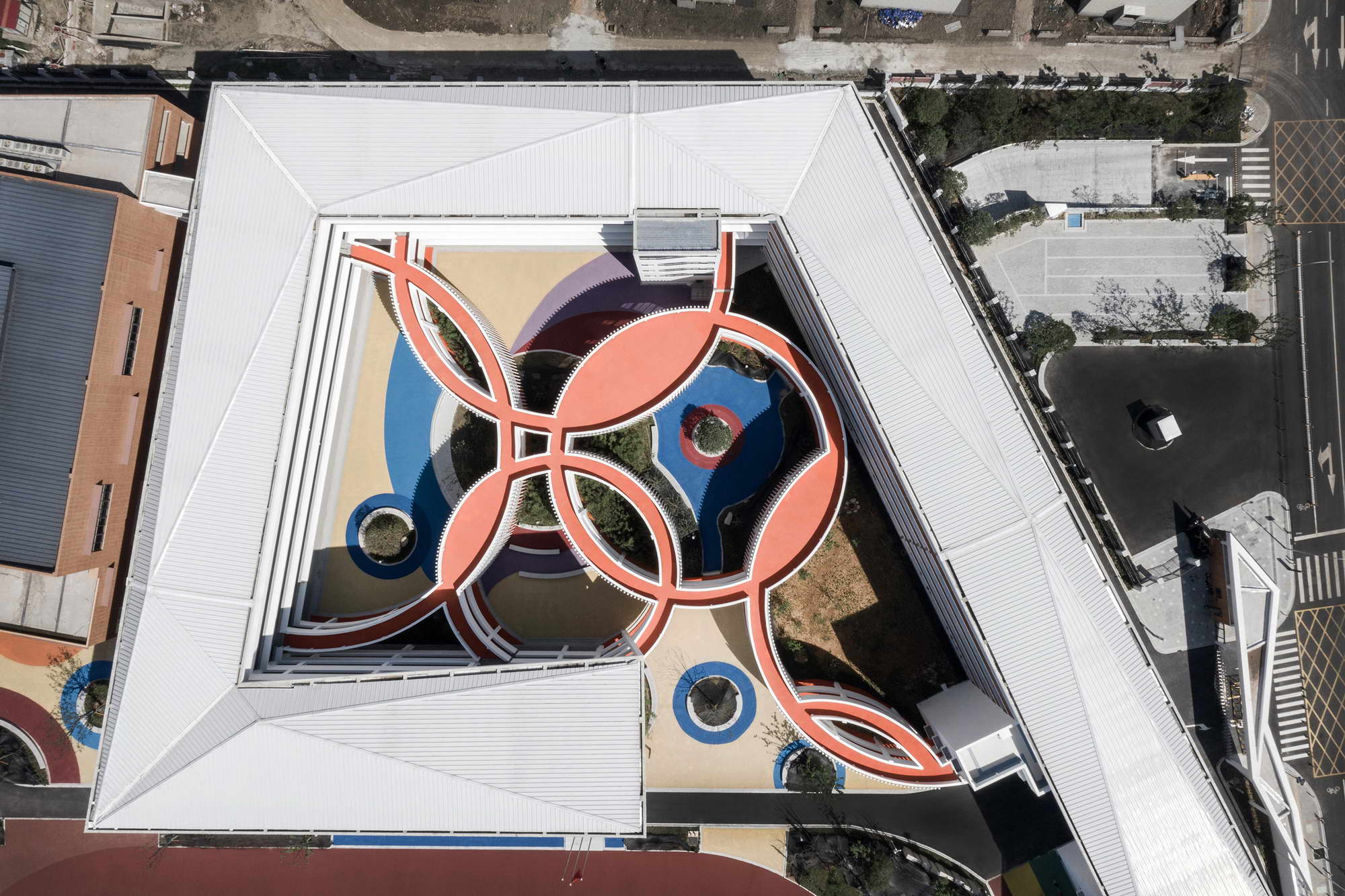
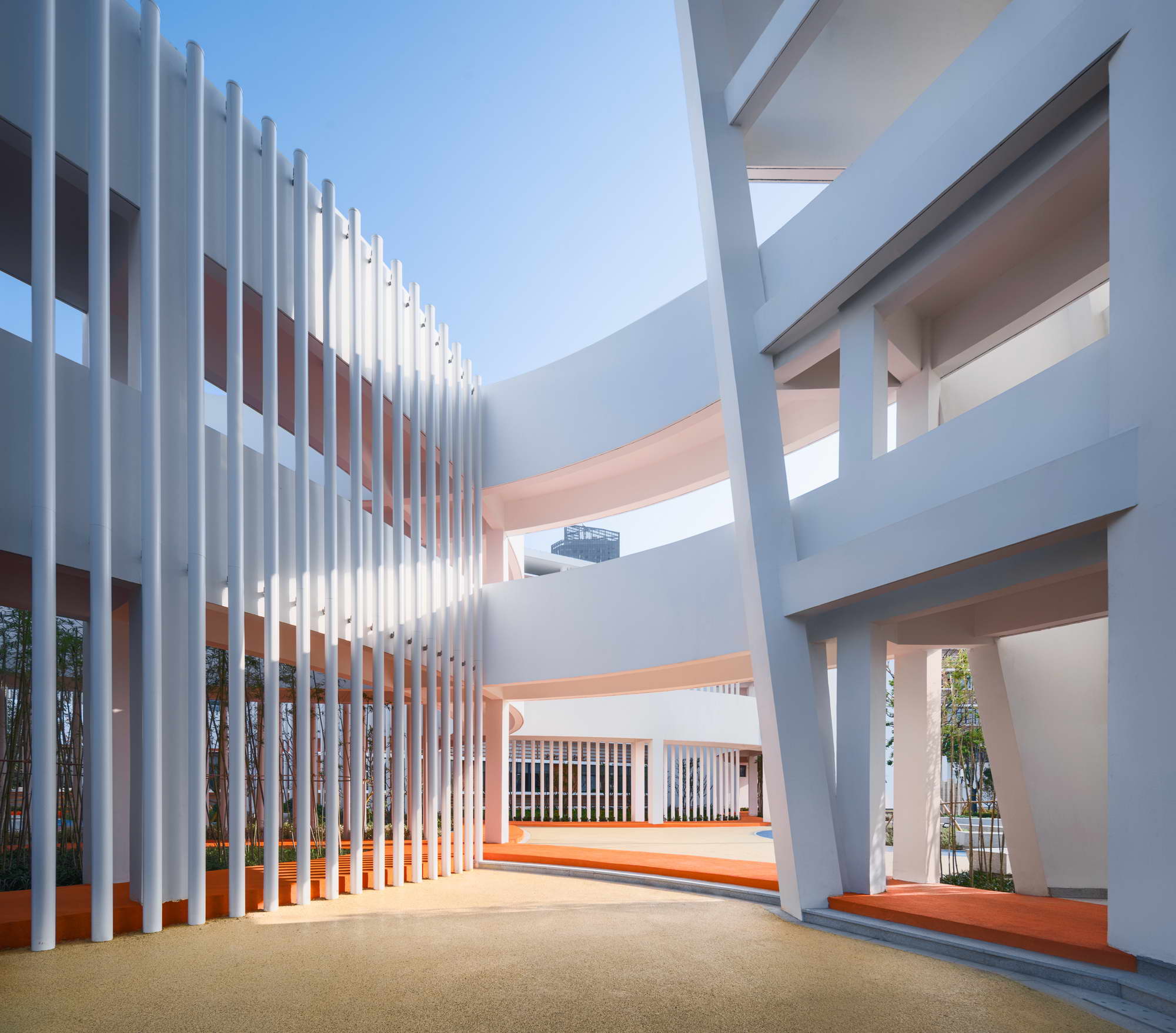
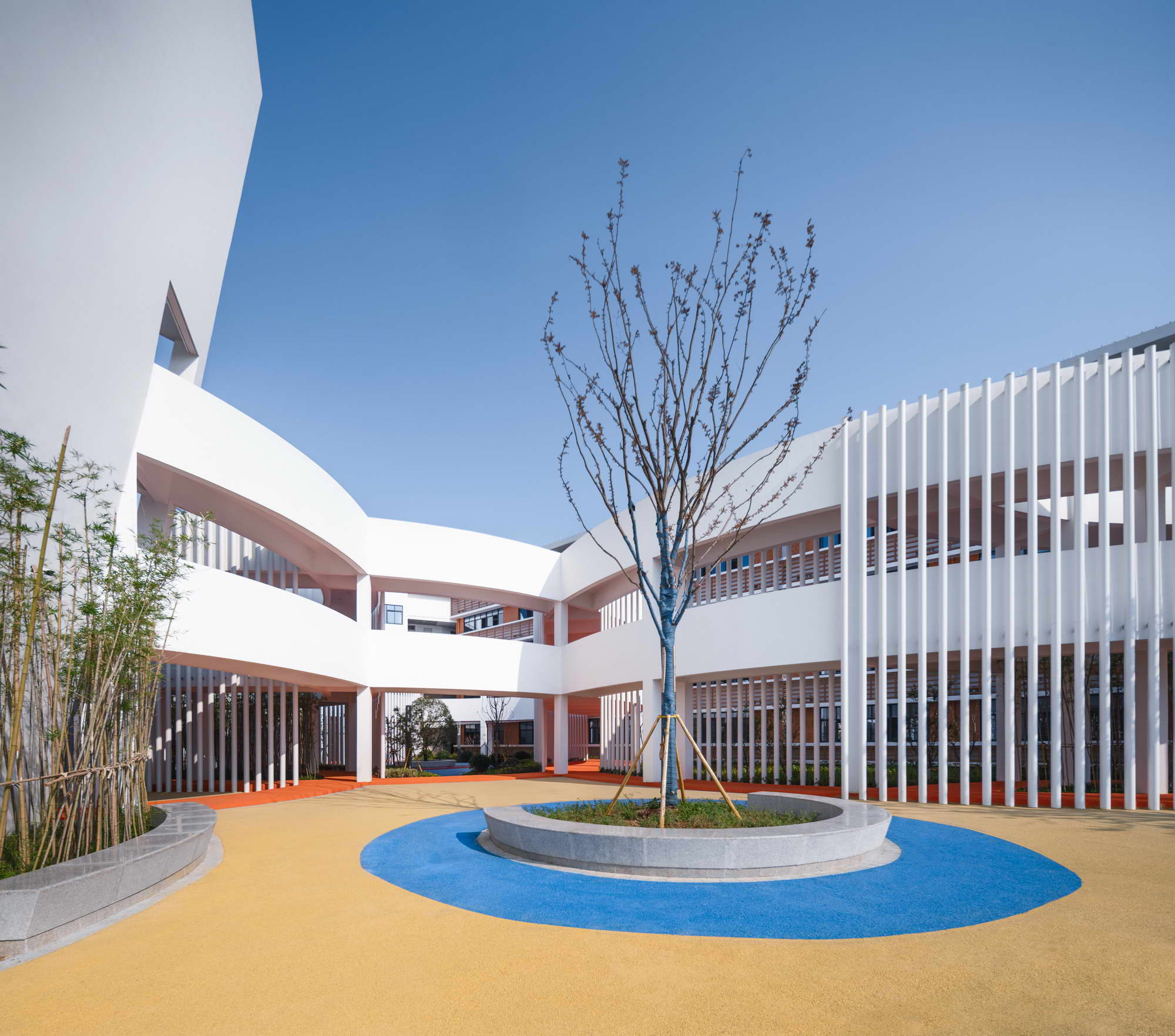
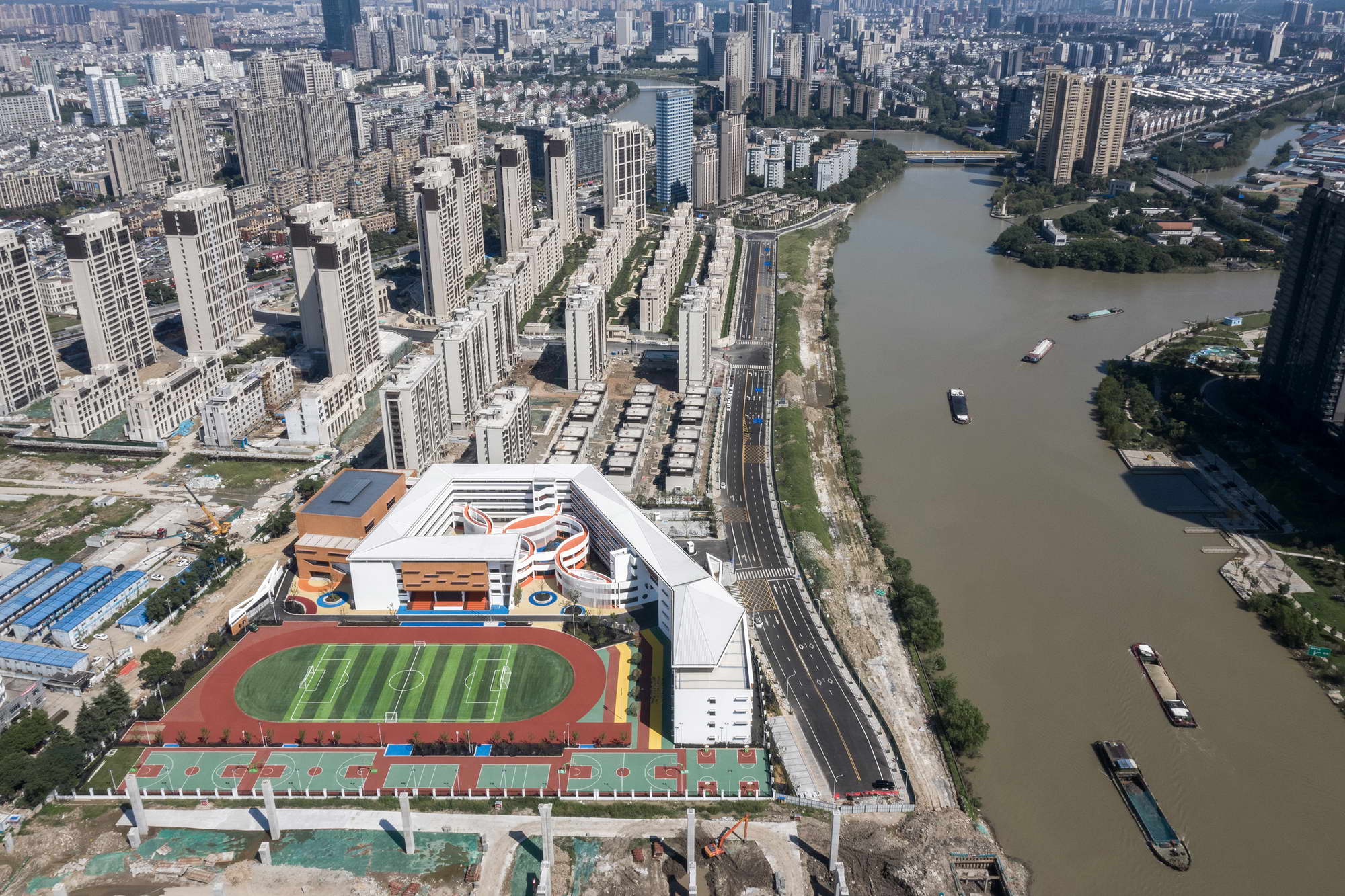
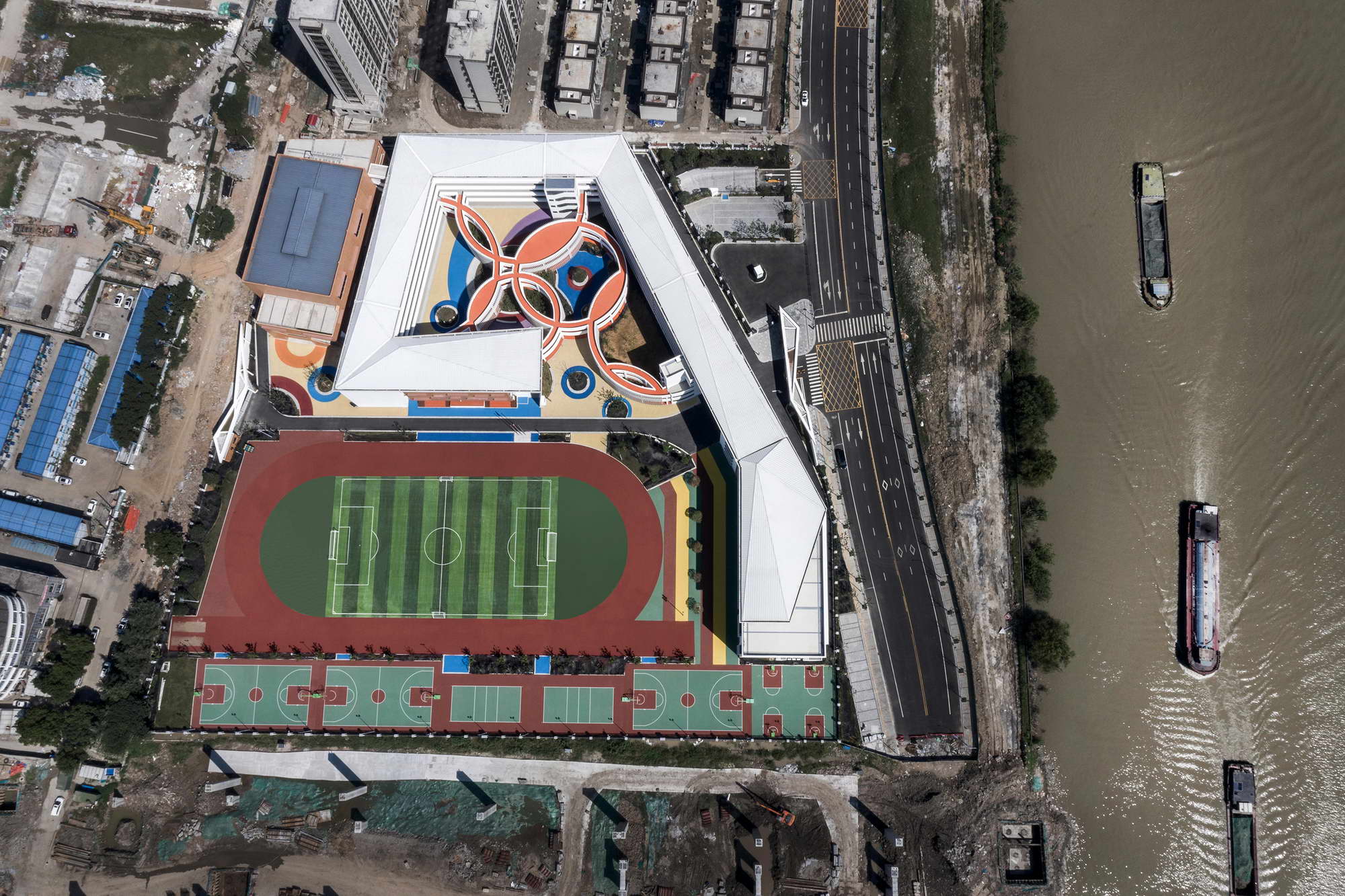
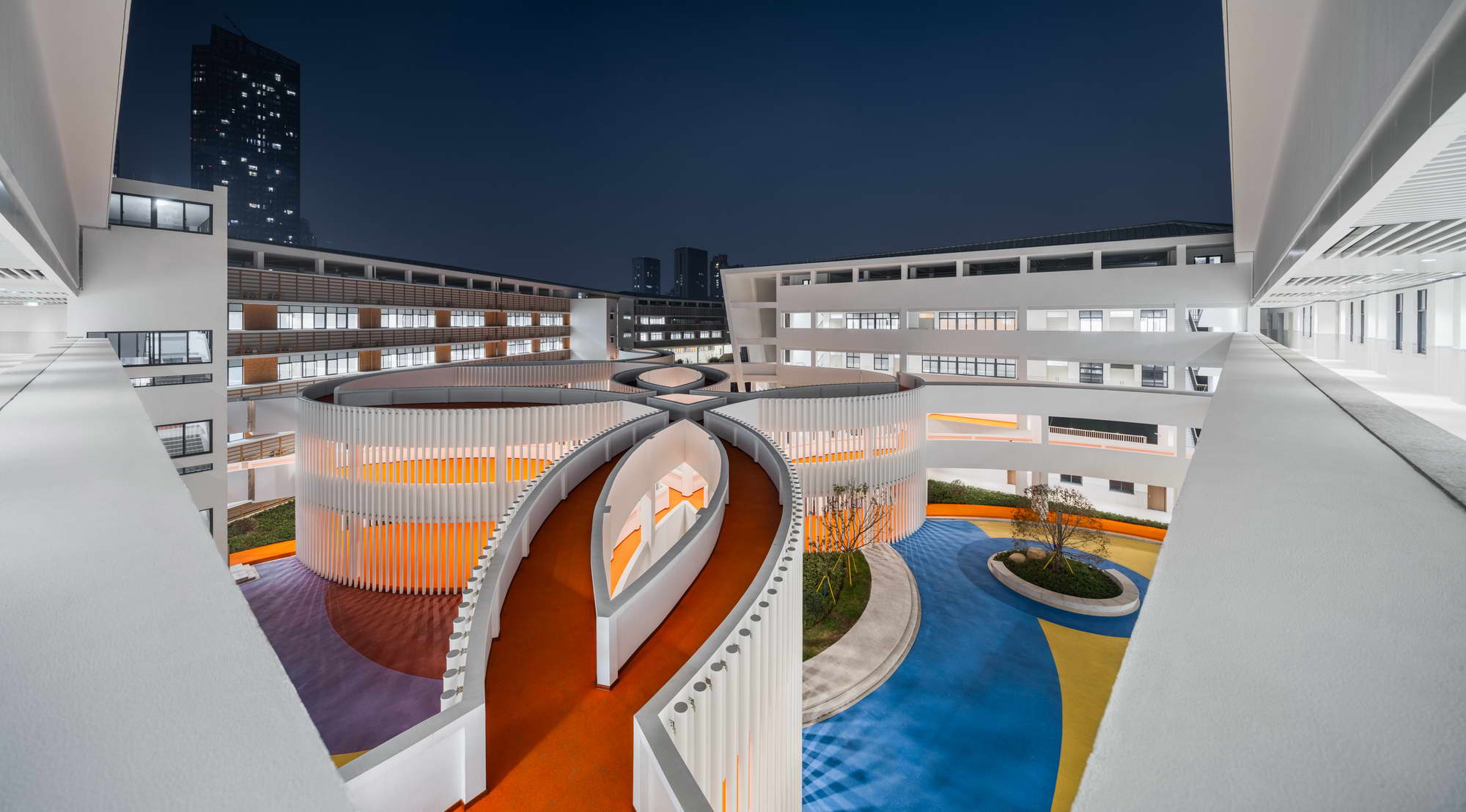
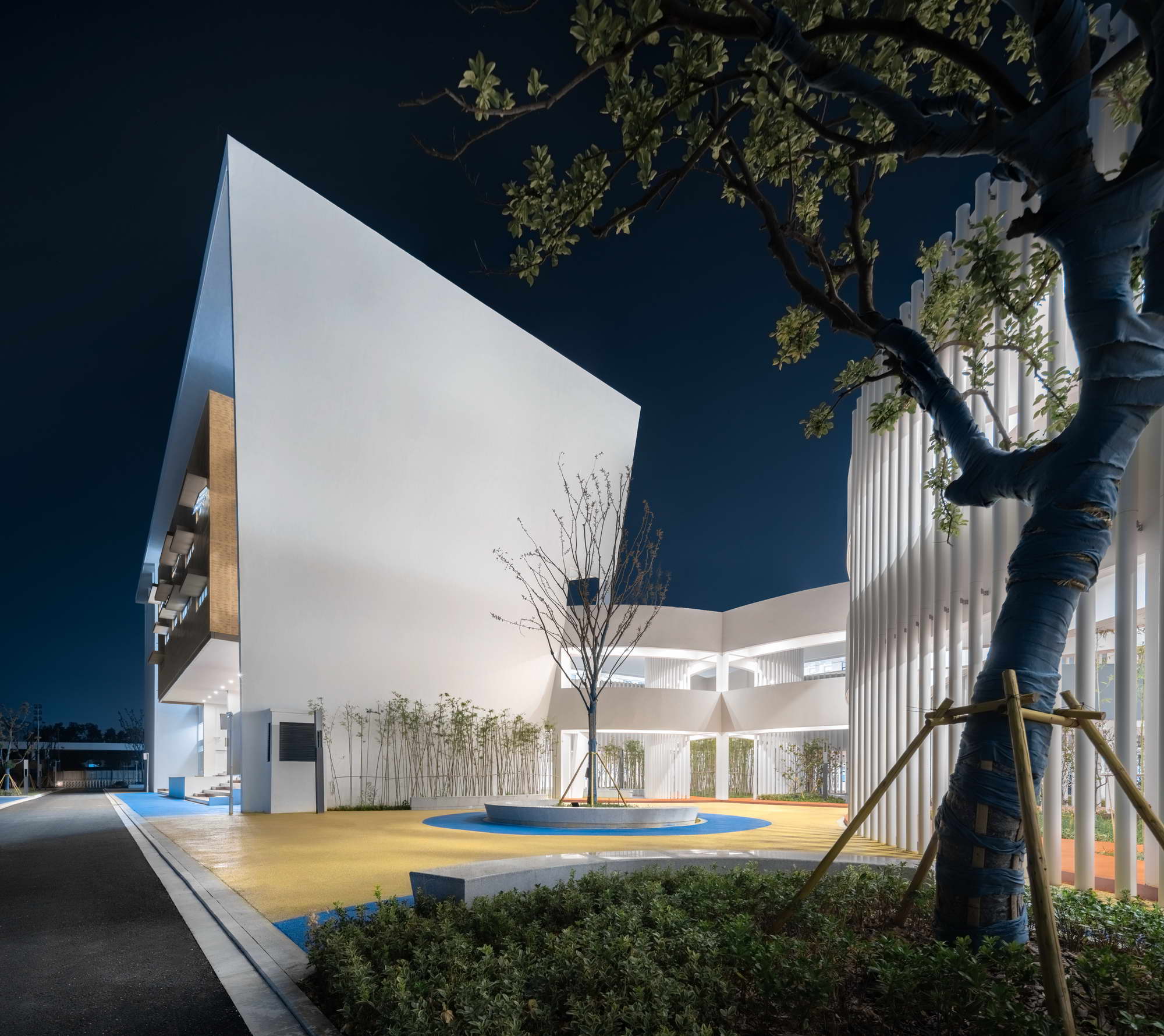
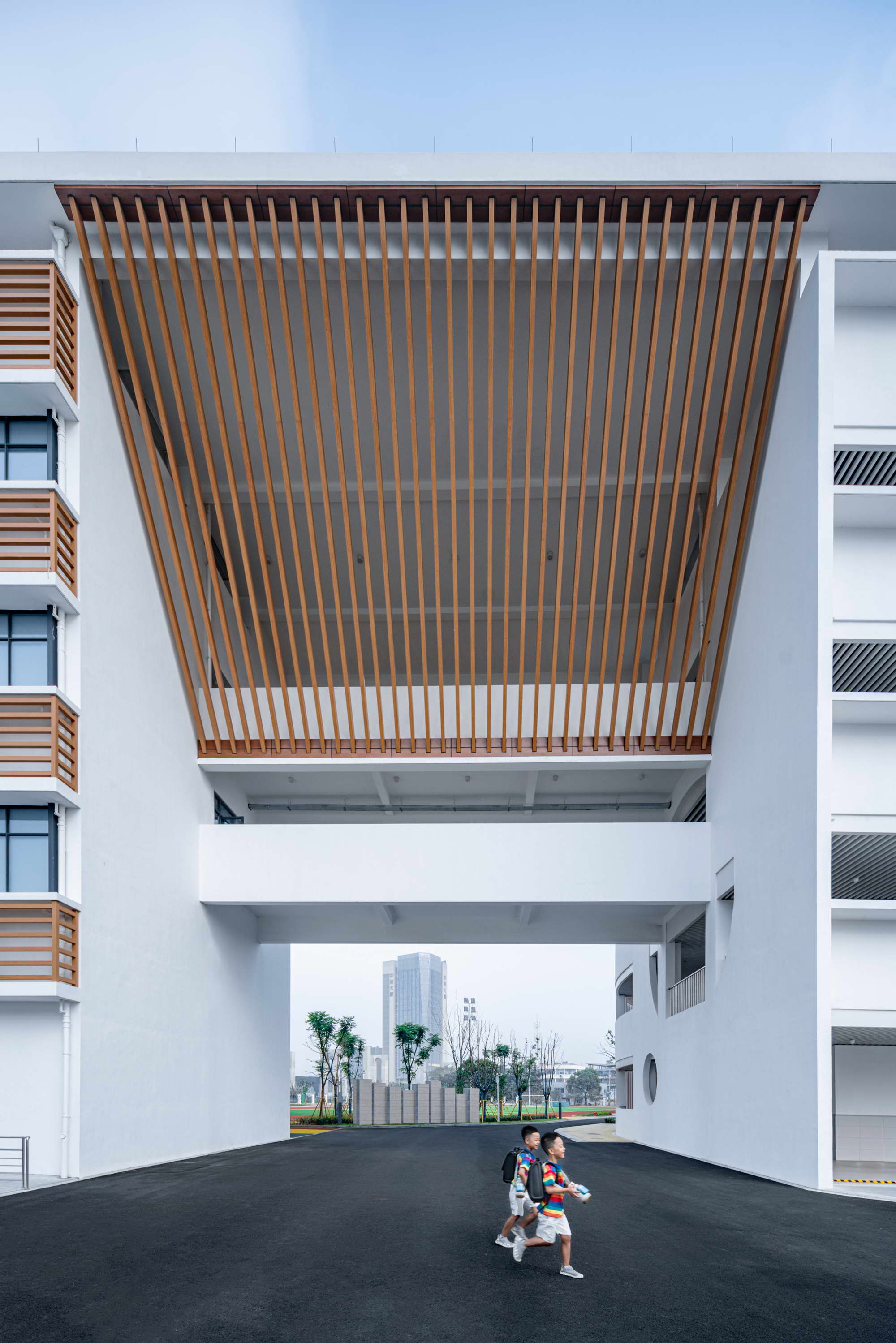
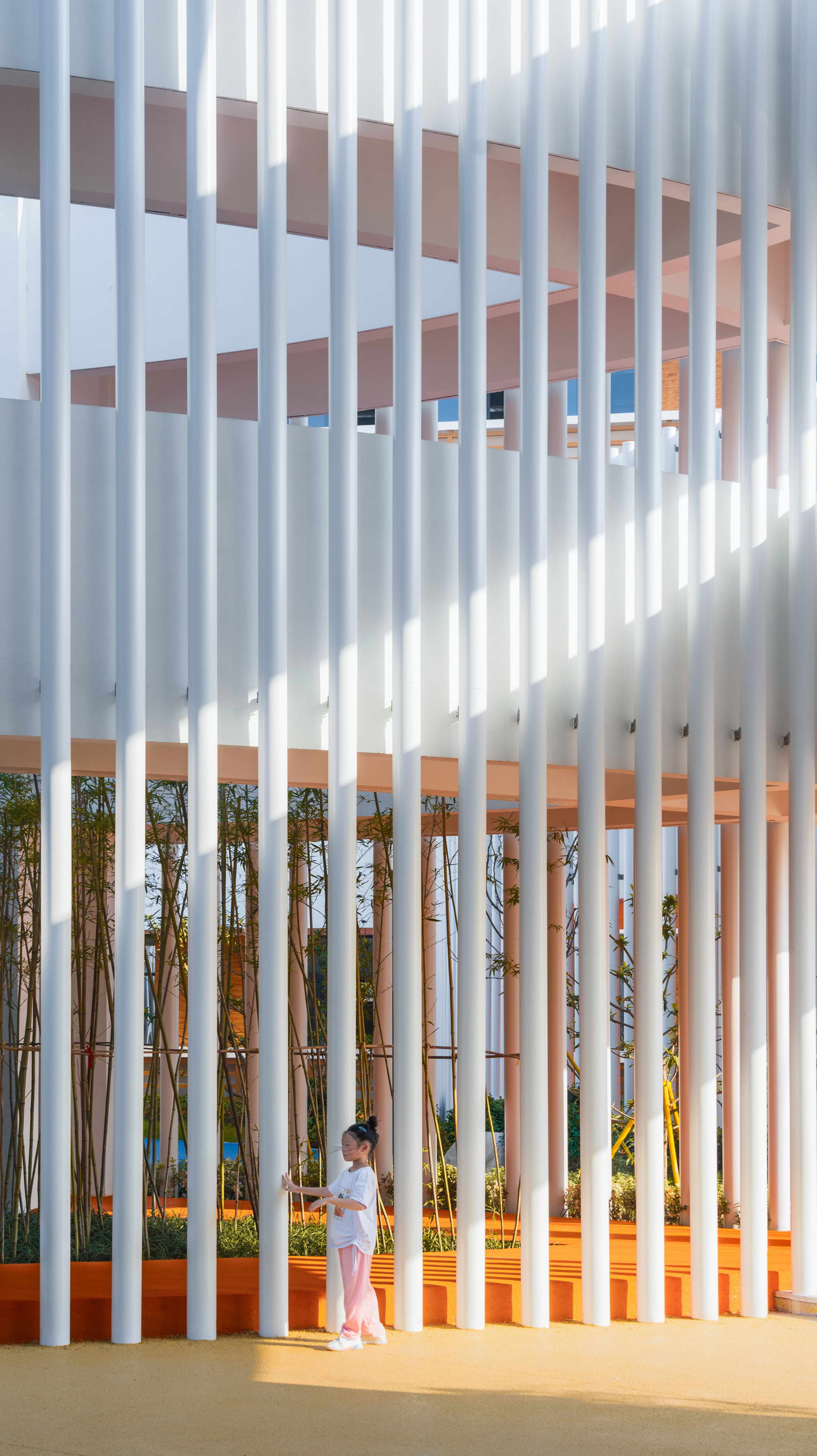
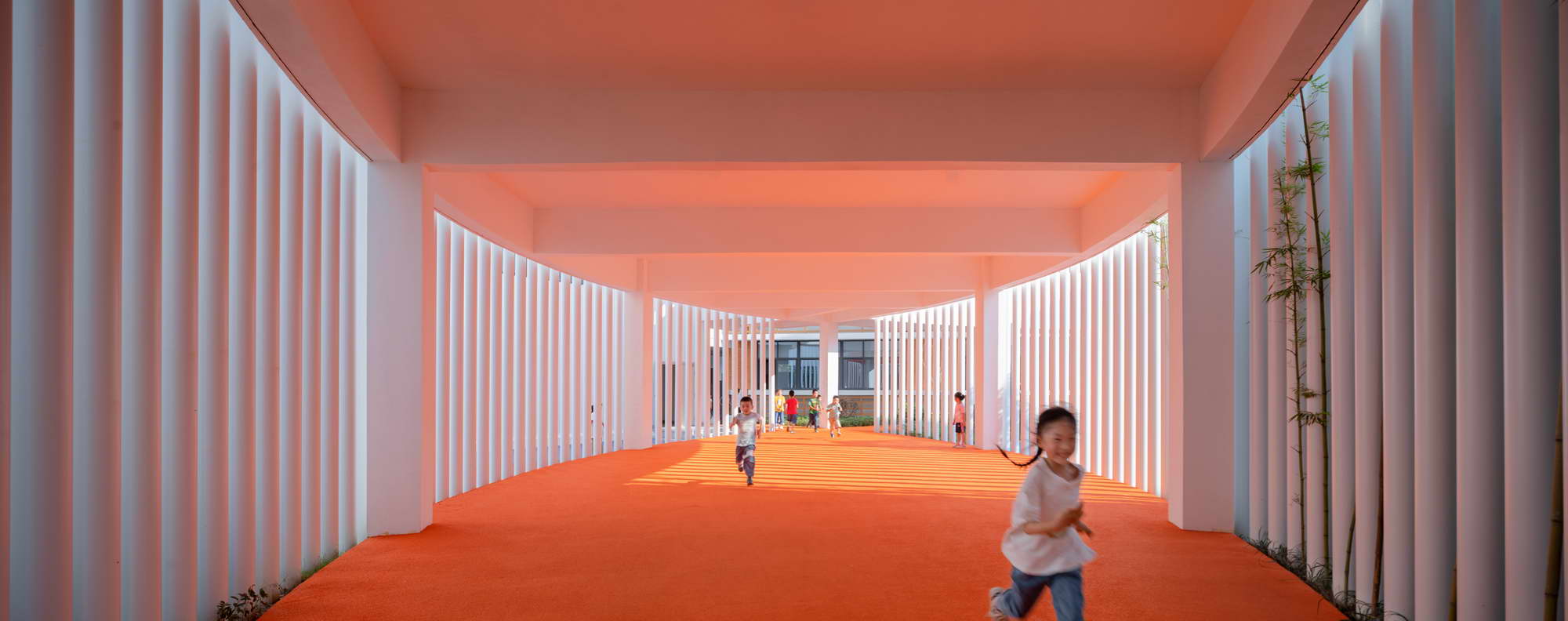
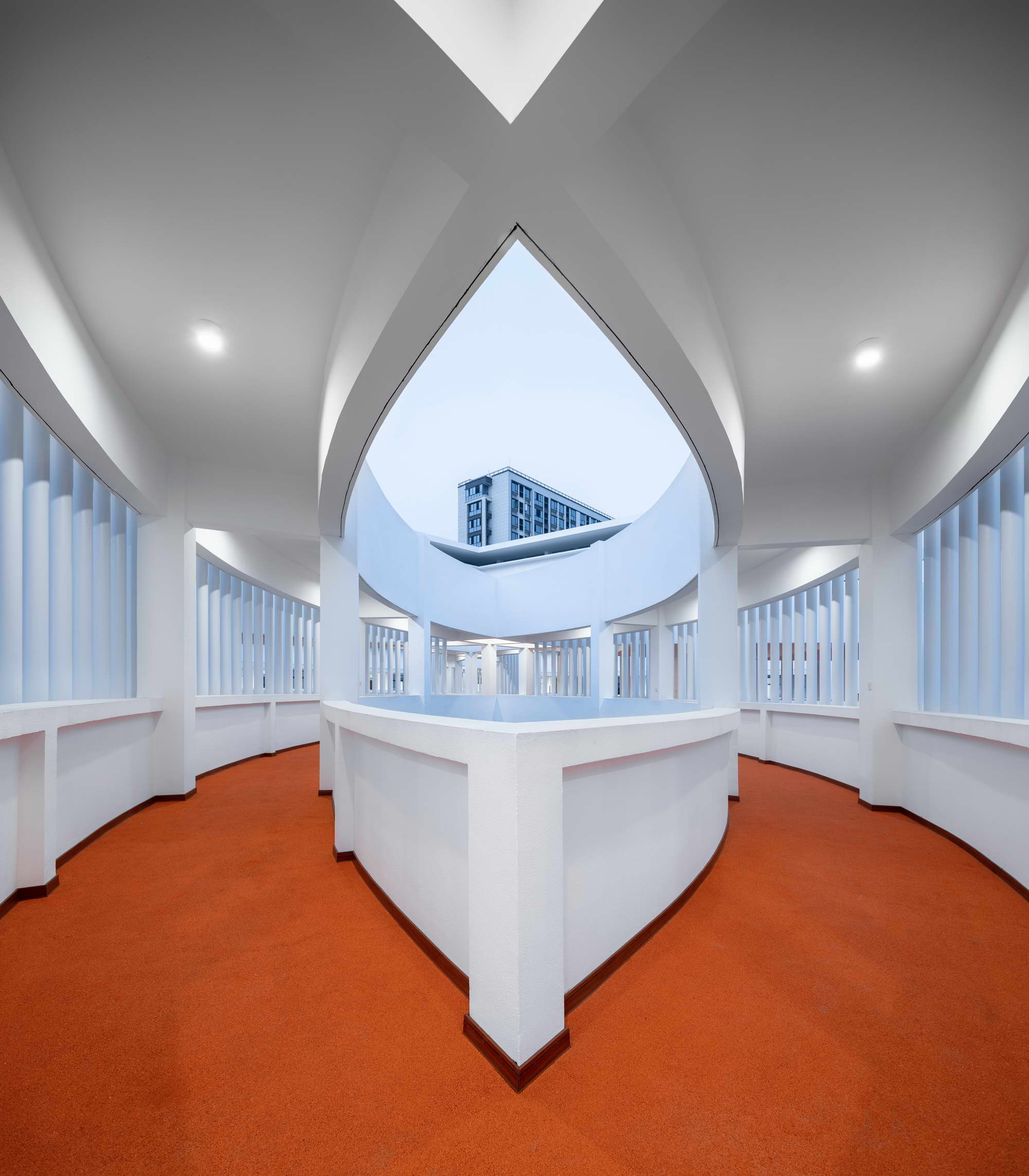
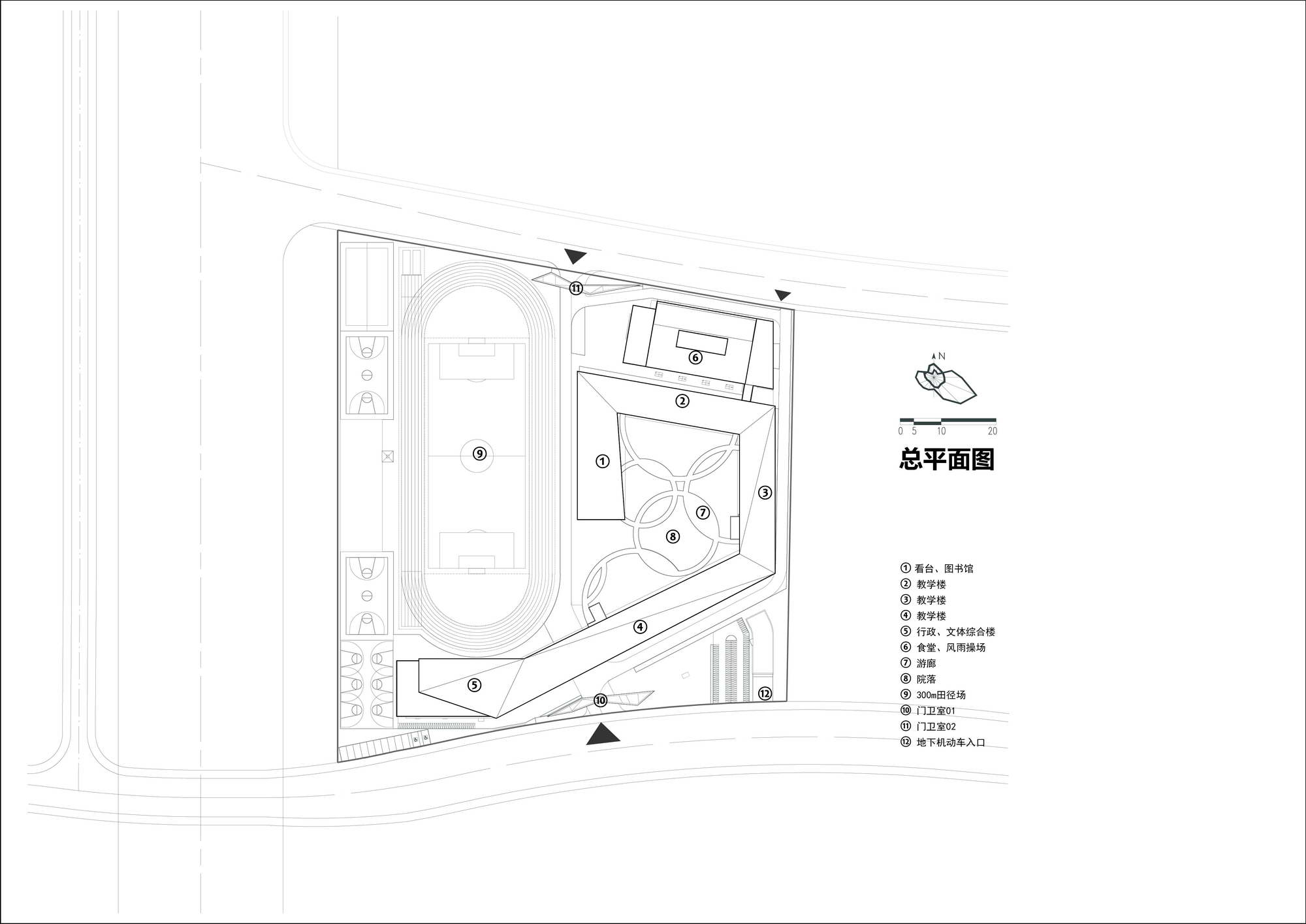
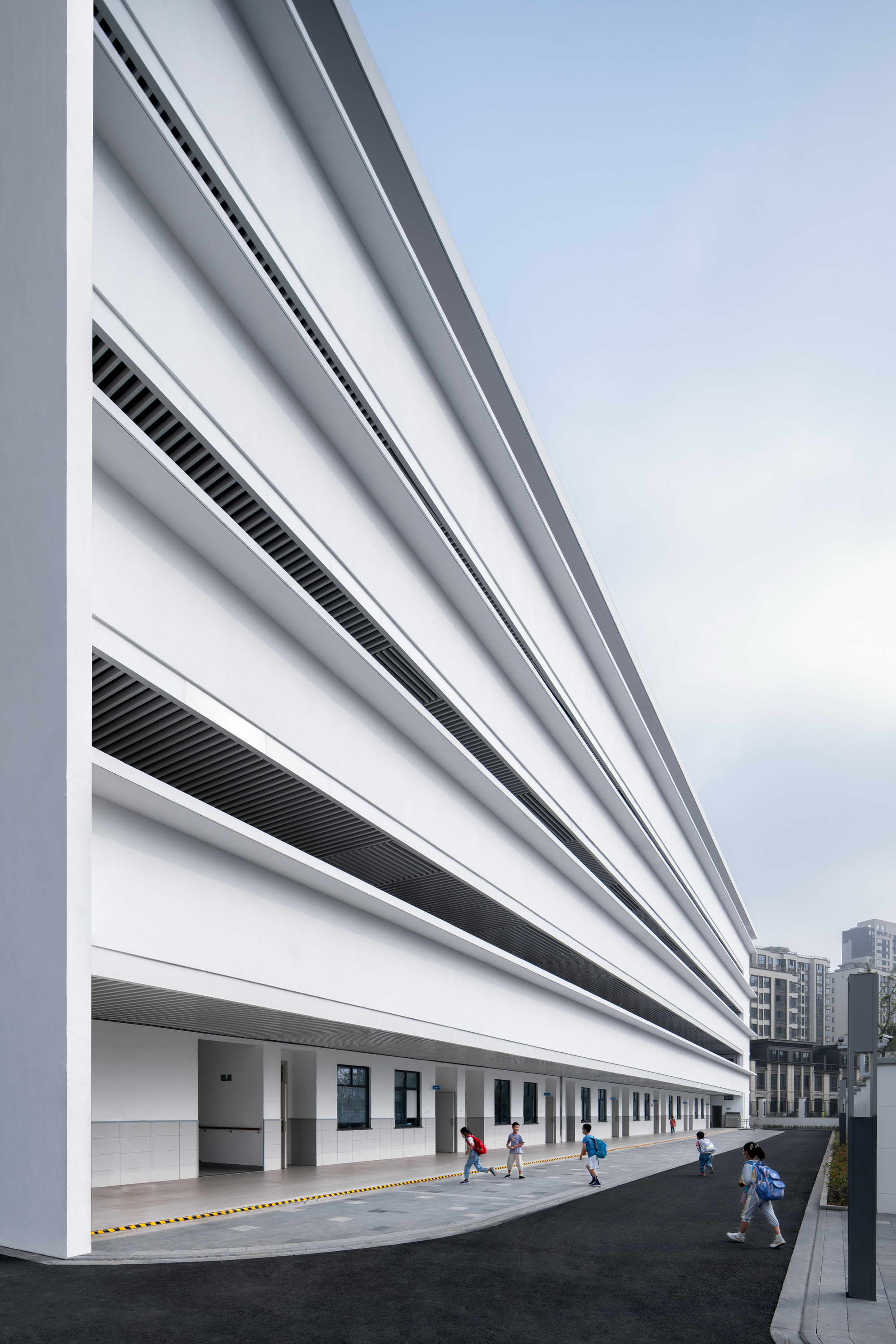
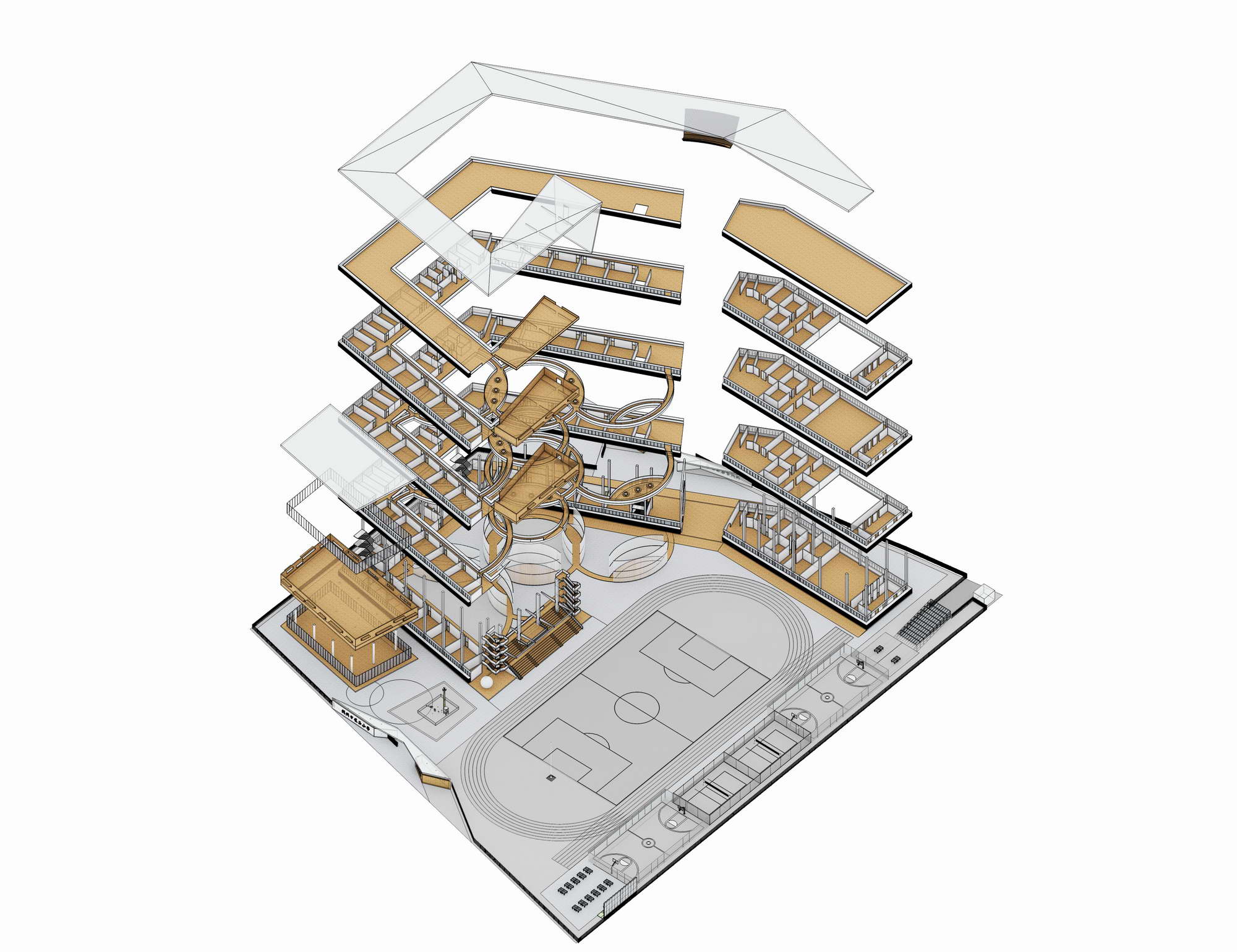
In dense cities, a hard boundary often separates built mass from free open space, and the primacy of efficiency pushes functional programming ahead of spatial delight. Schools are no exception: strict codes and tight land budgets tend to produce similar campuses, where teaching units and ancillary functions are arranged first and continuous free activity space becomes difficult. Fengxi Primary School in Huzhou, designed by Mixiong Architecture led by Lu Zhigang and completed in 2021 on 23,791 square metres, confronts this condition on a site surrounded by high-density housing and large-scale urban infrastructure. Rather than the conventional dispersed campus layout, the team treats the different functional buildings as a single element, adopting a periphery-enclosed, centre-open strategy: the building folds along the street edge in a continuous zigzag volume, enclosing a relatively independent courtyard while dividing the site into an open sports zone and enclosed activity courts. This continuous linear massing produces a horizontal, visually continuous expression on both inner and outer faces, giving the campus a distinctive identity. The main entrance is set on the south side, with the tilt of the main volume generating arrival and distribution areas. Horizontally, the continuous building is divided into ground, middle and roof levels: public teaching and ancillary functions occupy the ground, standard classrooms the middle, and the roof becomes a continuous element threading the whole campus. The ground floor is a genuinely public open place, with corridors, elevated bleachers and lofty entrances that let public activity permeate every interface. Vertically, a ring of elevated walkways inserted between the enclosed courtyards extends ground-floor activity upward, creating dramatic interpenetration and a rich sequence of scales. In time, the continuous circulation slows and accelerates along turns and nodes, producing compressed and expanded spaces, so that walking itself becomes a measured experience and chance encounters accumulate into memory. The school treats theatrical spatial making as a means to trigger the unexpected in daily life, allowing children to learn and grow through sensory richness rather than through a fixed institutional model.






 Editor's Pick
 Latest Design




