Text description provided by the architects
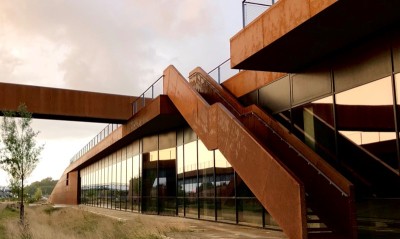
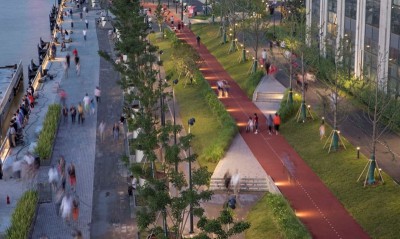
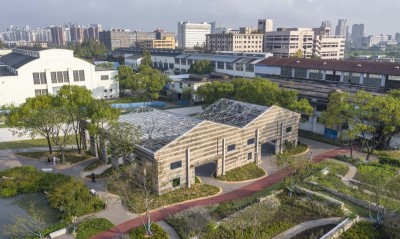
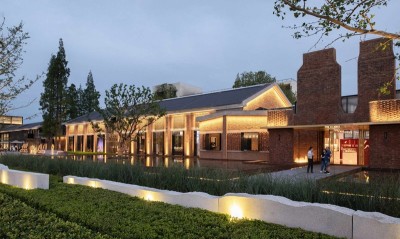
On the ancient canal bank of 2,500 years lies a century-old legend of industrial nation-building. Ship whistles, the canal, the old dock, factory buildings, ancient trees, Republican-era charm—a site filled with the weight of its era. Wiping away the dust of time, crossing a thousand years, it weaves a dream of urban renaissance. Under a meticulously crafted vessel, Hongyang builds Tianxiajin in Changzhou. Changzhou is a Jiangnan cultural city with over 2,560 years of history. For thousands of years, the Beijing-Hangzhou Grand Canal has flowed through Changzhou, humming softly along its course. The Dacheng No. 3 Mill, founded by the renowned industrialist Liu Guojun in 1936, was once bustling and busy, with a crowded harbor. After nearly a century of weather, only the magnificent gatehouse remains to suggest past prosperity. Mottled walls and century-old trees, lush and rustling in the wind, tell stories of the past. On December 30, 2011, Dacheng No. 3 Mill was designated a Jiangsu Province cultural relic protection unit, becoming an important modern historical site and representative building. From the moment of encounter, the project attracted attention through its unique location near the Grand Canal, superior site conditions with century-old trees, and distinctive Republican-era architectural charm. Every time one enters the site, it feels as though the land is recounting the story of Mr. Liu Guojun leading Dacheng No. 3 Mill in industrial nation-building. The design thinking: Changzhou Hongyang Tianxiajin will take textile culture and canal culture as its themes, relying on the Dacheng No. 3 Mill, to create a 500,000-square-meter cultural tourism project unlike anything Changzhou has seen.




 Editor's Pick