Text description provided by the architects
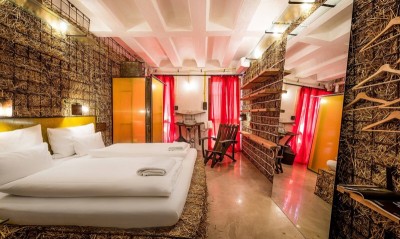
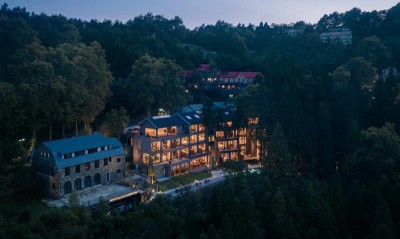
Caosu Chongmin's House is a rural guesthouse in Shengkeng Village, a remote settlement in Linhai, Zhejiang, whose history reaches back to the Southern Song dynasty, when descendants of the Du clan fled south after resisting the Yuan. Surrounded by rocky mountains, the village was built entirely from local stone, houses and roads alike, giving it the feel of a living stone chronicle. Isolation kept it safe from war but also emptied it: only a handful of elderly residents remain, and stone cottages are crumbling. The owners, Shuicao and Hui Ge, discovered the site in 2014 and opened the first phase in 2016. Two years later, when neighbours saw what Phase One had achieved, Uncle Chongmin volunteered his own house for the second phase; villagers insisted on calling it by his name, so it became Caosu Chongmin's House. The design by Hangzhou Guantang Interior Design continues Caosu's pursuit of rustic authenticity while adding refinement and a softer, slightly wabi-sabi palette. On the ground floor, a sunken living room leads into a shared kitchen and dining area arranged around how a village family actually lives. The original earthen stove is preserved, alongside a traditional square farm table and bamboo chairs; a fishing net brought back from Bali hangs as a lampshade. Below the waistline, the stone walls are plastered white and rounded, while above it the stones are softened and set in cement; crooked old roof beams are retained, polished smooth by decades of hands. The kitchen is split into a fully fitted Chinese kitchen and an open Western-style prep area, with baskets and bamboo sieves hanging from the beams. Upstairs, the staircase gains a more elegant, rounded handrail in contrast to the rougher first-phase stair, and the landing displays everyday farm vessels with freshly cut mountain branches. Chongmin's House has three bedrooms and is rented as a whole, appealing to small family and friend gatherings; bed linen is dyed with plant pigments in Caosu's signature series. The project strives to hold the balance between rustic mountain retreat and modern comfort, allowing guests to unwind in nature without sacrificing domestic ease.




 Editor's Pick
 Latest Design