Text description provided by the architects
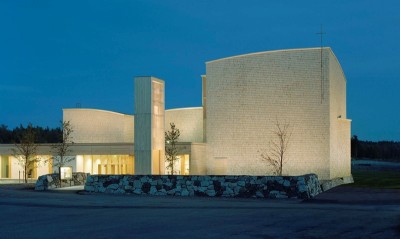
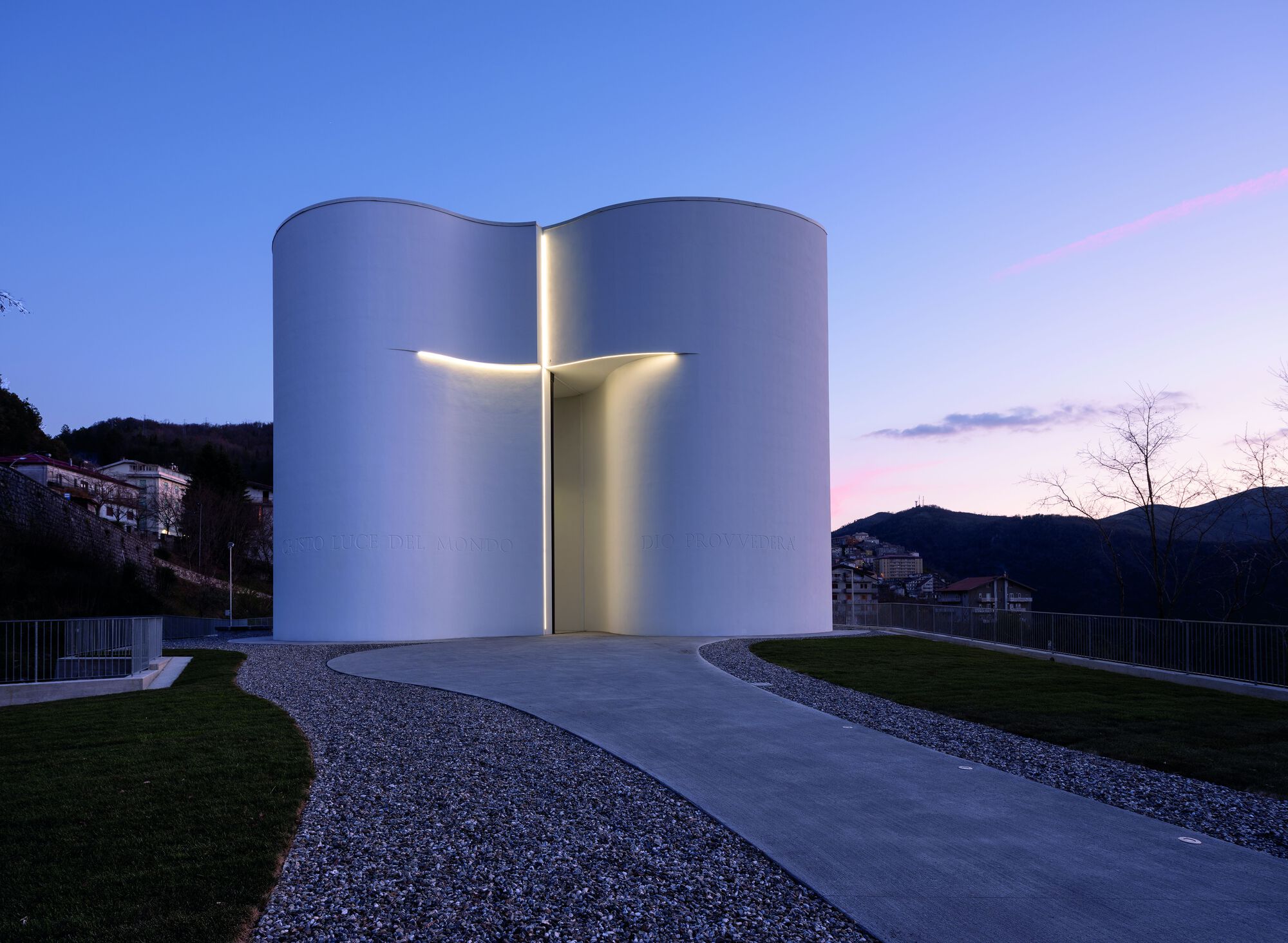
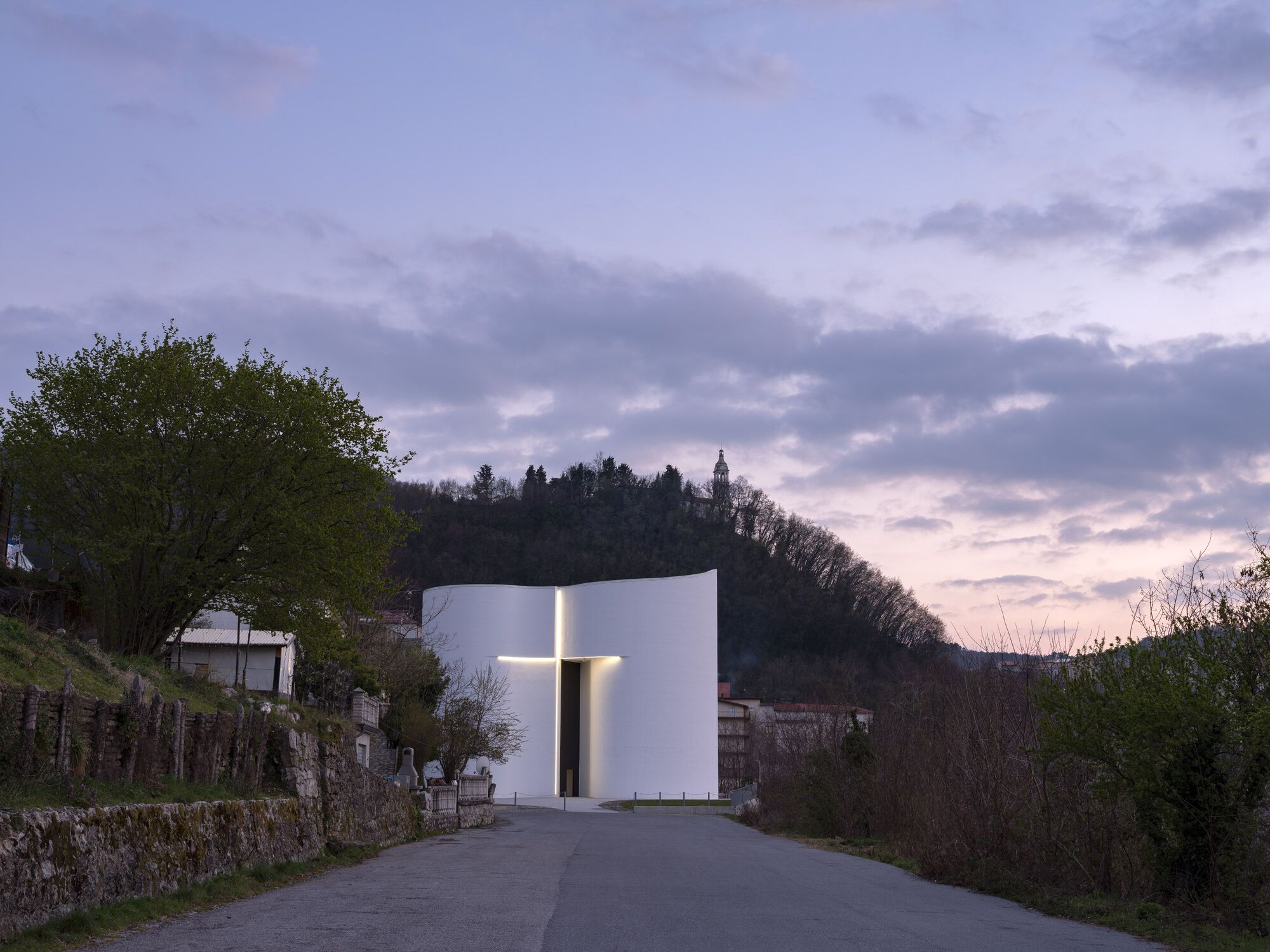
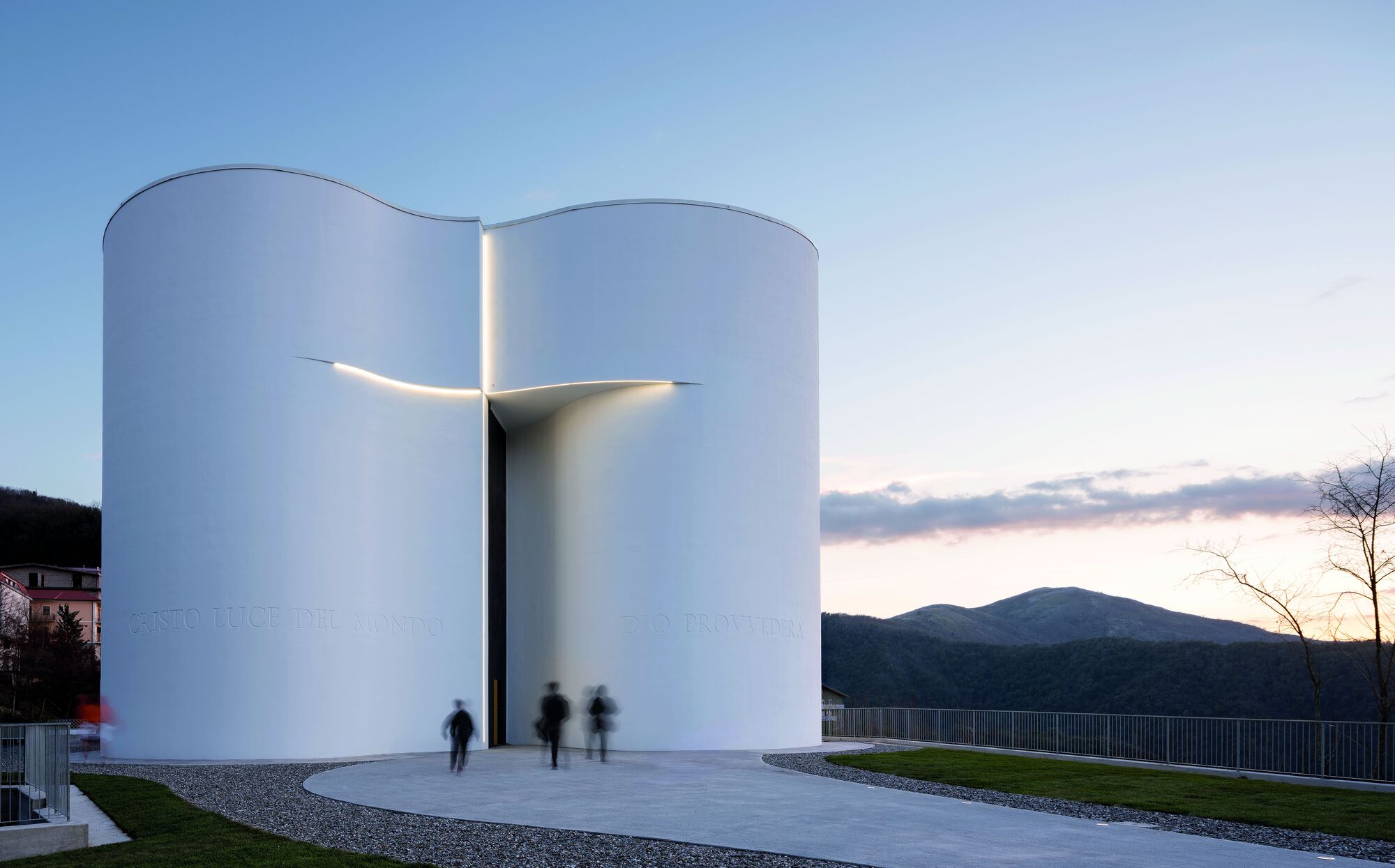
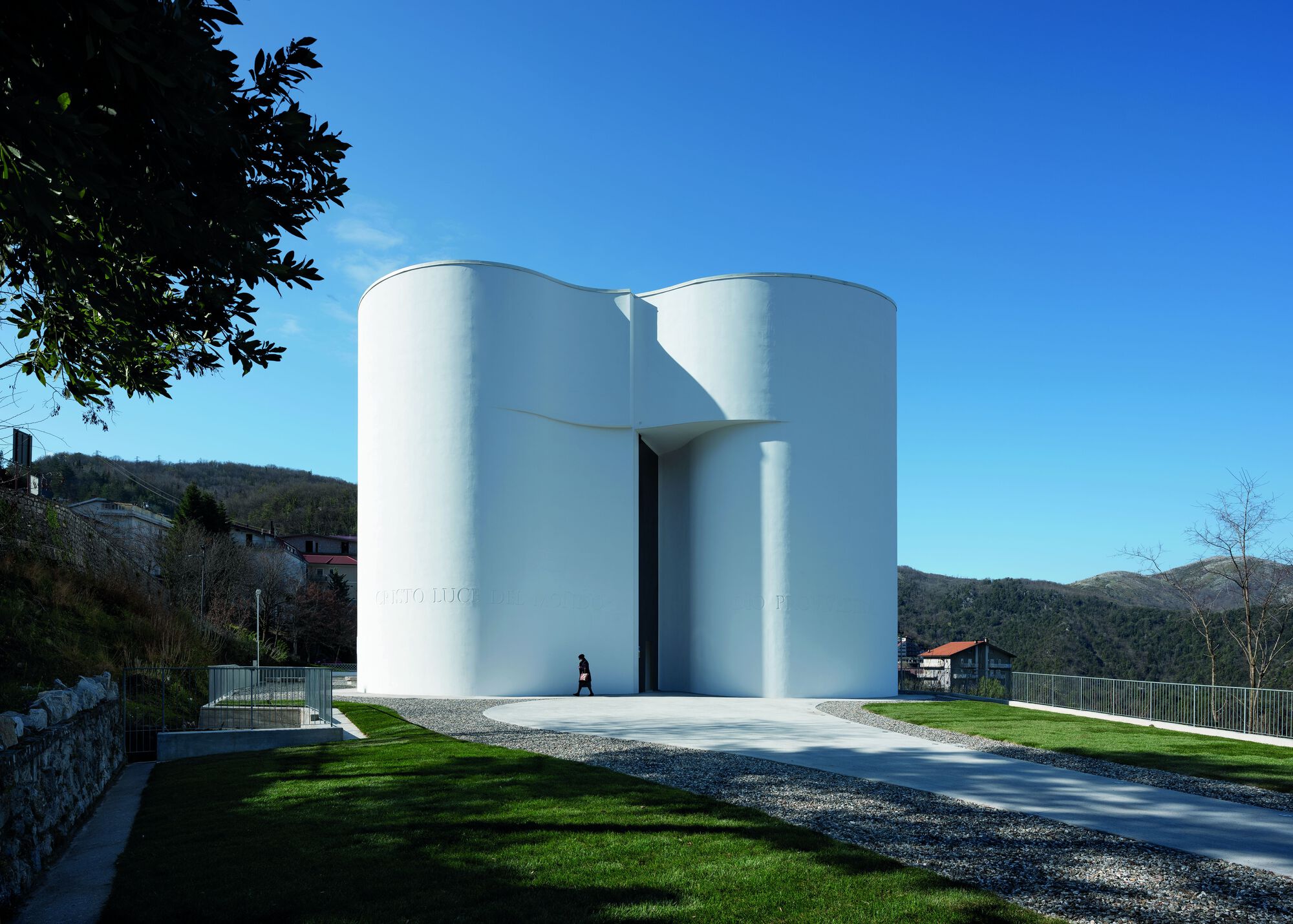
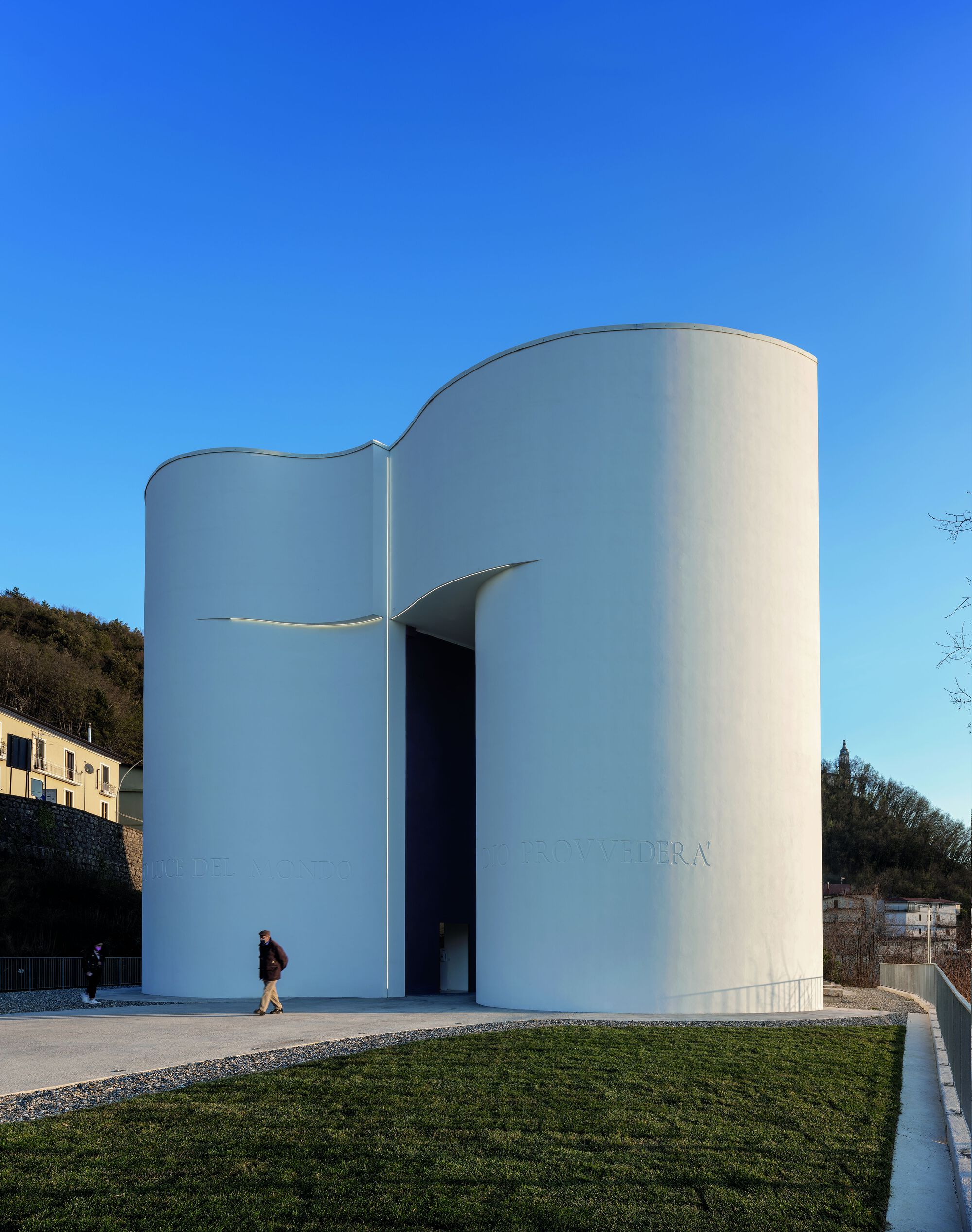
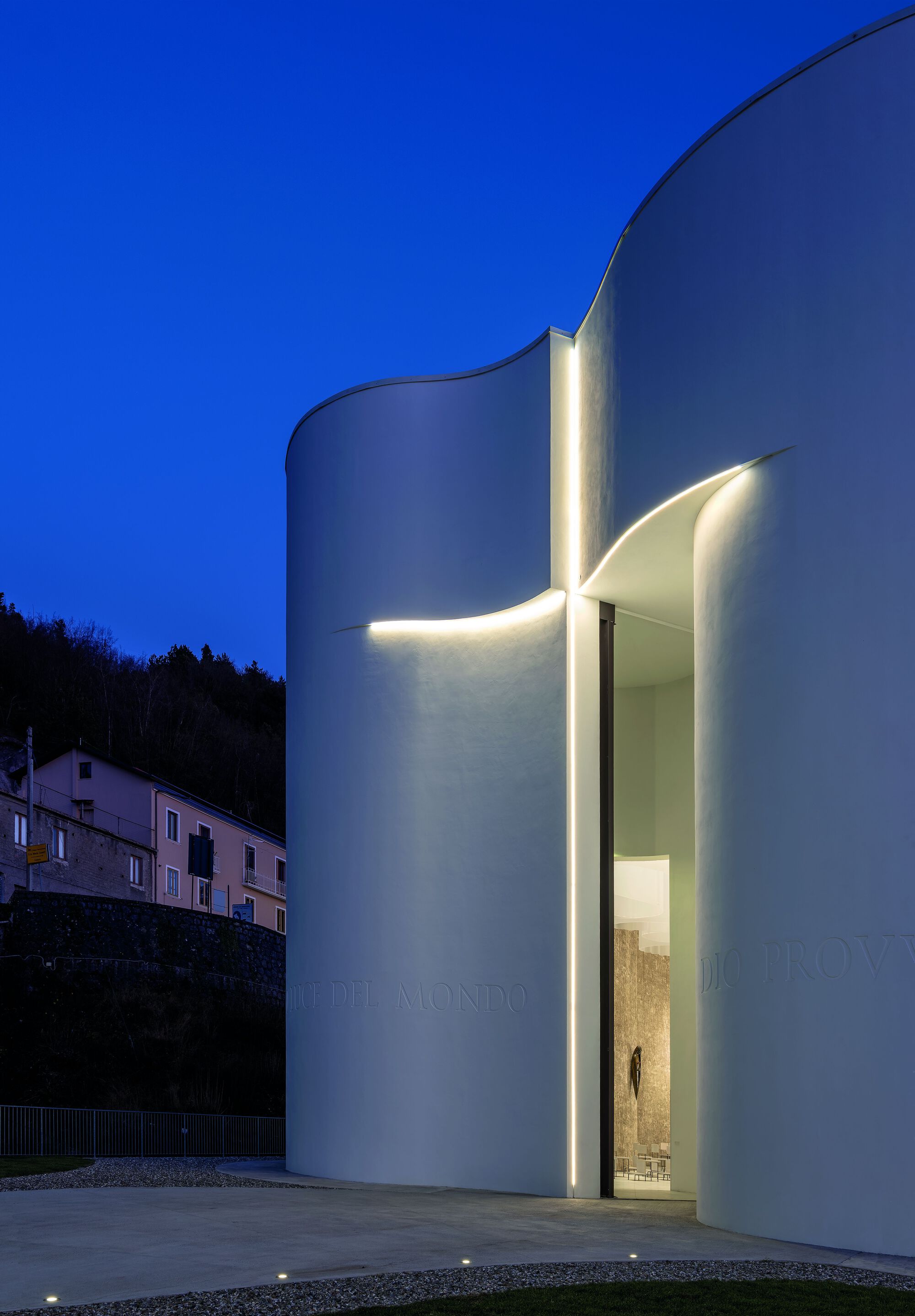
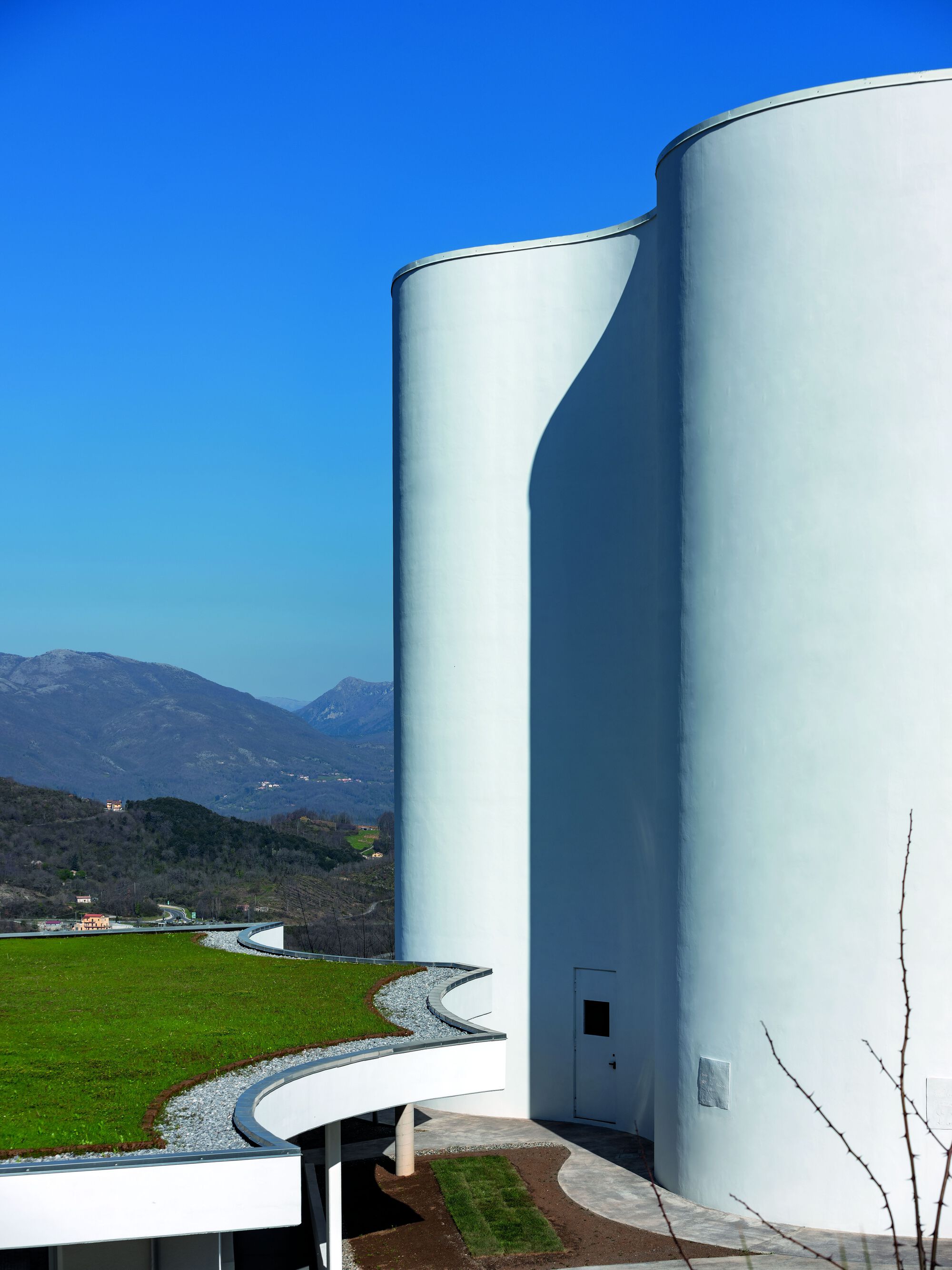
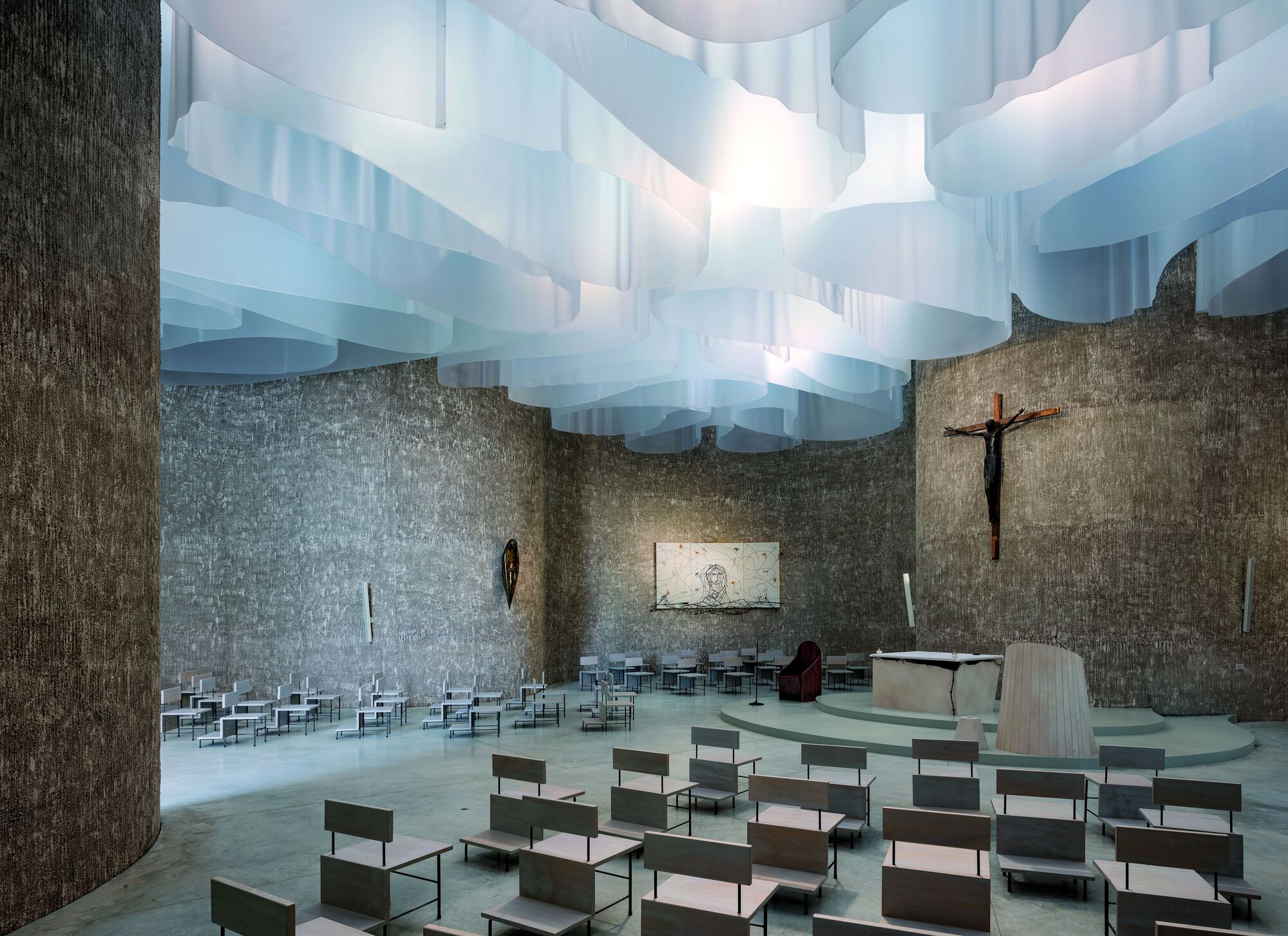
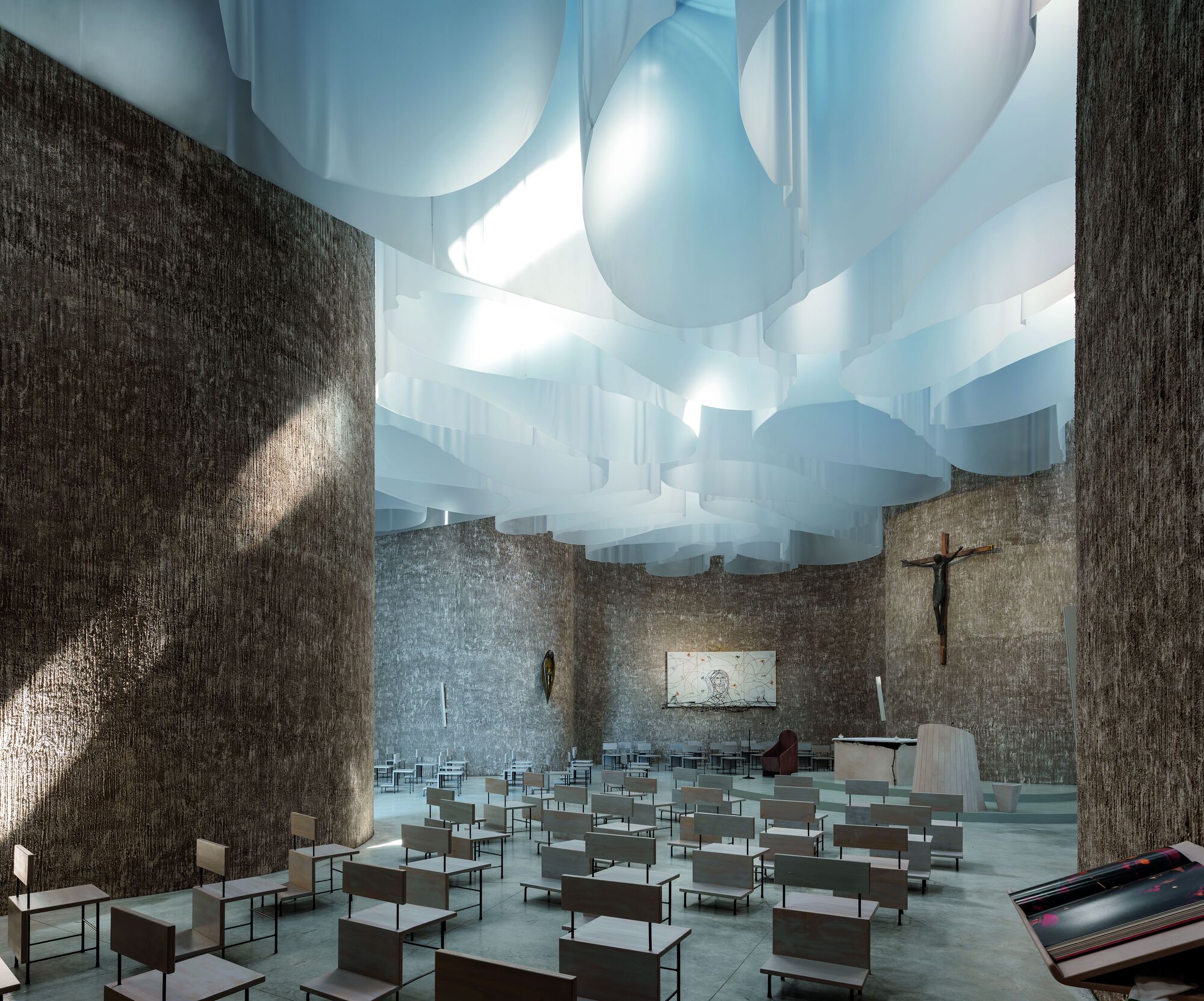
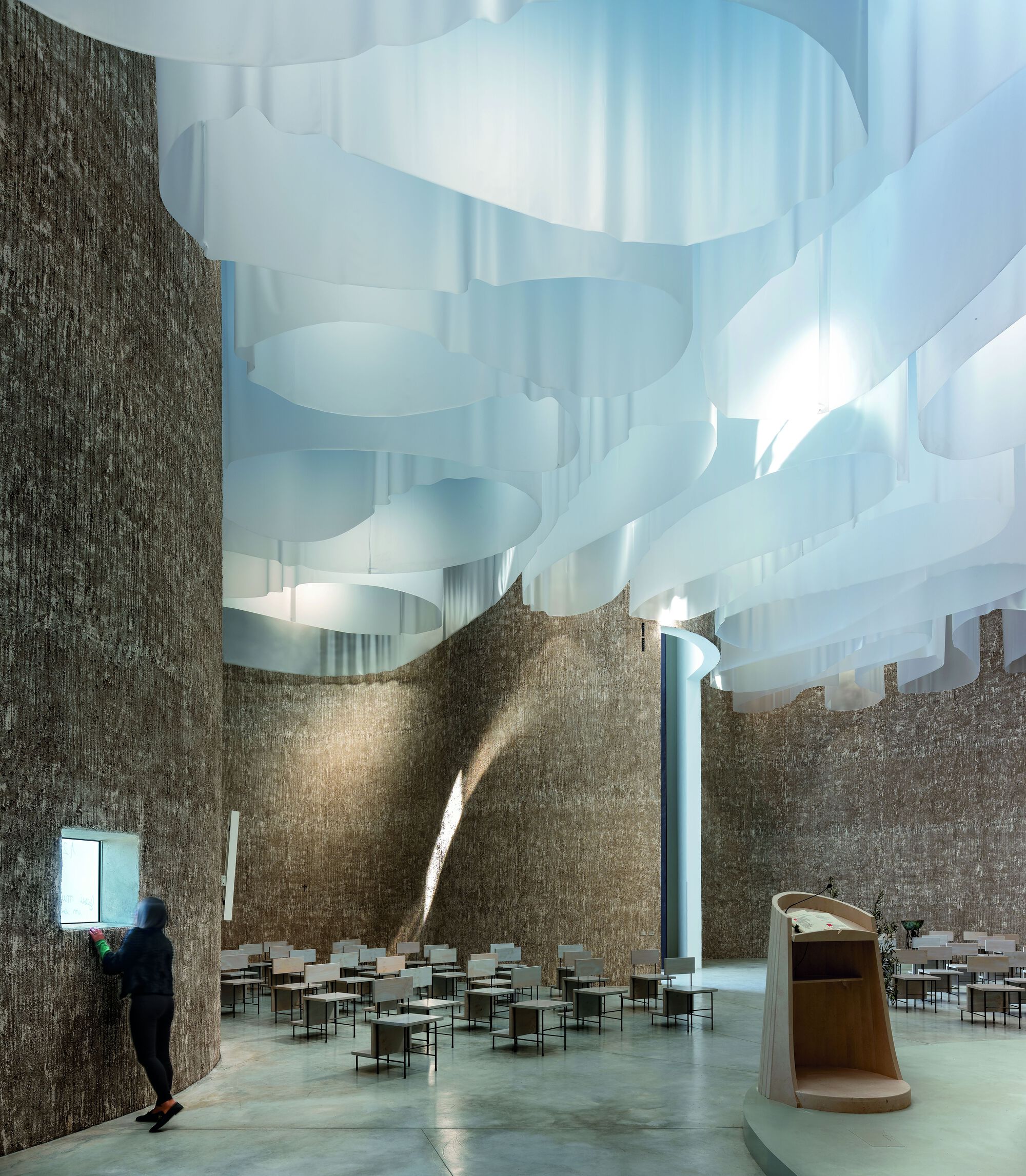
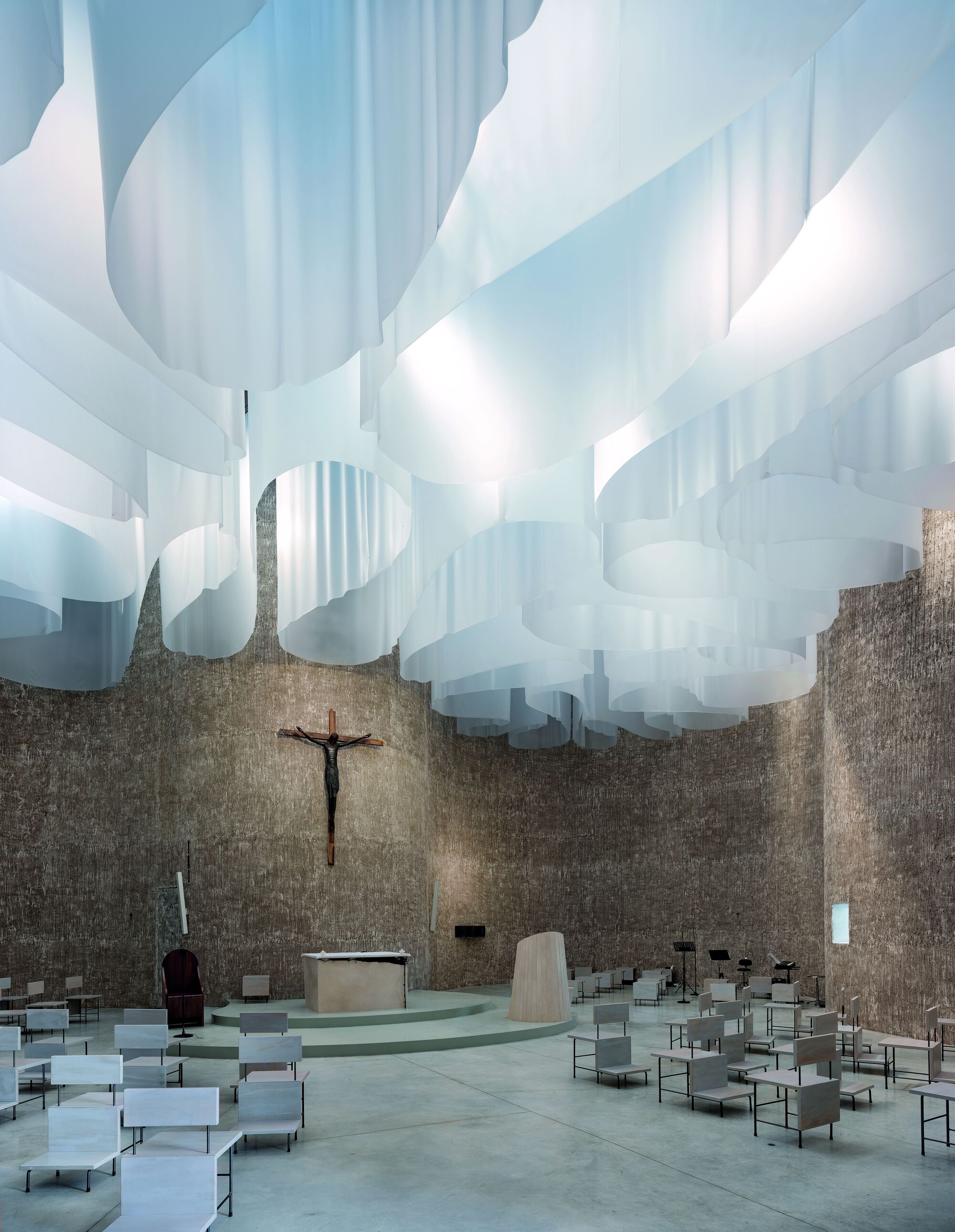
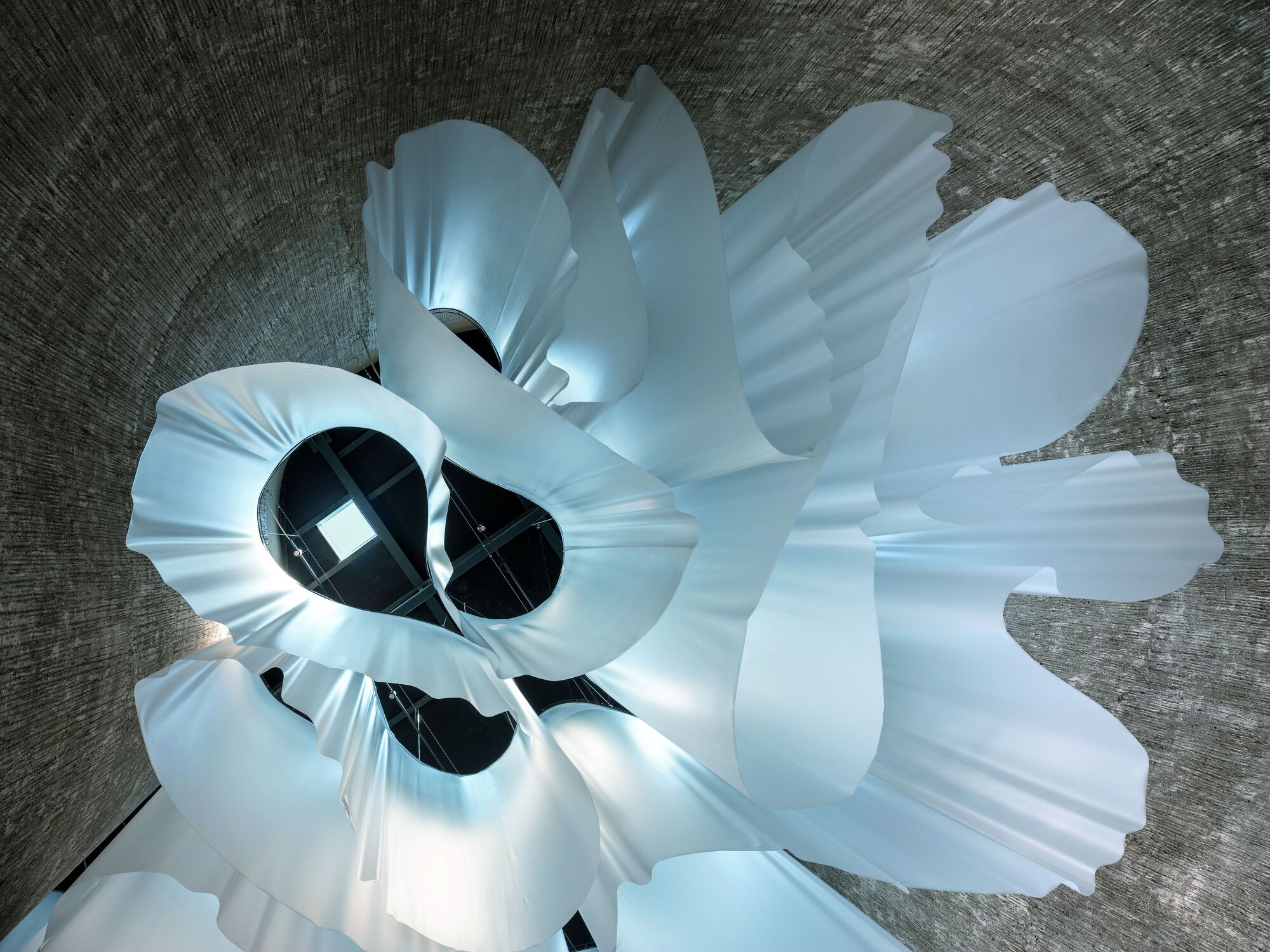
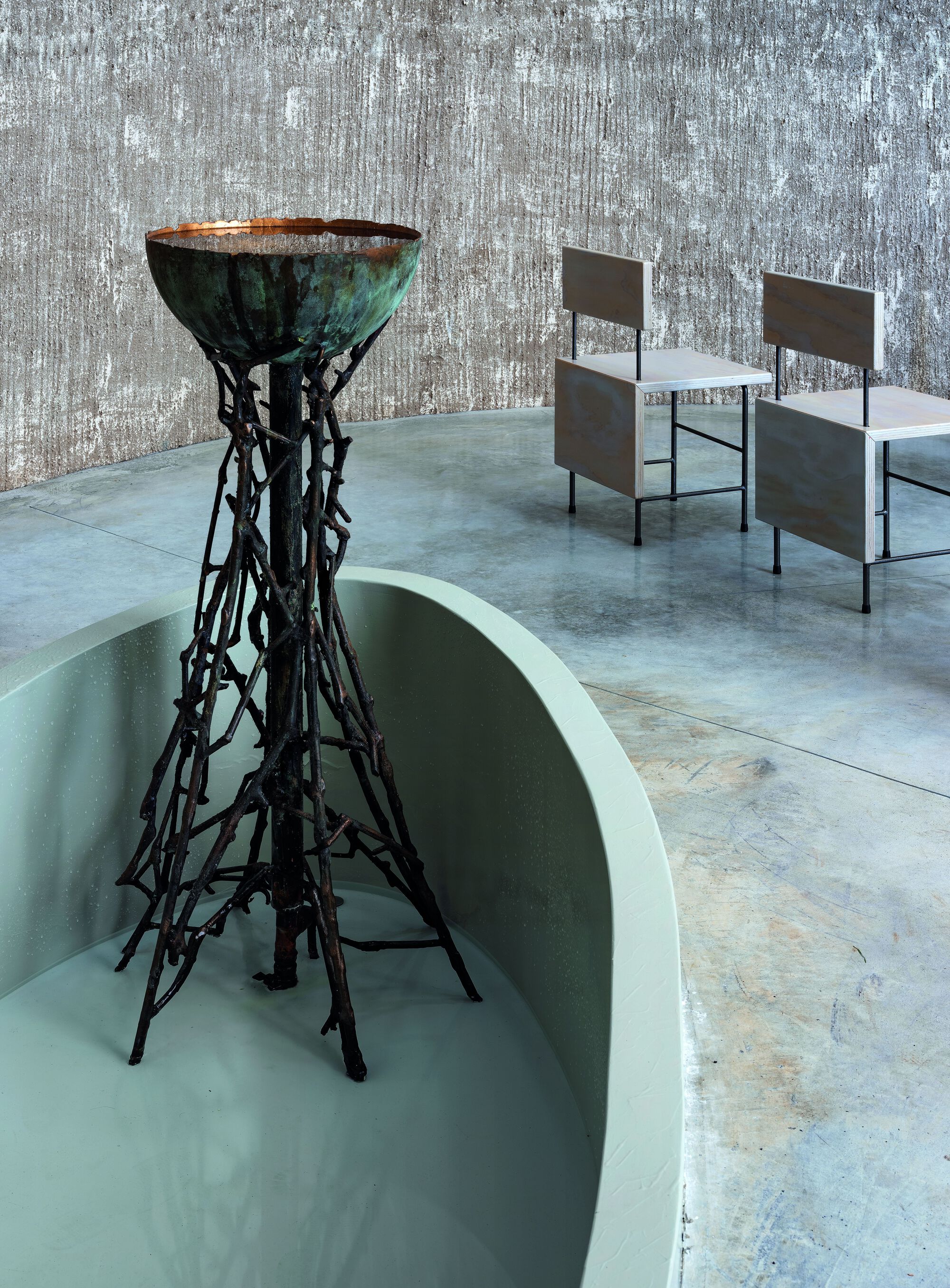
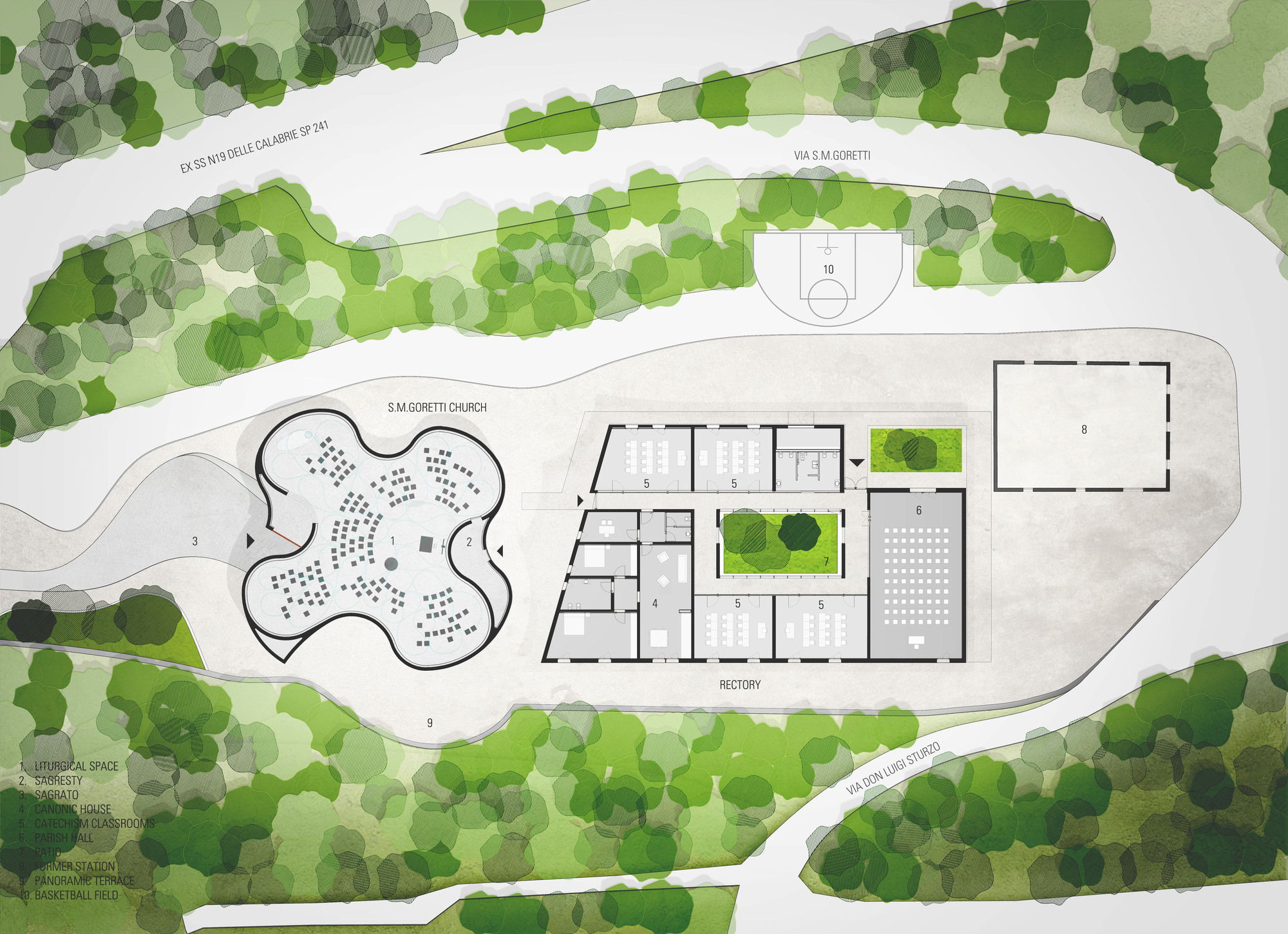
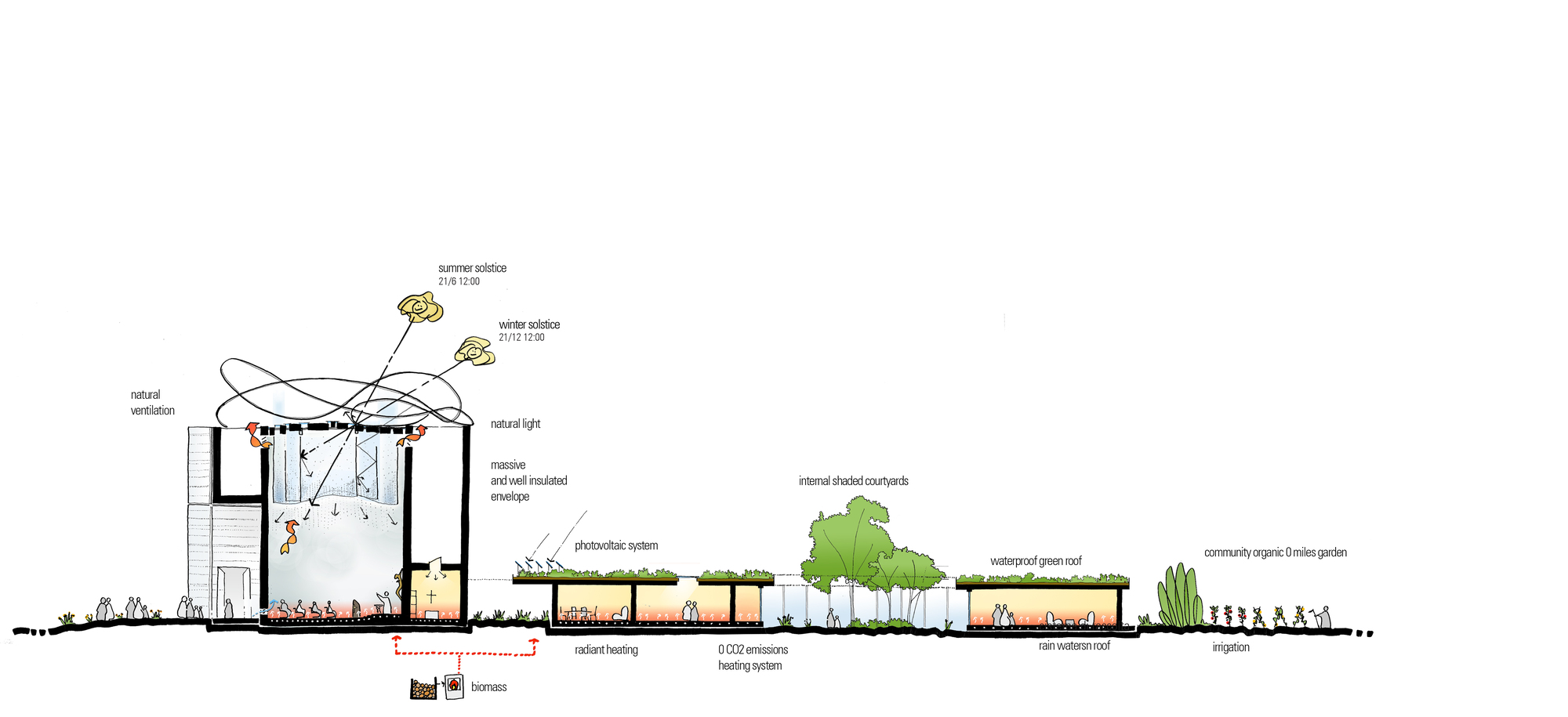
The new Church of Saint Maria Goretti rises independently, quietly, and majestically from the northern edge of the hill town of Mormanno in Calabria, its massive unified form overlooking the rugged Pollino National Park. Designed by Mario Cucinella Architects, the church stands like a sentinel on a grassy meadow, its organic flowing form inspired by natural shapes and echoing the simple yet beautiful Calabrian churches built by monks who fled persecution in the eastern Roman Empire. Woven from history and nature, the church is dedicated to Saint Maria Goretti, the Catholic Church's youngest saint, and appears to stand eternally outside of time. The entrance is set in a tall cut where four white concrete semicircular apses intersect, which also forms an external cross. When illuminated at night, it acts as a beacon guiding people. The interior is filled with mystery: undulating translucent fabrics hang from the 16-meter ceiling, diffusing natural light ethereally through the space. This designed soft light allows focus on the Eucharist and prayer, while the flowing forms recall Baroque Roman churches by Francesco Borromini. The church won a design competition organized by the Episcopal Conference of Italy in 2015 and was completed in 2021. It is reached via a dedicated paved road and serves as the centerpiece of a new parish complex also designed by Mario Cucinella Architects. The concrete-framed plan derives from a cross layout and includes parish meeting rooms, church classrooms, and clergy housing arranged around a lush central courtyard under a vibrant green roof. The north side features a fan-shaped eave line echoing the church's overall form and cloverleaf plan. Clergy enter from behind the altar through a sacristy hidden within curved walls. The church bells are also concealed within walls, ringing loudly but not deafeningly throughout the parish. Minimal wood and steel furniture by Mario Cucinella Design highlights the sculptural architectural elements. On July 6, the feast day of Saint Maria Goretti, a shaft of sunlight through a designed opening falls directly on the cross behind the altar. Nature, art, architecture, faith, and symbolism harmonize spiritually within. The design minimizes energy use and maintenance needs; green roofs, internal planted courtyards, and a zero-kilometer organic garden serve the local community sustainably.










 Editor's Pick
 Latest Design
 Best Idea