Text description provided by the architects
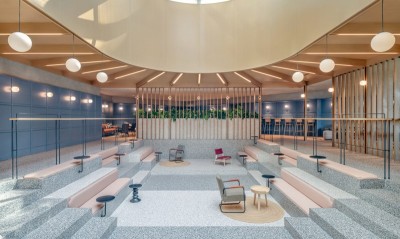
Chongqing is a city riddled with air-raid shelters, up and down, dense everywhere; when hotpot met the shelter, it became the city's greatest signature, as director Yang Qing's 2016 film Chongqing Hotpot dramatized. During the War of Resistance, Chongqing dug the world's largest air-raid shelter network, over 1.5 million square meters; in 1937 the city had only 54 shelters for 7,208 people, one percent of the registered population, but by 1942, after Japanese bombing began in 1938, the number reached 1,603, averaging 178 per square kilometer and able to house nearly all residents. Today the mountain city stands but the smoke has cleared, and Chongqing's shelter culture has entered everyday life: in the pre-air-conditioning era, shelters holding 14 degrees Celsius became places to cool off and date; then rock-and-roll youth brought instruments underground for truly underground gigs; in the twenty-first century, the city integrated shelters into metro construction, converting them into underground malls, hotpot restaurants and museums, while smaller ones became hardware shops, convenience stores and community cooling points. By 2019, ninety-one percent of civil-defense space in central Chongqing was in use. The Jixuding bar is converted from a shelter inside the old Chongqing Printing Factory No. 1, one of two famous old-factory cultural-creative parks in the city; the design treats the thick concrete shelter, its constant cool and its underground darkness as the bar's material and emotional starting point, turning a wartime defensive void into a contemporary social room that carries the layered memory of the mountain city.




 Editor's Pick
 Latest Design