Text description provided by the architects
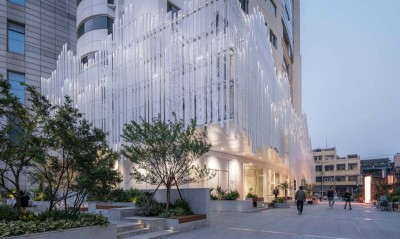
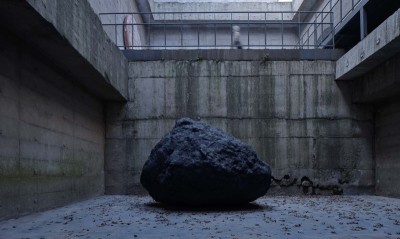
Sunac Wuhan 1890 is a landscape renewal on the site of the Hanyang Iron Works, founded in 1890 by the late-Qing reformer Zhang Zhidong as China's first and largest integrated steel complex, a site listed in 2018 on the first national industrial-heritage register. In 2019 Sunac acquired the land, and Shenzhen Yian Design consulted on the demonstration landscape. The Hanyang steelworks area sits centrally between Wuhan's districts and, after declining with industrial collapse in the late twentieth century, has become an indelible part of the city's DNA. The project includes Plot E with two protected heritage buildings; although the site was disordered and dilapidated, it is rich in mature cedars, poplars and plane trees tens of meters high, along with industrial components that can be reused. The design follows a three-act urban renewal. The first act, preservation, organizes the existing order: the two factory buildings are kept as cultural relics, and the team brings humility to the site, tidying and pruning rather than imposing, in a hard-edged industrial artistic scene; less is more here, the best way to respect history. The second act, remolding, uses a modern, simple spatial language that starts from function and aims at culture, producing a dialogue between present and past as a sequence of historical scenes. The front court is open and transparent so the buildings are fully revealed, with a refined, simple urban edge that gives immediate, visual connection to history. The core scene wraps around the buildings, restrained so that function and beauty are unified, and circulation, rest, viewing and strolling happen freely. The third act, regeneration, balances display plants and structures so that the whole space is reborn. The front is a stage for history: stepped entrances rise ceremonially, and a large mirror pool reflects the buildings as equal partners in a spiritual showcase. The Ring of Time is the project's boldest gesture: if the Zhang Zhidong and Wuhan Museum is the spiritual monument of the district, this site is the continuation of its rebirth. The ring connects the two areas through the buildings as a middle axis where new and old, memory and future, exchange. Deep in the site, the courtyard of time becomes a sketchbook where industrial parts are the most unique ornaments, and the objects find their right home. The ring itself is welded from 107 metal components to frame a view of the museum on one side and open woodland on the other, a passage that links old and new. Covering 7,482 square meters and designed in 2019, the project is a modest but meaningful act of urban renewal in which dormant factory space comes alive and will continue to grow into a new city block.




 Editor's Pick
 Latest Design
 Best Idea