Text description provided by the architects
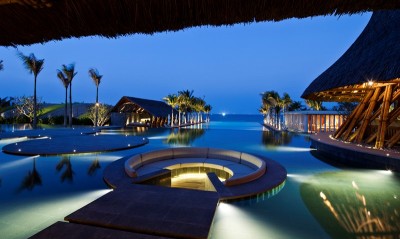
Guanlu Tent Hotel in Huangshan, Anhui is set in Guanlu Village, a nationally recognized historic and cultural village known for its eight great Hui-style residential compounds, surrounded by streams and quiet lanes. The hotel is positioned as a high-end wild-luxury resort with cultural depth. The design roots itself in the site's natural ground, treating mountain and water as veins, vegetation as hair and mist as spirit. The approach, called non-design design, uses restoration and protection techniques to reveal the original landscape, allowing people and architecture to grow naturally from the wild. White tent-style buildings nestle against the mountains, half-hidden among dense vegetation, blurring the boundary between nature and architecture. The maximally preserved native planting, supplemented by careful new planting, creates a pure mountain-forest wildness. Hui-style atmosphere extends from the village into interiors through a modern reinterpretation of restrained, monochrome black-and-white composition, accented with pine and stone. The design reflects the biophilic hypothesis that humans have an innate psychological need for emotional connection with nature, while in Chinese tradition mountains and water have always served as aesthetic objects that refresh the spirit and invite scholars into the wild. The hotel's artificial environment exists only to enhance the viewing of the natural one.




 Editor's Pick
 Latest Design