Text description provided by the architects
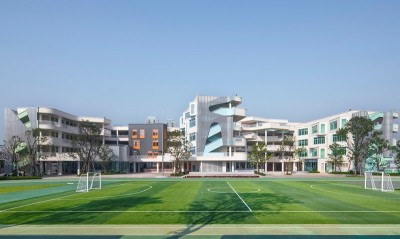
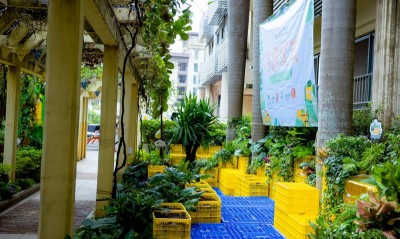
The ASEAN Arts College was approved by Chengdu as part of the city's deeper implementation of the Belt and Road initiative and its ambition to build a western cultural creative center and world cultural city. Aligned with Chengdu's park-city philosophy, the college is designed as an ecological park campus and was intended to offer university athletes from around the world a distinctive cultural experience during the 2023 Chengdu World University Games. The site lies north of Chengdu University in Shiling Subdistrict, Longquanyi District, the eastern gateway of Chengdu, bordering the central urban area to the west, Qingbaijiang, Xindu, and Jintang to the north, Shuangliu to the south, and Longquan Mountain to the east. The landscape design follows the Belt and Road principle, integrating ecological art, Southeast Asian art, and Eastern Zen sensibility into a forward-looking international arts campus. The ecological campus zone respects nature, culture, and locality, pursuing low-investment, low-maintenance, low-impact development, emphasizing human-centered natural experience and interactive participation, and combining landscape with stormwater management. An on-campus lake uses ecological water purification to reach Class III water quality, reused for pavement washing, landscape water features, irrigation, and fire-fighting supply. The lake is divided into a pre-treatment intensive purification zone, a water quality optimization zone, and a landscape enhancement zone, building a complete underwater ecosystem to preserve ecological diversity and ensure stable long-term water quality. The arts campus zone extracts cultural elements and modern aesthetic colors from the ten ASEAN nations for key nodes. The south entrance ASEAN Cultural Plaza draws on the main colors of ASEAN national flags for a modern water feature; the east entrance Arts Center Plaza uses clean planting and artistic language; the college hall ASEAN Arts Courtyard uses Nanyang plants and paving; the teaching building courtyard extracts the map of ASEAN nations combined with modern sculpture; and the dormitory zone blends traditional ASEAN colors with modern minimalist design. The college represents Chengdu's cultural confidence and its commitment to building a new platform for Belt and Road cultural exchange.




 Editor's Pick
 Latest Design