Text description provided by the architects
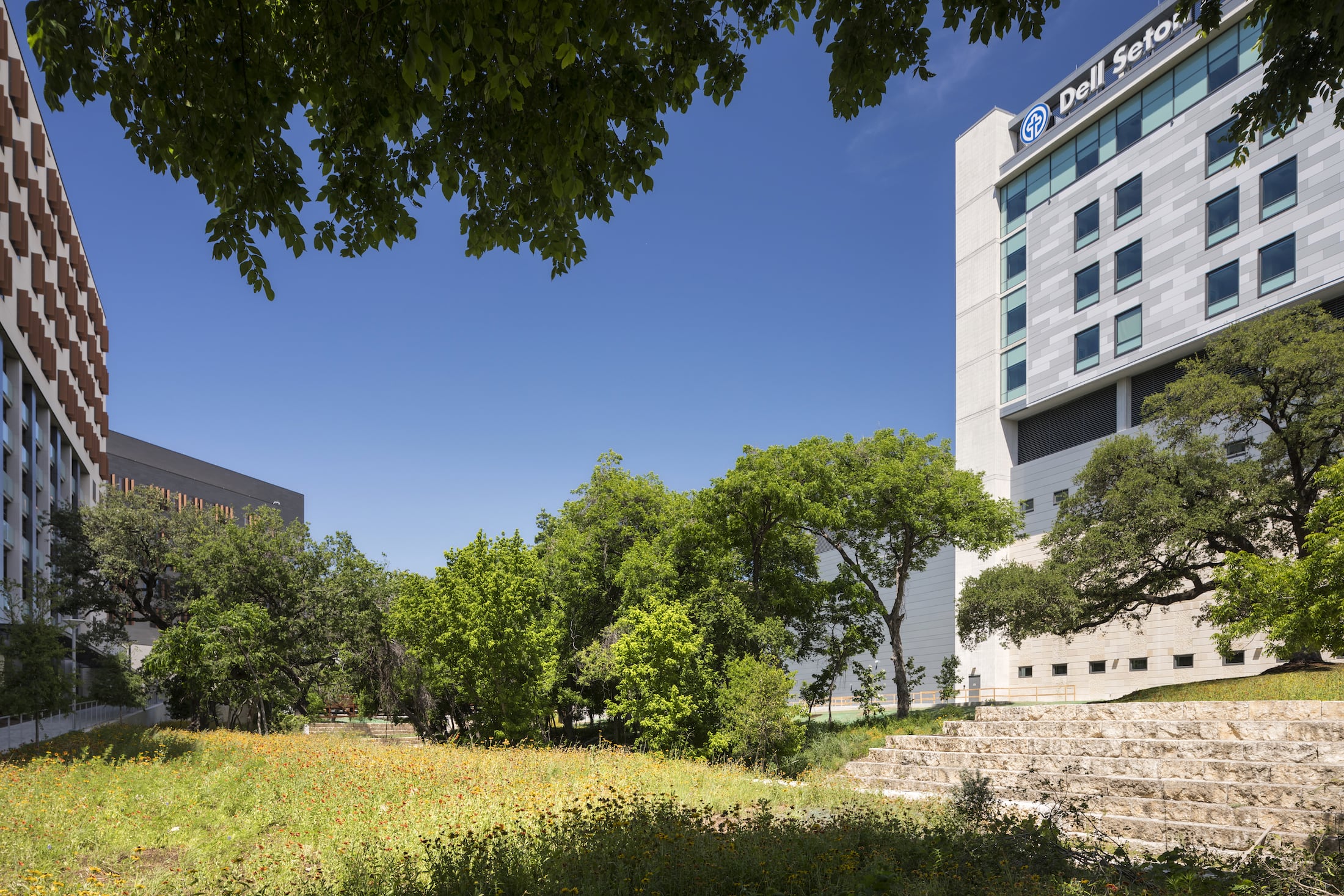
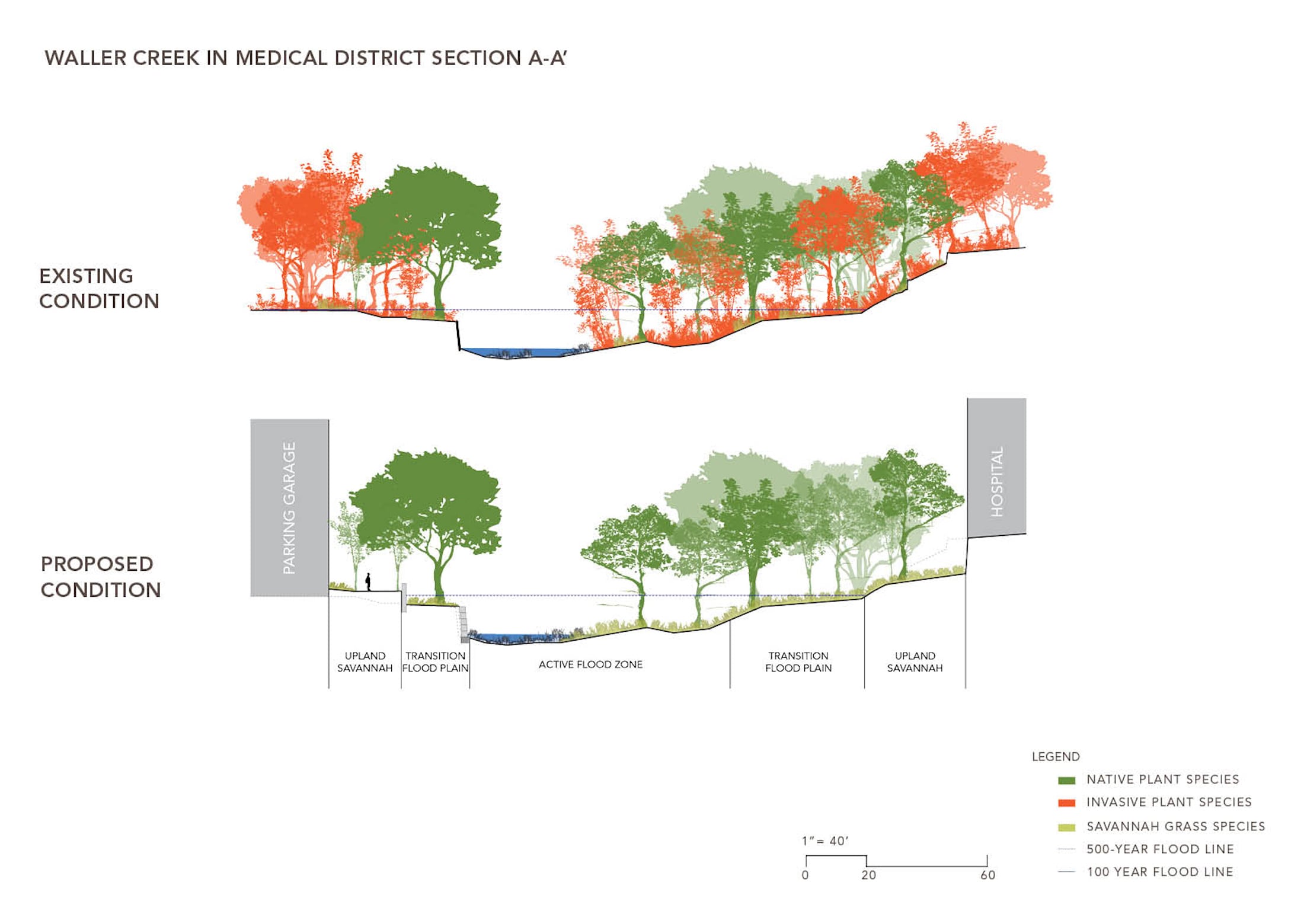
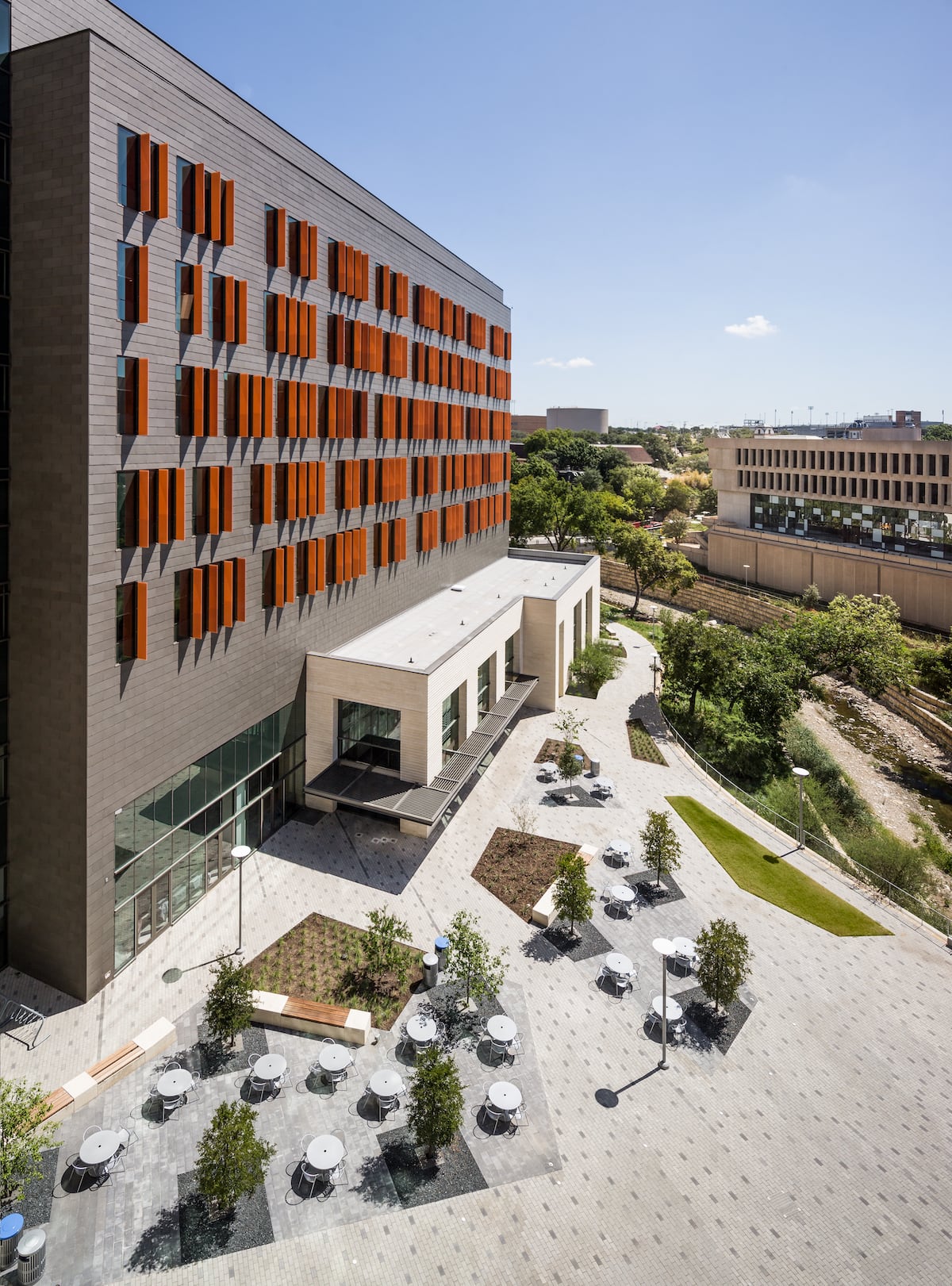
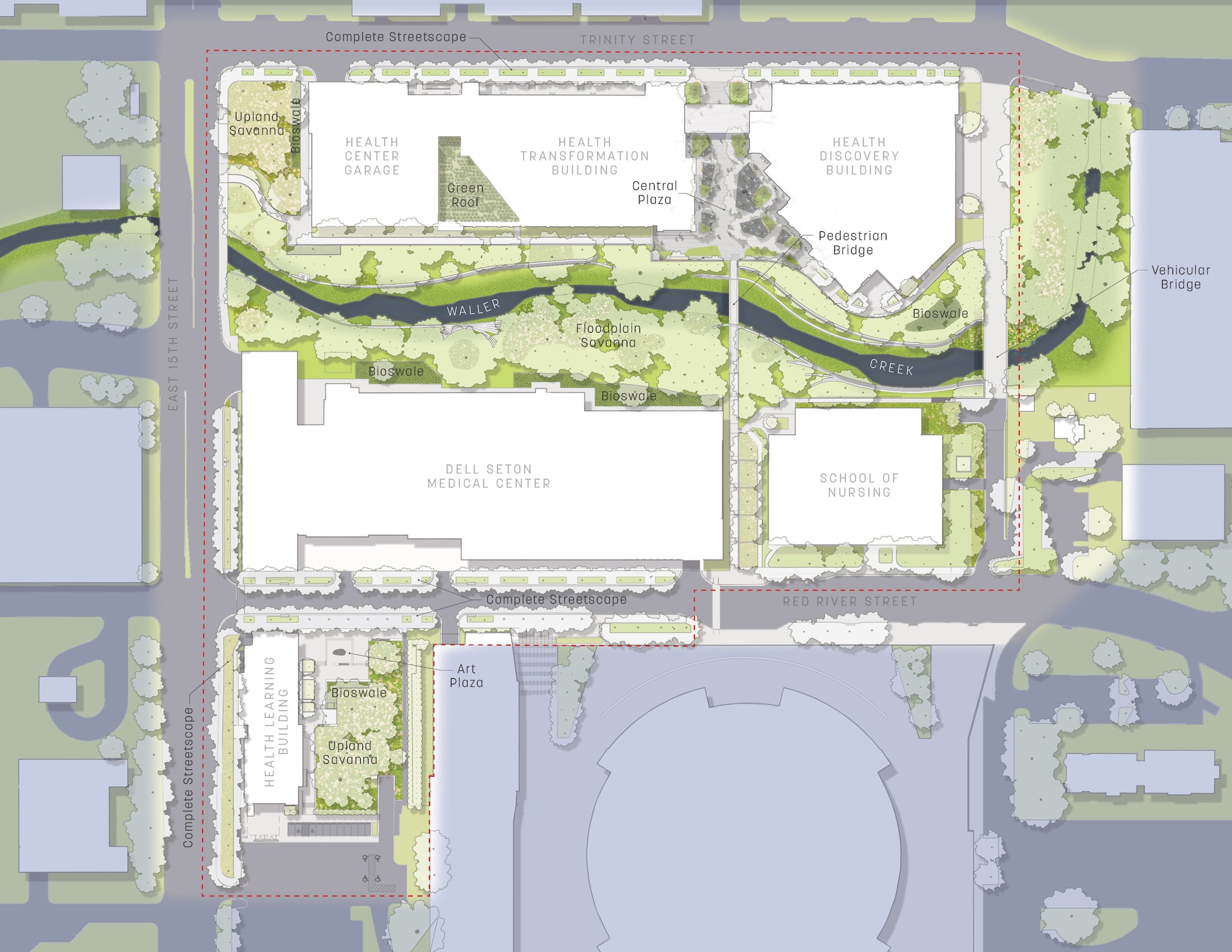
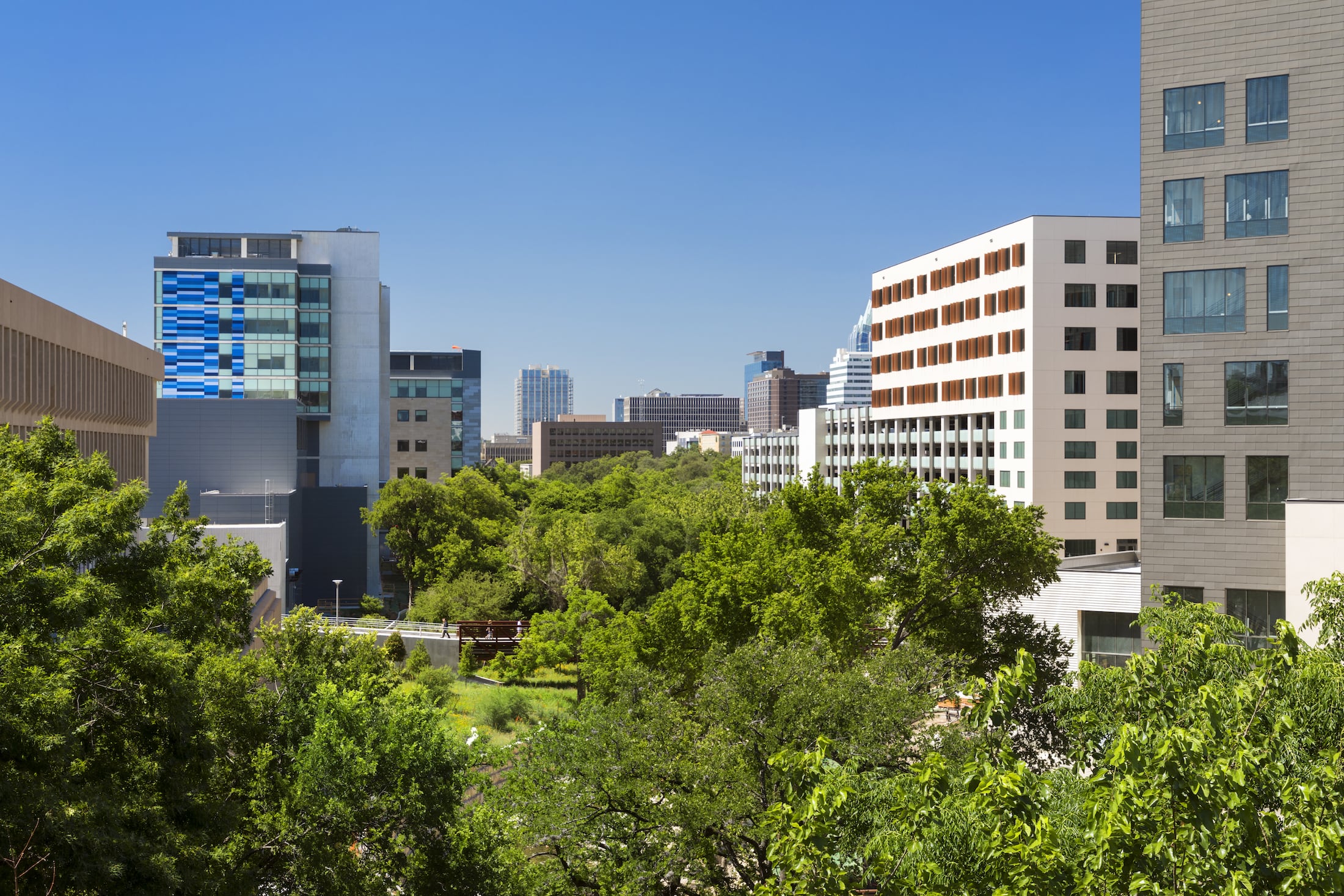
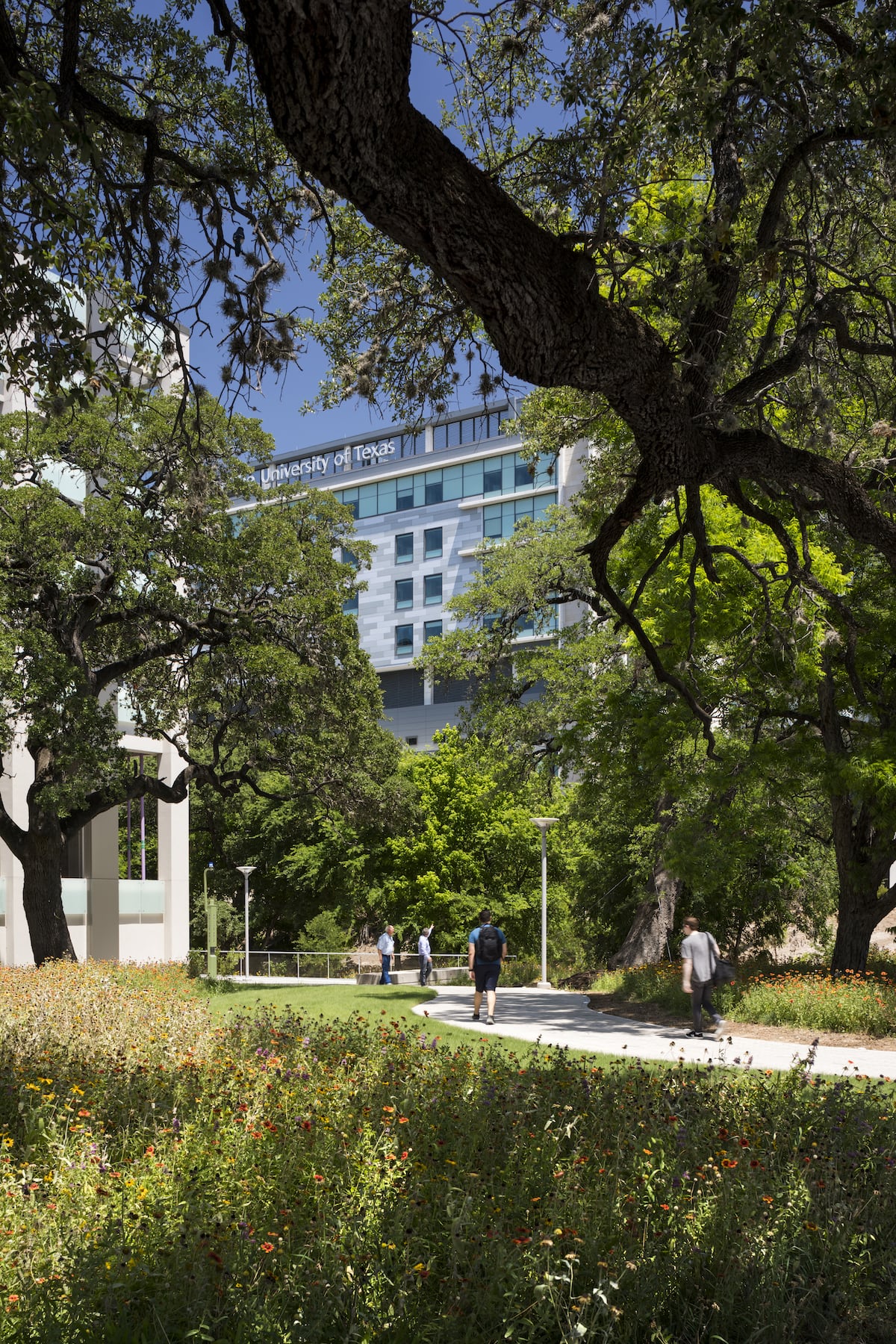
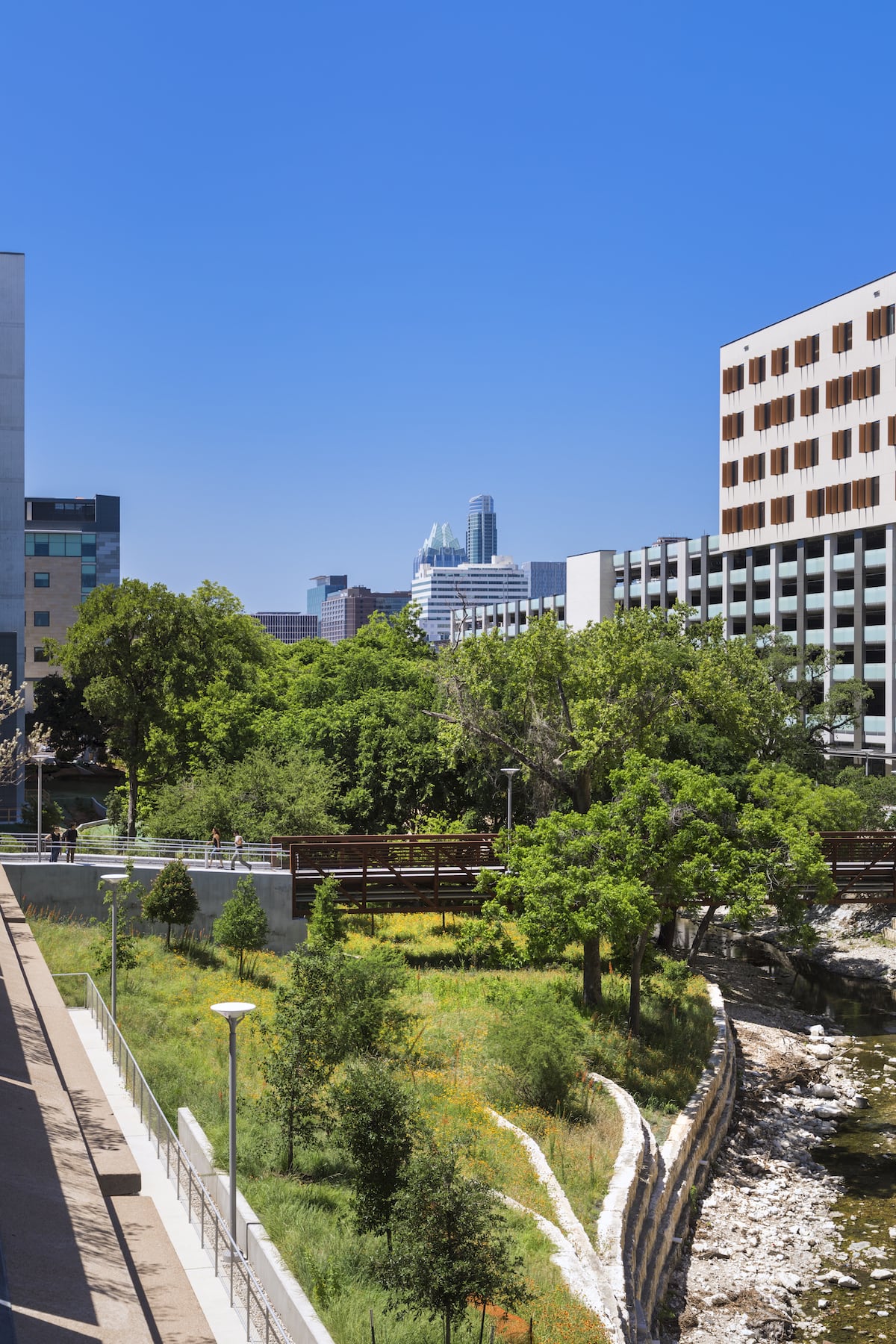
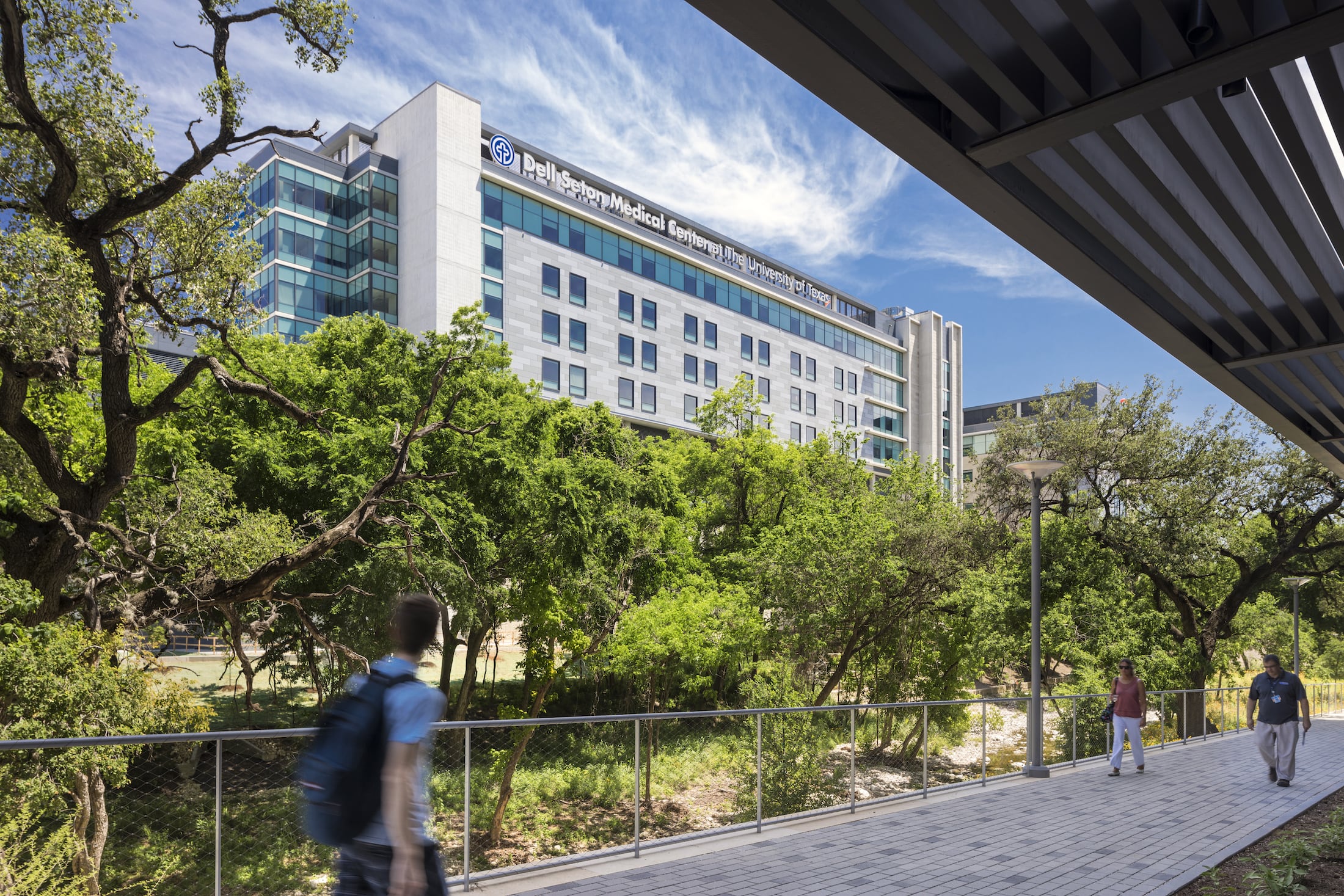
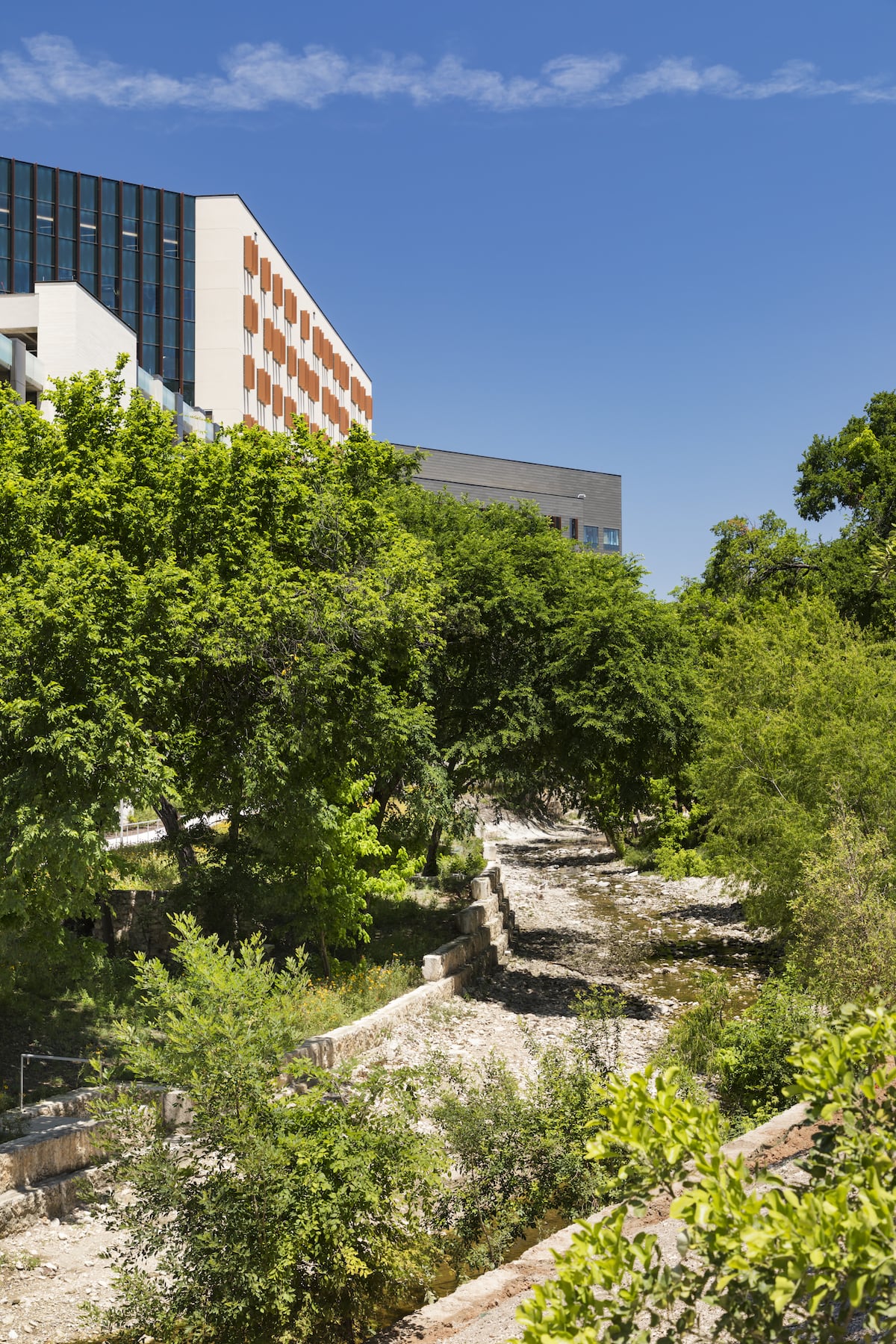
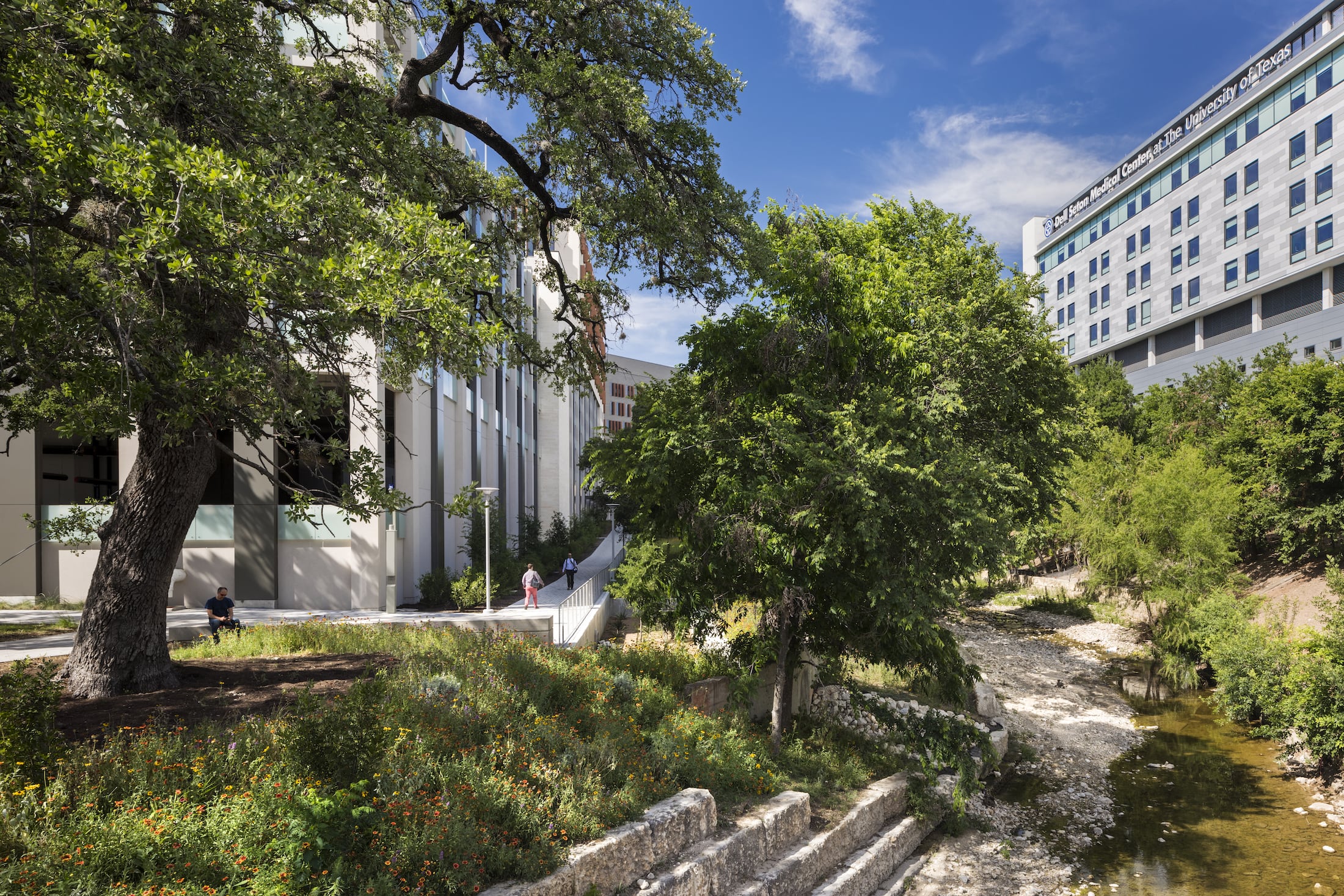
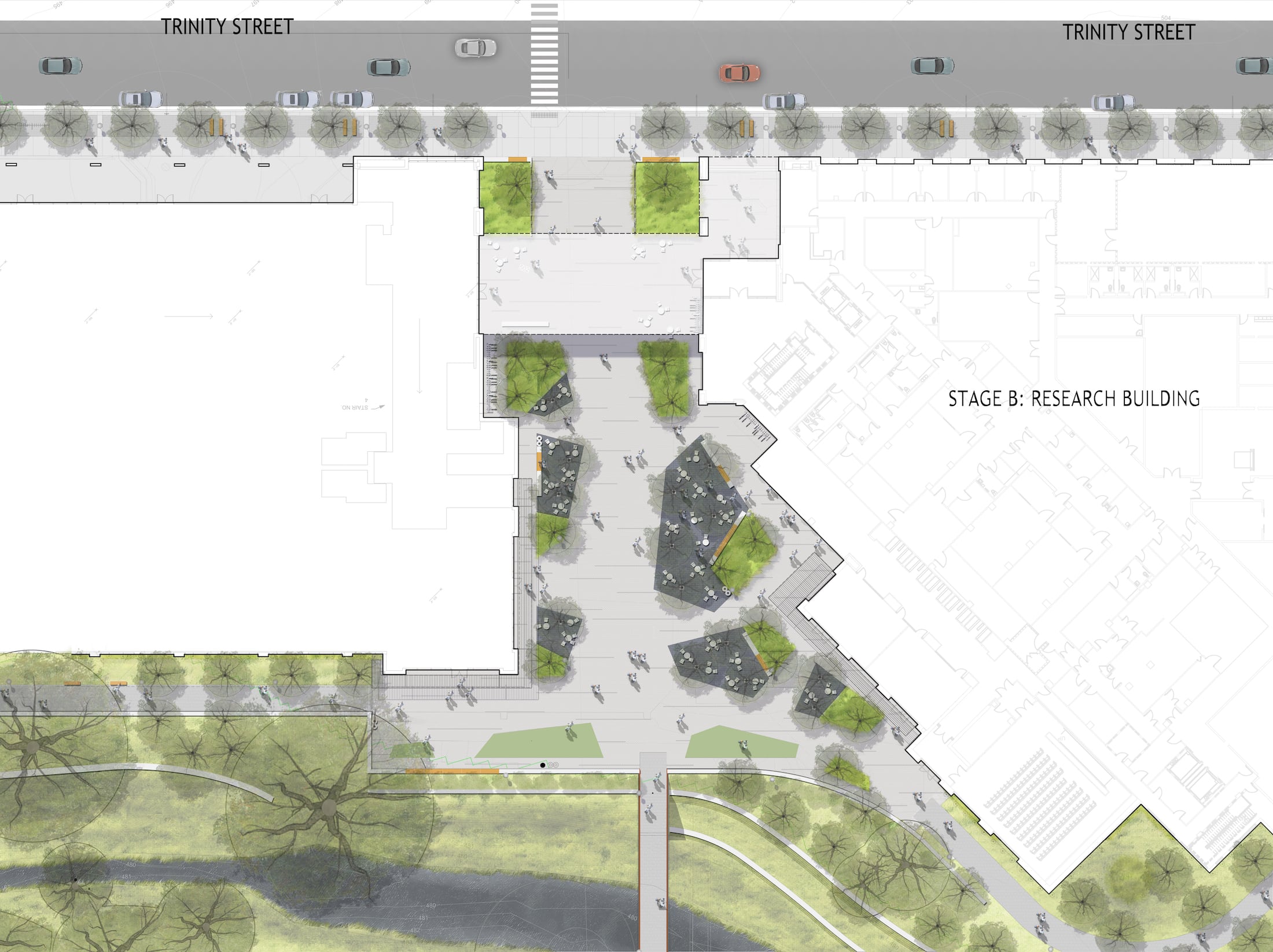
The Dell Medical District landscape at the University of Texas at Austin covers more than 6.5 hectares in central campus and is part of the city's largest health-care development, serving the Dell Medical School, the Dell Seton Medical Center teaching hospital and visitors while setting a new ecological-performance standard for the campus. The design continues a two-year planning process by Sasaki and consultants, who produced the campus master plan in 2012, the medical-district master plan in 2013, and the UT Austin landscape master plan and design guidelines in 2014, all grounded in the university's unique historical context. The medical district realizes the master plan's vision: an integrated health-care precinct, a revived Waller Creek corridor, and stronger links to the city of Austin. Once neglected, Waller Creek is revalued as a key campus asset and open space; restoring its medical-district reach was the first step toward folding it into the broader campus landscape and is essential to both visual quality and function. Over 18 months, the team planted a reference plant community in a nearby natural preserve, removed invasive exotics, stabilized banks and restored native riparian and upland diversity; on site, rain gardens were built and soils repaired in key areas, after which most campus landscape zones will need no supplemental irrigation. To promote health and well-being, 14 heritage live oaks were transplanted from the main fine-arts campus, where oaks are iconic for their form, ecological value and broad Austin shade; they carry the historic main-campus atmosphere into the new medical buildings. Streetscapes and plazas encourage interaction and link the campus to the surrounding city, while rain gardens, permeable paving, rainwater harvesting and green roofs manage stormwater and let visitors explore local climate and hydrology. The project achieved SITES Gold certification, advancing UT Austin's sustainable-site standards and delivering reduced water use, improved stormwater quality, less erosion, better habitat and greater resilience, turning the campus into a human-centered, connected open space where people and environment collaborate as one system.




 Editor's Pick