Text description provided by the architects
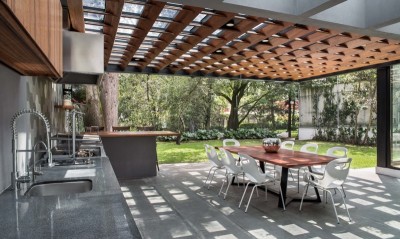
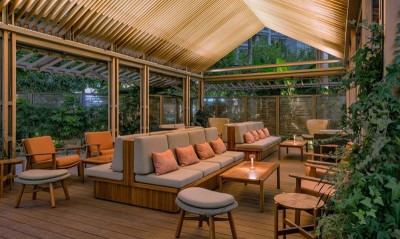
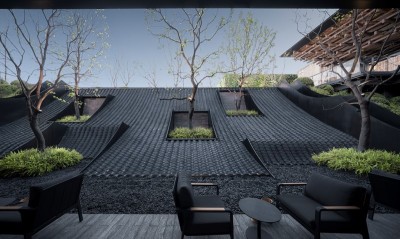
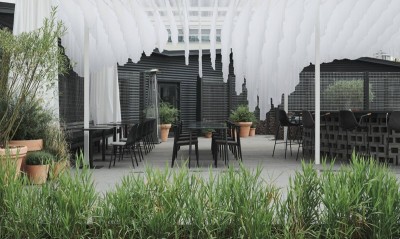
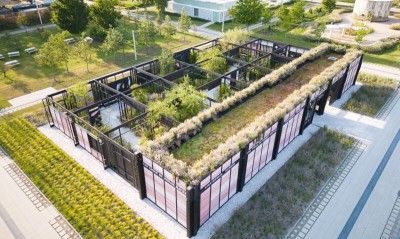
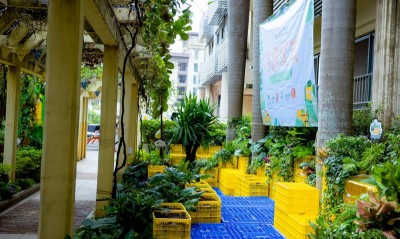
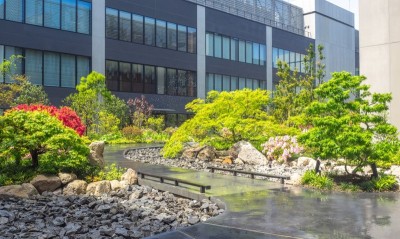
The TANKO Slow Flash Park sits in the hills of Mentougou, west of Beijing, a district known for its clean air and deep cultural roots. Conceived during the pandemic, when the pace of daily life slowed and residents reconsidered the value of unstructured time, the park is positioned as a doorstep park that links valley, town, and idealized slow living. Developed around the TANKO community's future small-town lifestyle, the limited site is organized into three atmospheric zones, the Celestial Realm, the Secret Realm, and the Human Realm, strung together by a distinctive natural aesthetics that connects leisure, creative culture, family, and art. An irregular sculptural canopy and curved feature wall mark the image entrance, deliberately softening the boundary between park and public street so that the garden feels open and permeable. Generous transition zones create a boundless wandering experience; rocks, lawns, planting, and water courses are inserted to build a rich natural ecology. The park distributes stages, markets, seating, dining, children's play, and art pavilions along a looping water system that ties the zones together. Paving uses exposed concrete and crushed stone, platforms use treated timber, and stream beds use gravel and cobble, reinforcing a rustic, open character. Natural and playful art sculptures are scattered through the planting so that landscape and sculpture interpenetrate. Built on sloping terrain, the park follows the hill in terraced layers: climbing steps and gradual planting banks let visitors touch the landscape directly, and tents dot the broad meadow. The hillside planting is organized as pure slope forest plus seasonal flower meadows that shift colour through the year; at its centre, swings, treehouse, and slide form a children's garden. The Cloud-Top point and the spiral Rain Bell Tower offer the best viewpoints, for distant prospect and quiet meditation alike. Mountain-side guesthouse planting uses crabapple, red maple, miscanthus, and aster, with granite and slate walls to evoke a secluded luxury retreat. Despite construction challenges on steep, mountainous terrain, the team used large crane lifts and close coordination to deliver the park on schedule. The project embodies Milan Kundera's observation that slowness is a sign of happiness, using a designed landscape to invite residents to pause, reconnect with nature, and adopt a slower rhythm of life.




 Editor's Pick
 Latest Design