Text description provided by the architects
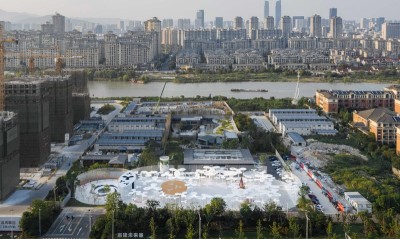
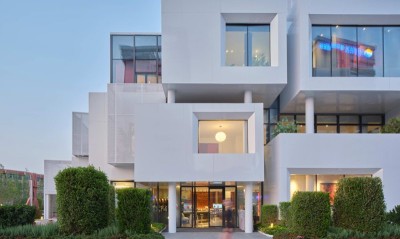
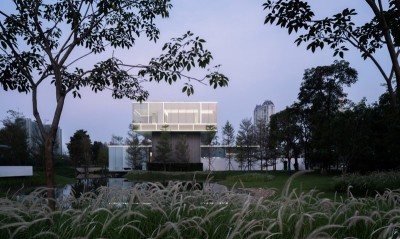
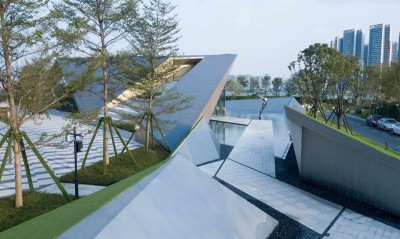
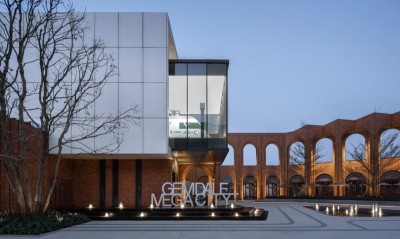
Stones in the forest, water before the grove; forest on the mountain, mountain in the clouds; deep courtyards holding mountains and waters—a tribute to the minimalist aesthetics of Eastern imagery. Qionglai belongs to Chengdu, Sichuan, and has been known since ancient times as the first prefecture south of the Heavenly Prefecture. The ancient city of Linqiong is one of the four great ancient cities of the Bashu region. Over two thousand years of development, the city site and structure have remained unchanged, serving as a model of a feng shui ancient city on the Chengdu Plain. Within the old city, over thirty Ming-Qing ancient courtyards and nearly forty characteristic lanes survive on Dabeijie and Xingxian Streets. The design concept draws on the strange peaks, grotesque stones, beautiful waters, and secluded forests that make Qionglai's famous Tiantai Mountain renowned at home and abroad. The landscape design continues the traditional residential courtyard pattern, emphasizing spatial depth and sequence, and proposes the concept of mountains and waters within the courtyard, integrating Tiantai Mountain scenery into the courtyard to form a one-courtyard-one-view, progressively unfolding landscape experience. Clouds, mountains, forests, waters, and stones are condensed into design elements that interweave to interpret the modern Chinese poetic mountain-water dwelling. The first progression, Ascending the Gate to View Mountains, uses a stately gate as ritual, a solemn facade as prologue, and layered entry ceremony to add a full sense of ritual and quality to the homecoming. Glass is layered to form mountains, with pines and cascading water on both sides, accentuating the entrance facade and opening the ritual ceremony of Eastern gardening. The second progression, Exploring Bamboo and Listening to Springs, follows a winding path through seclusion, lingering among turns where lush bamboo screens floating light on the wall.




 Editor's Pick