Text description provided by the architects
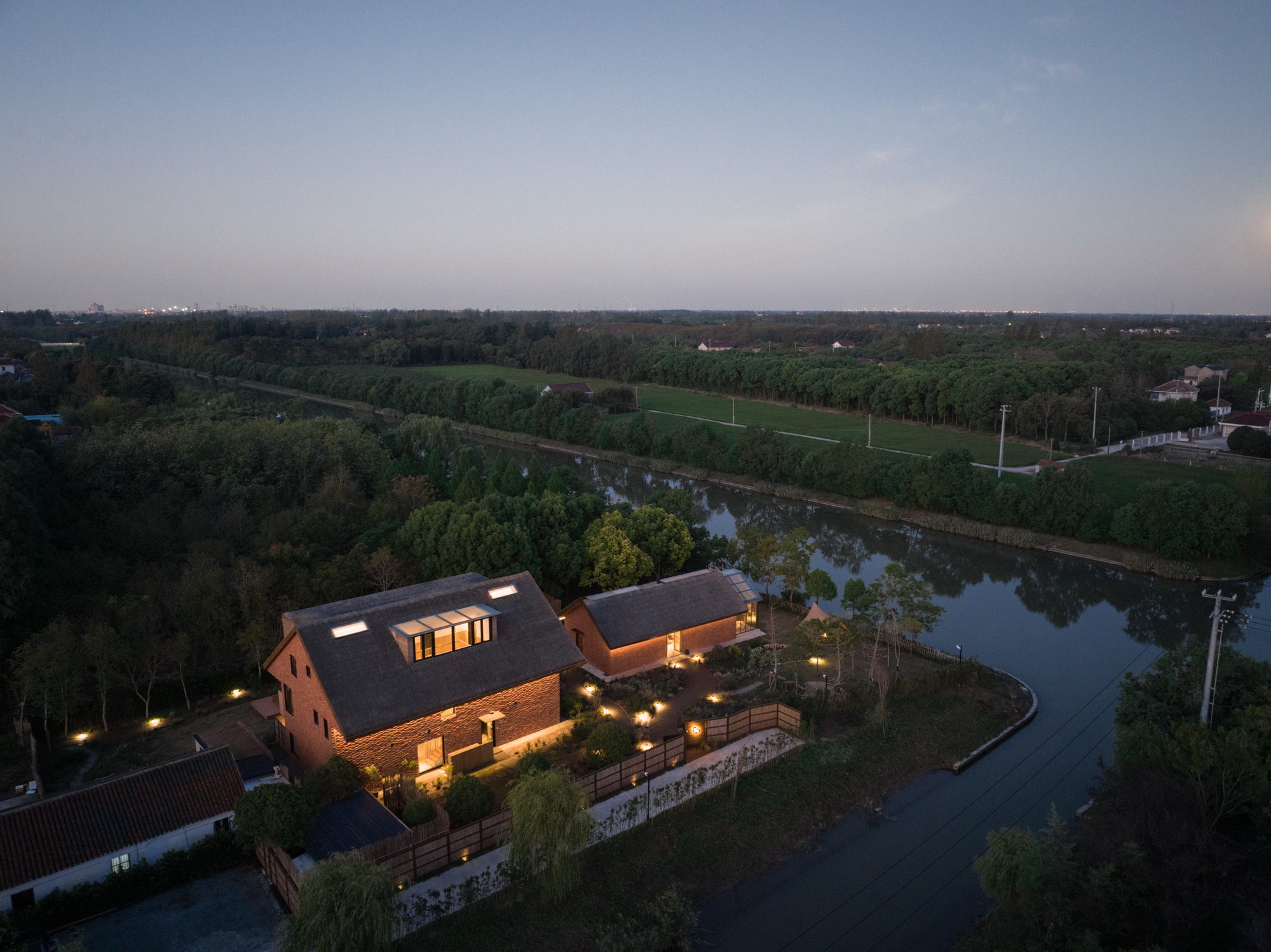
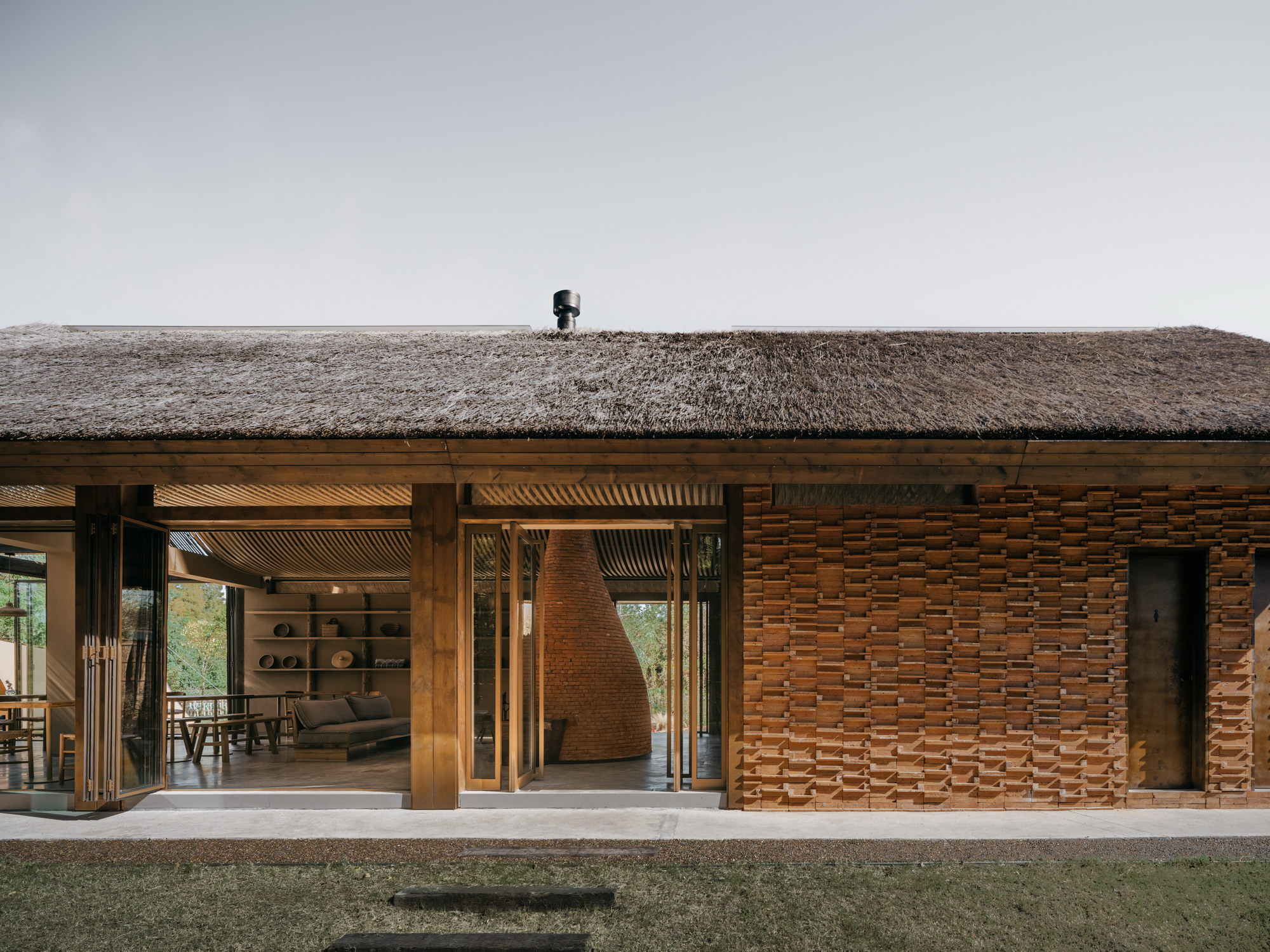
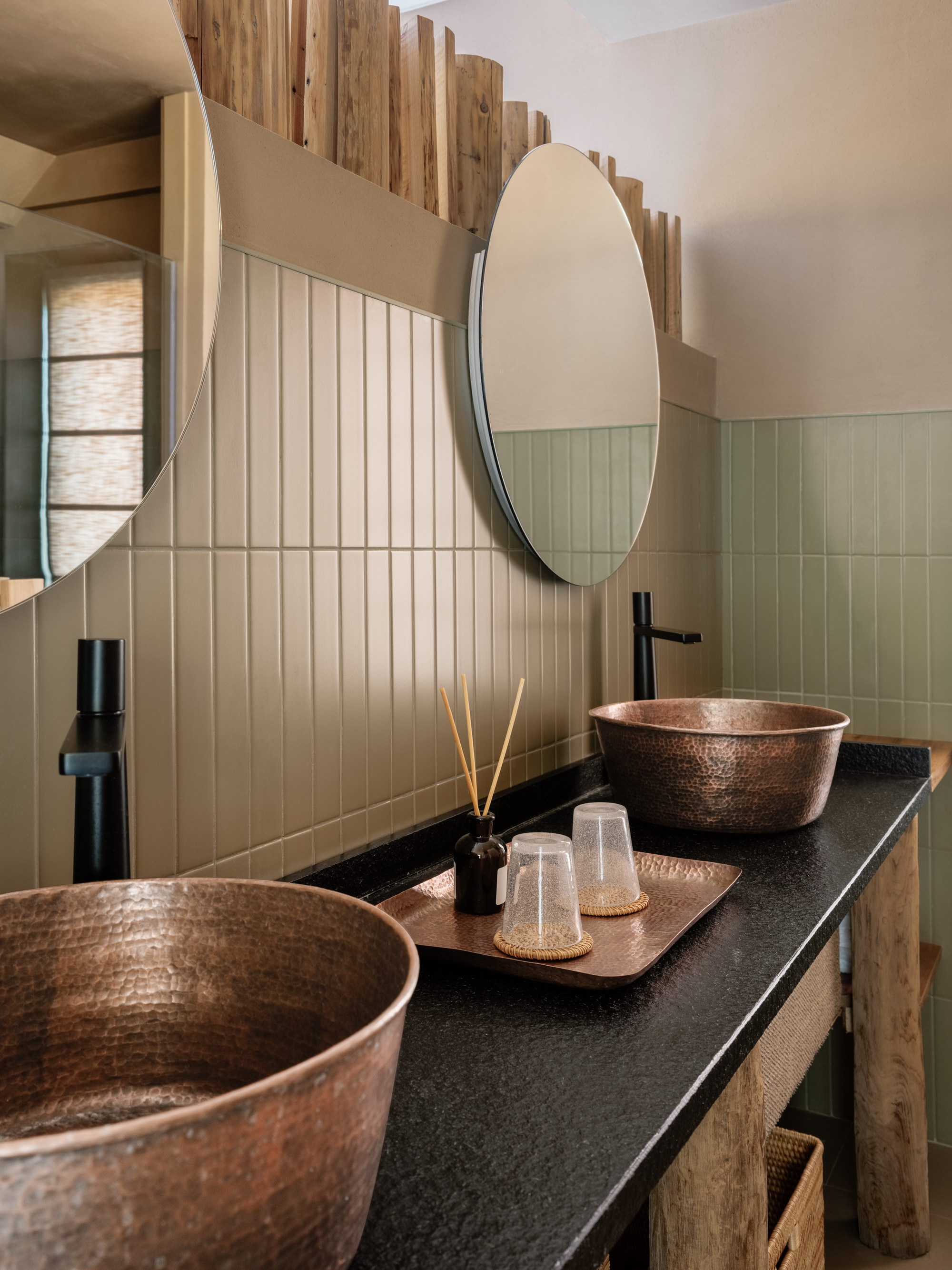
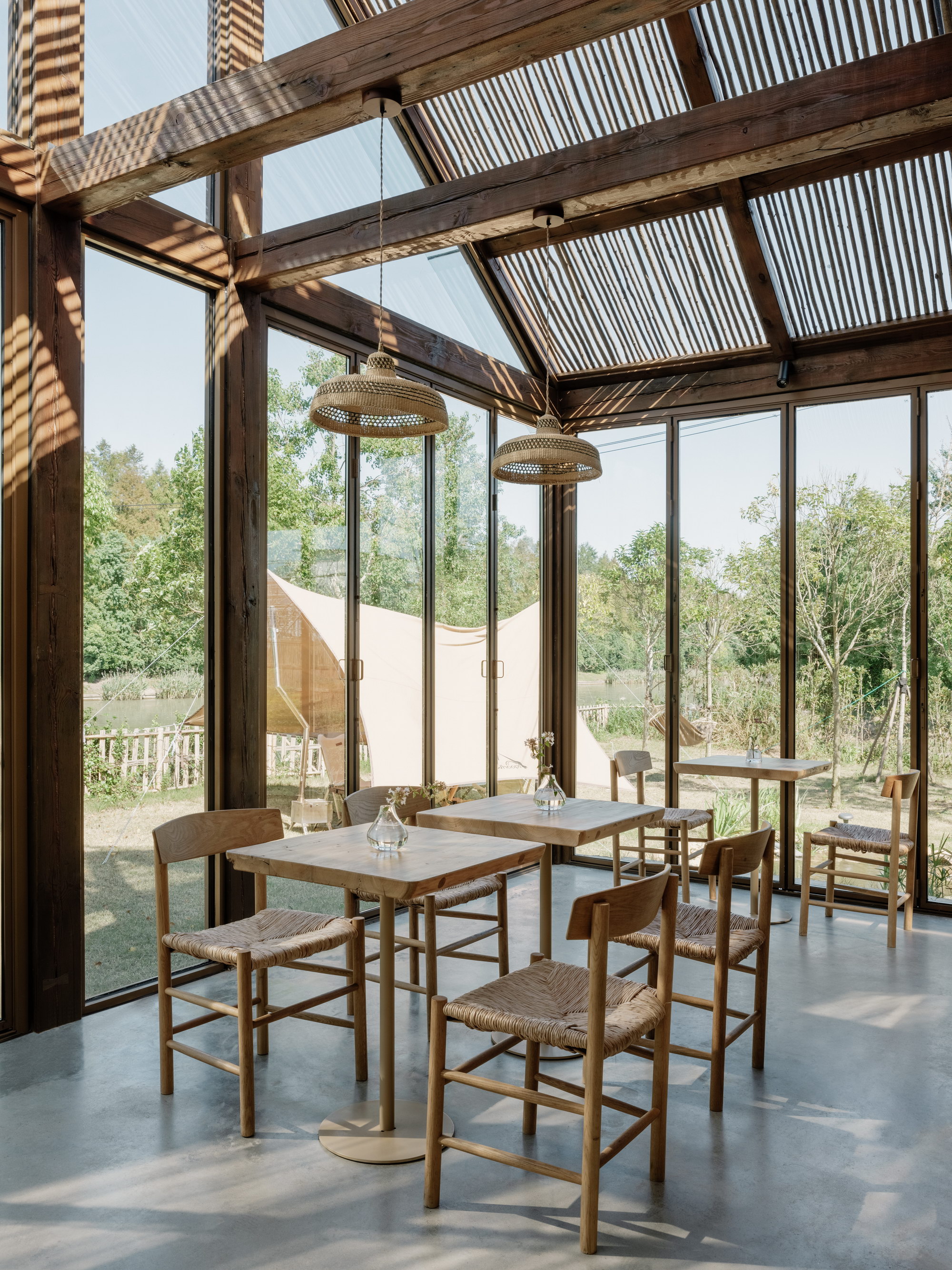
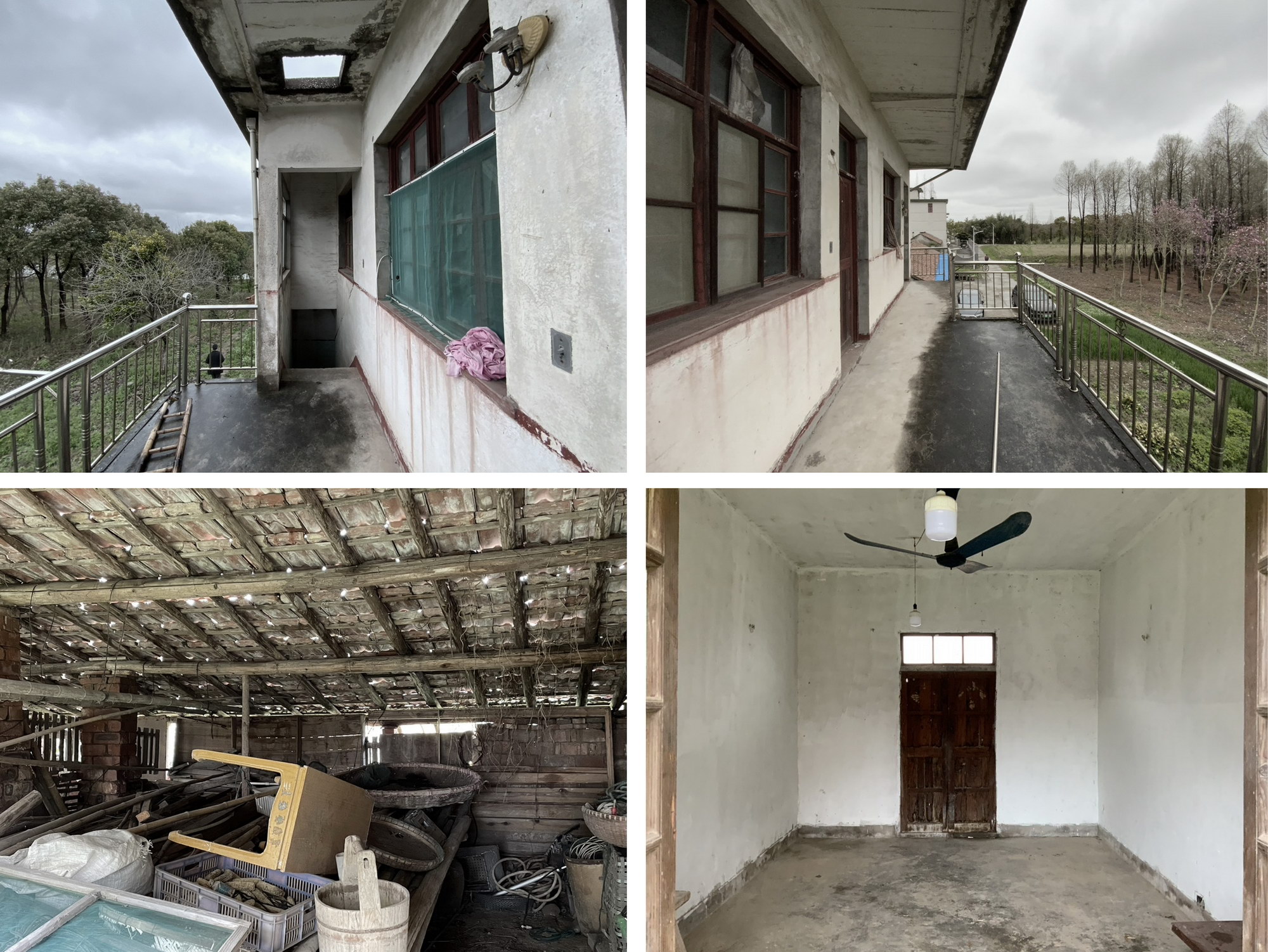
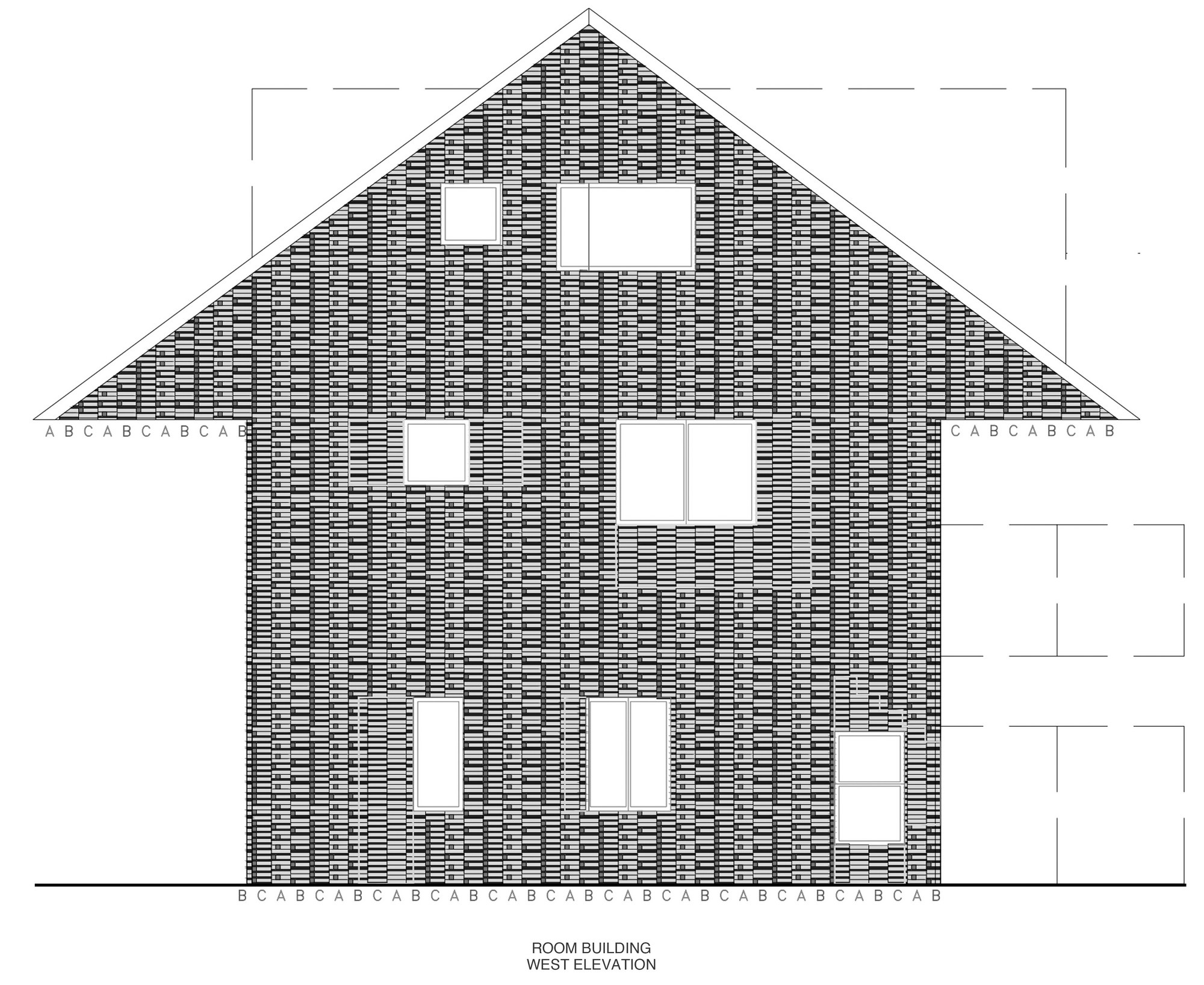
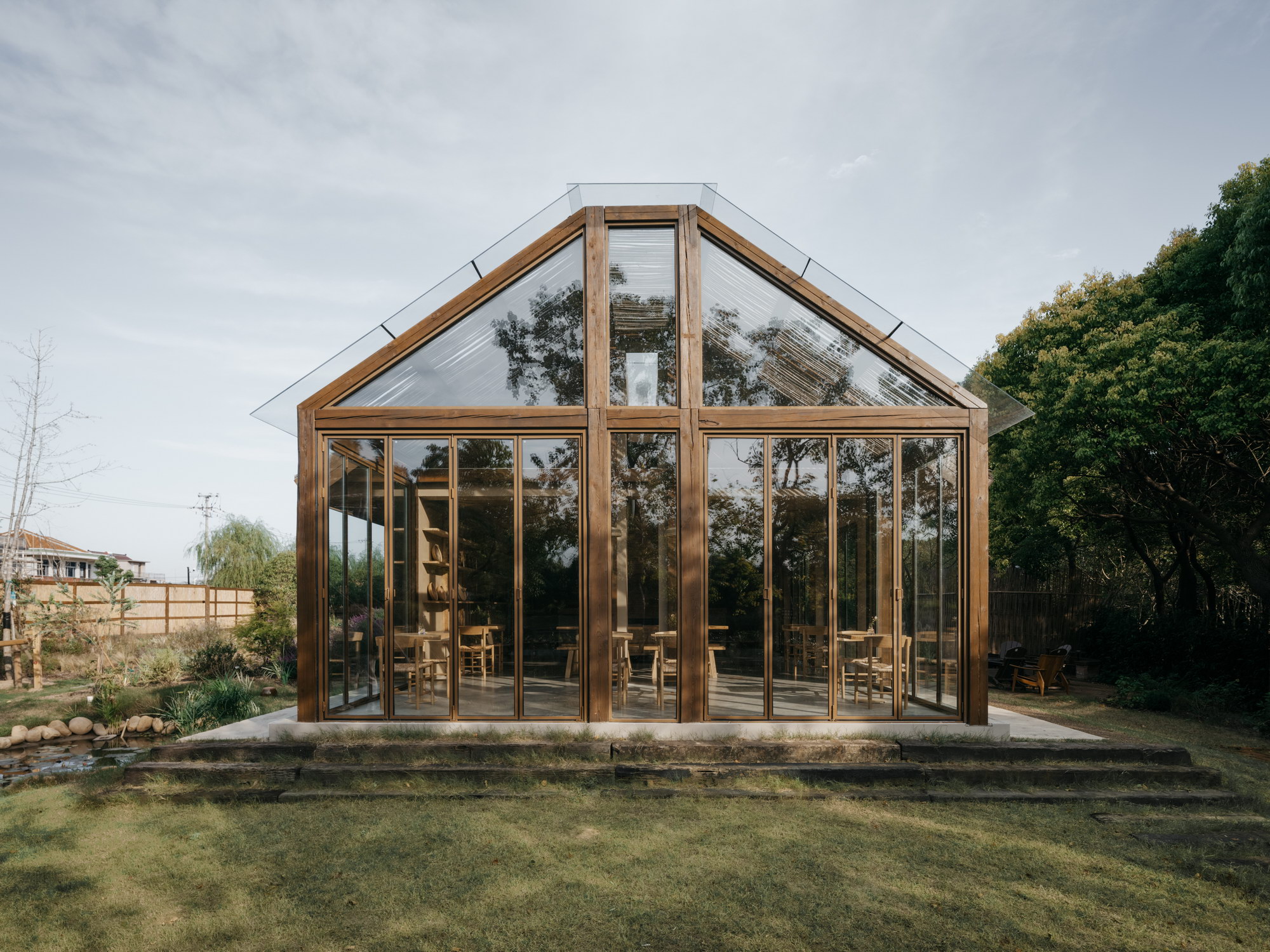
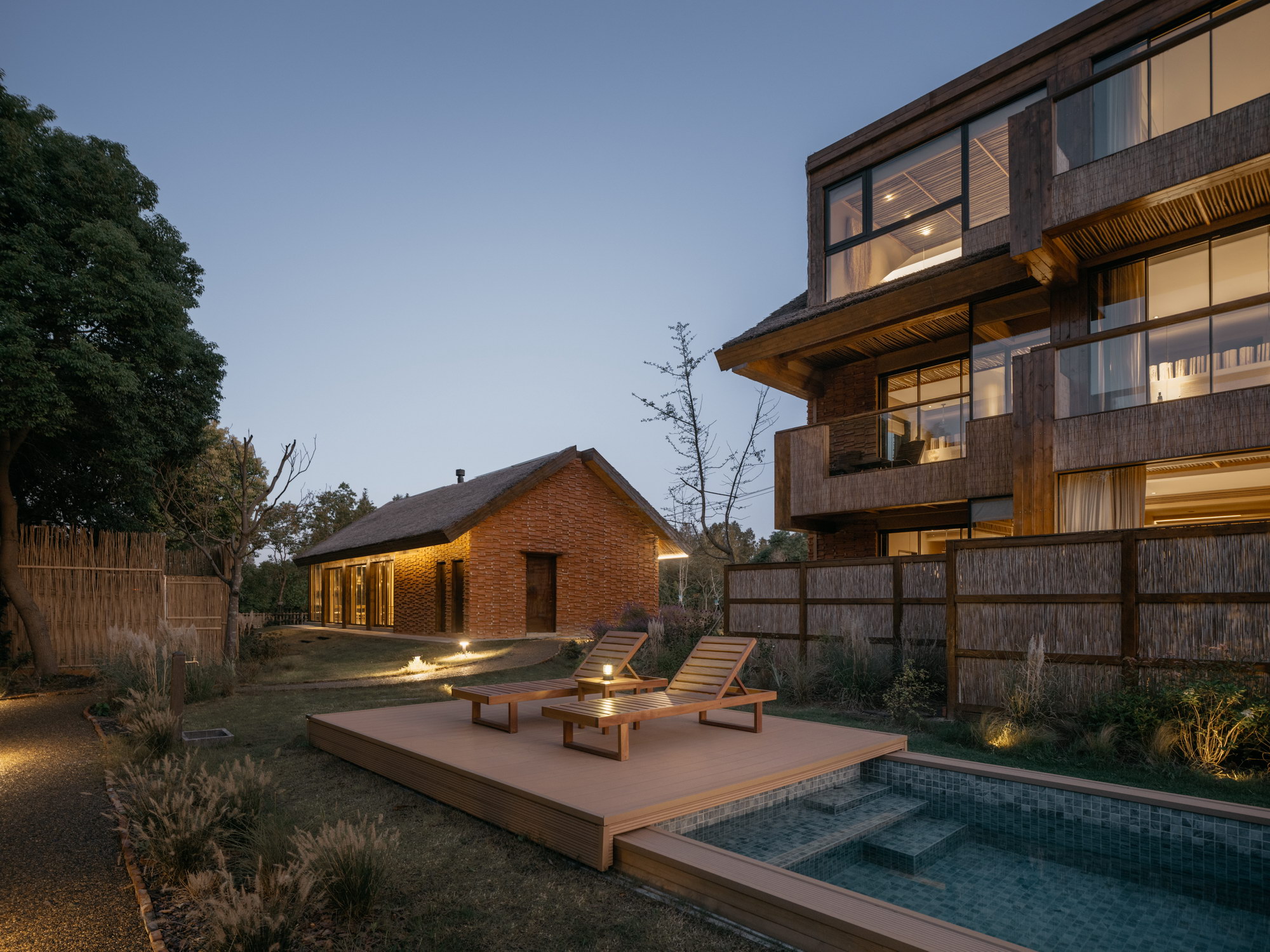
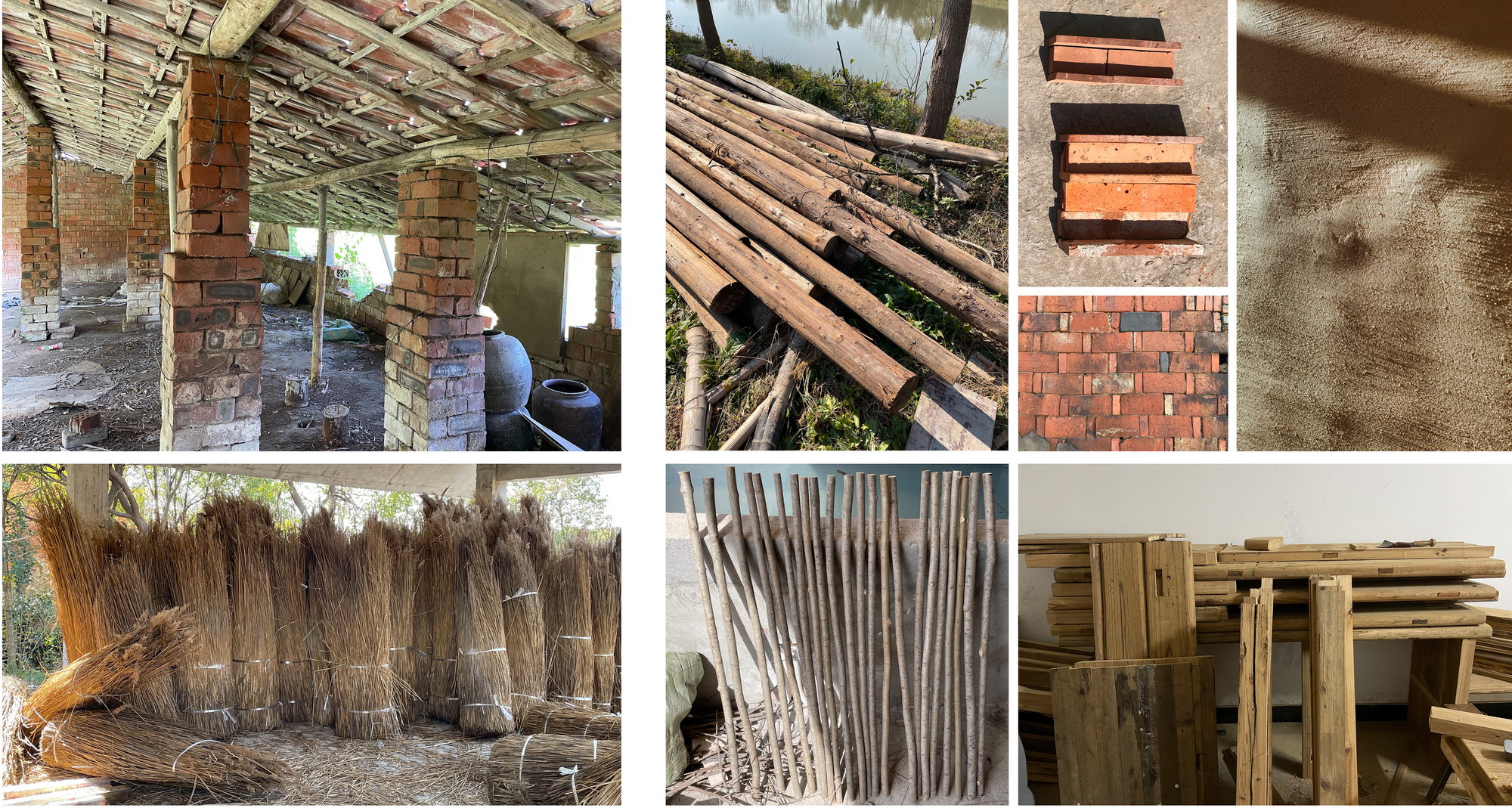
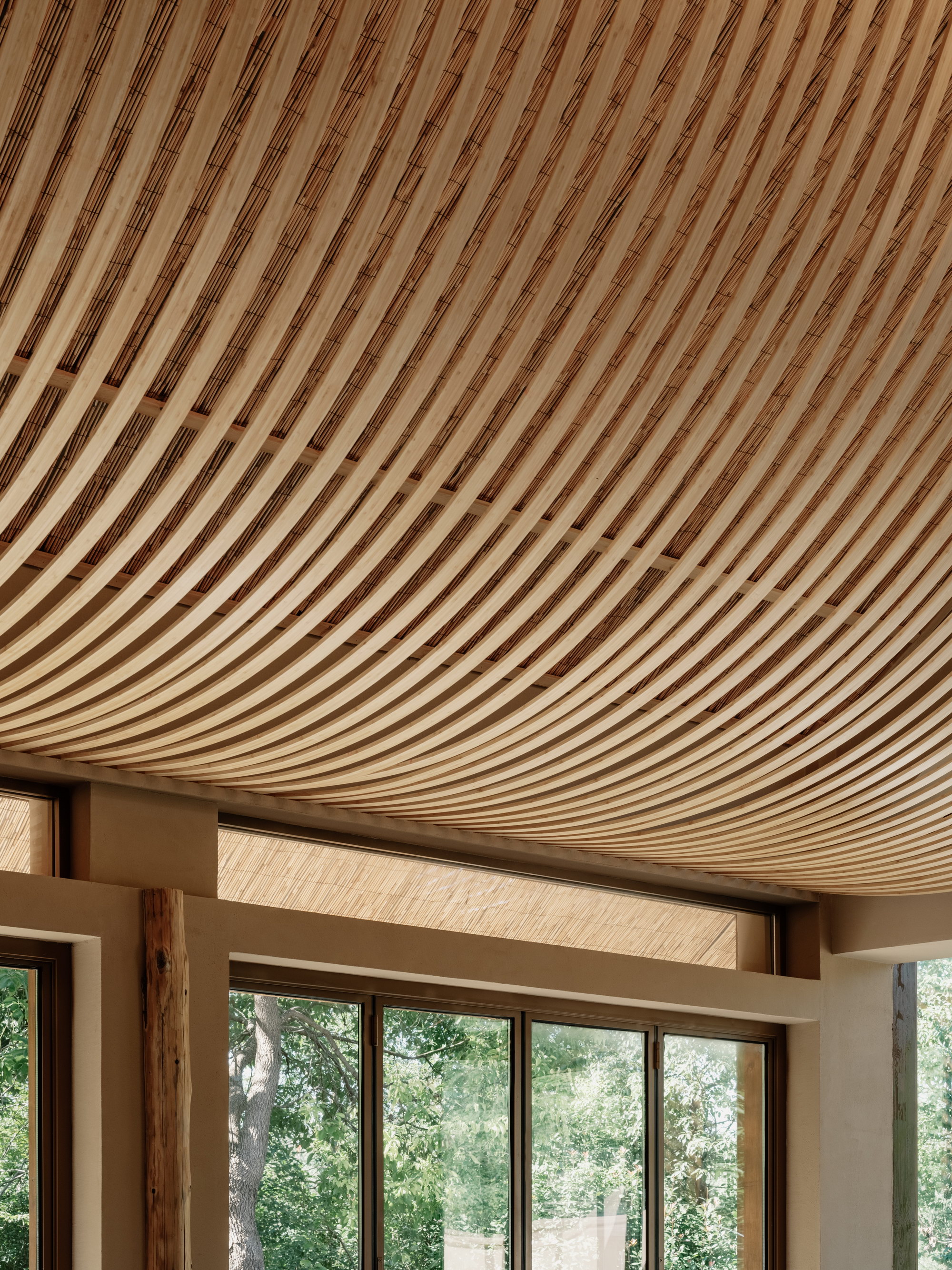
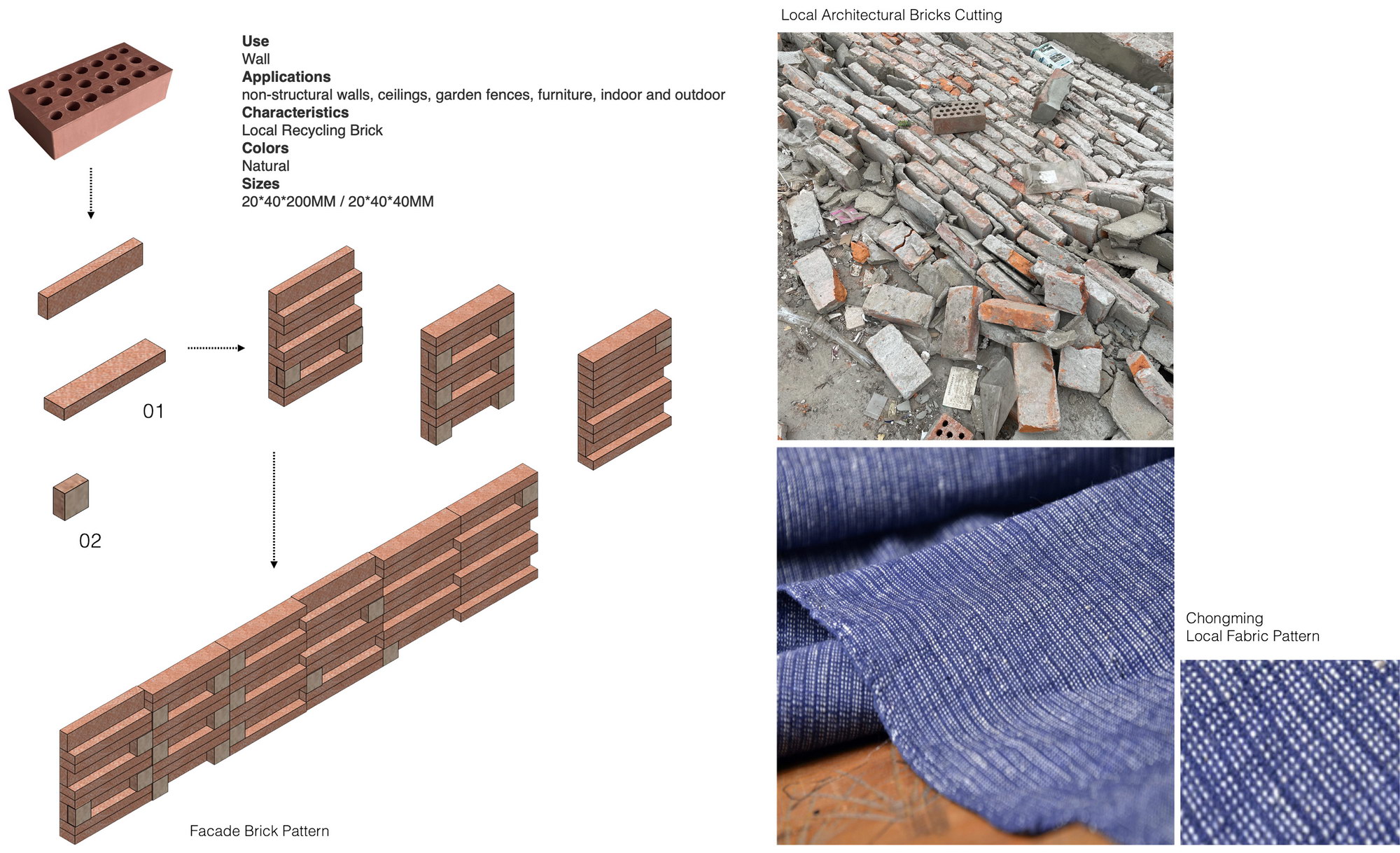
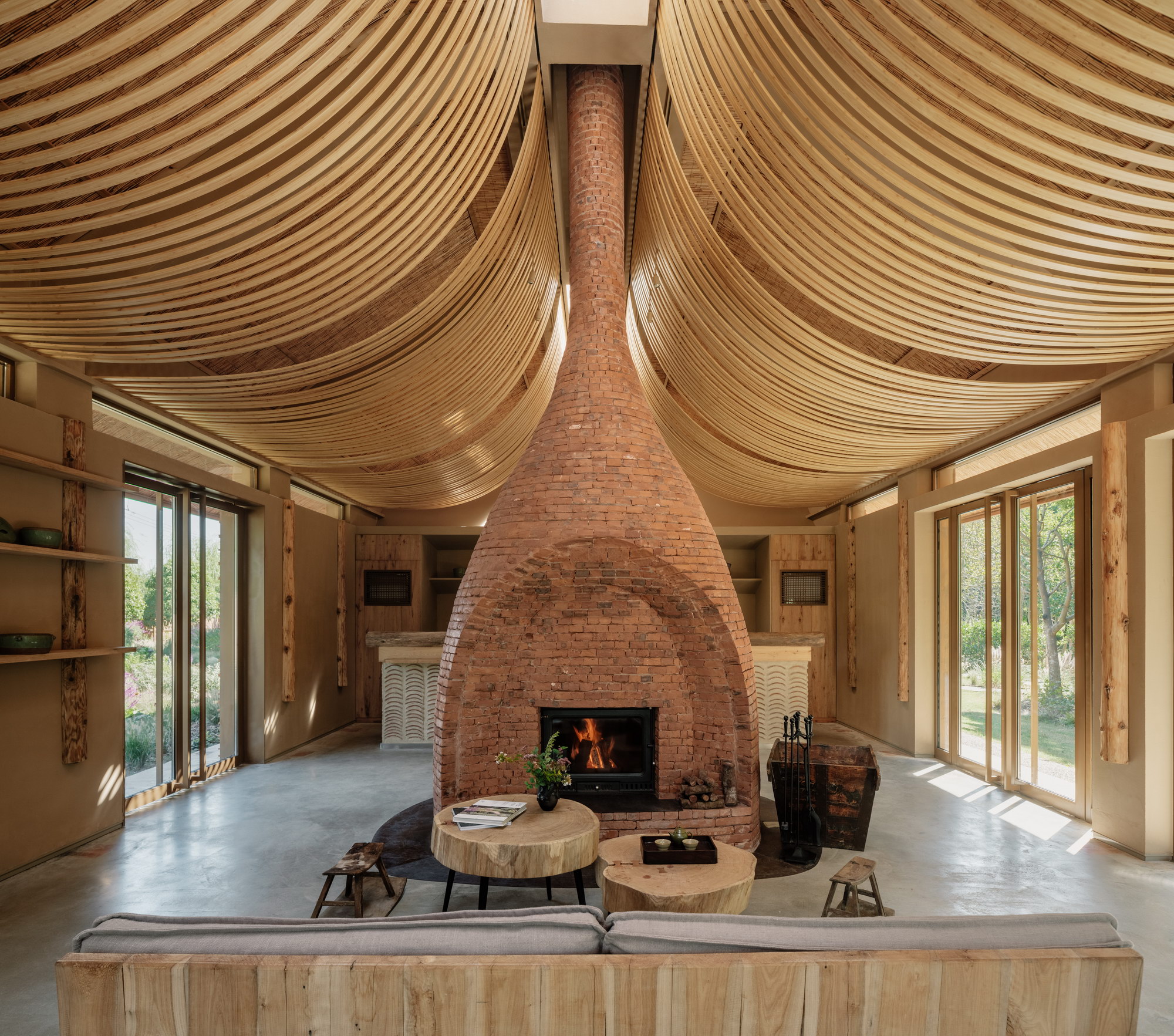
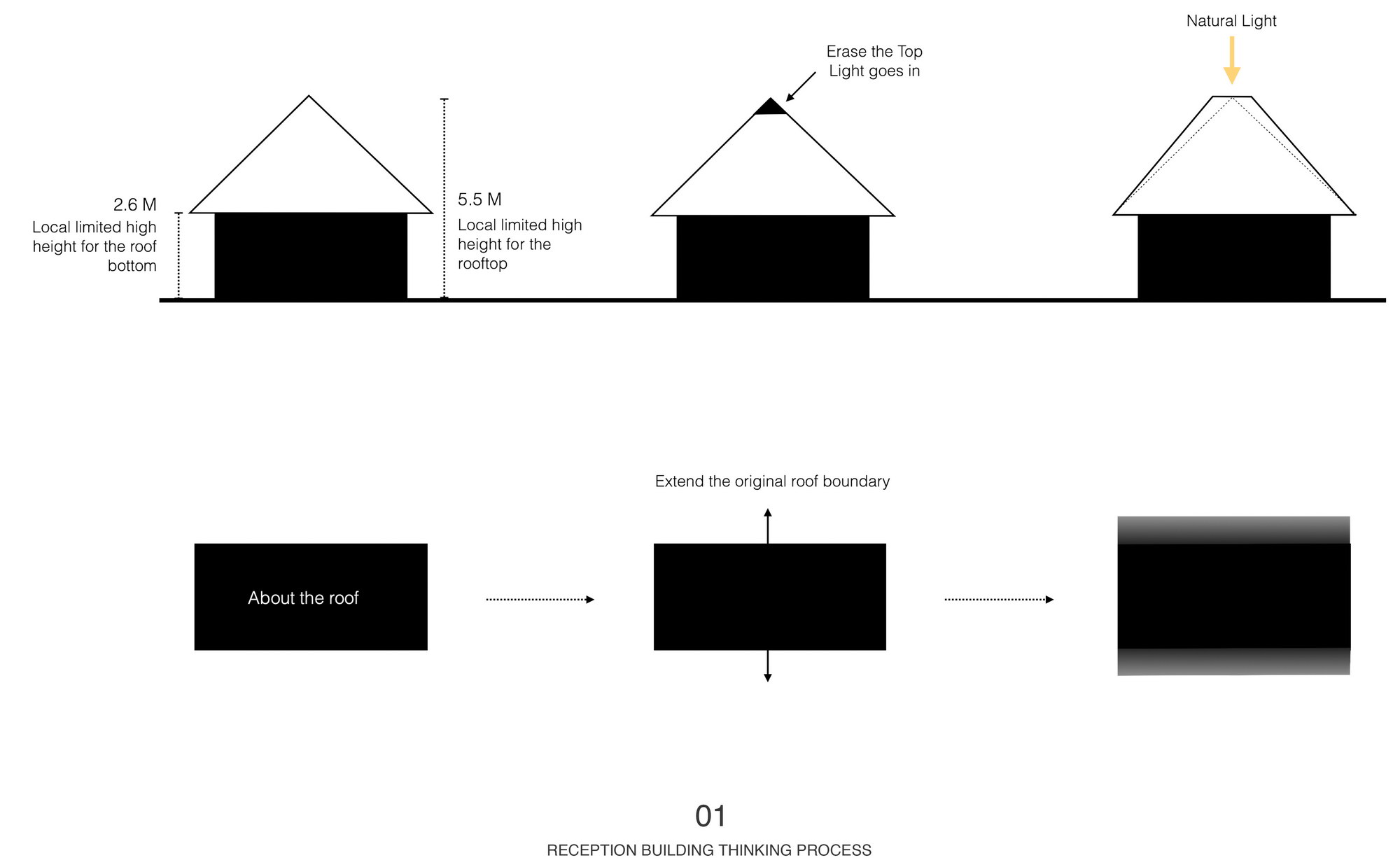
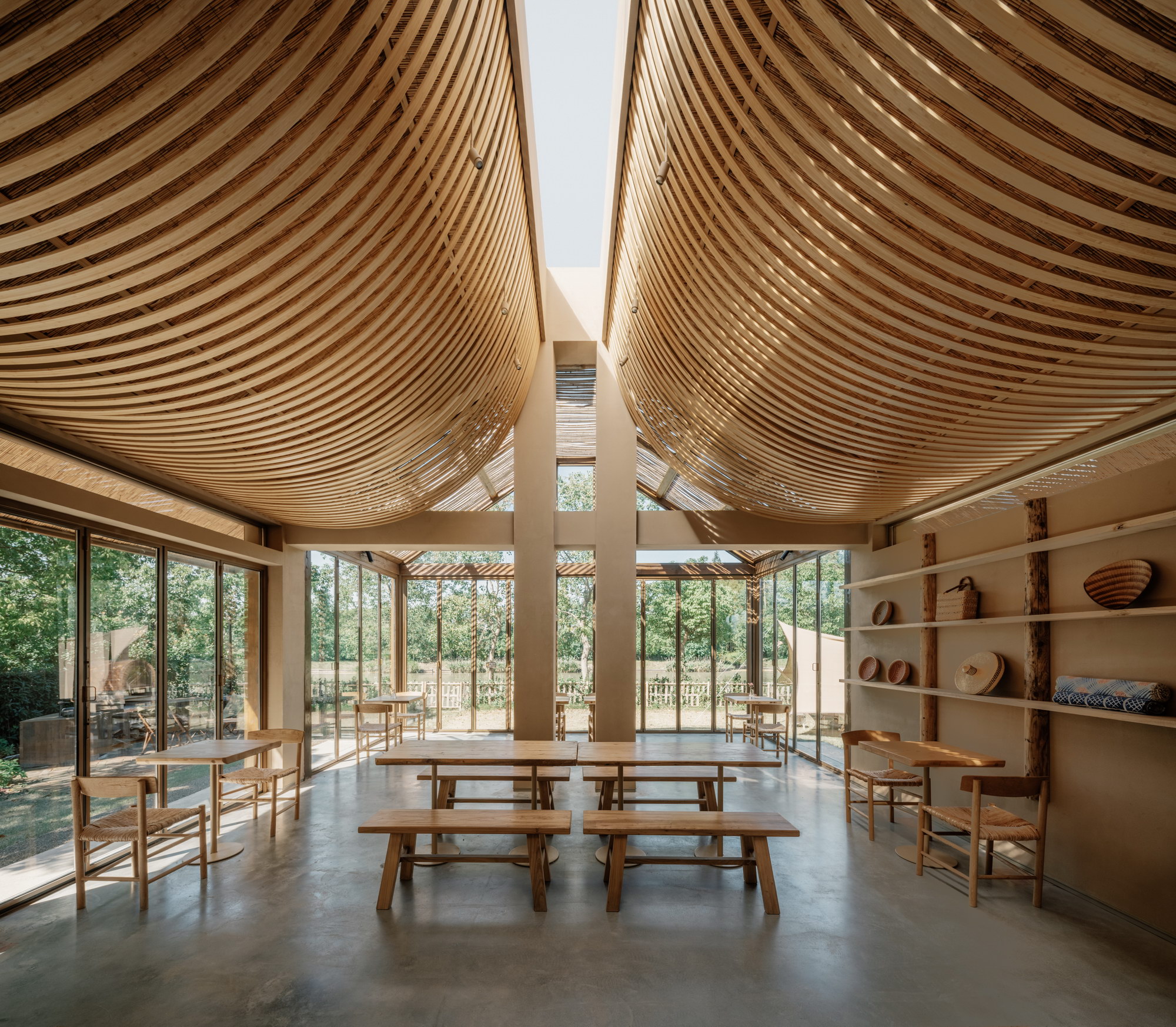
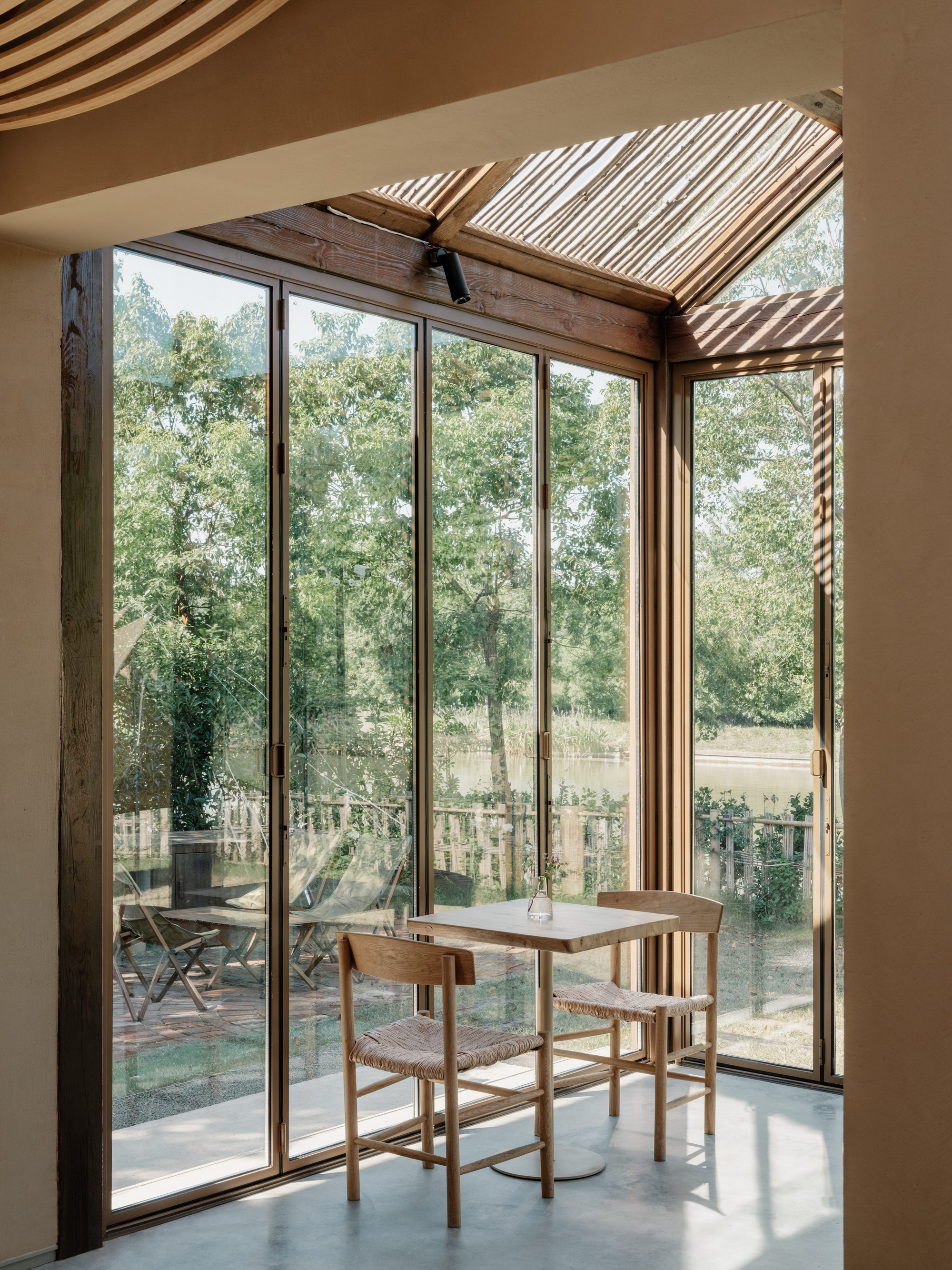
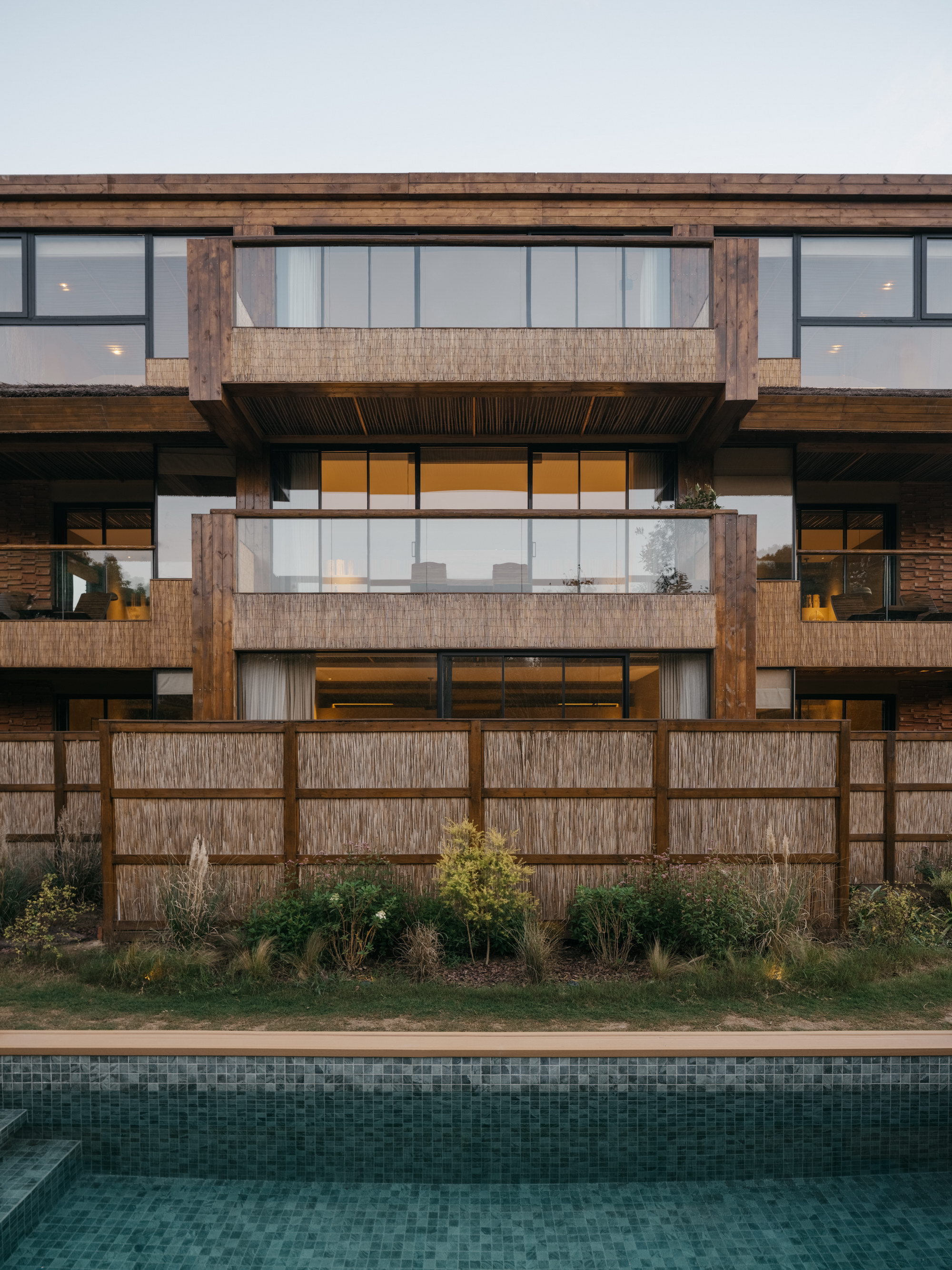
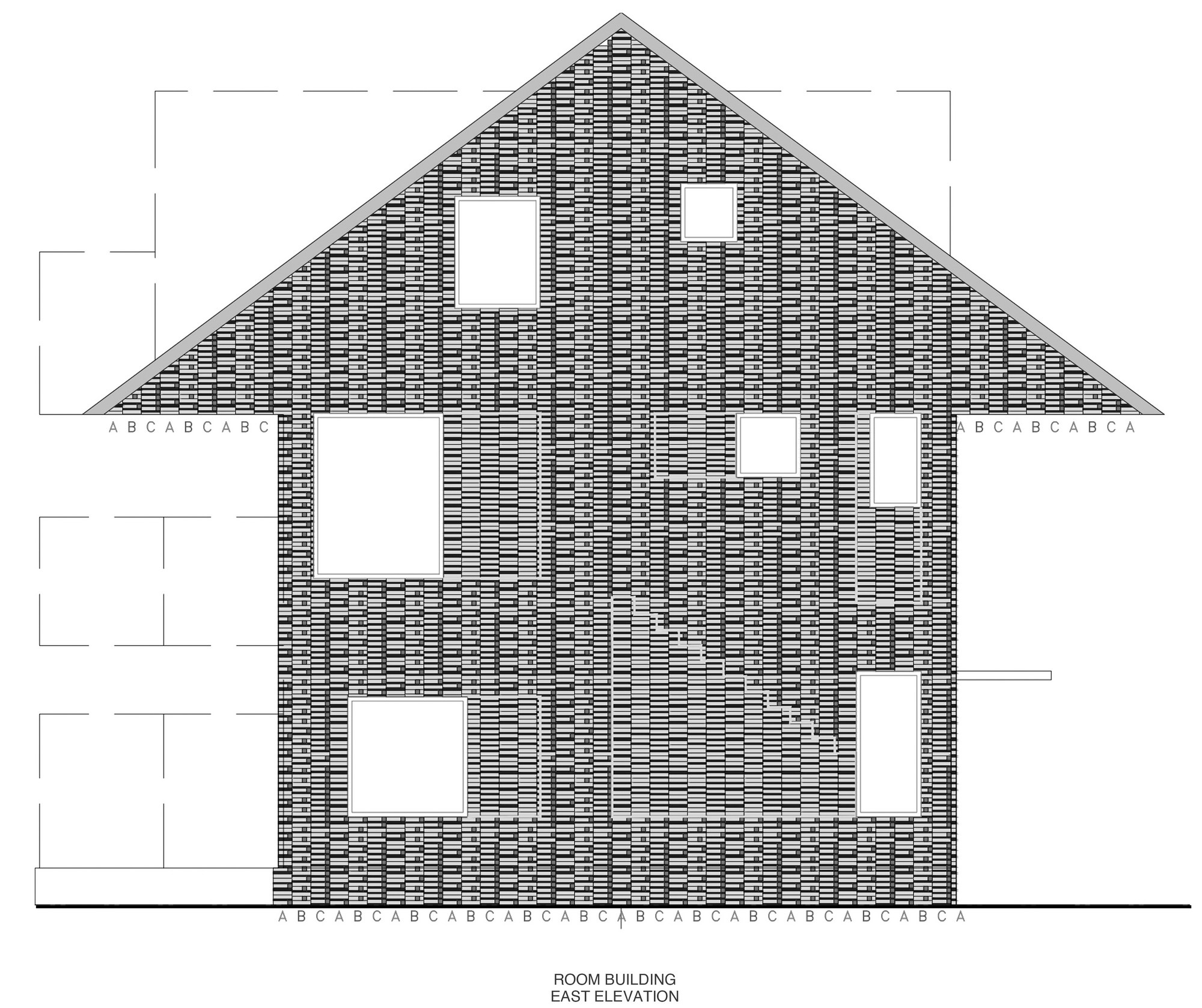
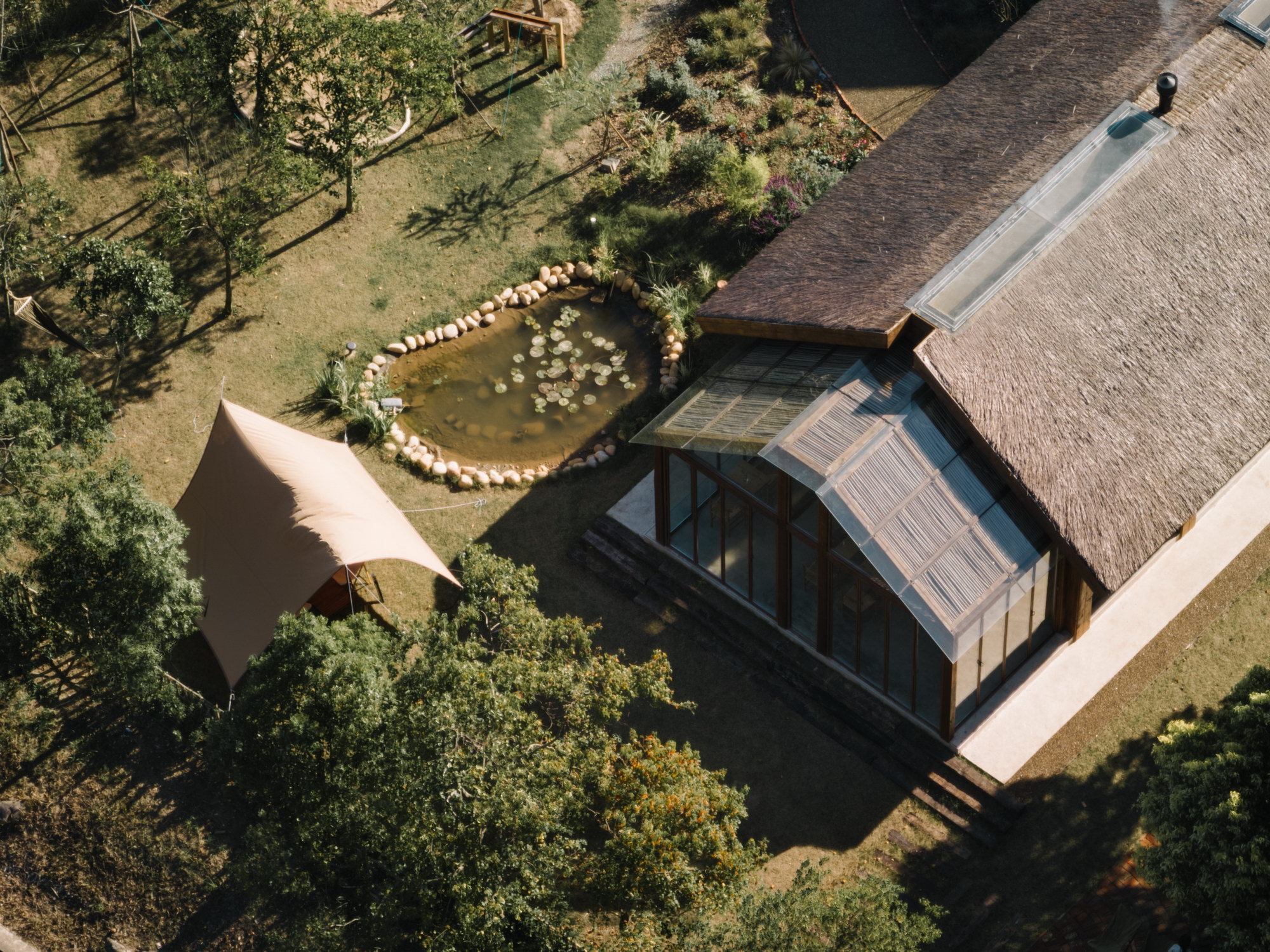
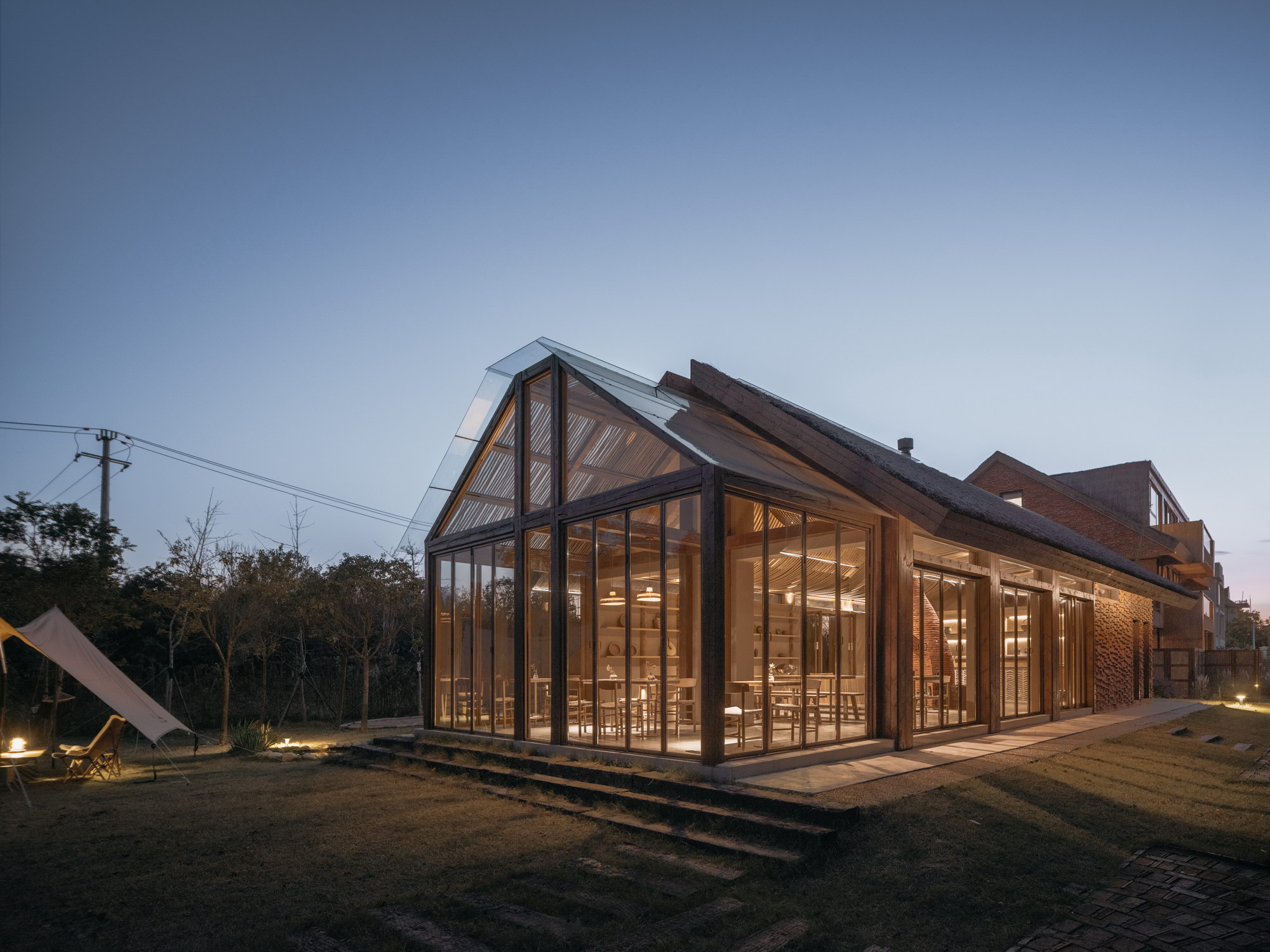
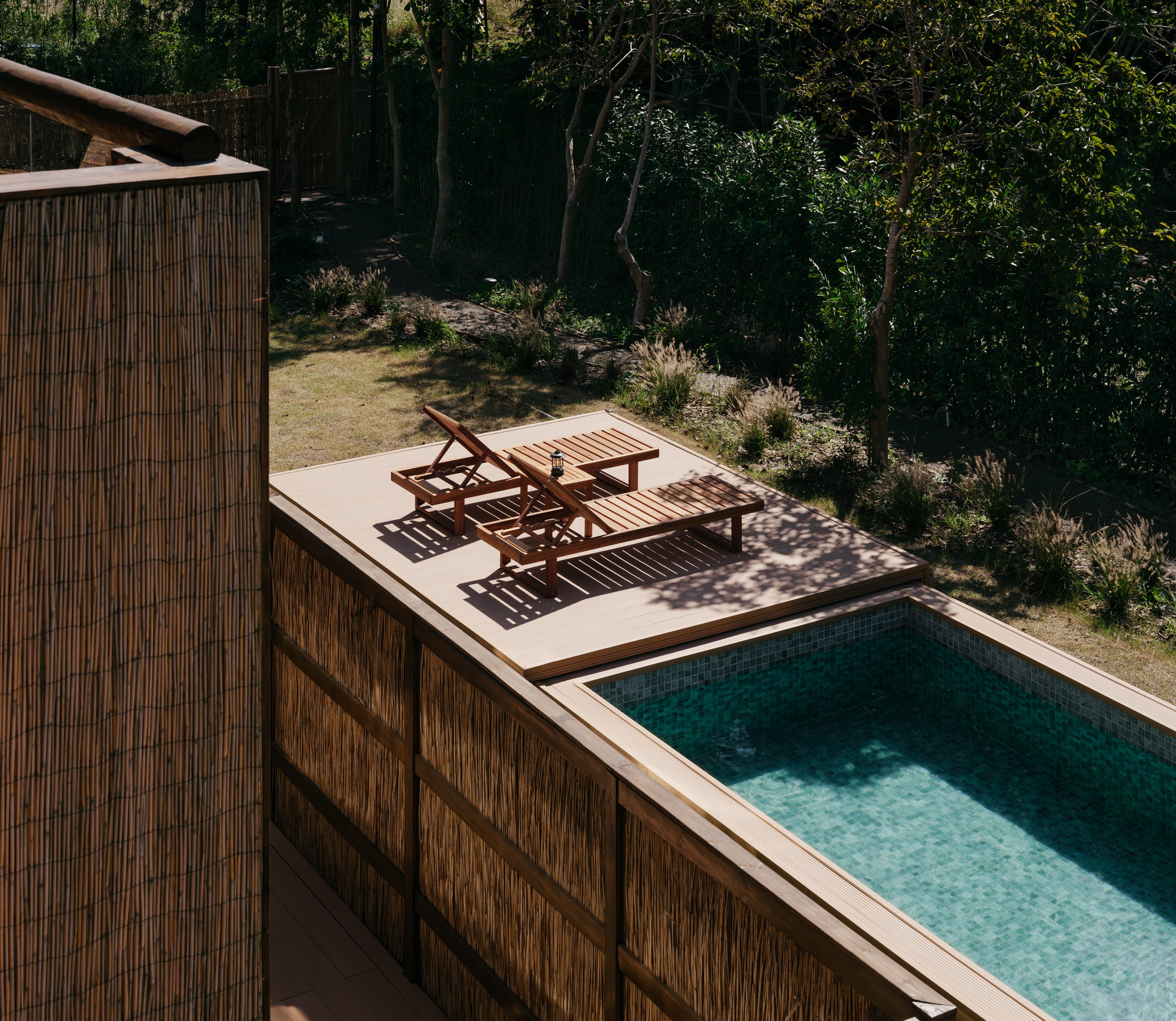
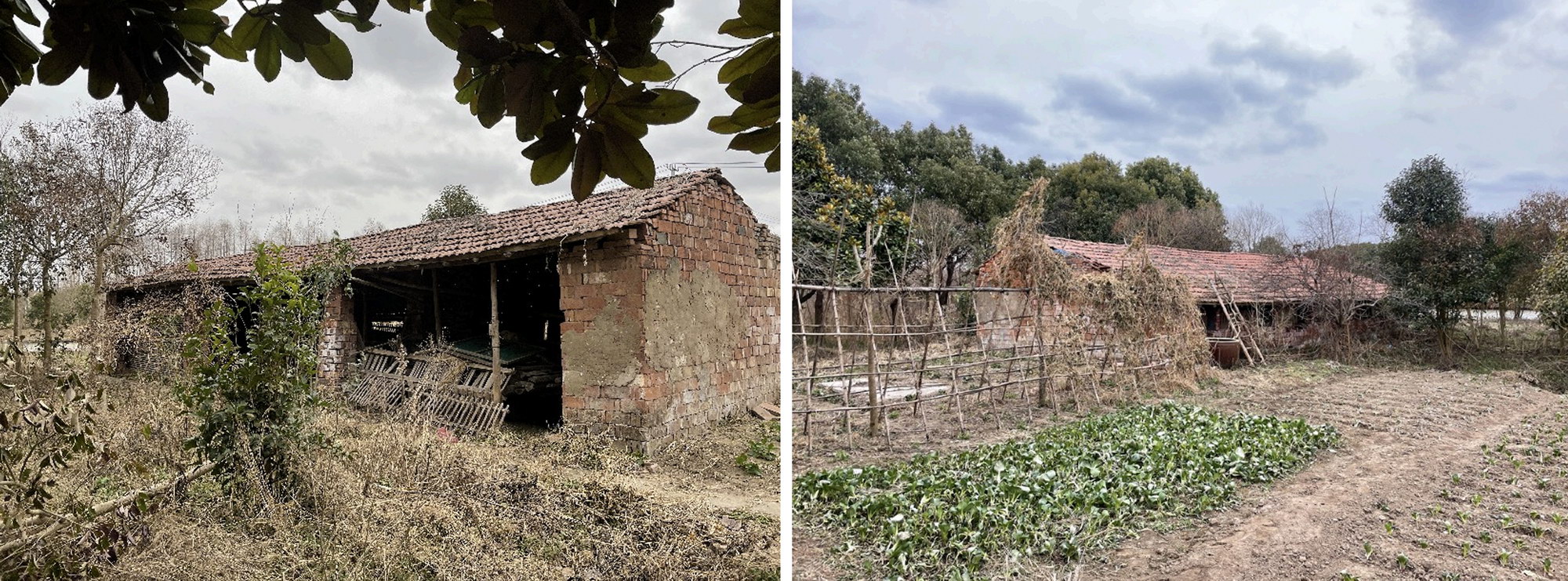
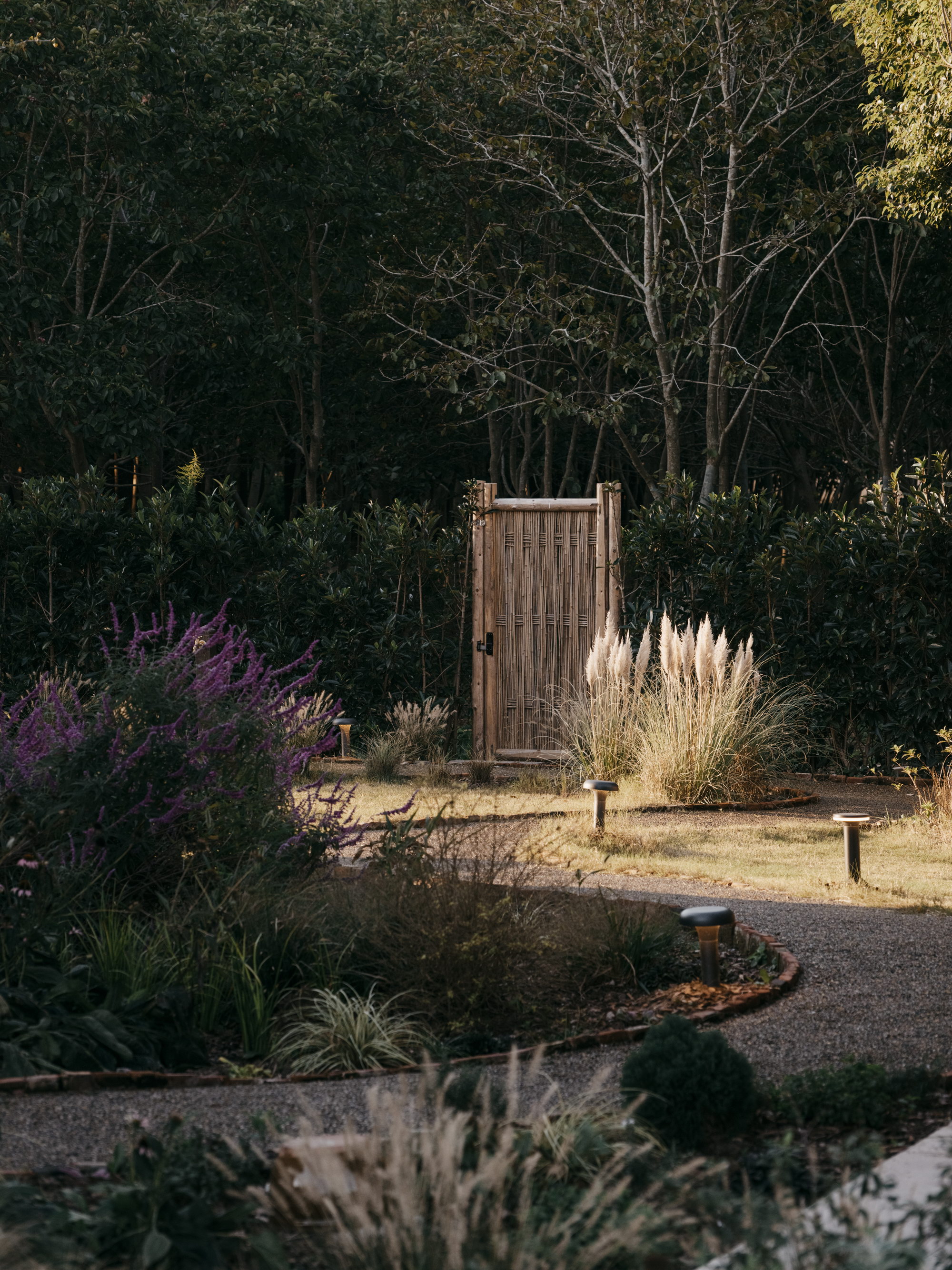
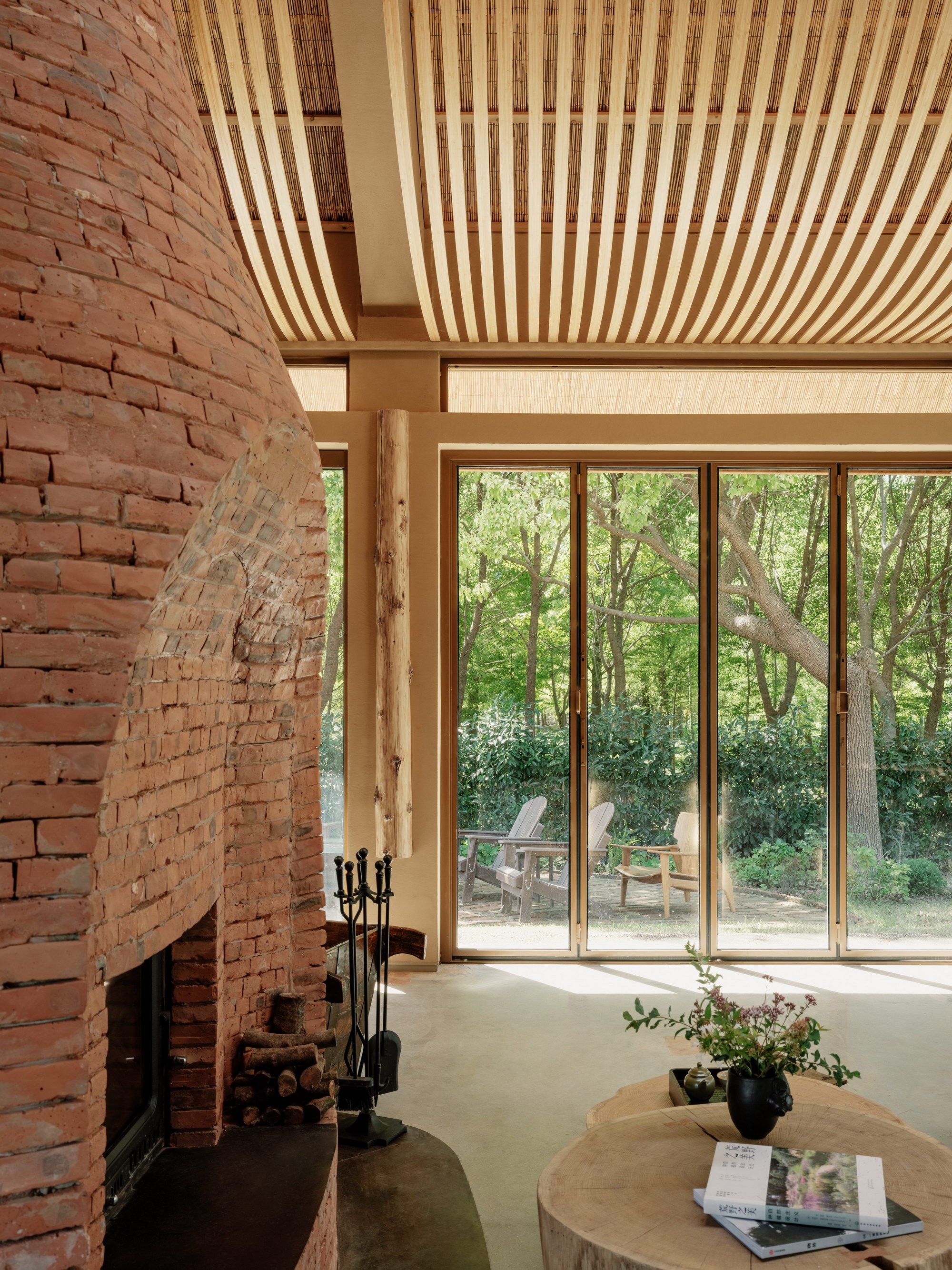
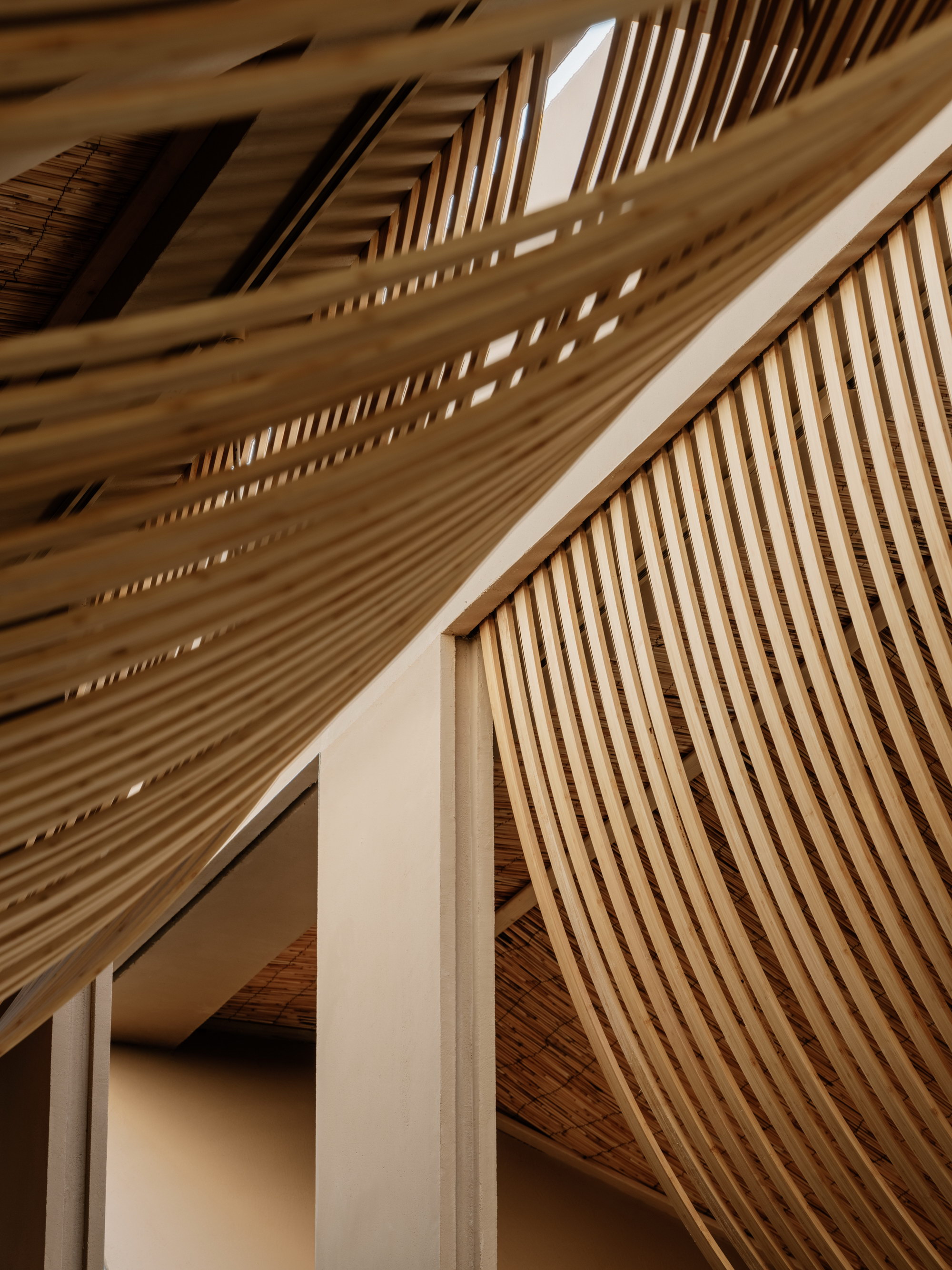
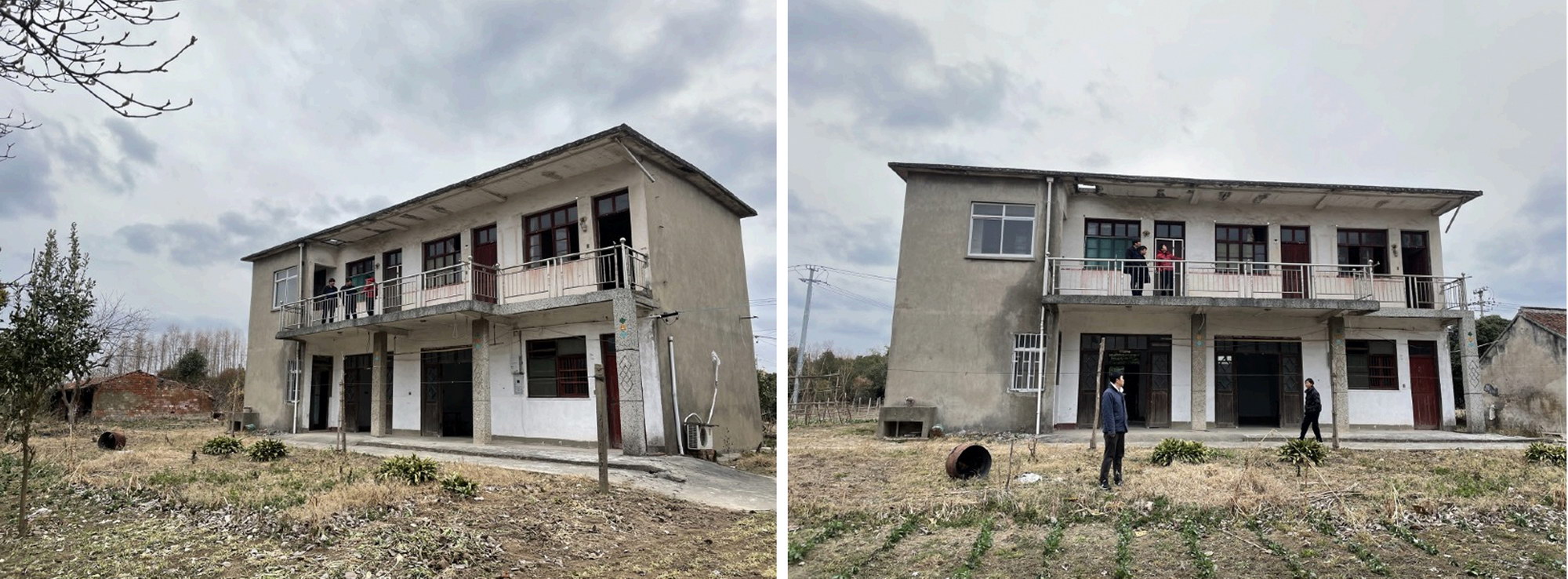
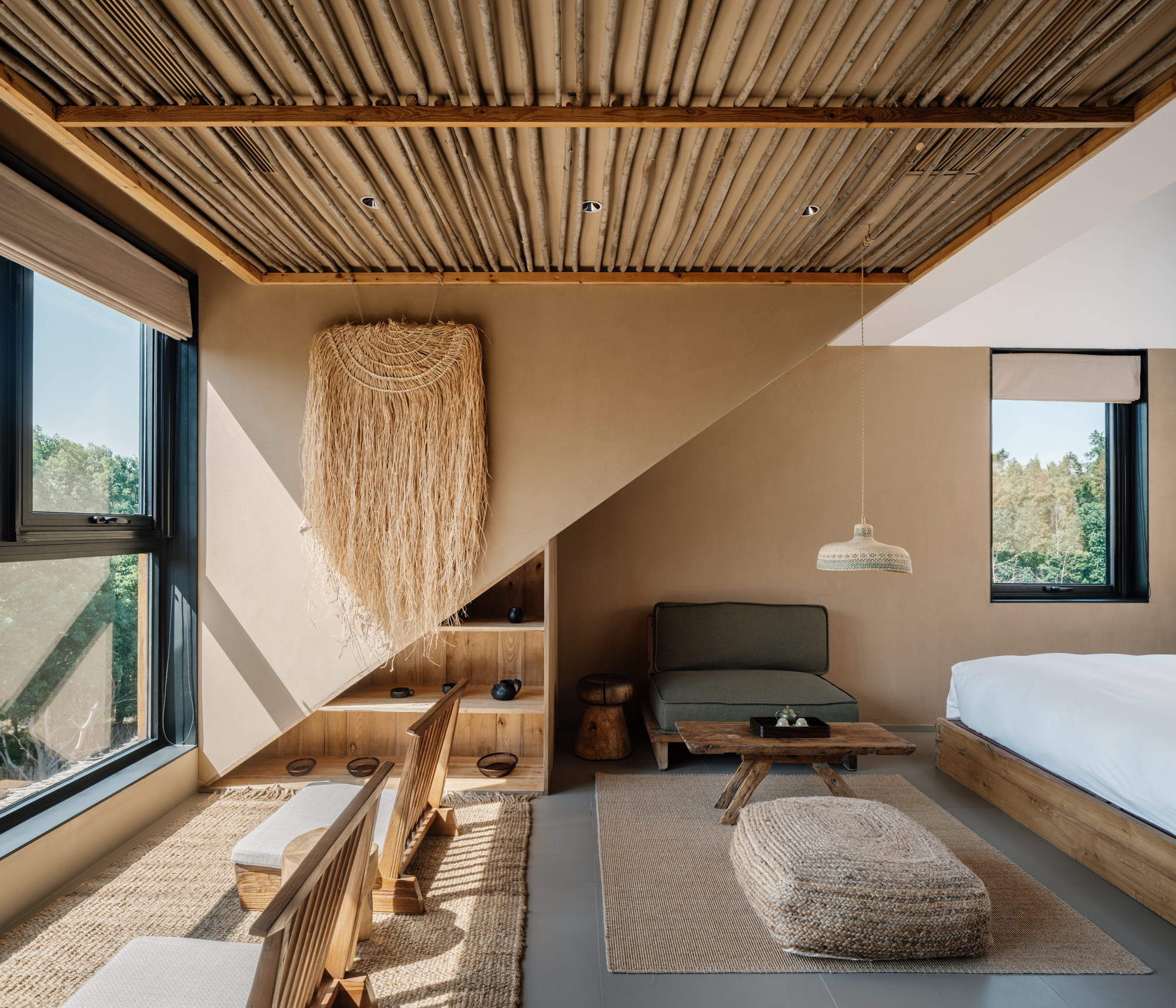
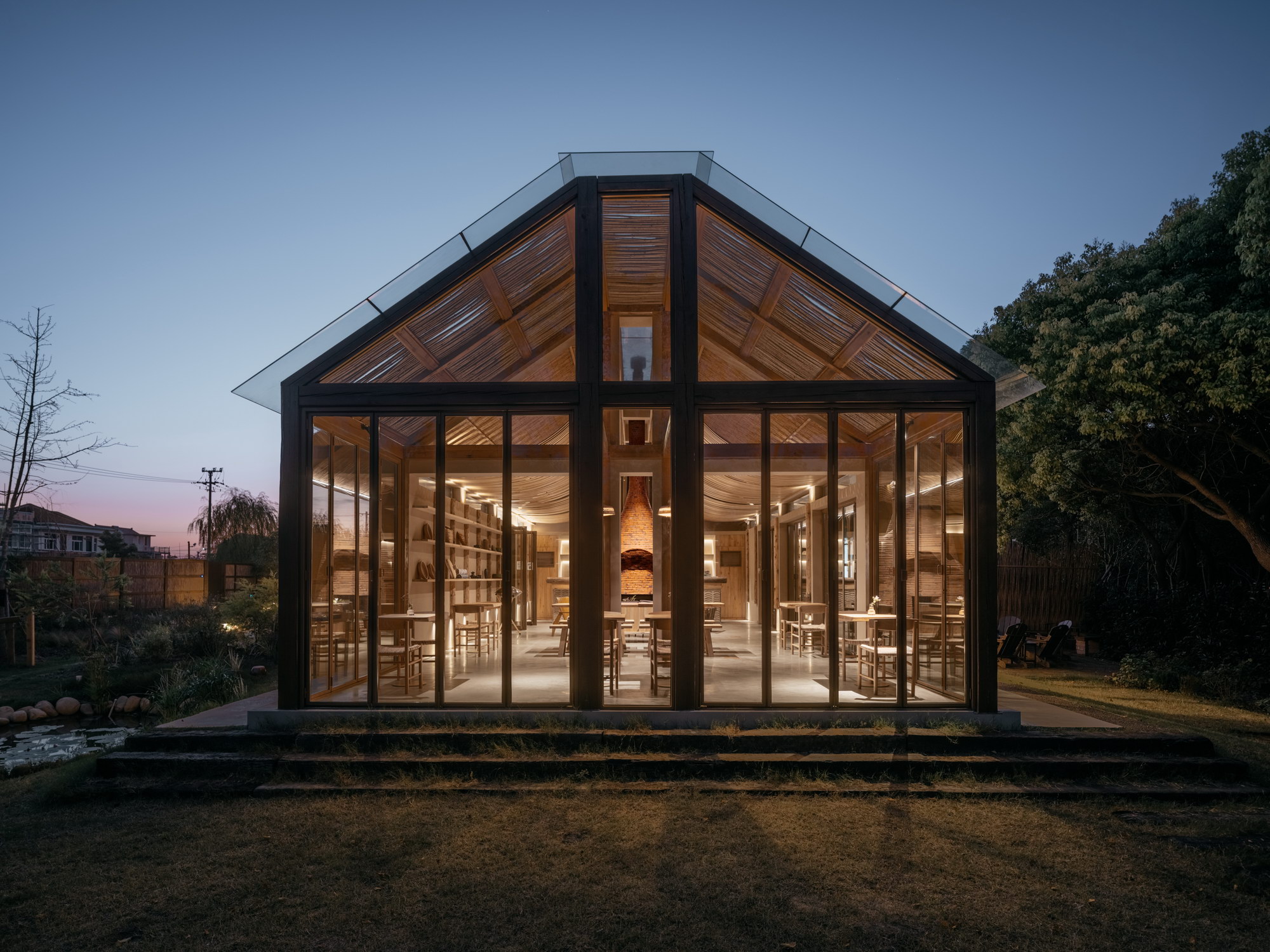
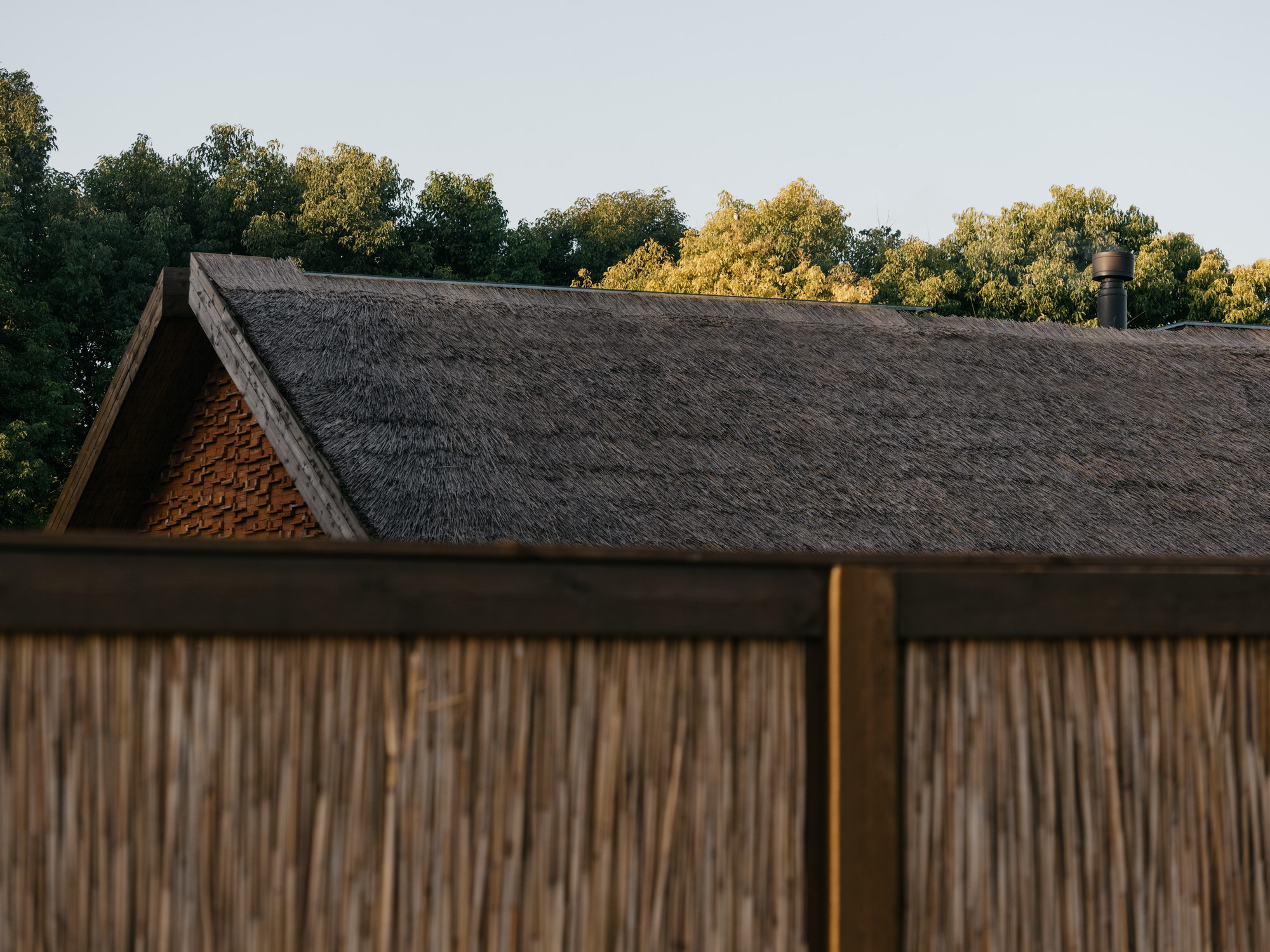
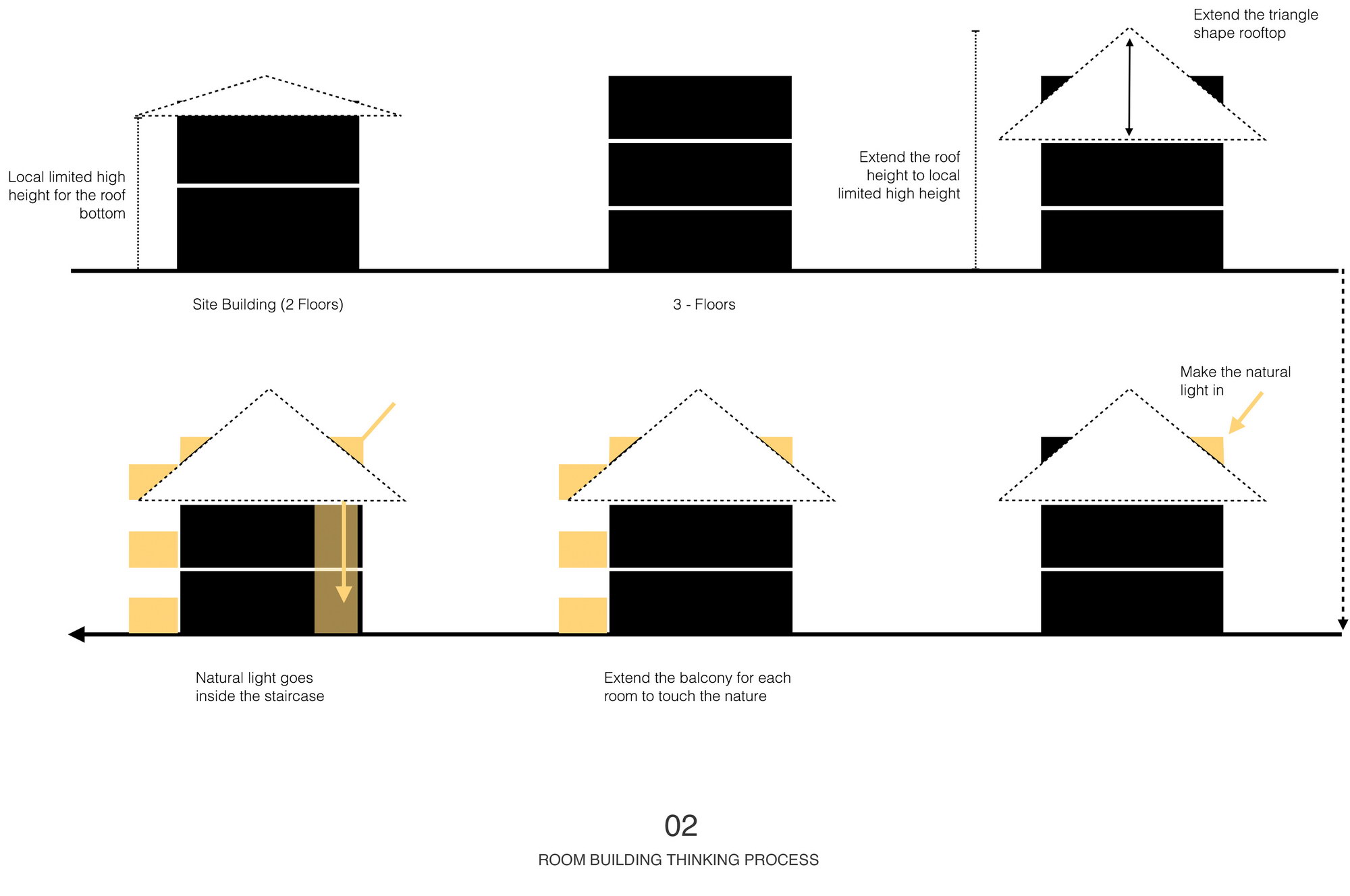
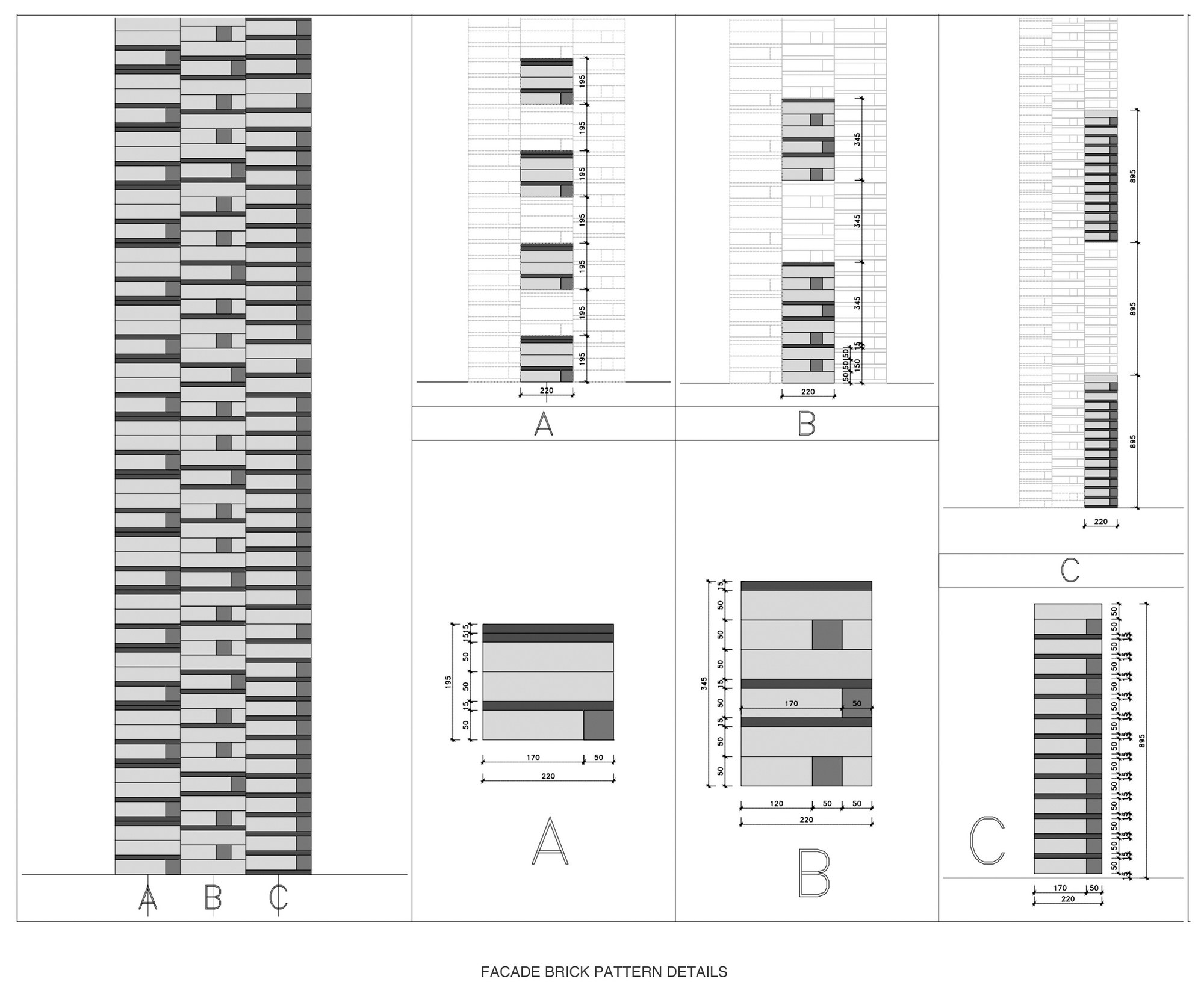
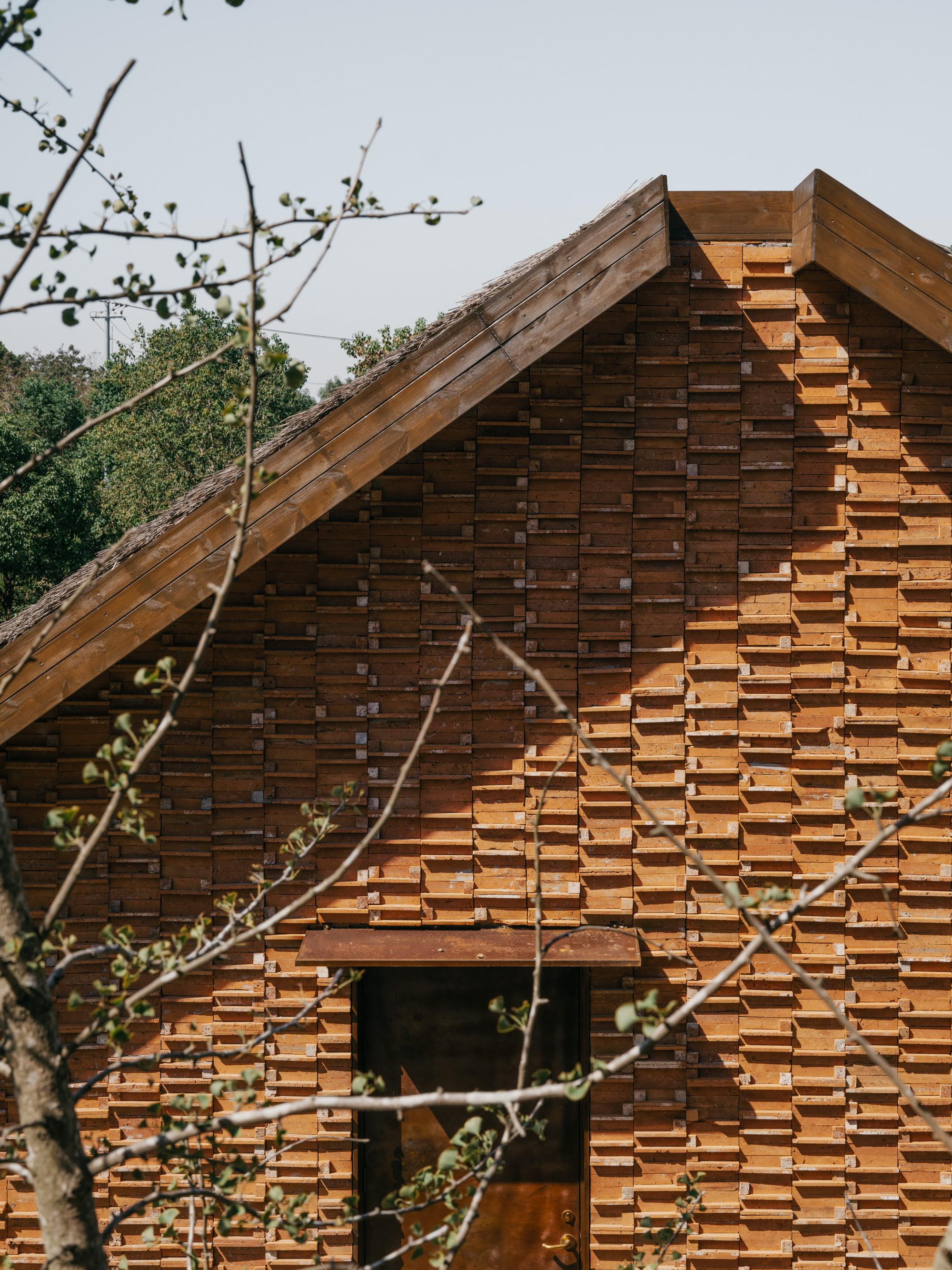
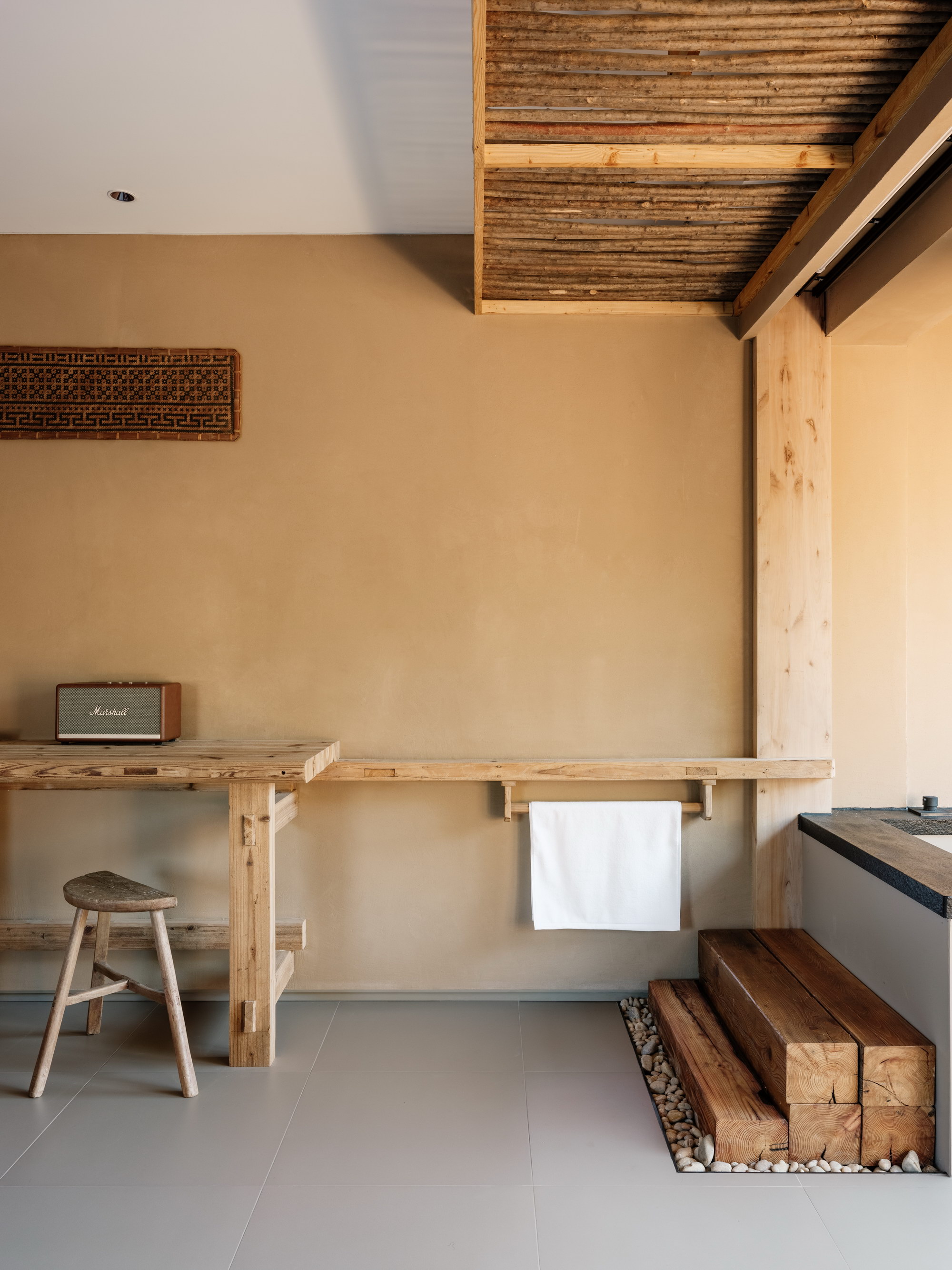
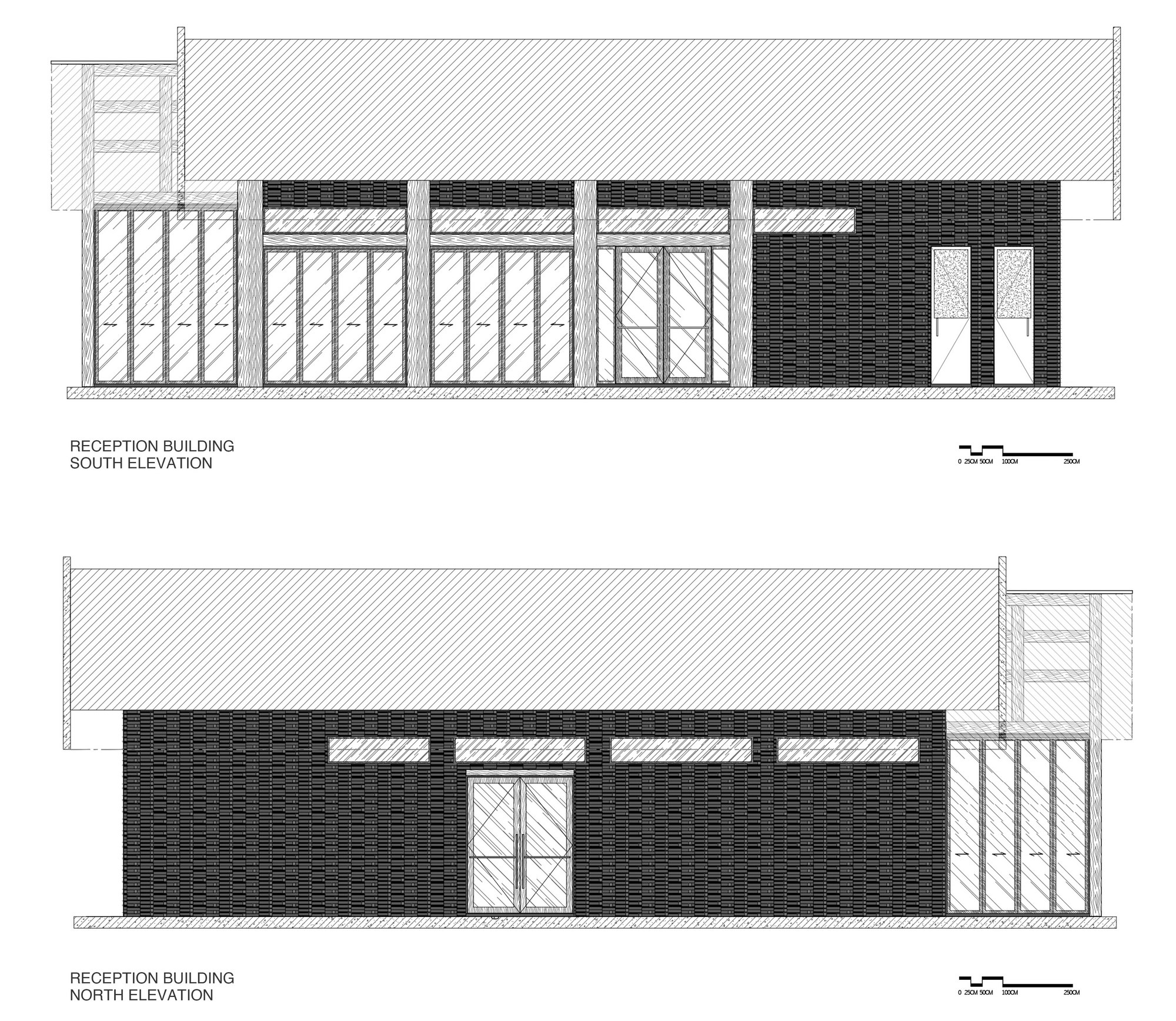
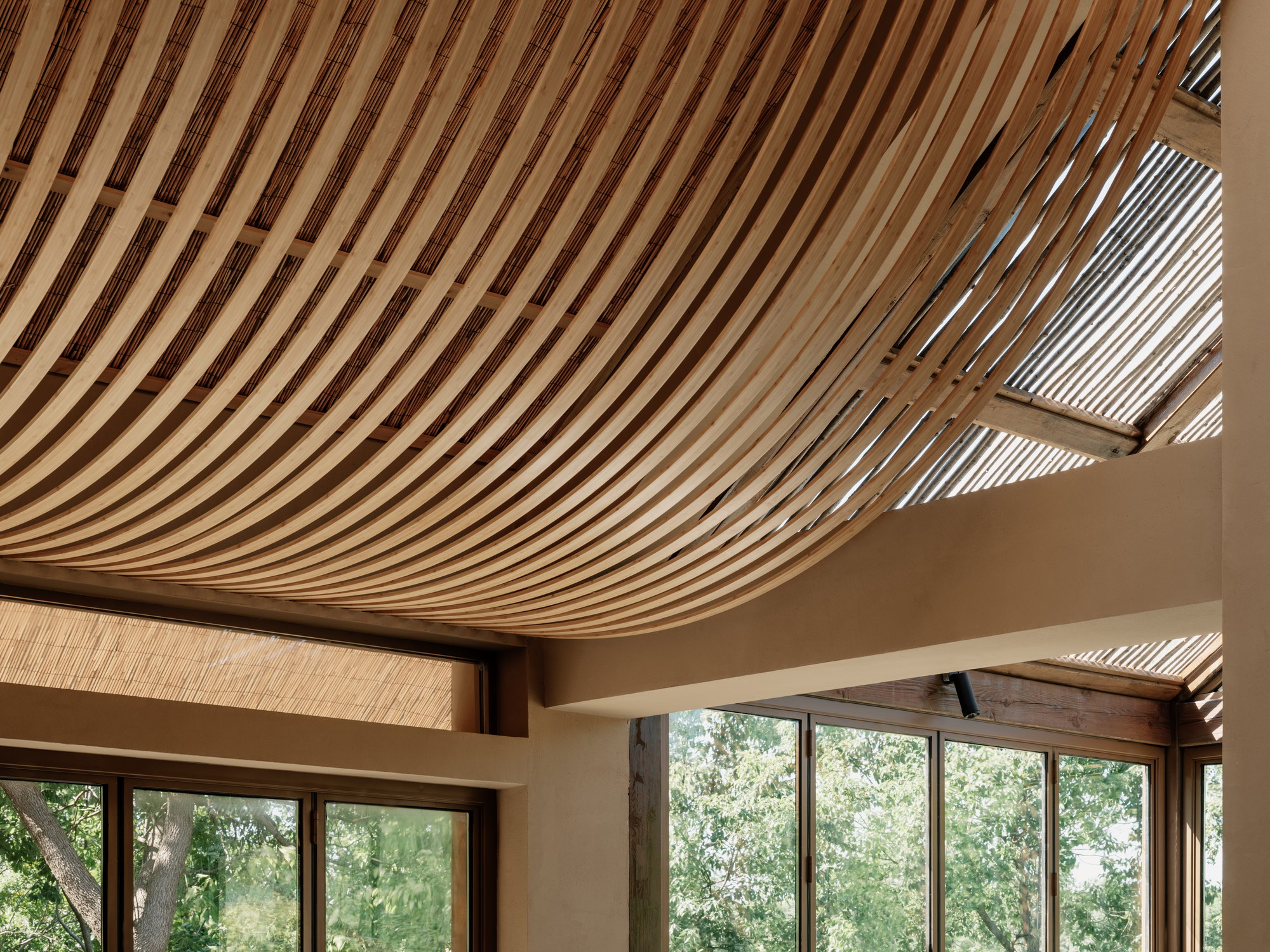
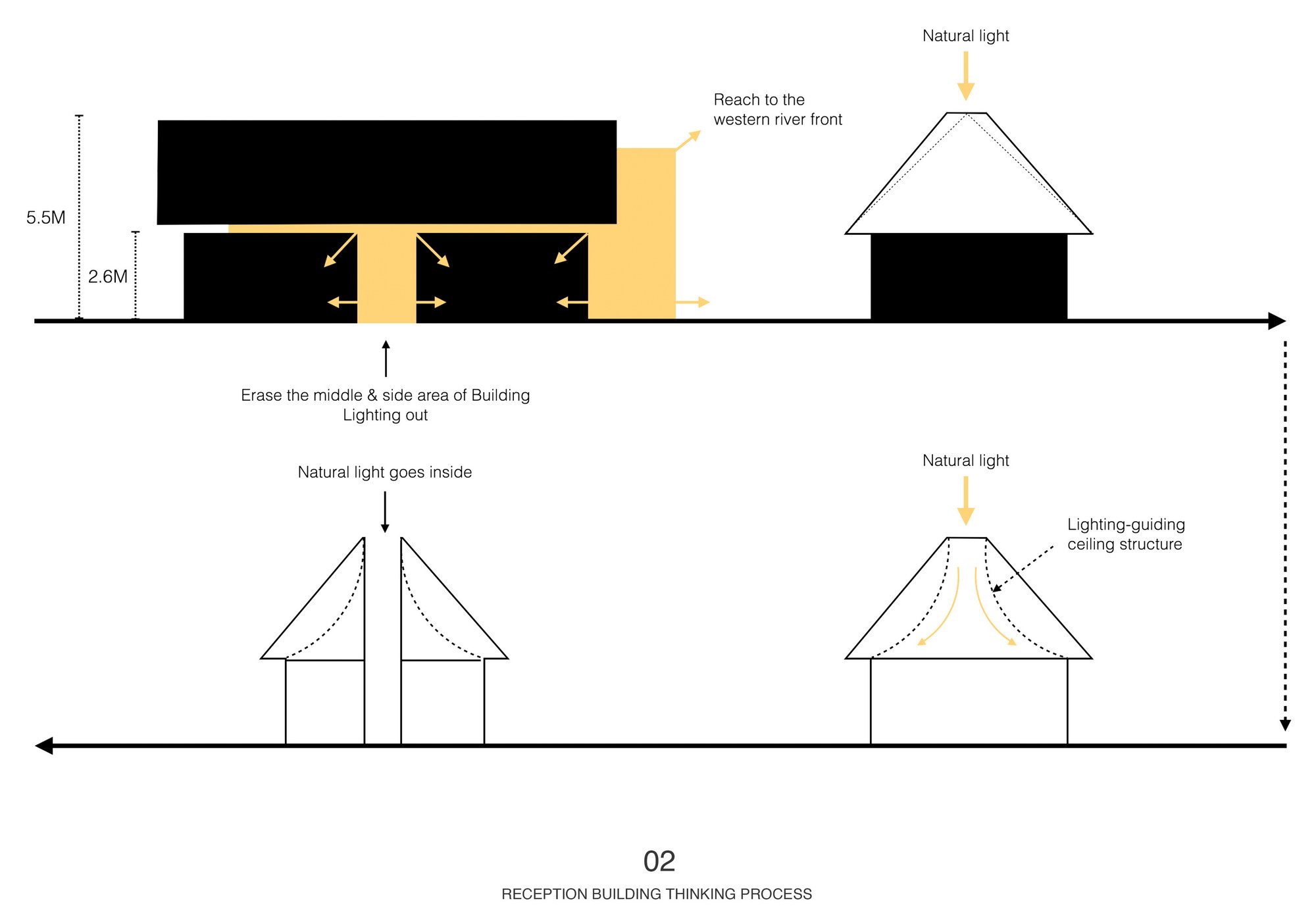
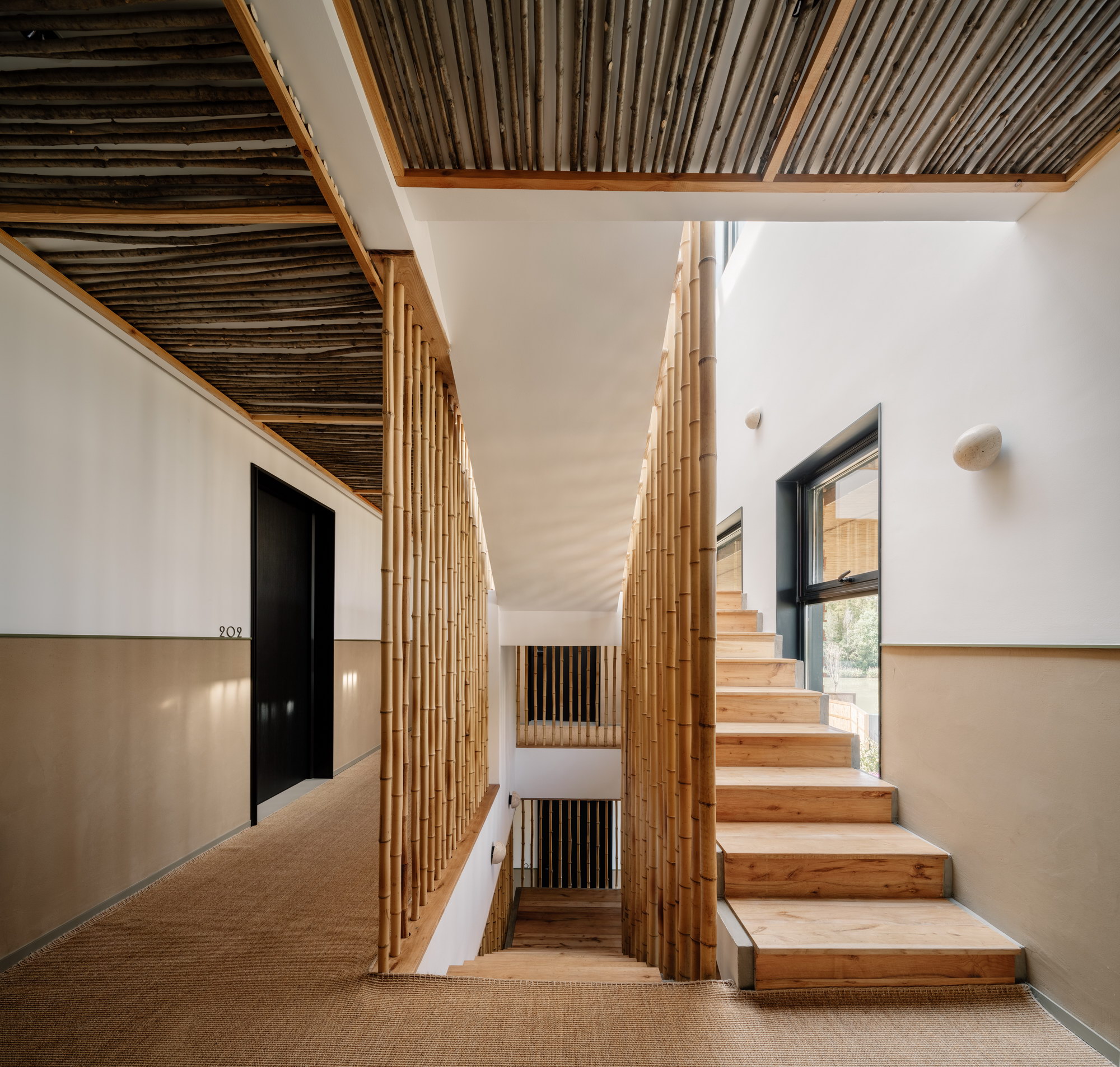
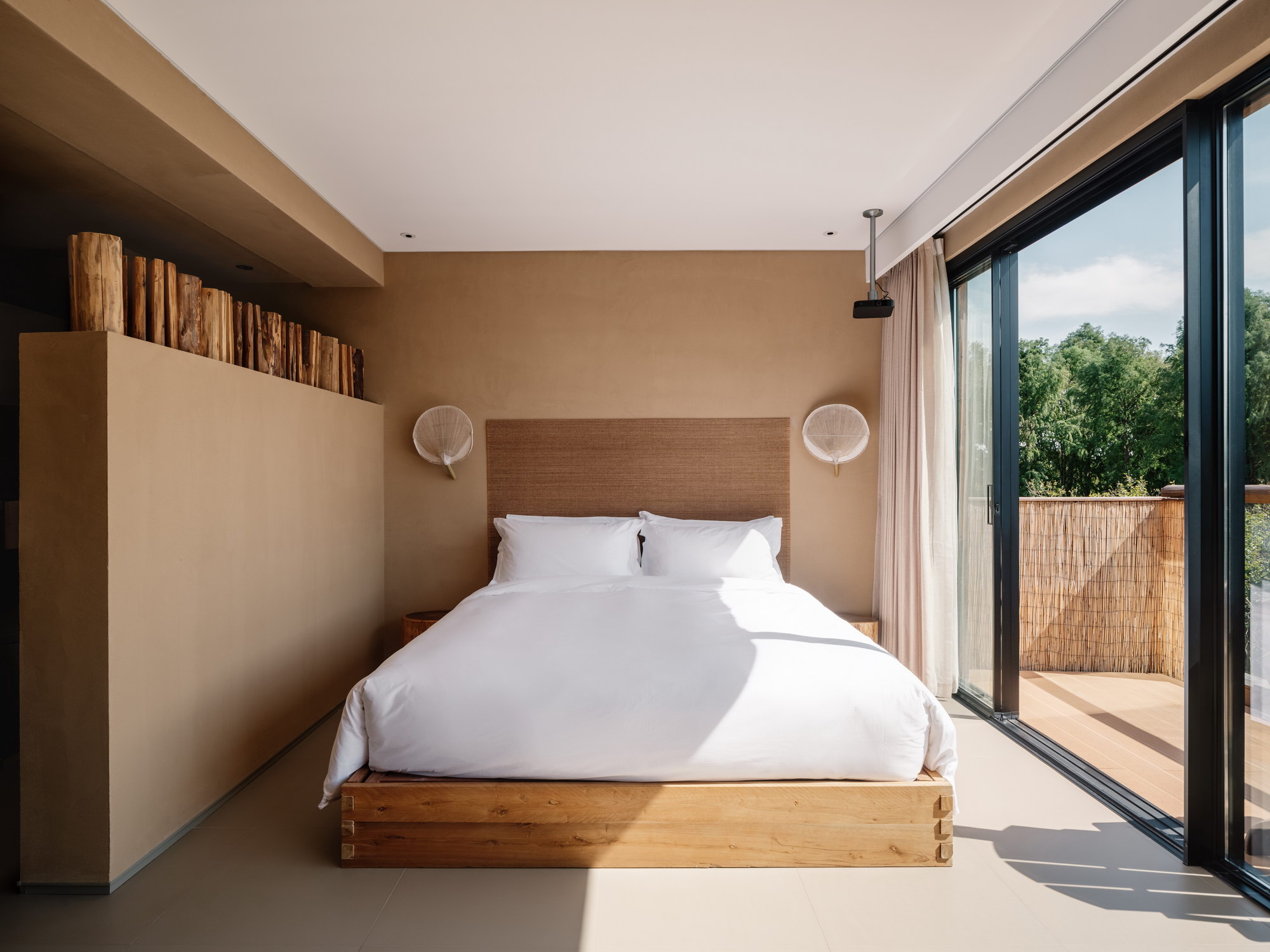
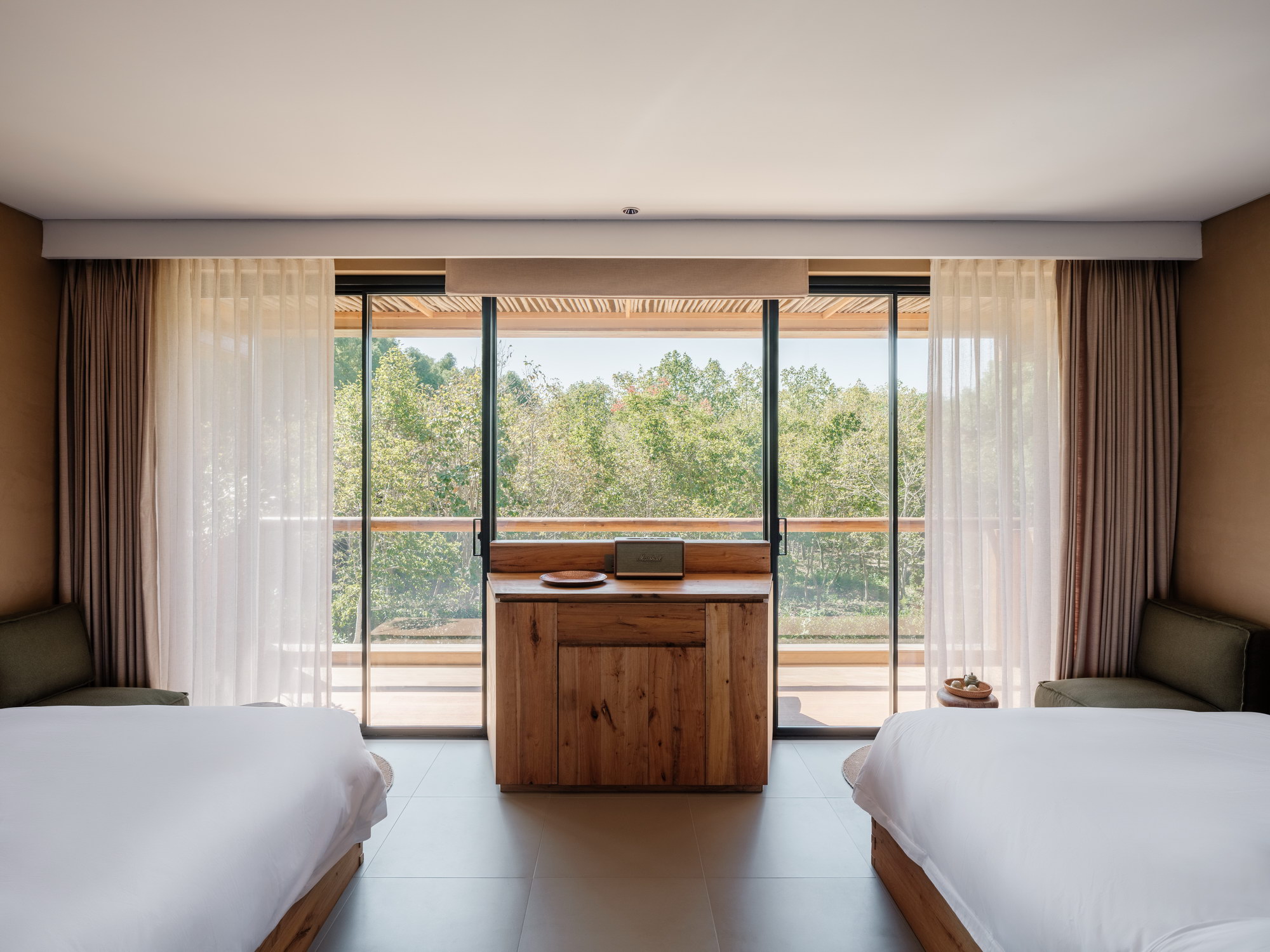
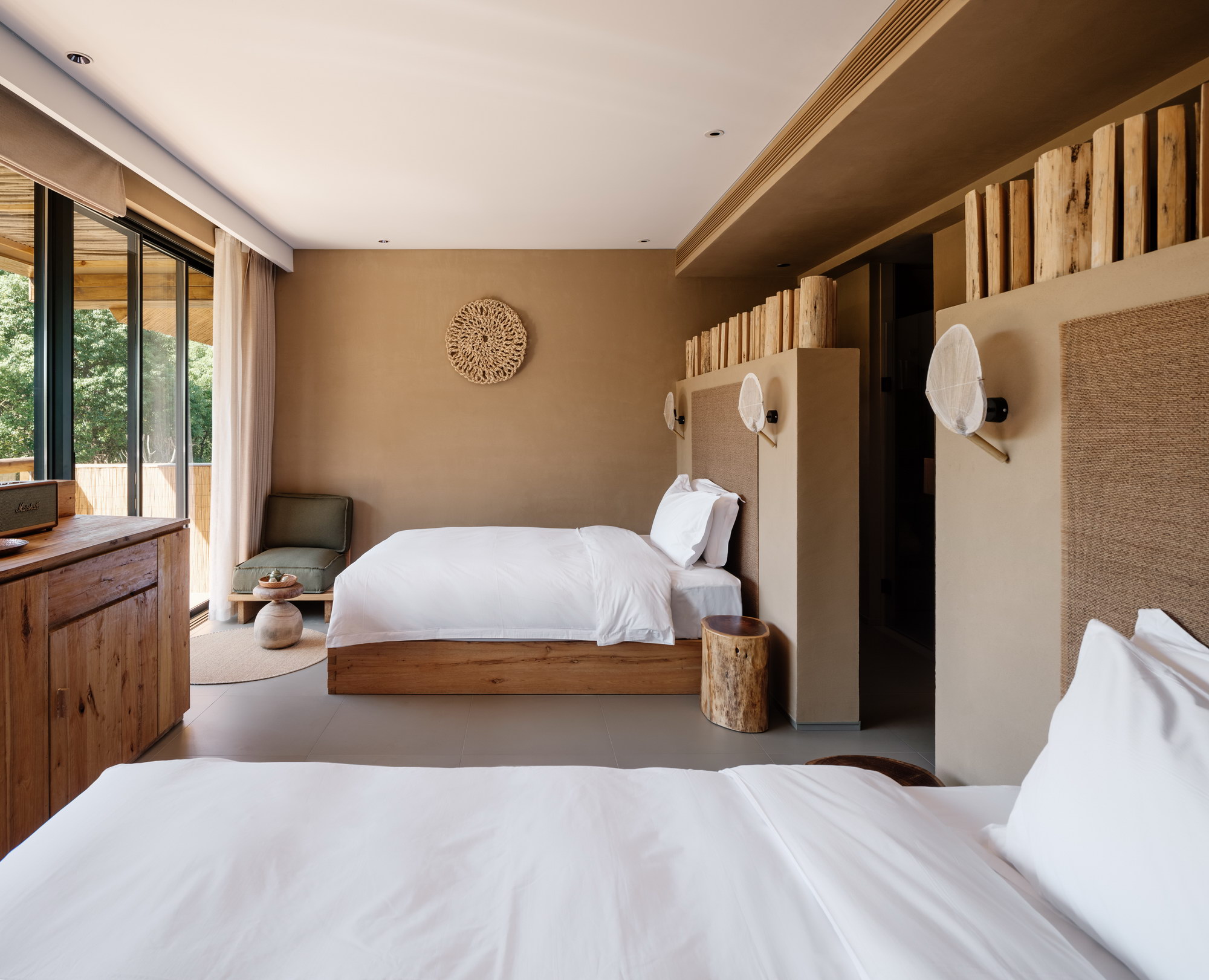
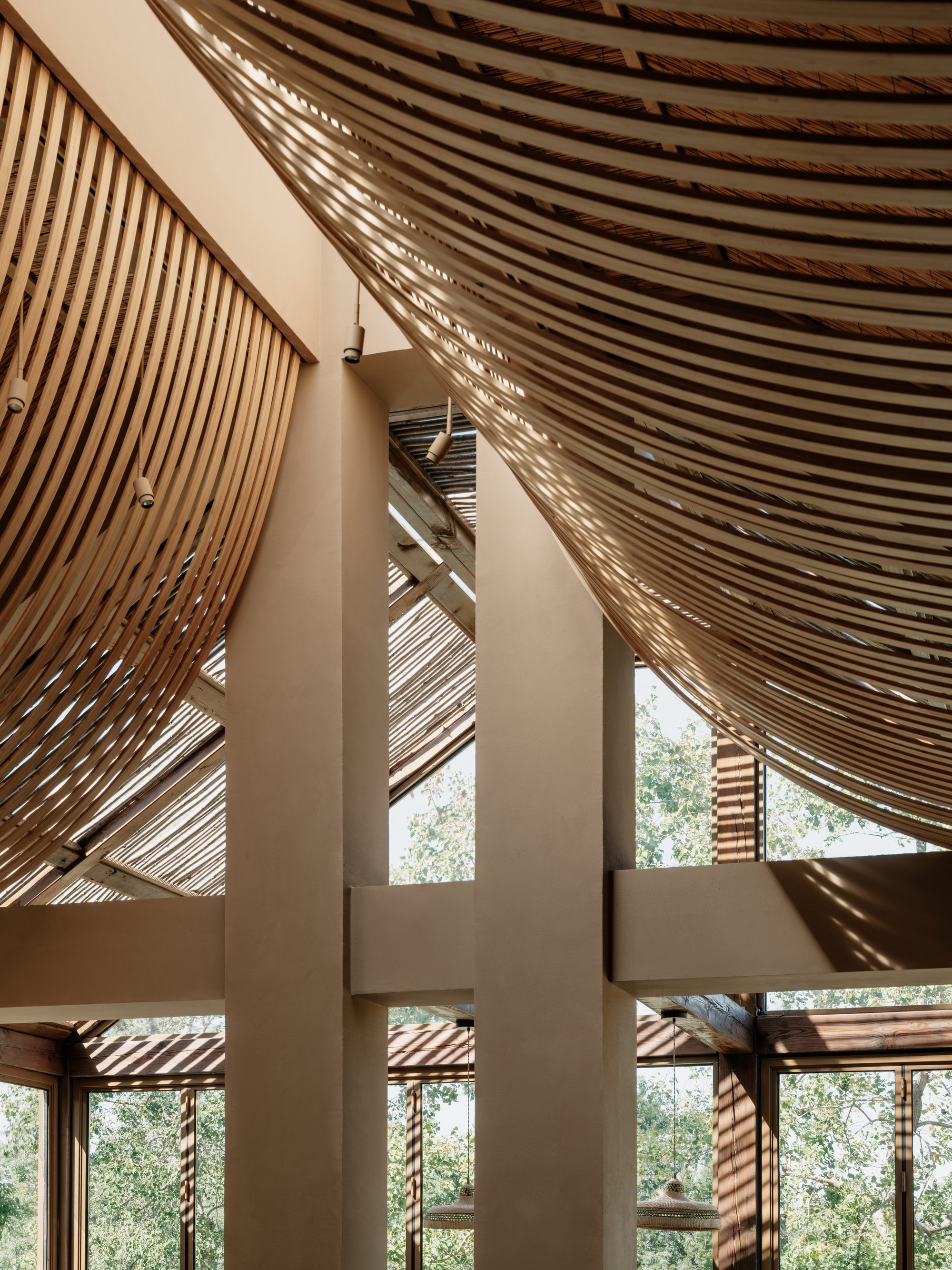
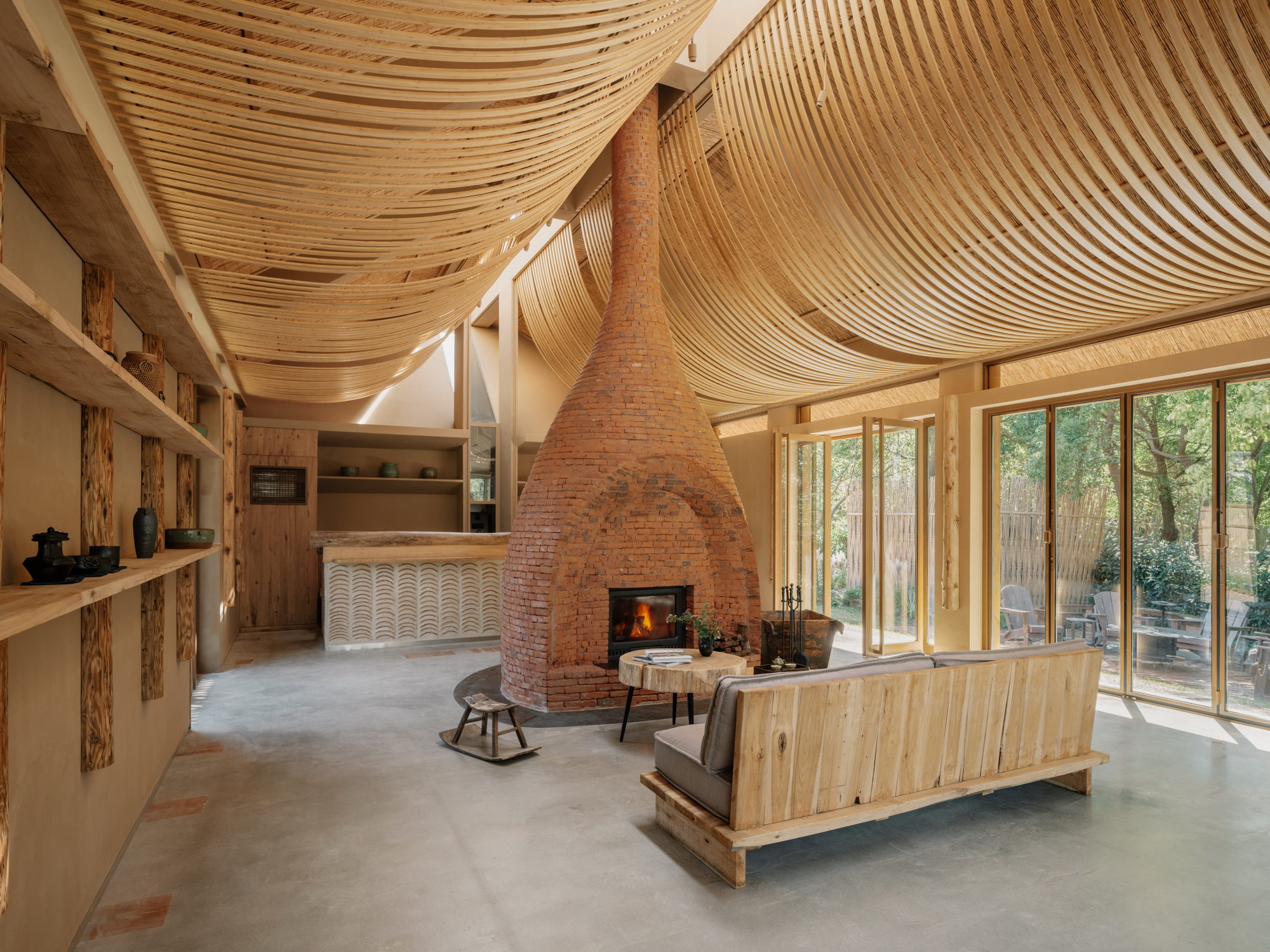
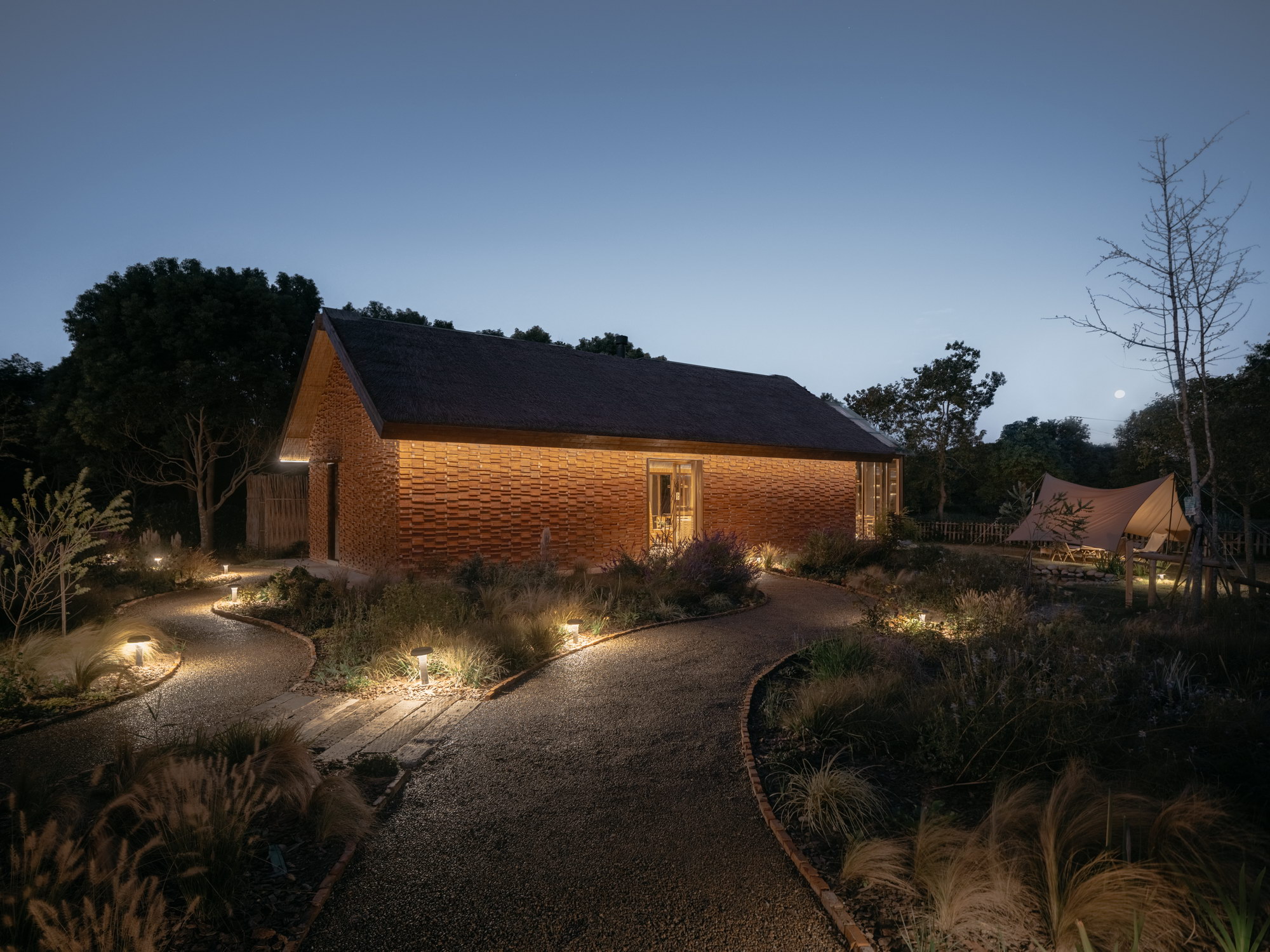
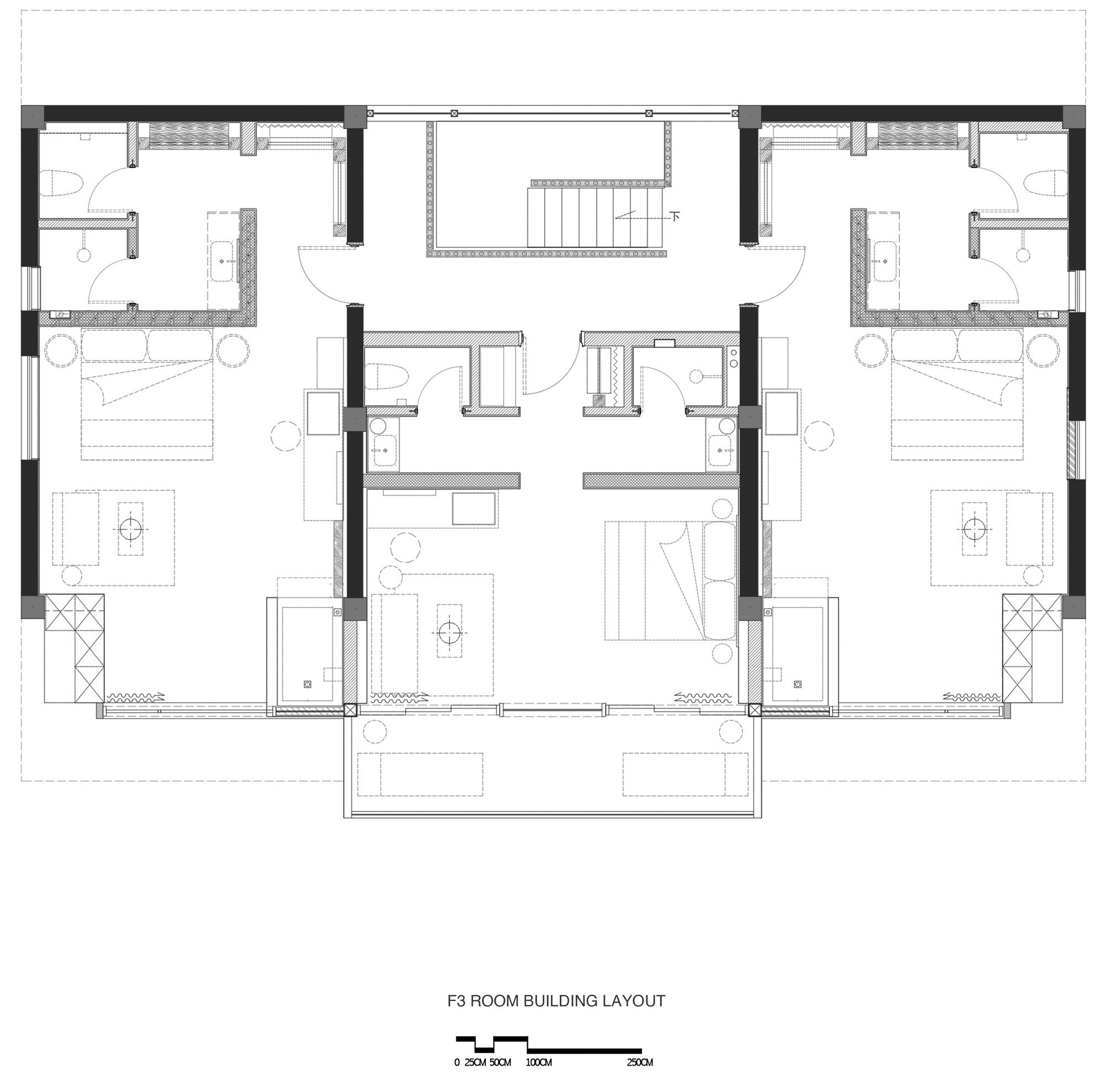
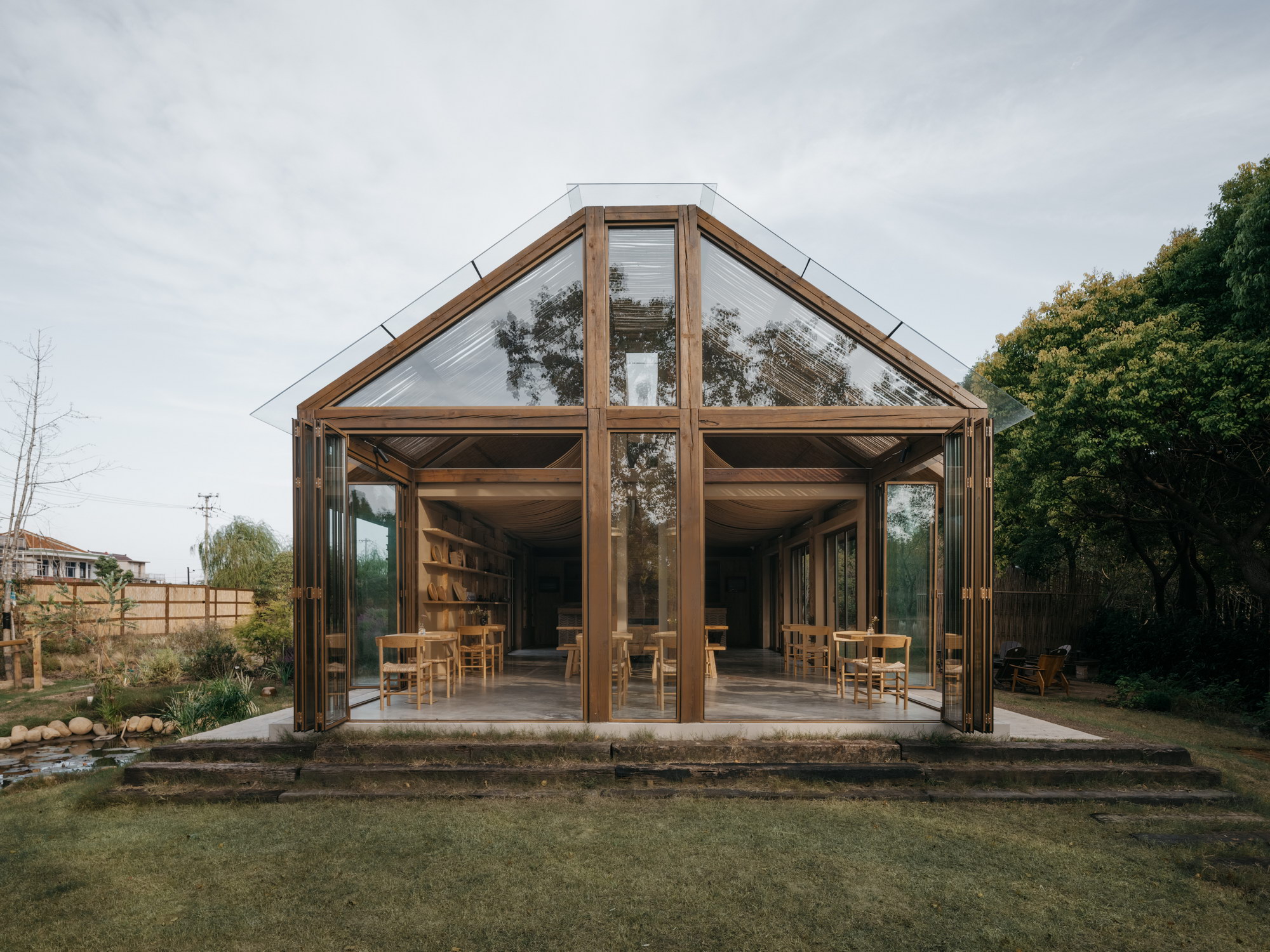
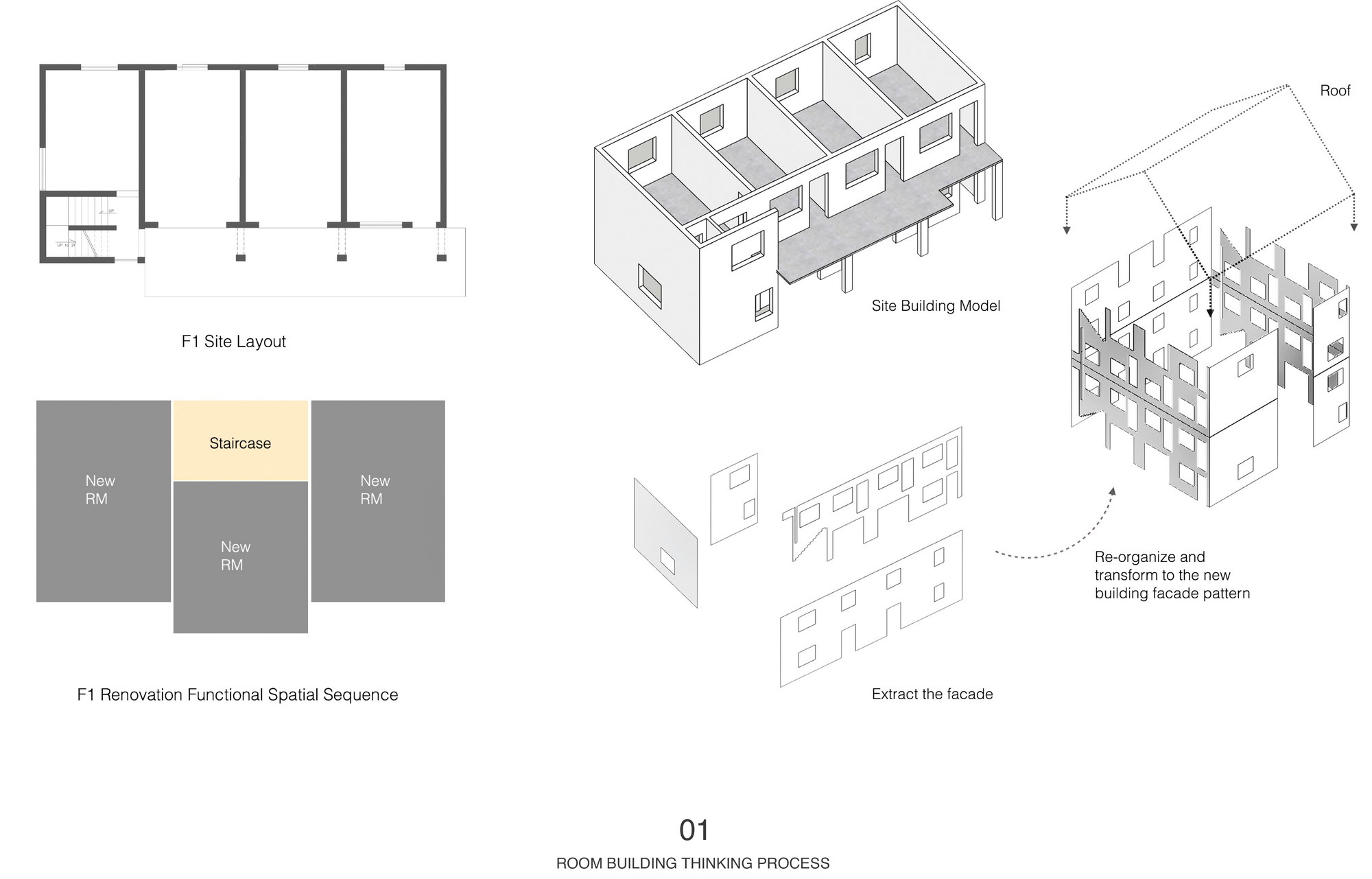
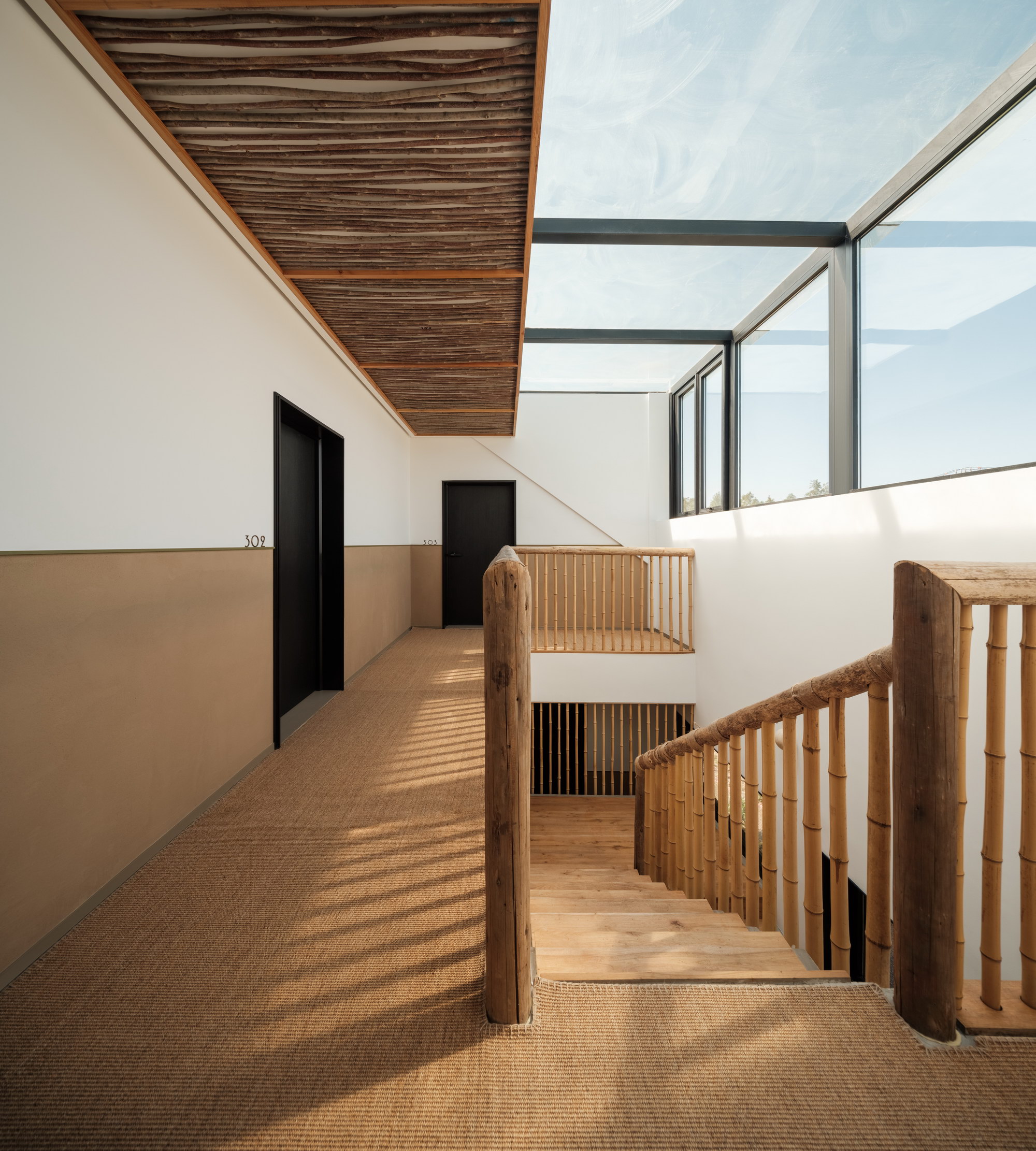
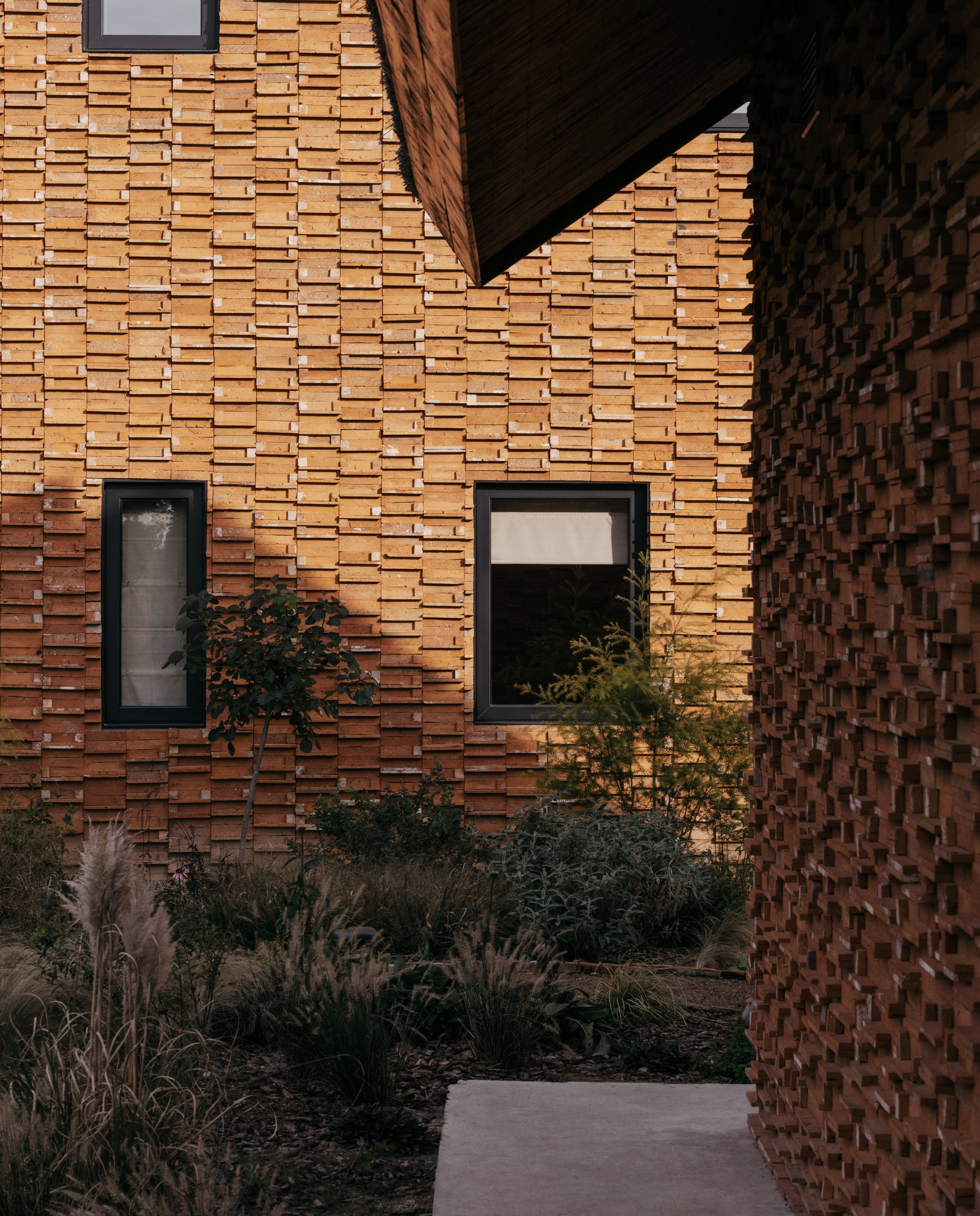
Songman SOM Land on Chongming Island, Shanghai is a resort that integrates natural countryside with local customs and handicrafts. The name derives from a traditional Chinese color, wind entering pines slowly, evoking the warm green between dappled tree shadows and a relaxed, slow-paced life. The site faces water on two sides, adjacent to the Laoyao Port and Hongmei Road landscape canal, surrounded by national shelterbelts. Two existing old houses, originally the village chief's residence, are renovated under local regulations that limit changes to original height and vertical shadow: one three-story main building for accommodation, and one single-story annex. The annex, originally a tool shed, is reorganized as kitchen, dining, reception and restrooms, extended outward with transparent glass roofing and folding doors that bring light inward. A brick fireplace under a curved bamboo-steel ceiling anchors the interior, with functional zones arranged around it. The main building is expanded from two to three stories, with the staircase relocated to the center of the north facade to optimize circulation and views of the shelterbelt. Existing window sizes and positions are retained on the new facade to preserve the old building's visual identity. Materials prioritize biophilic, sustainable choices: recycled brick, salvaged timber from demolition, natural clay, site branches and traditional Chongming homespun fabric. The facade's textured relief is made from cut recycled brick laid in patterns inspired by Chongming cloth. A reed-thatch roof, a local traditional craft, is hand-bound on site. The 632-square-meter building sits within 1,440 square meters of landscape.




























 Editor's Pick
 Latest Design
 Best Idea
 Hottest of Week