Text description provided by the architects
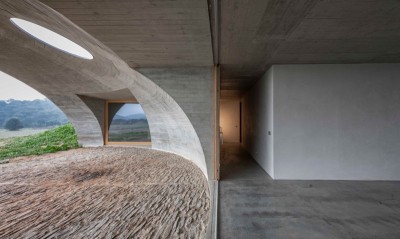
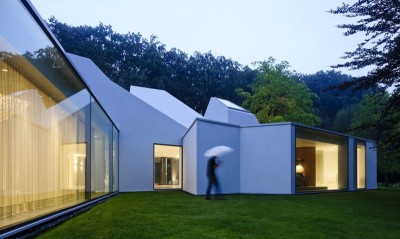
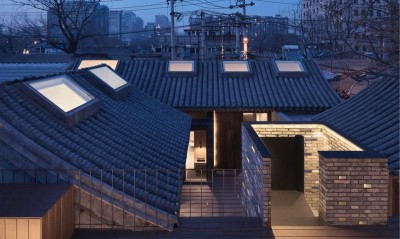
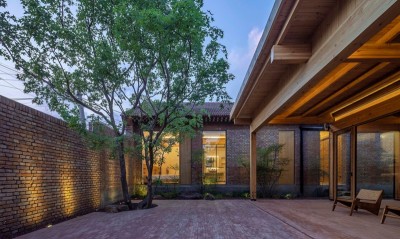
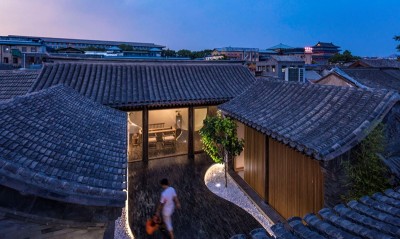
The Dongcheng Private House in Beijing is a renovation by JSPA Design, lead designers Johan Sarvan and Florent Buis, from February to October 2022, of an existing Ming-period street-side building in Beijing old city, reconfigured as a courtyard residence of about 660 square metres of interior. The design task demanded a clear reading of old and new, and a continuous architecture that binds them together. The brick perimeter wall and the old building structure are preserved, while two parallel new volumes are added to form a sequence of three courtyards. The new buildings take their cues from the surrounding old ones but reinterpret them in a modern register: traditional tiled double-pitched roofs are retained, but with shallower slopes and longer eaves; traditional timber framing is replaced by thin steel structure combined with timber rafters. The courtyards are arranged so that privacy increases from outside in: guest rooms and living spaces wrap the first court, while the second and third hold strictly private bedrooms and a study. A single ultra-thin black steel canopy links the three buildings, hiding structure while naturally forming the entry and a covered walkway between the courtyards. That same horizontal line establishes a common datum for frameless glazing in both old and new buildings and provides sun shading for the south facade. Three concrete elements are inserted: two sealed boxes that house bathrooms like plugged-in modules, and a concrete frame that adds a bedroom behind the living room. Much of the plot had never been built on; once the possibility of a basement was confirmed, a swimming pool and gym were placed below grade. They are naturally lit by a courtyard at the north end and a linear skylight on the side, with structural beams exposed to add diffuse reflection to the underground space. The contrast between the two levels is deliberate: above ground, traditional Chinese roof forms sit discreetly in the old-city context; below ground, a raw, almost brutalist concrete language carries an unusually rich light-and-shadow play using a single material.




 Editor's Pick