Text description provided by the architects
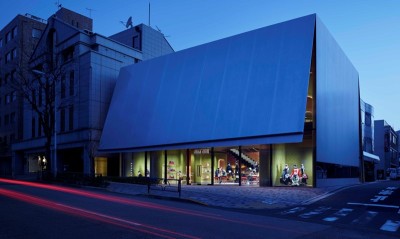
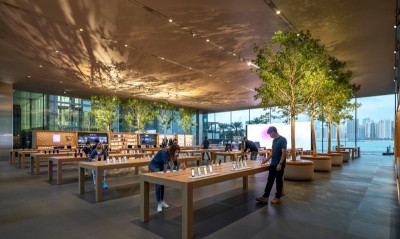
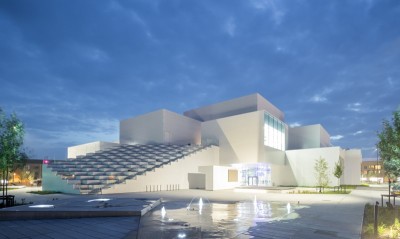
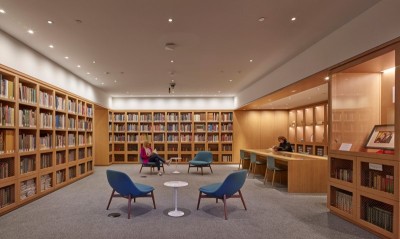
Designed by UUA for the Shouchuang Intangible Cultural Heritage Platform, the Chengqi Zaowu pop-up shop is a small but luminous pavilion set in the sunken plaza of the Fangshan Outlets in Beijing, built by Beijing Zhongyi Decoration and photographed by Jin Weiqi. The client wanted a destination-like object that would light up an otherwise dim underground retail street and become an unforgettable landmark, even though the site was squeezed into a three-by-three-by-ten-metre volume. Rather than stage folk craft literally, the architects chose to express the theme through structure. The opening gesture is inspired by the Chinese oil-paper umbrella: its ribs offer shelter while keeping the sides open, never closing the interior off from the street. Two spread wooden ribs support the whole building, and the sales area sits beneath them like space under an open umbrella. Between the ribs, a sloped soft-membrane ceiling acts as the umbrella's skin, diffusing soft light down onto the objects on display. Because the project had to be designed and built in little more than a month, with restricted working hours and no storage on site, modular prefabrication was a starting condition: two umbrella frames form a hexagonal module, three of which are prefabricated in the factory and assembled on site, with the middle module fully cantilevered. Fixtures and loose furniture were also prefabricated. Without extra columns, the exterior reads as a pure glass box in ultra-clear glass, letting passers-by see the goods directly; the base is slightly raised to make the pavilion float. In a sunken mall where daylight never reaches, the interior light itself becomes the wayfinding, and the visible umbrella ribs become the focal point. The wall facing the neighbouring shop is lined with mirrored stainless steel, concealing electrical and HVAC services while visually expanding the space. Inside, oak furniture and structure set a warm wood tone, with brass detailing outlining edges and a carefully articulated language of junctions; the warm interior and silver exterior form a deliberate temperature contrast. The three hexagonal bays form a circular route, and the central bay is column-free, reserved for live craft demonstrations. When the pop-up closes, the umbrella frame can remain as a rest area or be disassembled and reused. Aluminium composite panels and wooden slats keep the pavilion gentle with the mall even as it deliberately stands out, proving that beauty at small scale is still worth pursuing.




 Editor's Pick