Text description provided by the architects
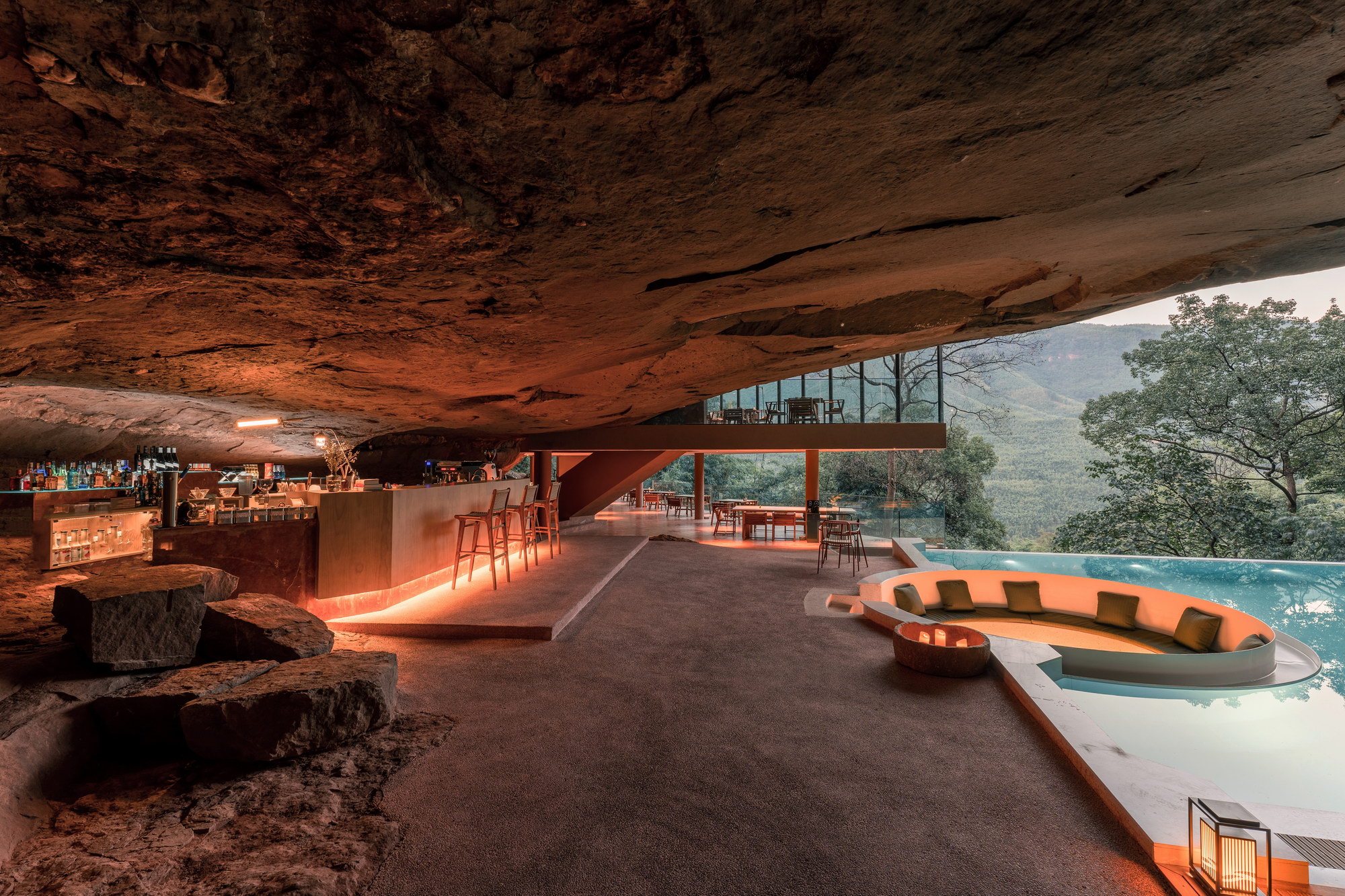
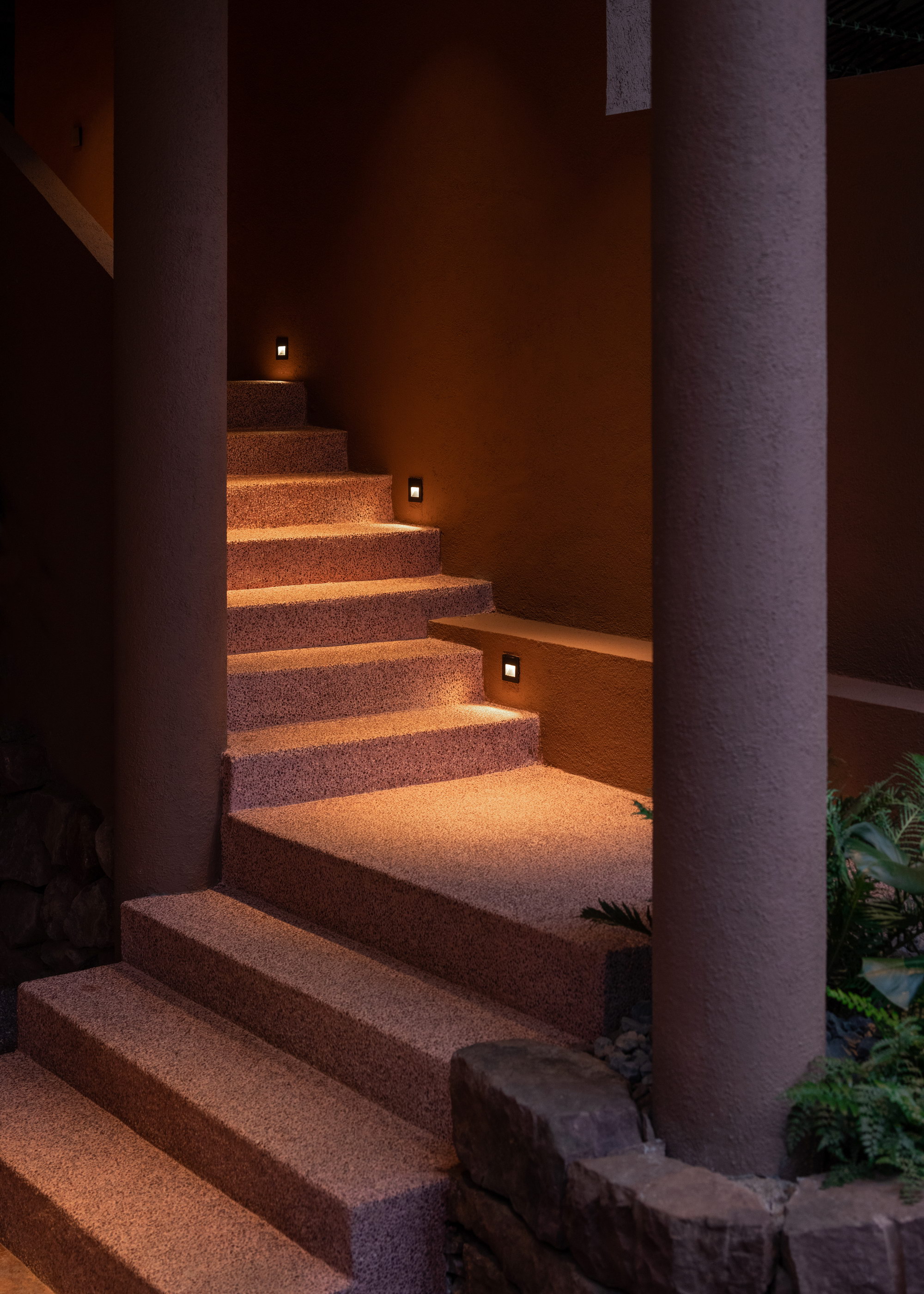
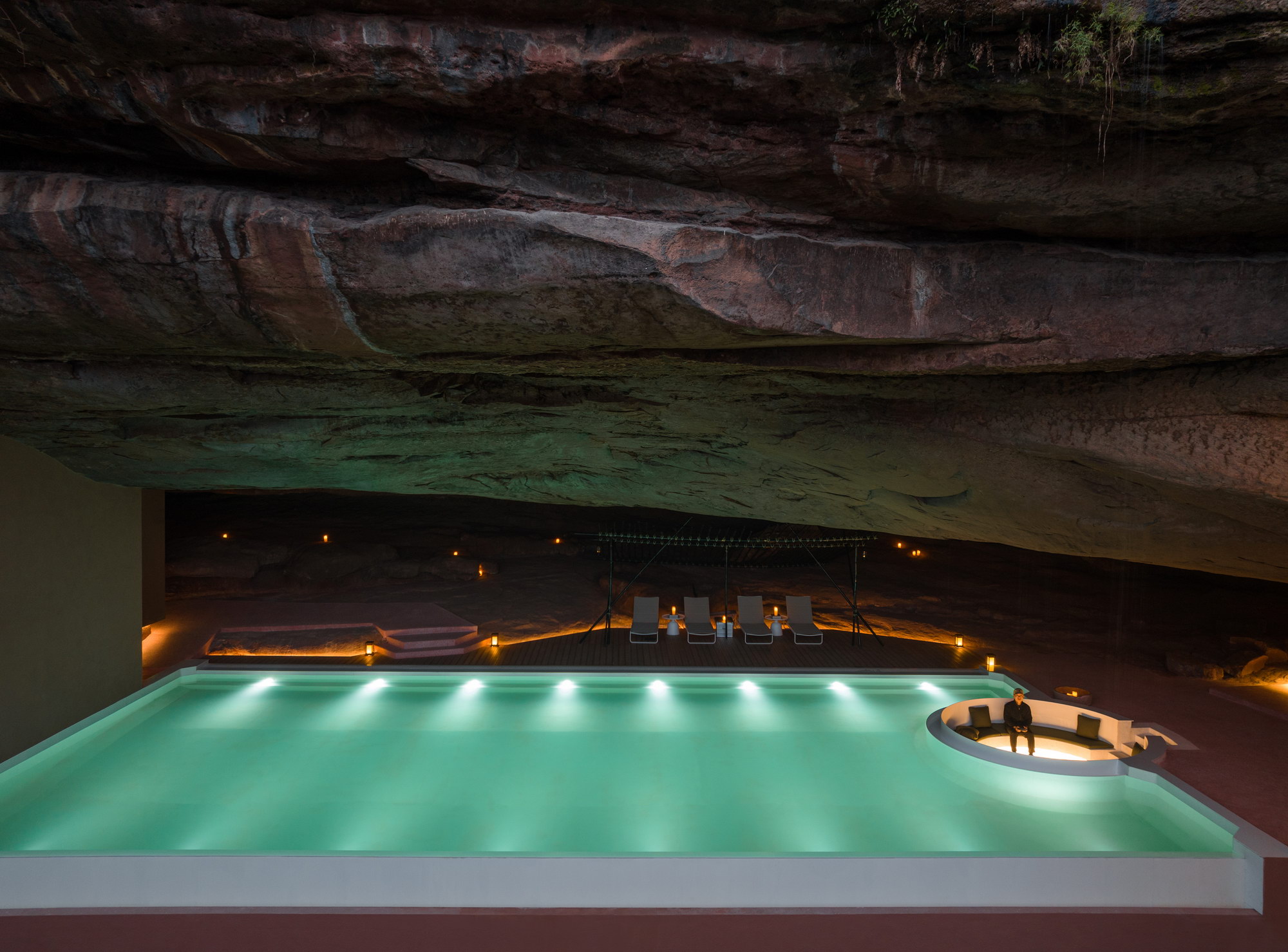
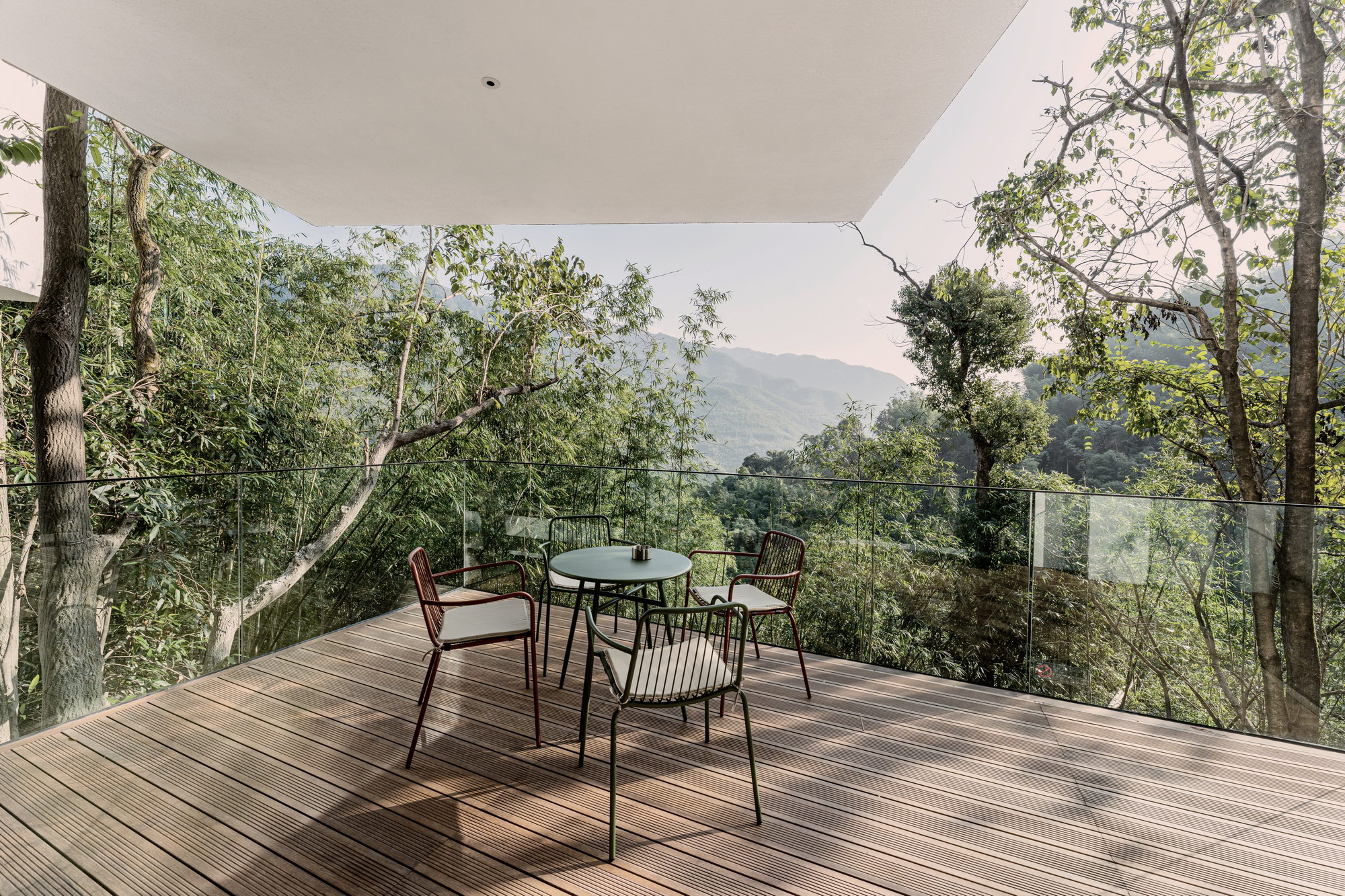
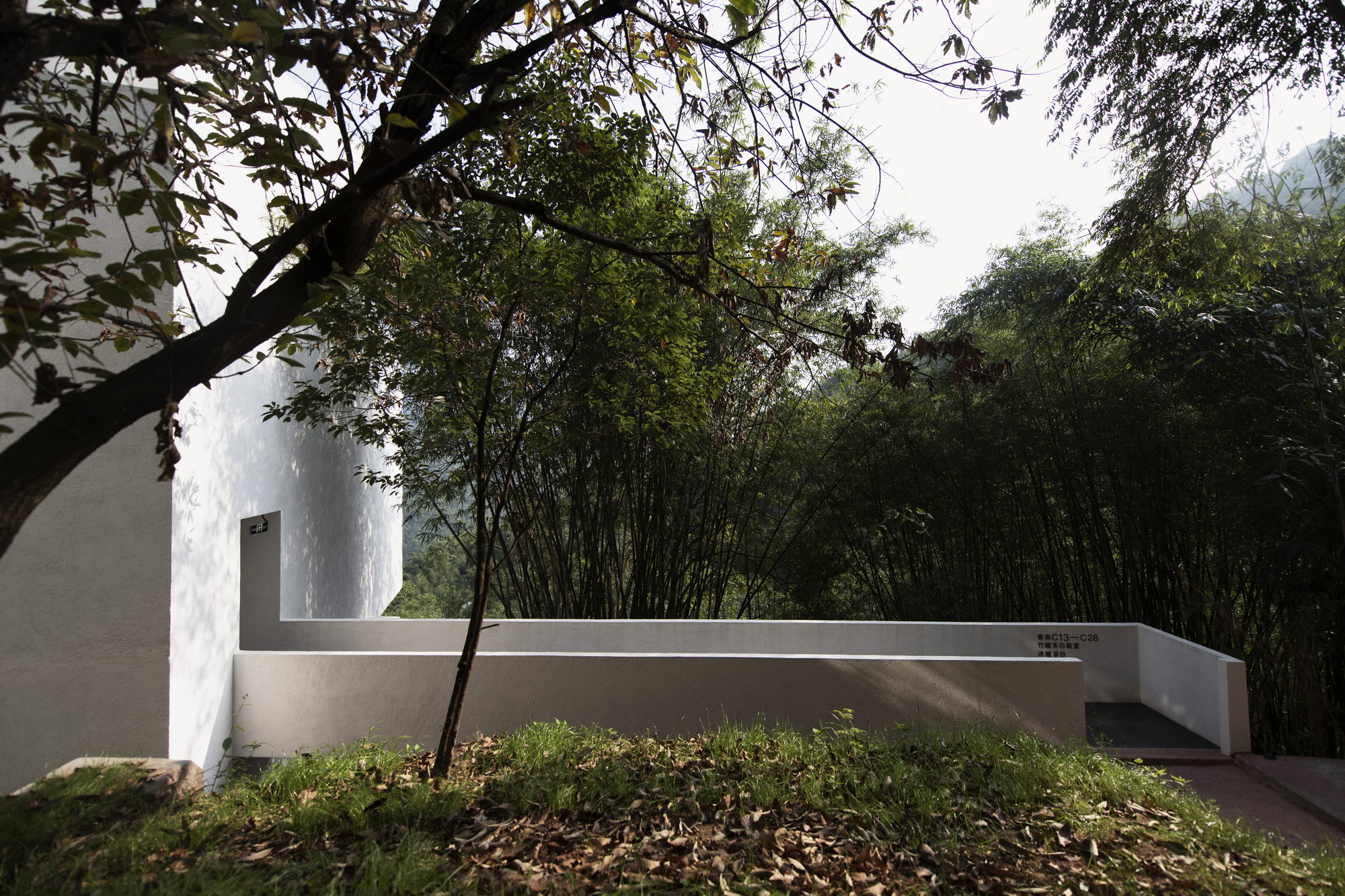
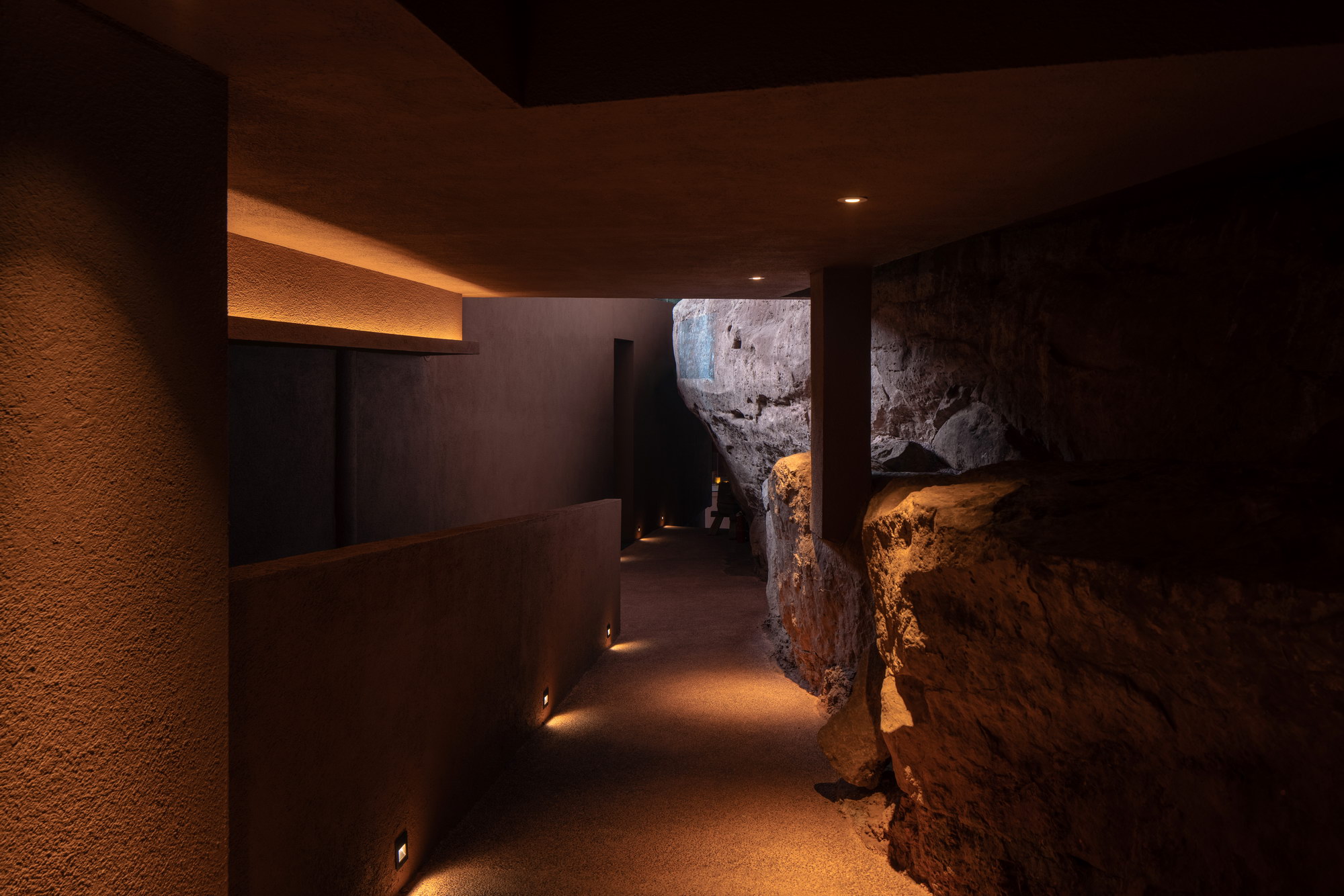
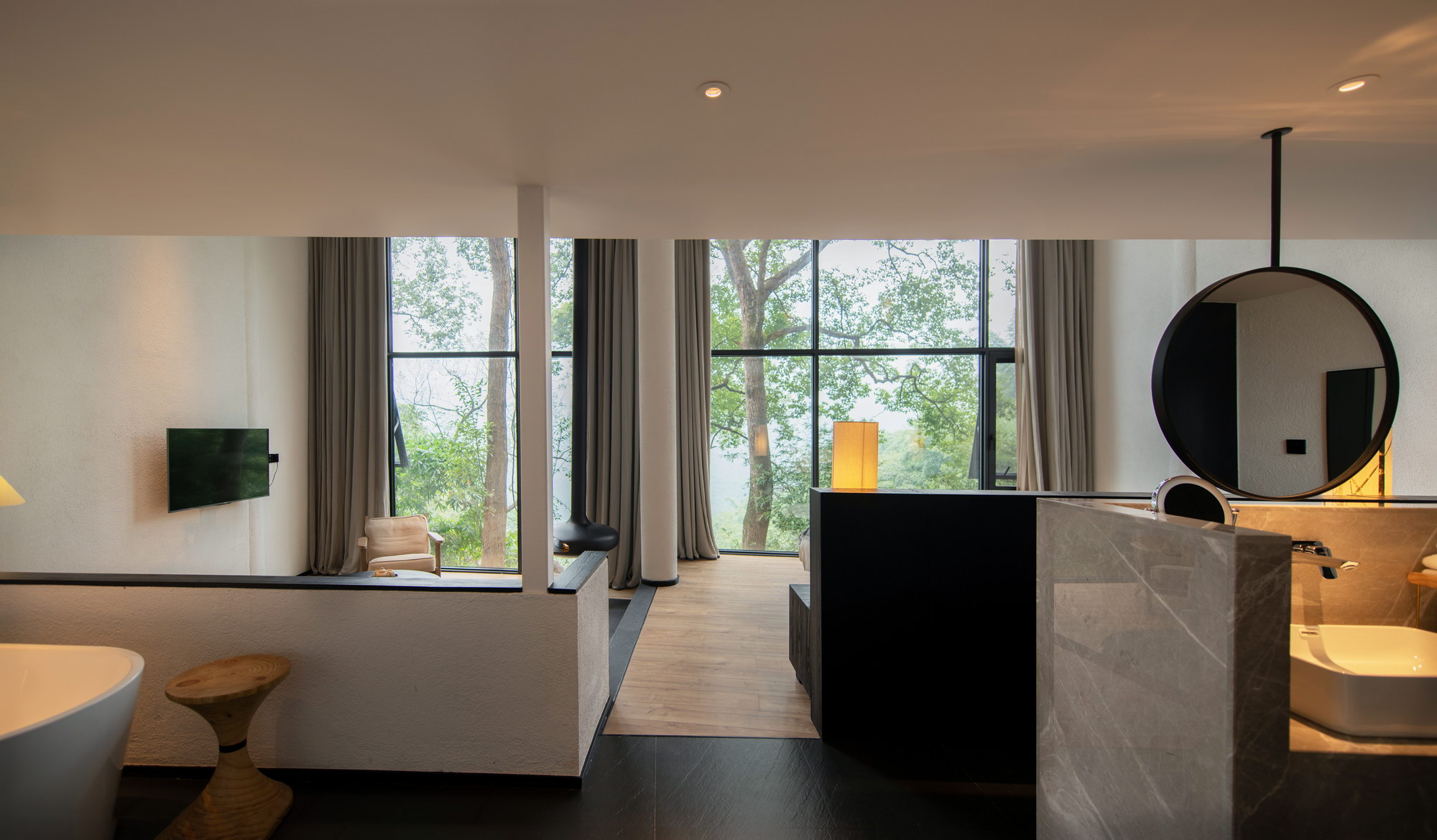
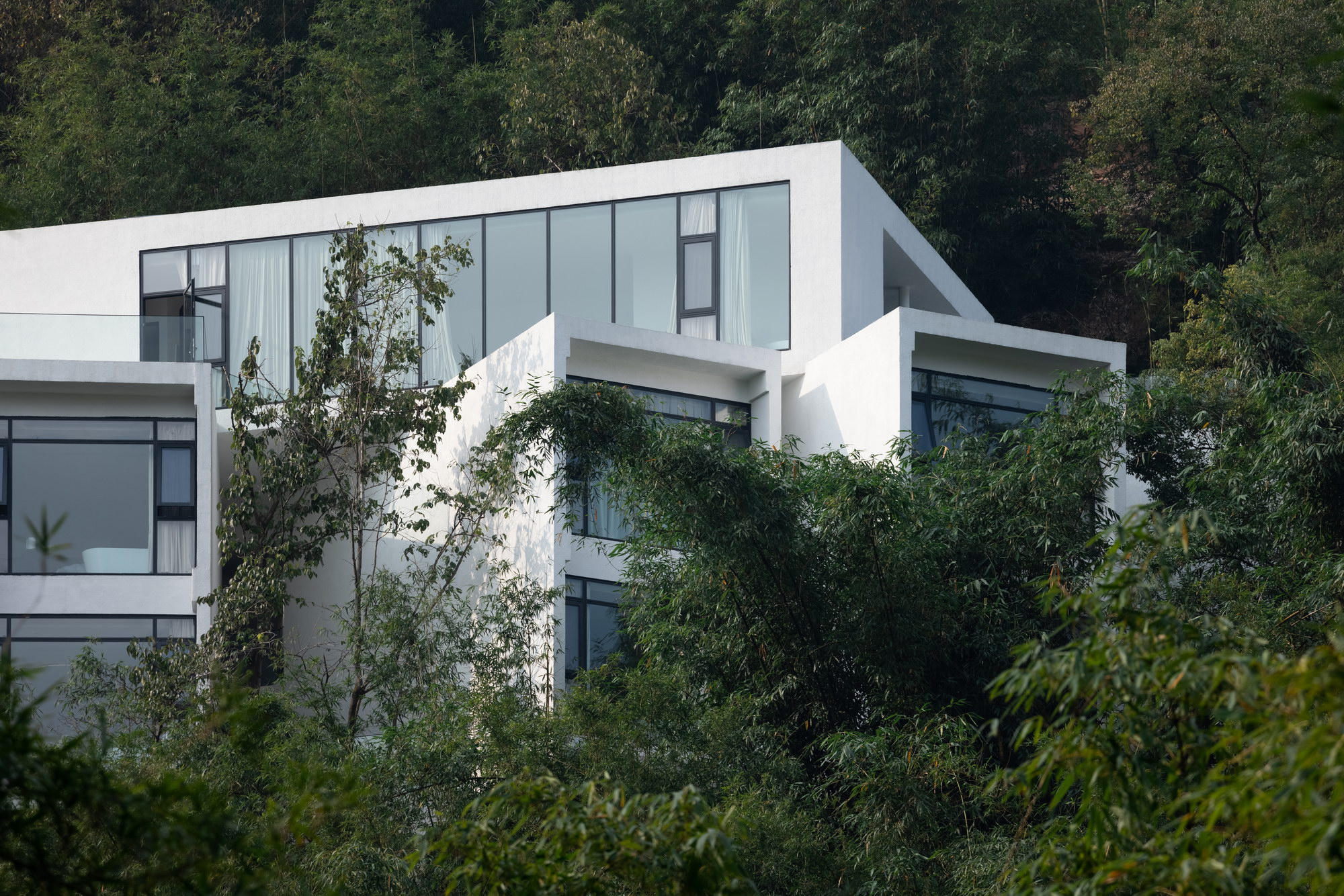
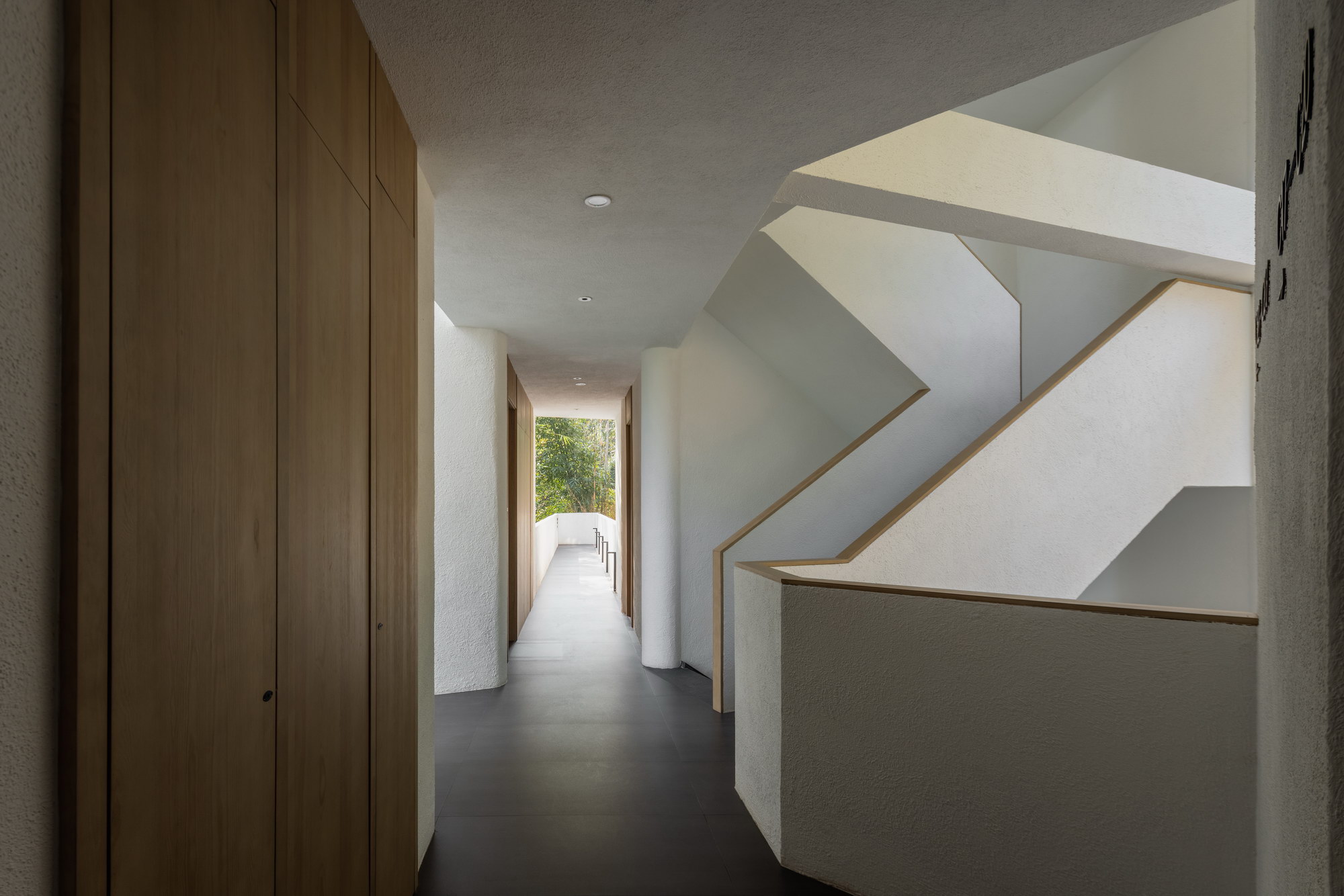
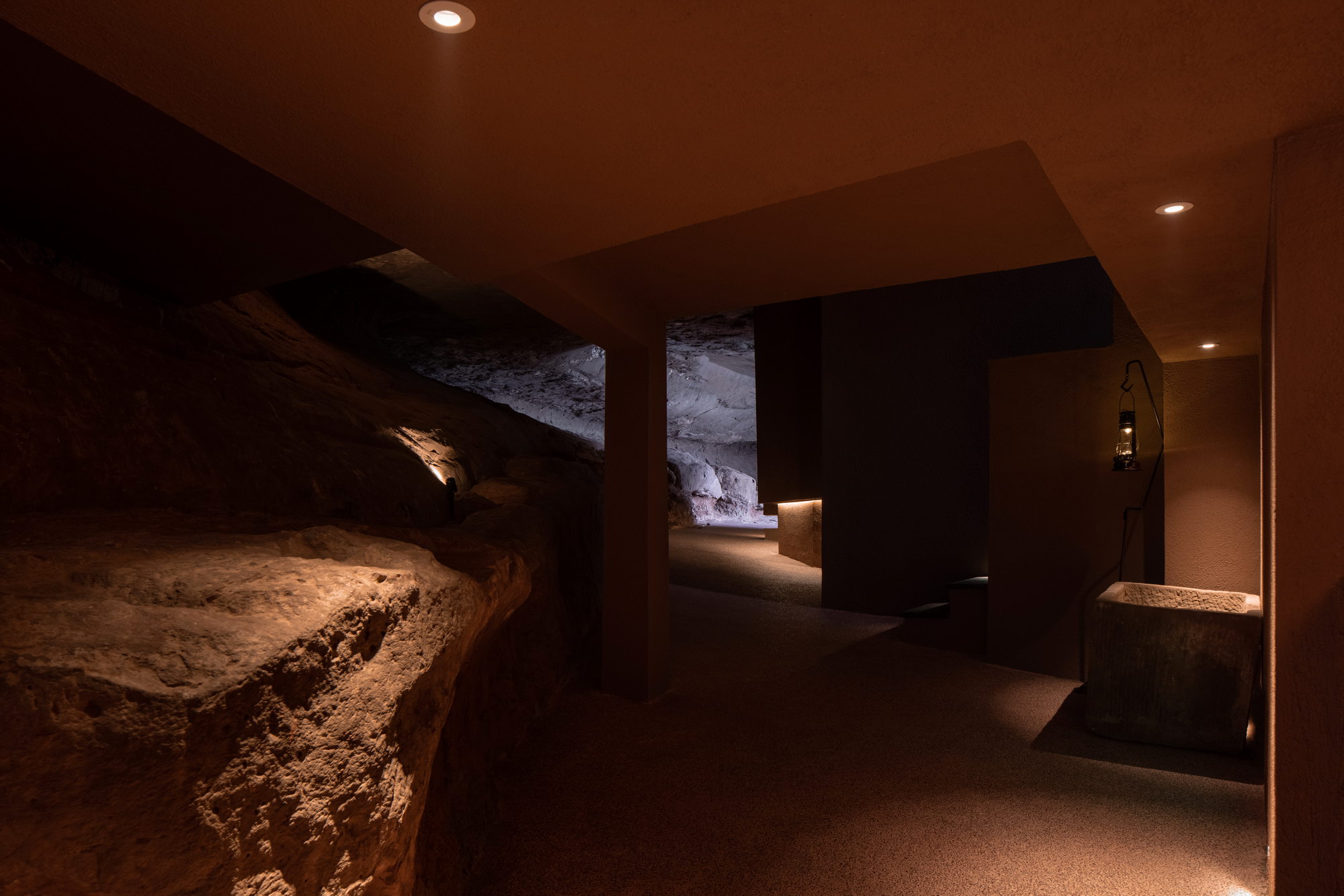
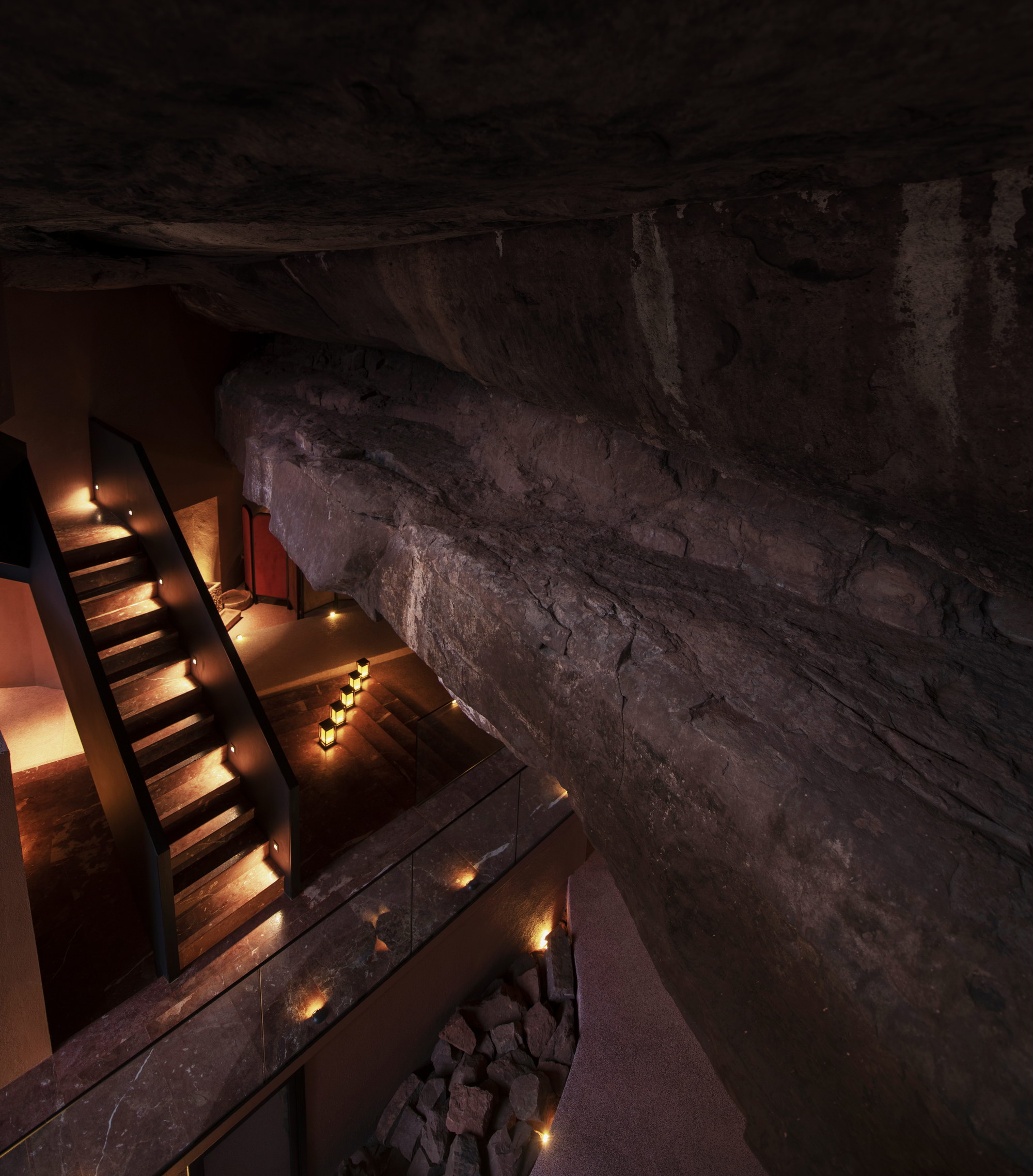
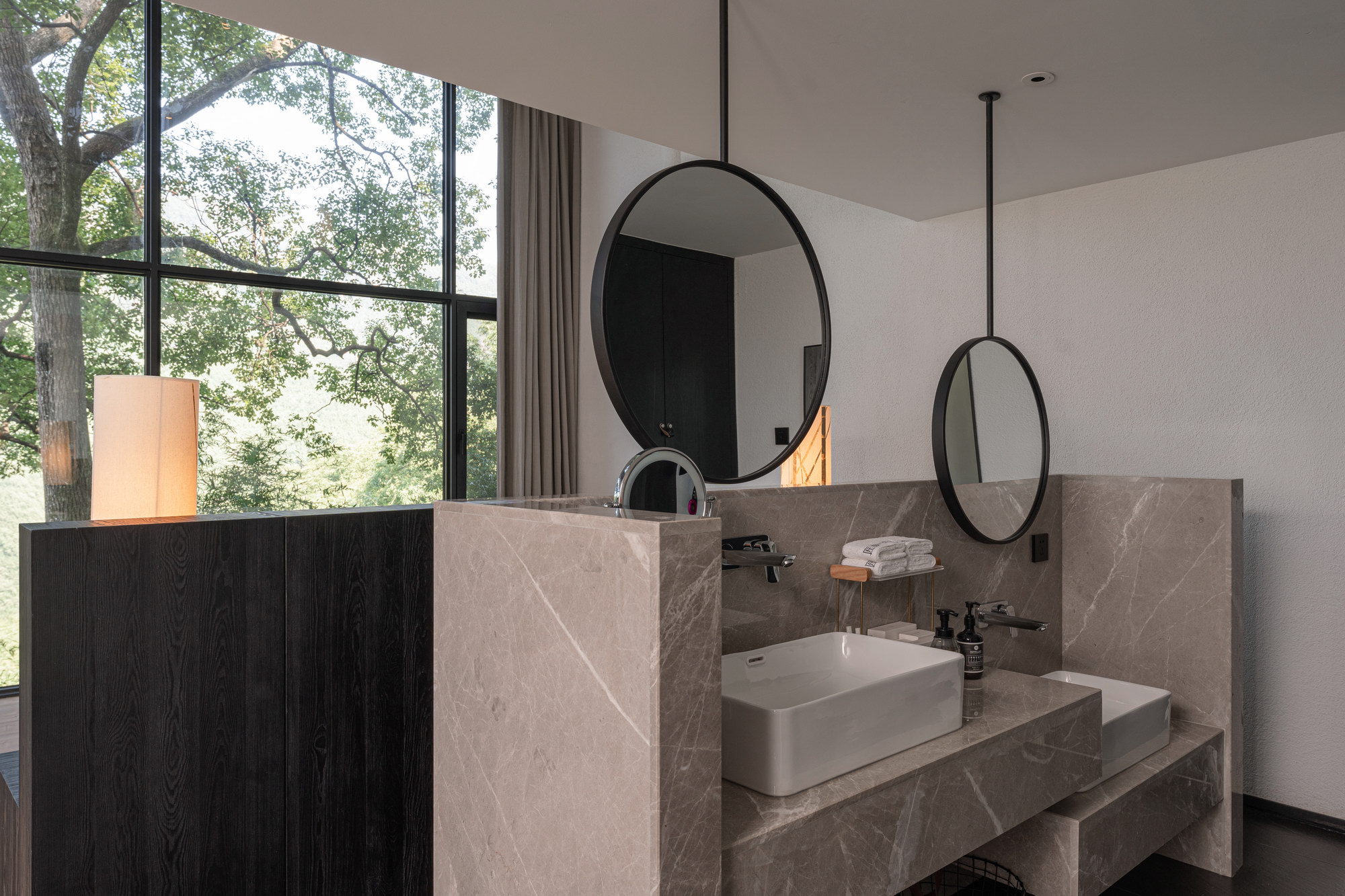
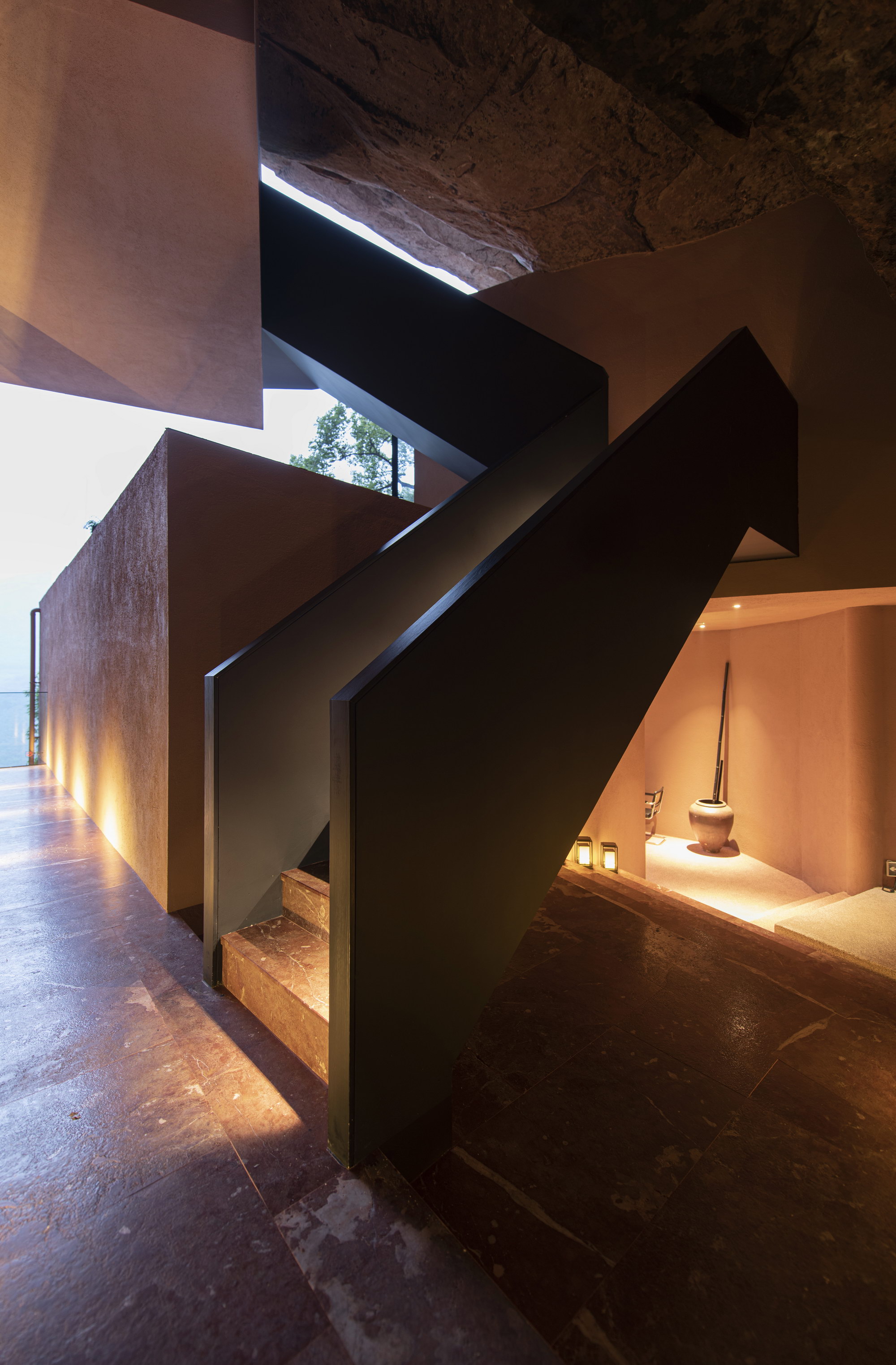
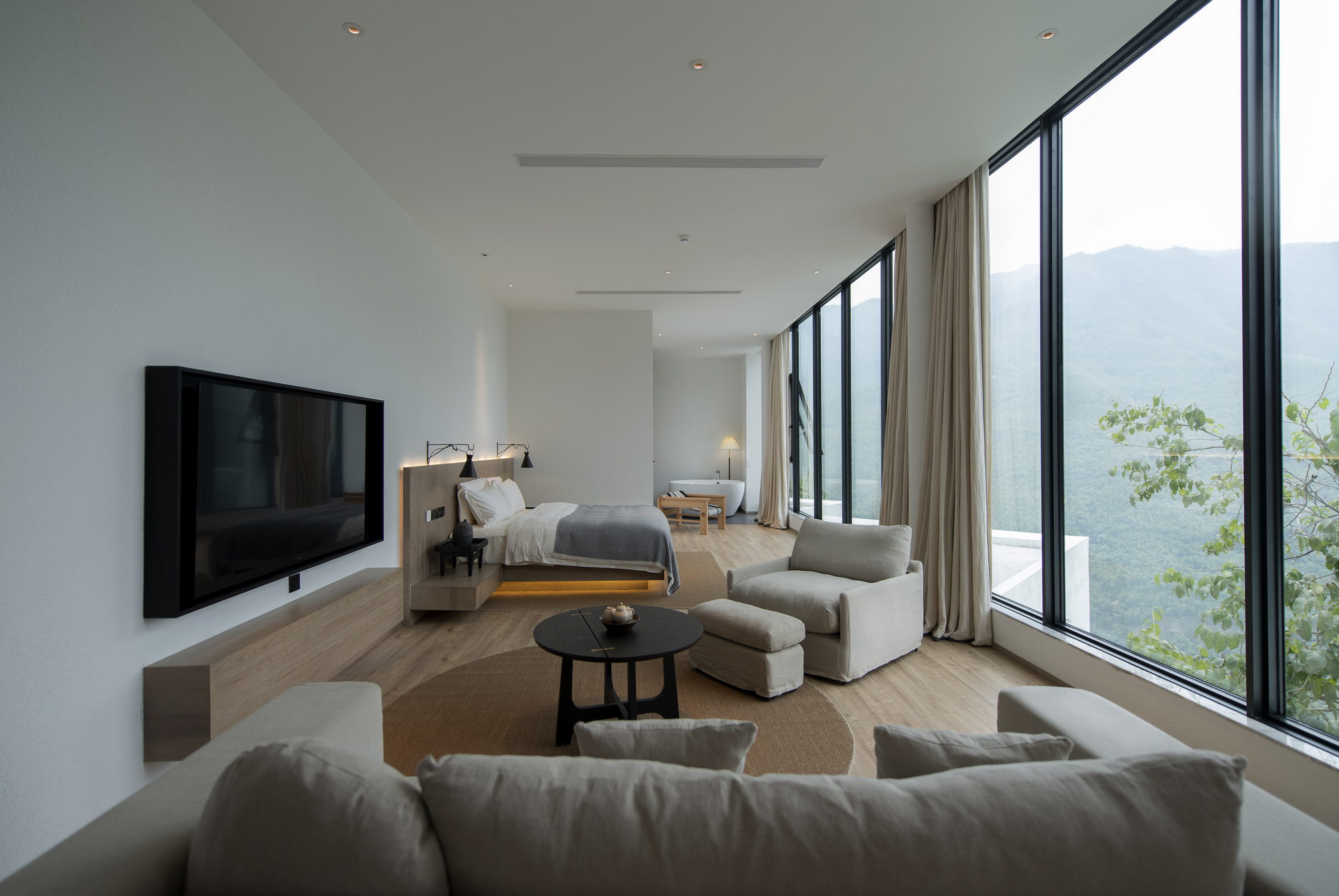
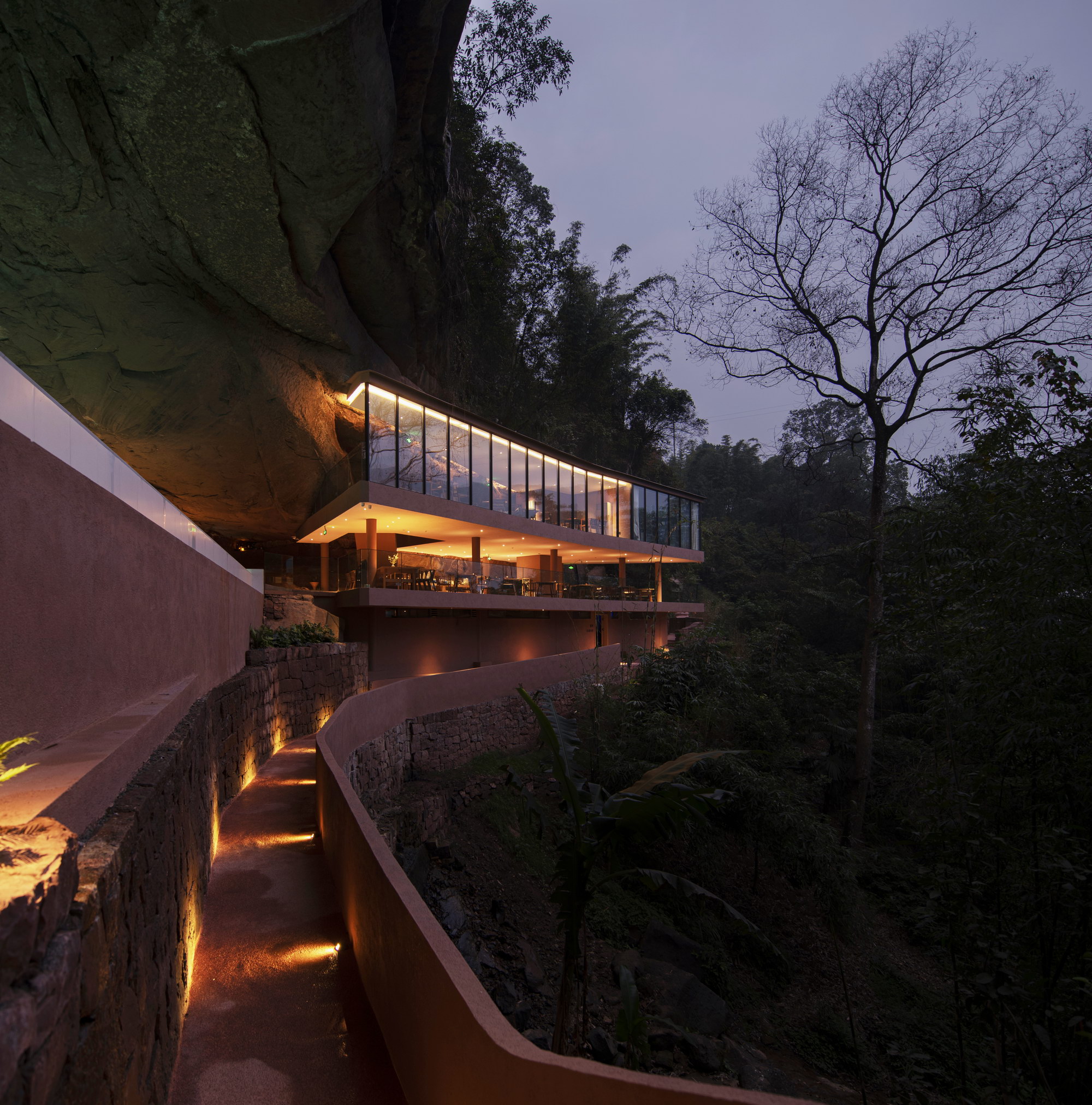
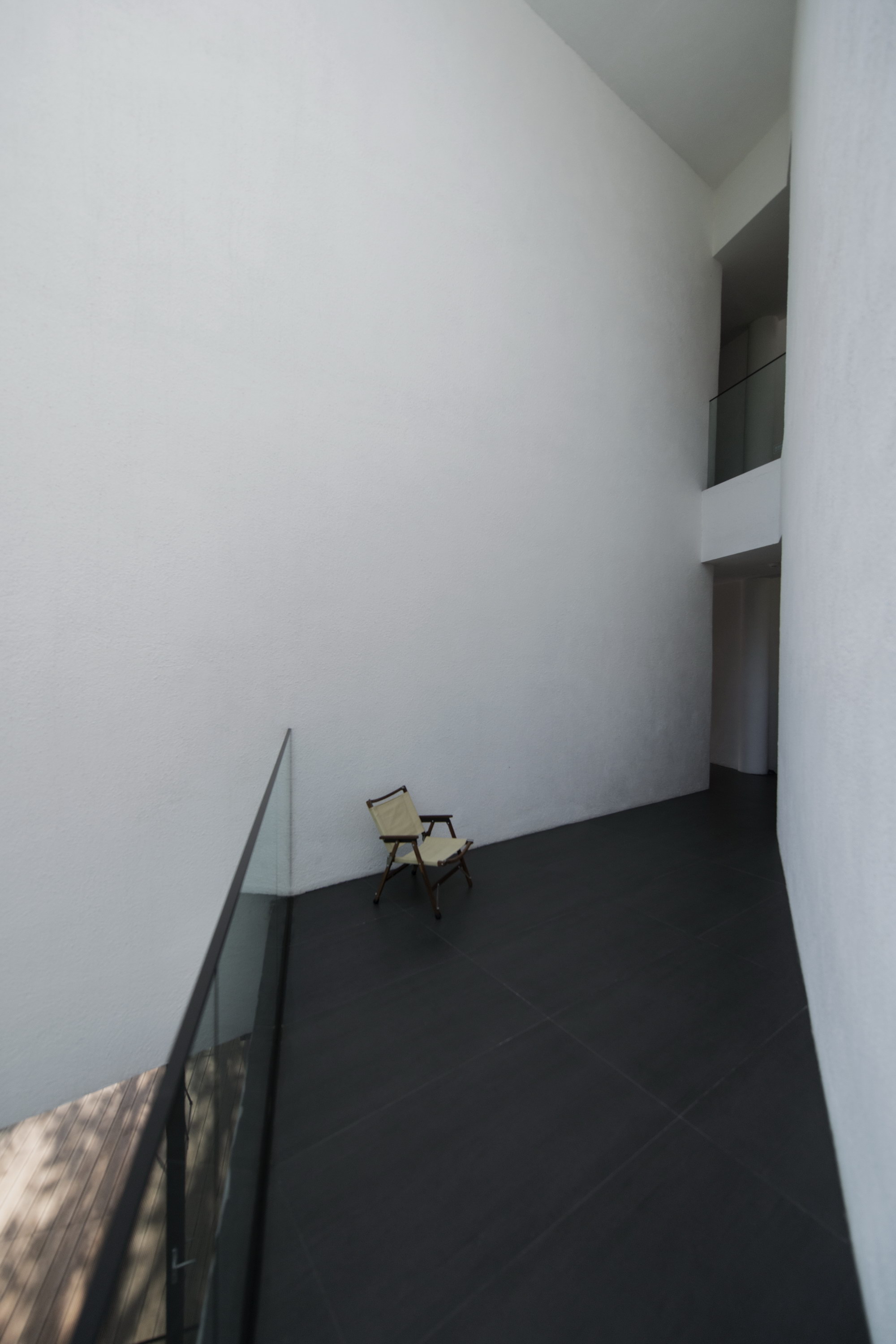
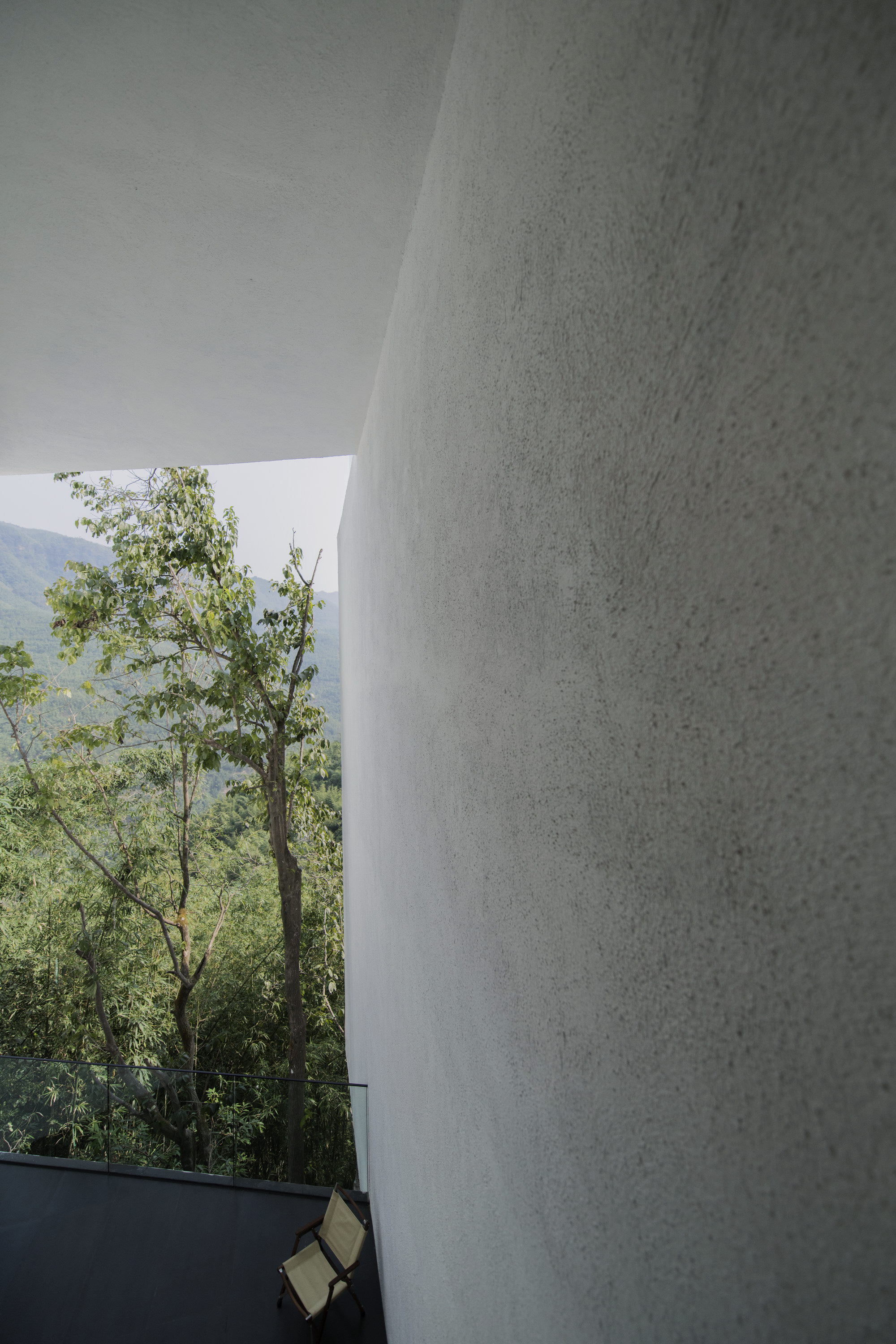
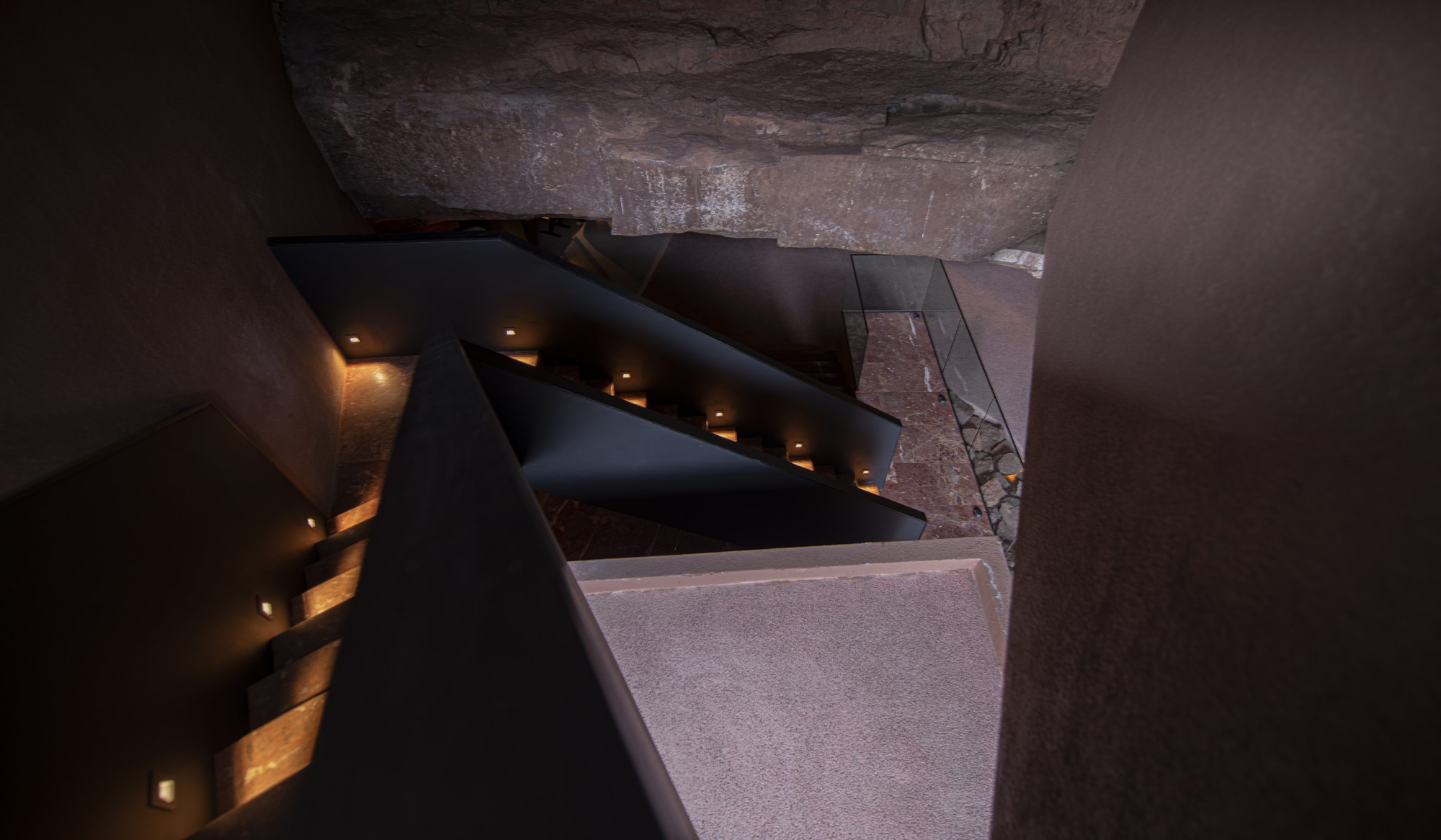
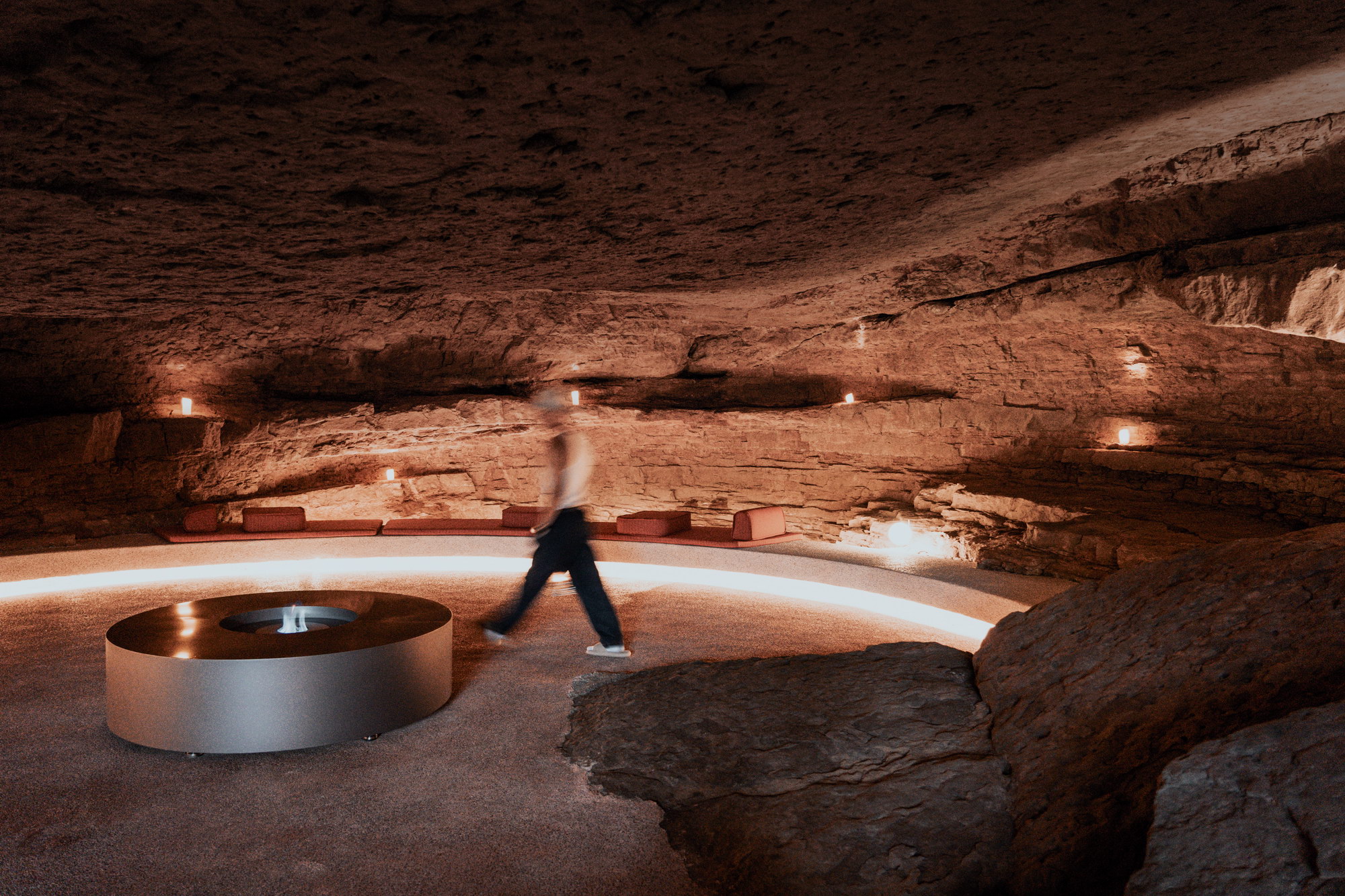
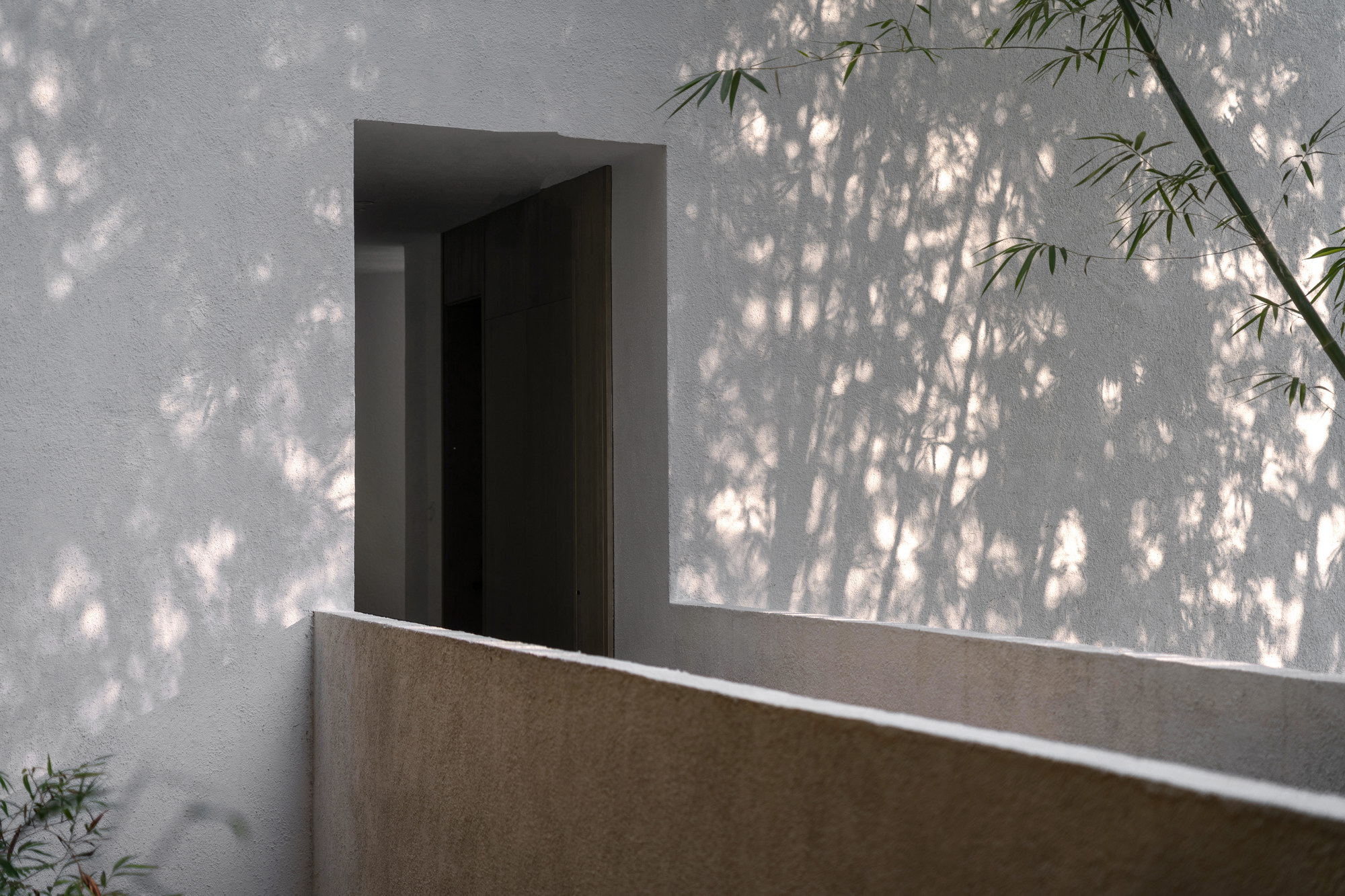
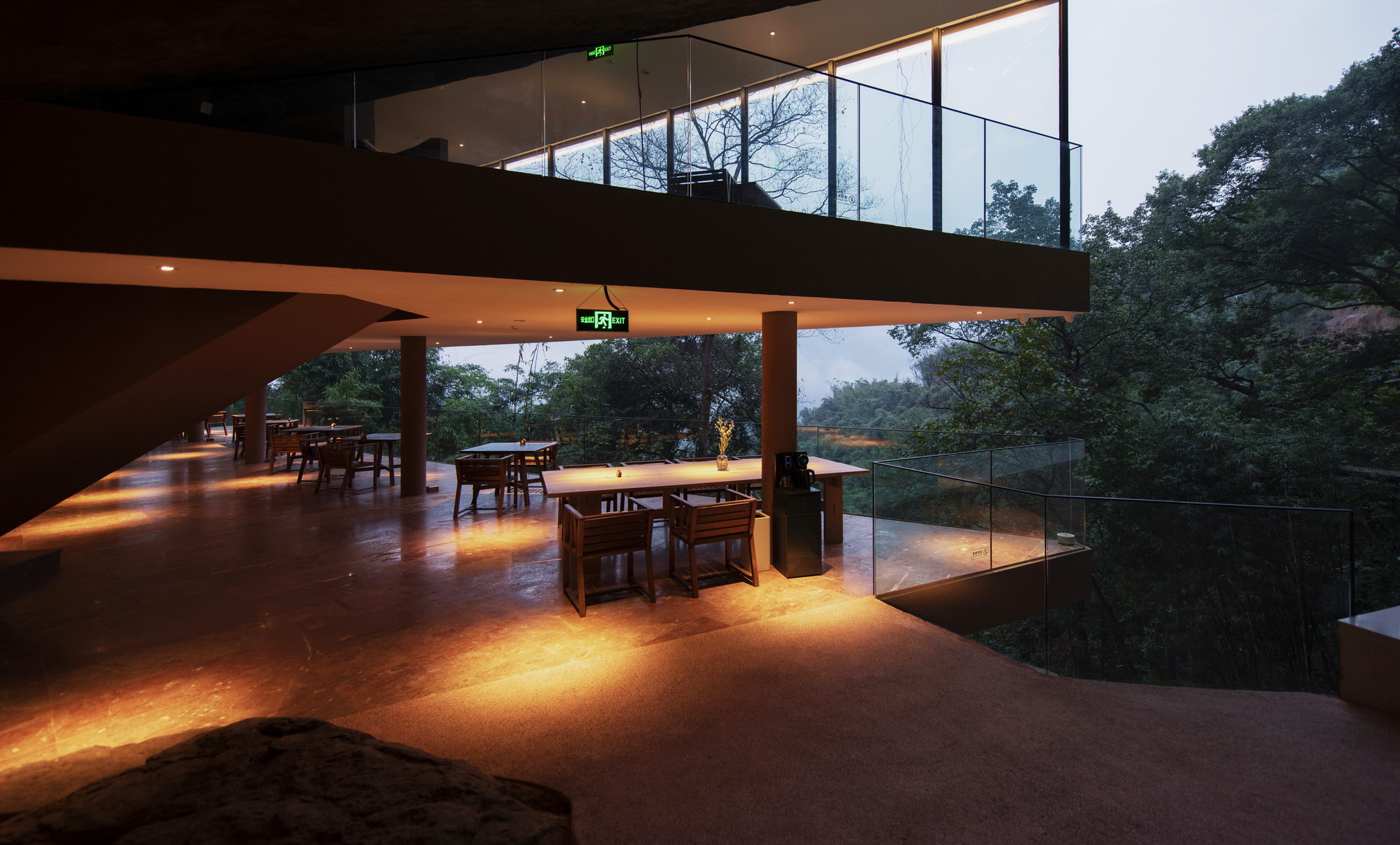
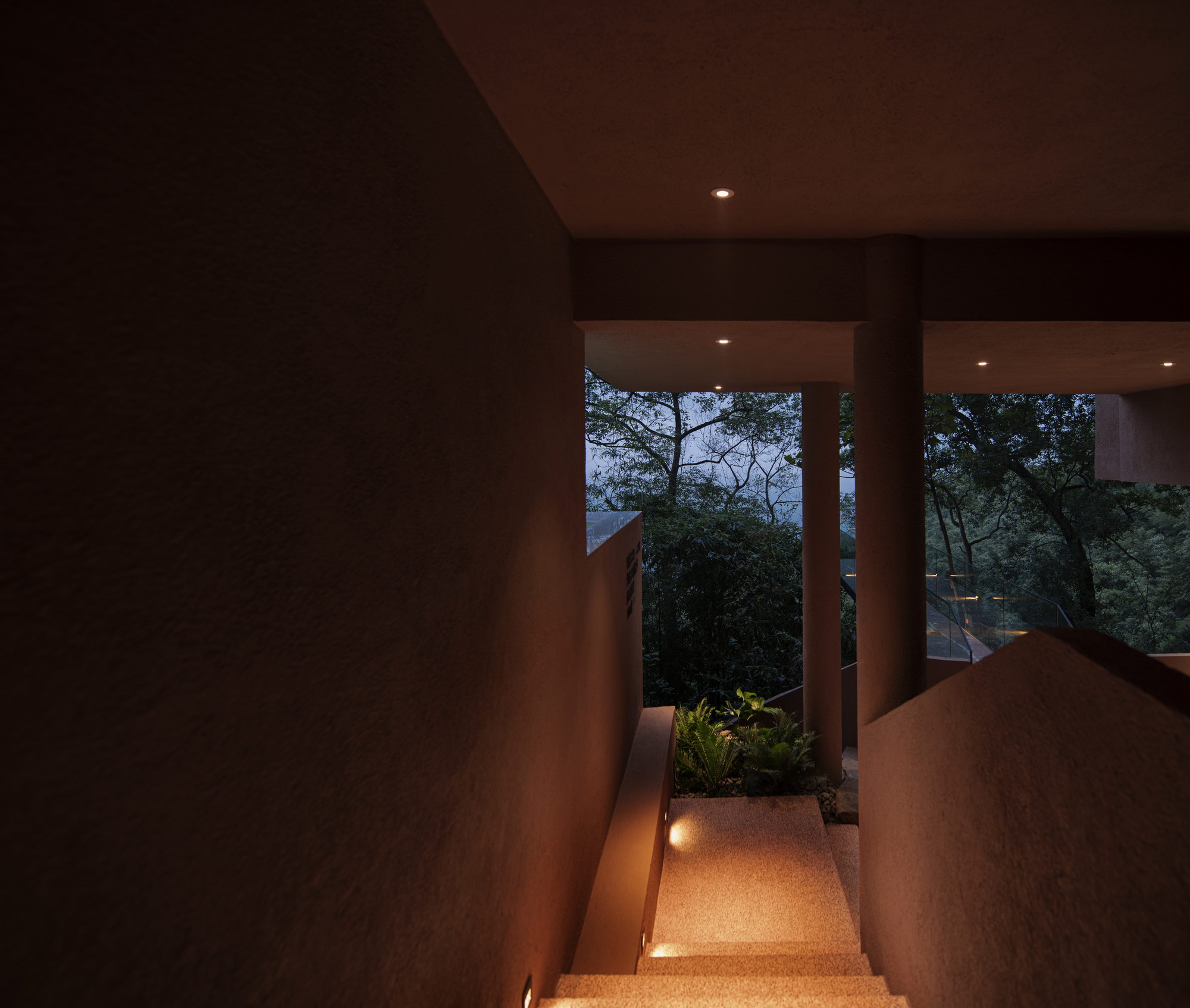
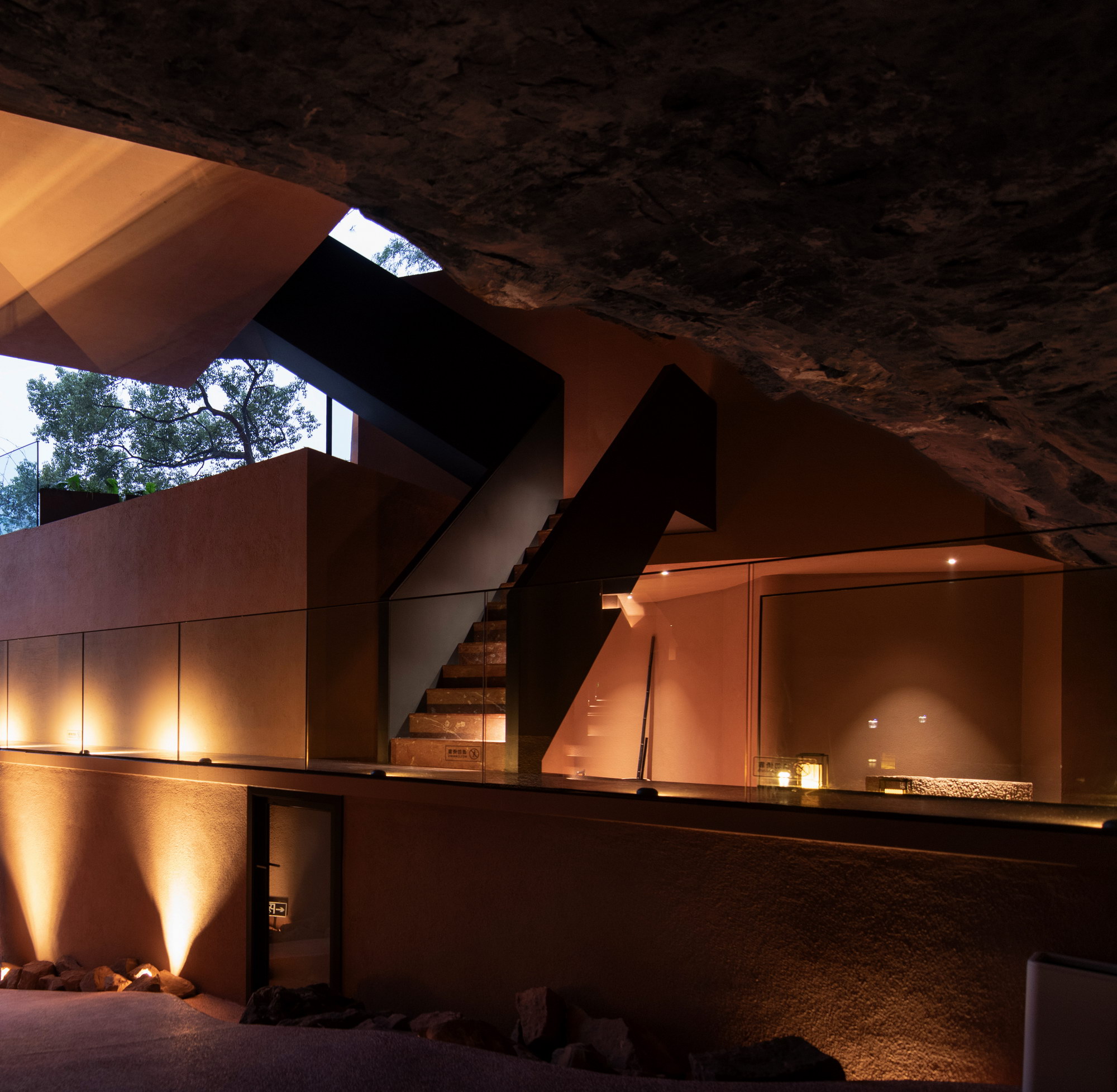
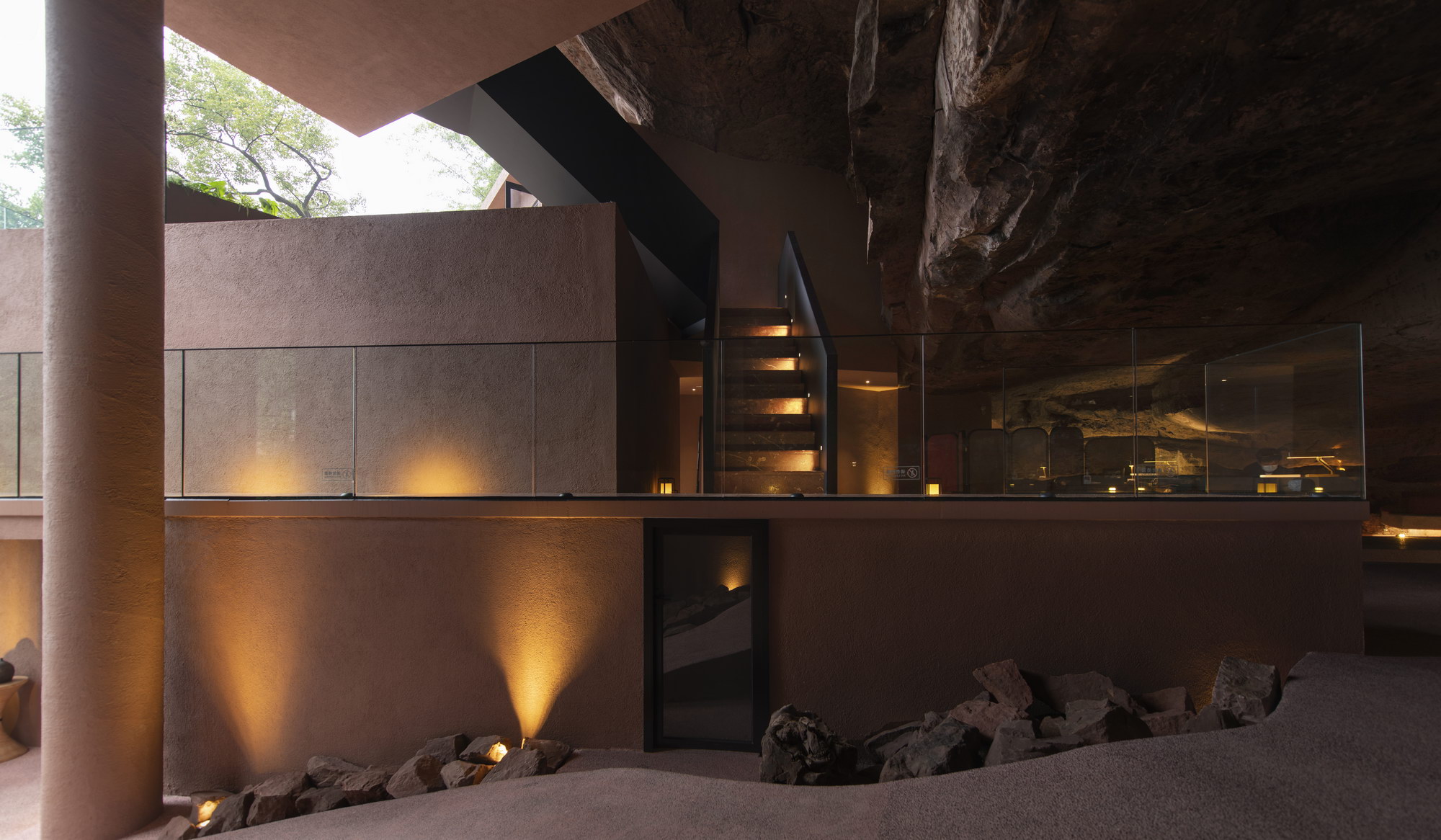
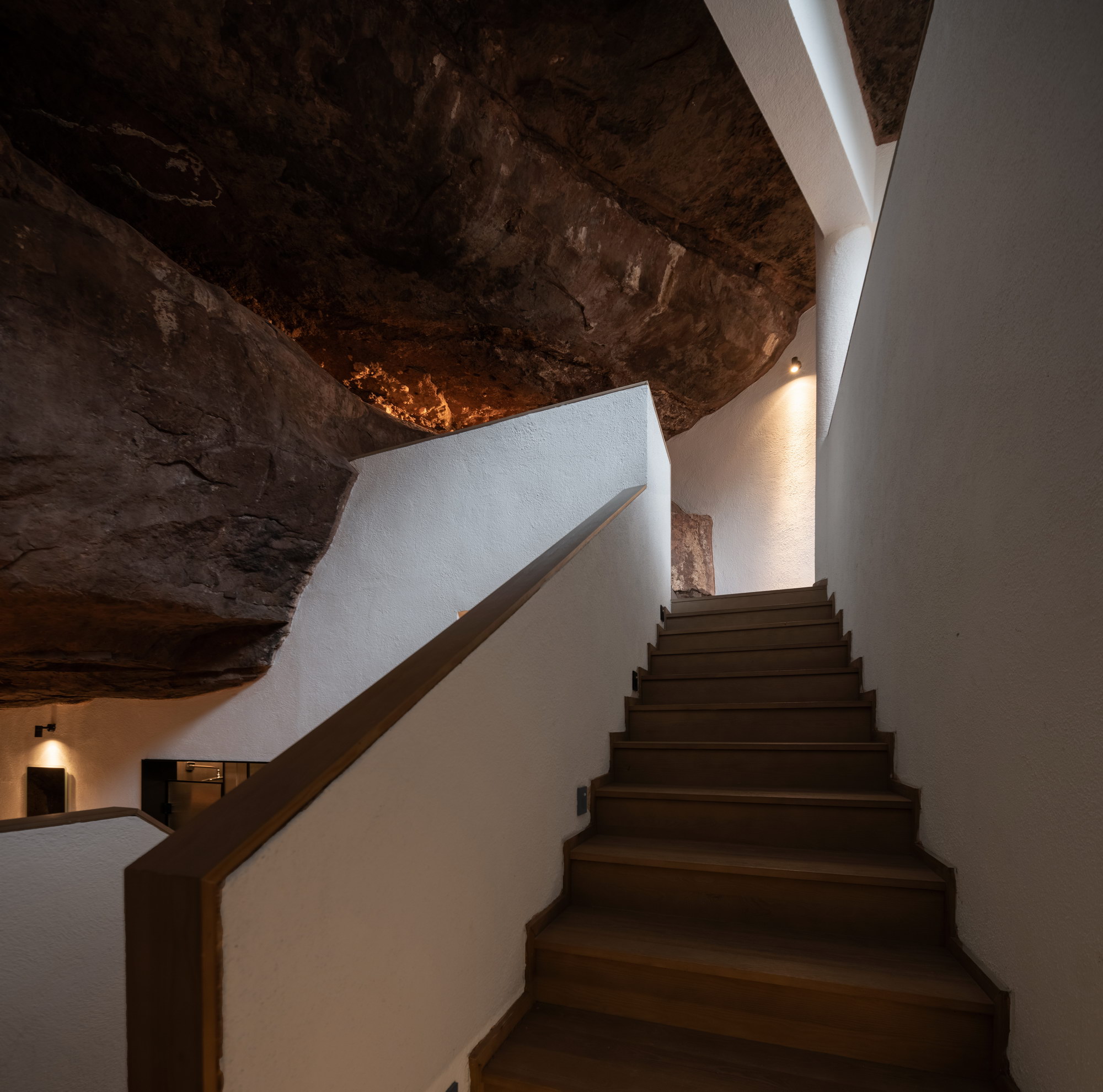
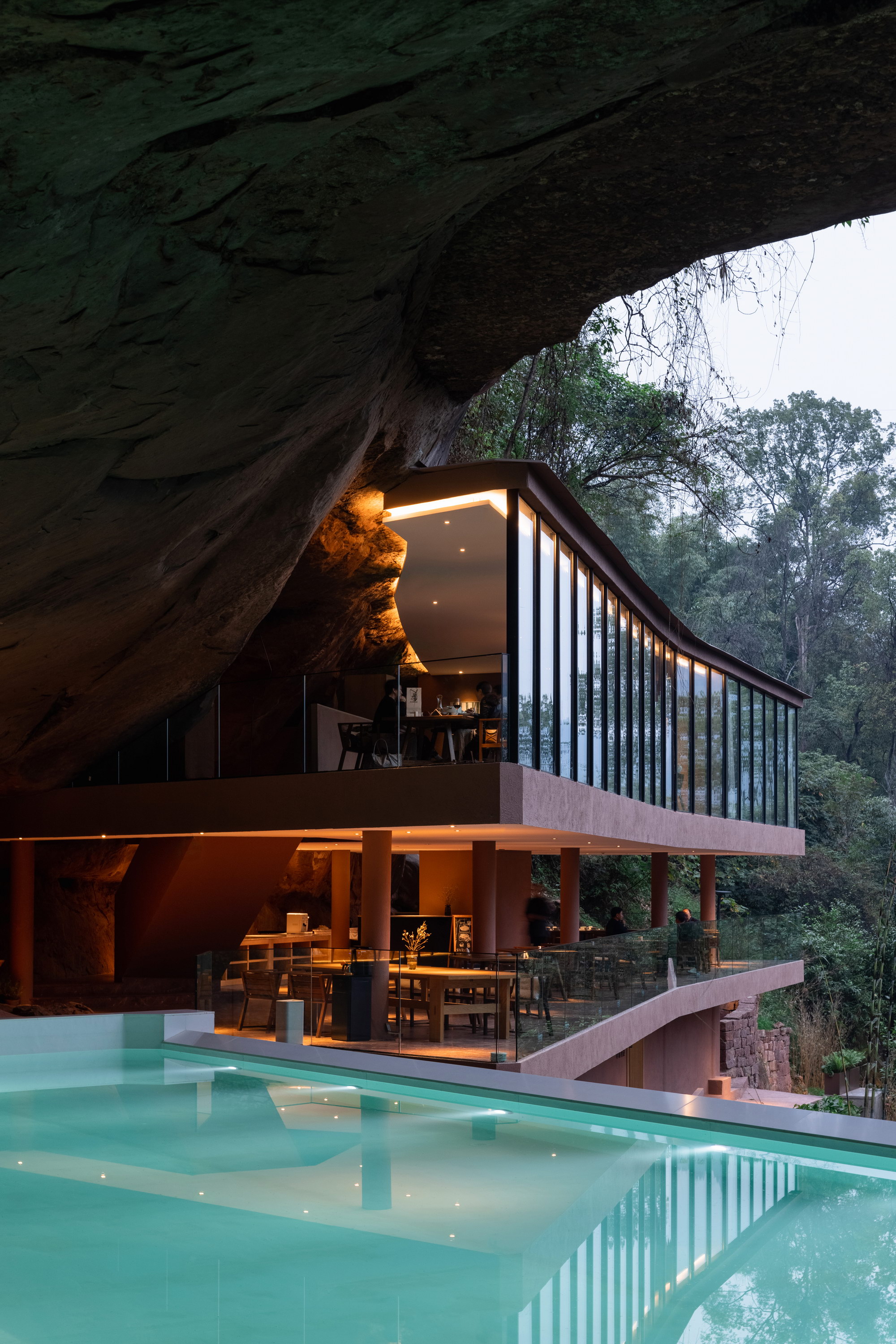
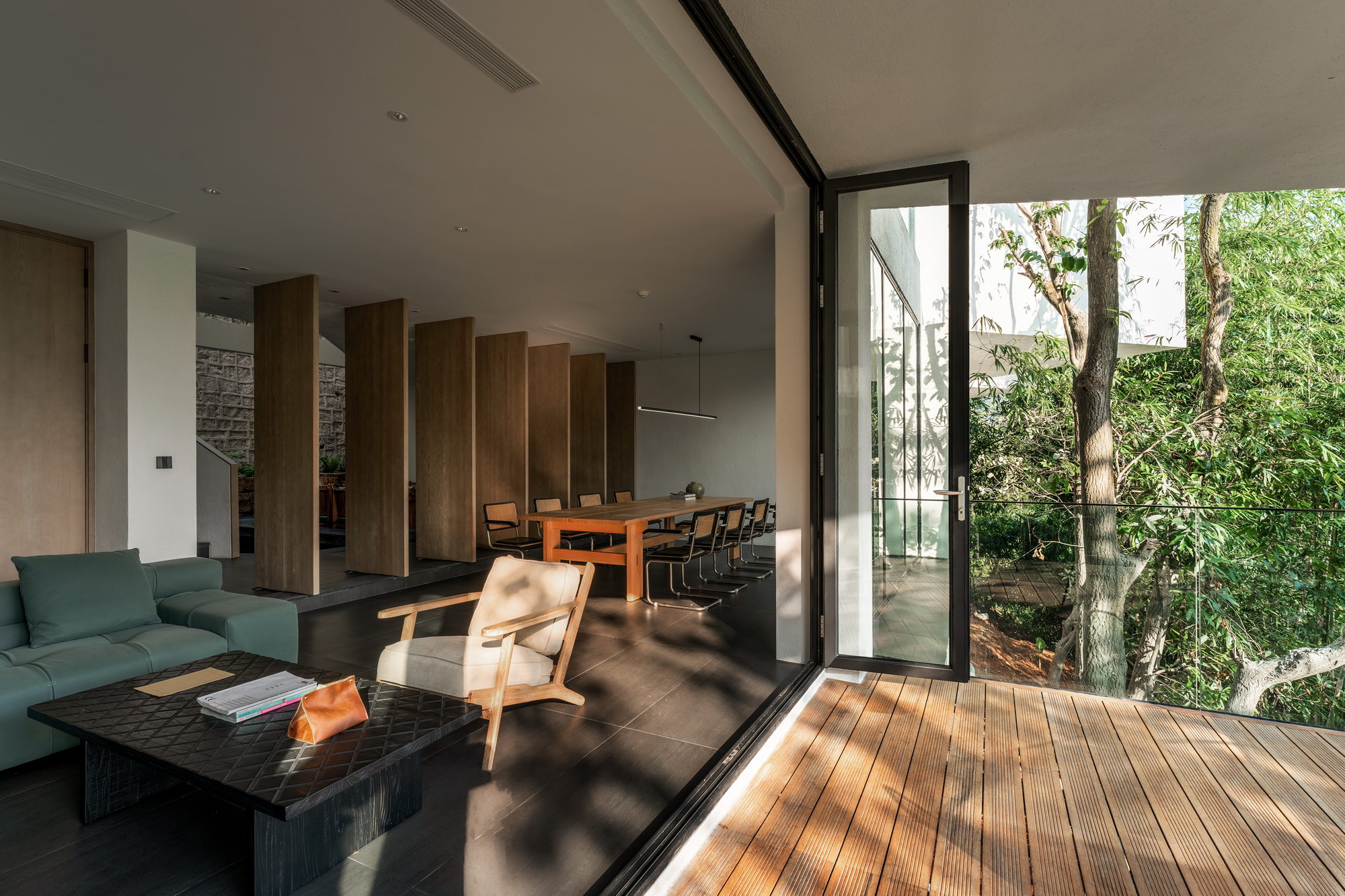
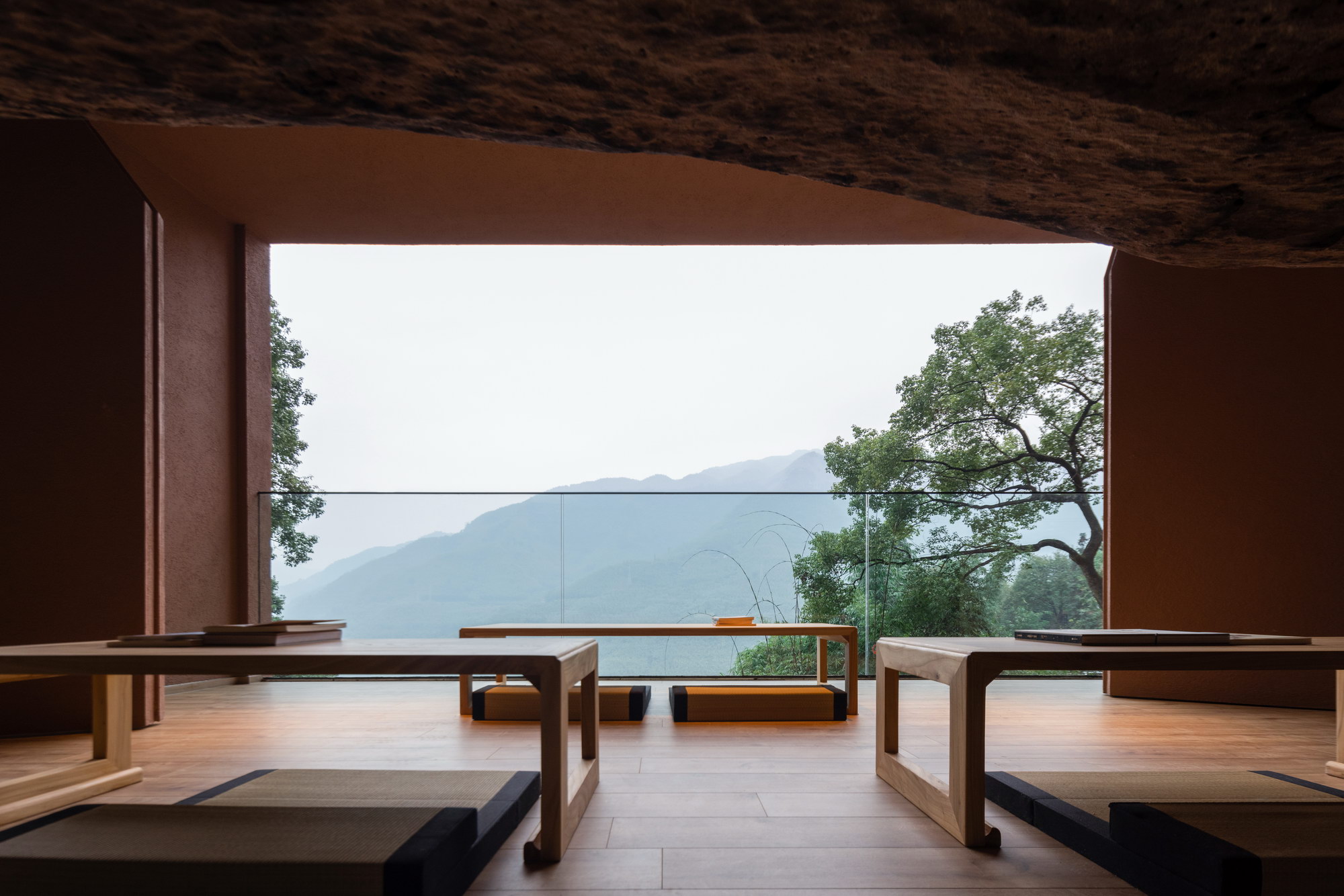
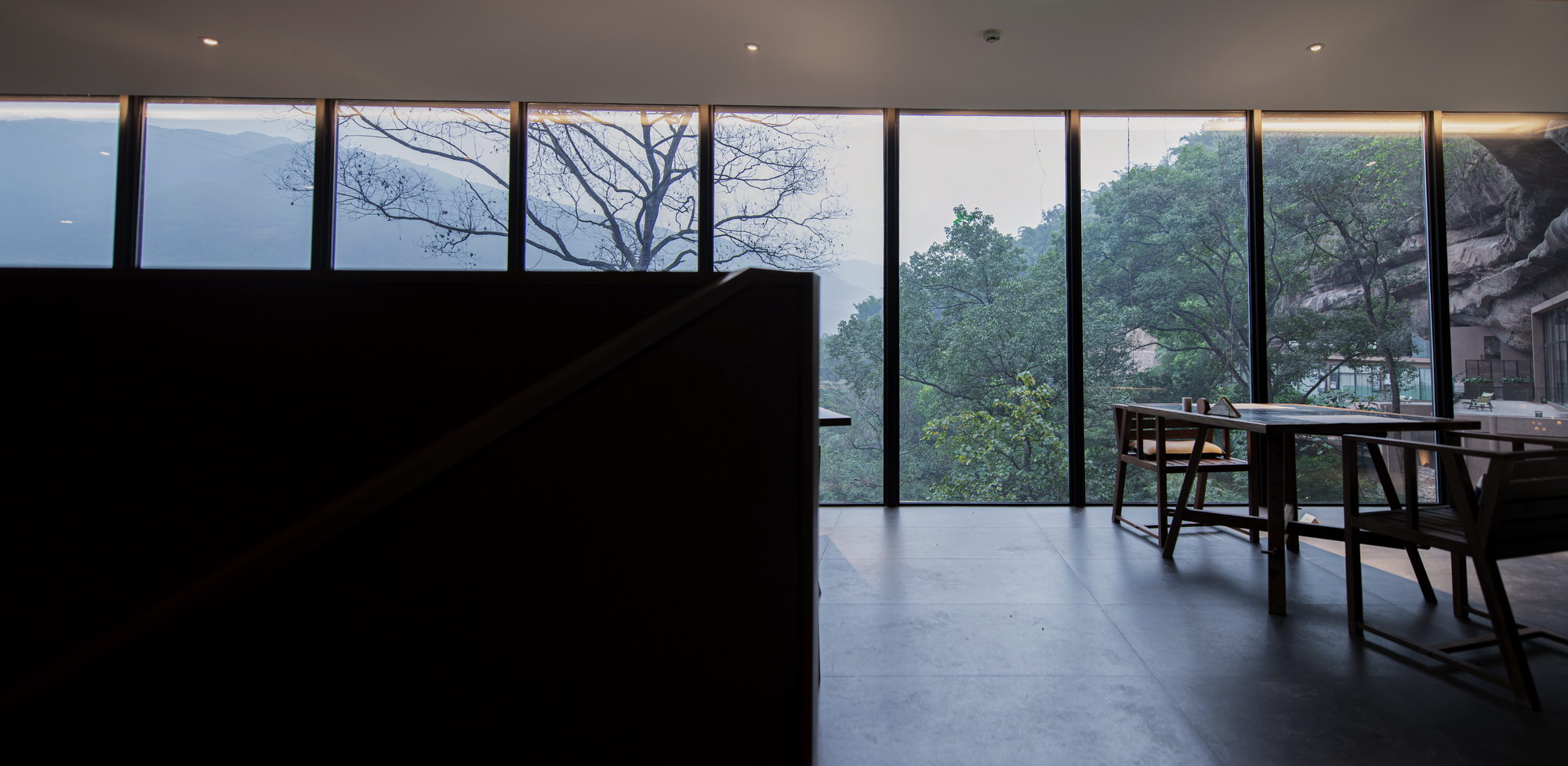
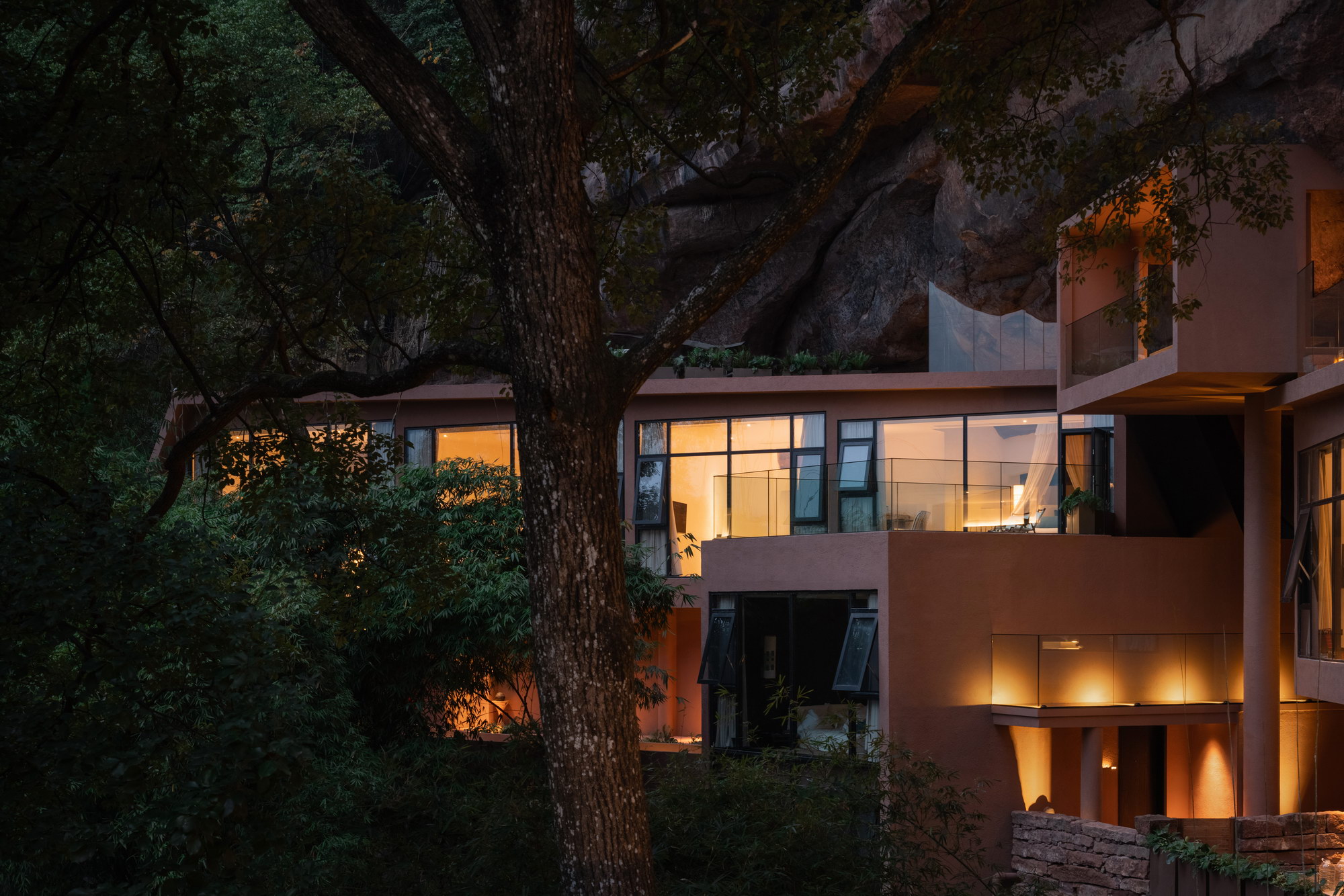
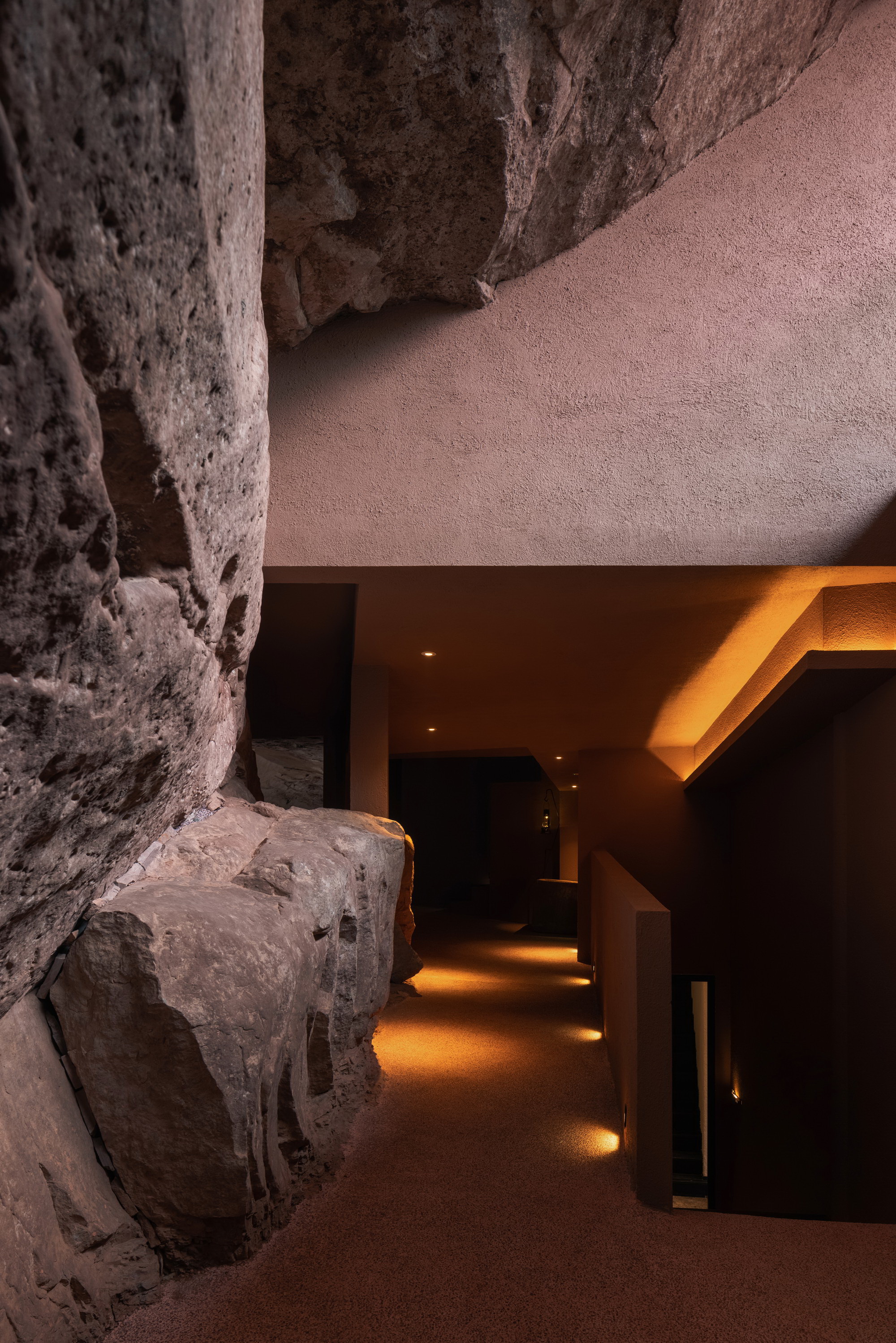
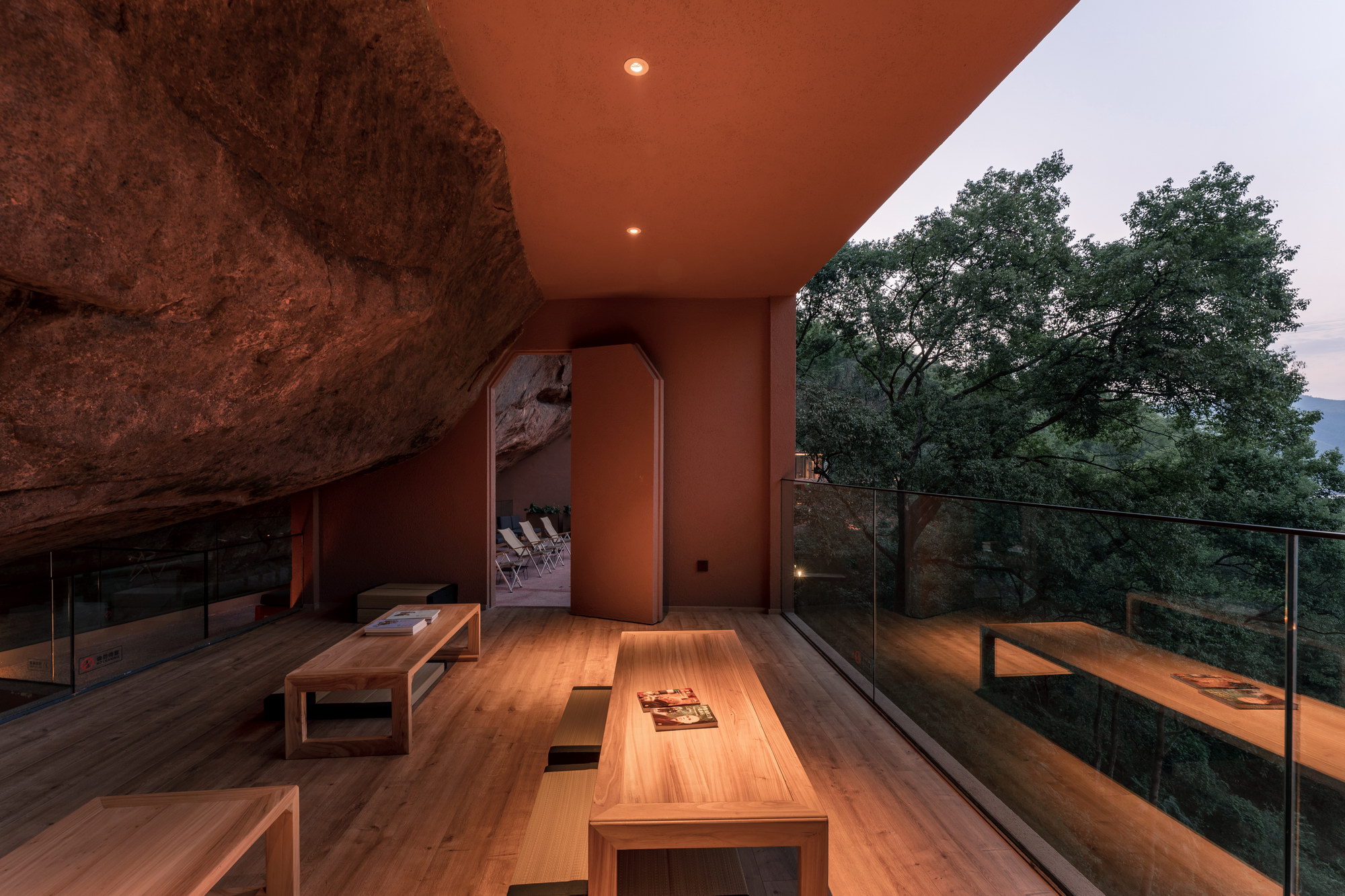
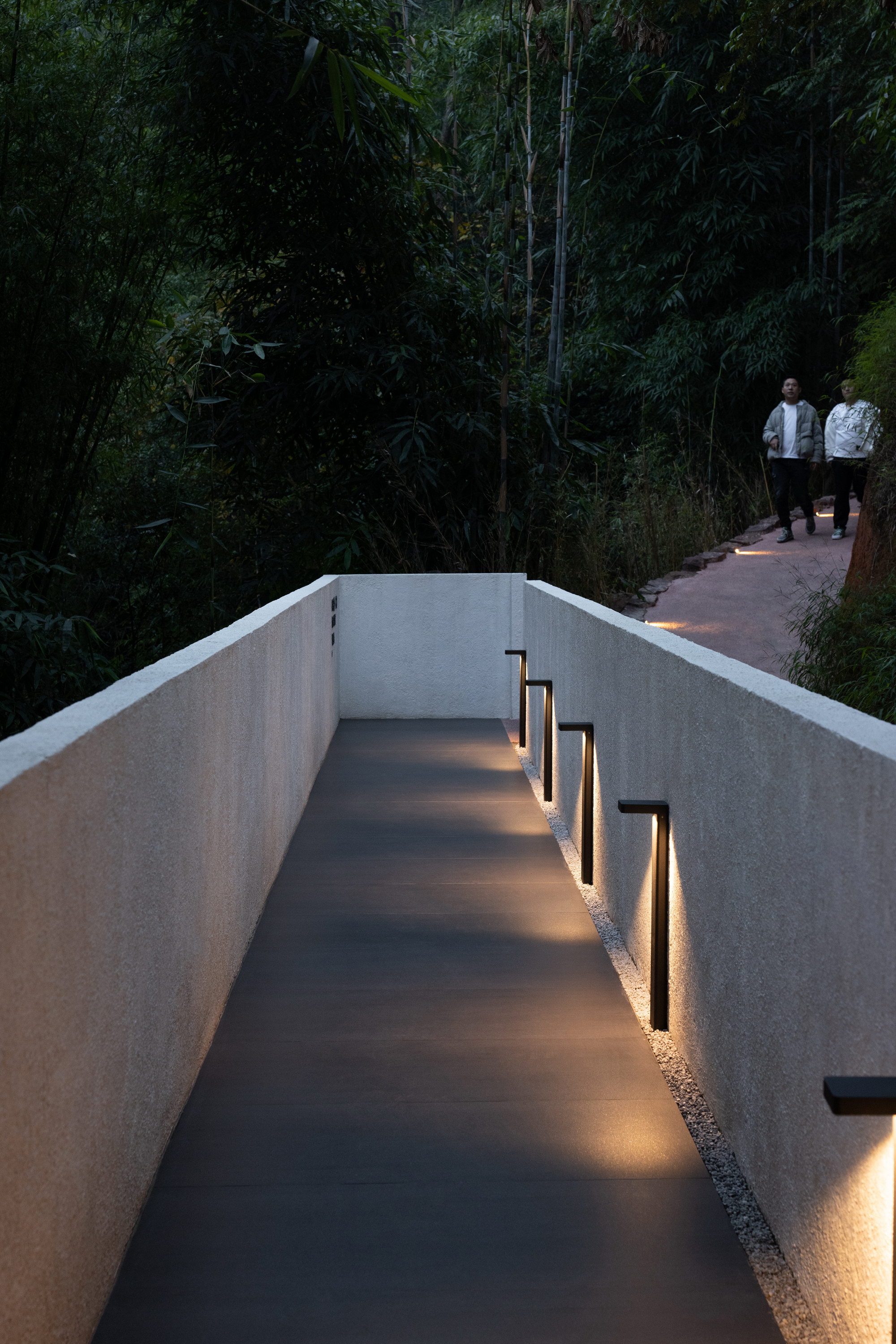
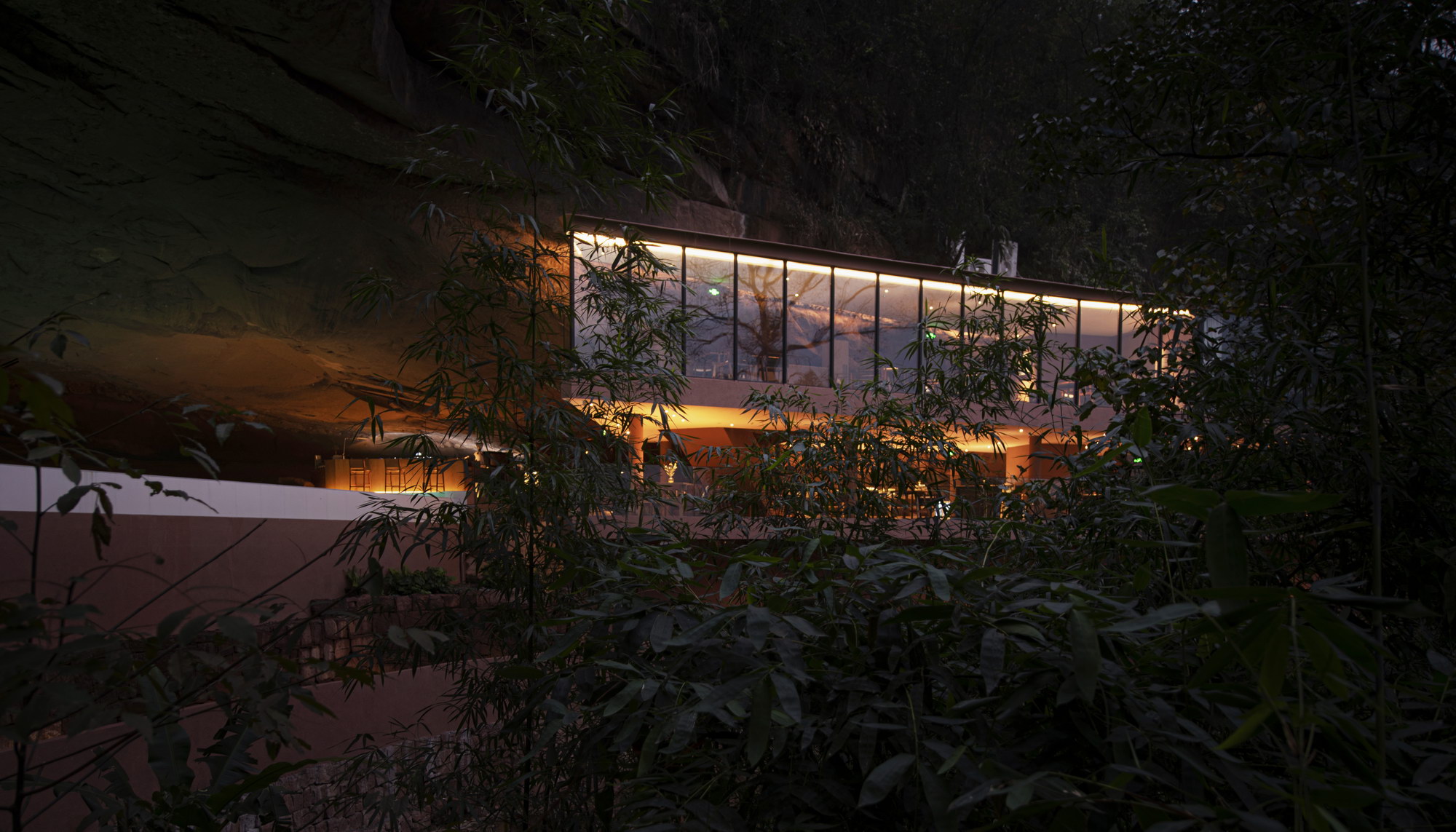
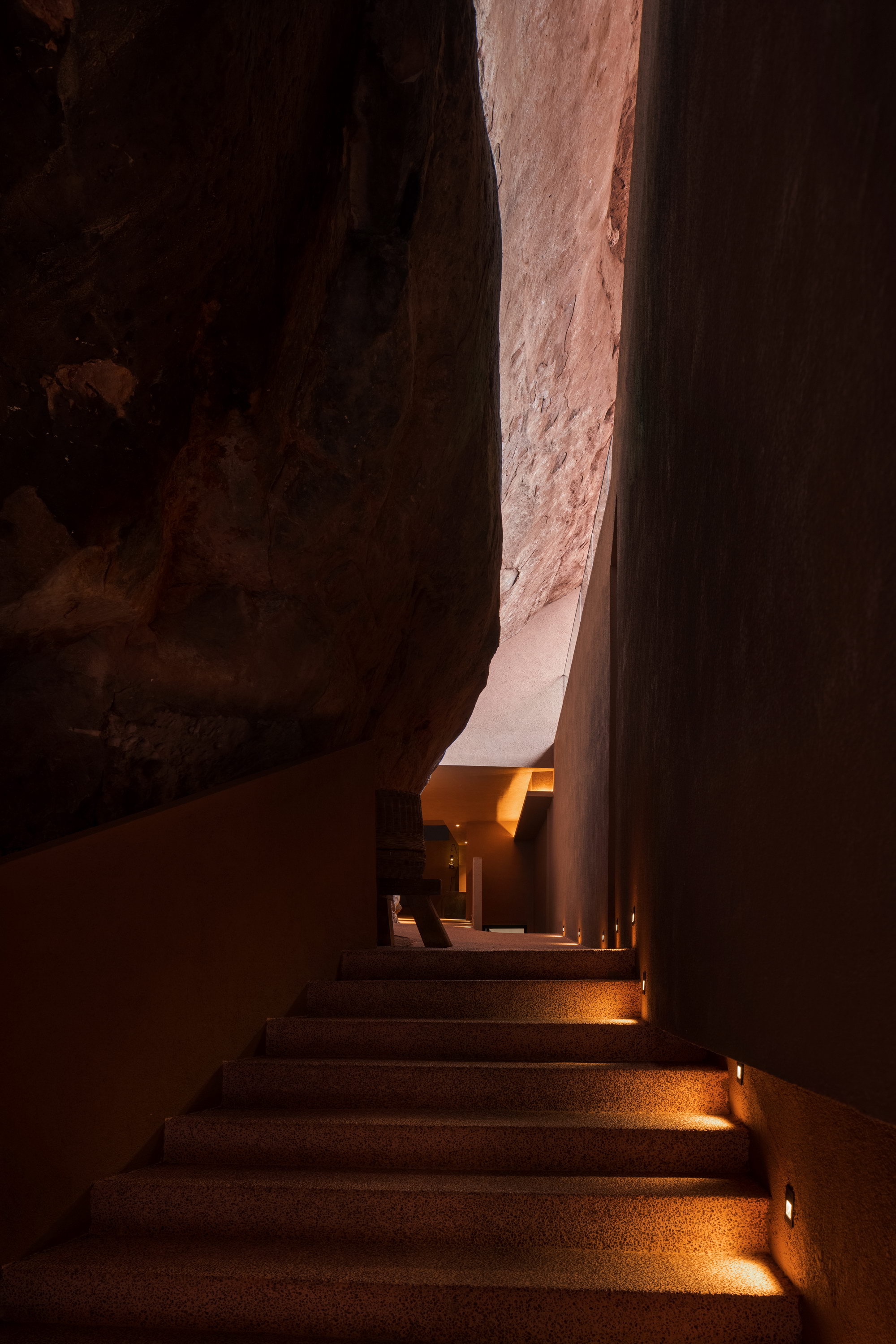
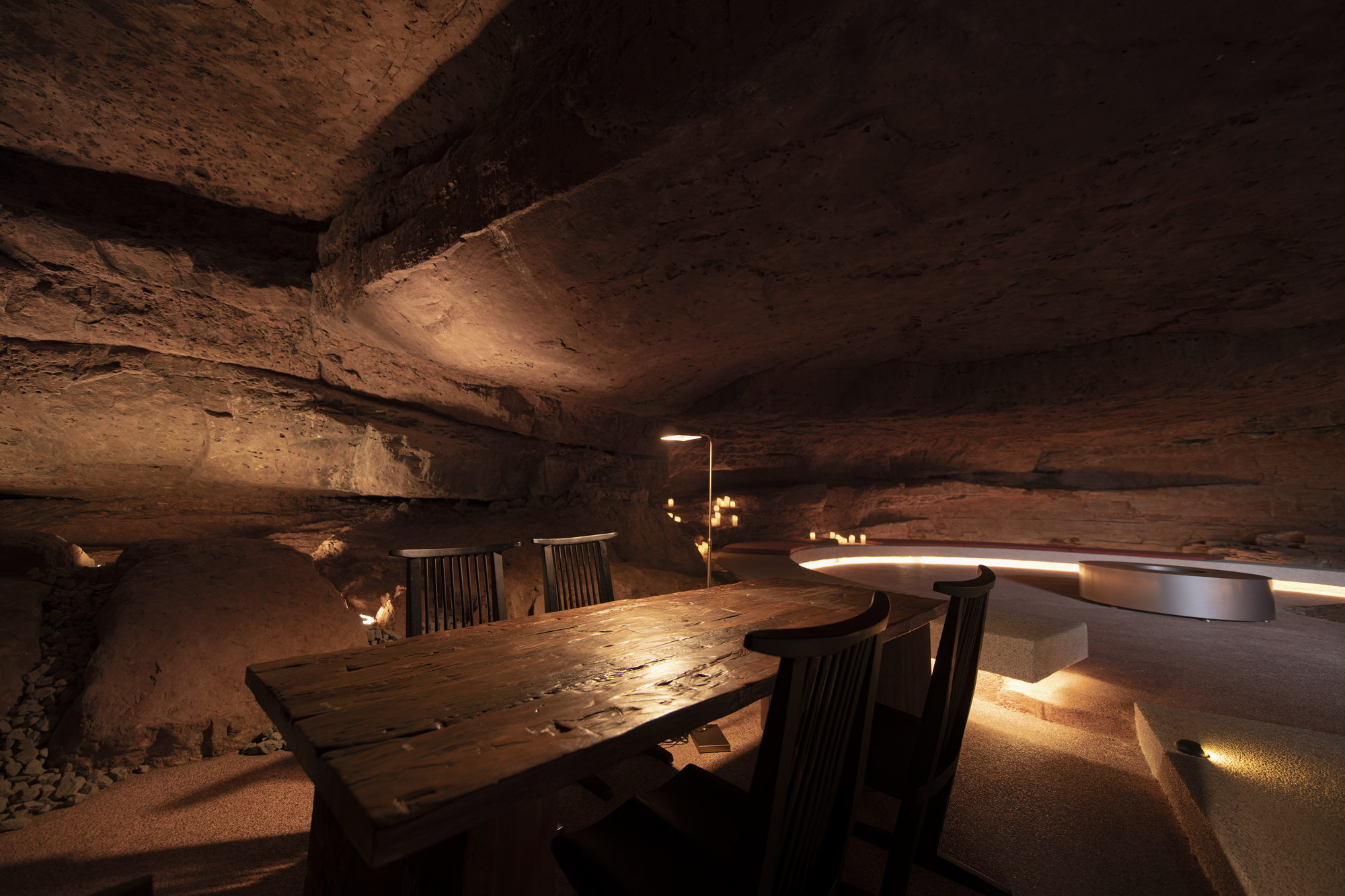
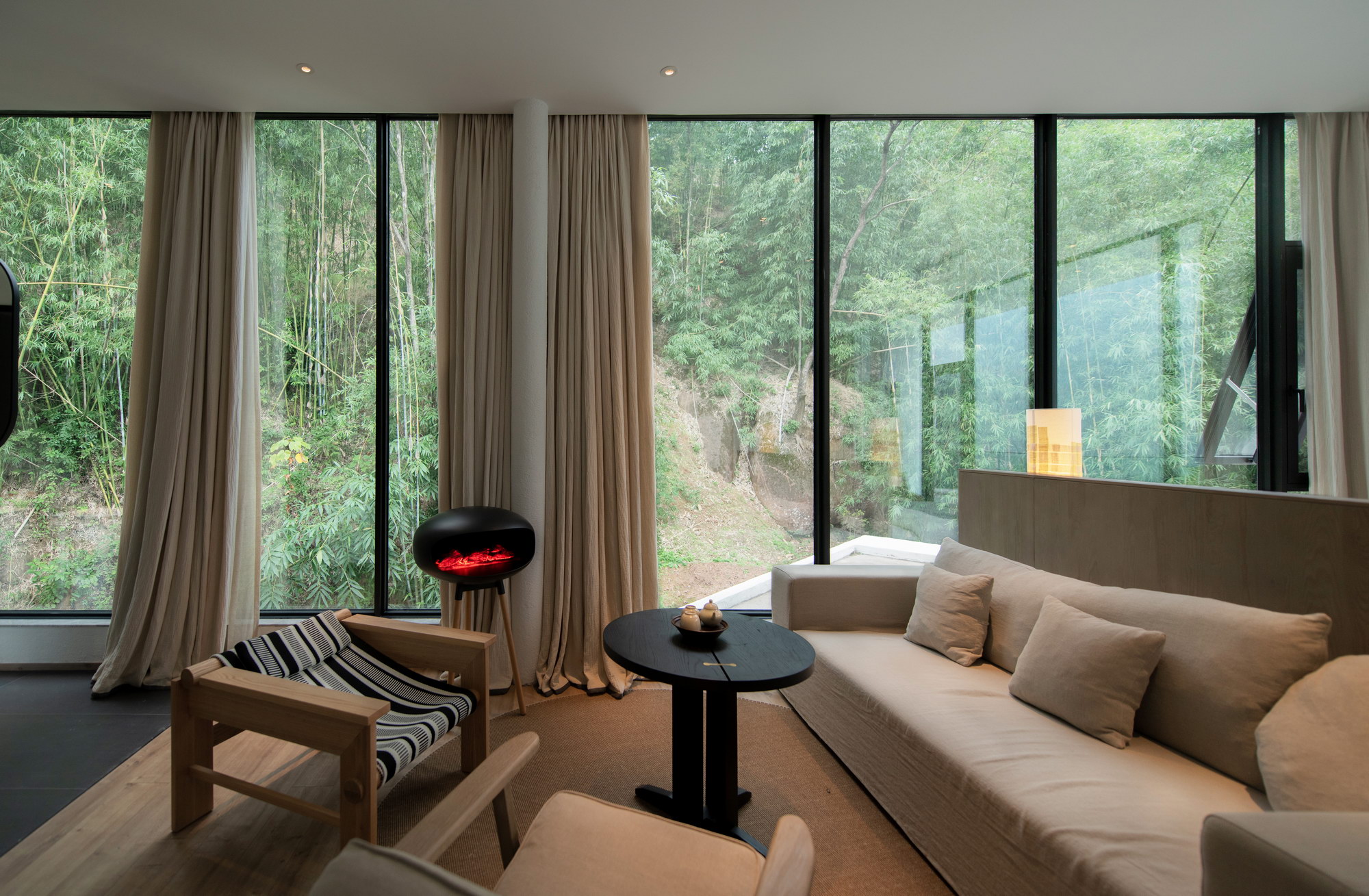
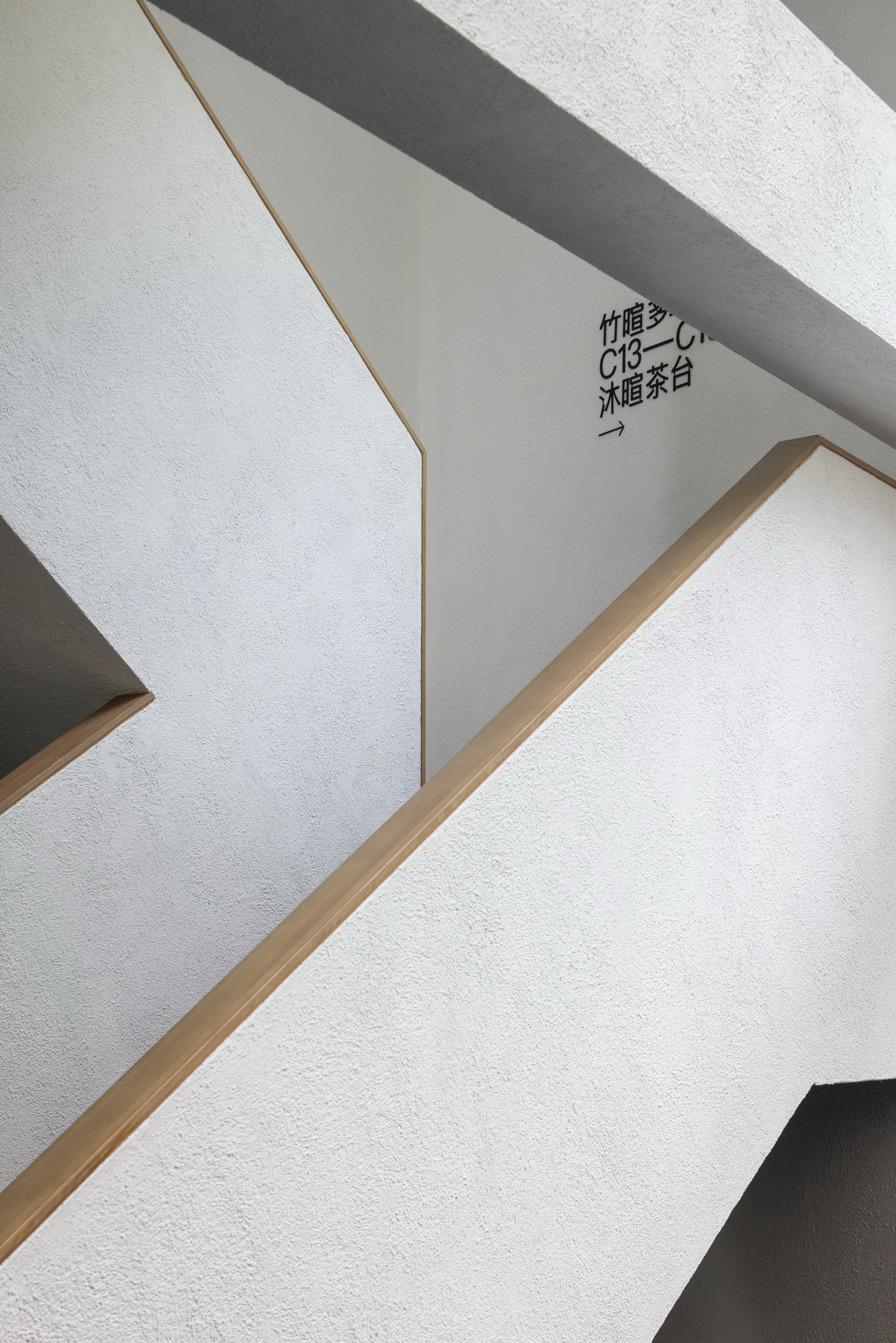
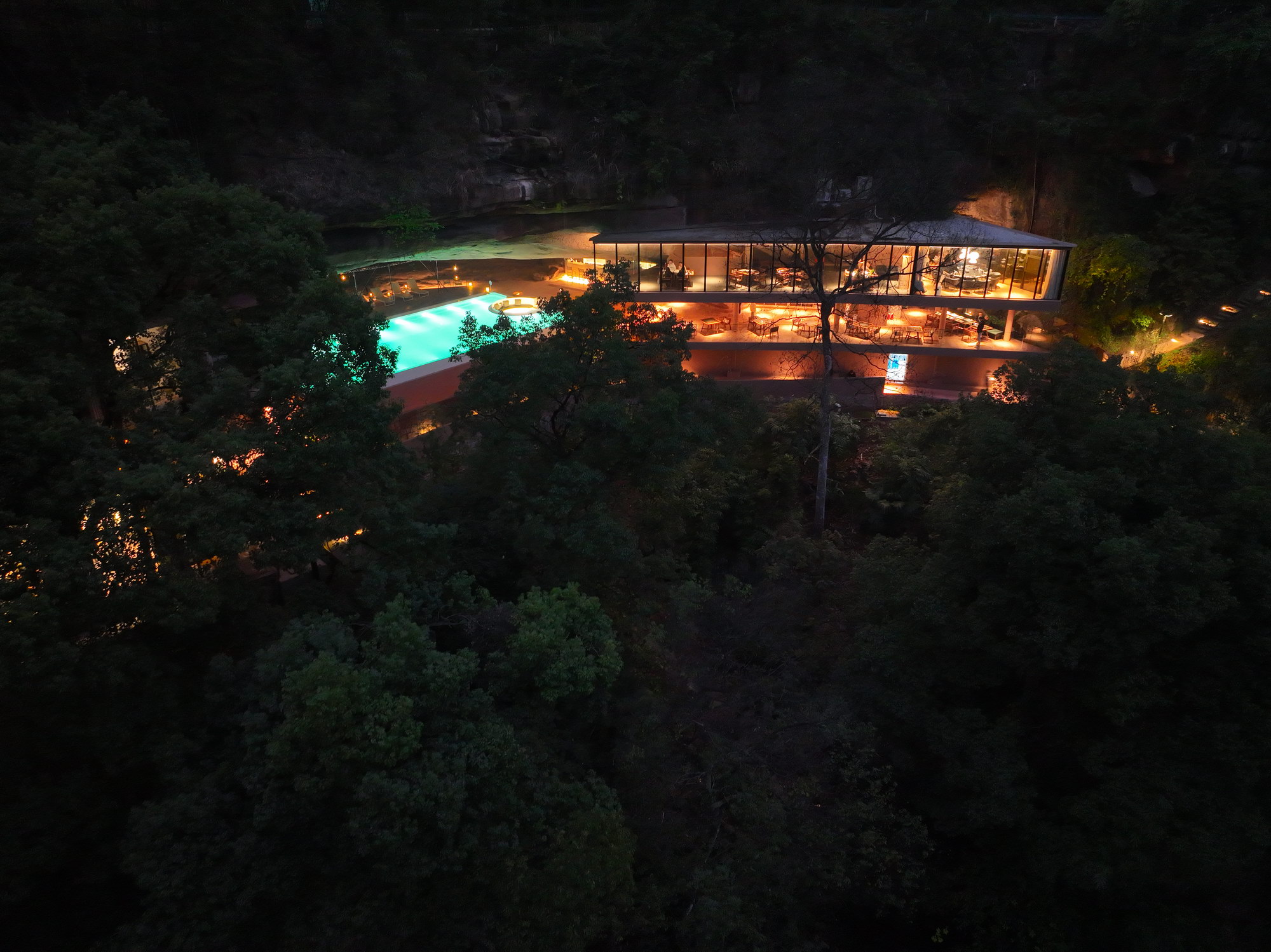
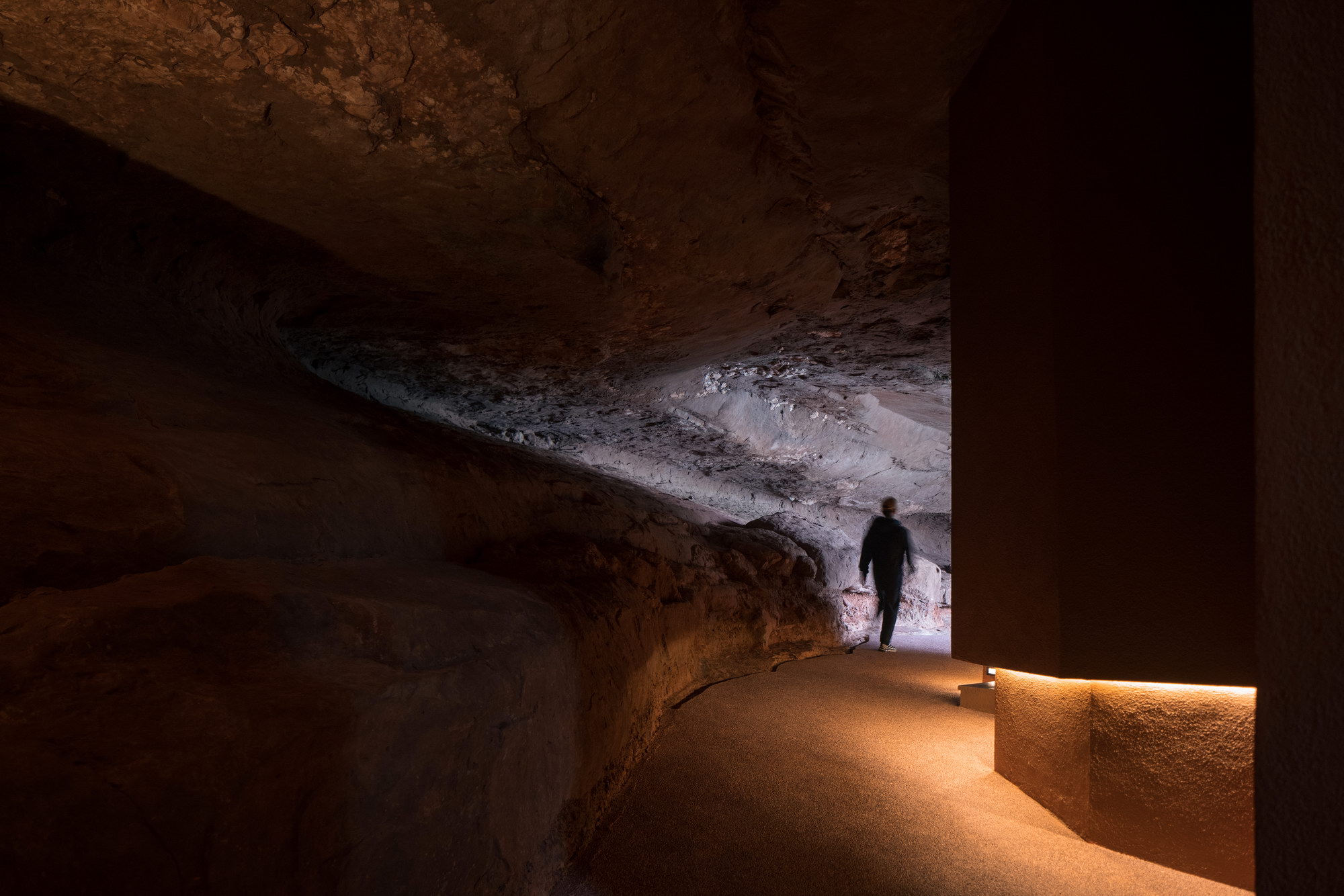
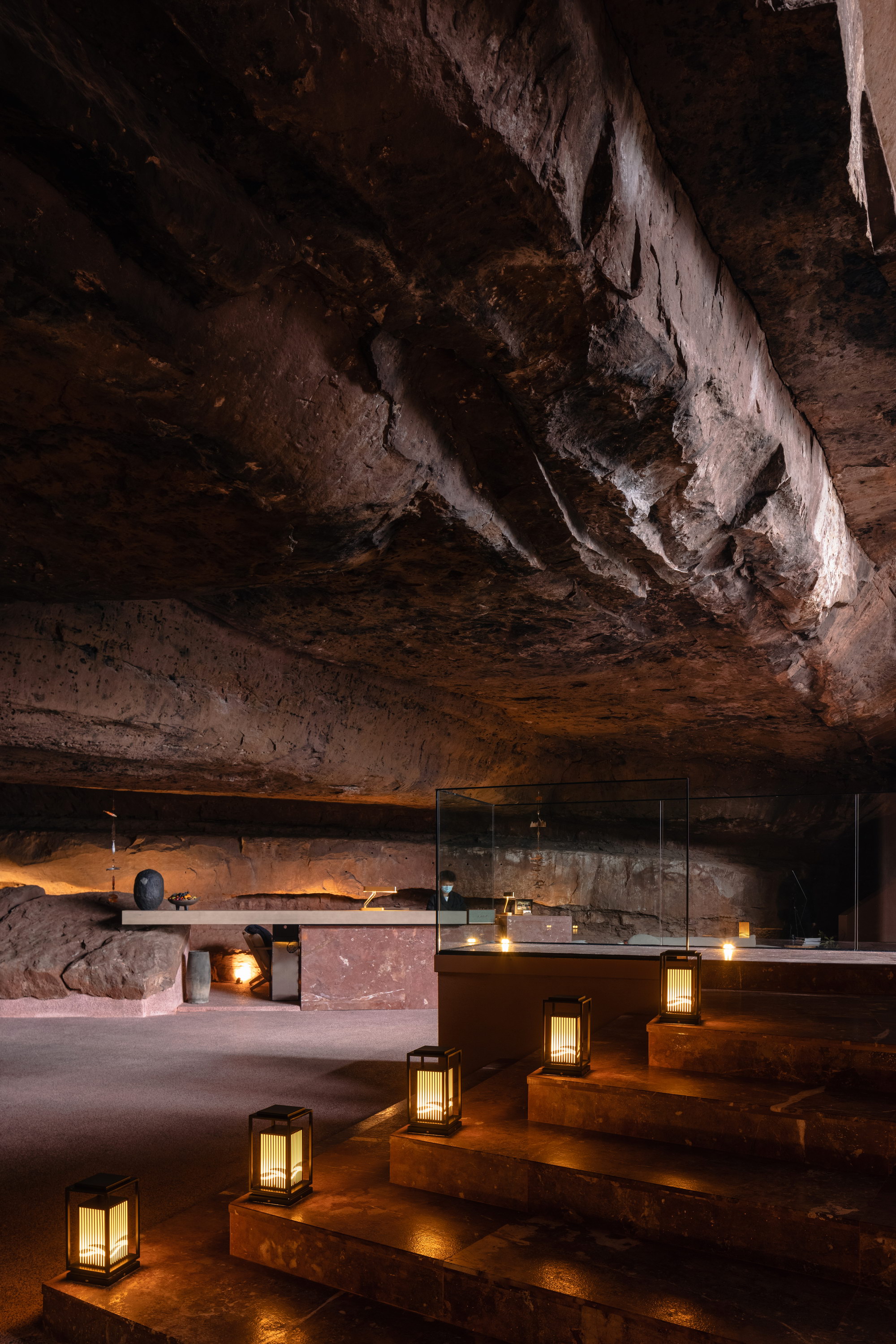
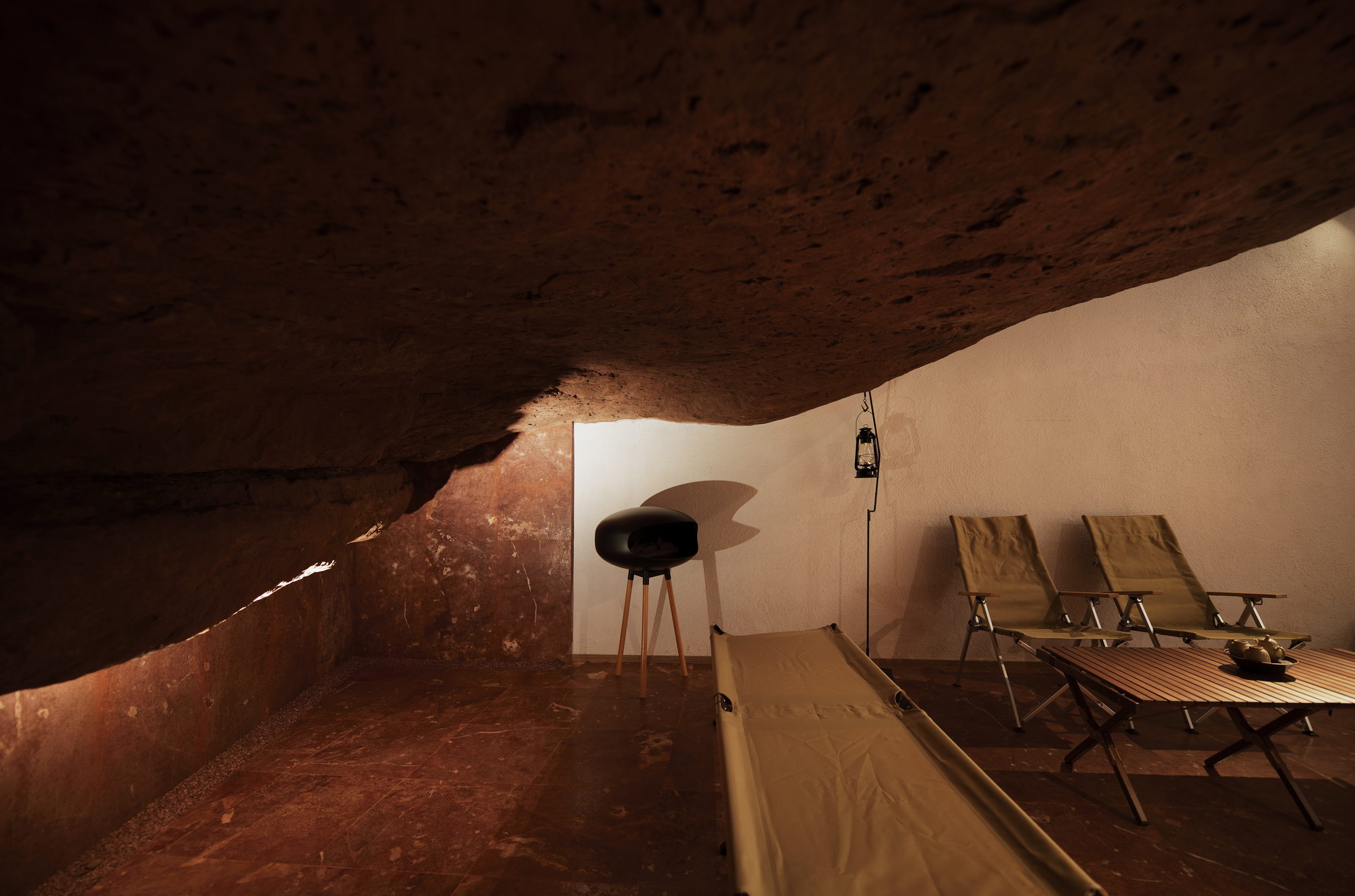
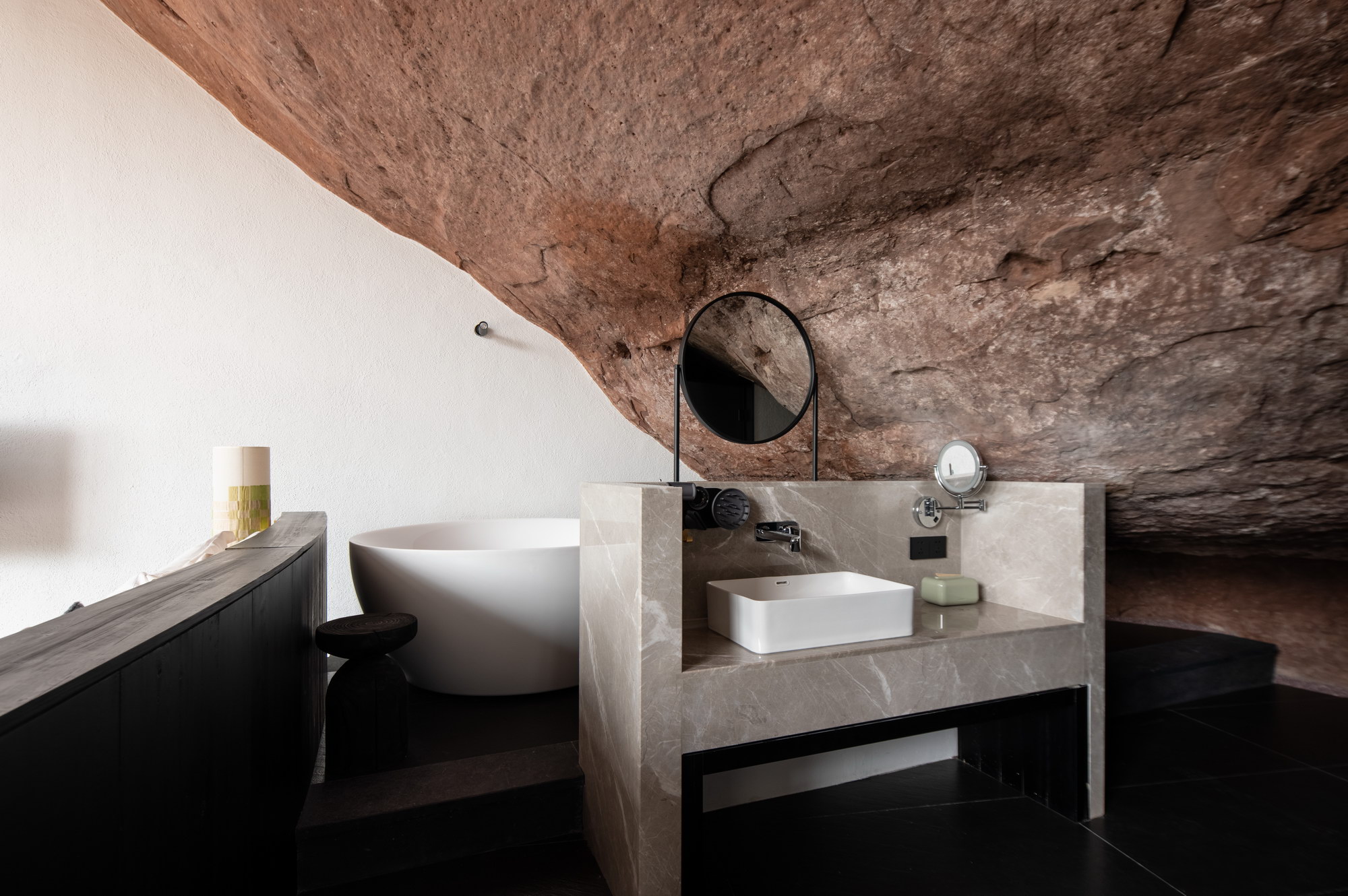
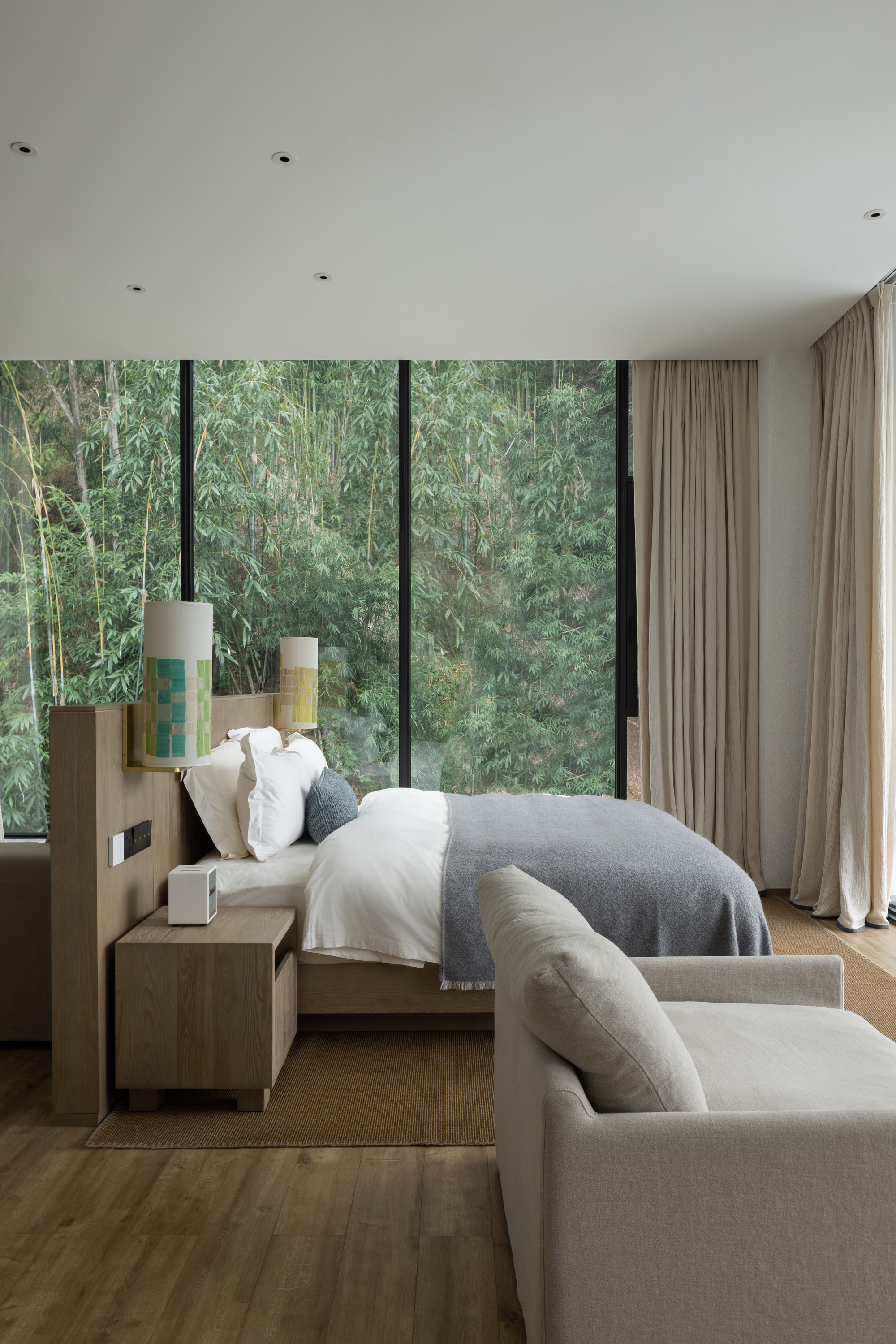
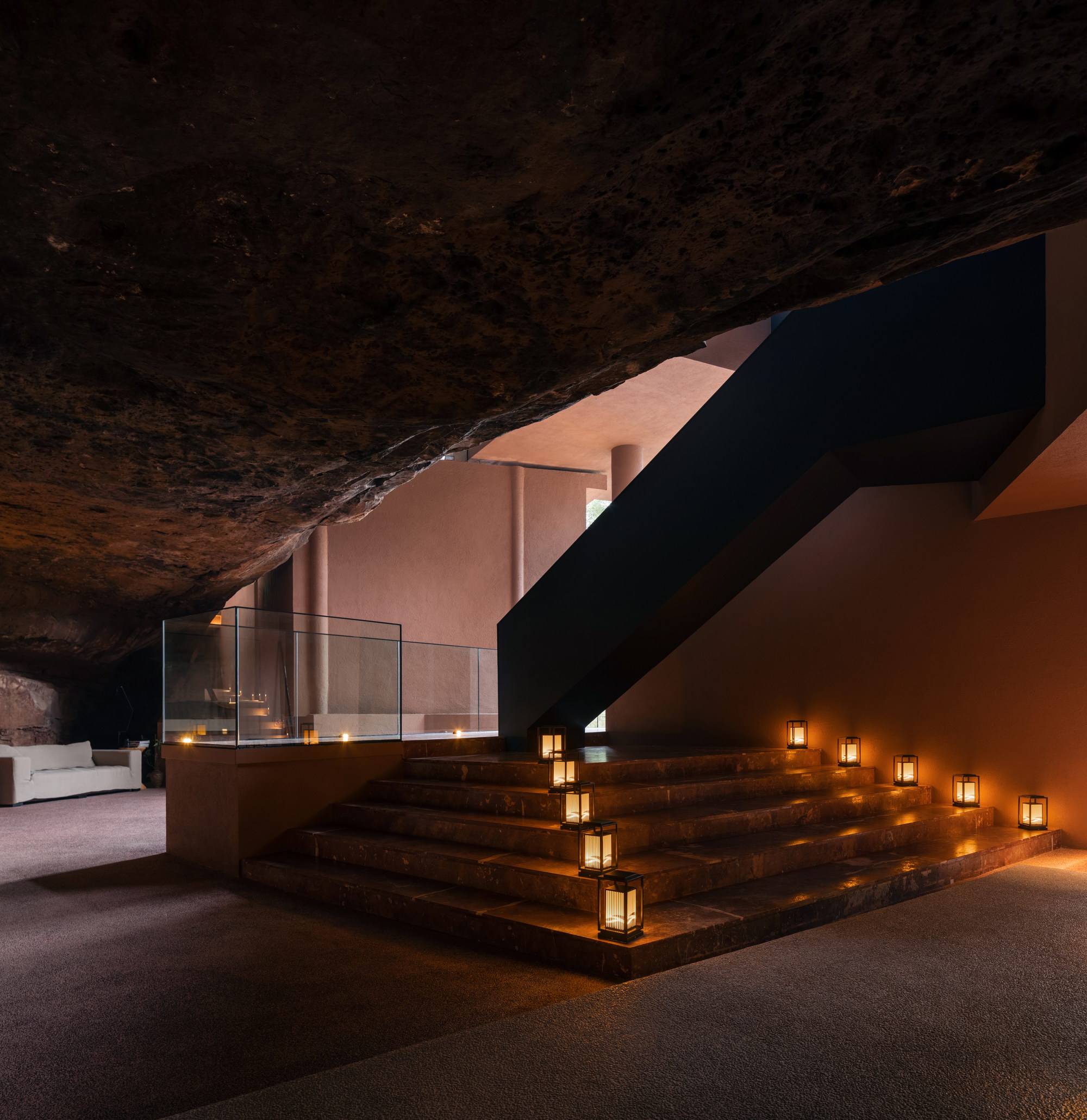
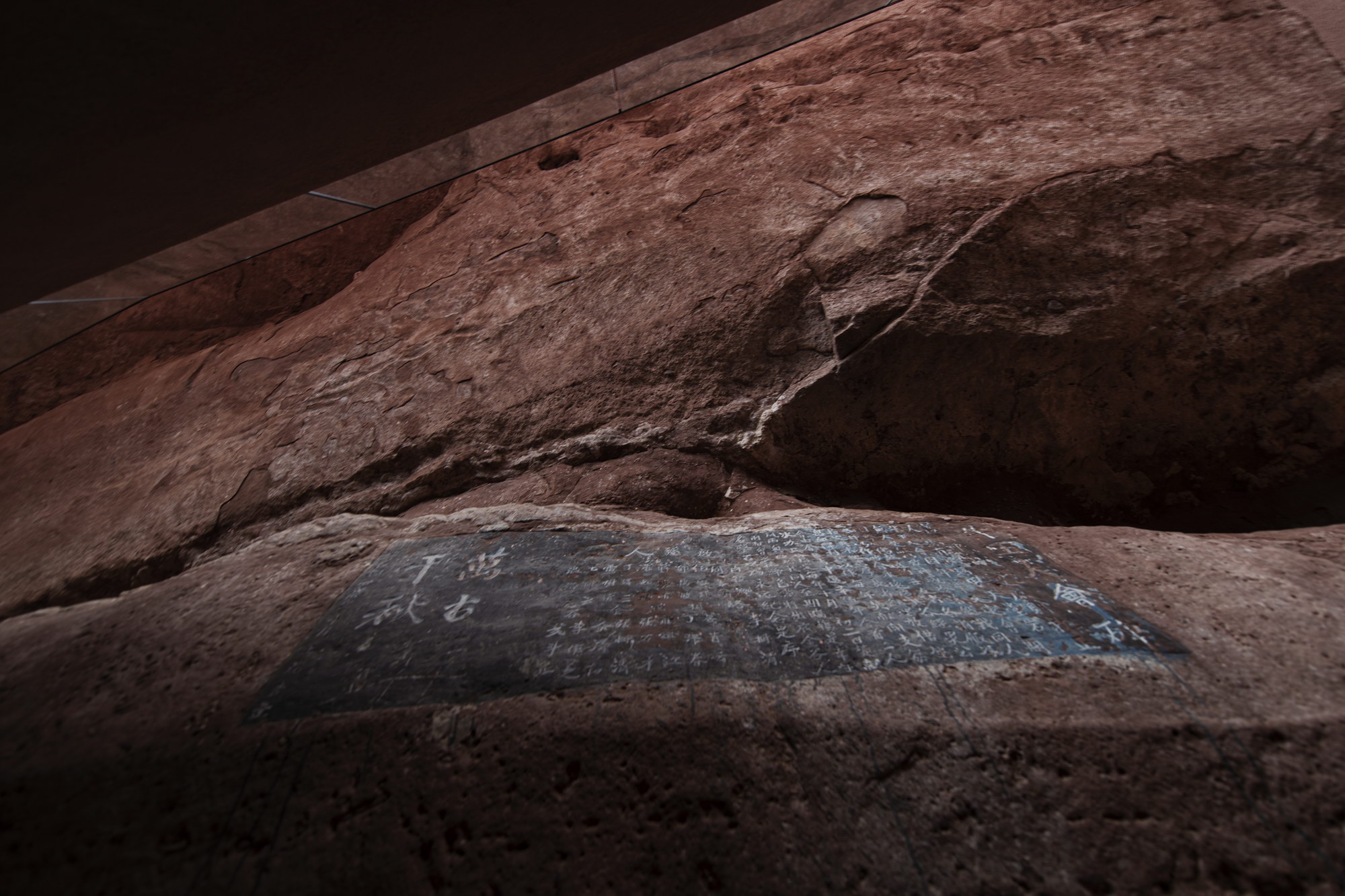
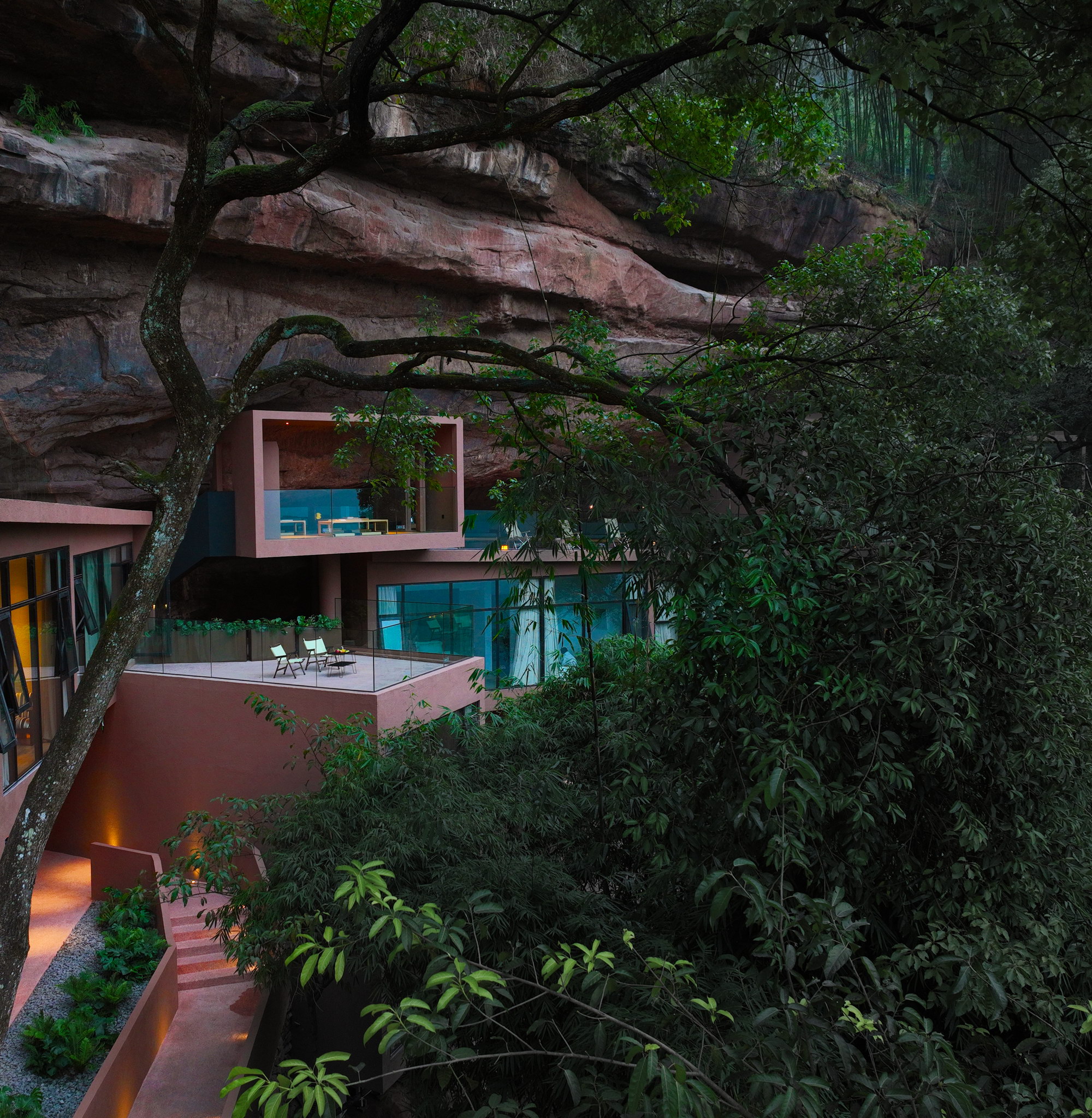
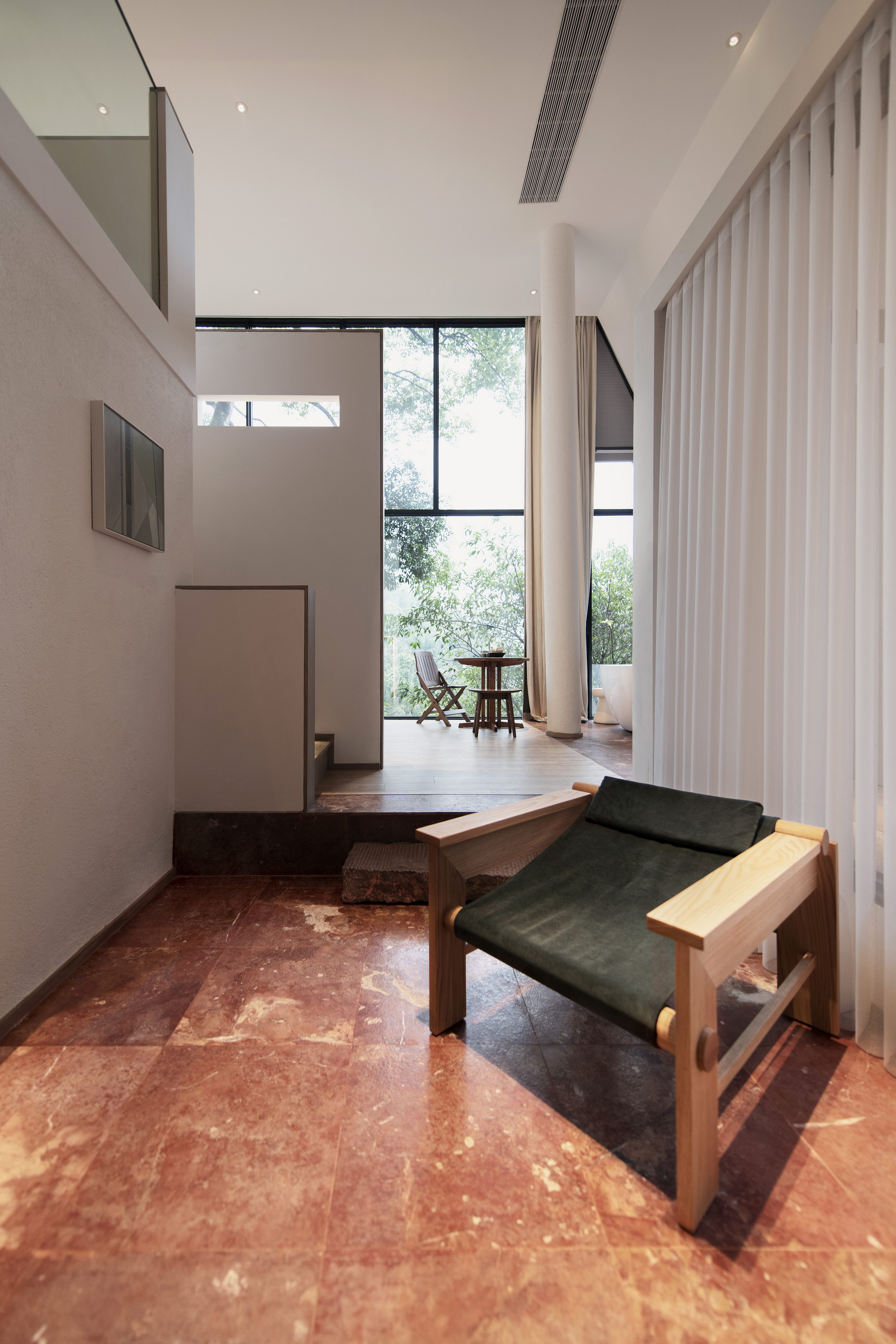
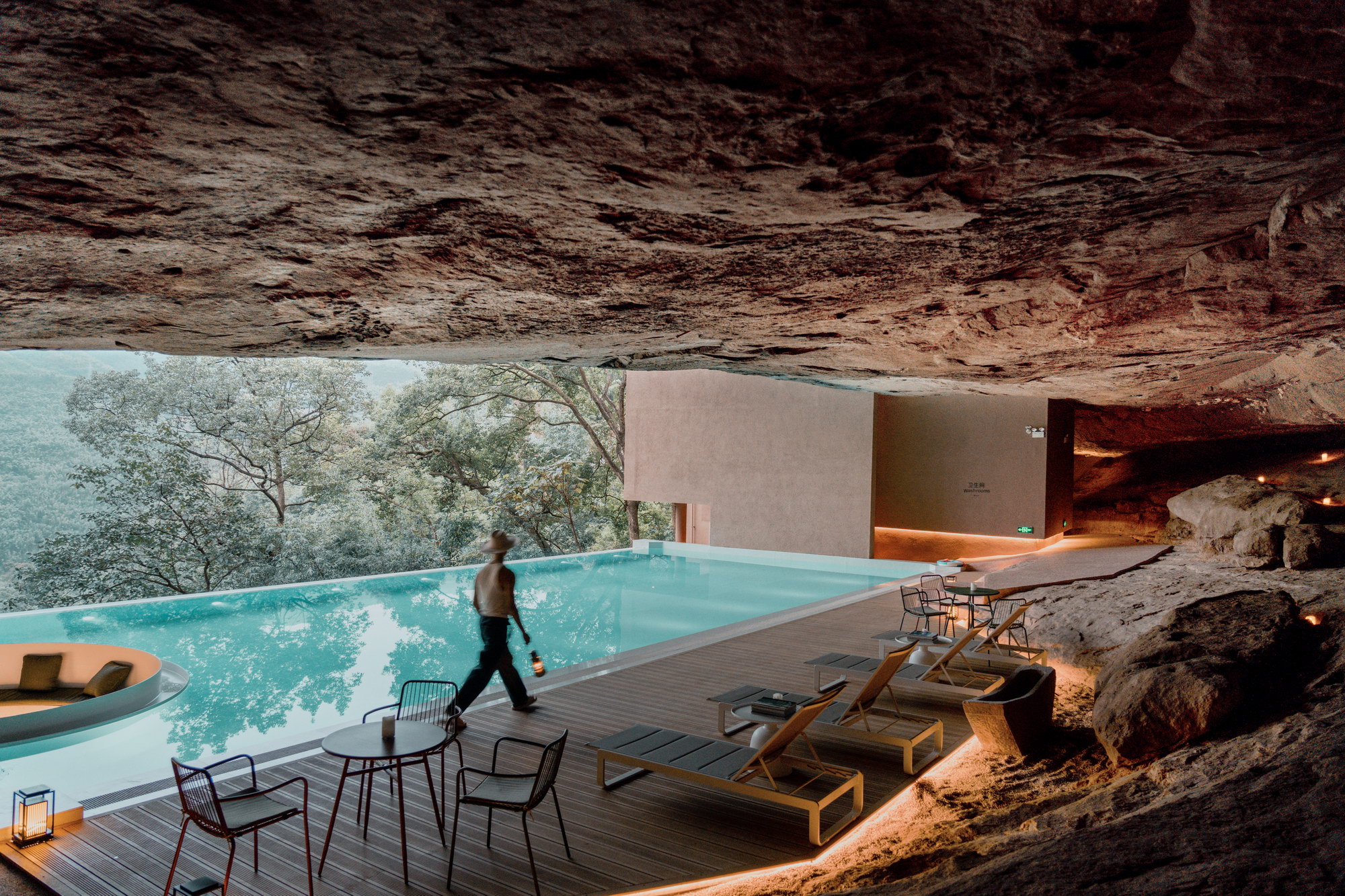
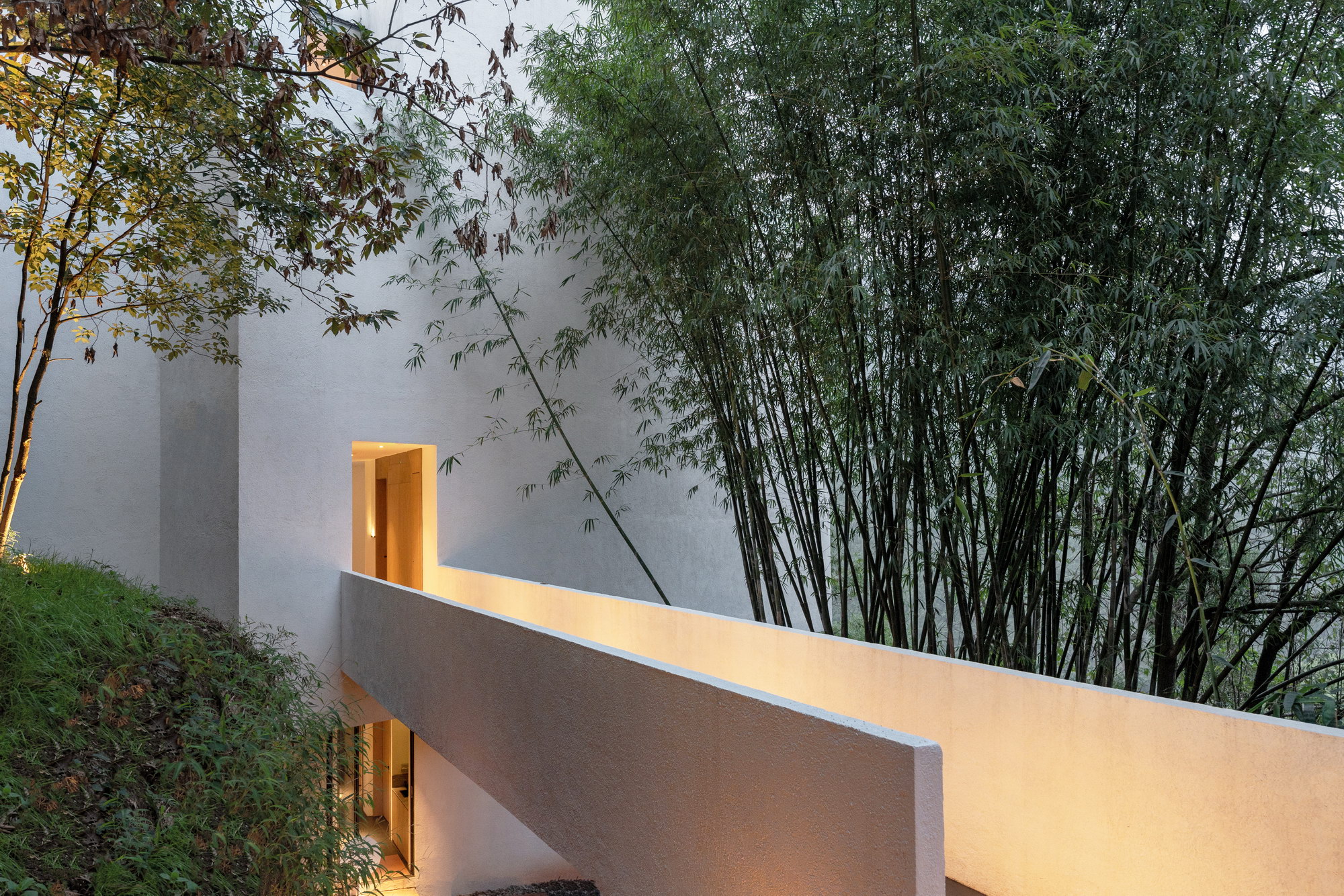
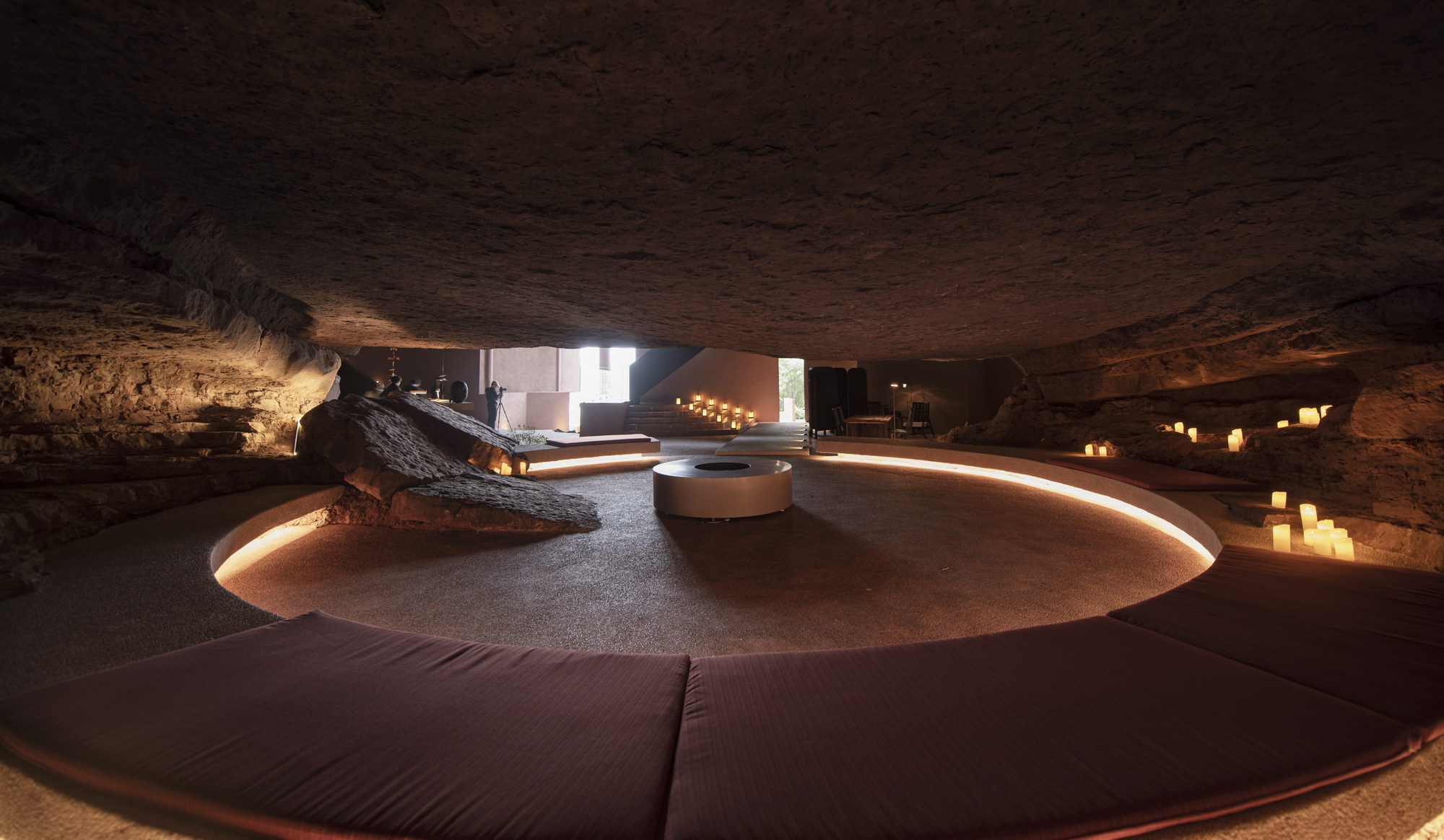
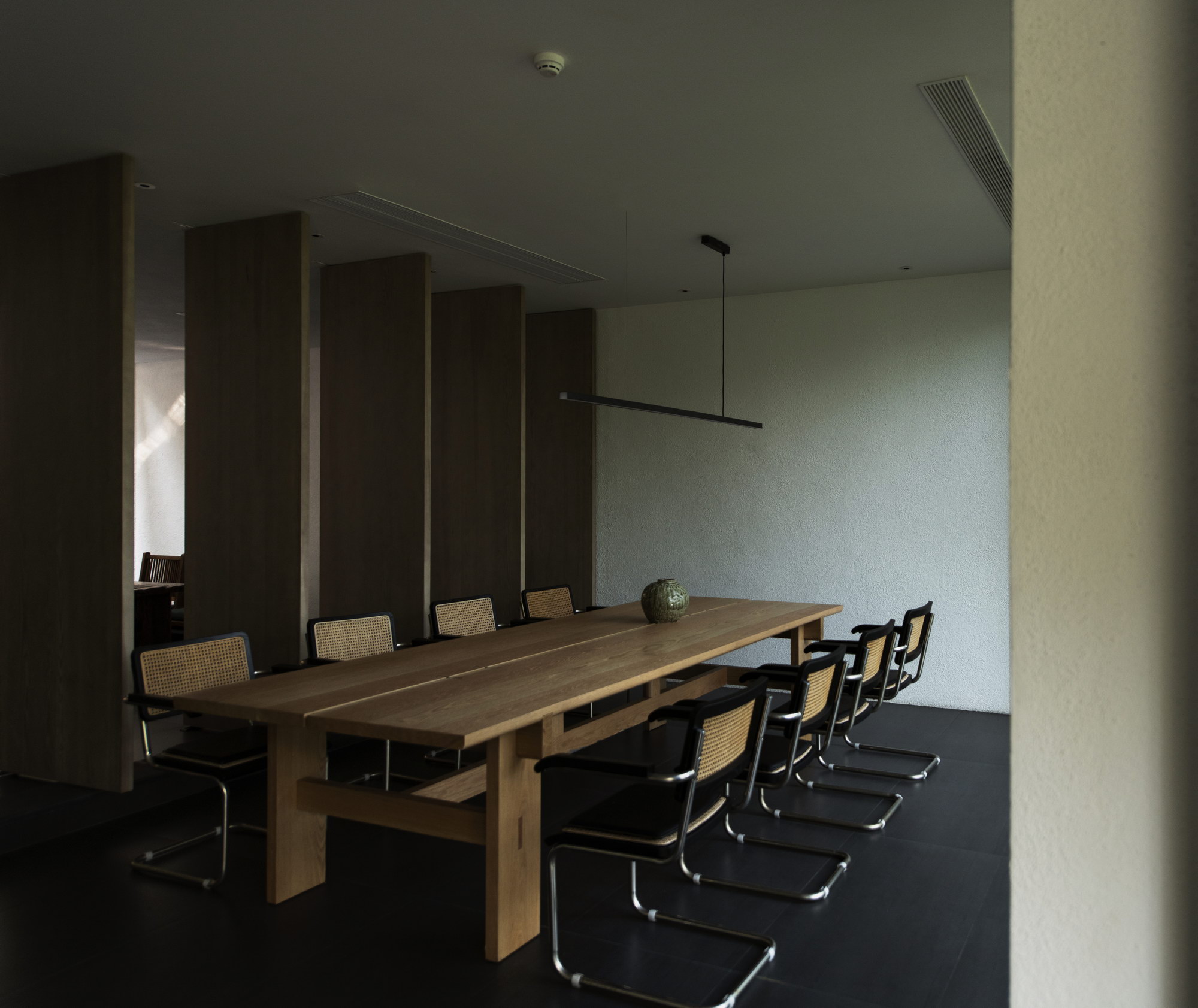
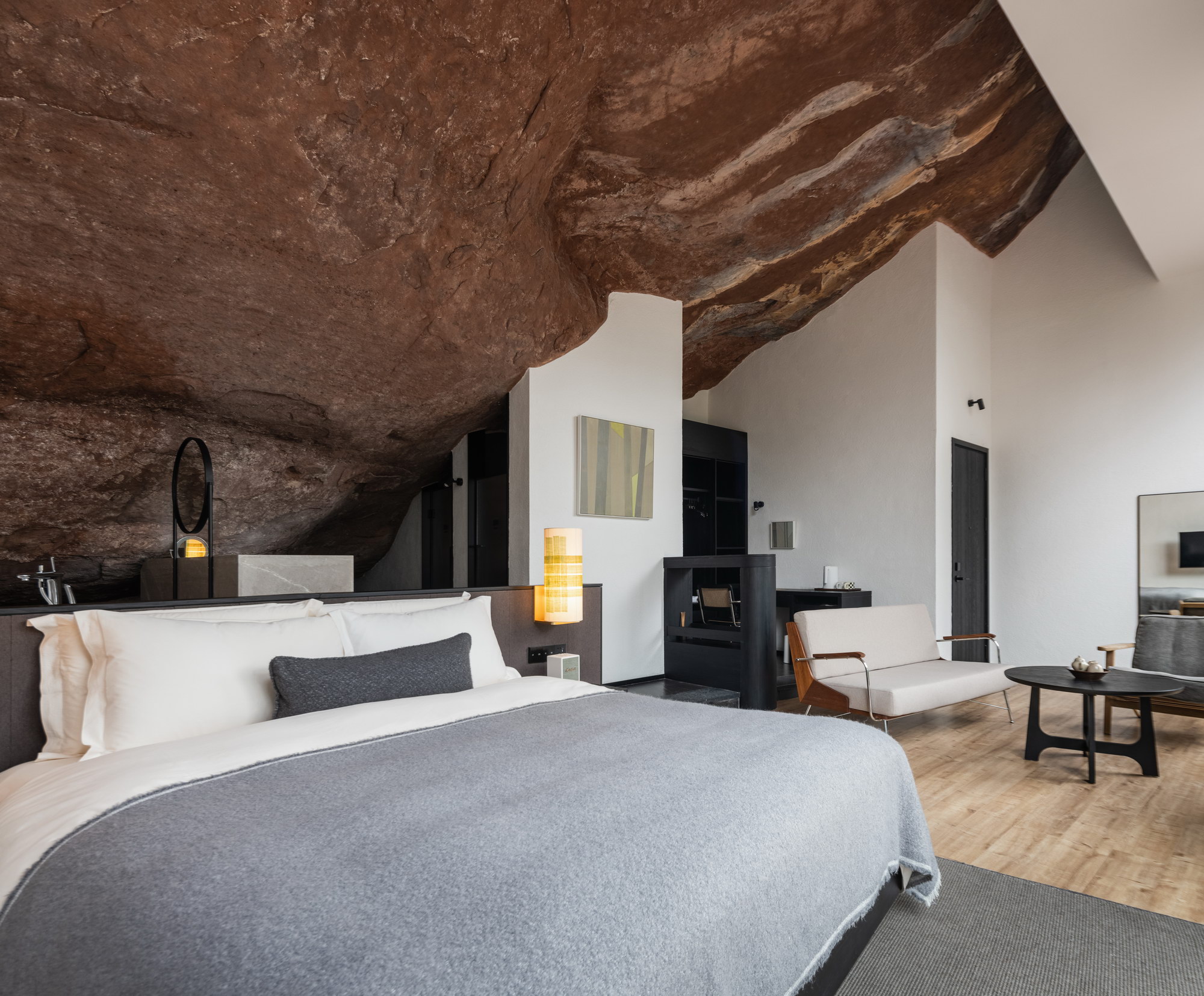
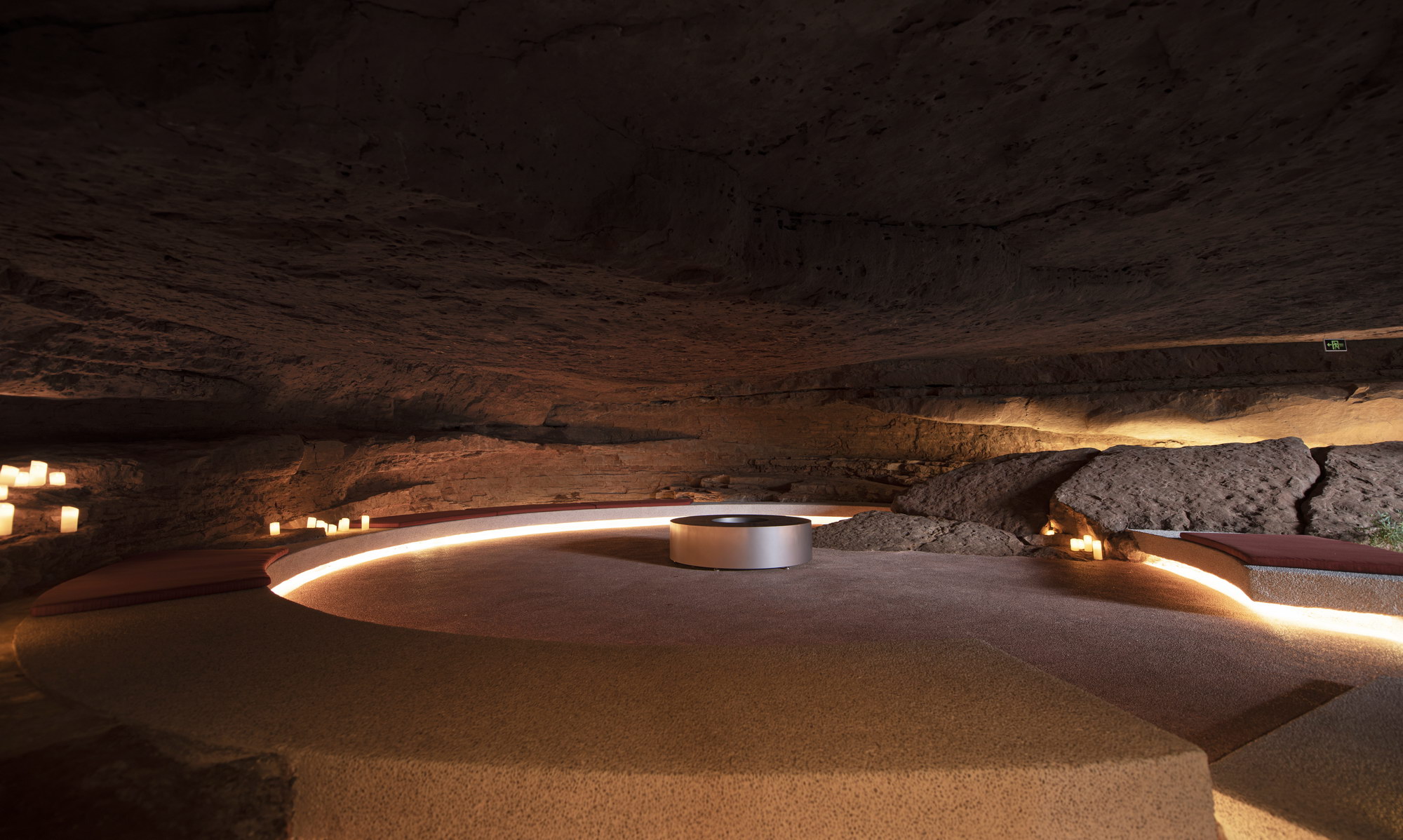
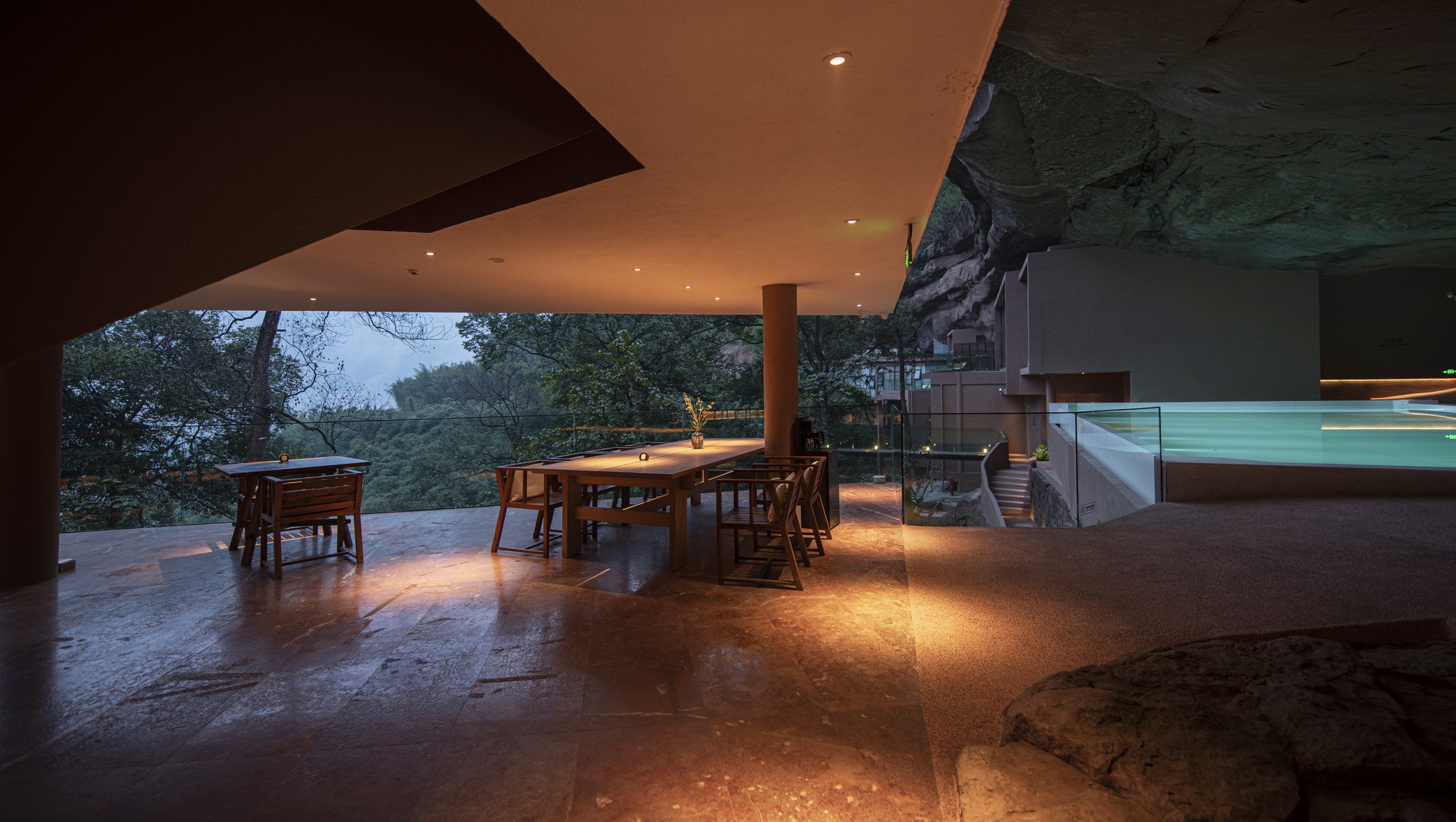
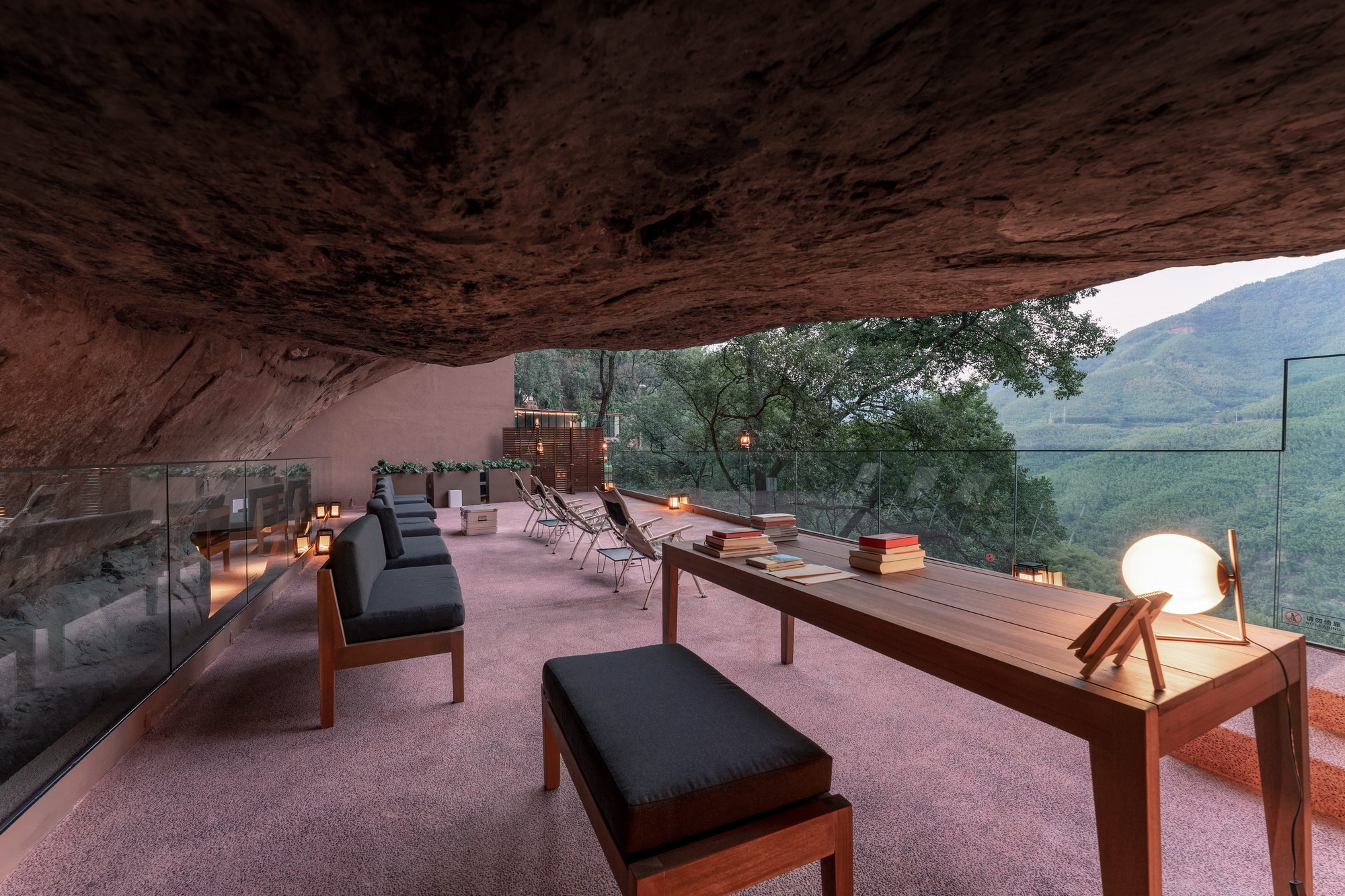
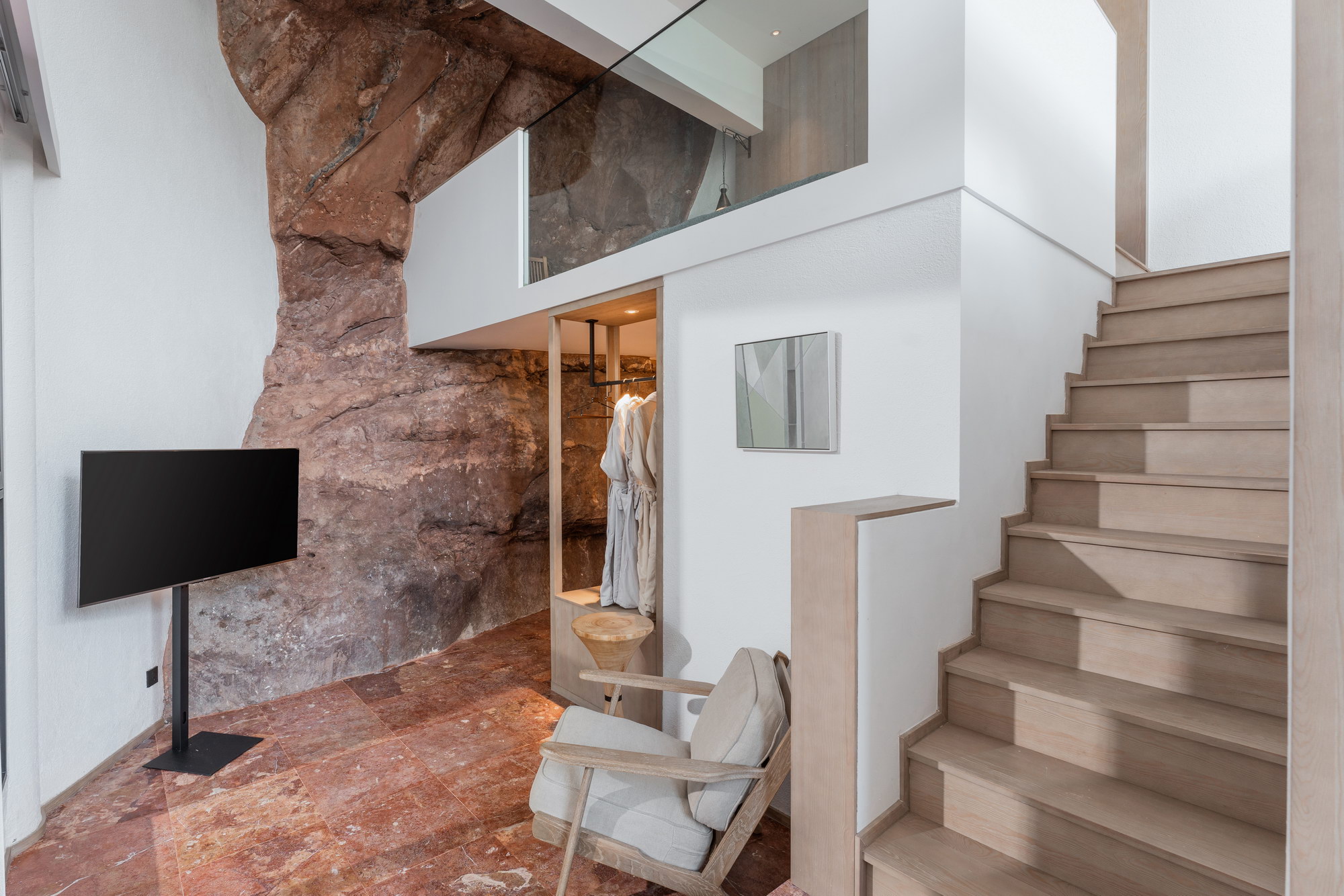
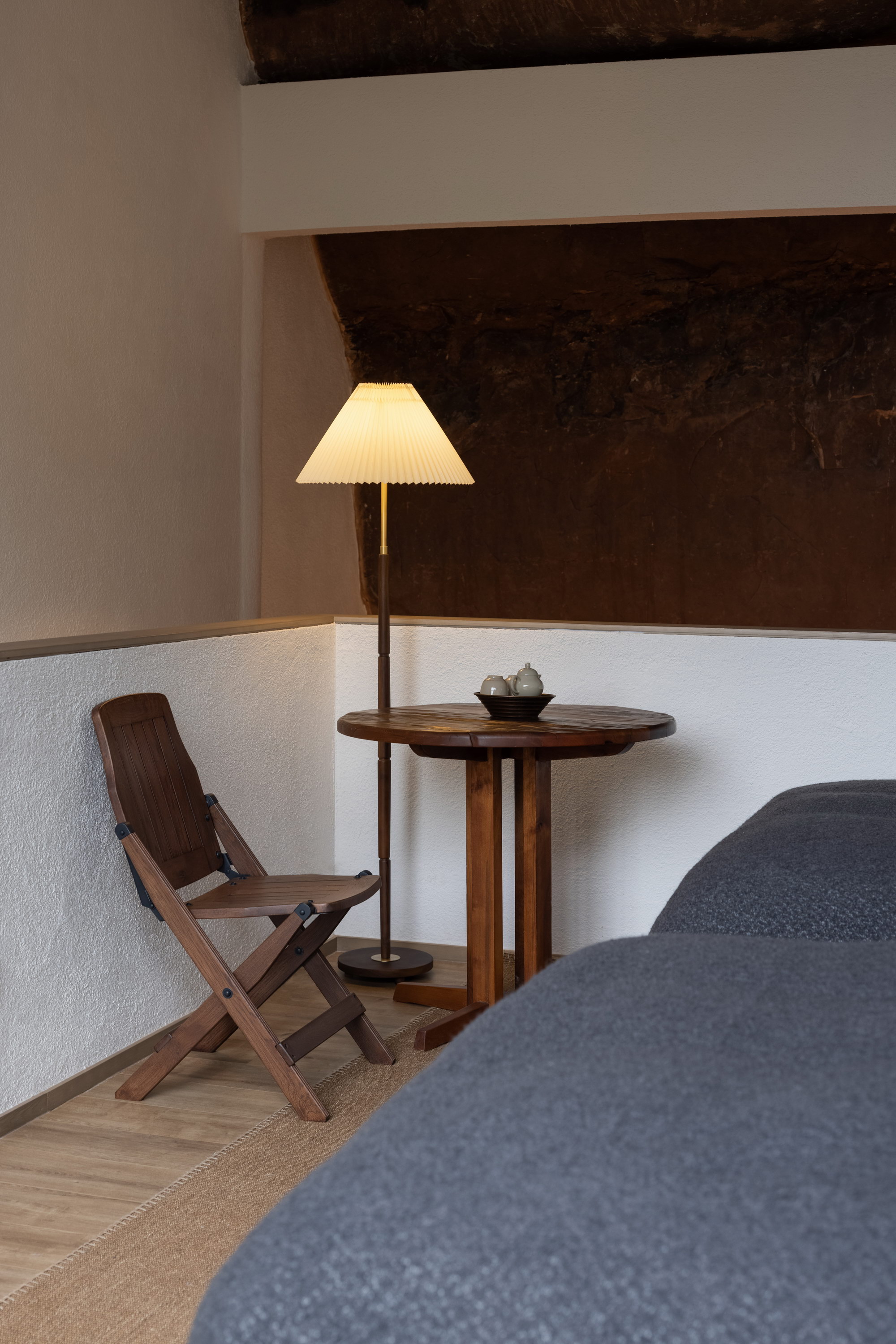
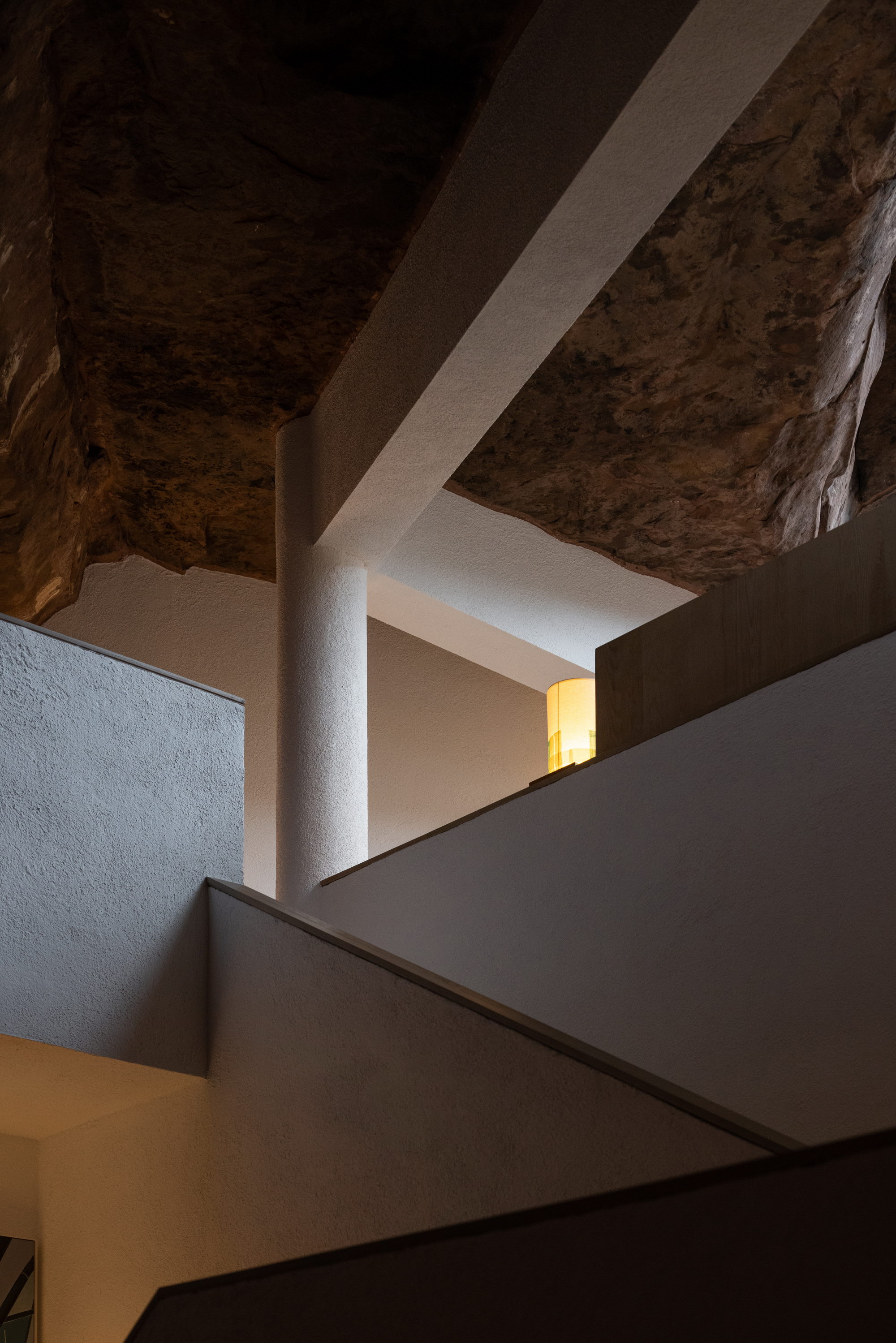
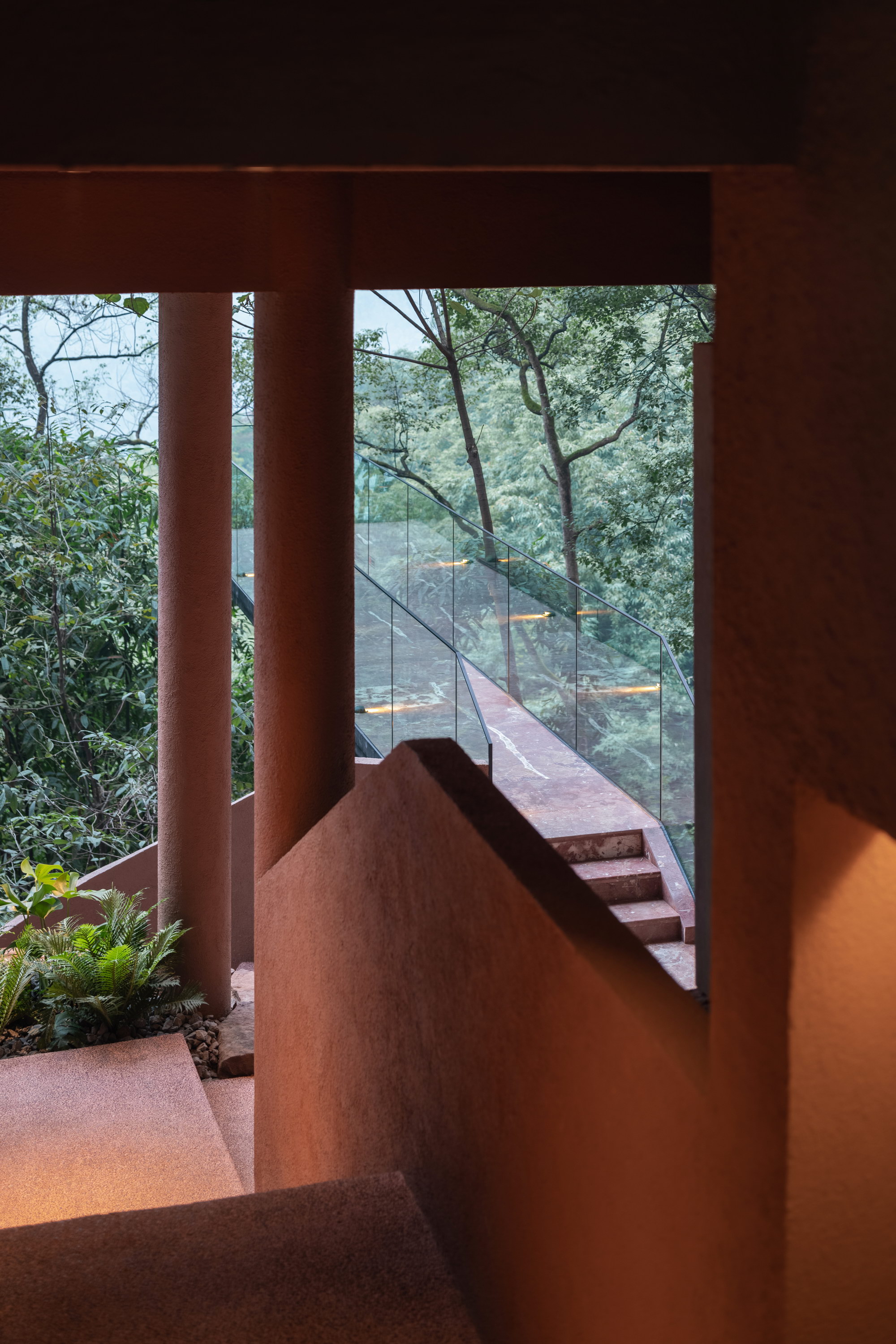
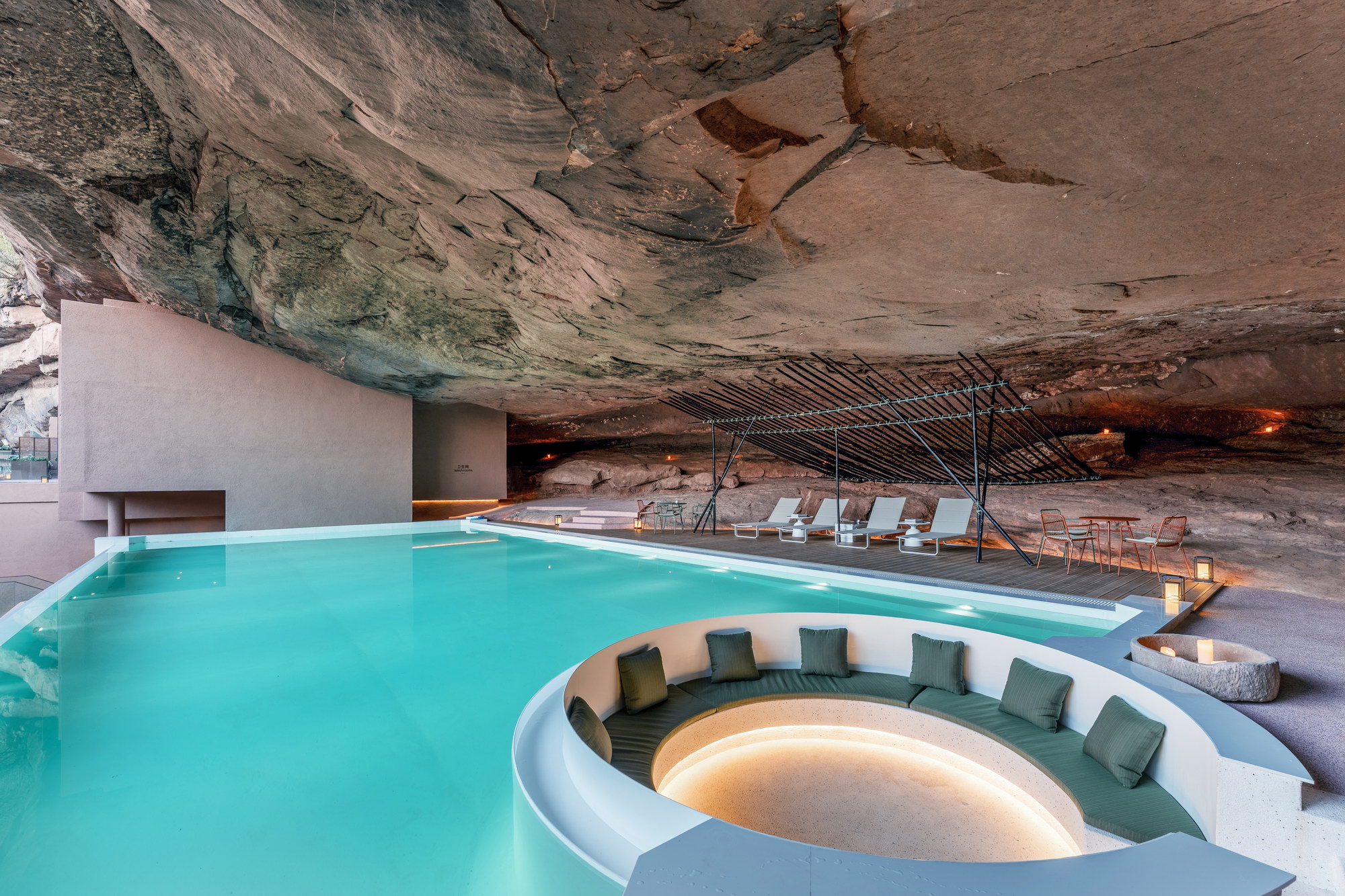
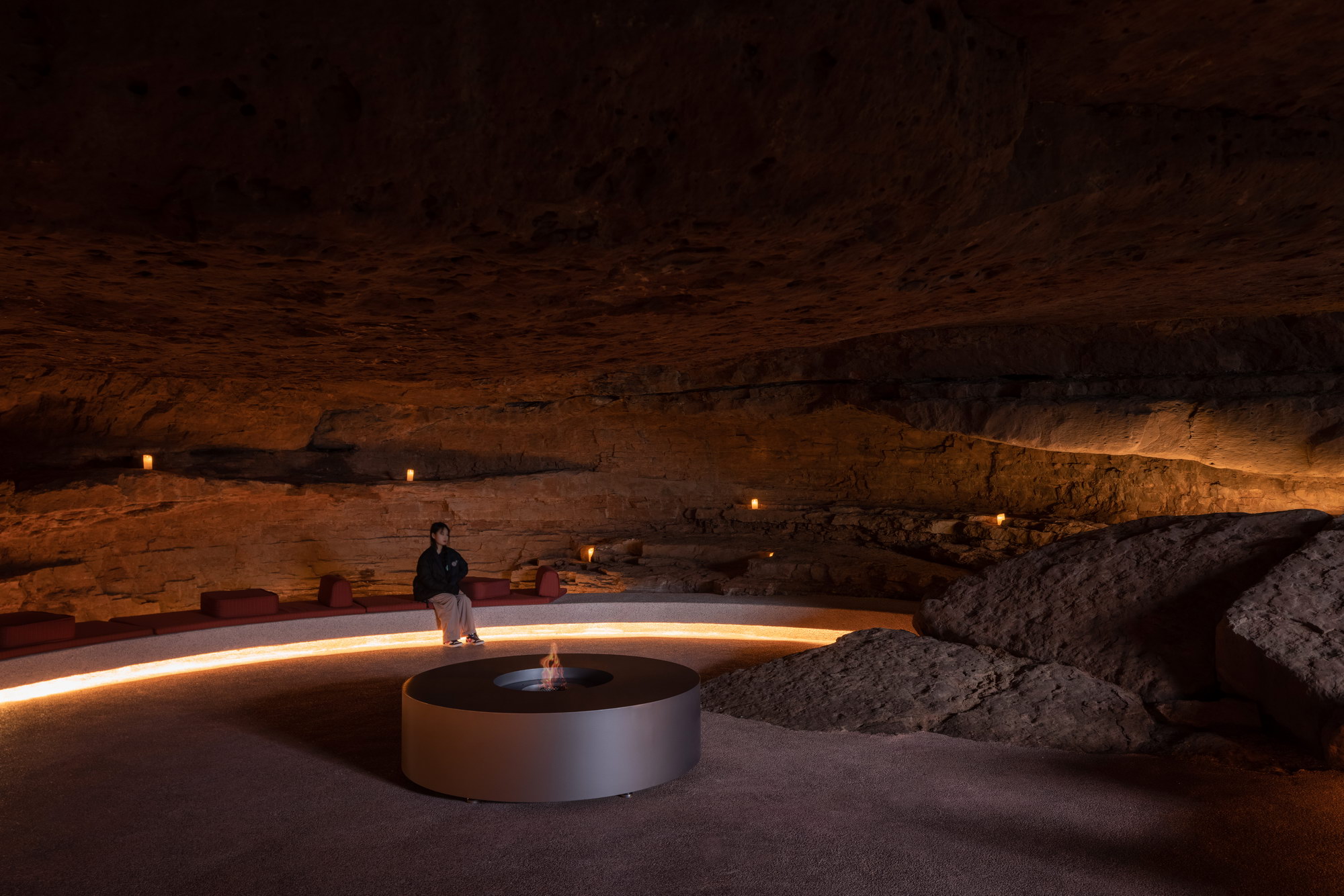
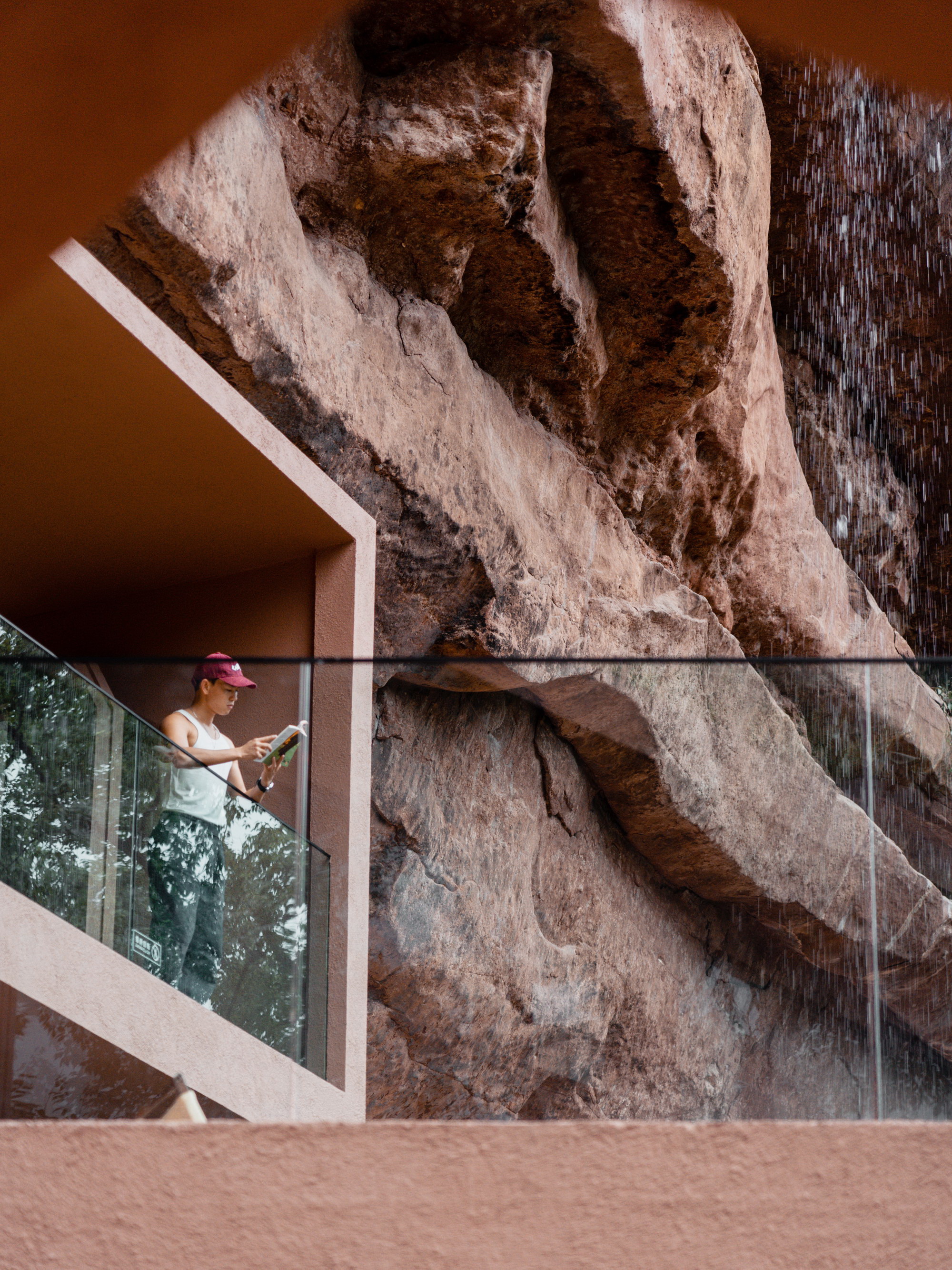
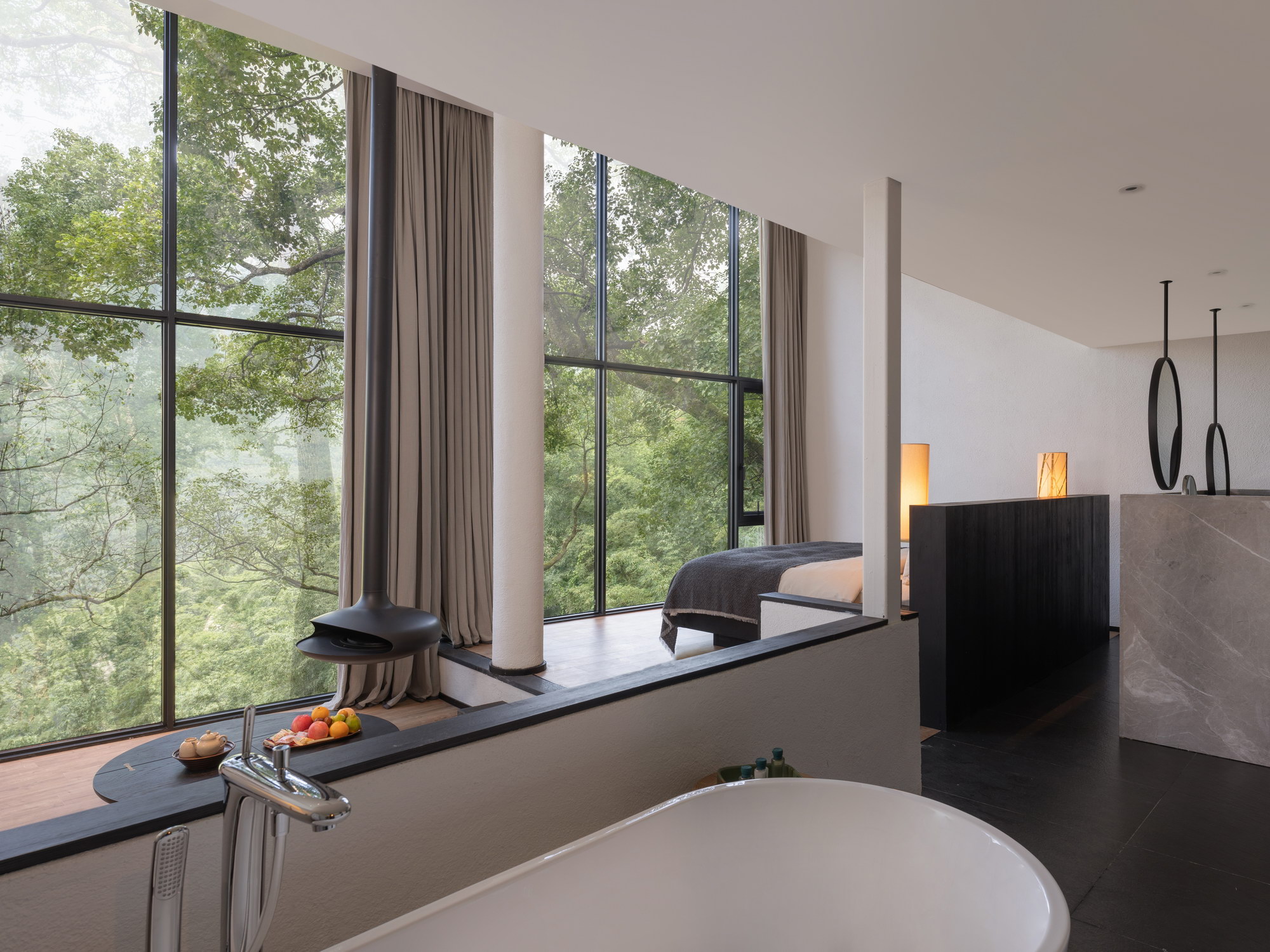
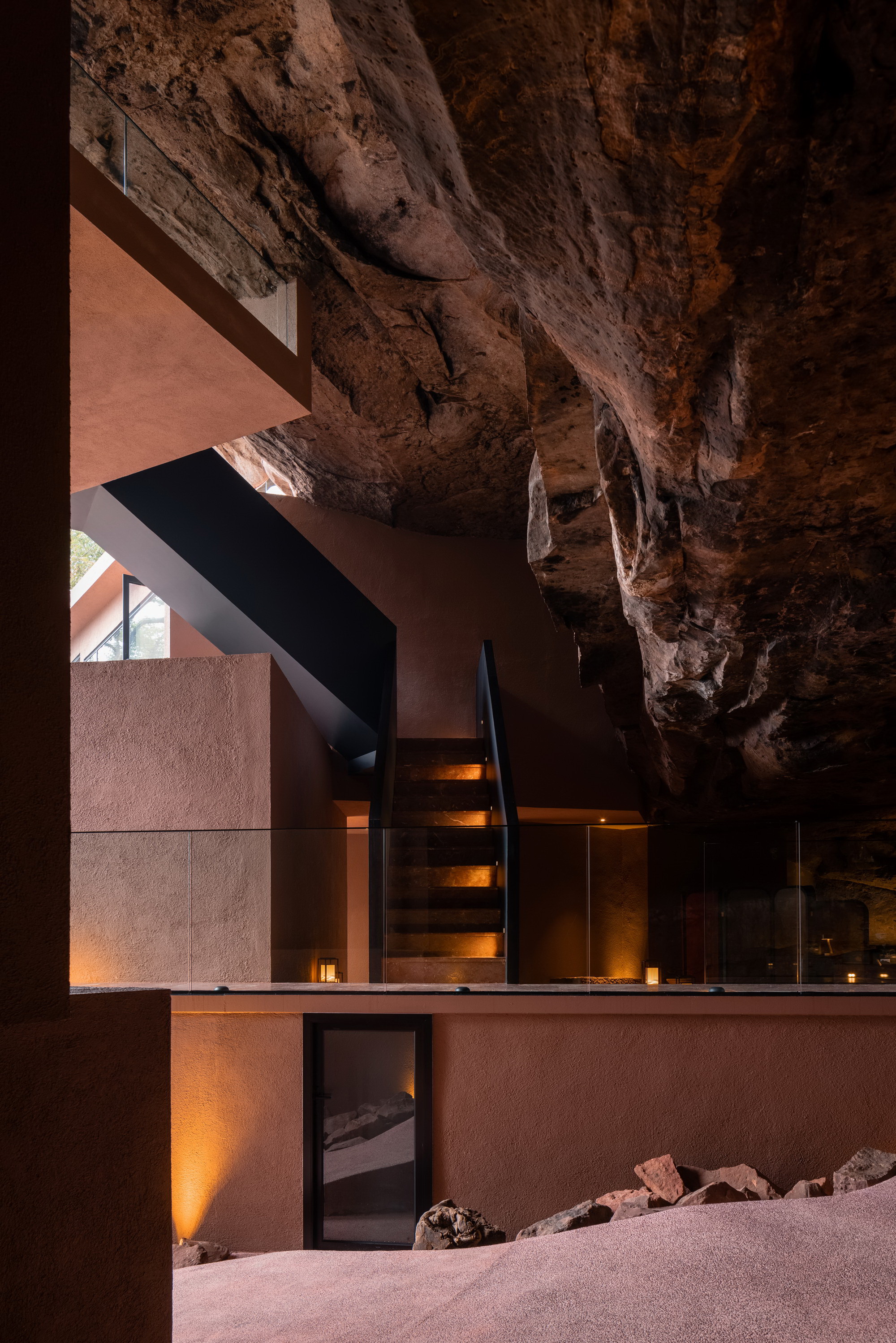
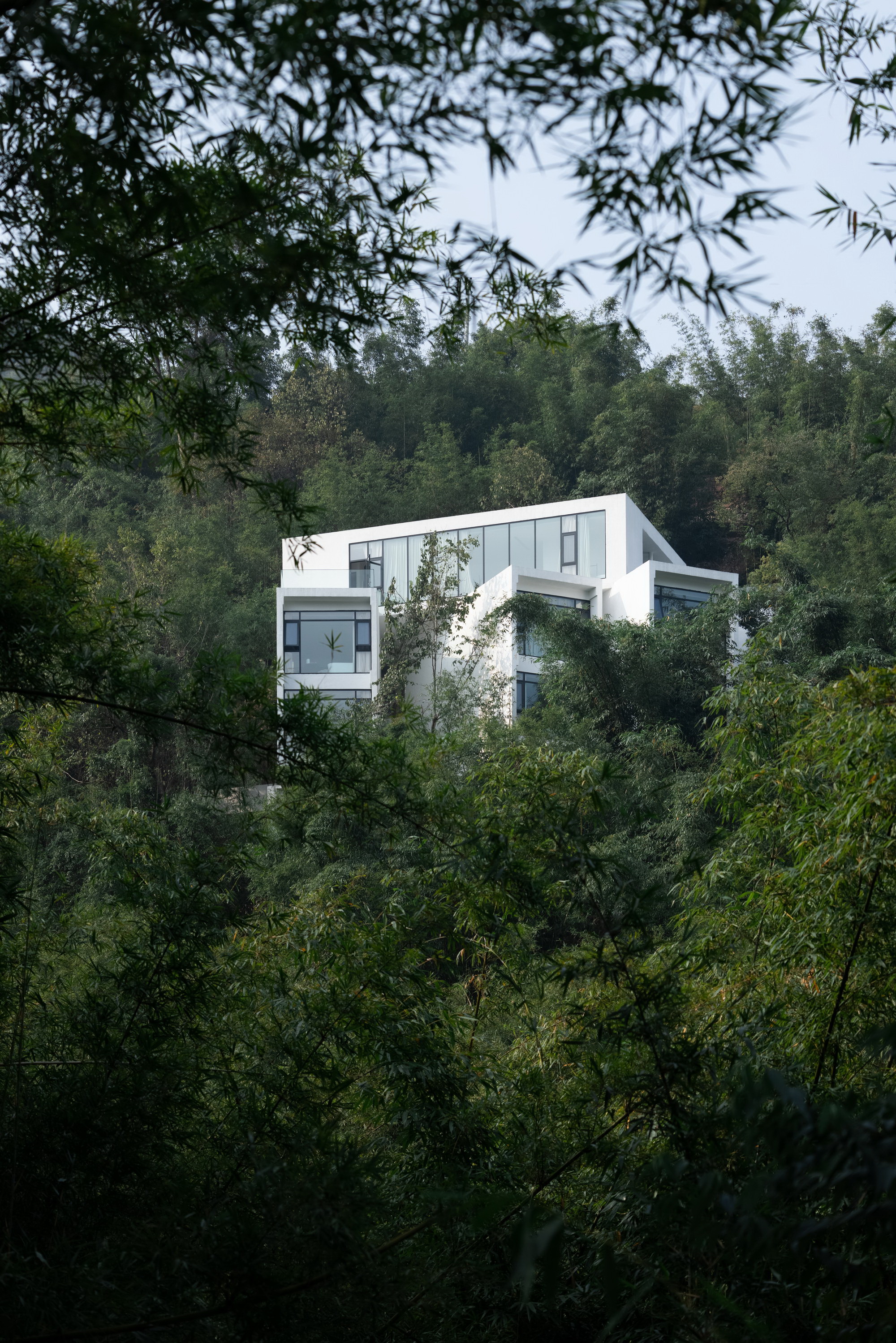
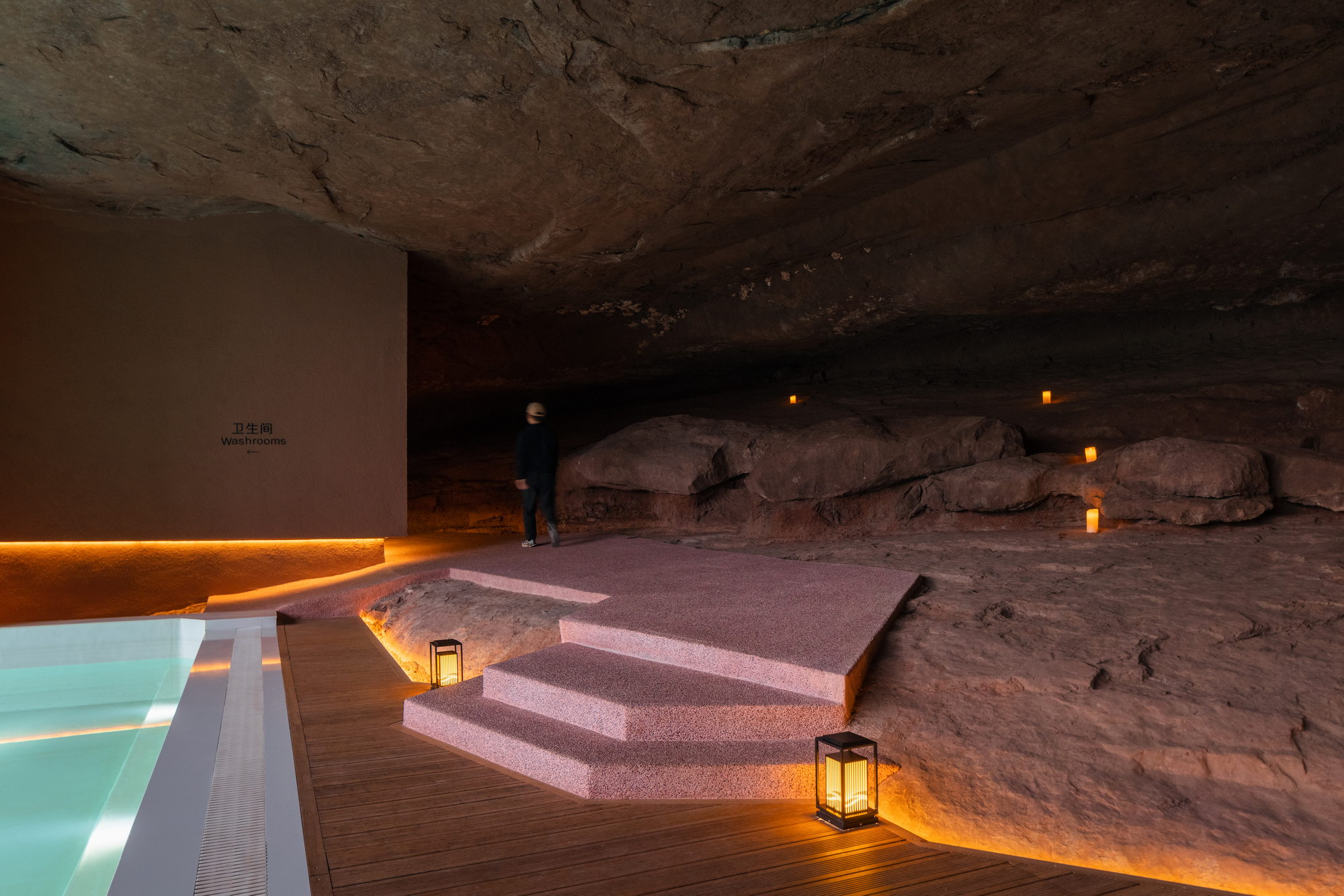
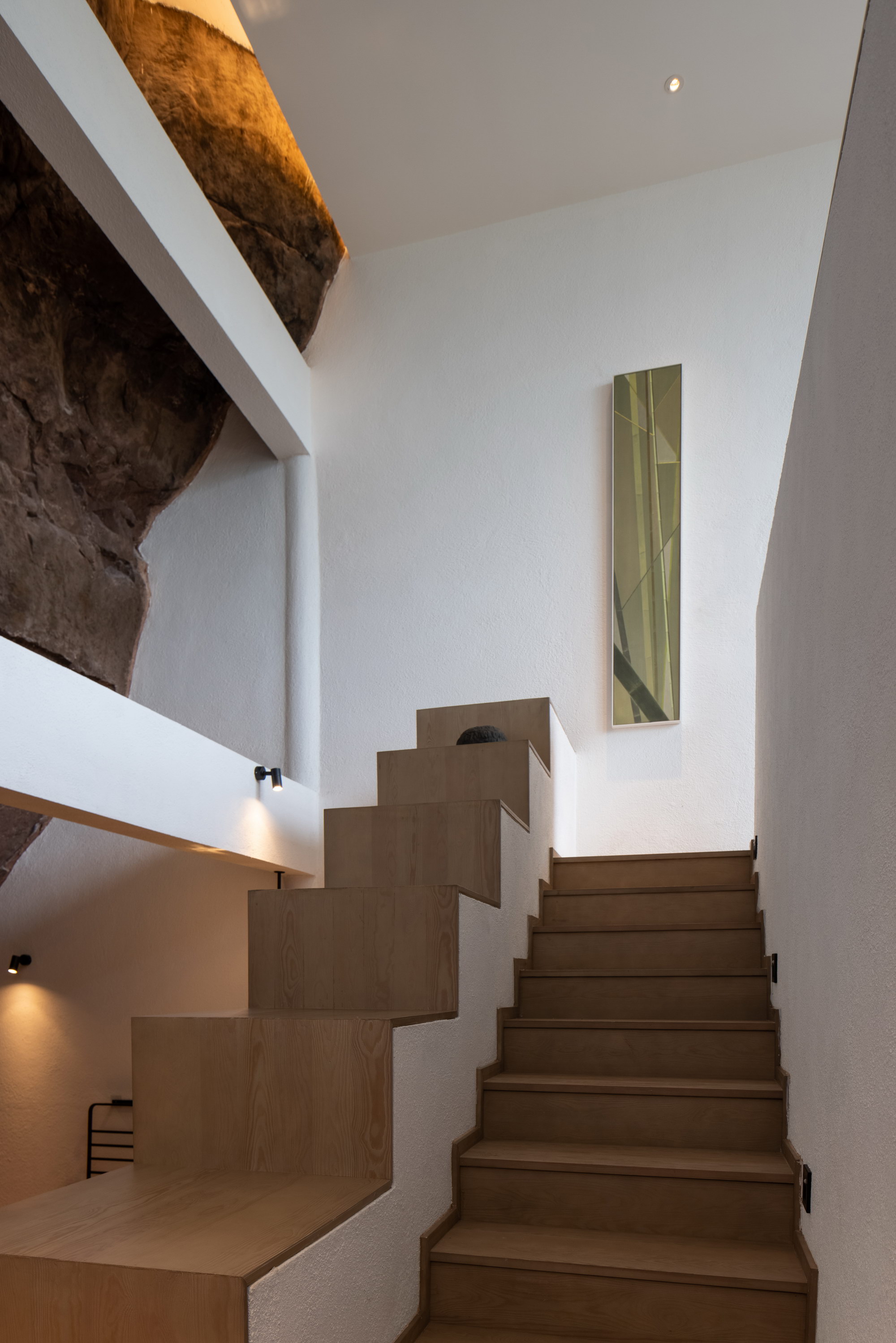
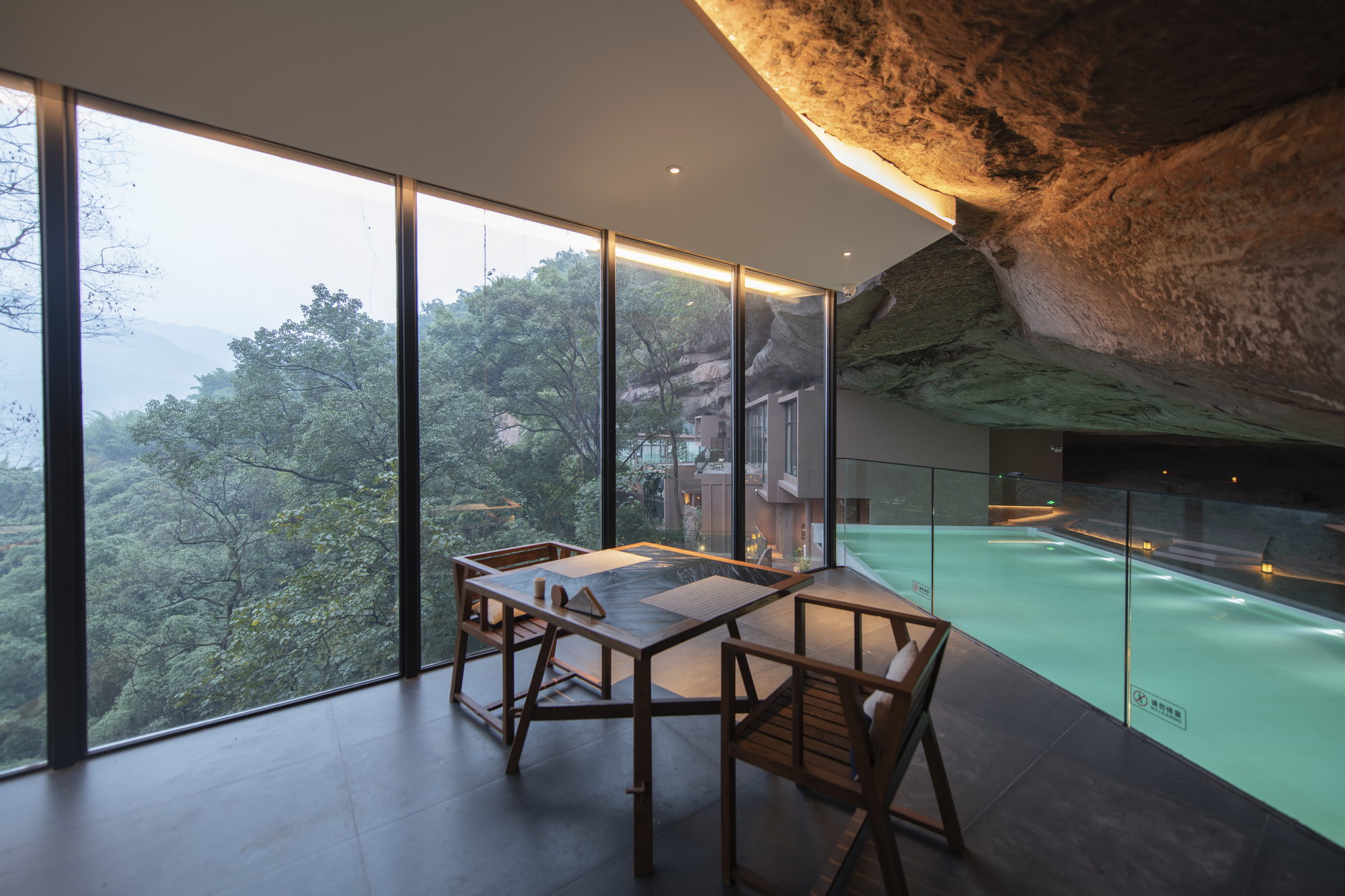
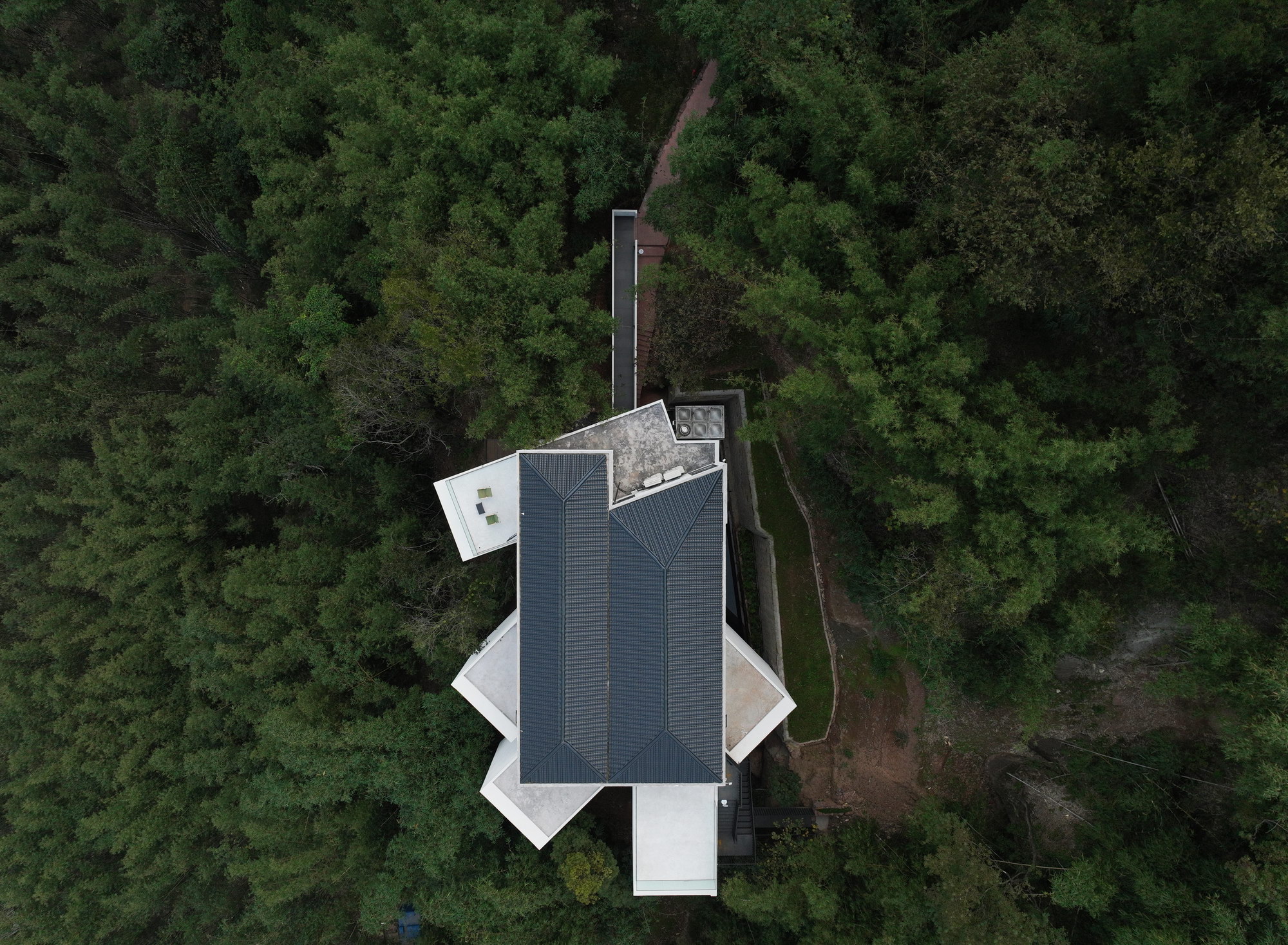
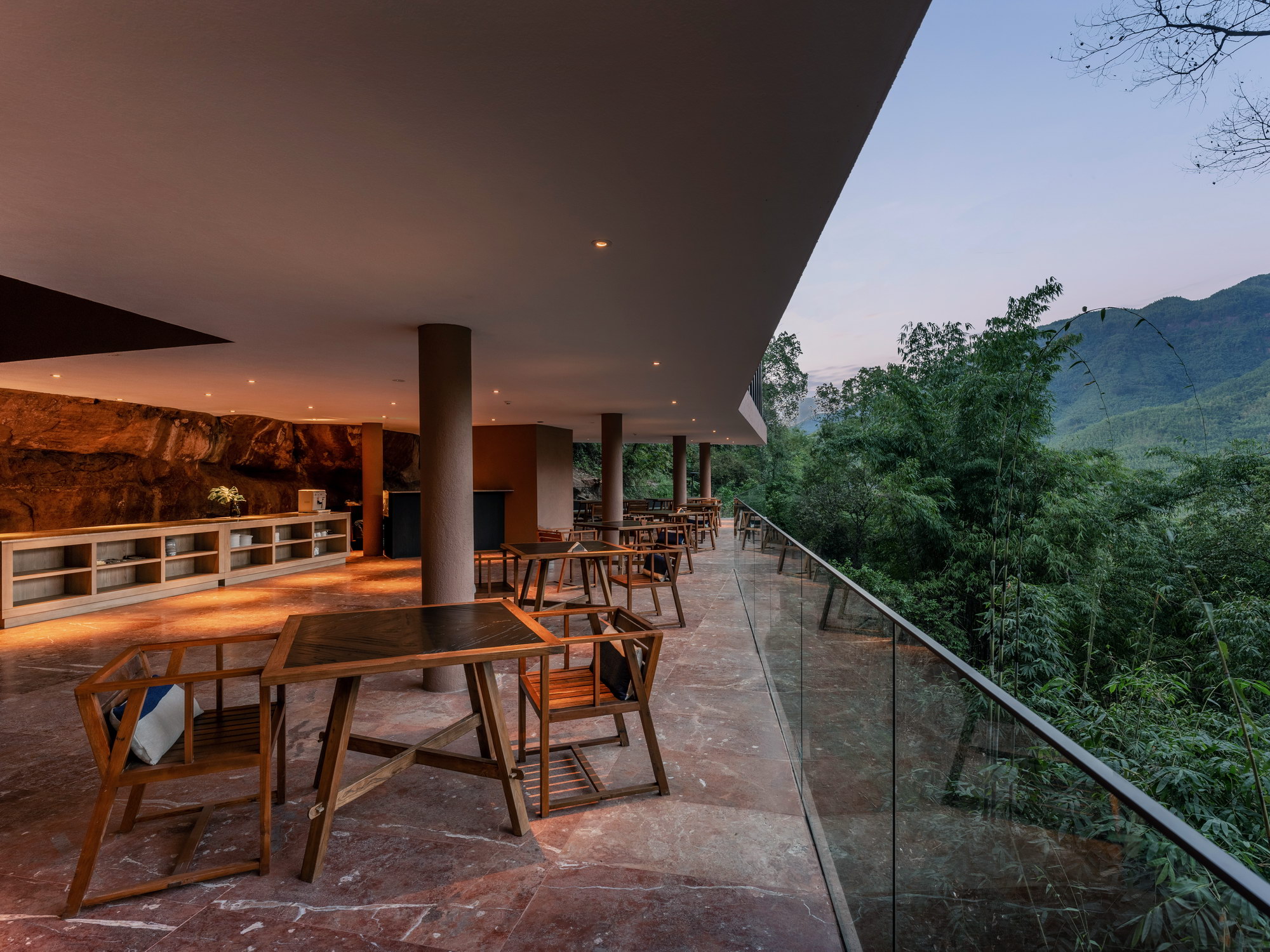
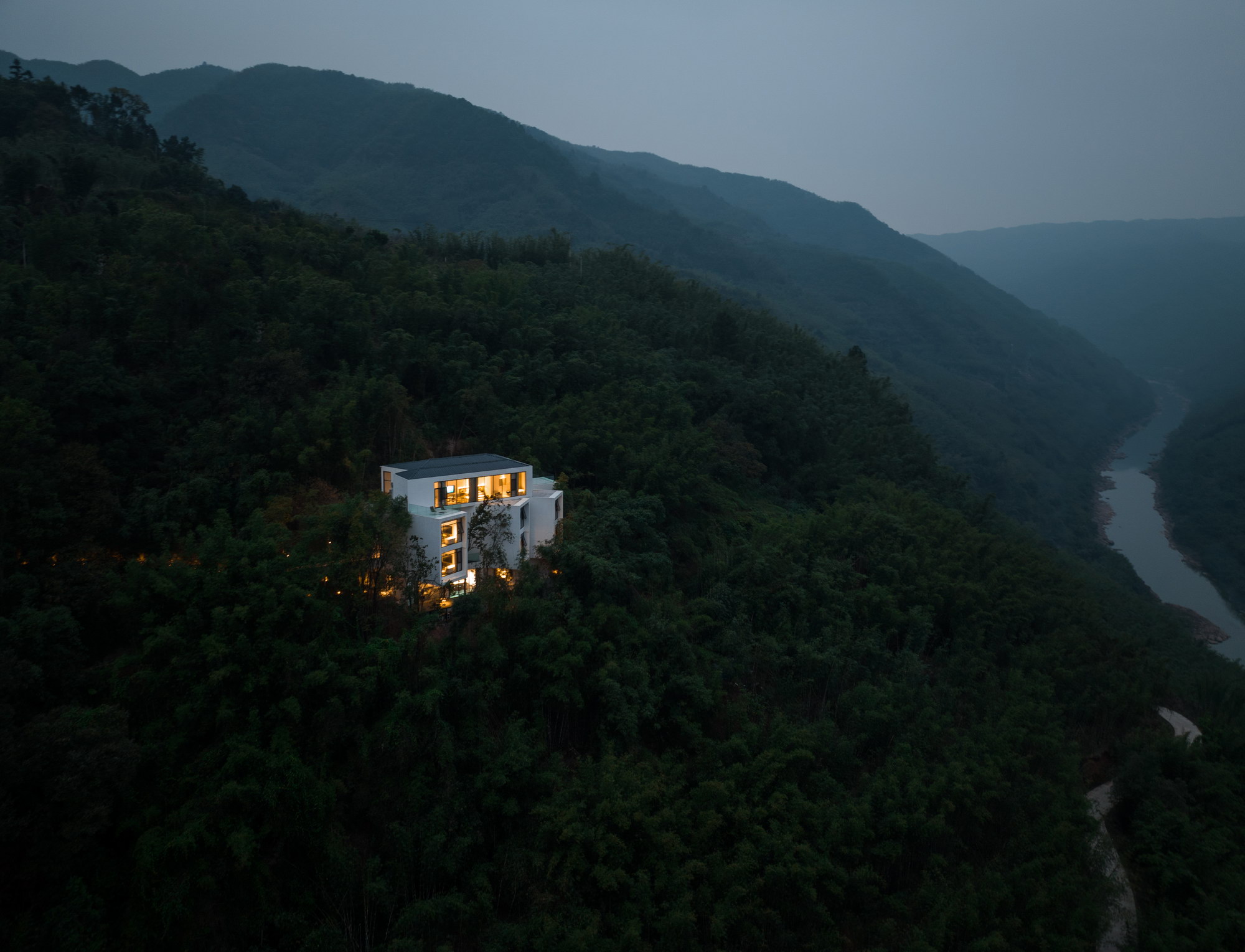
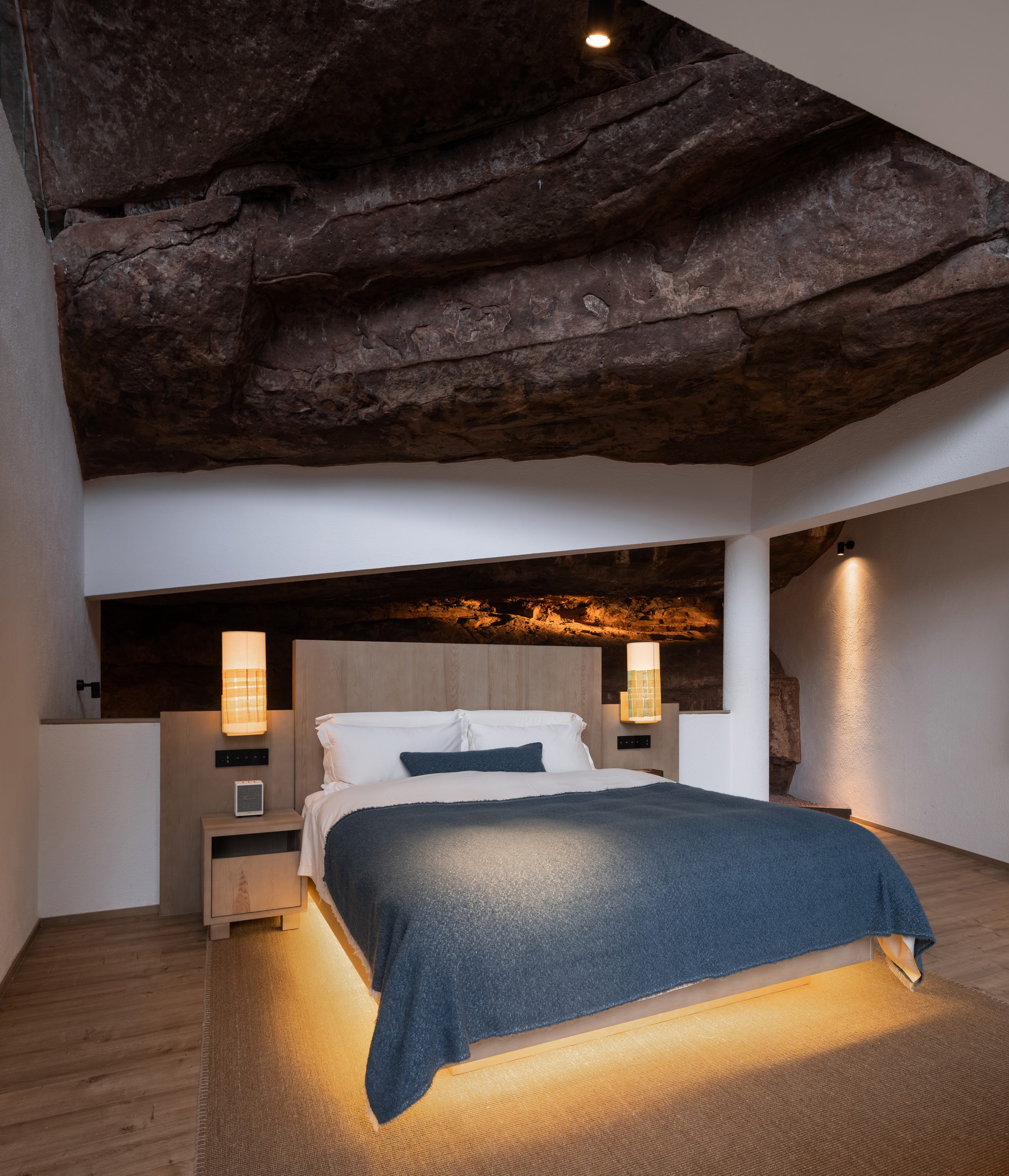
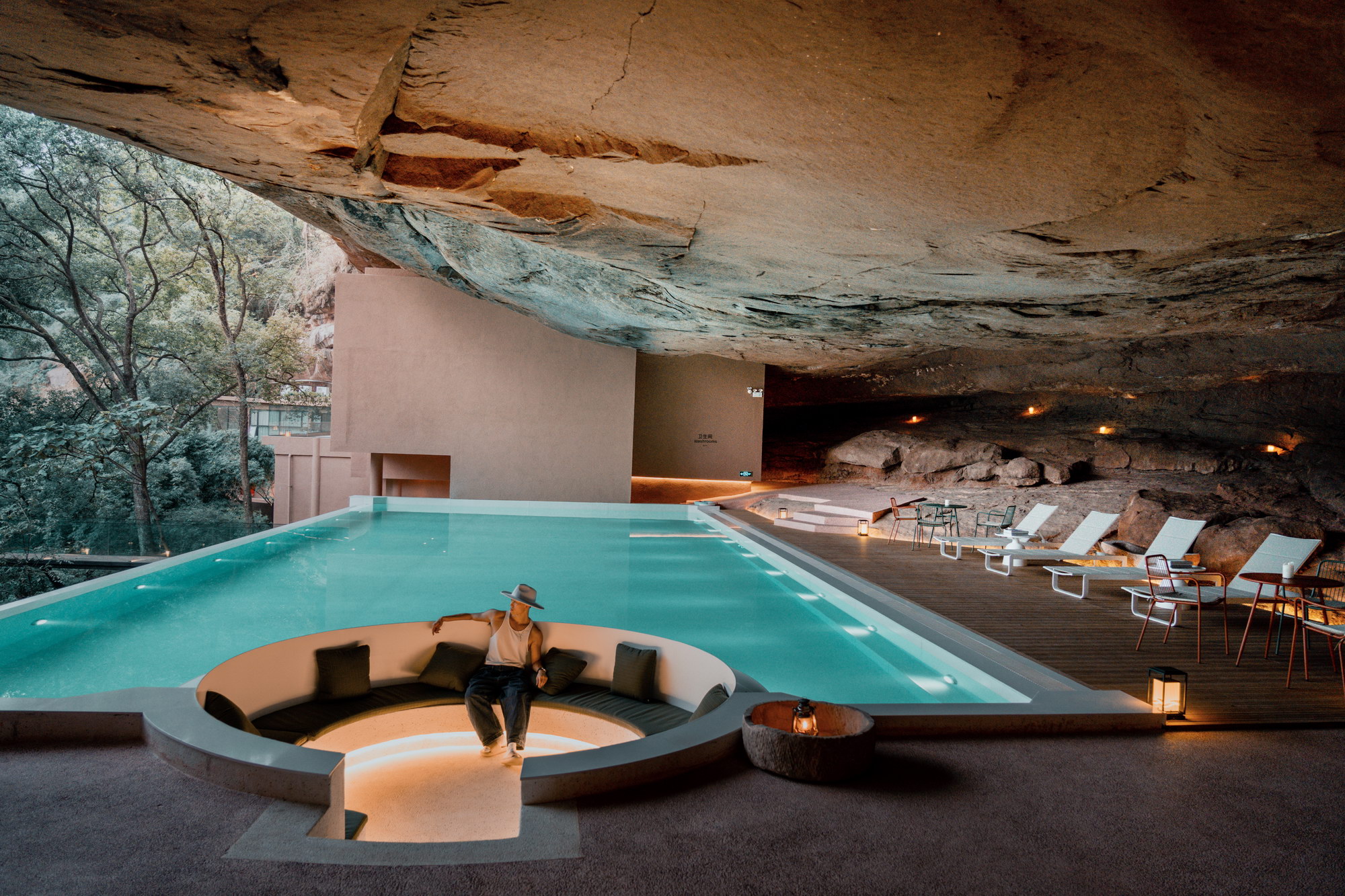
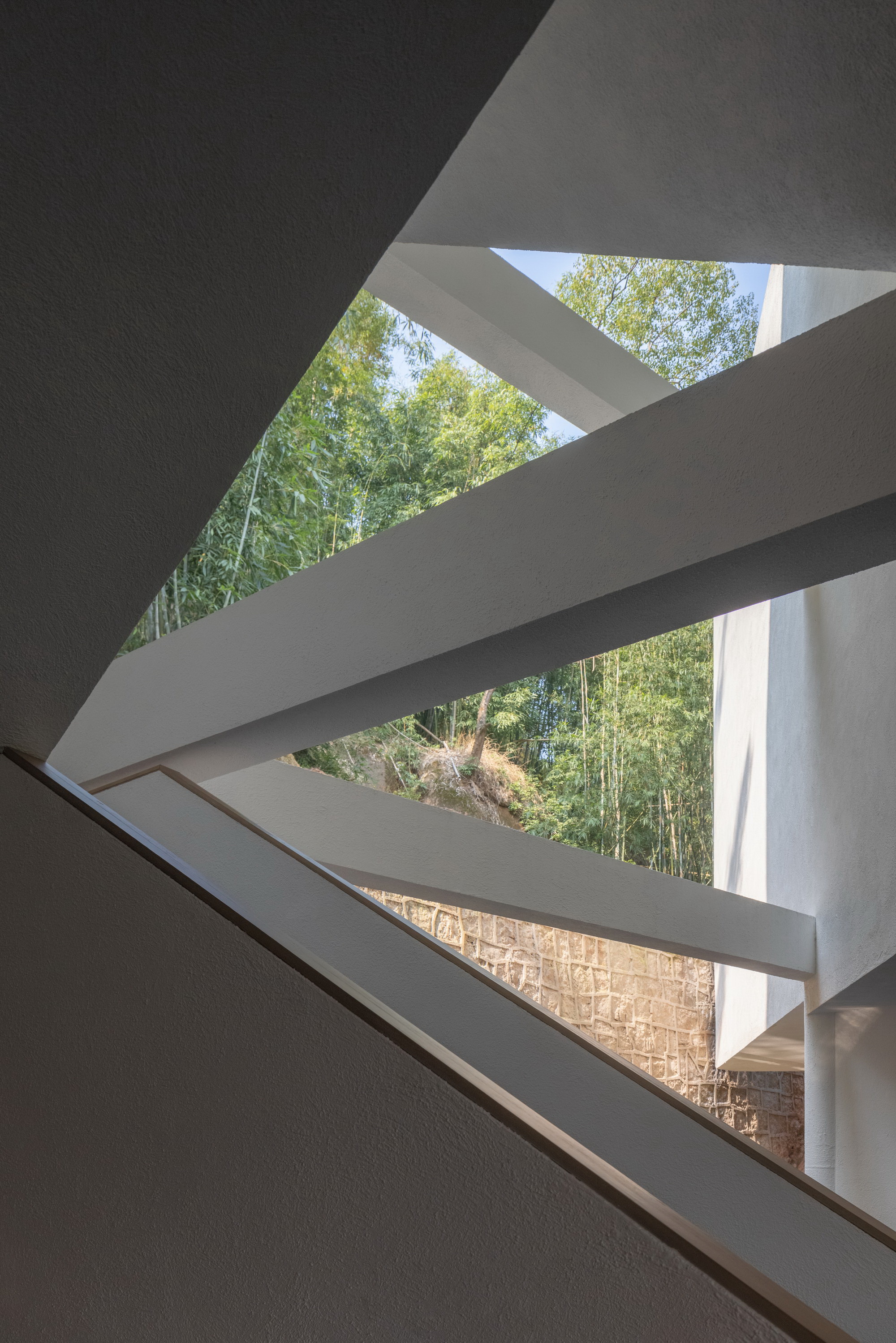
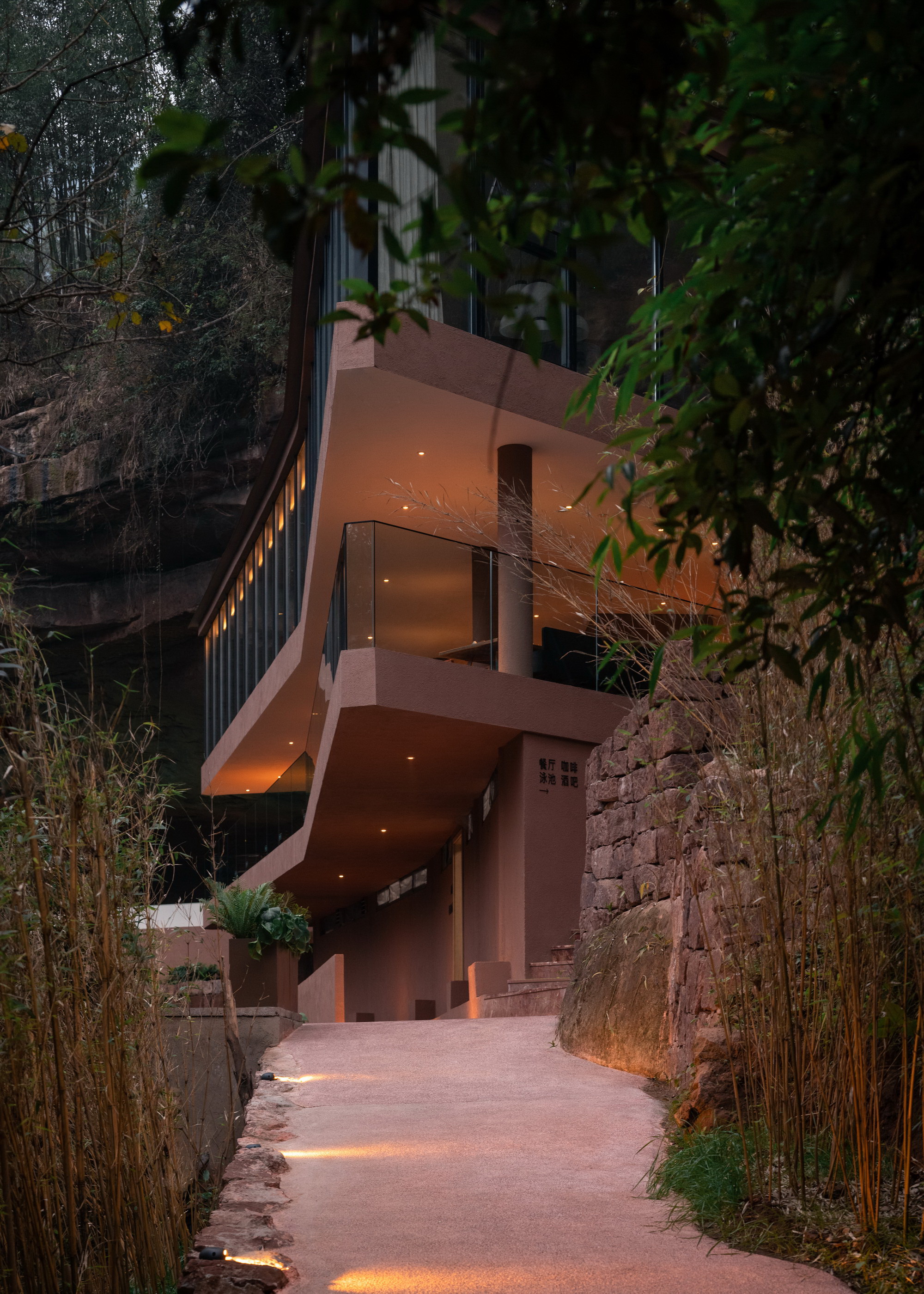
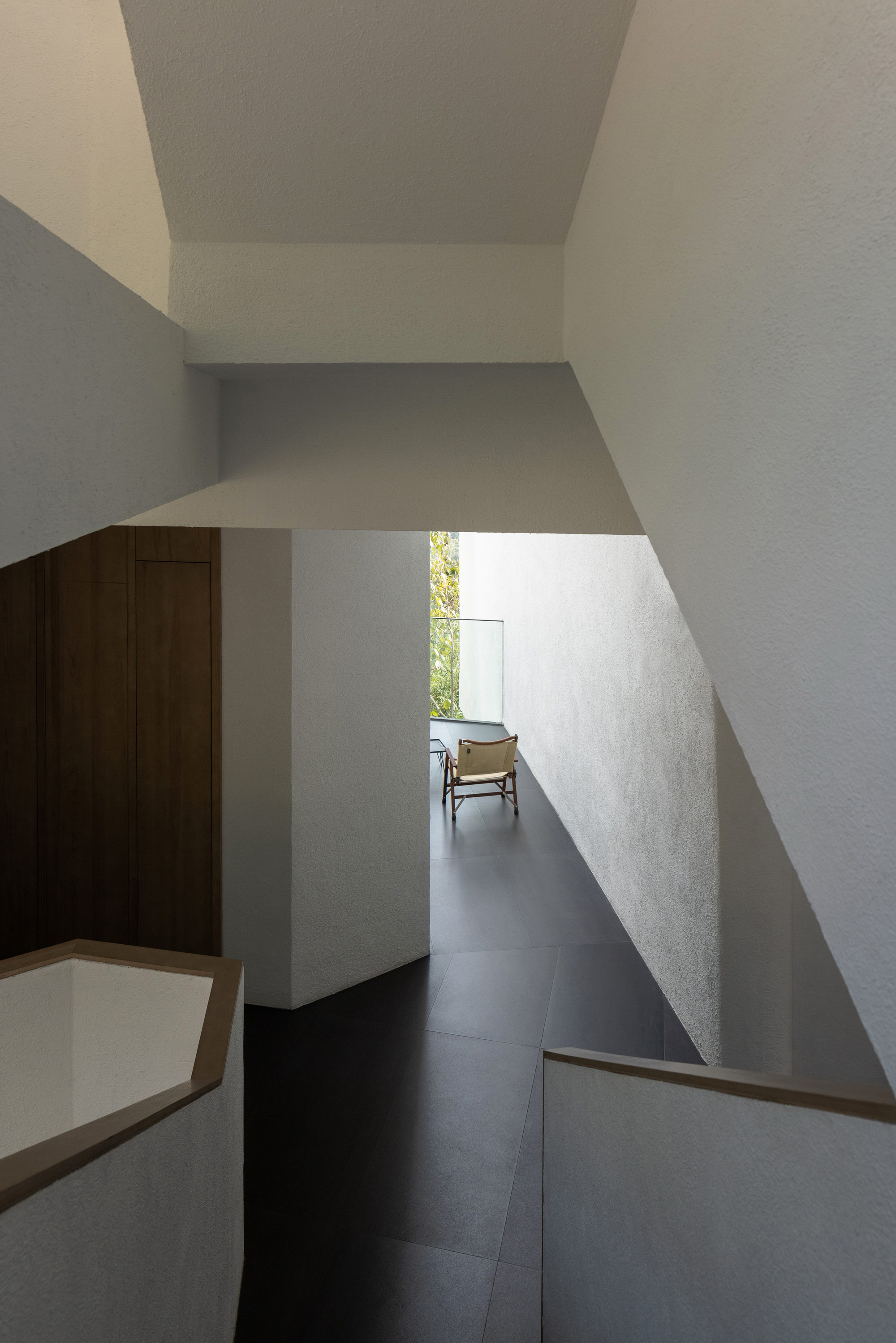
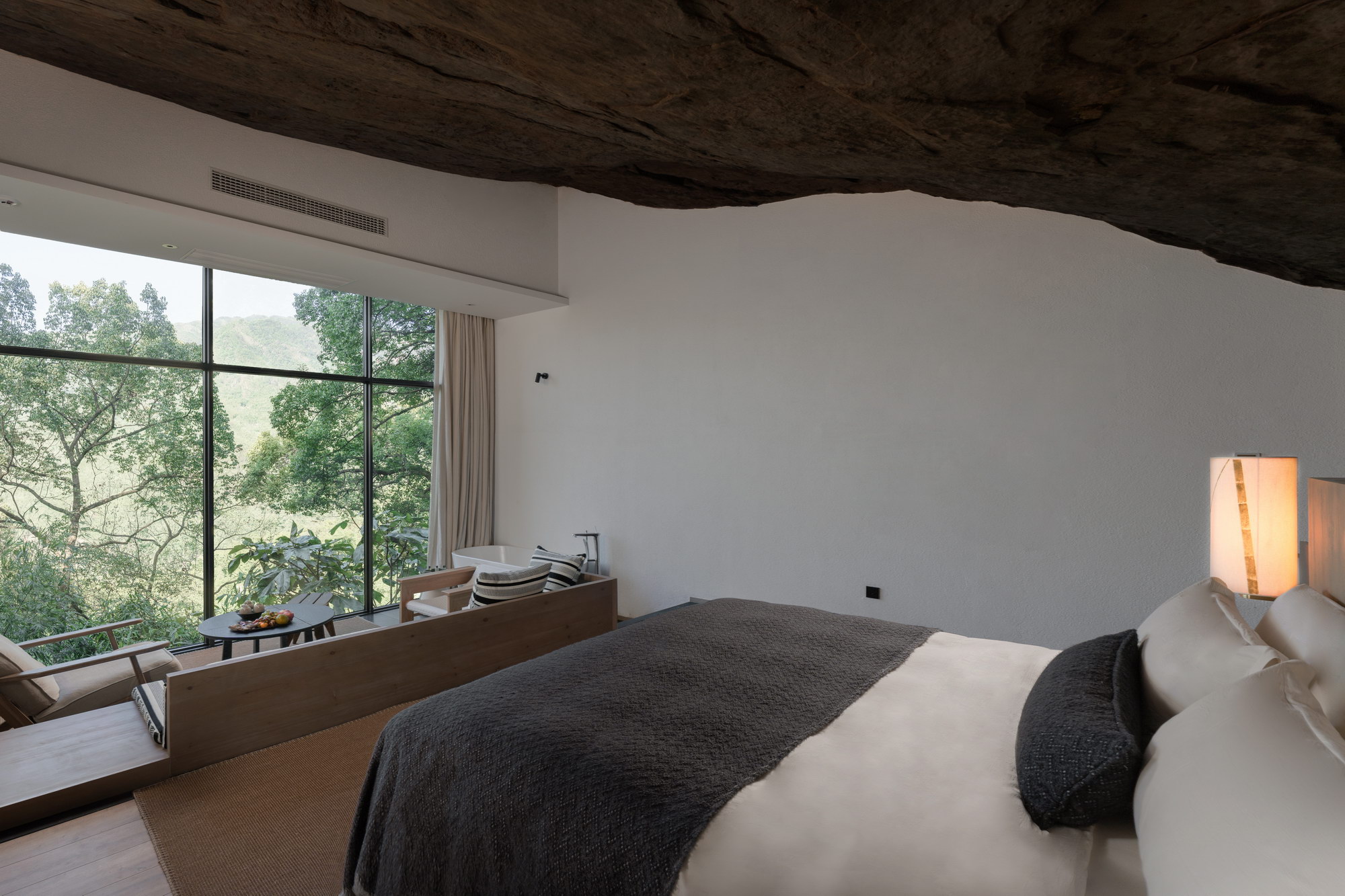
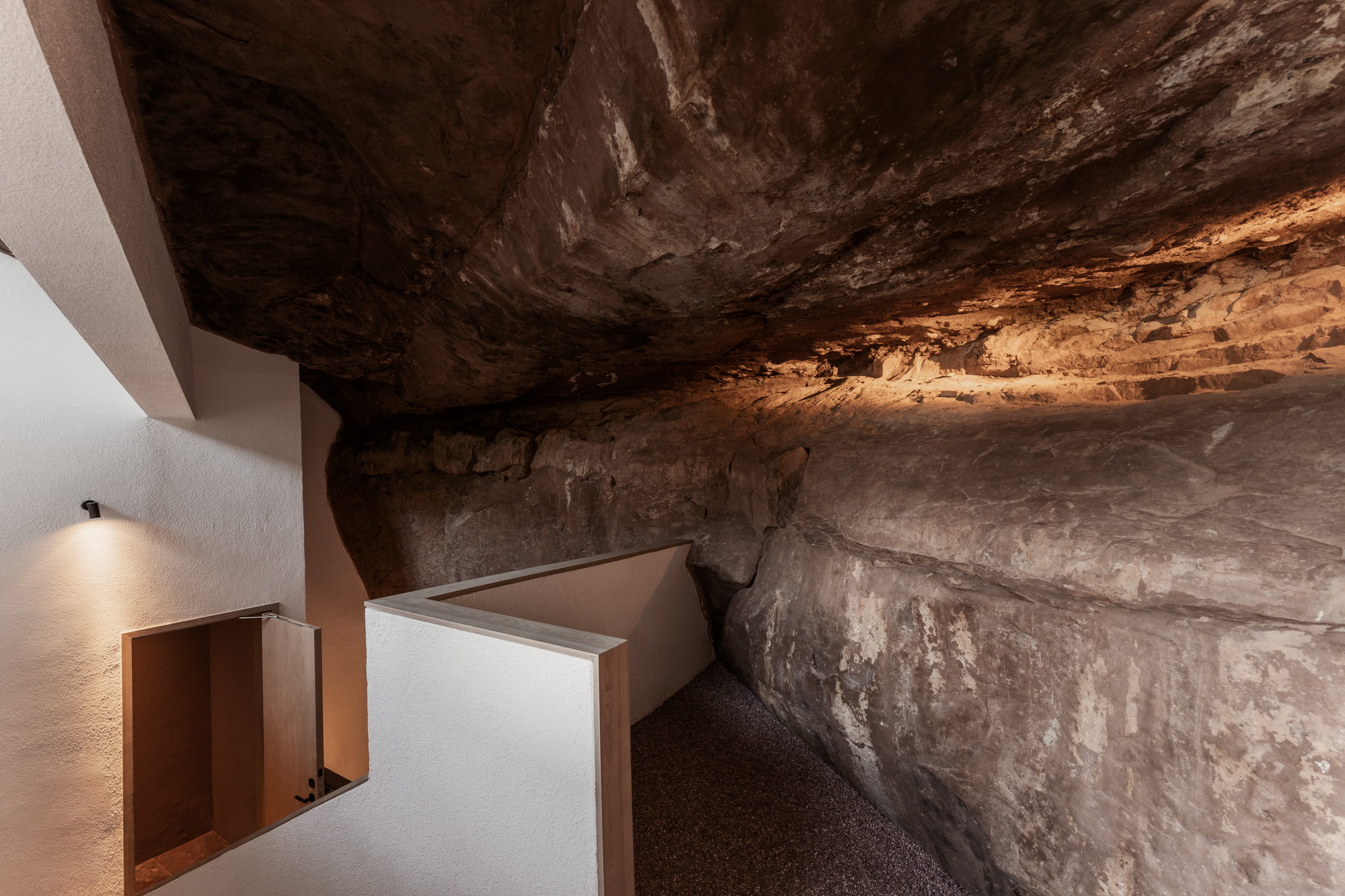
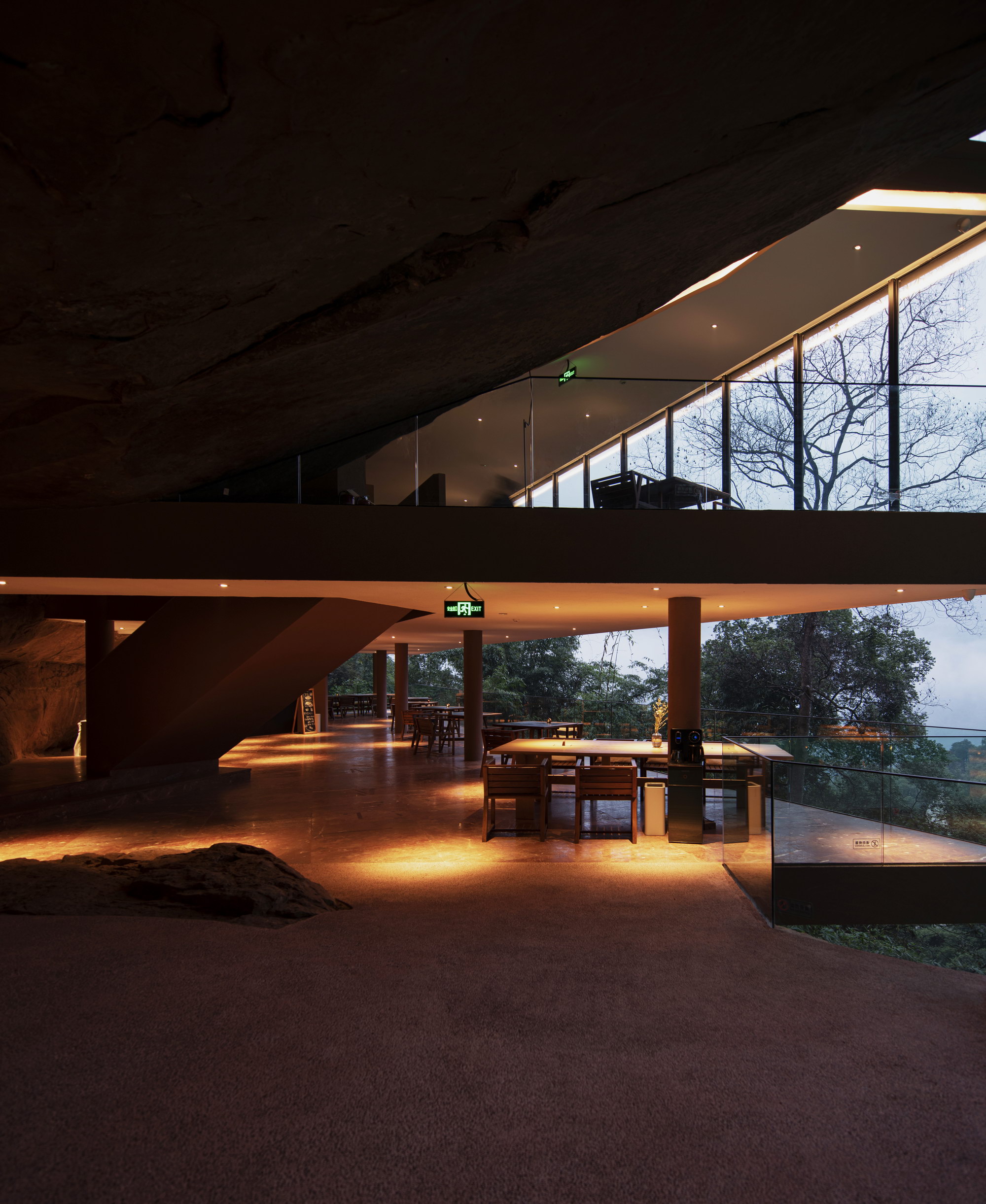
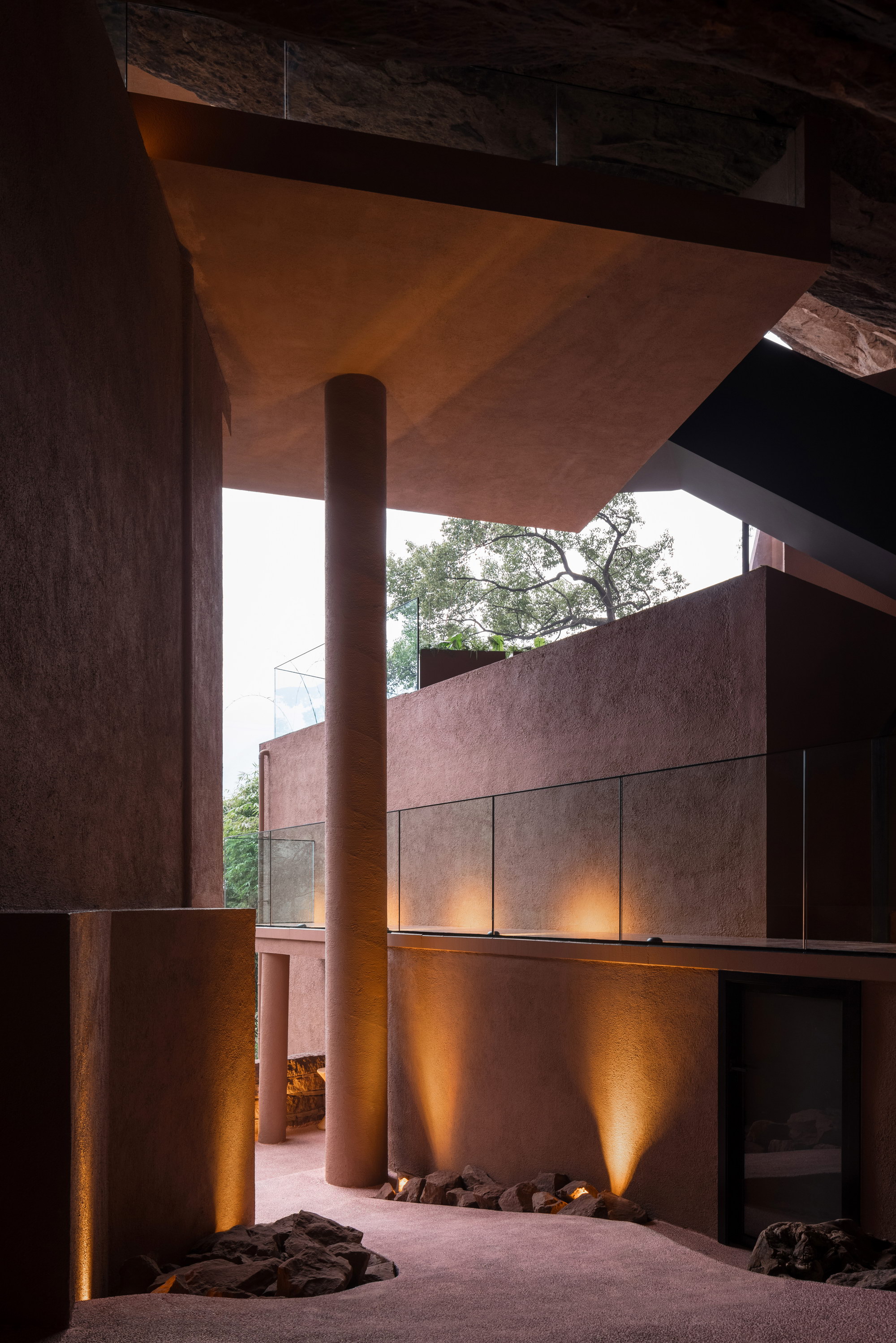
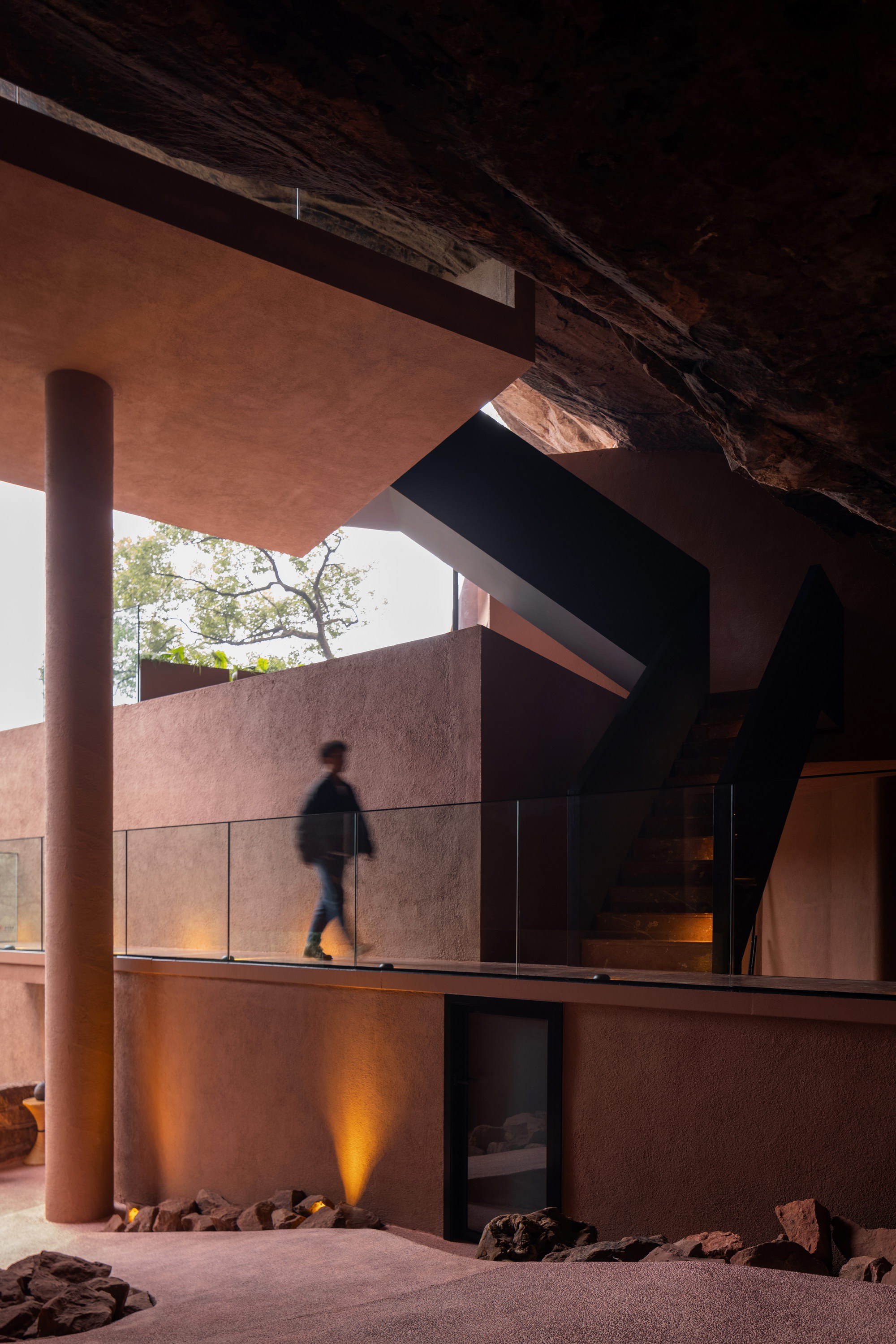
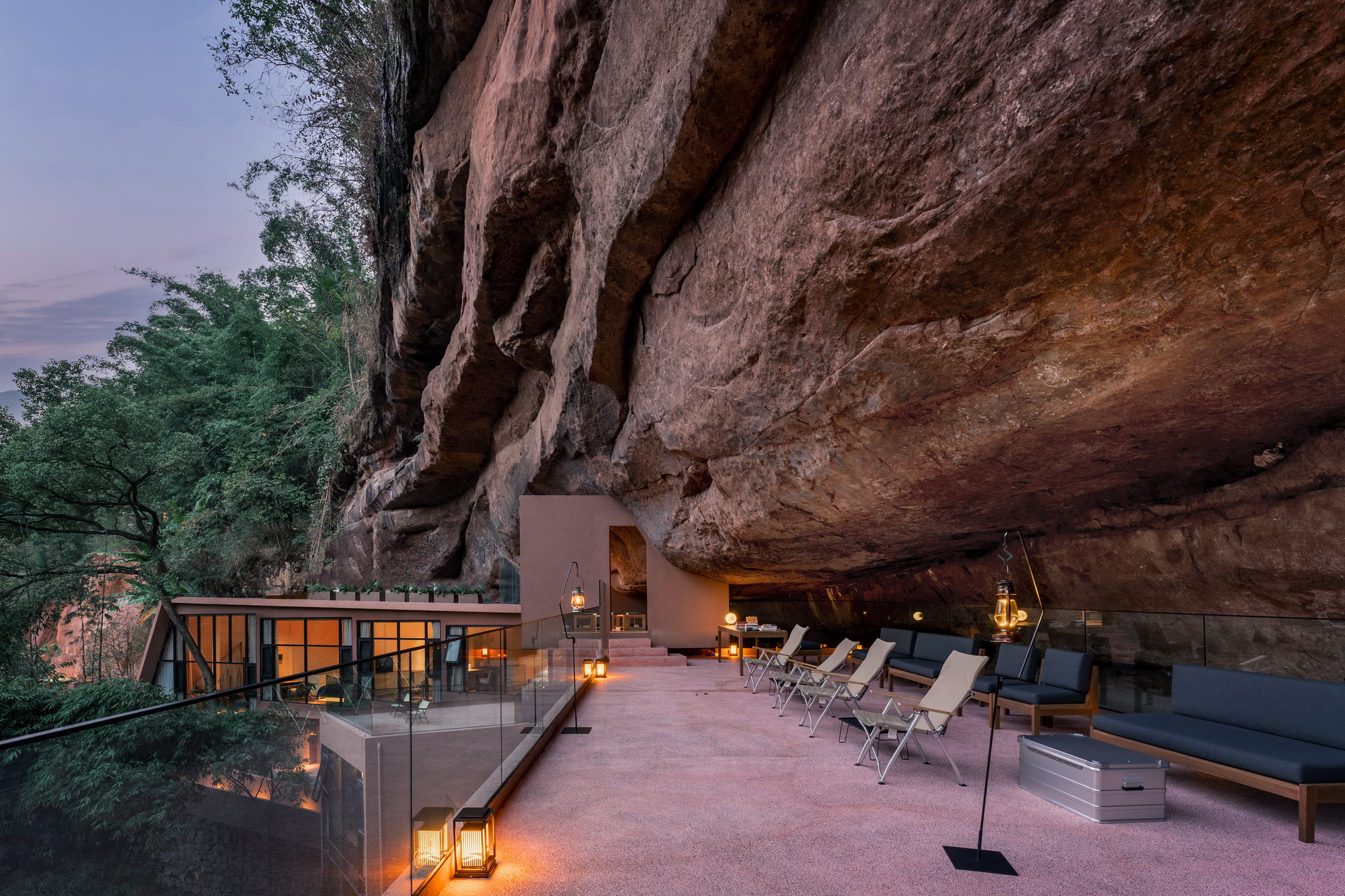
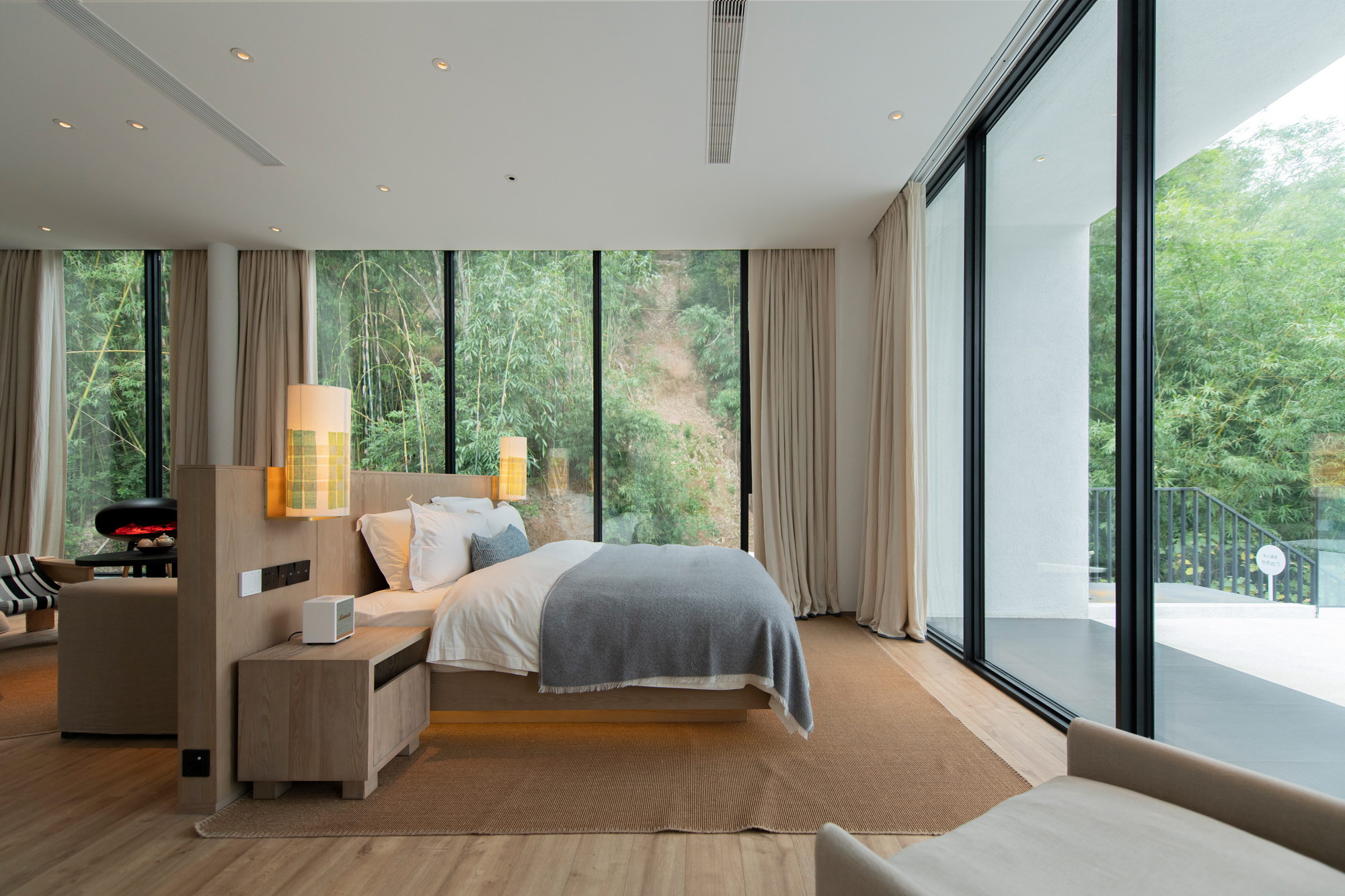
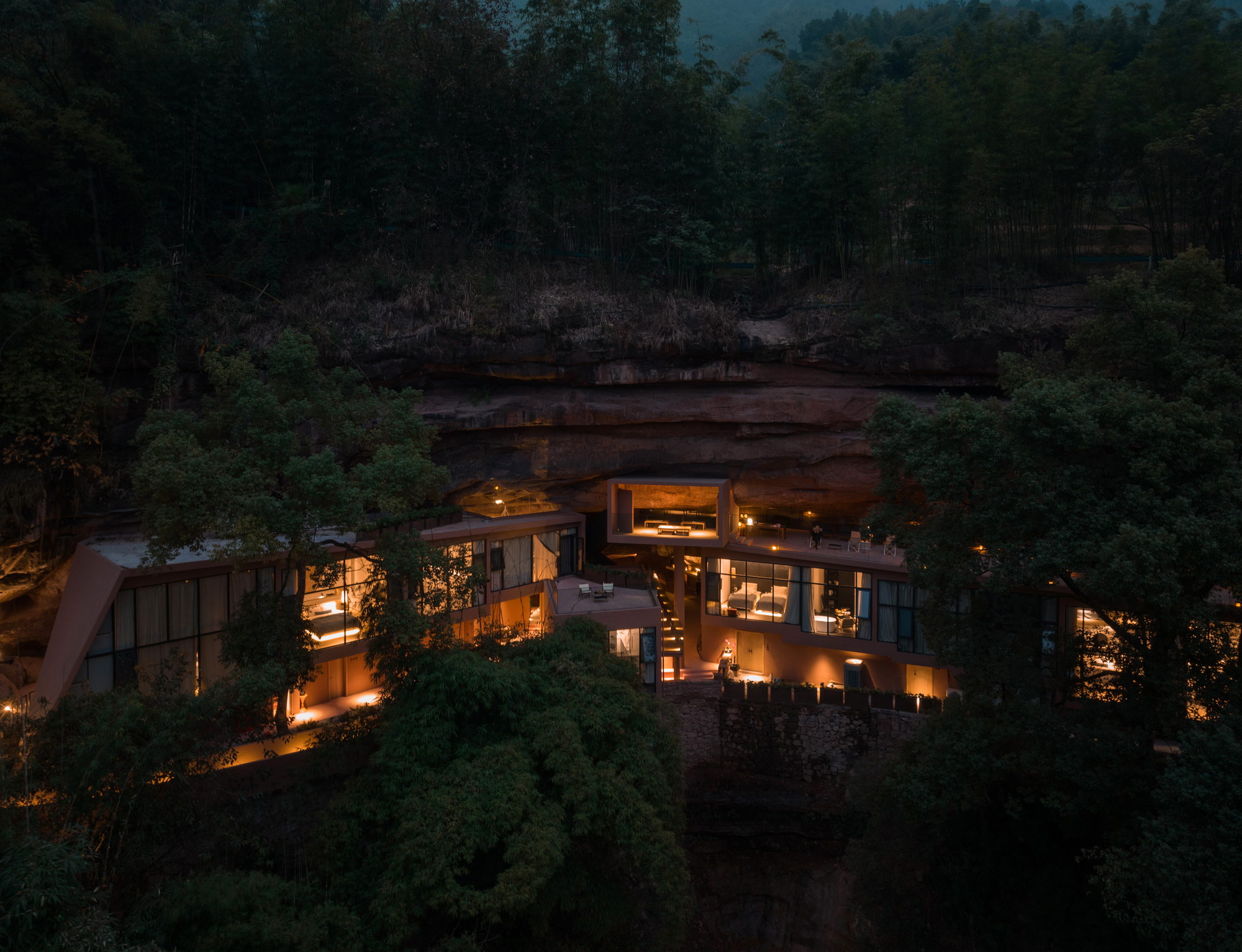
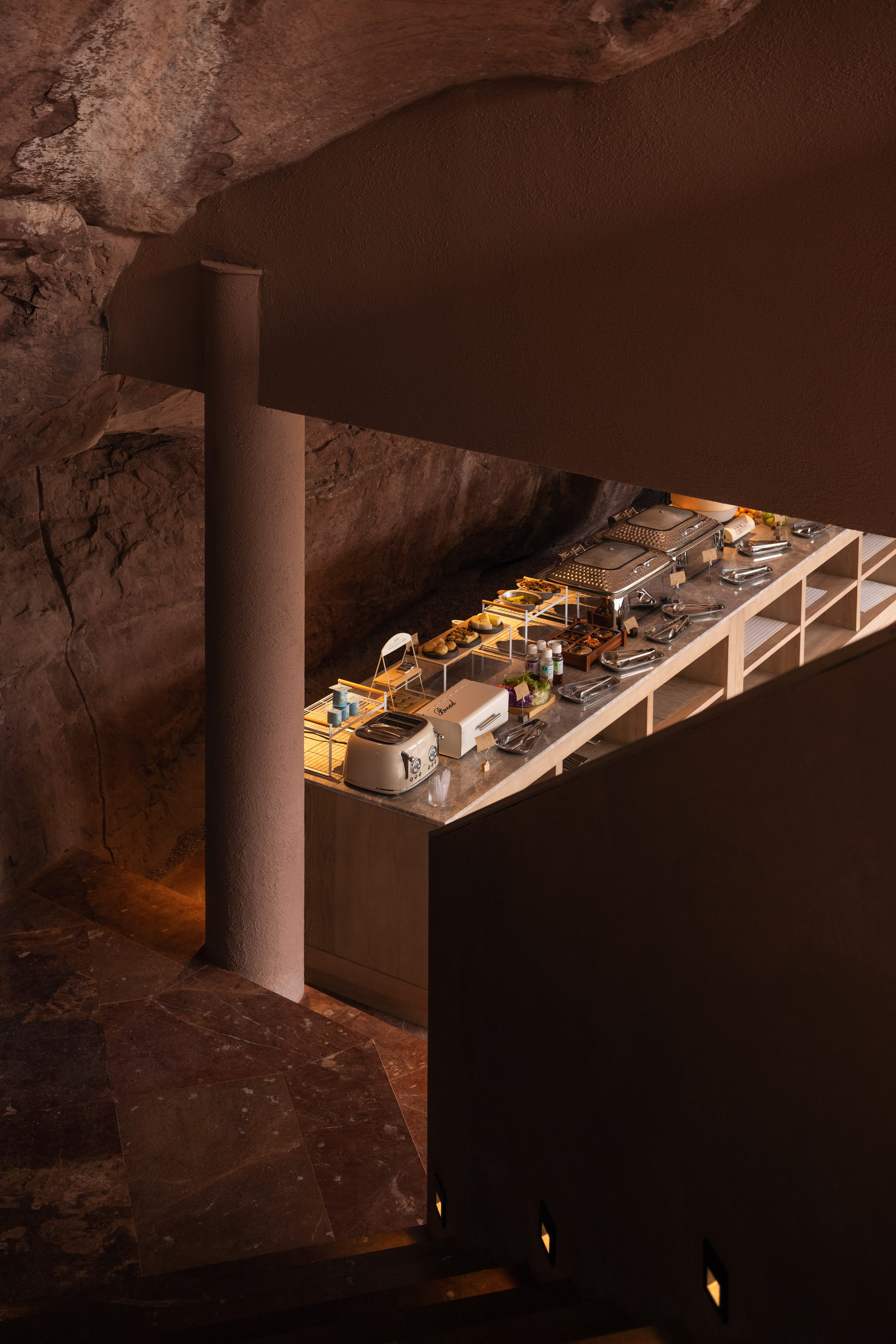
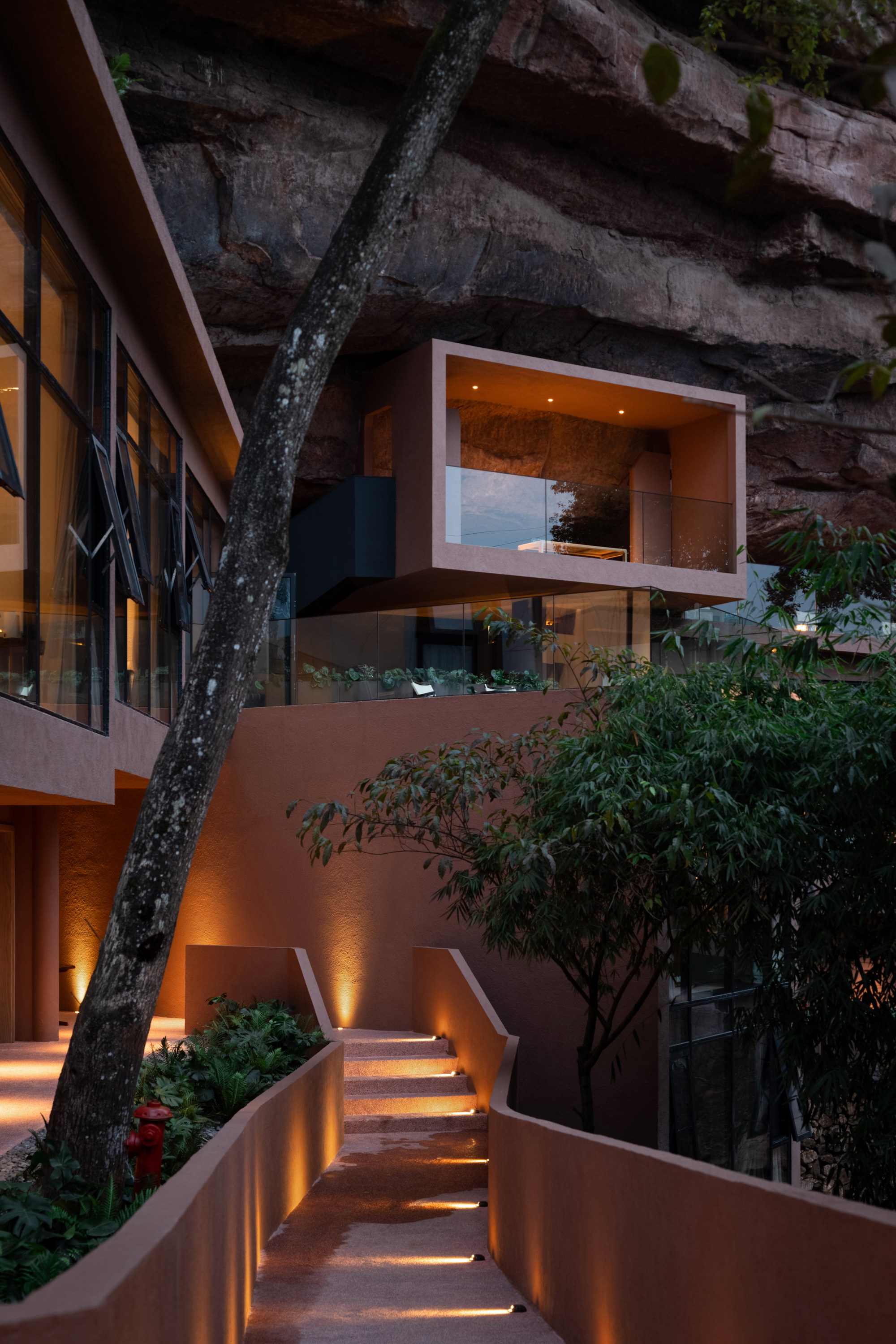
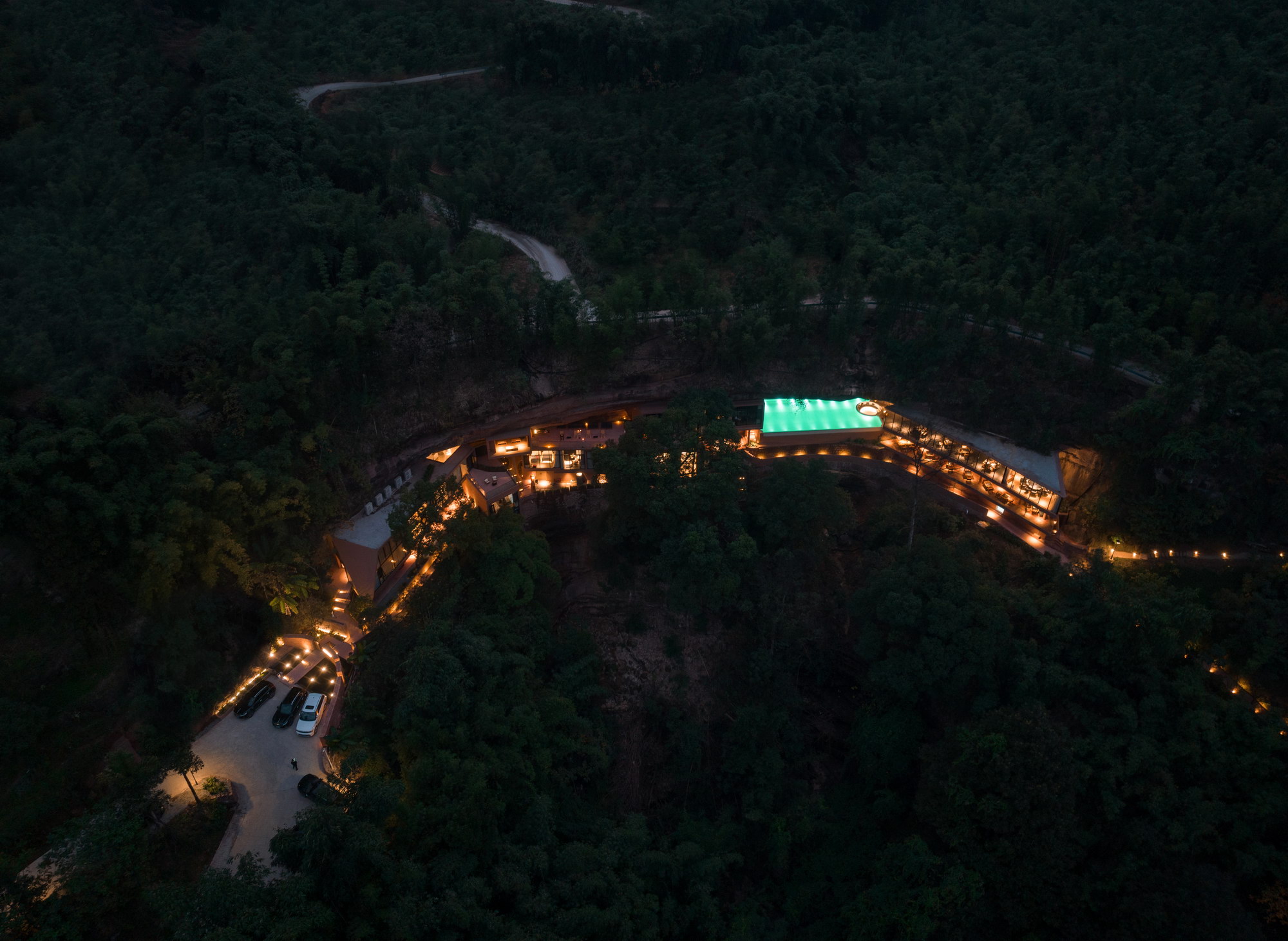
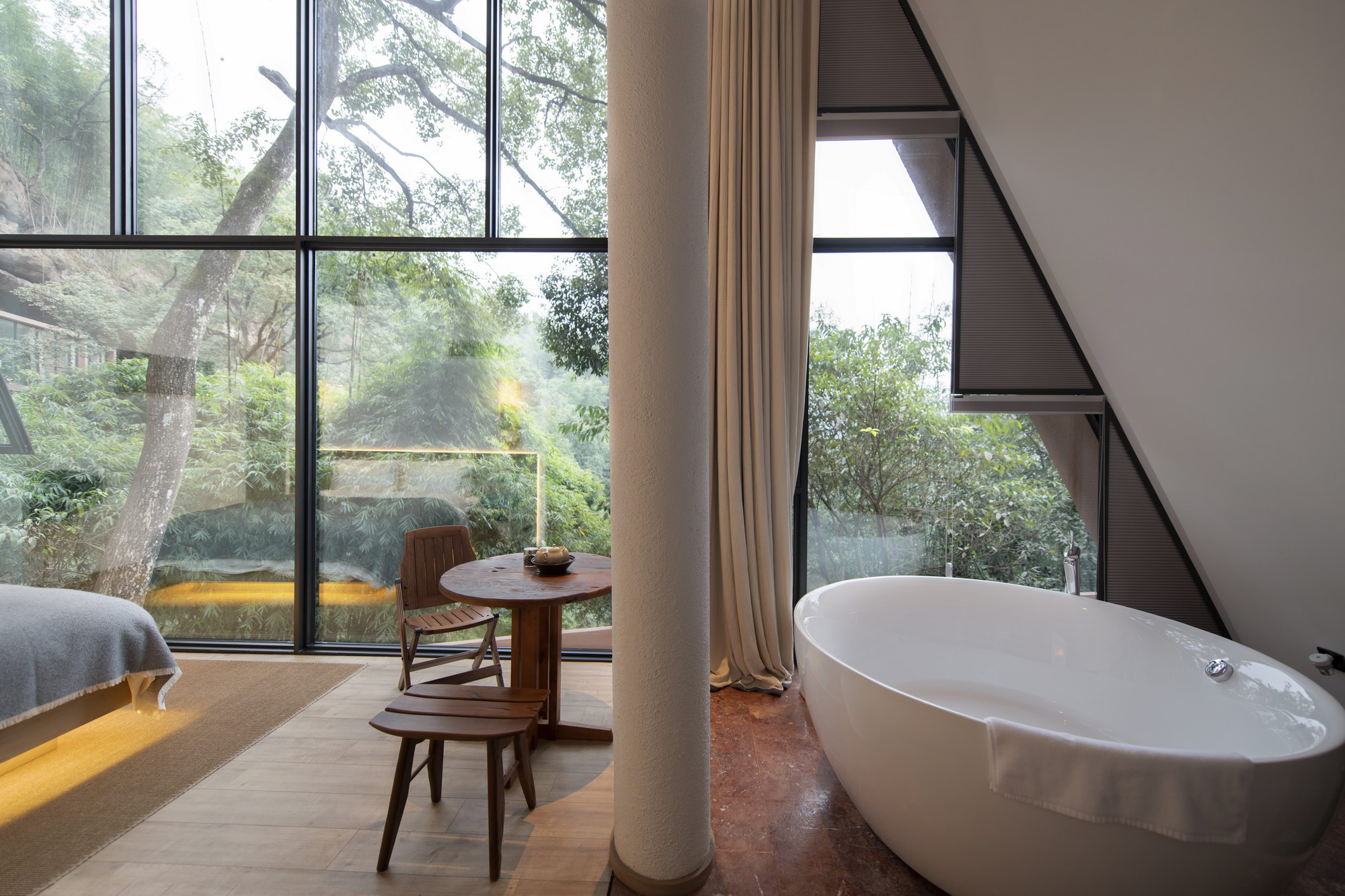
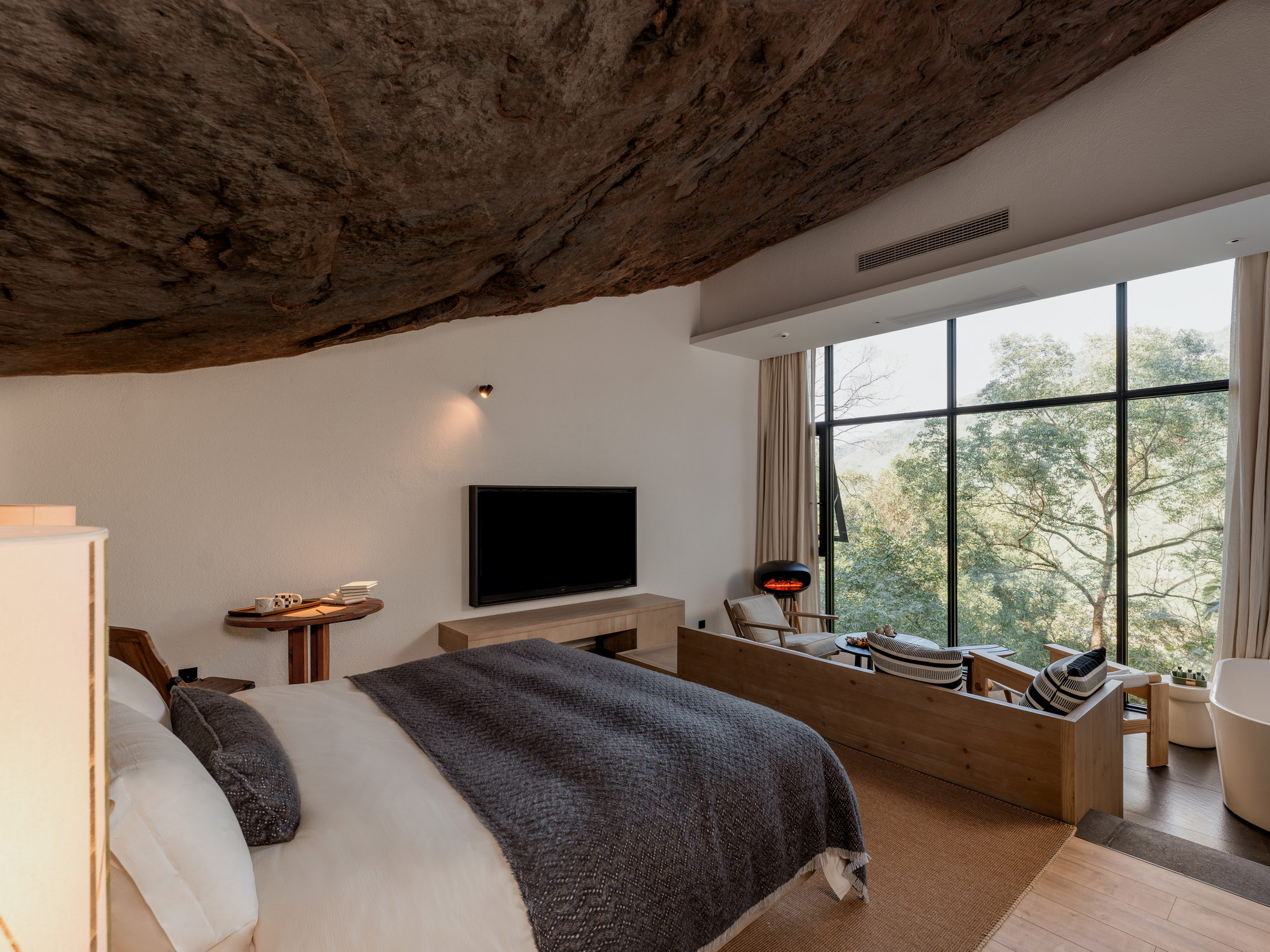
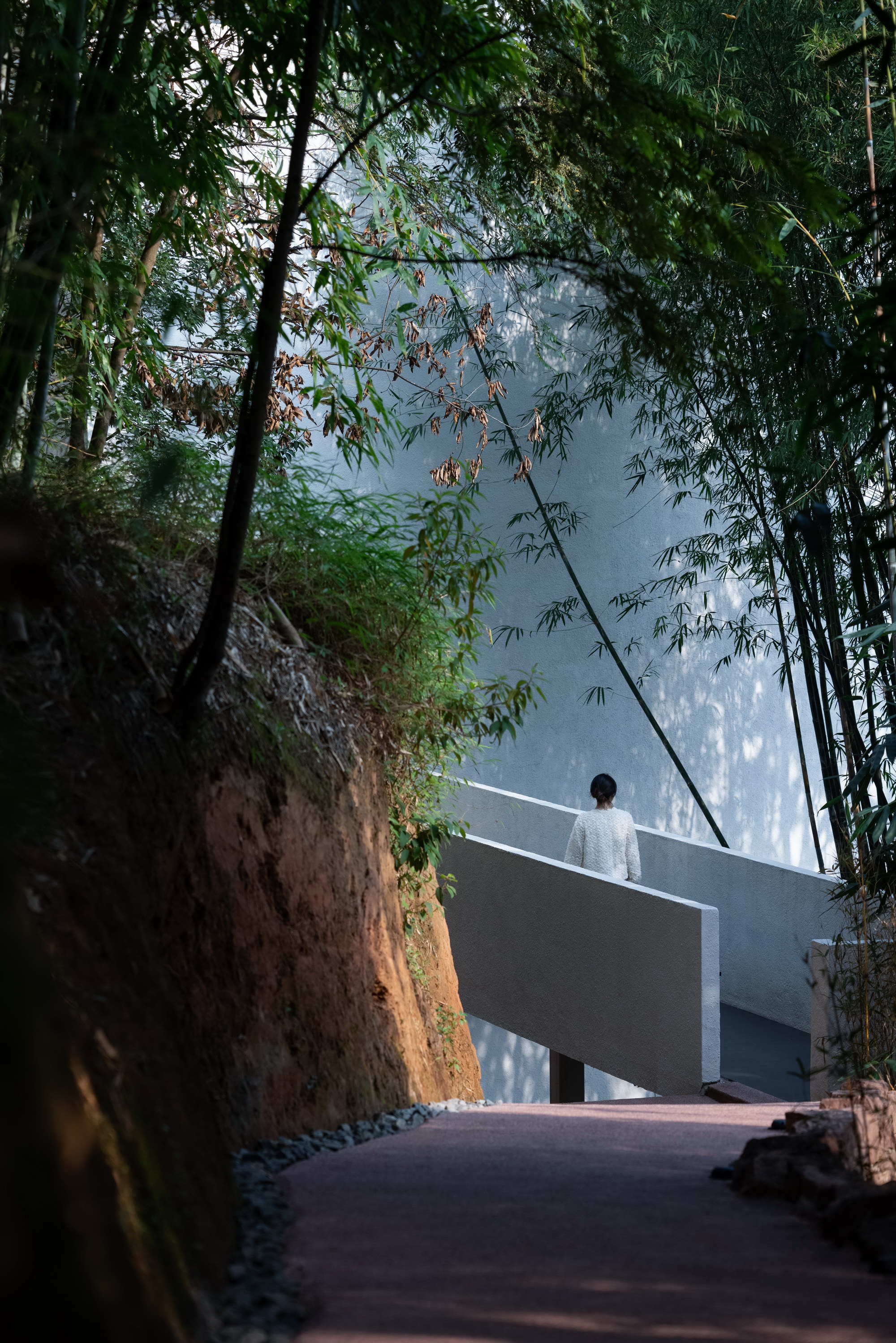
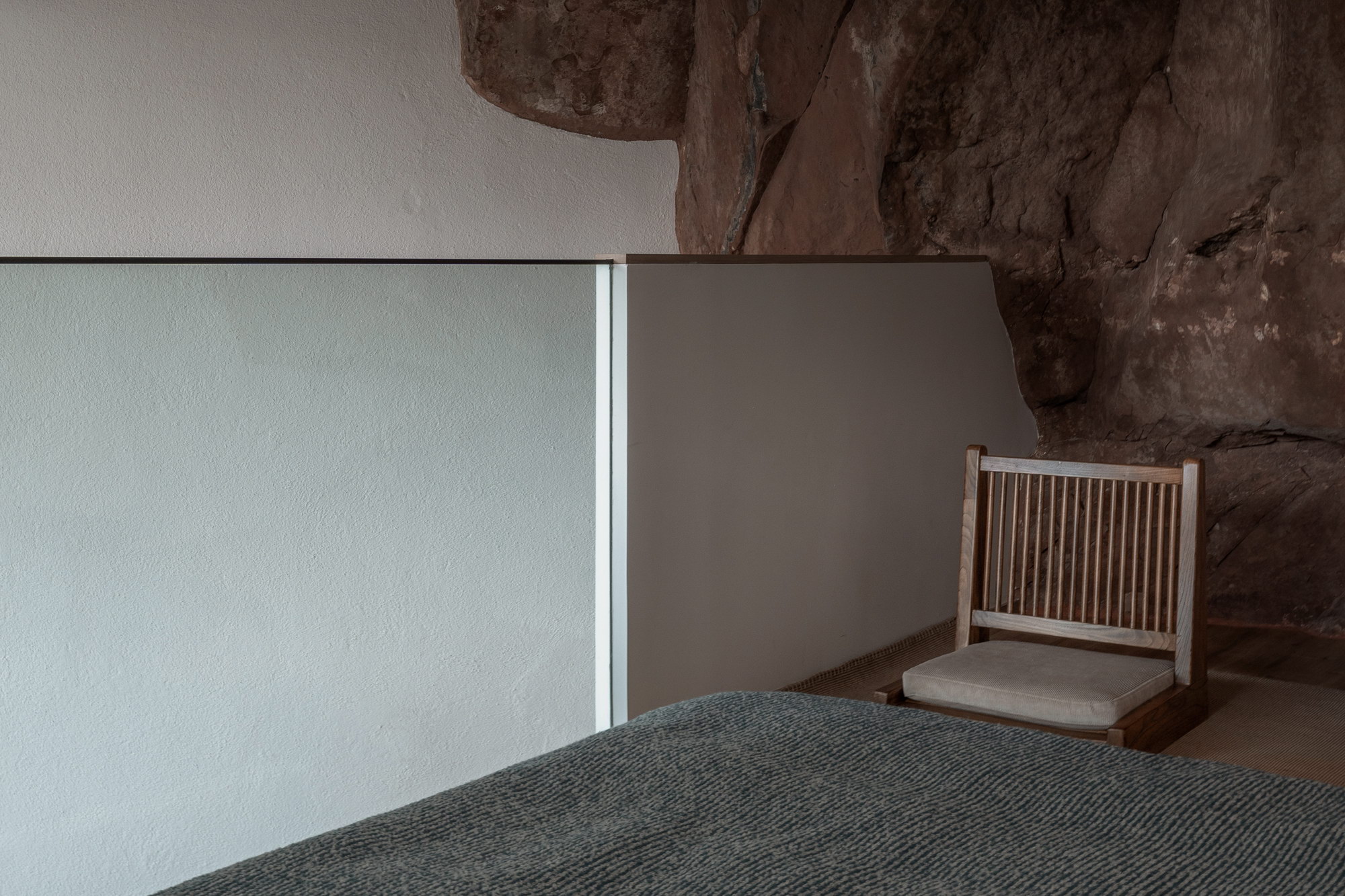
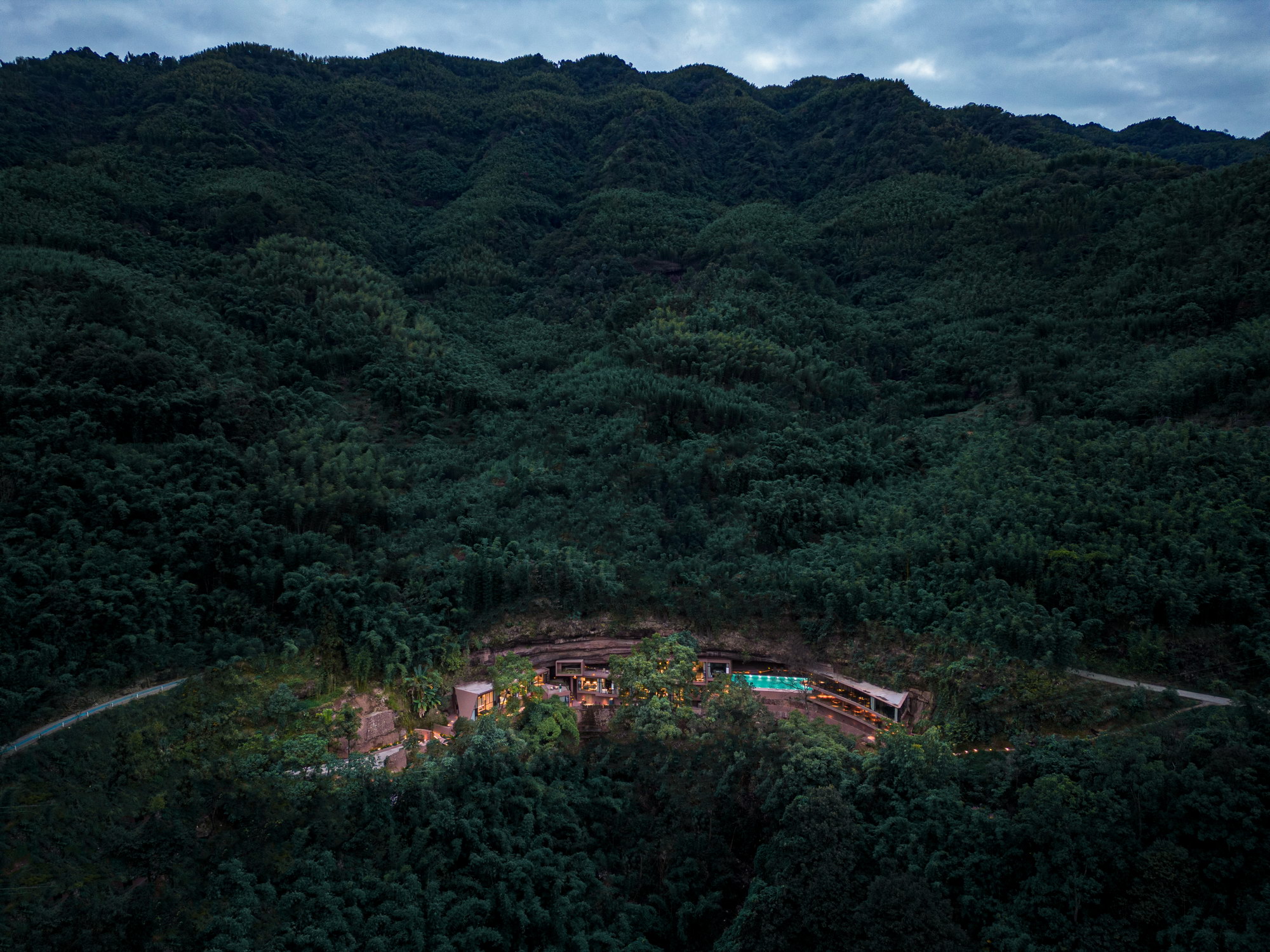
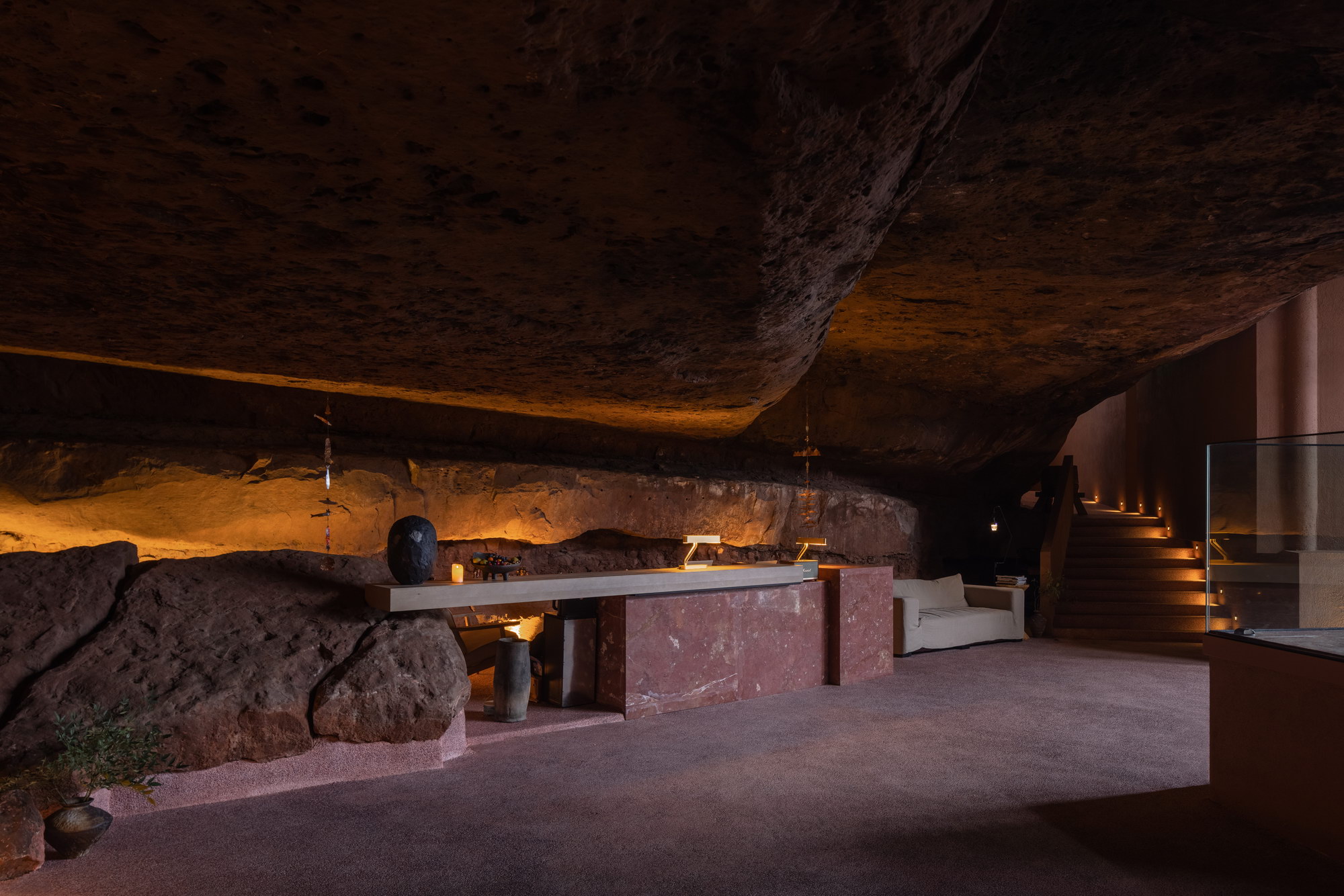
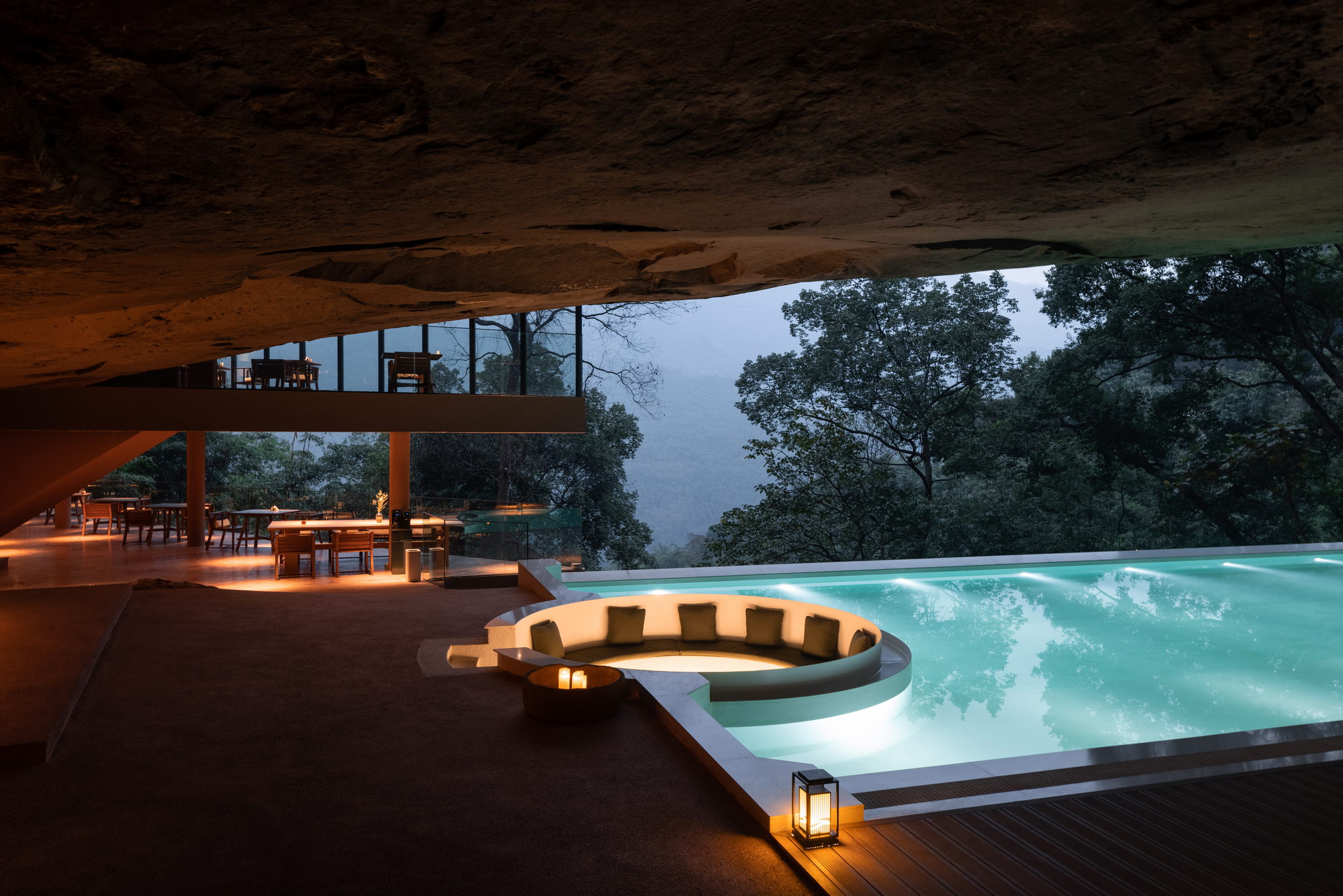
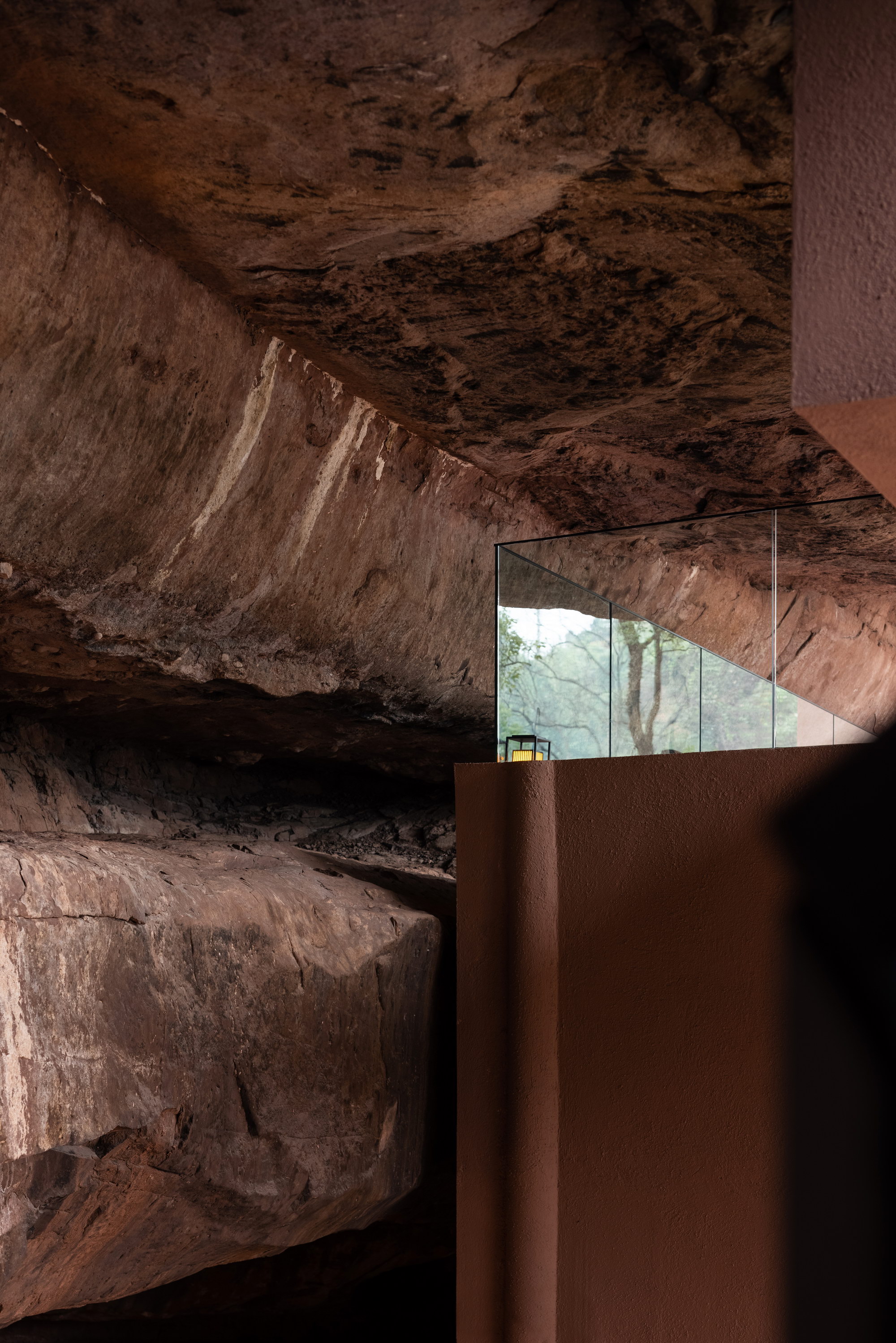
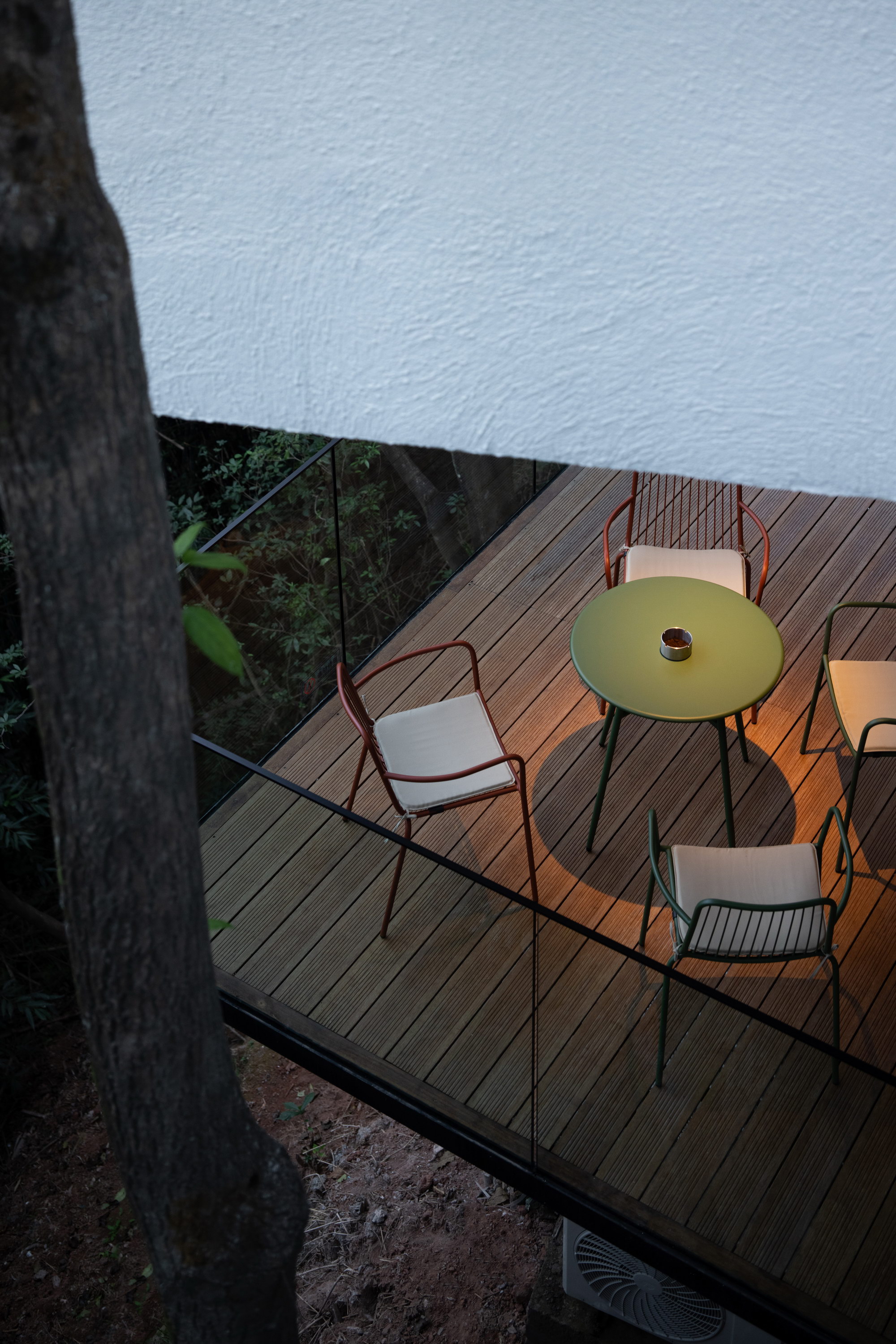
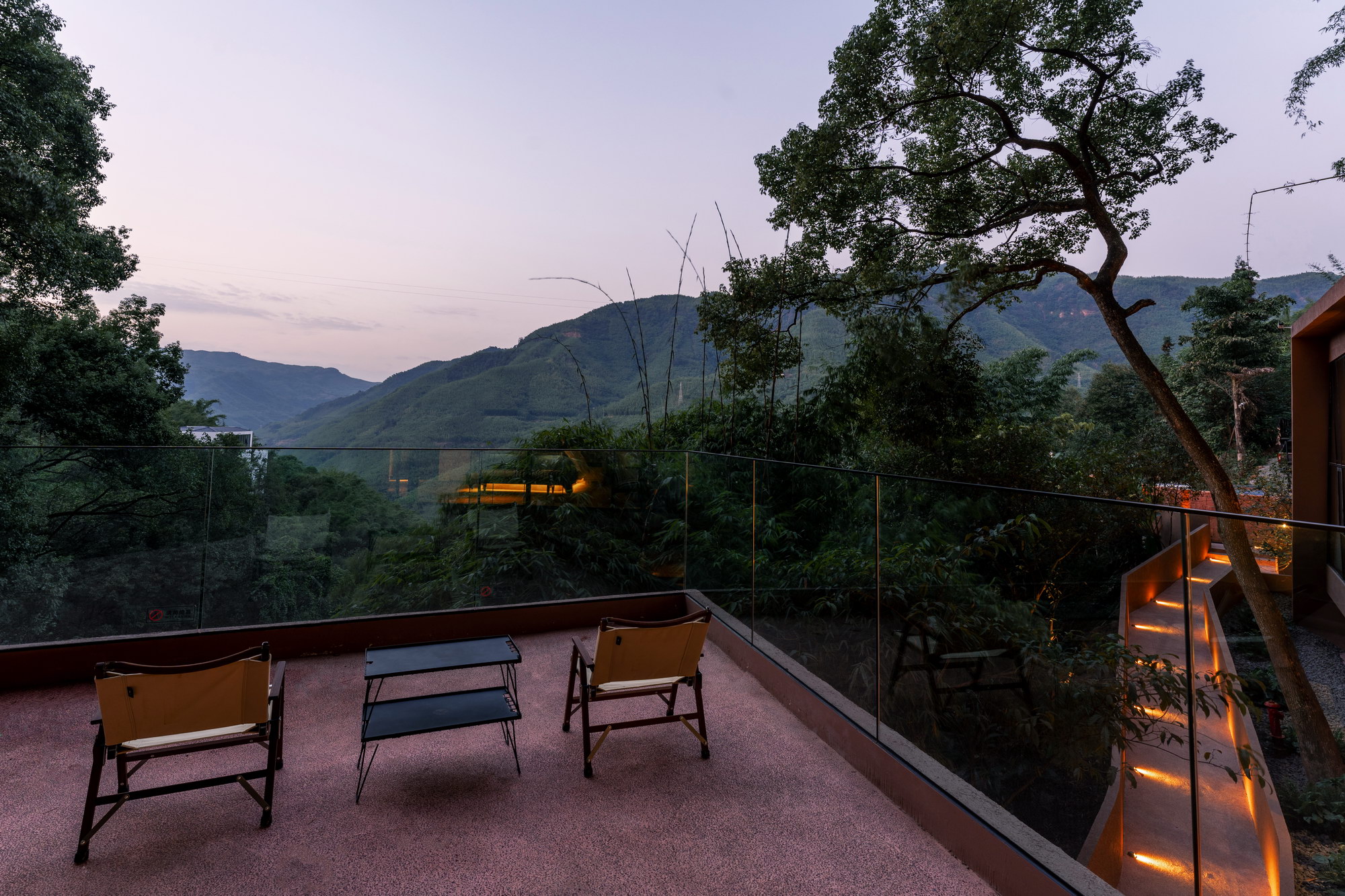
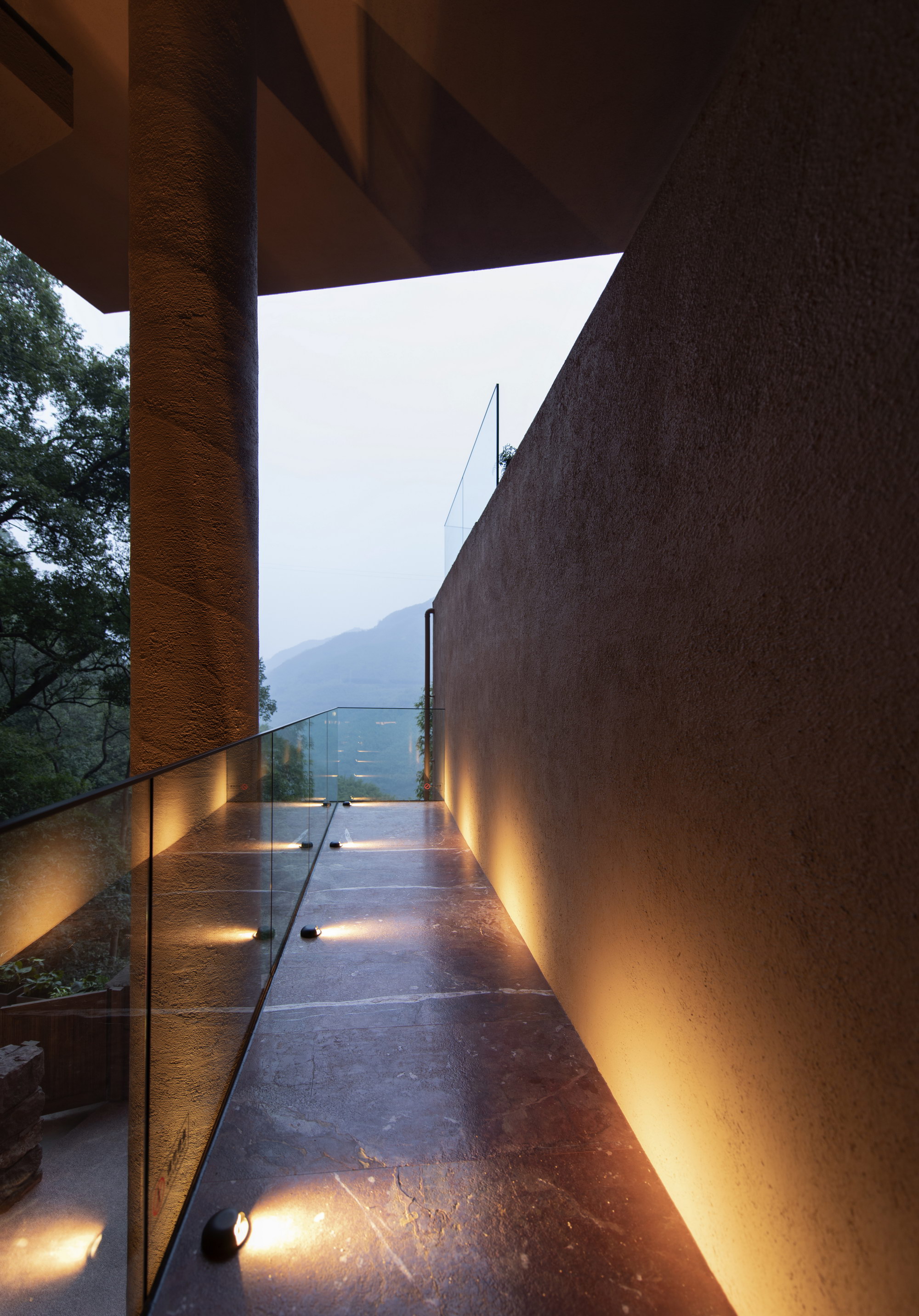
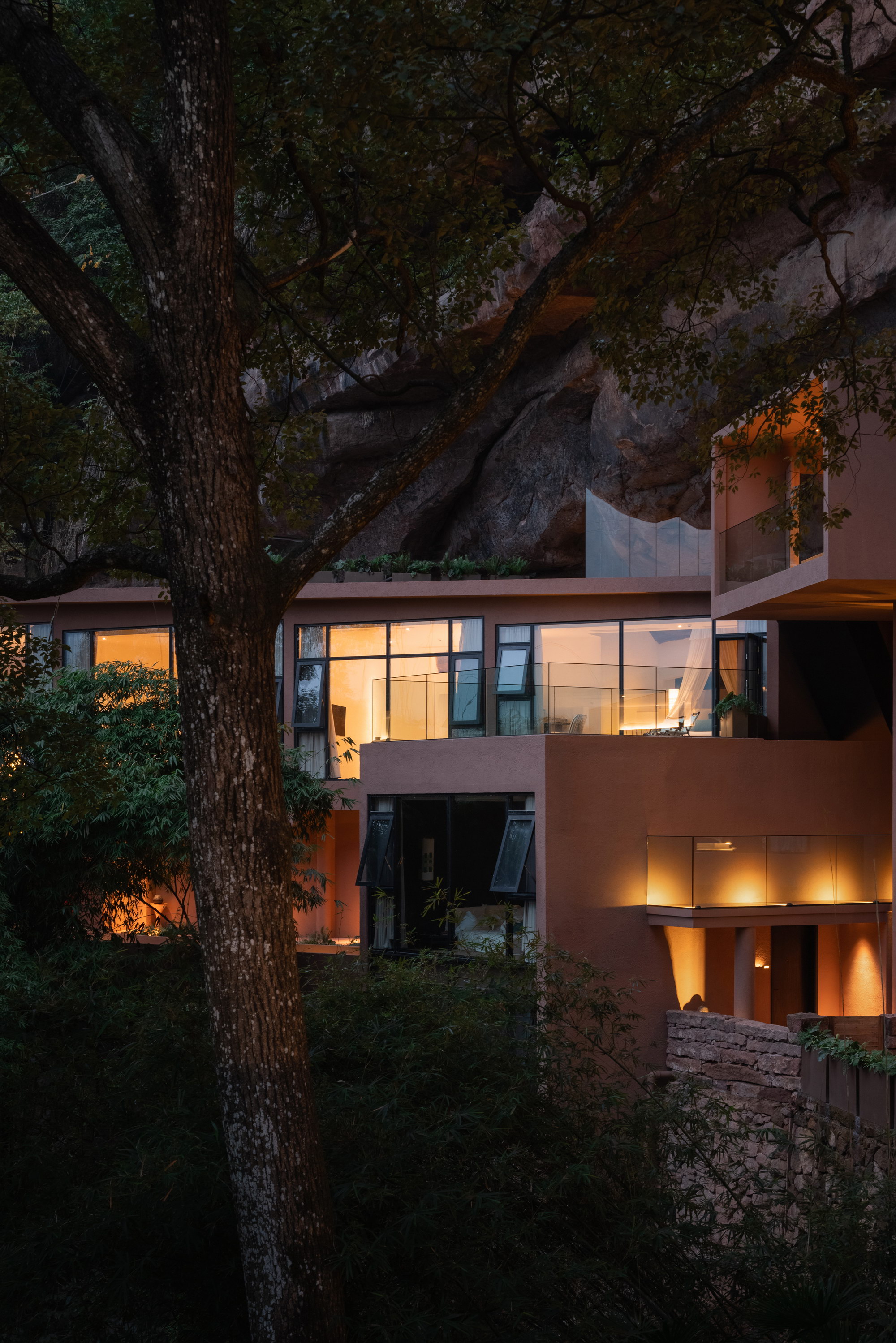
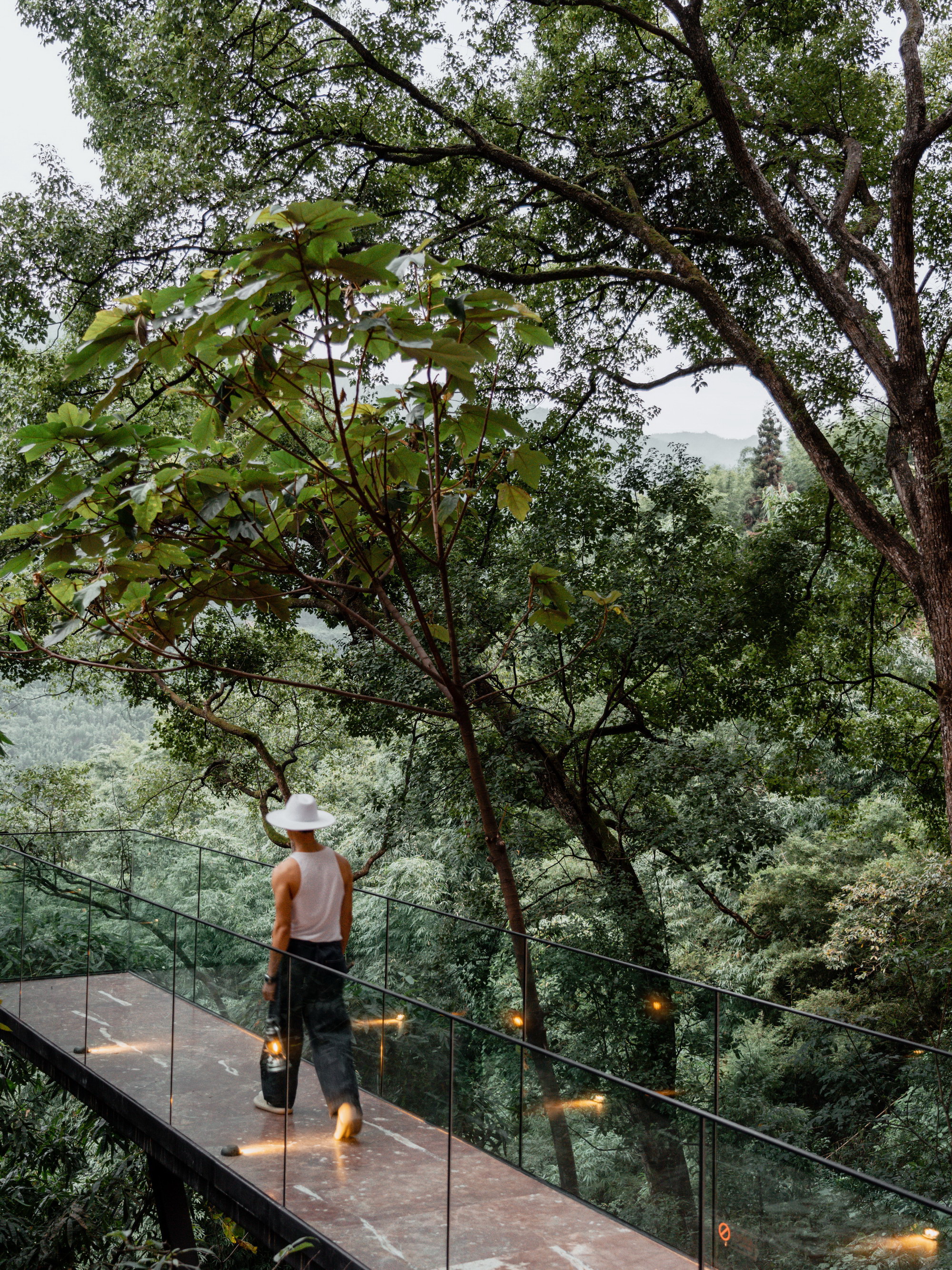
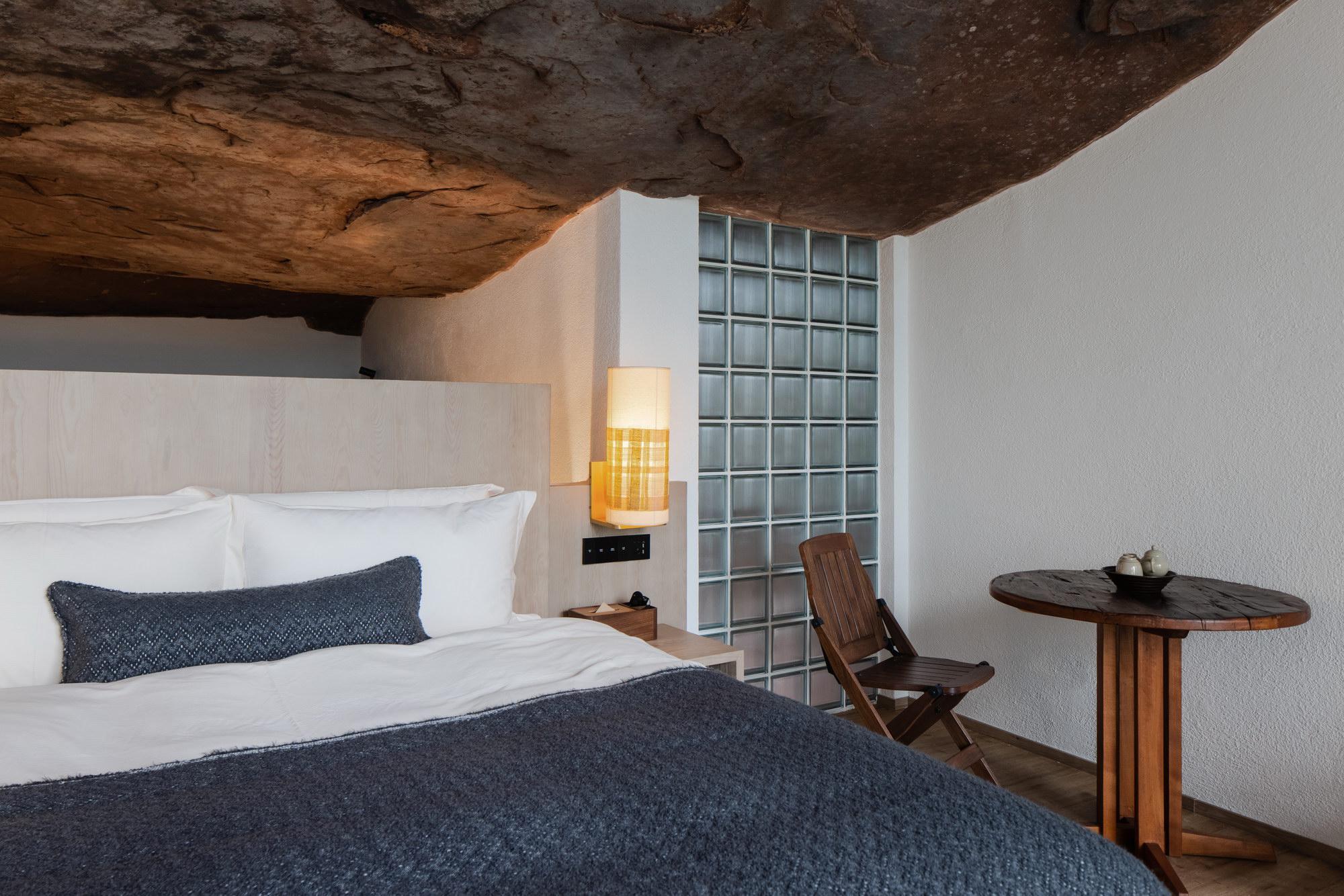
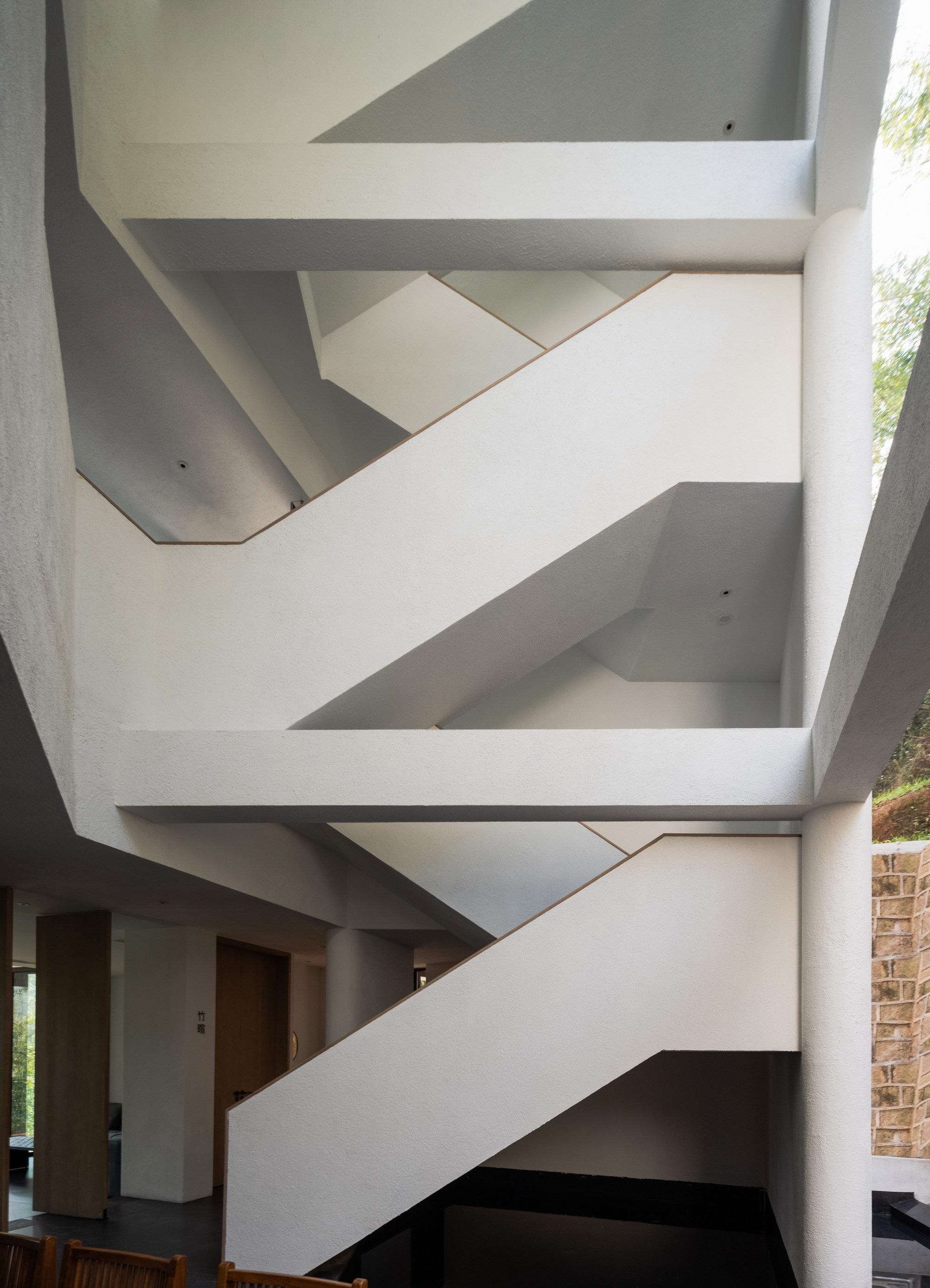
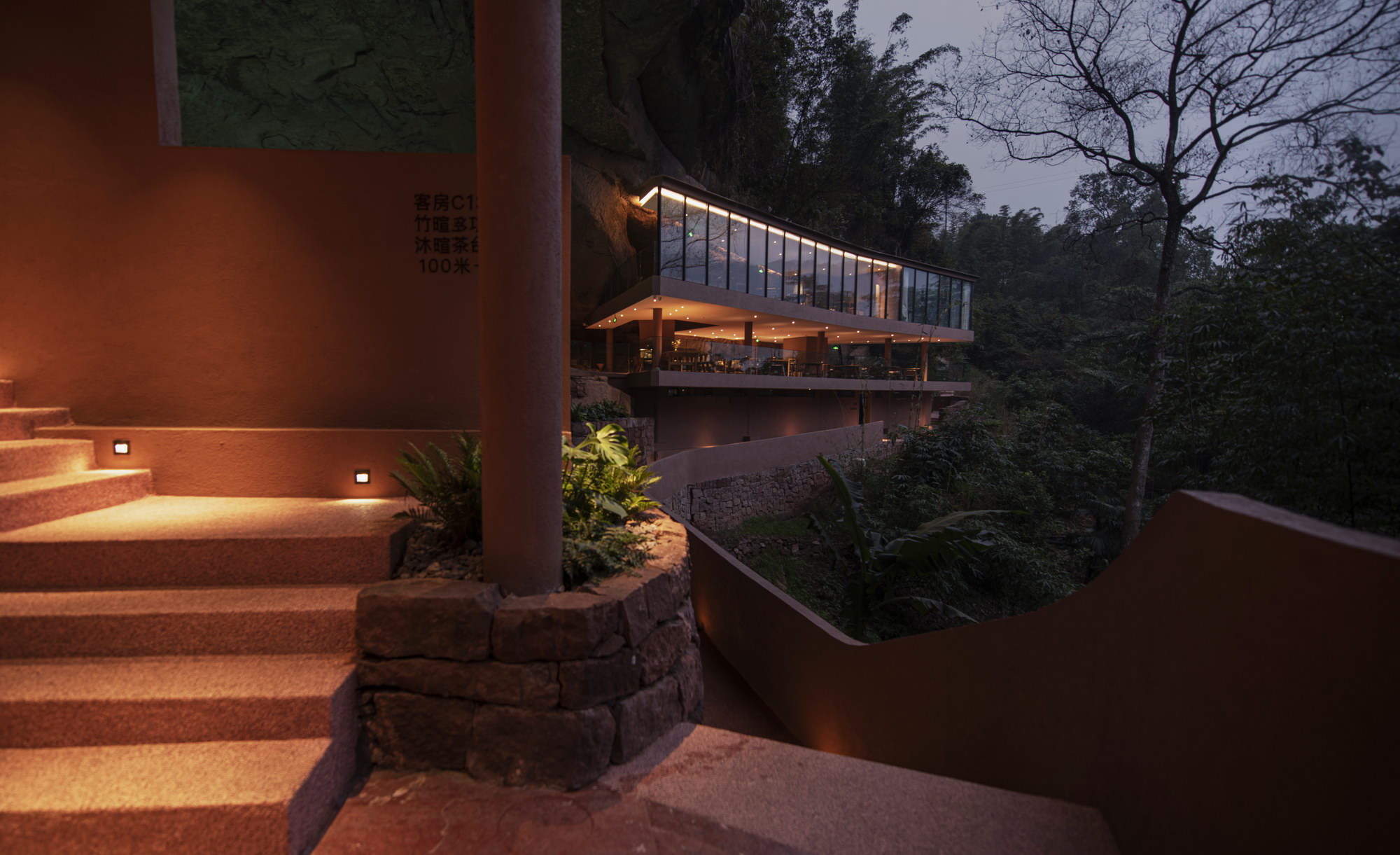
Jianglu Cave Hotel, named Yaluigu, literally I miss you, transliterated from the local Tujia dialect, tucks into a cliffside cave among bamboo groves in Chishui, Guizhou, designed by S plus P Studio of Poetic Space with Liu Zongya, Zhou Danlin and Wang Bing for client Jianglu. The project celebrates a return to rural life and a distinctive dwelling: living inside the rock itself, amid the Danxia landform mountains, waterfalls, caves and bamboo forests. In addition to a conventional entry, a boardwalk winds through the bamboo directly to the lobby, separate from guest circulation, so that the path becomes a passage through a hidden world. The cave itself is treated as a fill-in-the-blank exercise: because the rock natural recesses and projections are irregular, volumes of different shapes are inserted at varied heights to produce a distinctive spatial rhythm, their colours tuned to the surrounding Danxia red sandstone. A natural circular chamber inside the cave, with the primal force of rock, becomes the lobby, evoking the ancient Chinese idea of round heaven and square earth; from here, the visitor encounters the first waterfall tumbling from the cliff, and the space acts as the junction to guest rooms, pool, restaurant and meditation room. Above the pool, a second waterfall produces a unique dining atmosphere, with the outdoor platform bringing diners close to the water and to birdsong in the bamboo. A narrow passage leads to an infinity pool, where bar, restaurant and pool are grouped to create a convivial room overlooking the valley birdsong, streams, waterfalls and trees. Guest rooms stage a dialogue between rough cave rock and modern construction: uneven, tactile rock walls form an enveloping enclosure that invites exploration. Beyond the restaurant, through a bamboo grove, sits a white hillside building, a form-and-function house whose white facade contrasts with the bamboo; a second-level walkway is added for luggage access, and on sunny days bamboo shadows drift across the white walls like a Jiangnan painting.











 Editor's Pick
 Latest Design
 Best Idea