Text description provided by the architects
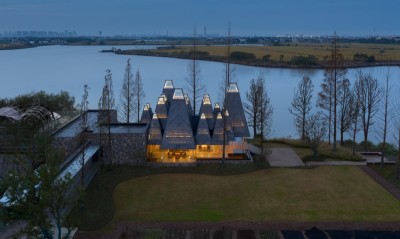
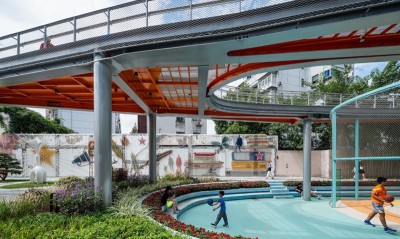
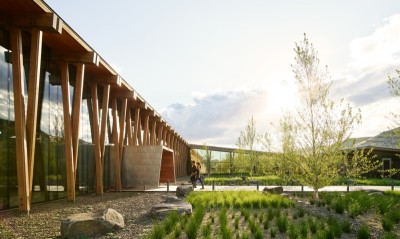
Wutopia Lab transformed an abandoned twelve-company grain-drying ground at the Dongtan Source outpost farm of Bright Food Group into the Cockaigne of Everyman, the Golden Barnyard. Standing on the derelict site among tilting granaries, equipment sheds, offices, and mottled pavement in the scorching heat, the client asked what could be made of this 8,400-square-meter, 220-meter-long drying ground. The designer was disoriented by unfamiliarity and the loss of the previous line of poetry. The grain-drying ground had existed in the designer's own life only briefly, during high-school agricultural training, when harvested rice was piled on the drying ground; the students did little yet were exhausted, lying sprawling on the ground or rice piles, panting and hungry. It recalled Pieter Bruegel the Elder's Land of Cockaigne, which depicts the medieval European dream of a place where no work is needed, food and drink pile up like mountains, and wine flows like a sea. On the last night, with a campfire and performances, the students ate all the food they had saved for a month and drank for the first time, shouting and singing out of tune because they knew they would escape the dull, exhausting agricultural life the next day. It was the designer's first drunkenness, and it recalled Bruegel's Fight Between Carnival and Lent, the unadorned, brief, self-forgetful joy and reckless innocence. The original purpose of agricultural training was to build endurance through hardship, but inwardly it forged a simple life goal: study hard or make money, never fall so low. The brief carnival on the drying ground became a directive that the future should allow such indulgent celebration in any urban space at any time. Looking back at fifty, the designer feels ashamed, because no such reckless, guilt-free moment has recurred. The drying ground was functional for crop processing, economic for work-point calculation, social for gossip and gatherings, ritual for formal events and open-air cinema, even private for dates, and public as the plaza of a company or village, but never spiritual. Its expression was always simple and direct. The designer therefore chose gold to symbolize a drying ground covered with harvest, an endless festival of abundance, hoping that Cockaigne would be a place of eternal leisure, superabundant food, and edible architecture: paradise.




 Editor's Pick
 Latest Design