Text description provided by the architects
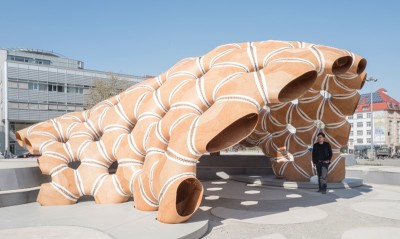
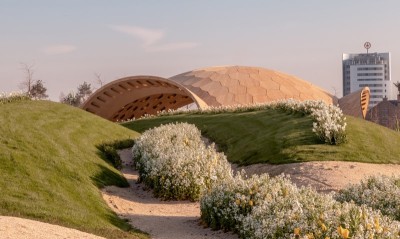
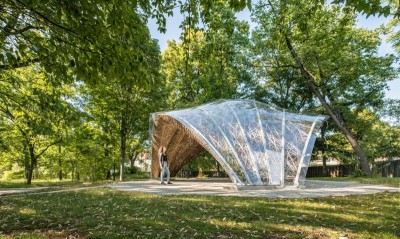
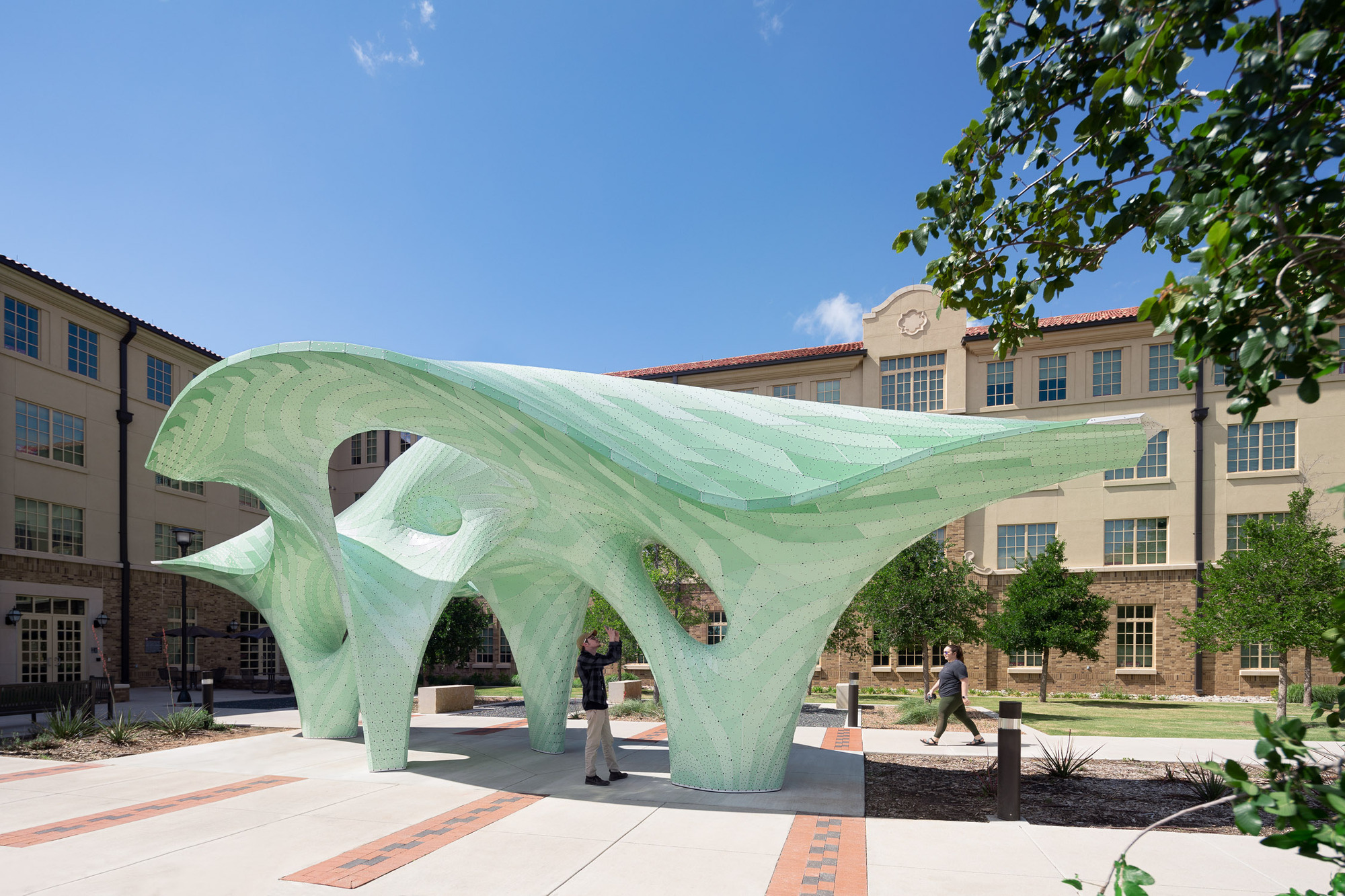
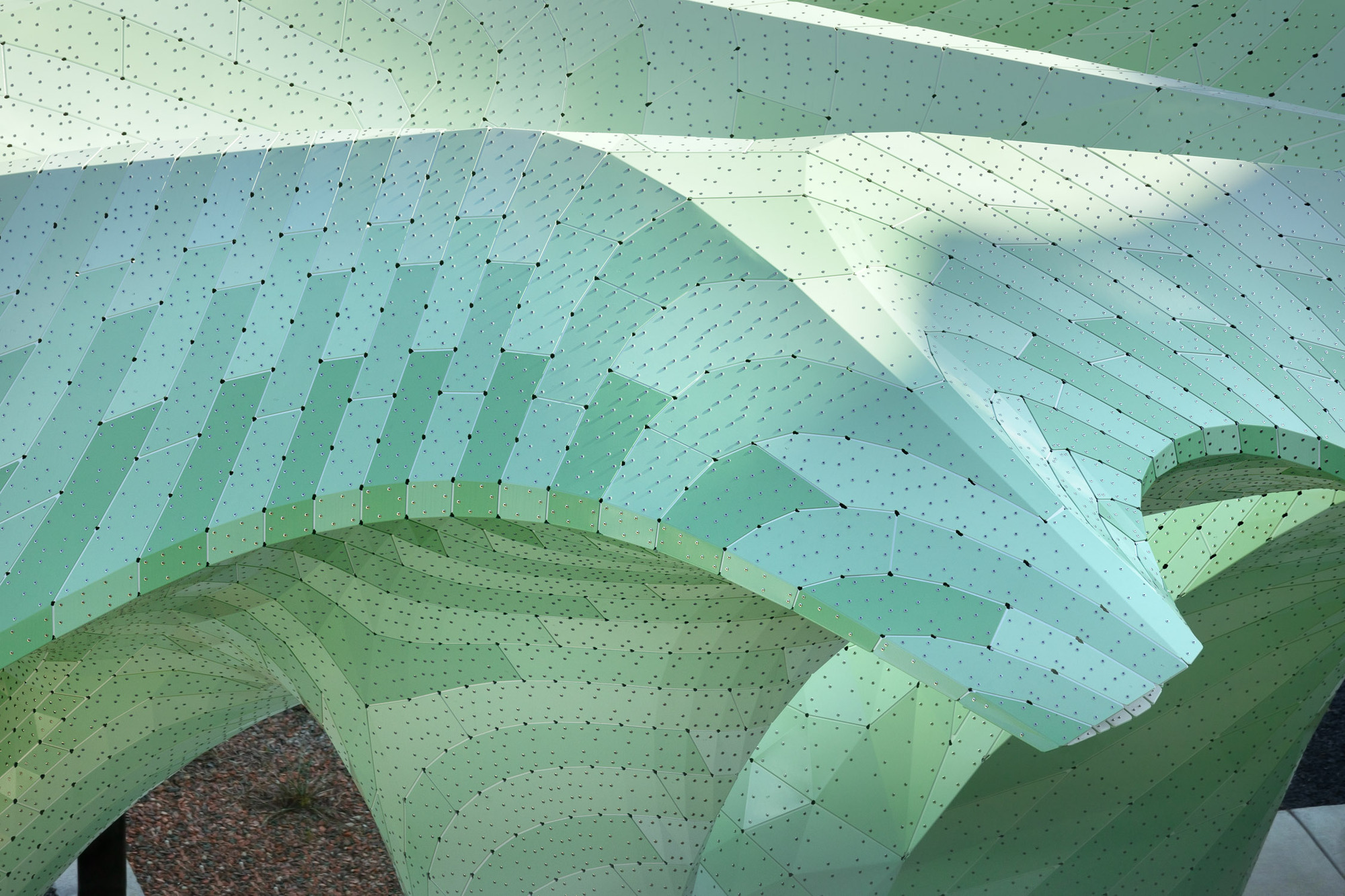
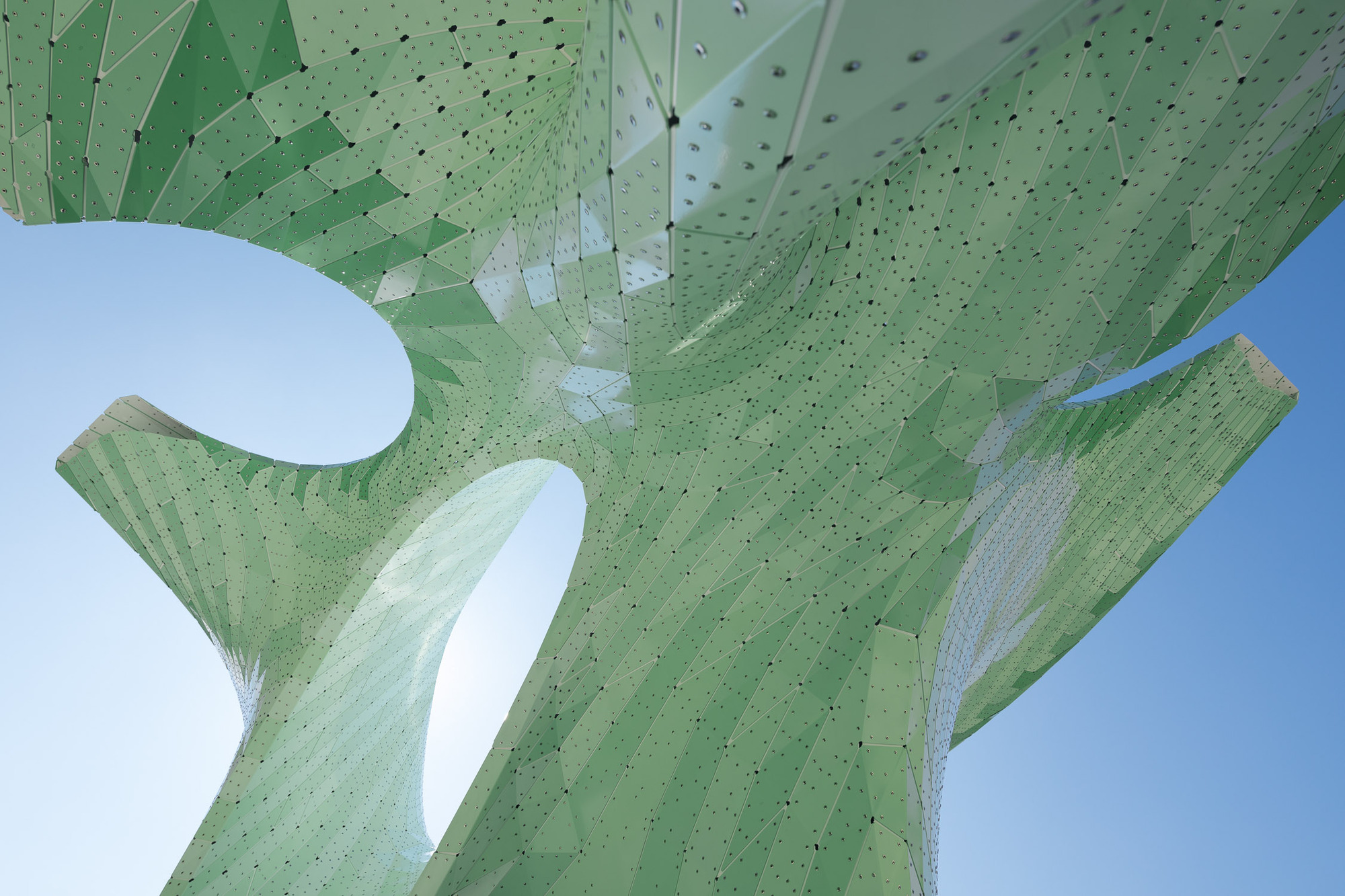
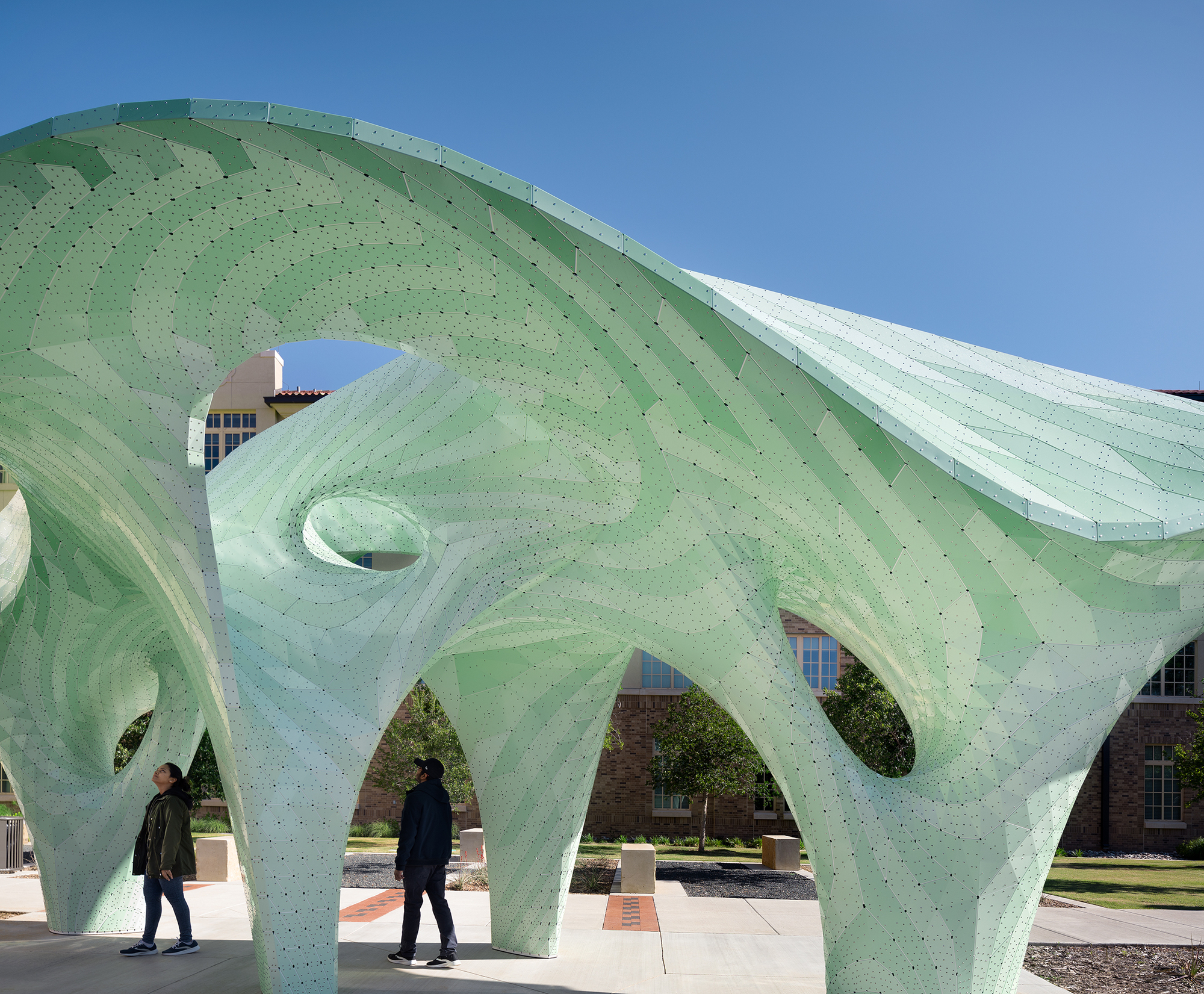
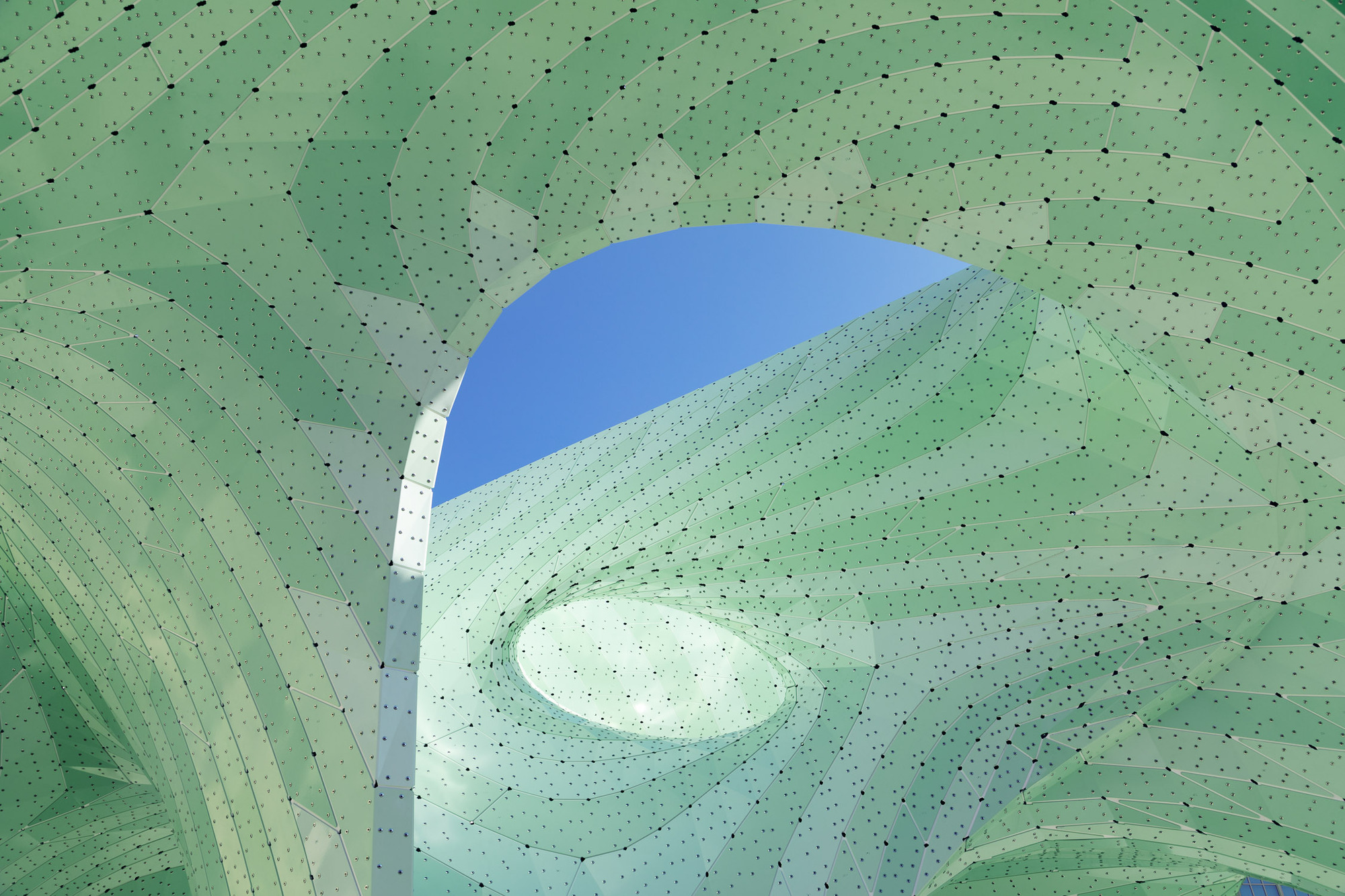
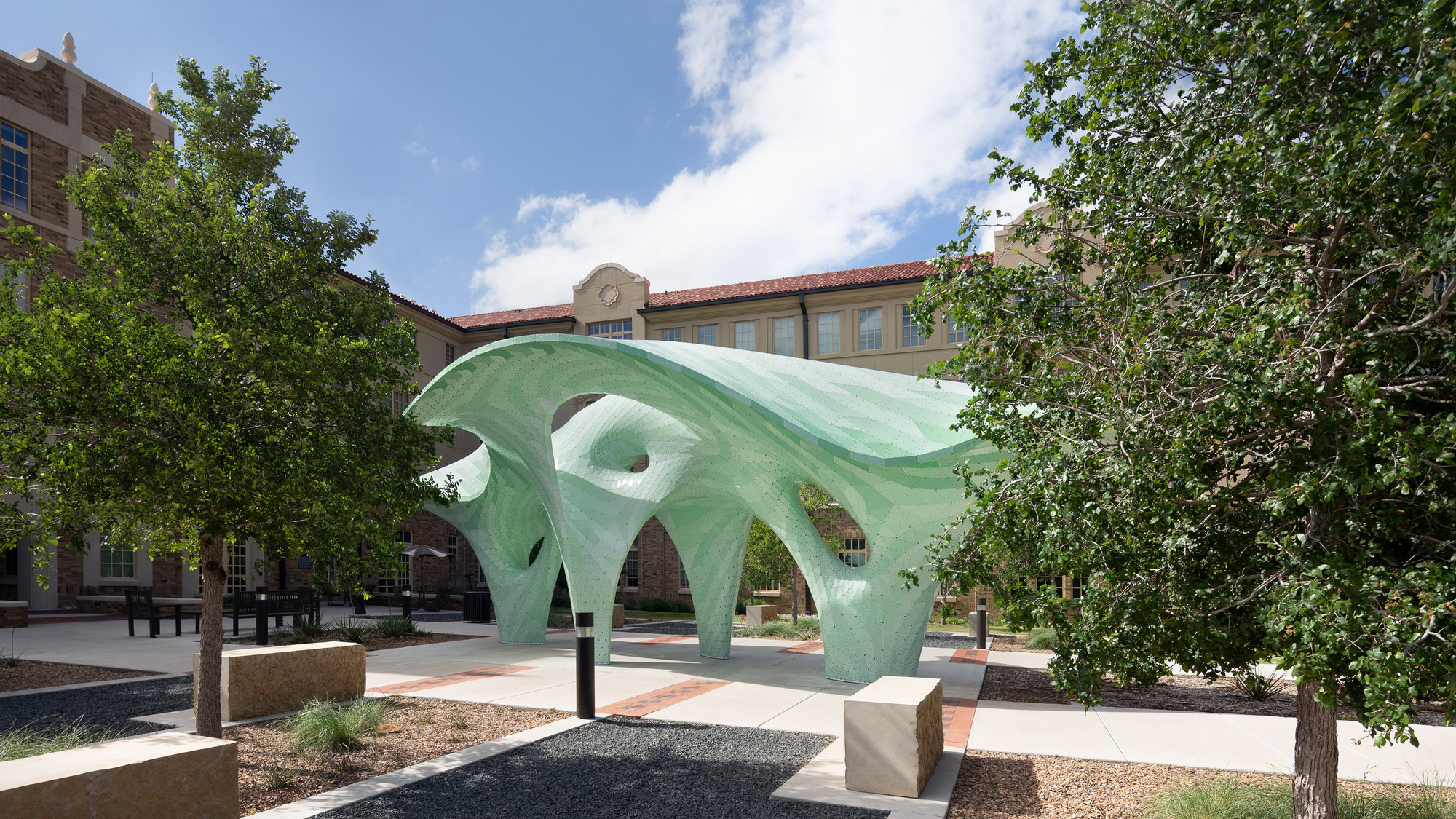
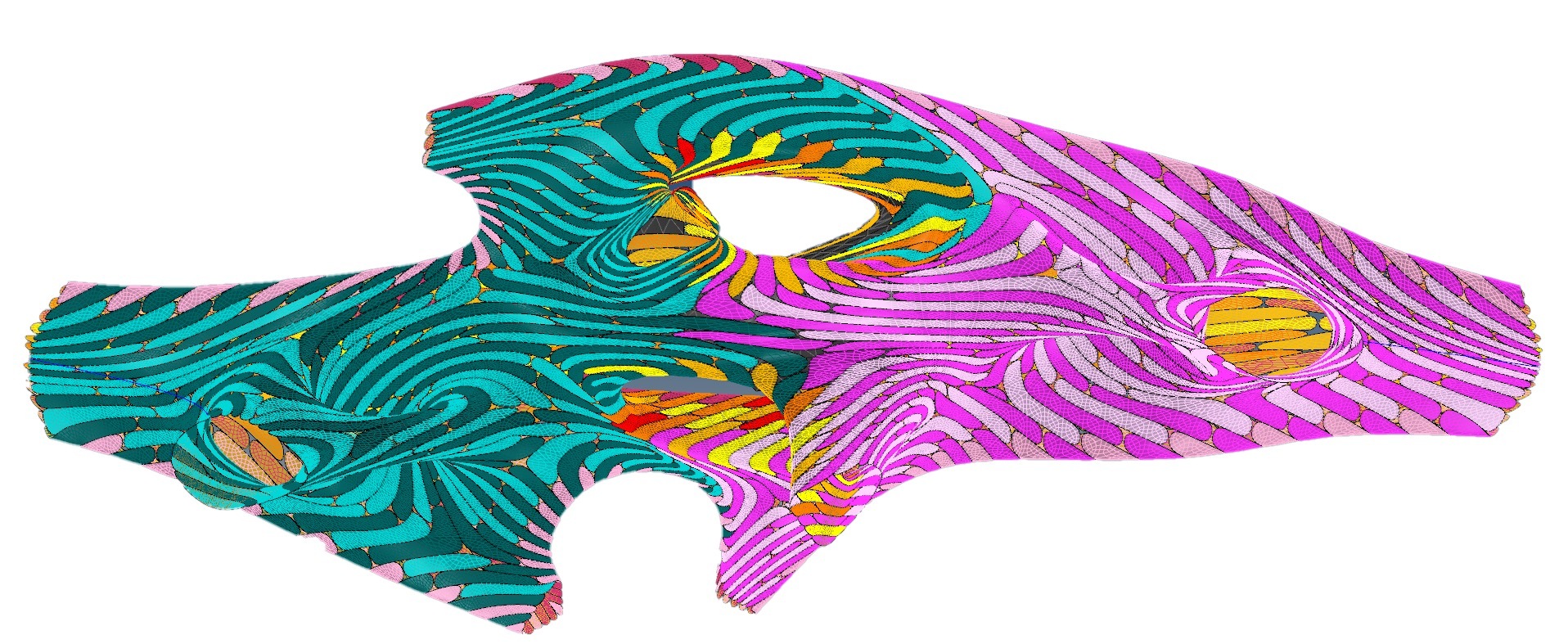
The Wind Pavilion at Texas Tech University is a wind-shaped canopy that provides a shaded passage through the courtyard between the Honors Hall dormitory buildings, offering the university a social gathering place. Cantilevered structures extend from a knotted central hub, creating a distinctive landmark along campus walkways while providing shade. This gentle megastructure is a carefully computed display of a graphically rich structural skin generated through digital computation. Four dense striped support columns expand into bridging arches, undulating wings, and ring-shaped piers that define openings to the sky. The form rises and falls in response to the various circulation paths that pass through and across the space. The pavilion incorporates cross-campus pedestrian movement, embedding walking routes into its volume as paths that either pass through or along the structure. Arched curves naturally unfold from the convergence of tilted columns, and their silently complex forms open new perspectives toward the campus buildings and the sky above. Hollow-body structures fix flow trajectories as large-curvature diagonal strips cut from hinged components, simultaneously providing spaces for meeting friends, studying over coffee, or strolling between classes. Passing through the colonnade or simply pausing beneath the canopy, one seems to find a peaceful slow moment within this campus community, as if all troubles have been carried away by the gentle west wind. The structure demonstrates how computational design can create expressive, context-sensitive public spaces that respond to pedestrian flow and climatic conditions.









 Editor's Pick
 Latest Design