Text description provided by the architects
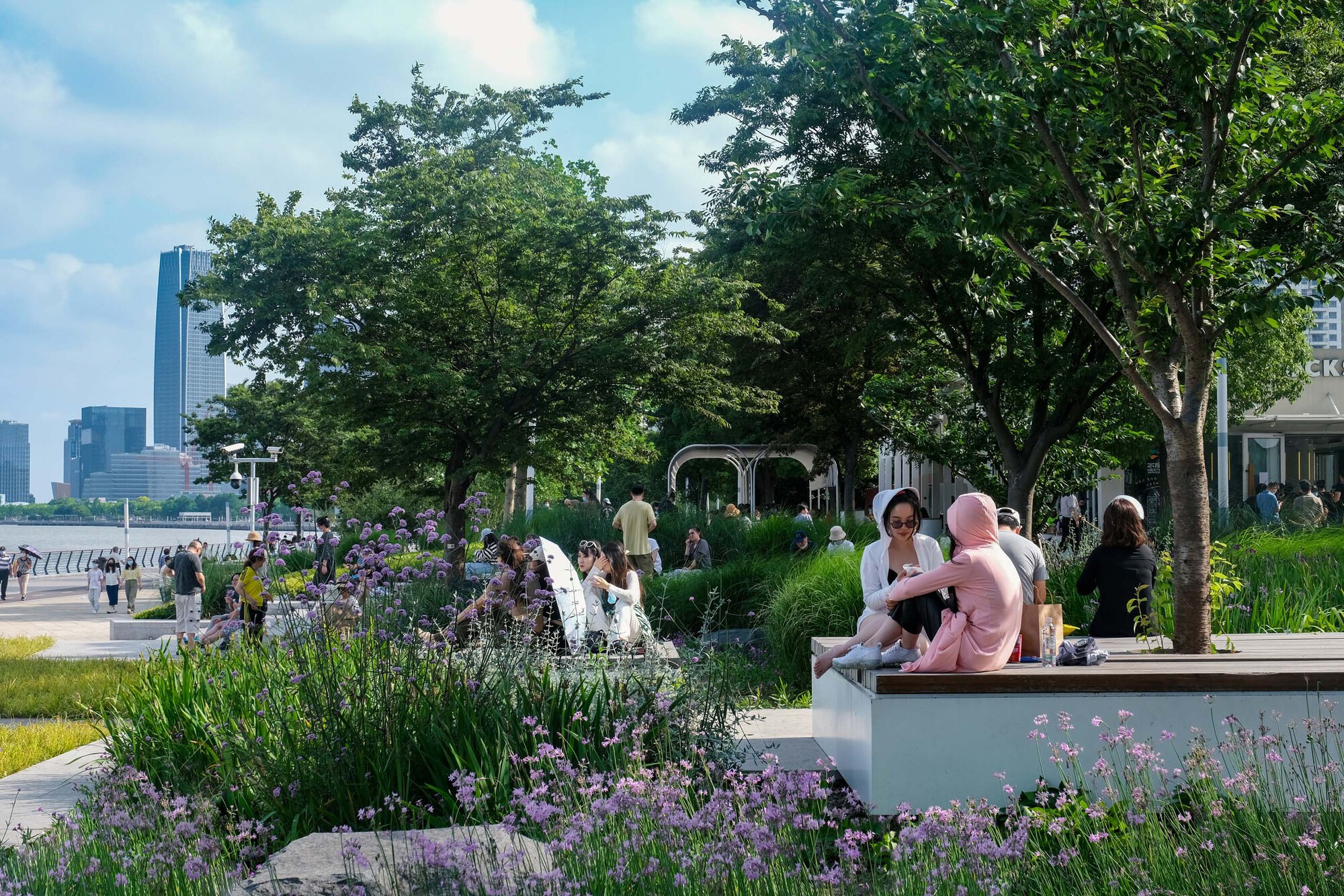
The nodes of the West Bund waterfront were renovated and opened one by one in 2022; since opening, daily visitor peaks have reached 40,000, making it a must-visit waterfront destination and a favorite urban public space for Shanghai residents. A healing, relaxing green living room has appeared, and the once-separated relationship between people and water has become intimate. The client, West Bund Group, has long aimed to create more pleasant, playful and accessible spaces. In early 2021, Hassell was commissioned for a series of waterfront projects along 11.4 kilometers of the Huangpu River's west bank. The West Bund was once a birthplace of twentieth-century national industry and the site of Expo 2010, now transformed from a production shoreline to a living one, a highly valuable open space in a dense city. Landscape is not only a beautiful space but a container for harmonious relationships among people, nature and one another, said deputy general manager Ye Keyang; by respecting the site, caring for needs and stimulating exchange, the renovation builds a shared waterfront life. The design team combines four waterfront service types: cultural venues, commercial amenities, independent buildings and temporary facilities, highlighting green-building symbiosis across humanization, identity, sharedness and vitality. Considering how different communities use the space, the design builds connections between place and people: picnics and gatherings on lawns, basketball, gardens, skateboarding, riverside running. On the River Gather table, inspired by converging with the river, young painters express imagination and, through rubbings on the table, learn about the mother river of their city. As people slow down past the little Italian restaurant garden, the underground story wall makes them pause; are the little creatures inside also enjoying a feast? Users now employ the space in novel ways, enjoying the upgraded waterfront. The West Bund is also a benchmark for sustainable operation and low-cost construction; low-maintenance planting greatly reduces upkeep, and demolished materials are creatively reused, reducing demand for new materials and contributing to a lower-carbon, community-positive outcome. This recycling and highly site-sensitive management are key to the broader sustainable operation of the waterfront. Hassell aims to inspire, educate and show leadership in long-term sustainable design, preserving mature trees and buildings along the route to retain memories while practicing sustainability. The team had to address typhoons and floods; existing trees were kept for root stabilization, and plant species around flood walls and gaoyuan platforms were selected for extreme weather, creating rich, poetic, changing landscapes in the unique riverside microclimate.






 Editor's Pick
 Latest Design