Text description provided by the architects
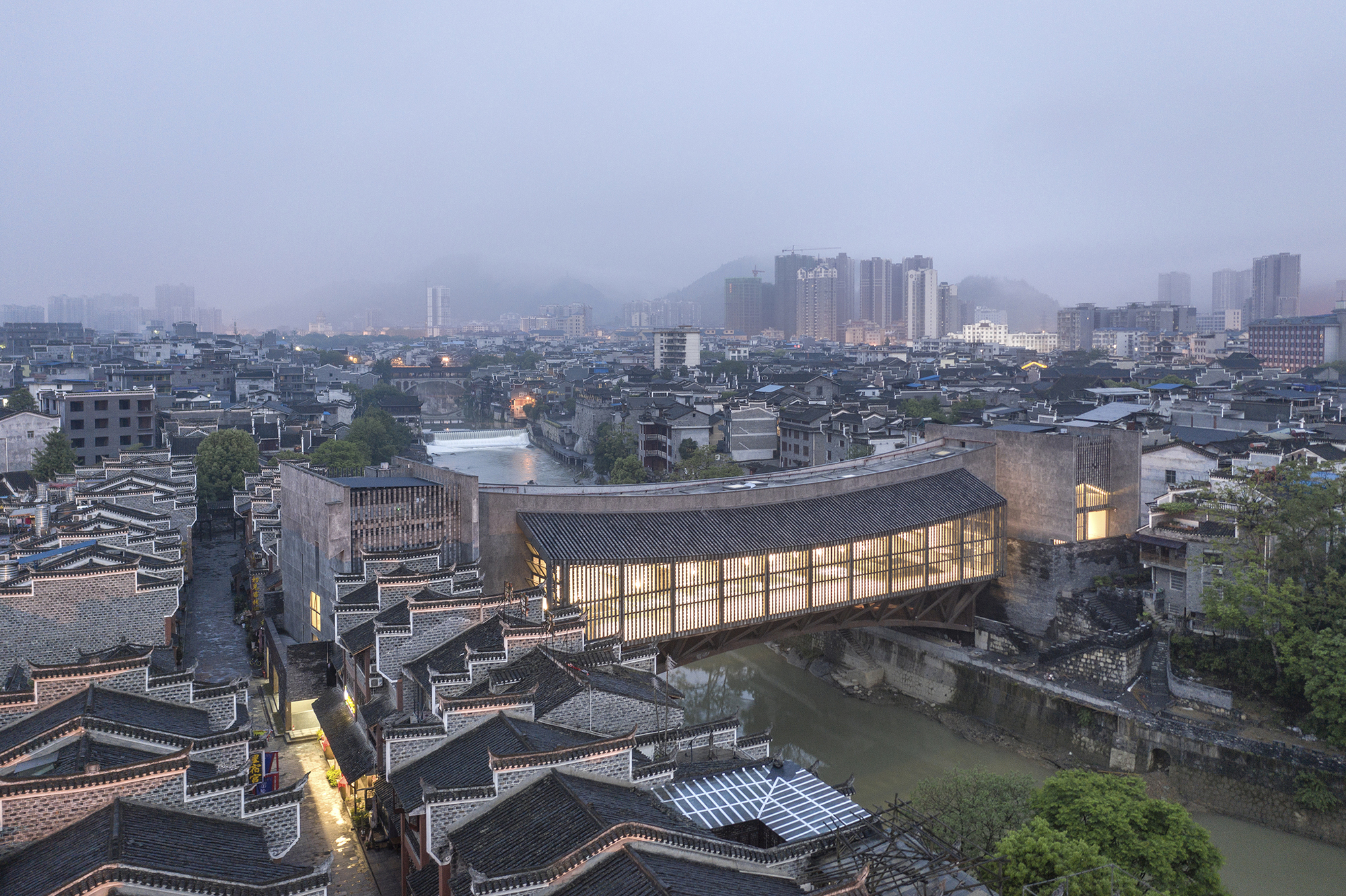
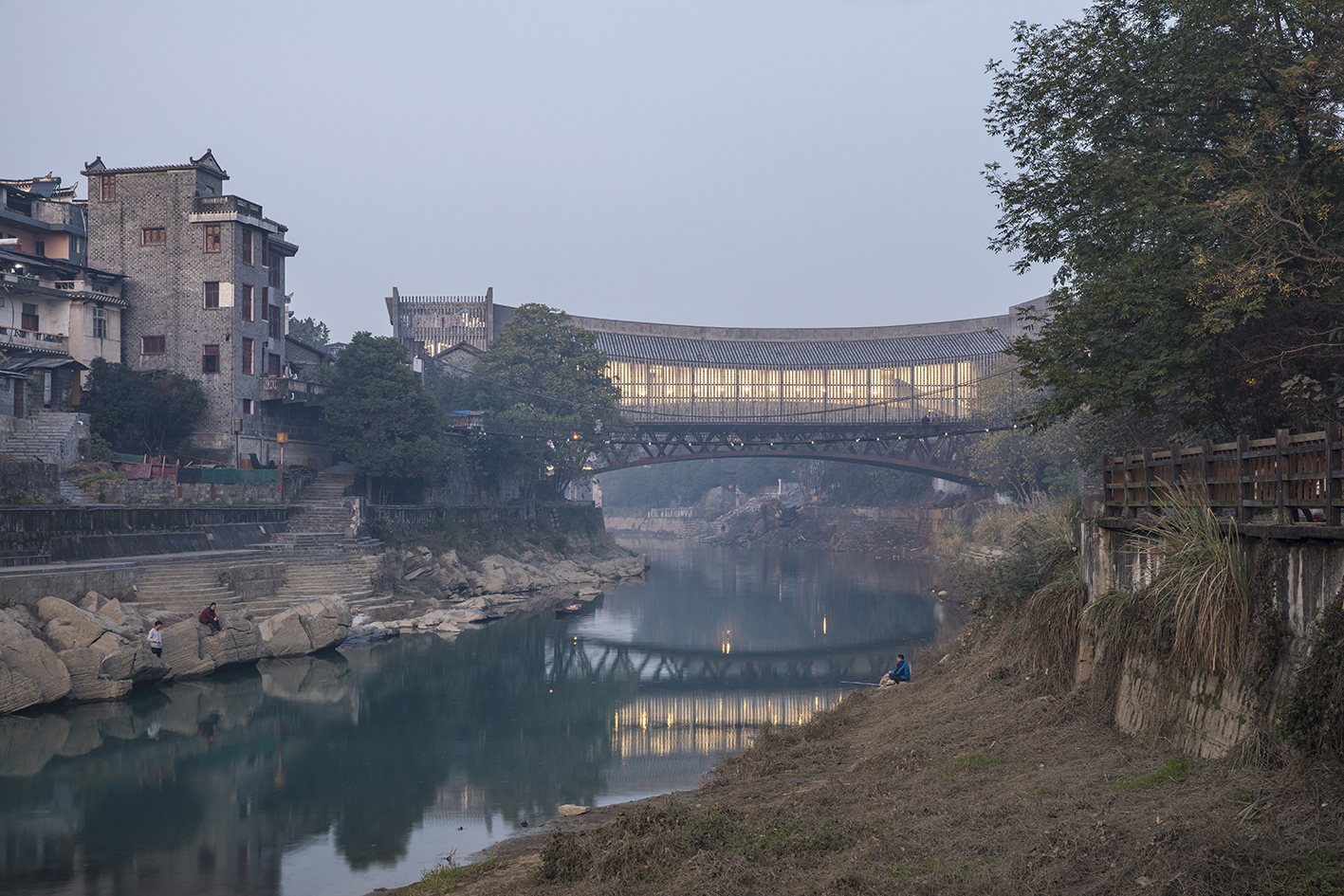
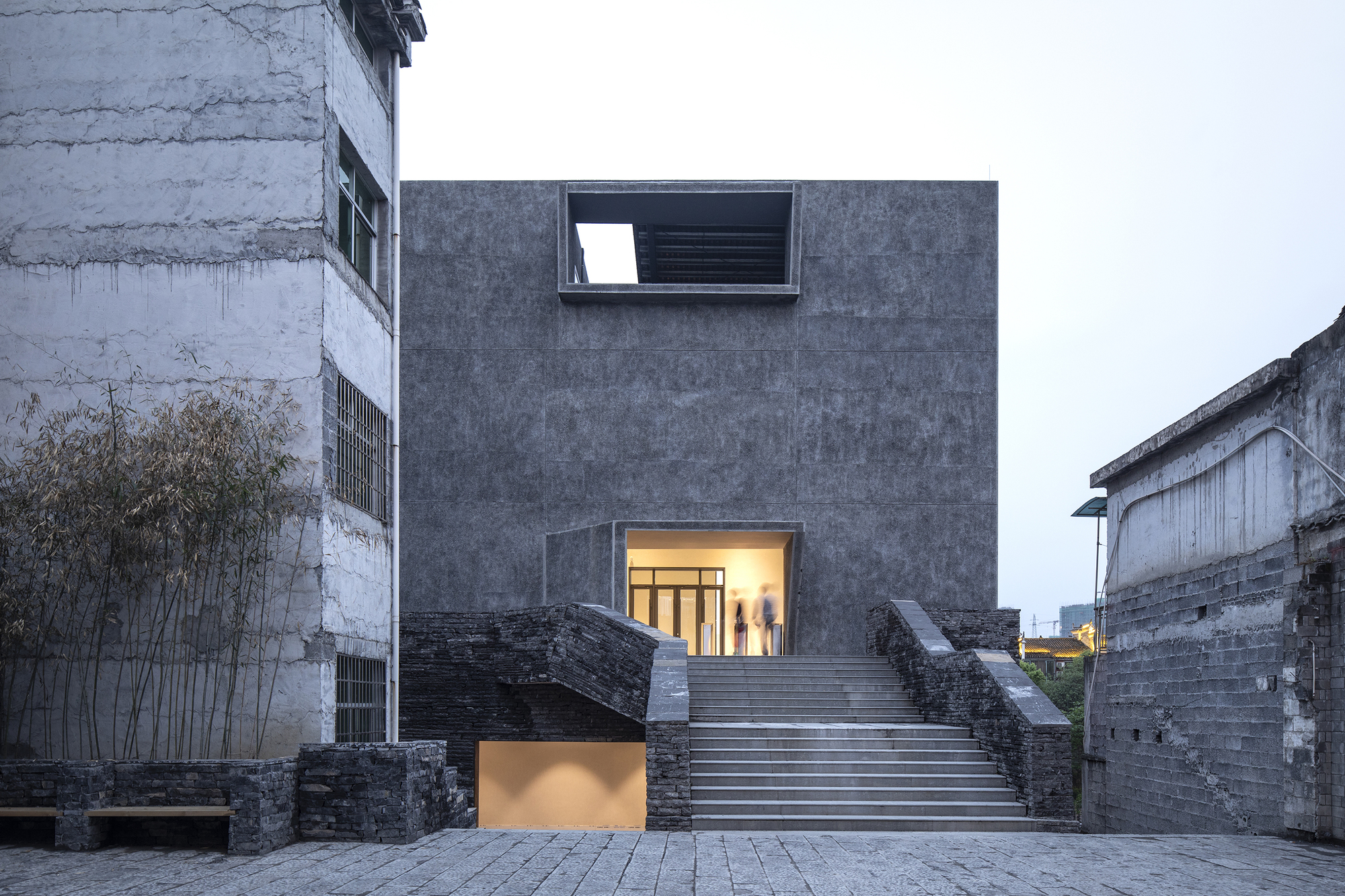
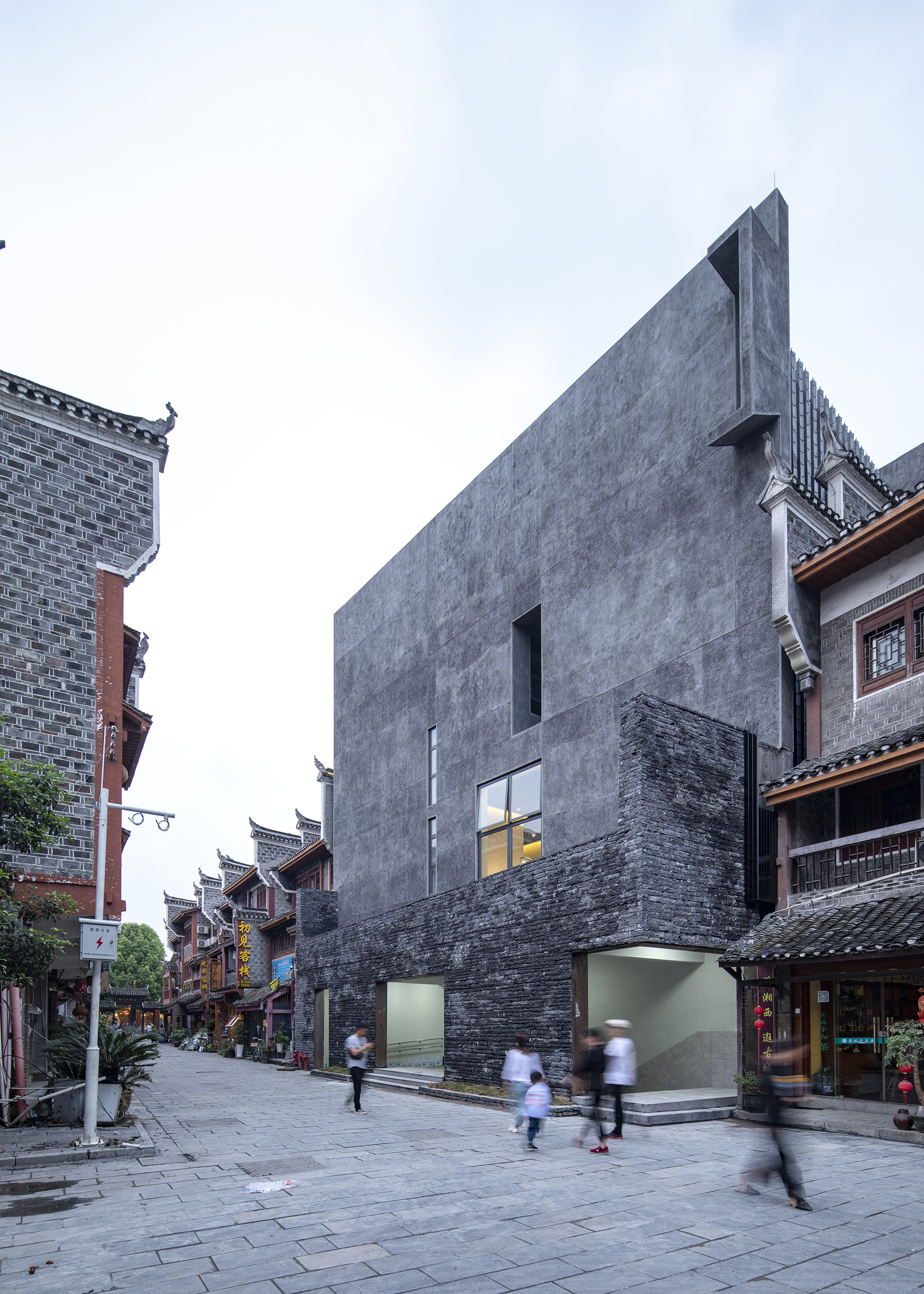
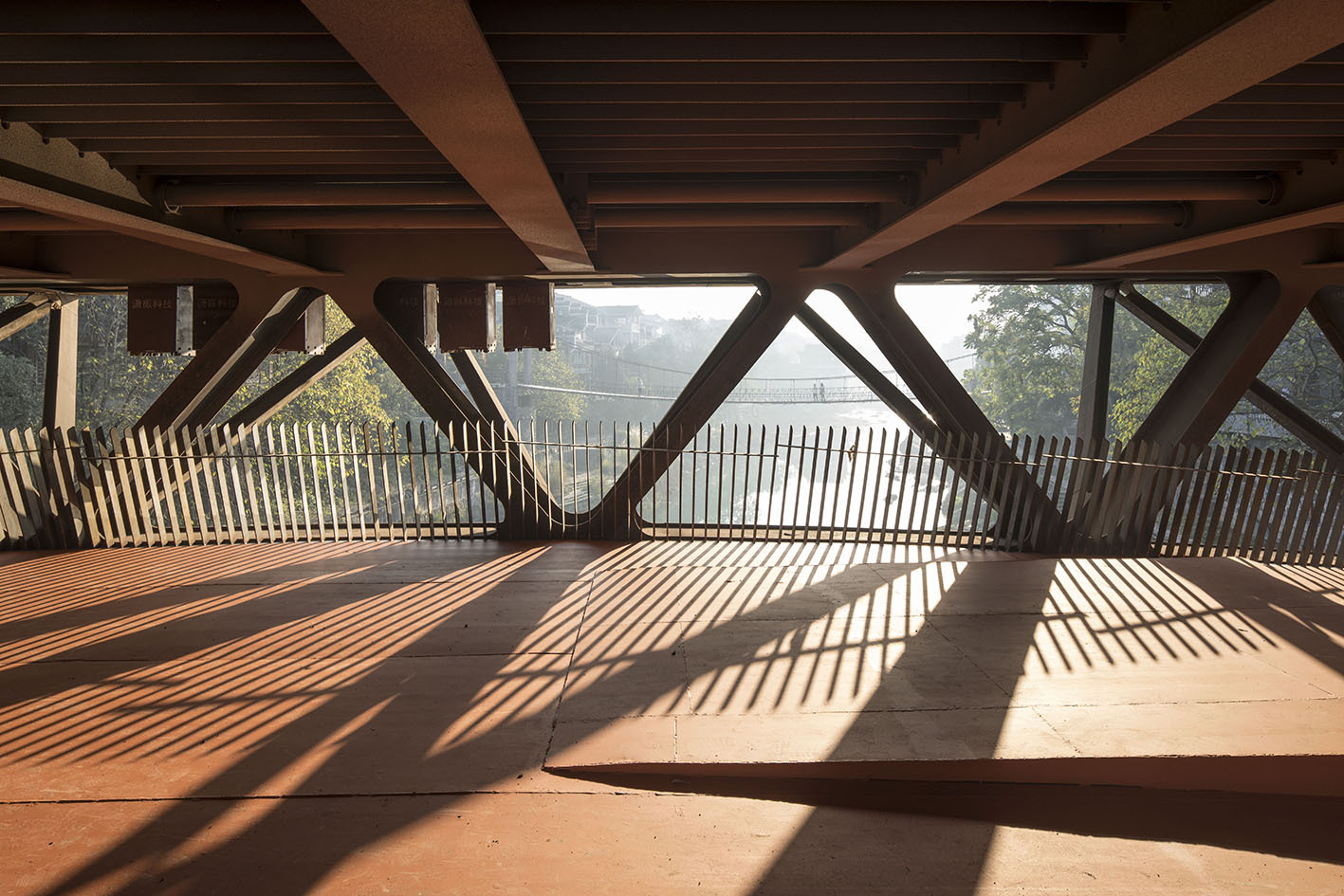
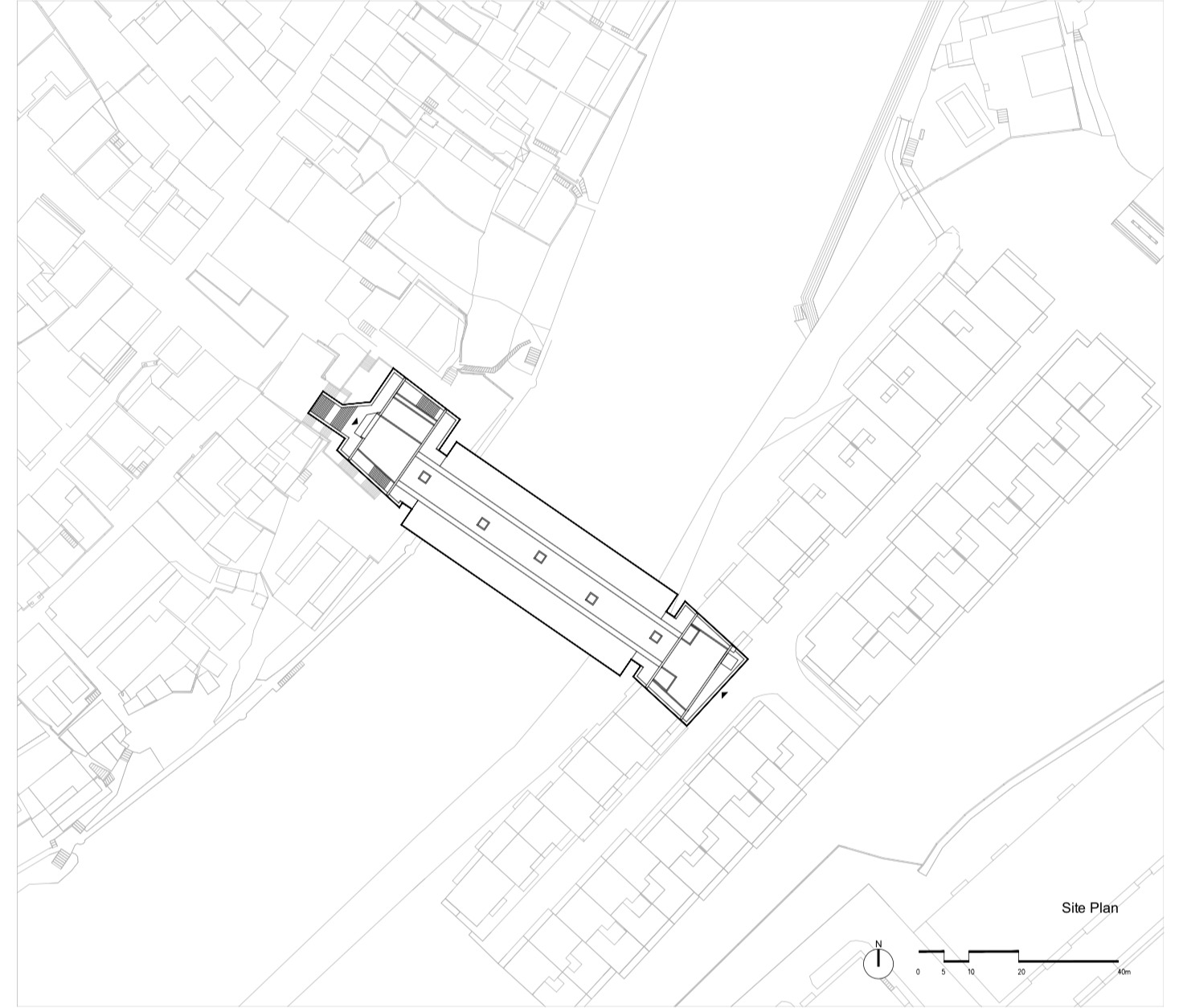
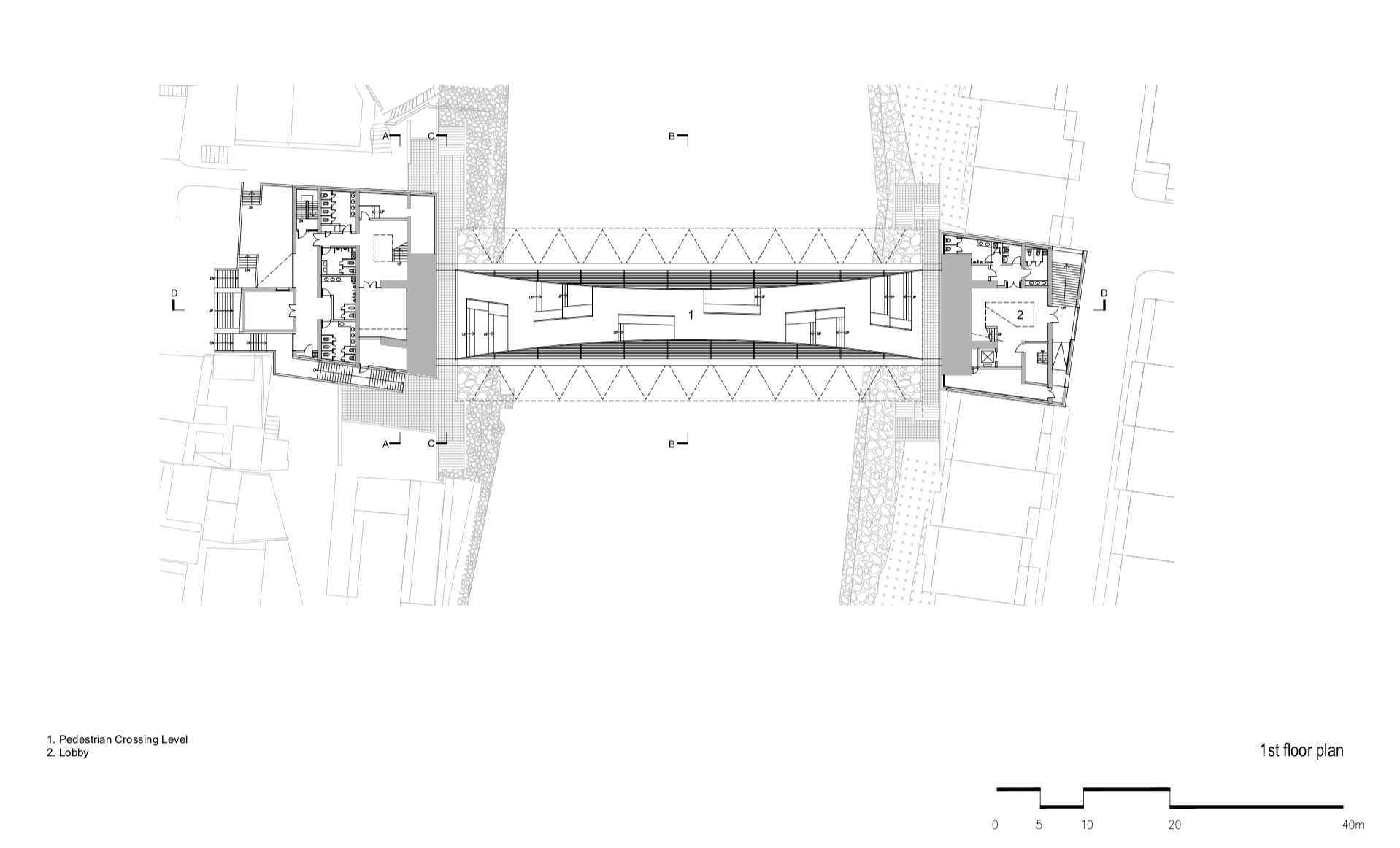
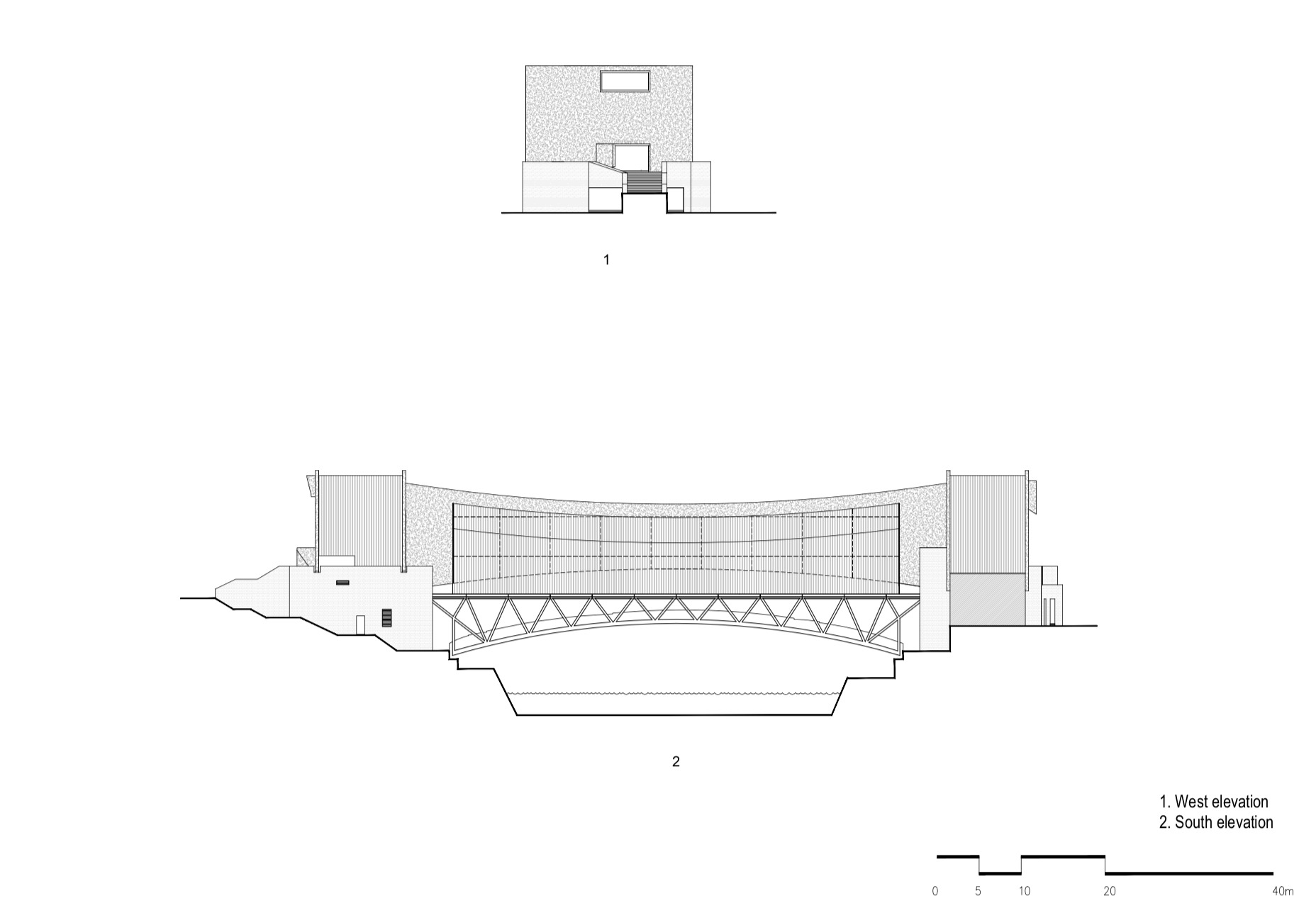
Social engineering. The museum sits in Jishou, capital of the Xiangxi Tujia and Miao Autonomous Prefecture. Initially the local government considered a site outside the city in a development zone, but the architects argued for placing the museum in the dense center of the old Ganzhou city, because cultural facilities should be as accessible as possible to residents. The Wansong River runs through central Jishou, so the architects conceived a museum spanning the river that also serves as a pedestrian bridge. They hoped people would encounter art not only on dedicated visits but on their way to work, school or shopping. Inserting into the fabric: today many contemporary cultural facilities like museums and theaters stand as independent monuments apart from communities; the museum should not be spatially detached from its audience, so it is embedded in the existing urban fabric, with bridgeheads on both banks tightly connected to riverside row houses containing shops, restaurants, small inns and upstairs homes. The Jishou Art Museum entrances on both banks are thus part of the mixed-use street facade, woven into daily life. Interpreting tradition: covered corridors called wind-and-rain bridges have a long history in China's mountain regions; beyond crossing rivers or valleys, they are public spaces where travelers rest and vendors sell. As a contemporary interpretation of this old type, the design preserves the corridor bridge's transport and resting functions while introducing art and modernizing its formal language. Bridge architecture: the museum is built as a bridge-on-bridge. The lower steel bridge is an open truss providing a covered pedestrian street and helping drain floodwater; the upper cast-in-place concrete arch contains galleries. Between the two is a large exhibition hall enclosed by glass curtain wall and barrel-tile shading for temporary shows. Service spaces such as lobby, offices, shop and tearoom sit in the bridgehead buildings at both ends; people can enter from either bank. The museum was initiated and donated by artist Huang Yongyu and completed in April 2019, with the inaugural exhibition opening that summer.












 Editor's Pick
 Latest Design