Text description provided by the architects
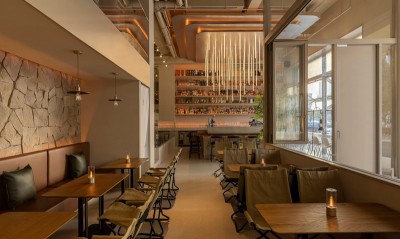
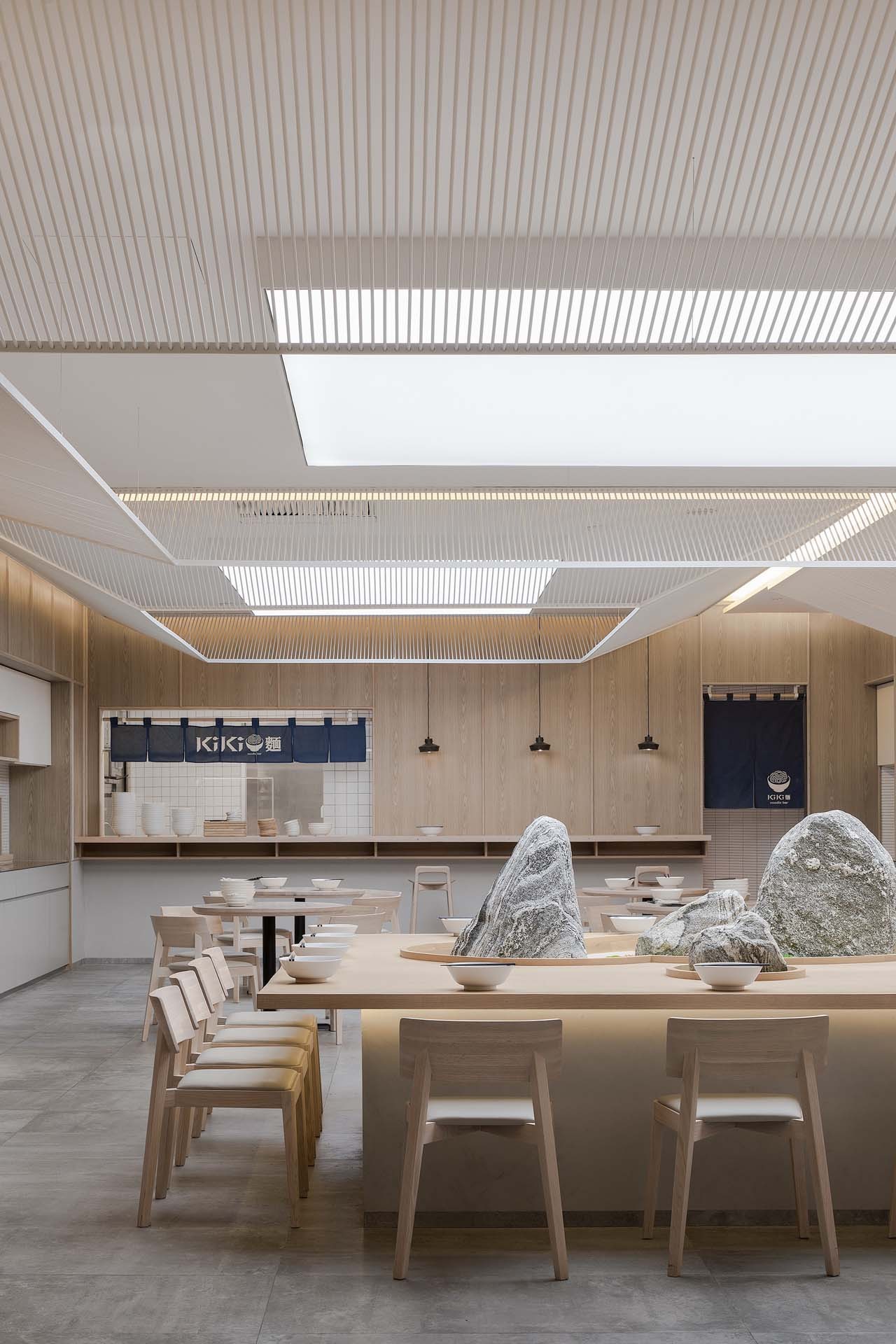
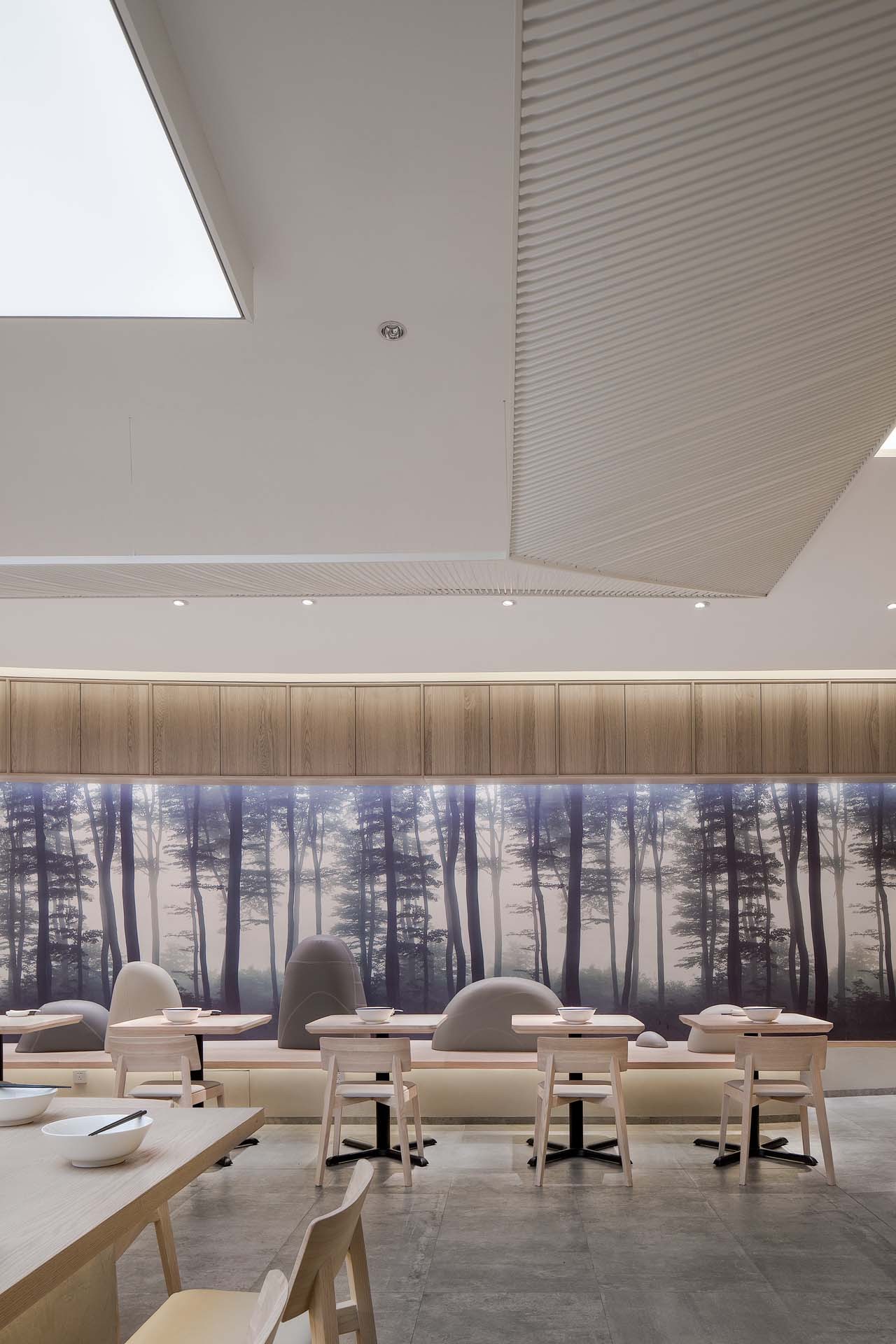
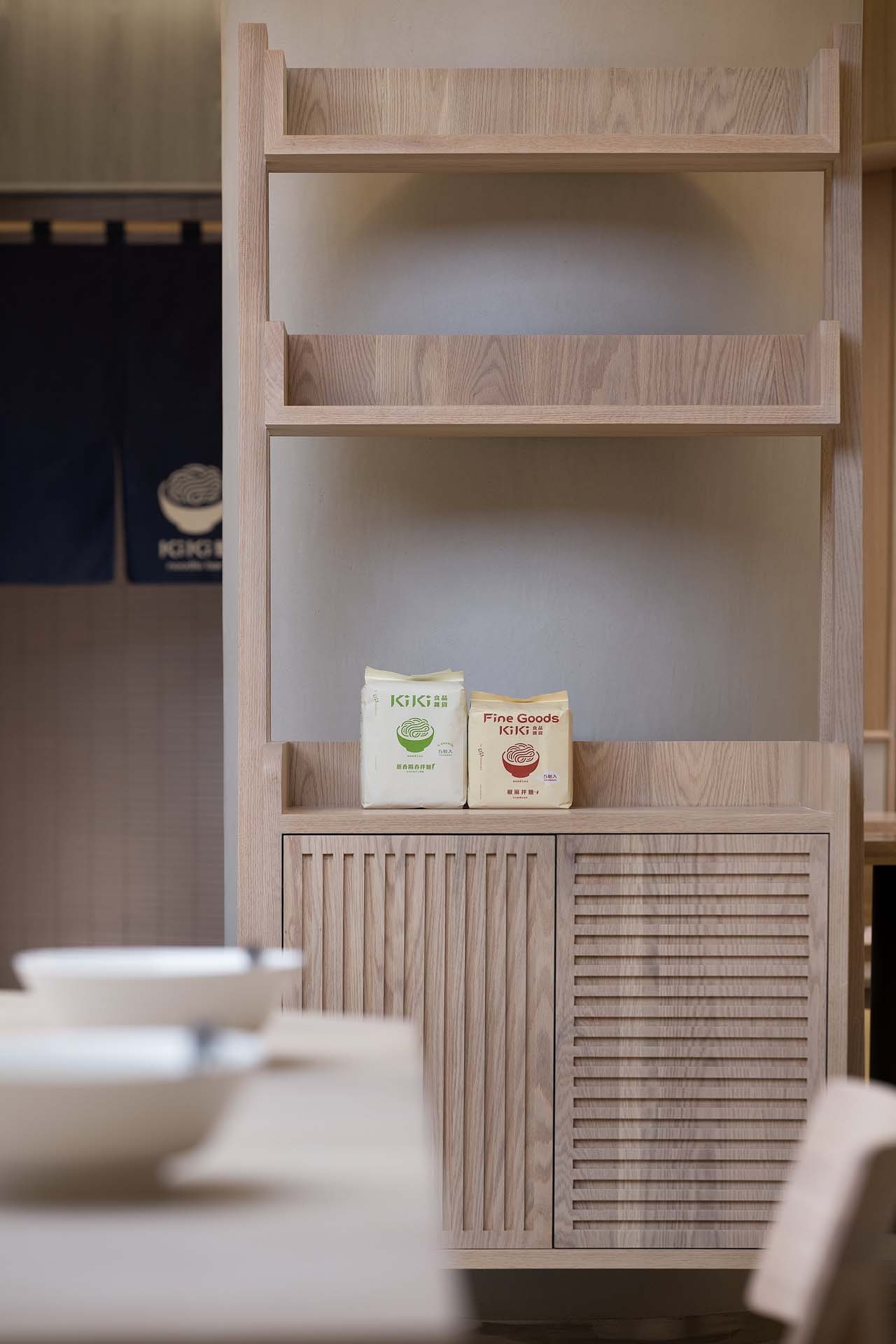
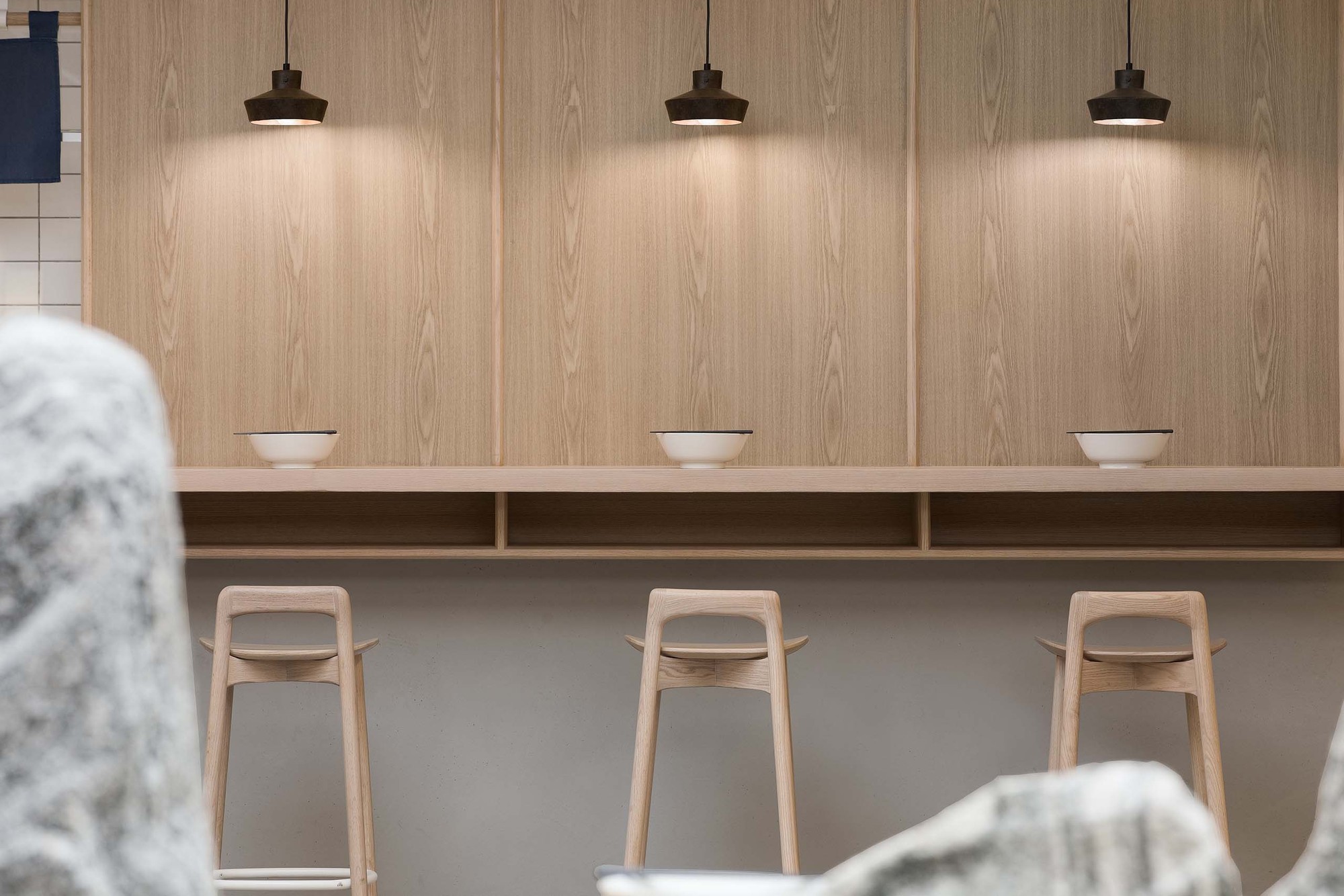
Passing by HK Plaza in Shanghai, a noodle shop called KiKi Mian, with actor Shu Qi personally endorsing it, draws attention. It turns out this is Shu Qi's noodle shop, and its signature is the old-style Tainan hand-dried sun-dried noodles. At the entrance, the first sight is the warm, simple KIKI tea bar beneath a slanted white eave and an old Taiwanese street noodle cart parked at the door. Up close, the cart is laden with KIKI groceries, rich and playful, as if an Amoy-speaking grandmother will look up and greet you. Walking in, the far noodle bar is directly ahead, where busy chefs cook behind a cloth curtain, steam and movement forming an essential part of the shop. The kitchen curtain has been used since the first Taiwan store years ago, representing KiKi's original intention: no matter where KiKi settles in the world, the original desire to make the best noodles never changes. Turning back, the near dining area: a long bar table seating nearly twenty turns the shop into a shared space, with a carefully designed miniature landscape at its center, so that even during a bowl of noodles the mind can travel to quiet mountains. Looking up from the bar, the ceiling resembles traditional eaves and courtyards; looking ahead at the misty tree-lined wall, one suddenly understands: the space hopes people sit beneath a courtyard eave, quietly gazing at distant scenery. The busy noodle shop is thus designed as a spacious resting place, a spot to pause and view mountains outside the courtyard, giving the mind a short holiday. Beyond the bar is the KiKi grocery retail area, so diners can not only eat hot Tainan noodles but also buy ingredients to cook themselves. Around the bar lies another surprise: a row of special booths in front of a lush mountain forest mural. Rocky hills replace traditional sofas as booth backs, echoing the forest behind. The space is an arc, visually kept as one continuous curve like a panoramic window framing the view, while in use the tiered booths are rectangular units. KiKi is like the literary youth of noodle shops, not chasing noise but using a warm, quiet space to carve out a place for the mind to rest, offering a rare gentleness to hurried urbanites even in a brief distraction.












 Editor's Pick
 Latest Design
 Best Idea