Text description provided by the architects
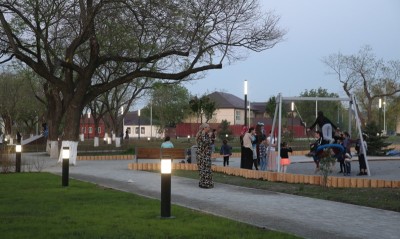
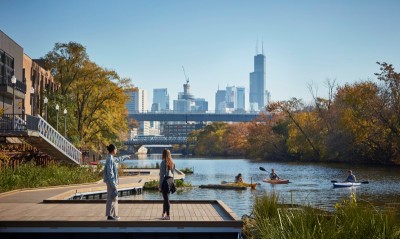
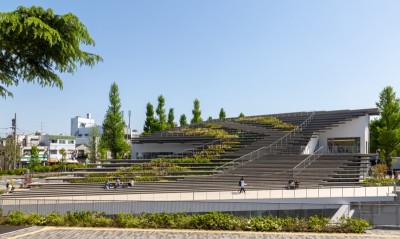
Xuhui Runway Park is a creative urban-renewal project on the former Longhua Airport runway in Shanghai, developed by Shanghai Xuhui Riverfront Development and Investment Construction and covering 8.24 hectares. The design treats the park as a living record of Shanghai's urban development, borrowing the runway's dynamic quality to organize street and park into a single linear running system for cars, bicycles and pedestrians. Although every space is linear, each uses different materials, scales and topography and hosts different activities, producing varied experiences; the park becomes a runway for modern life, offering leisure and relaxation in the city while preserving a layer of memory. The design preserves as much of the original concrete runway paving as possible, reusing broken runway concrete for new paths, plazas and seating areas. Many spaces evoke the sensations of take-off and landing, hinting at the site's aviation history while offering varied viewpoints. Road widths are controlled and public transit encouraged to retain a compact downtown feel, and six rows of deciduous street trees form green buffers between sidewalk, cycle lane and road, creating comfortable microclimate and four-season scenery. Sunken gardens between the metro station and adjacent plots improve the metro experience and layer the park. The landscape uses native Yangtze Delta species to build terrestrial and aquatic habitats: a bird-watching grove, fruit orchard and varied gardens above, and wetlands, soft shorelines and floating wetland modules below. Lighting poles recall airport communications and lighting; buried linear and point lights mark the old runway and are among the park's signature elements, while glowing handrails, benches, shade structures and elevated walkways define activity zones; all lighting avoids habitats and nocturnal wildlife. Rainwater from Yunjin Road and the park is managed through 5,760 square metres of rain gardens and 8,107 square metres of constructed wetland, Shanghai's first roadside rain-garden system; runoff leaves via the airport canal into the Huangpu River. Construction began in spring 2016, and open sections have already become beloved community rooms.




 Editor's Pick