Text description provided by the architects
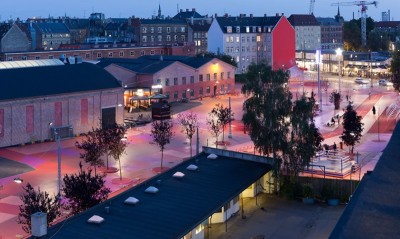
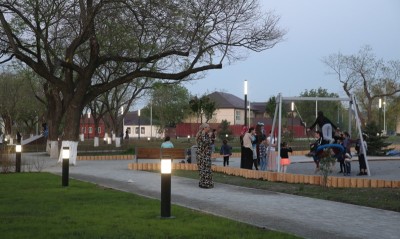
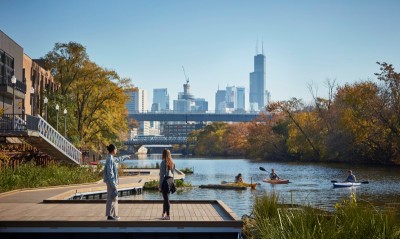
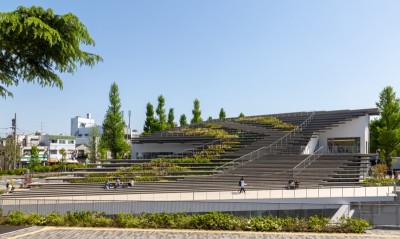
The Longxi Lake Park renewal in Jiangmen is located at the end of the central green axis of the Jianghai High-tech Zone new town, north of Longxi Lake and east of the Green Axis Park. Jiangmen's Wuyi region, comprising Xinhui, Taishan, Heshan, Kaiping, and Enping, is Guangdong's largest hometown of overseas Chinese, with a long history of emigration to Southeast Asia and California and a cultural lineage that produced Liang Qichao, Chen Baisha, Feng Ru, and Liang Sicheng. With the Greater Bay Area, Jiangmen is poised to become a new growth node. The existing Longxi Lake was surrounded by industrial land, and the park is the new town's first important node, linking future residential, office, and ecological park networks. Cultural reference is drawn from Ba Jin's essay The Bird's Paradise, which made a great banyan grove in Xinhui famous and raised public awareness of nature conservation; that site now hosts more than forty bird species. The landscape captures the dynamic flight of birds and injects local cultural elements such as diaolou watchtowers and palm fans to create a new bird paradise on Longxi Lake. The original park was a generic lakeside green belt with a single loop path and sparse planting, remote and empty; the redesign provides a comprehensive ecological park for recreation, leisure, and fitness, organized into three functional zones linked by urban greenways. The western ecological zone includes celebration lawn, rain garden, and greenway service station; the central vitality zone includes fitness, elderly chess, and all-age unpowered children's play; the eastern civic zone includes a central axis plaza, a water-cloud meditation court, and a wedding lawn. The whole park is open twenty-four hours, with diaolou wedding pavilions, palm sculptures, feather sculptures, bird sculptures, and nest slides as local signatures. Ecologically, the park builds a sponge base: all runoff toward Longxi Lake is filtered through dry creeks, sunken rain gardens, and modular storage, supplying water in dry periods and draining in wet ones. Completed at the end of 2017, the park now draws crowds every weekend.




 Editor's Pick
 Latest Design
 Best Idea