Text description provided by the architects
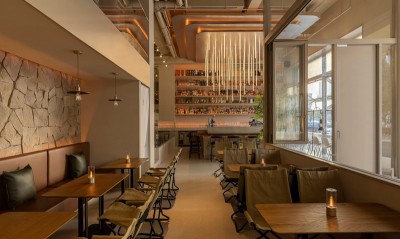
The Gushi Chuwei Restaurant in Dongyang is a 488-square-meter interior designed by Shegu Space Design. The project interprets the brand name, which means the original flavor of ancient food, through wabi-sabi aesthetics: the quiet, unadorned beauty of simplicity bathed in the patina of time, which shares ground with minimalism but is deeper and more genuine. Shegu uses architectural space and artistic form as its skeleton, strips away the sensational, and shows maximum respect for emptiness, turning spatial corners and the movement of light into a modern wabi-sabi work that returns to the restaurant's founding intention: tracing ancient food and returning to authenticity. As the Belgian designer Axel Vervoordt wrote, cut down to the essence but do not strip away its charm; keep it clean and pure but do not take away its life force. With a Zen attitude toward time and space, the design chooses blankness and non-contention, smooth geometric lines, restrained decoration, and a rhythmic dialogue between light and dark to release the charm of emptiness. Spatial changes naturally form corridors and public areas, into which plants are inserted so the interior feels like an outdoor landscape, achieving an exterior-within effect. Beauty is quiet without speaking, yet has its own conviction. In architecture, that means stripping away artifice to reveal an inner cosmos. Using squares as windows and circles as light, the designers embed the traditional Chinese philosophy of round heaven and square earth into the space, deepening the brand spirit, while intermittent greenery adds vitality. Emptiness is infinity: by deleting the superfluous, the space reveals its original face, and the dialogue between human and nature, human and human, and human and self is placed at the highest level, reducing decorative presence so that people relax, think, and return to themselves. Light is the rhythm of space, flowing freely, alternating bright and dark, and dancing. Geometric walls of pure color could feel tense, but shimmering light, rising steam from food, greenery, and warm noren curtains produce a comfortable feeling, and one can almost hear the delicate melody of light. Along the corridor, warm wooden steps and plain marble complement each other, and light through gaps falls on the walls, adding a courtyard-like freshness. Le Corbusier wrote that architecture is an artistic act, an emotional phenomenon beyond construction. Gushi Chuwei hopes modern people recover reverence for food, using the pleasure of ancient eating to return to simplicity, explore original flavors, and reconsider the ritual of eating, and thus the relationship between people and food, and people and nature. The design creates a warm, textured dining place in soft tones, with geometric walls carrying the philosophy of round heaven and square earth, and dry-landscape, dot-line-plane details that make ritual present everywhere. In a fast-paced commercial world, allowing diners to converse with their food and with themselves is the purpose of the space.




 Editor's Pick
 Latest Design