Text description provided by the architects
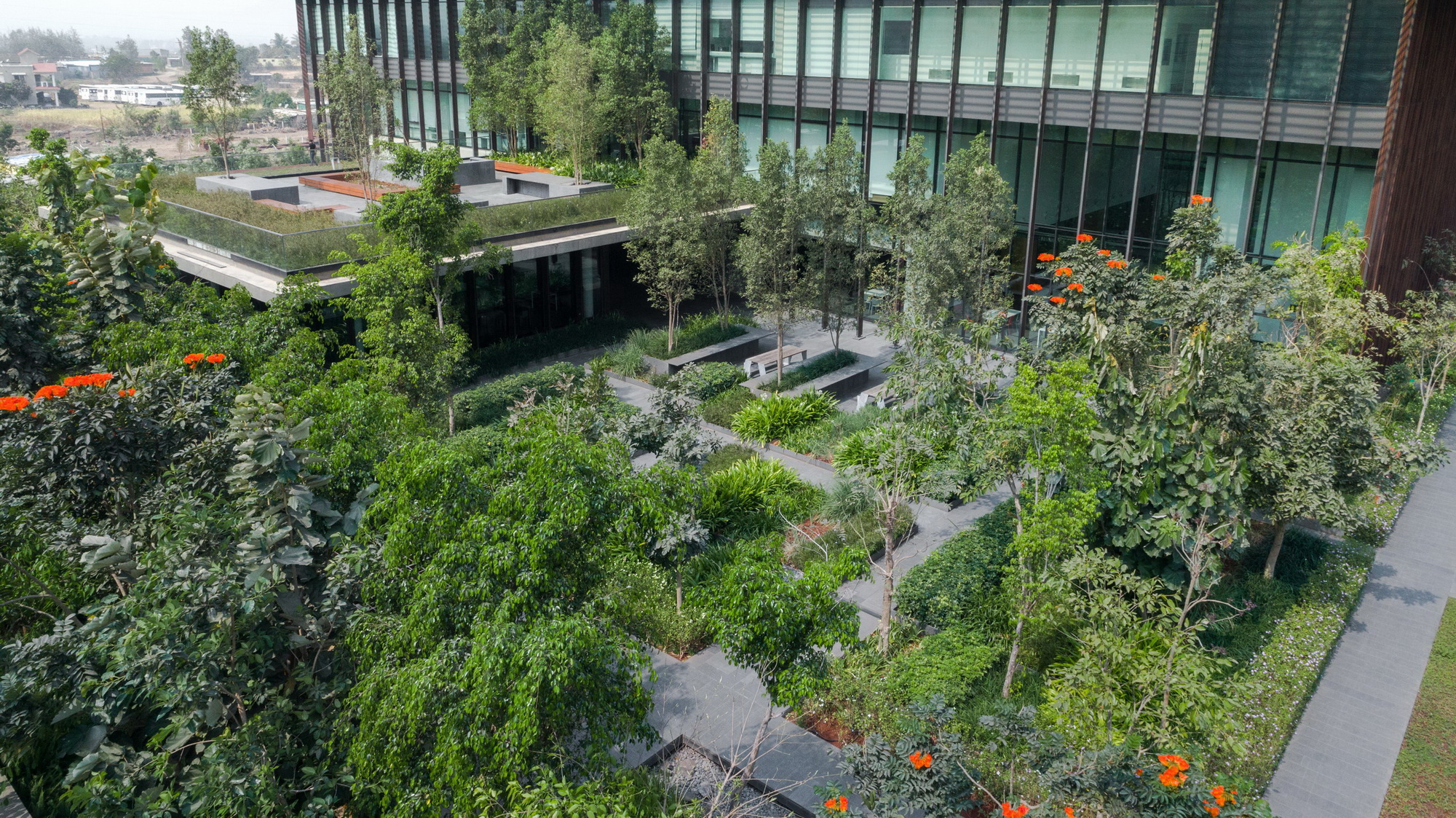
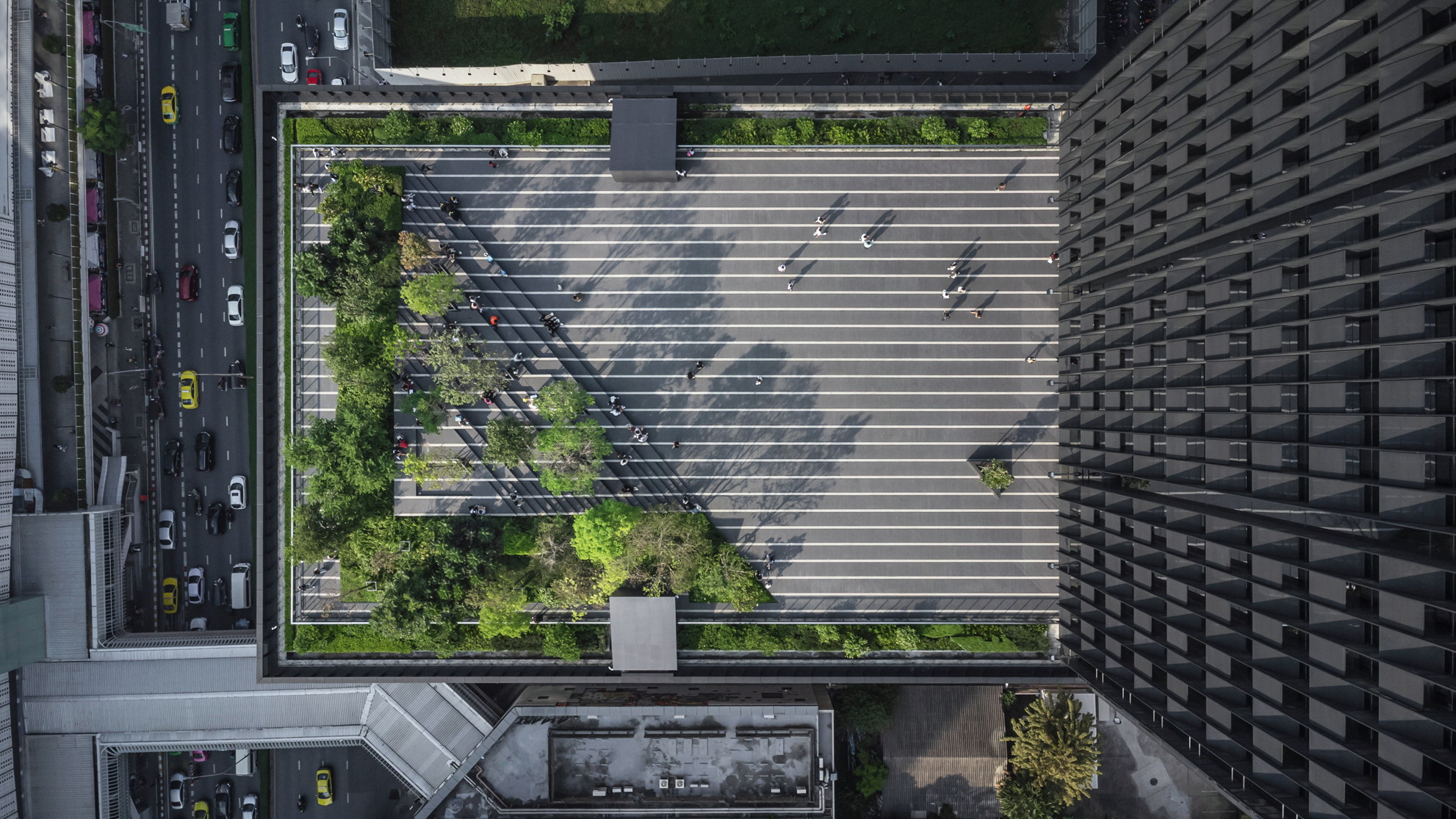
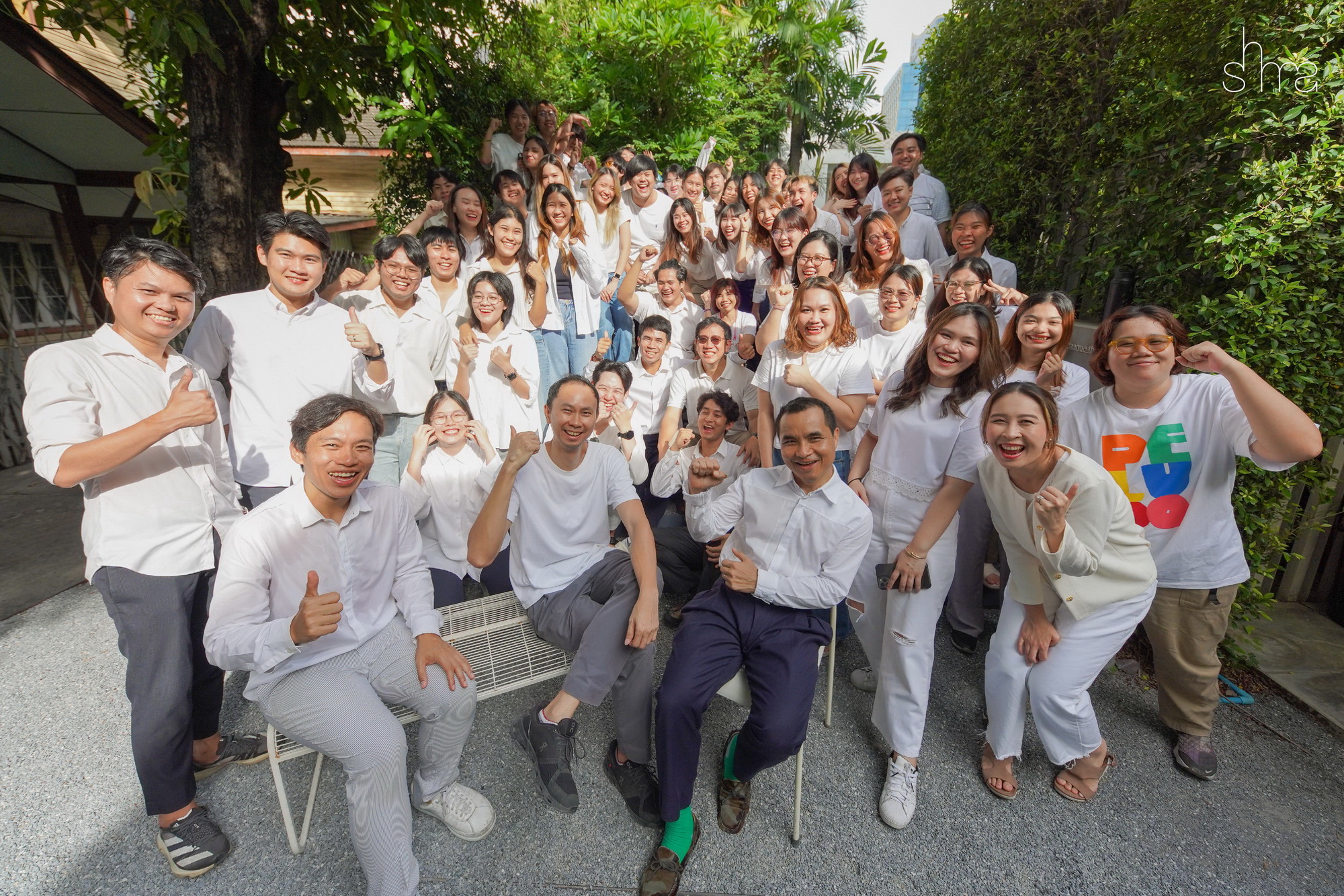
▲Shma :Shma、Shma Soen、Shma Lab、Shma Media 01 In what circumstances did your three co-found Shma? The right circumstances. I think we start our career during the time of economic crisis. So, all three of us really start practicing professionally, I can say it in Singapore. So, after a couple of years, you seven? 5 years and half/seven/four and half in Singapore and we missed home, and we want to come back. And we think that Thailand and also Bangkok like really in like badly needed landscape architects to do the right job so we started at Shma at that time. I think we want to bring some refreshing idea, and bring the experience that we have, and contribute back to Thailand, but not only Thailand, but I think it’s time that we would like to use our experienceand use it for the whole world, that's how we gonna make the use of it to make the world better and the earth better. I think why three of us is because we think that it’s better than one erson(exactly! ). I think maybe because we thinkthe same way (absolutely), so we want to share the good time and the bad time together, and build the company together. We complement together,And we will always have someone watching our backs. It is good to have three of us, without one of us, it won’t happen. ▲Shma:Namchai Saensupha、Prapan Napawongdee、Yossapon Boonsom 02 The garden-style office environment of Shma is quite special. Do you think your working environment has any inspiration on the design process? So when we started the Shma and looking for the place for our office, we know from the start that we don’t want to be in the office buildings, but we try to find a place where is like a home that has garden itself. So luckily, we have found this place, which it was just a house before, then we just converted it into an office place, And we retained a lot of garden spaces, and also improve the garden around the house as well. The garden that you see behind me, actually, it was a swimming pool before. But we think that we didn’t need to use a swimming pool, so we turn it to be a garden to try out many plants that we want to use in our projects as well. And it become a nice variety of plants, and provide a place for our people to come out to enjoy the lunch and enjoy chit-chatting with each other. I think, in a way, working environment is not only focus on your work exclusively,but actually the activities in between are very important. And those are times that people can discuss and then perhaps some new ideas could happen from there. So, I think our garden is very special for us. 03 Can you tell us about the Shma team and their expertise? I think it comesback to our goal, tocreatethebetter Earth through the landscape design. So,our goal is tocreatea sustainable landscape design. So that meanswe have to have a lot of expertise in order to realize them. I think the expertise start from the process in thinking. How we gonnause the design thinking,the way we can brainstorm and come out with arefreshingidea. Not only among ourselves, but also sometime we workshop withour client, with thestakeholder in order to gettingthevery unique idea. Secondly,we also look into how we gonna turn those ideas into reality through the design of the landscapearchitecture,working closely, activelywith the client andallstakeholders. And also works with horticulturist team, not only to design the planting,but also design the habitant or some kind of ecology for the place. And we need to also understand not only the planting,we also need to understand the people. How we gonna understandpeople’s behavior? We have theparticipatorydesign team in order to analysis and talking to people, finding the ideafrom the people to make the designeven richer or sensitiveto the people. And then comes to the retaliationof theconstruction part, I think this is very important. Becauseonce you havethegoodvision, you have thegood idea, you have to implement it well,so,we havetheconstructionmanagement team to make sure that the drawings are welldocumented with the very accurate program. And then looking atthe site,working with the contractor to make surethatthe details arewellconstructed. Andthenafter the site is completed, we also have a team to monitoringit, to make sure and analysis whether what would be the feedback after it completed. To make sure that we can collect the data, and improve our work later, in next project we will make itevenbetter. And lastly, I thinkit’salso important wegonna communicateall the workthat we have done,all the knowledgethat we found. Not only keep it as comments to ourselves, and also sharing to the society. BecauseI think to have a sustainable landscape design, or sustainable earth, everyone needsto be awareand awareofthelandscape design can bethetool tocreatea bettersociety. I think this is all theecosystemthat we try to createfromthinking/retaliation/communicate/sharingand also about the knowledge. we also have a team tofind in depth, andmake surethatall of these canbe the powerful tools to intertwine and change the worldto fundamentals. 04 What kind of landscape Shma prefer? And what kind of landscape experience Shma want to bring to Thailand? The back bone of Shma landscape would be sustainability. Indeed, because we are dealing with living things: first is human, and then trees, and ecology which involves other species, including microorganism in the soil. So, how to combine all these things, and make it livable in a long-term? And at the same time, it serves the purpose of users. So meaning that, even though the background is sustainability, but the appearance of the final product of landscape it can be something very unique, sometimes it is fun, sometime is functional, sometime is very refreshing and memorable. To answer the second part of the first question, the land and the open spaces are the most precious things, and there are fewer and fewer possibilities that we can add the landscape into our environment. So our landscapes that we want to bring to Thailand, is the landscape that is multifunctional and multipurpose, one area that serves many purposes, not only sole purposes. For example, giving this private landscape, we try to make the private landscape can be enjoyed, can be shared to public as well. For example, the space in front of the commercial areas (and) office buildings, that have no fences, and some part of it can be accessed and used by public in some certain times. Or even the landscape that can produce foods and provide the habitats for other species, and small animals, not just for beauty, not just for decorations, not just for the marketing purposes,but the landscape itself, as I said, that is more and more valuable and scarce,So we are trying our best to achieve most out of that limited resources that we are provided. 05 What do you think the impact of landscape on the environment and the urban city? Recently, Shma has been doing quite a lot of public projects in Bangkok and other cities around the regions. We always keep mind that the lack of open public spaces in the dense urban areas, so all the design, we have this in mind, and we know that sharing of the urban open spaces is important. And smaller and smaller parts, when combine, we can create a much better environment and make a bigger impact into the surrounding and the quality of life in the urban. So, I think all the projects we are doing, we try to make it more open and accessible by public. Even though some of the projects are not possible to access by physics, you cannot really go in there, but at least, we can share through visual, though openness. People maybe can look through the fence and into the good landscape in private areas. So the perception of urban green spaces is obvious, is more to combine and make the better and bigger impacts in overall. So the perception of urban green spaces is obvious, is more to combine and make the better and bigger impacts in overall. So with this, the detail we are putting inside the landscape that combines the much diversity of species. We are thinking about the plants, give chances, giving flowers, and have the fruits and nectar for other small species, like birds and insects. You know, they can come and utilize, or even live in the landscape newly designed. So that the environment in the urban areas can be more of rich and more friendly. So that the new landscape projects that we are doing in the urban contexts, not only increase the green areas and openness by sharing to physical, visual, or mental, but it also increases habitats for other species in the ecology as well. 06 Thailand is a country with multiple river systems. Could you share Shma’s experience in water management? So, actually, most of Thailand, the middle part of Thailand, is actually, the Chao Phraya floodplain, which is the main river system, starts from the northern part of Thailand, coming down to the middle part of Thailand, and then goes out to the ocean. So in the old days, our ancestors already known how we do the settlements that go with the flow of waters. We(ancestors) tried to avoid the places that would have impacts of water rises from the rivers, our settlement is not kind of the fixed system but is something that can be adaptable to those when the waters try to come down to the sea. So, I think, nowadays, when we develop into the urbanization and countries, we are kind of lacking the ideas of how to deal with the water. So I think, being a landscape architect, it is very important that we can propose our ideas of how to deal with, how to design the lands that is appropriate for this water condition that we have. So we have done a project in the outer side of Bangkok called Jin Wellbeing County. From the start, we design a masterplan of it that based on green and blue infrastructure concepts. So we start to lay out the pattern of the water that essentially becomes the main core of the design. So we have the main little quiz that go cross the project, and use that as the water mitigation places. So in this project, we don’t have the concretes drain at all, but actually we use the natural drain as the main way to deal with the water. We can avoid the flooding, at the same time, we can use the access water that come to be part of the water that helps to watering the plants, maintaining our green to be sustainable in the long future as well. And it also becomes nice landscape features for people to enjoy as well. so the green become one of the nice landscape features for the project as well. It is a place where the forest can grow easily without much maintenance. And this is a place where people can come to enjoy where the water flows, where the fish can enjoy, where the animal life can enjoy as well. We think that by integrating the water into the design, its impacts not just human, but is actually impact for the greater nature as well. 07 Shma's design concept is well acheived in oversea country as well. what kind of efforts did you do to achieve this? So actually, my first job in landscape architecture is in Singapore. So when I worked there, I gained a lot of experiences not only in Singapore but also international projects as well. Because in Singapore, they service kind of the worldwide projects. So when came out (and) we come back to Bangkok and opened Shma by ourself, we think we wanted to extend our service to the international standard as well. So, I think to do the international projects, the important thing for landscape architects is to really know and understand the actual condition of each country and each specific place that we are dealing with. So we start to do lots of research about the site location that we are dealing with, and of course the type of project that requires site analysis as well. For example, the project in Singapore, it is called Mapletree Business City. In this project, there are not much spaces left for the landscape, but actually, they have a lot of spaces on top of the car park podium. So we proposed our client that we wanted to turn the entire roof of podium into green landscape, with the forest concept. The site is actually adjacent to one of the most important natural reserves in Singapore. So we thought that by introducing the forest concept, we can connect the ecological value from the forest into our site. So, in Singapore, they are quite advanced in a way that they do green roof design. So it opens up our opportunity to do with activities with this concept. So we deal with soil depth to ensure that all the trees and plants on this podium can be survived and also can grow as close as possible into the way they grow on the ground. We have done this project for almost 8 years already. We have gone back and see that the trees directly grow to a very big size comparing to when they grow on the ground. So we are very happy to see this result. ▲Shma:Mapletree Business City II The other example is our project in India, it is located in Pune, it’s around 3 hour’s drive from Mumbai city. And the location that we work with exactly in a hilly environment, and it has quite unique, kind of seasons. In the dry season, there is no rain at all, everything on the mountain becomes yellow, but in the monsoon season, the green start to come back, because there is a lot of rains that comes in the monsoon season. So with this contrast in the seasonal conditions, we wanted to create the landscape that reflects this contrast. So what we proposed is the landscape that provide space to store the rainwater underneath the ground, so that we can keep the moisture on the ground during the monsoon season,But when the dry season comes, these water that connected on the ground level will help nurturing all the tree surrounding this area. So this becomes our main idea to deal with this space, and this help a lot with the developers doesn’t have to deal with a lot of maintenance on the plantings. when we understand the nature of the places, we can use that as our advantages, and use that to help to maintain our greenery in a long run.













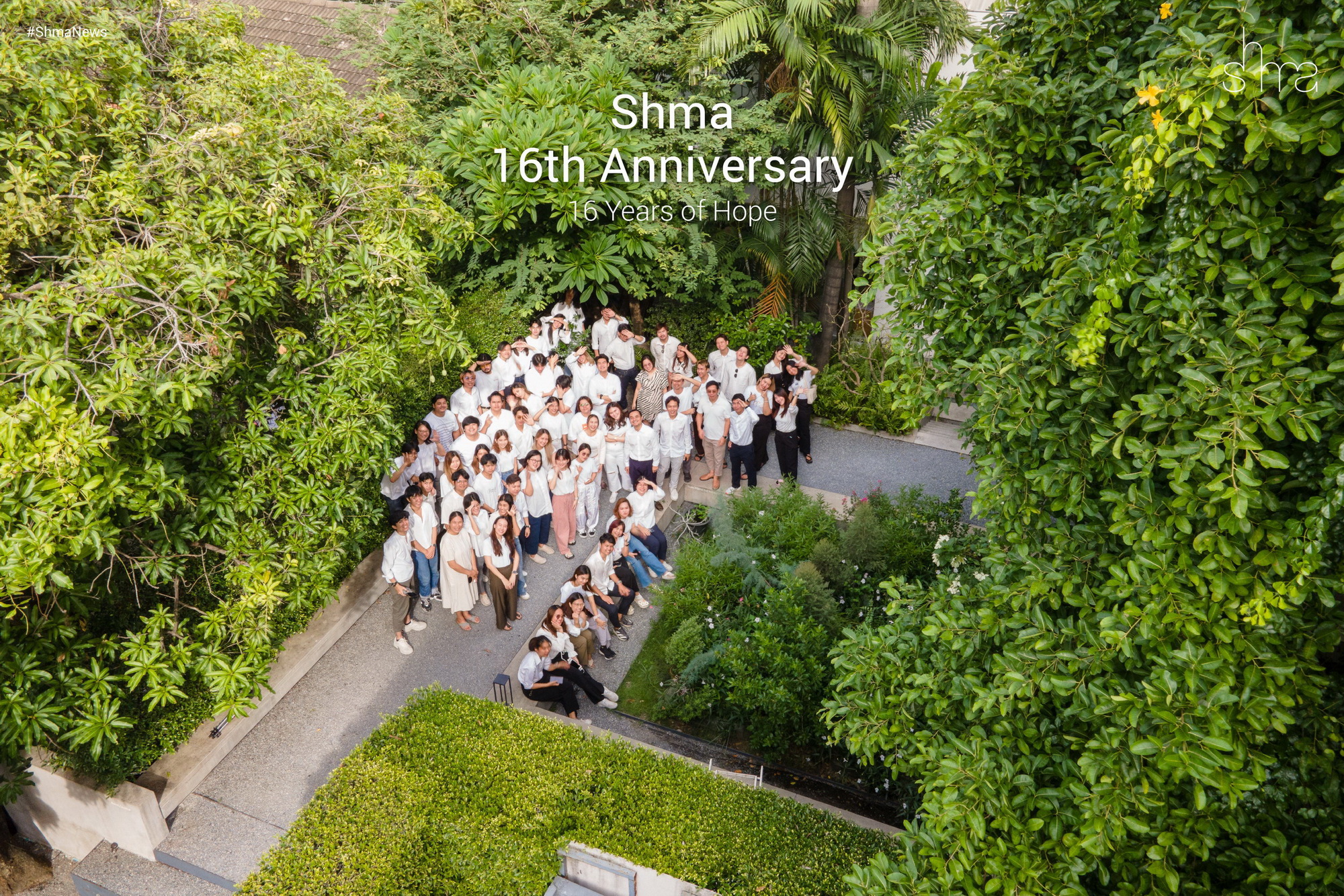




 Editor's Pick