Text description provided by the architects
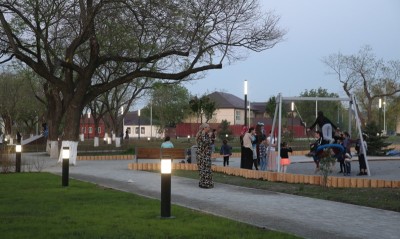
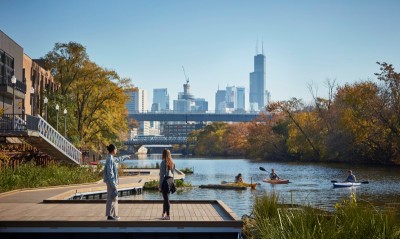
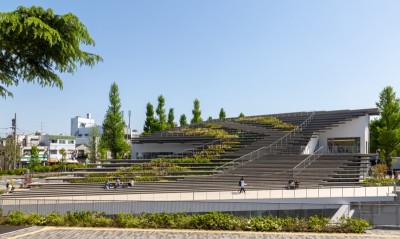
Commissioned by the Shenzhen Nanshan Urban Management and Law Enforcement Bureau and built by Huali Landscape, the 1,748-square-metre path improvement along Longzhu Avenue was completed in July 2021. The site sits south of the Taoyuan Village East bus stop, about 100 metres from Taoyuan Village metro exit B and 70 metres from a footbridge, on a busy residential arterial. Before intervention, only 1.5 metres of width separated the bus stop from the green belt, forcing pedestrians to take turns at peak hour, while the wide roadside green itself was overgrown with tall trees and dense, impenetrable ground cover. The question was whether different management bodies could share the green belt to meet walking needs, as a pilot for similar spaces citywide. The team conducted behavioural observations at rush hours, midday and weekends, and interviewed residents of different ages, before proposing a problem-led, non-over-designed solution. Slow movement, walking, wheelchair use, strollers, lingering and resting is moved inside the green belt on a 2.5-metre route, while a 5-metre main path allows two-way passage; fast cyclists and bus-transfer pedestrians stay on the outer cycle track, so that slow and fast users separate and can switch between modes. Three openings on the west, south and east link to Longzhu 7th Road, Longzhu 8th Road and the Longzhu auxiliary road, all at level for accessible transfer, and retained mature trees continue to provide shade while lower planting is replaced with easier-care species. Two shaded rest zones with benches and activity platforms serve everyday resting, waiting and chatting. When the project had served its neighbourhood for a year, the Ministry of Housing issued its national pocket-park guidance in July 2022; this small, acupuncture-like intervention, which resolves right-of-way, throughput and universal access at once, is offered as a working case for that agenda.




 Editor's Pick