Text description provided by the architects
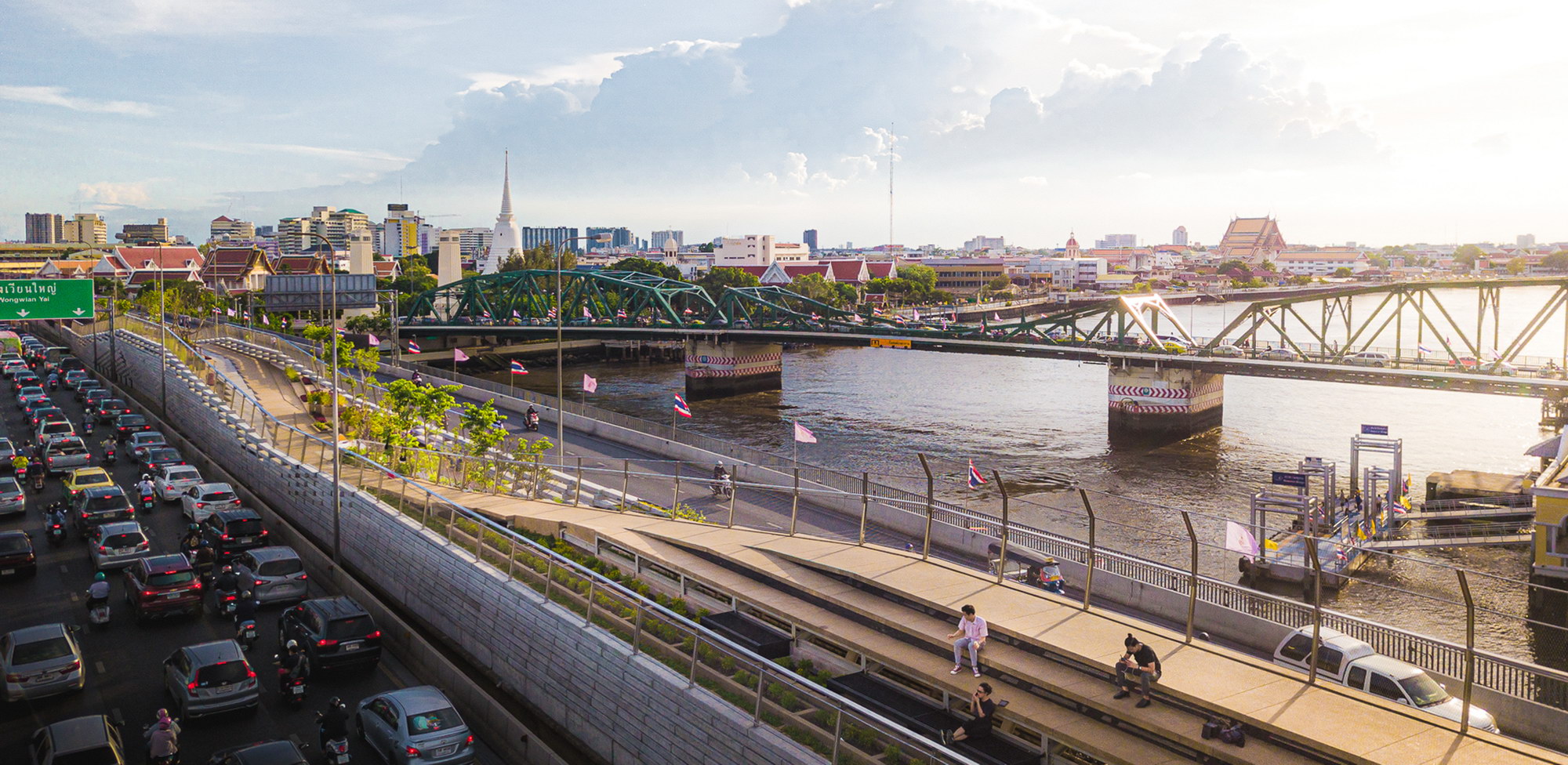
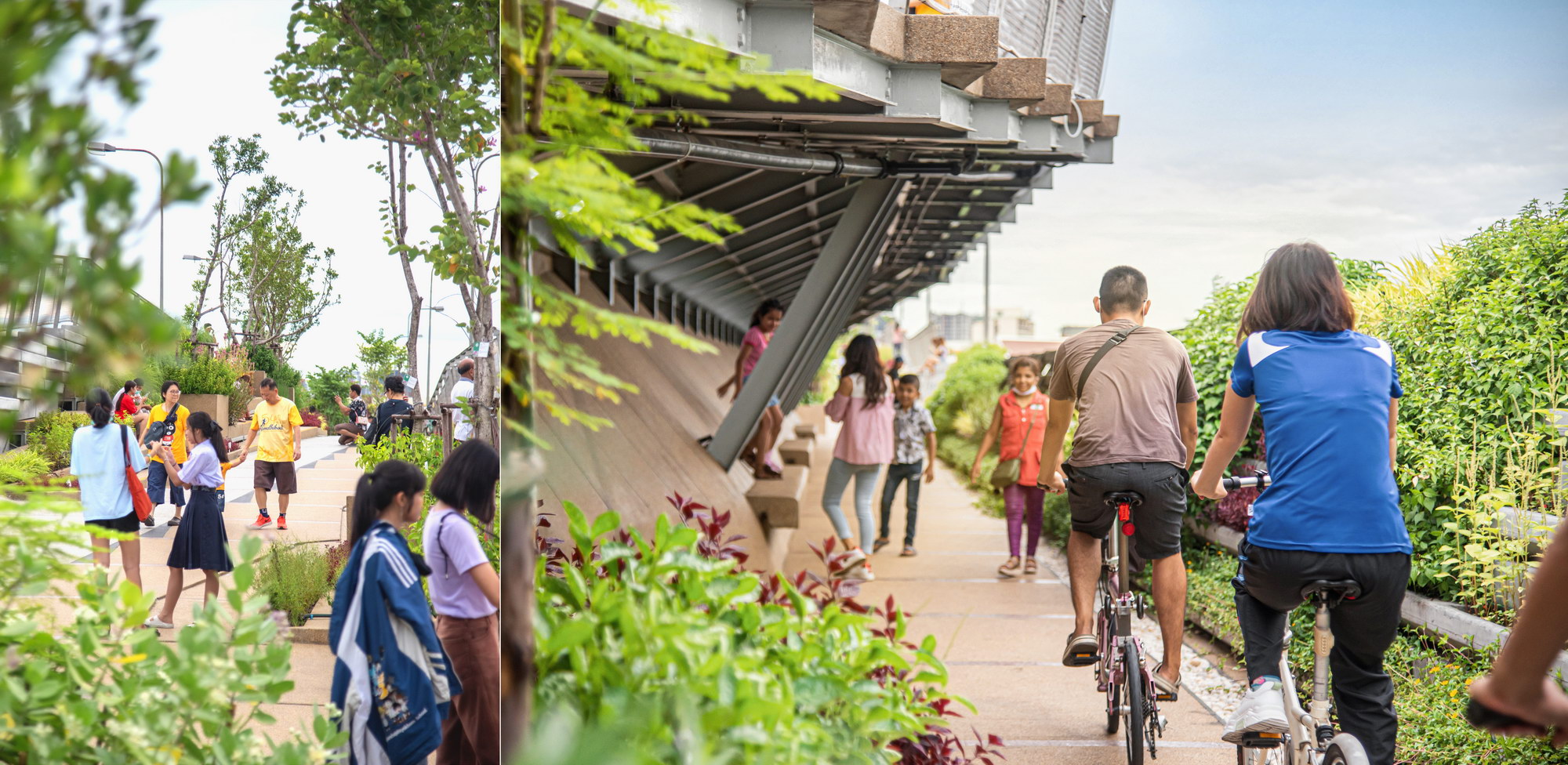
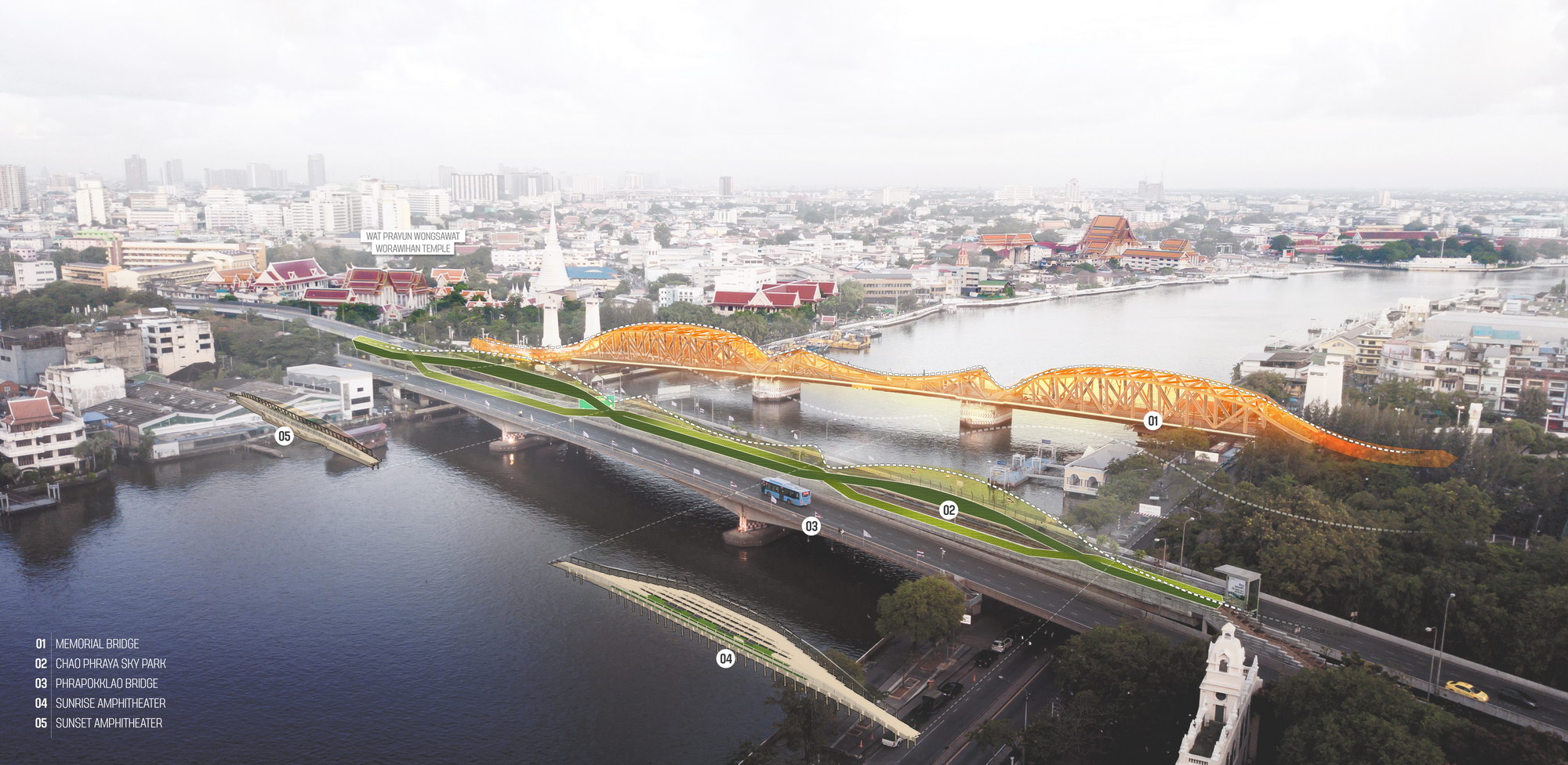
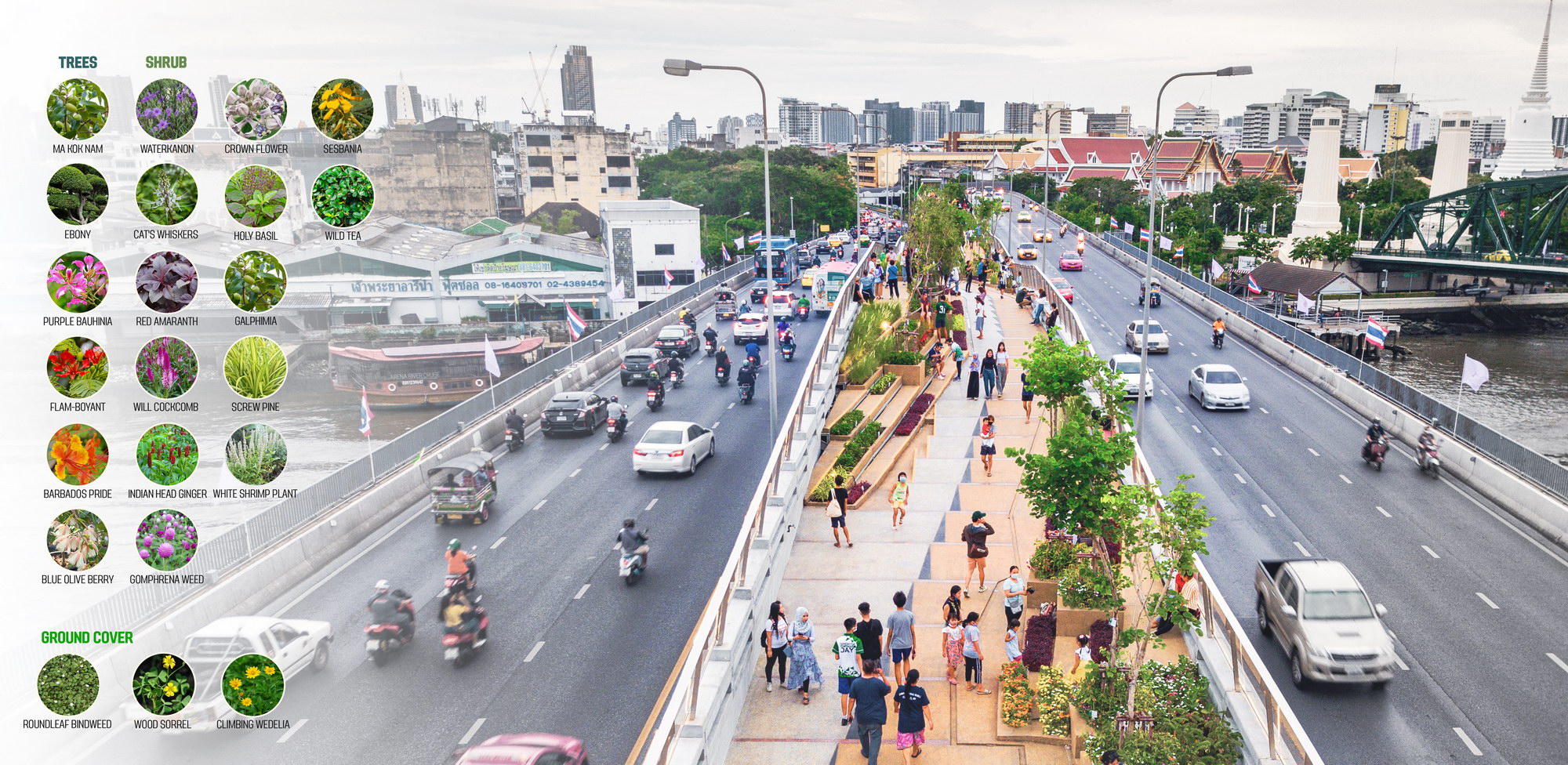
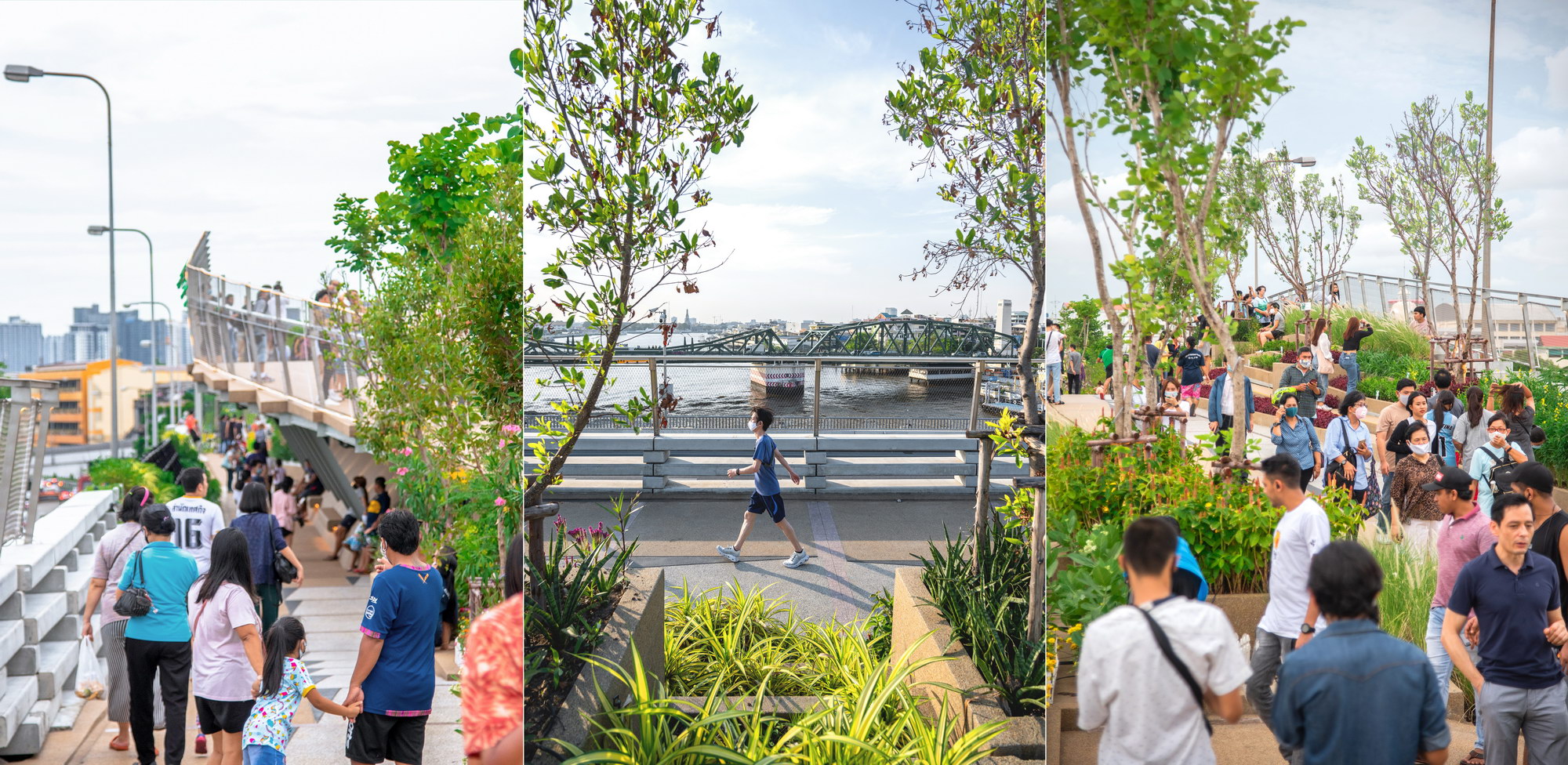
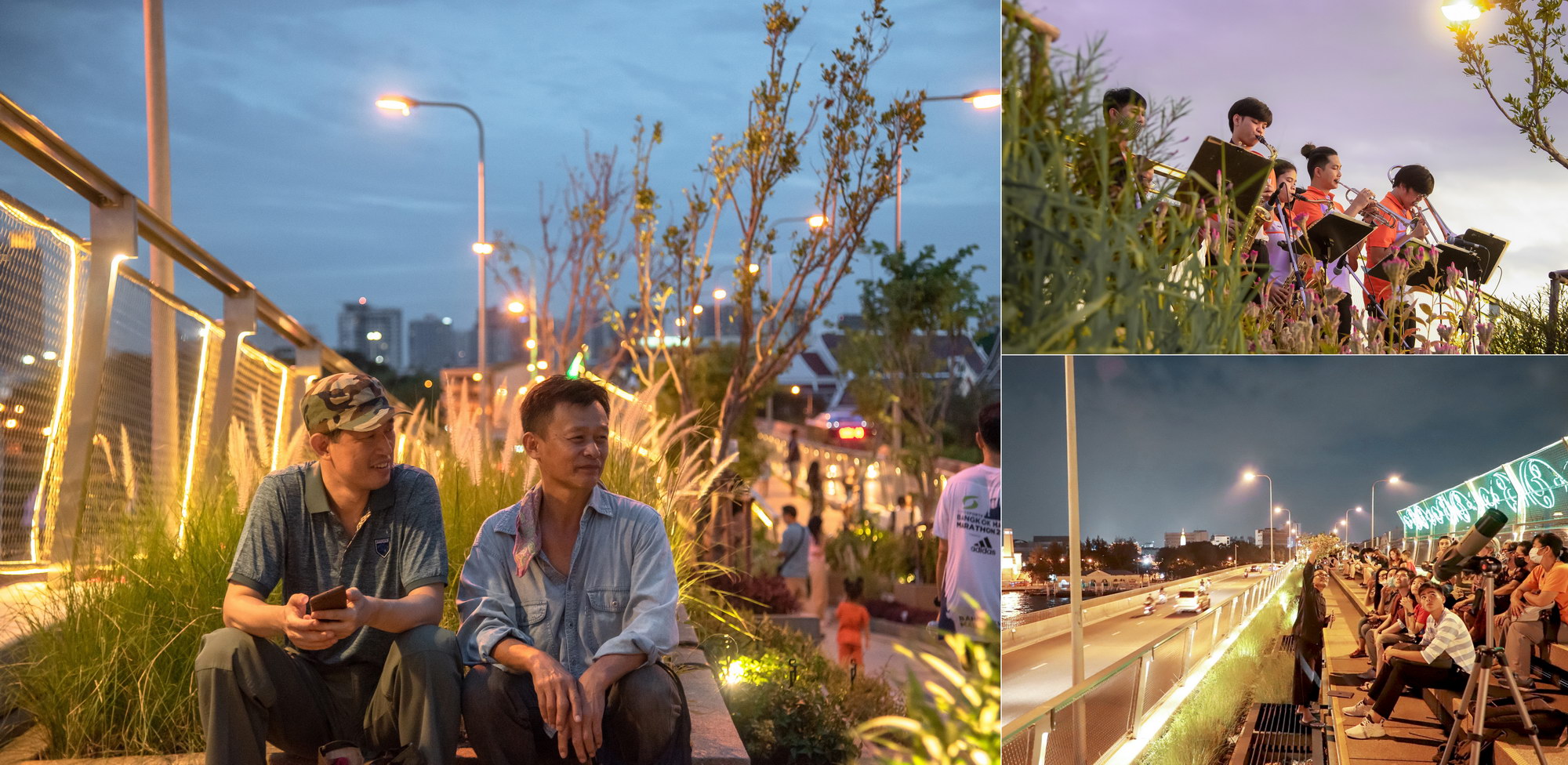
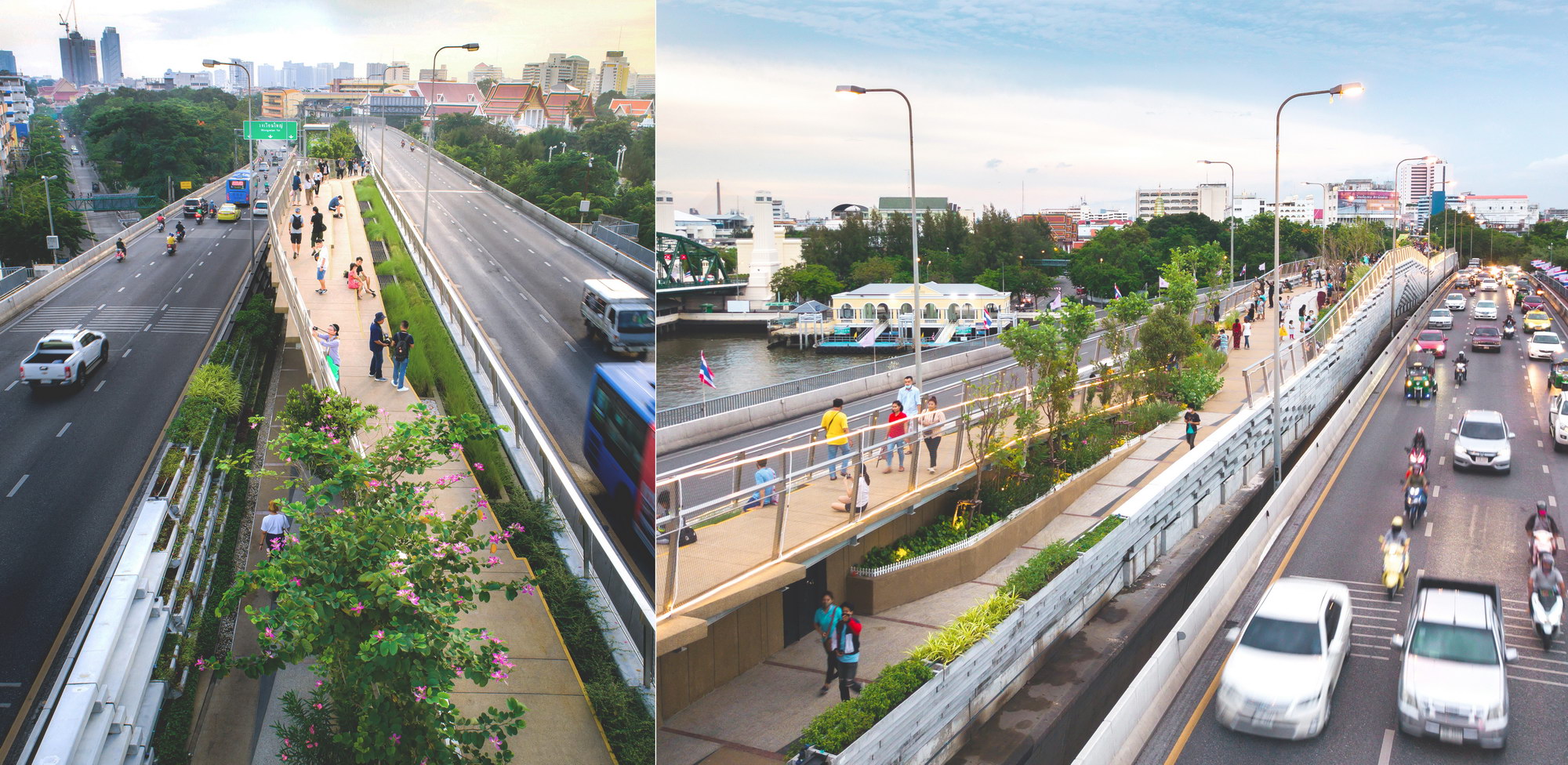
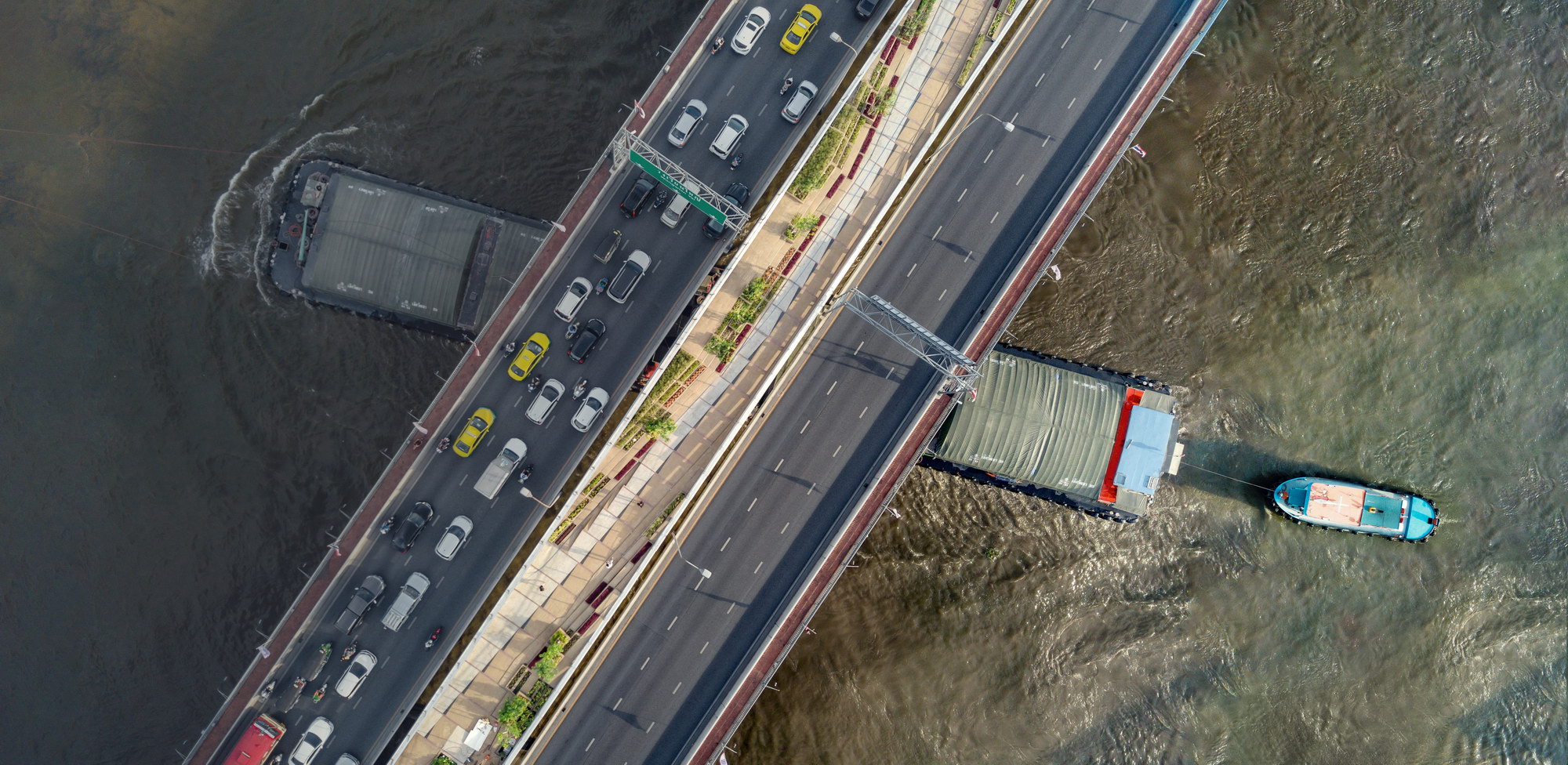
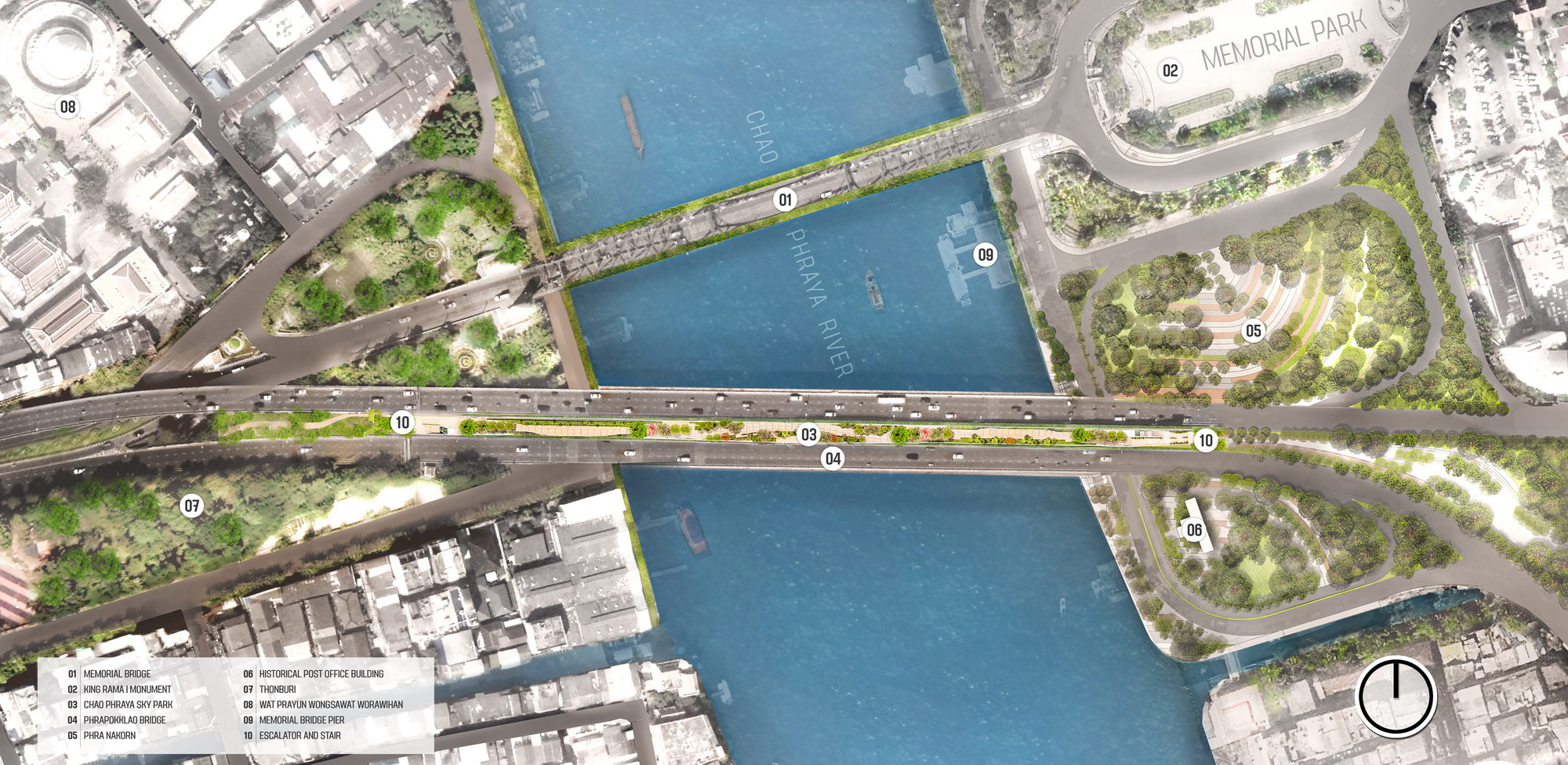
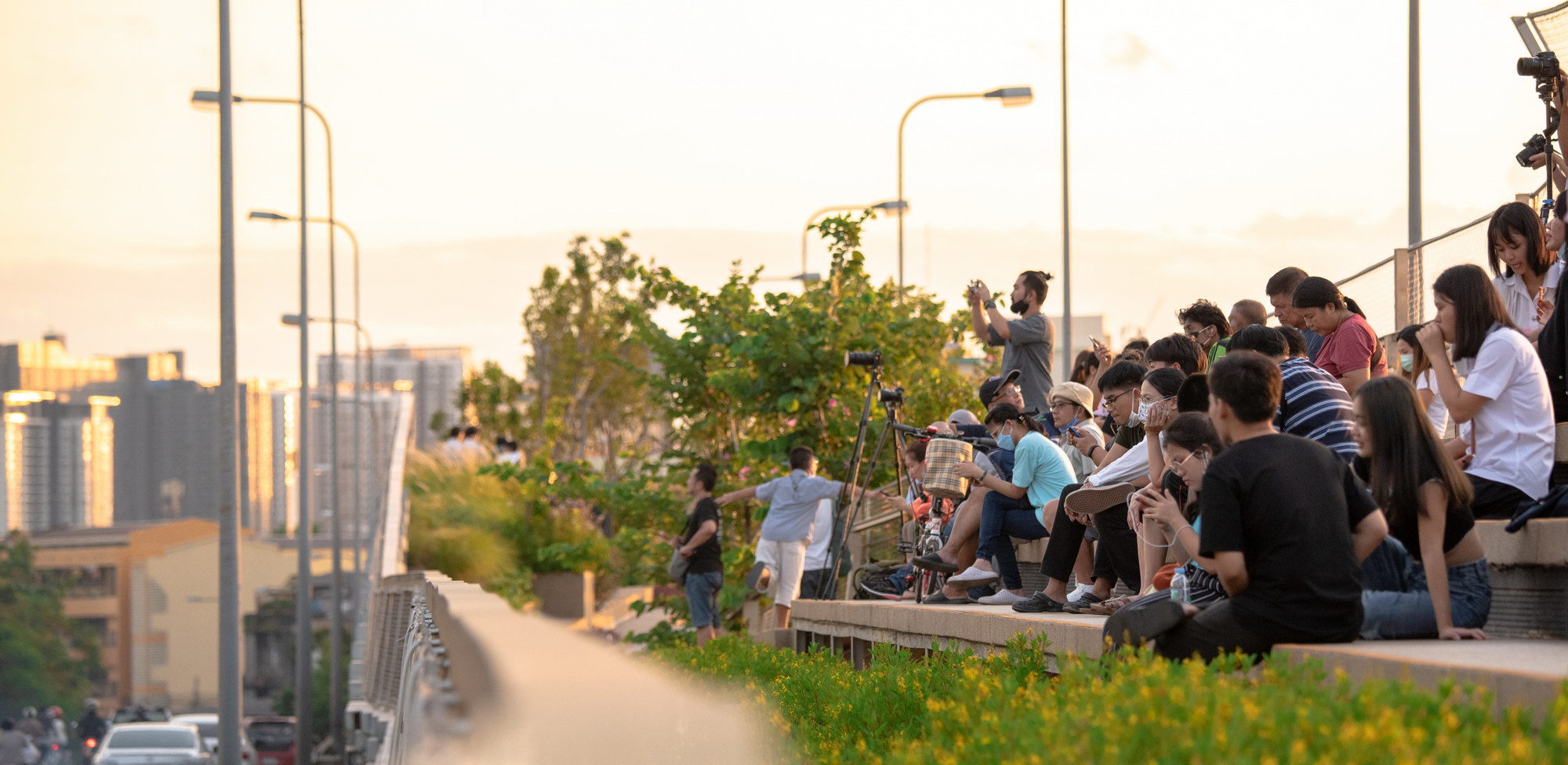
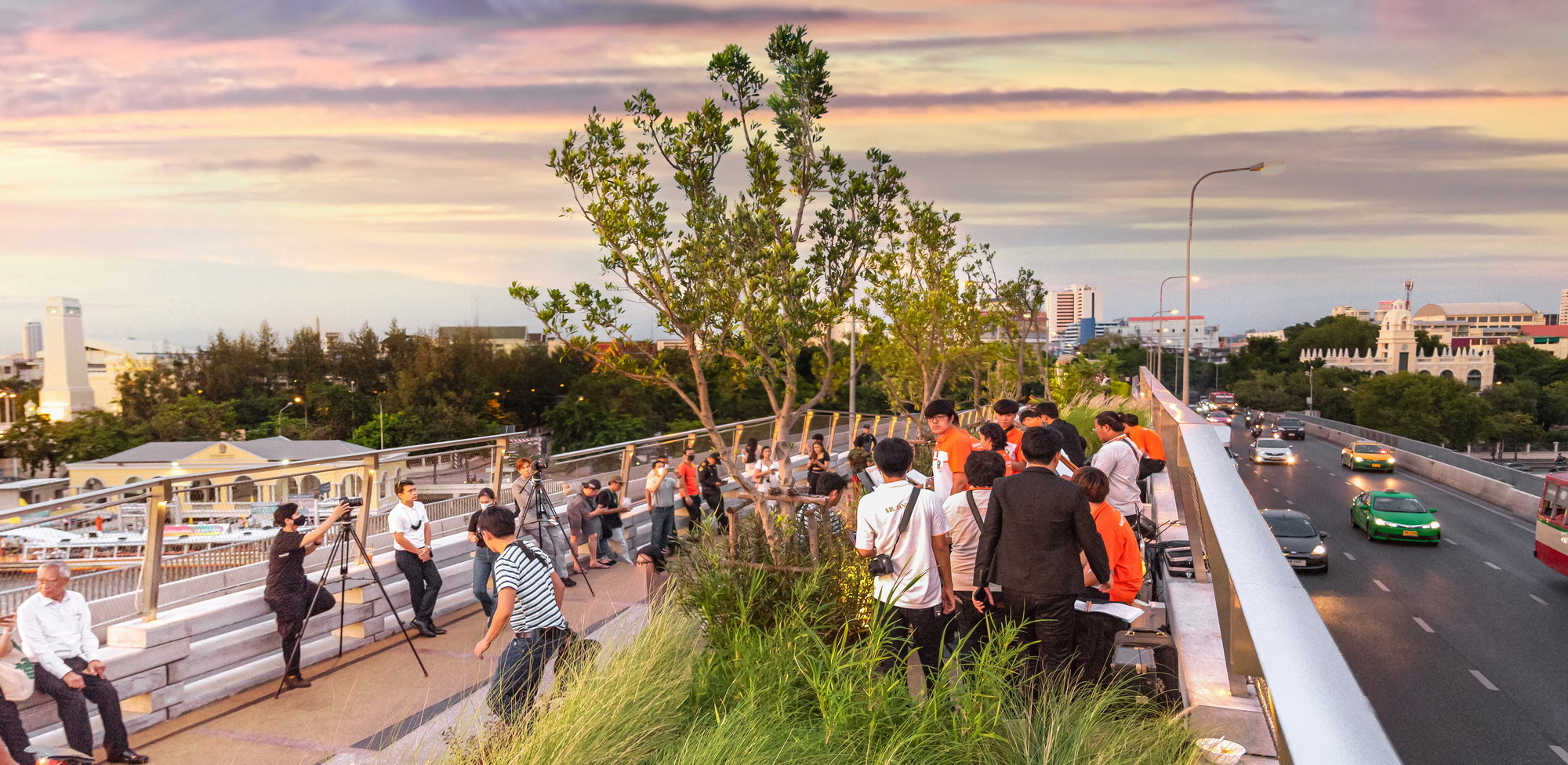
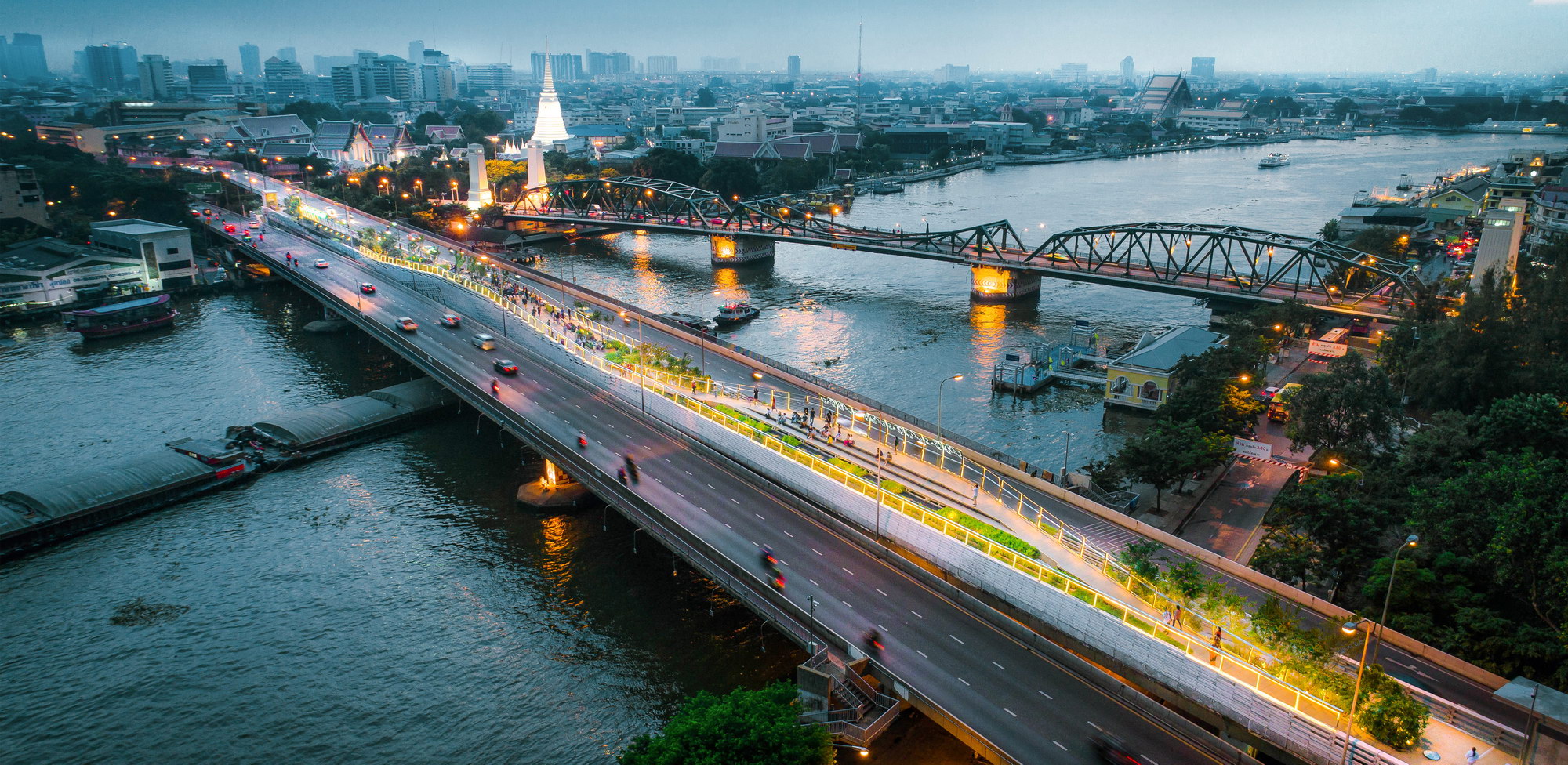
Amidst the pandemic, the Bangkok Metropolitan Administration opened its remarkable public space, the Chao Phraya Sky Park (CPSP). Left abandoned for almost 40 years, the halted infrastructure project has now been given a second life as the newest Bangkok landmark, and the nation's first pedestrian bridge park spanning a river. Finishing the unfinished dream In 1984, Bangkokians anticipated a hopeful milestone: being the first nation to establish a sky train in Southeast Asia. The railway would share its load with two existing roadways of the Phrapokklao Bridge in a gap of 8. 5 meters wide and 280 meters long. Due to its incompleteness and inaccessibility, Bangkokians named the abandoned infrastructure "Saphan Duan", or "amputated bridge. "The 40-year failed mega infrastructure stood abandoned as the city's unfinished dream。 Bridging the past to the present Merging juxtaposed sides of Bangkok two existing parks, the CPSP creates the first pedestrian bridge across the river for the nation, enabling dwellers to traverse on foot. Once inaccessible, the wasted infrastructure now links Bangkok’s significant cultural and historical landmarks. The CPSP is located next to the nation's most important monument: the Memorial Bridge, the new structure of CPSP humbly emulates the curves of its predecessor weaves the slopes of its counterpart to adorn the city’s landscape in unison. With a 360-degree view, pedestrians can enjoy a foreground view with the Memorial Bridge, overlooking Bangkok’s historical postcard destinations. CPSP has shown the future possibilities from abandonment to placemaking for increasing the health of the citizens and their city. Widening spaces, while lengthening experiences Squeezed between heavy traffic with just 8. 5 meters, The CPSP made rooms out of the narrowness by splitting the space into two interweaving pathways. Elevating all park structures, the CPSP reduces the disruptions caused by traffic visual, noise, and pollution. The waterfront in central Bangkok was often occupied by informal settlements or luxurious hotels, why not create a new public green space over the river? Once inaccessible, the wasted ruins are now whole, linking significant cultural destinations. Cutting across the shortest section of the river, the 280-meter appears straightforward in the visual distance. To lengthen the users’experience, CSPS hides its visual endpoints on both ends by raising intertwining walkways while forming Sunrise and Sunset Outlooks. CPSP shows the importance of walkability, creating low carbon-emission construction from adaptive reuse while restoring its citizens' physical and mental health with greenery. These natural gradients promote urban biodiversity, providing a microclimate and green corridor for pollinators and insects. At the Chao Phraya Sky Park’s hill curve midpoint. The two divided pathways merged at Sky Park’s midpoint, where the topography is raised as a hilltop curve, formed by small cascading steps that carve out a sitting area and a performance stage for special occasions. The project is a big step forward in collaboration and reimagination, solving the city's most pressing issues in a low-carbon context, increasing green space, and walkability, reducing emissions and pollution, or enhancing public health and enhance climate resilience city. The crisscross design of the varying elevations of paths ensures safe visibility, where all visitors can see and be seen. The interweaving design also opens up new Bangkok unique outlooks to admire the sunrise and sunset over the river. Design with Limitation Building an entire park on an abandoned, 40-year-old inaccessible Sky rail infrastructure is no easy feat. As part of their on-site investigation, the architect team needed to estimate all dimensions and to experience then as if they were walking on the amputated structure. Furthermore, with weight limitations, the soil depth and the additional existing structure were critical considerations during the design process. With space and time constraints, the bridge park wall structures are made of precast GRC, saving construction time, material and cost. Forming walls of diverse topographies, planter, railing, seating, framing the walking, and driving experience inside out and outside in. From Vacant to Vibrant Opened during the pandemic lockdown in Bangkok, the CPSK reminds us that we could not wait any longer to take action in addressing our public green space, public health, and climate crises and in building resilient cities. By repurposing the useless and rethinking the conventional. We can move forward to create a better city with creative use of what we have and countless future unused infrastructure that should not be left behind. Connecting people from the abandoned infrastructure Technical sheet Completion Date: 10 June 2020 Project Type: Public Park Across The River Project Area: 3,800 sq. m. Project Owner: Bangkok Metropolitan Administration (BMA) Project Leader: City Planning and Urban Development Department (BMA) Chula Unisearch, Chulalongkorn University Urban Designer: Urban Design Development Center (UDDC), Chulalongkorn University Landscape Architect: LANDPROCESS Architect: Chakdao Navacharoen Civil Engineer: Pisitsak Serklin, Sukkawich Thepchana Structural Engineer: Thummanuun Susumphao, Ph. D. Project Contractor: SGR Enterprise Company Limited Community Participation: Cultural Tourism Community Kadi Chin- Klong San






 Editor's Pick