Text description provided by the architects
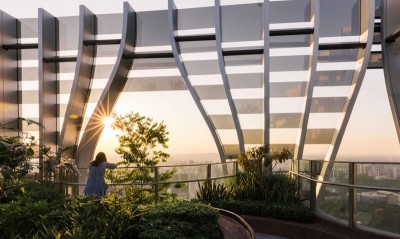
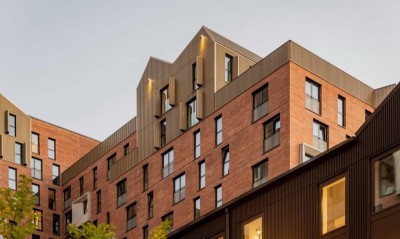
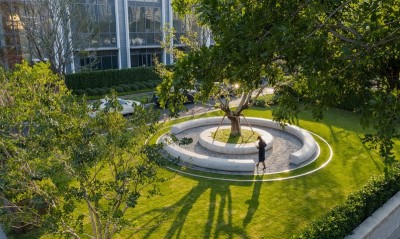
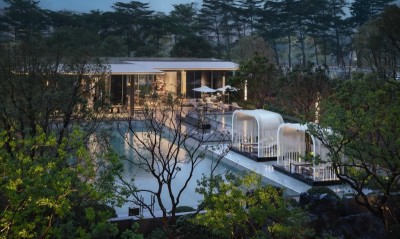
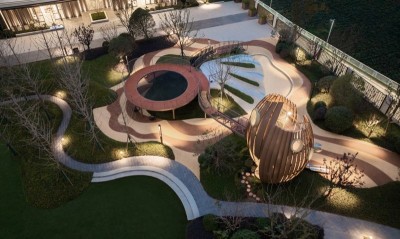
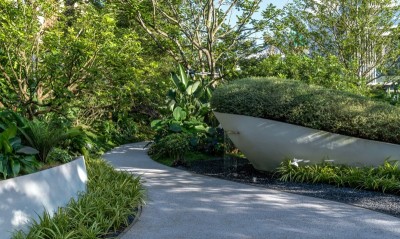
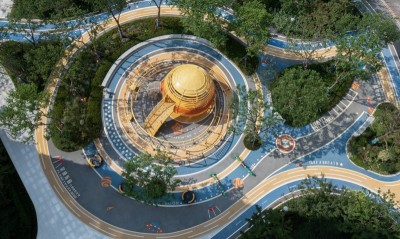
Yongwei Gusuyue in Suzhou sits near Tongjing Park in the watery landscape near the old city. The design draws on traditional Suzhou garden methods, modernizing framing and borrowed-view techniques to deconstruct daily life and create a flowing community space. The entry suppresses overall height with modern near-contemporary scale to convey Suzhou's understated, reclusive tone. The traditional roof form is combined with a bronze mirror gate and movable feature walls that create spiritual light and shadow. The central courtyard's side corridors use a bridge concept with extensive perforated mesh that enhances transparency and light play, white walls capturing a quiet corner of daily life. The structures' open porosity allows internal life events to overflow into the public realm, promoting porousness and activation. The design deliberately sets random freedom against ordered framework, soft against hard, white against dark. A communal long table condenses the qu-shui-liu-shang wine-cup ritual into a symbolic, representative design element that emphasizes humble, quiet humanistic character while supporting openness and participation. A custom LED screen inspired by the Moon-Coming Breeze Pavilion of Master-of-Nets Garden displays lunar phases, so that moon, mountain screen, water and planting illuminate one another. The project extracts Suzhou's nature and culture at multiple levels, using vertical variation and facade space to condense the lively reality of four seasons.




 Editor's Pick