Text description provided by the architects
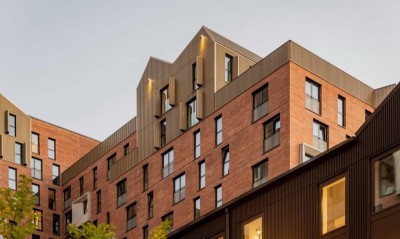
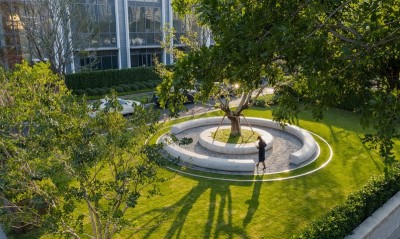
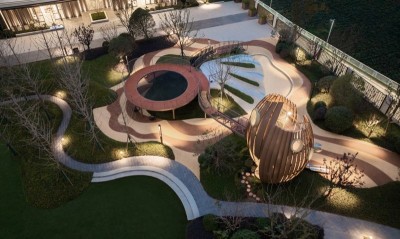
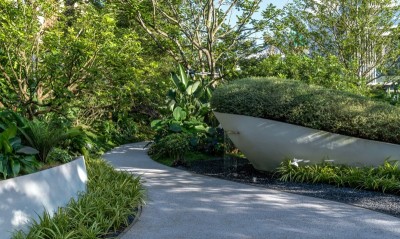
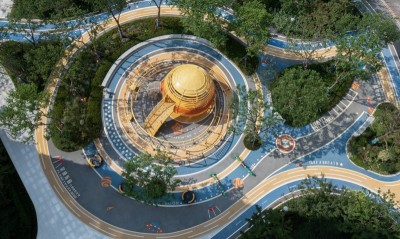
Longting Road 95 is a residential project in the Gulou district of Fuzhou, developed by Yango Group's Fujian division and landscaped by eLandscript. Fuzhou is read as a city that holds antiquity and modernity in a single gesture: century-old courtyard houses, tree-lined banyan lanes, modern towers and mountain trails all coexist, and the design aims to absorb both traditions while exploring a culture that crosses eras and a pursuit of nature. The ambition is to reshape a lively modern life in Fuzhou's old city centre through a garden-like dwelling that blends Eastern and Western traditions with humility and poetic imagination. The two ends of the site are defined by the "Gate of Fuzhou" twin towers and the Fuzhou Teahouse: glass-curtain residential slabs and a red rammed-earth clubhouse stand in strong contrast to the tree-lined old streets, and a dark landscape base is used to set off those rich colours and refresh the historic street front. The design is triggered by a memory of the Rodin Museum in Paris, where an axial walk from the Hotel Biron leads to a long rectangular lawn and a circular basin that links surrounding arcades and sculpted gardens, fusing classical gardening with artistic life. The team projects that axis from the "Gate of Fuzhou" towers through the central garden, extending the ritual of coming home and creating a gentle, rich hidden oasis that quietly answers the surrounding buildings. The entrance is a symmetrical, ceremonial gate that recesses an axial vestibule and leads back to a courtyard, with a sequenced detail language that makes arrival feel like exploration. The central garden is themed around water: jumping fountains for rhythm, layered cascades interacting with planting, and arcades and banyans that bound a very large garden but divide it, through screen-like elements, into intimate social rooms where openness and privacy coexist. At night, the atmosphere becomes restrained, refined and urbane, a fusion of Eastern and Western manners that gives residents a sense of timelessness. Beyond the central garden, multiple themed gardens are arranged for everyday intimacy rather than ornamental display, weaving Eastern and Western elements, nature and art into a residential language that updates taste without chasing trends. The ideal home, the project argues, is a dwelling with historical depth, where nature and art interweave and time is left to polish space, material, colour and light.




 Editor's Pick
 Latest Design
 Best Idea