Text description provided by the architects
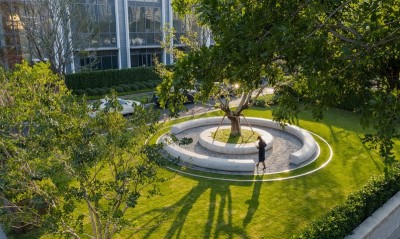
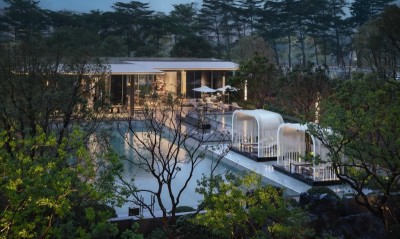
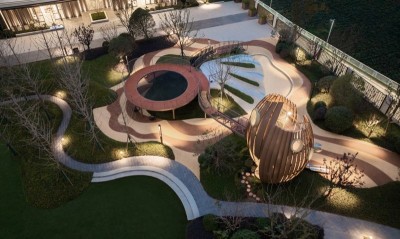
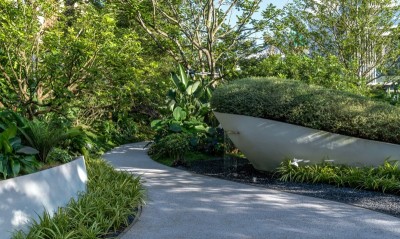
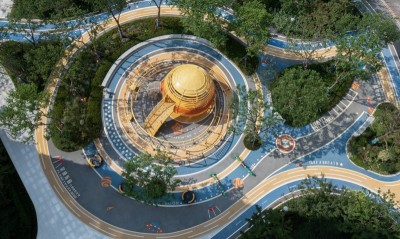
HONOR ONE Yuanzun Mansion is a residential demonstration landscape in Tonglu, Zhejiang, at the confluence of the Fenshui and Fuchun rivers, ringed by mountains with a narrow valley plain and scattered hills in between. The design is by HEYU Landscape Design Consultants (Shanghai), with design director Xu Jianlong and a team including Cheng Ming, Wan Zhiye, Liu Liyan, Li Xiaoxia, Xue Chengjie, Wang Hui, Fan Yujuan, Yang Ruipeng, Zhang Yunhua, Yang Pengwei and Zuo Yang. Tonglu is already celebrated for its strange mountains and unique waters, praised since the classic Letter to Zhu Yuansi; the design question is how to fuse local culture with fresh blood that makes the place more attractive. The project is therefore positioned as a future urban living community, defining an avant-garde, healthy way of dwelling and building an open place for emotional sediment, a projection of future lifestyles. Guided by the vision that city and nature grow together, the small demonstration landscape is used as a microcosm of future ecological urban life: a refined little landscape in which people and city, people and nature interweave, increasing both social and ecological diversity through how spaces are used. The design evolves from the original disordered freedom into order, letting the site 'grow naturally' through three steps: reading the existing condition, sorting circulation and grade changes, and evolving circulation into functional zones. The Welcome Lobby is designed inside the architectural gate, accommodating both the long-term controlled pedestrian flow of the future main district and the temporary flow of the display period; a central sculpture, paired with the perforated circular dome, takes its inspiration from floating bubbles of natural spirit, raising the dignity of arrival. The Floating Water Island is composed of multiple green islands and crystal islands, viewed from the indoor sand-table islands outward. The Roving Forest stages the under-tree leisure of the future community, and from the entrance the native clustered camphor trees make visitors feel as if they have stepped into a real forest. Reading Time extends indoor reading into an outdoor series of small reading rooms for one, two or several readers, plus characteristic resting nooks. Finally, the Free Growth zone preserves the original clustered camphor at the boundary corner, treated as a window display of natural vitality that becomes the strongest first image of the site.




 Editor's Pick