Text description provided by the architects
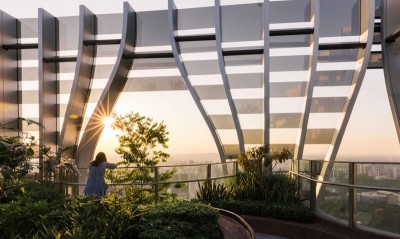
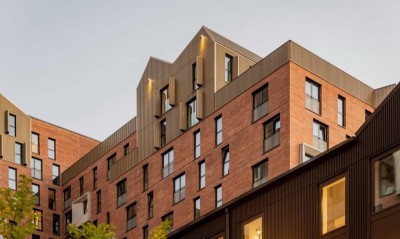
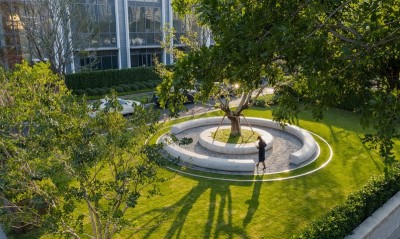
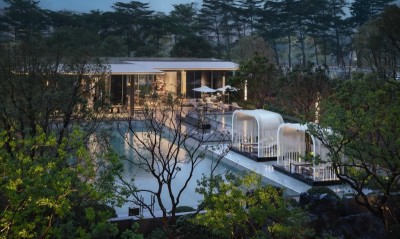
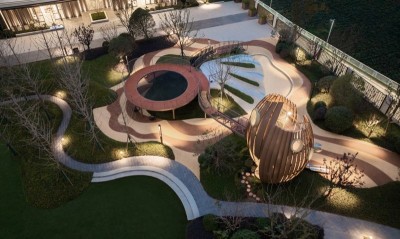
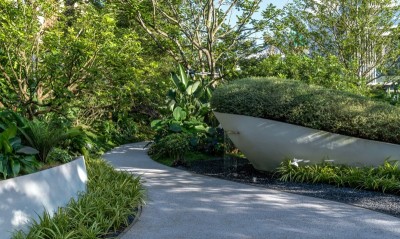
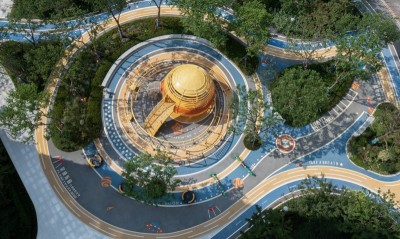
Mirror of the Sky, the landscape of the Eling Peak hillside residence in central Chongqing, designed by Change Studio and built by Jisheng Landscape in 2016 on a four-hectare site for CDL China with architecture by Moshe Safdie Architects, takes on one of the densest, most elevated urban contexts in the city. The site enjoys a sweeping view over the city, backs onto the ecological green of Eling Park, and sits beside a strongly individual residential building by a renowned architect; yet the already-built outdoor condition had diluted all these advantages, with overloaded vertical relationships, an ambiguous circulation system, crude functional zoning and a disconnect between building and landscape. The designers' response was a programme of "measured demolition and spatial reconfiguration," extending the elegant curved lines of the building into the outside. New circulation and functions were reconstructed on the terraces, and the building's set-back forms were pulled outdoors as viewing platforms, simultaneously screening unsightly details such as ventilation shafts and light wells. Because outdoor space is tight, the strategy was to keep the city view as the principal material: a quiet water band defines the spatial boundary and links the various terraces, widening at the point of best view into a still surface that reflects sky, city and environment together like a mirror. The reconfigured circulation stitches the reconstructed functions back into the building, while the return-home court uses more naturalistic planting and comfortable courtyard seating, so that each small pocket feels like something grown, alive and unexpected. The design and construction were highly integrated: the landscape team worked repeatedly with the architects and was on site almost daily to resolve the rich vertical changes and refined details, producing a close collaboration that the studio offers as a model for more interesting urban residential environments.




 Editor's Pick