Text description provided by the architects
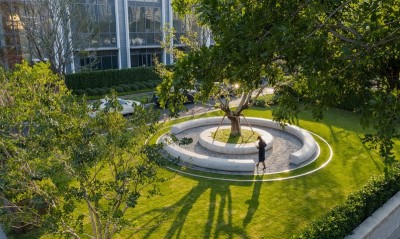
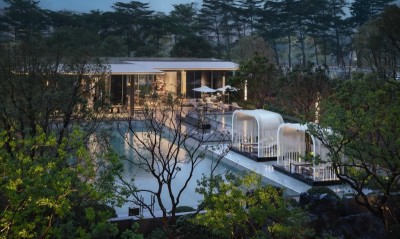
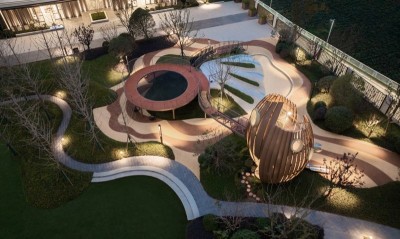
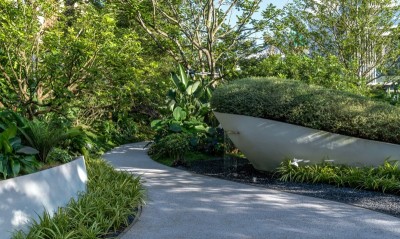
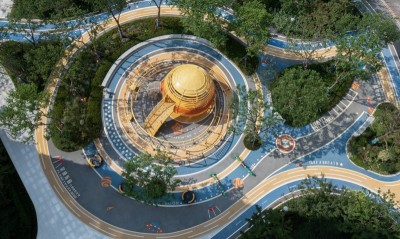
Luyin Qingzhu Lake in Changzhou sits within a city known as a mountain-river-island and thousand-year-old commander, the home of Qu Yuan and Jia Yi. The site itself is tucked in forest beside a stream, with extraordinary natural conditions. As the opening to a large master-planned development, the challenge is to create a unique experiential space from a single node. The design seeks the site's spiritual culture, continuing nature's most graceful gestures and hiding living within nature through restrained, introspective freehand brushwork that merges dwelling with landscape. This is a renovation project with tight constraints; the team returns to the site's original beauty, recomposing natural sightlines around two core themes: the urban interface and a semi-natural water body, pursuing the rhyme of Chu landscape poetry through boundaryless fusion. Dynamic poetic narration draws architecture, landscape and nature together, dissolving the building into distant mountains. The design translates Chu culture into a dialogue between modern art and classical aesthetics, inheriting the idea that mountains and rivers have their own clear music without strings, and infusing the romantic naturalism of the Chuci. Four poetic-natural realms emerge: the dissolved expanse, the mysterious attribute, natural order, and spiritual resonance. The dissolved expanse uses pure plant habitats to create an abstract, distant elegance that lets visitors step out of the city. The mysterious attribute winds through forest paths and blade walls, producing narrow, exploratory walking moods and dappled light. Natural order opens at a cascading waterfall; the architecture, landscape and nature interlock, with a green island and a single slender tree injecting vitality. At night, layered glows shimmer like stars. The commercial extension uses descending terraces to absorb grade changes, with planting beds dividing spaces for relaxed under-canopy gathering. The 10,000-square-meter landscape, opened in 2022, conveys a Changzhou-inflected mountain-water aesthetic, capturing the gifts of a single pool, a thin shadow or a faint light and delivering an ideal realm of poetic nature.




 Editor's Pick