Text description provided by the architects
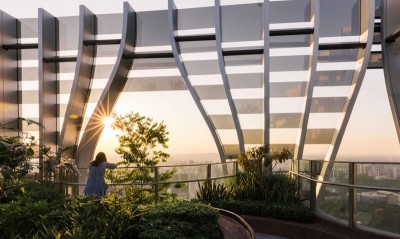
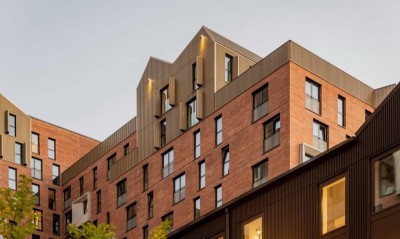
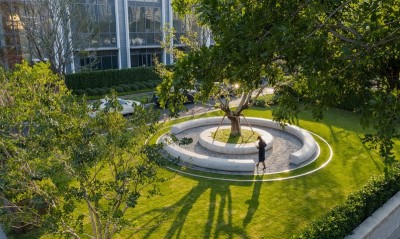
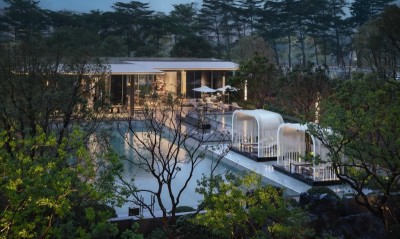
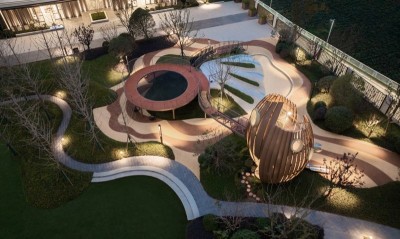
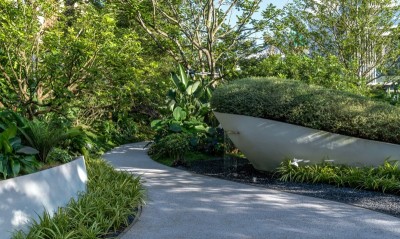
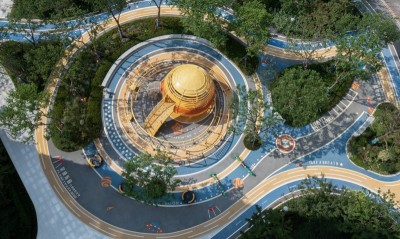
UNITY · CHANGE MINIMALISM ·PERMANENT We shape architecture and architecture in turn shapes human behavior and character. In the face of conventional building bodies and low cost, How to create a space with discernment and vitality? With the development of global economic integration, the trend of "desertification" in landscape design concept and "assimilation" in style is becoming more and more obvious. Popular design is more and more obsessed with artificial beauty and delicate literary and artistic skin, and stereotypical design style makes viewers passively accept sensory paralysis. Before conventional architecture, how should we reshape the landscape possibilities of the new era? How to excavate and create a landscape language family with site spirit? Seek unity in common, seek change in unity, seek simplicity in change, seek long-term in simplicity "Unity" of order and "diversity" of space Two sides of the same coin that balance each other We hope to skillfully balance and combine the two in this field With a single module, the three-dimensional space Seek unity in common, seek enrichment in unity The greatest art is the transformation of complex and diverse environmental language and architectural structural expression into the highest unity. Kengo Kuma once expressed: "Architecture is originally burdened with the sad fate of having to highlight itself from the environment. It can be said that this is a destiny that is forced to be separated from the environment. " What the current landscape architect has to do is to subvert this kind of destiny builds architectural and landscape spaces with unique tension. Anything, whether it is stone bricks or plantings, or space design, architectural form, we can all be seen as a certain whole composed of interconnected parts, and we can also regard this whole as a structural system. There is spatial independence and integration in the entire structural system. In the Hezhu Meijiang project, we pay more attention to the overall space including the steps, waterscape, sinking space, exploration park and site, and integrate human needs, "symbolic" design expressions into the space, and create The cultural essence of landscape design; through the use of positive and negative space effects and the use of "paperclip language", the city, architecture, and landscape are used to realize the "three-in-one design concept", unity in balance, and integration in independence. The change of the landscape space shows the spatial difference of the landscape process and its driving force. It changes with the use of the subject and time, and faces the surrounding environment from different time perspectives, creating a continuously changing perception space. With the participation of human behavior, the background of the story, the process of experience and the entire environment are interspersed in the space, constructing a rich and changing landscape narrative language. "An excellent landscape designer will know how to use the white surface to transfer sunlight directly into the space, and establish the order change of space and light", deducing the real spatial imagination of exquisite counterpoint and continuous rotation. In the interactive "unbounded·change" of seeking knowledge, interest constructs space and knowledge constructs time. Through streamlines, turn turns, ramps, and steps connect the height difference, connect the unit modules in the site in series, and the rich and diverse splicing combination creates immersion, complex and multi-dimensional space experience. ” "In this era, Design is to create space in the city, Pay attention to human perception and experience, In the simple and inconsistent, Create an urban spiritual texture where rationality and sensibility coexist. " In the ideology of space language, adopting Mies’ contemporary minimalist architectural language standard of “less is more”, whether it is the use of design language elements or the “paper-clip” combination of planting landscapes, it describes the rigor of space. And rationality, the design language depends on the structure of the building without being restricted by the structure. It is generated from the structure and feeds back the condensed and unification of the structure. “Architecture does not form a barrier between humans and nature. Instead, it uses a subtle metaphor to extend the urban life of humans on land to the distant natural landscape. ” The integrated language of plants and space creates a pure beauty and tension on the site. Achieve the effect of seeing the big in the small. In the landscape design, we cut the complex and simplified, and eliminated the redundant elements in the site, forming an abstract and simple perception space and the material praise of the viewer strolling through it, with less distracting expressions, more spatial essence; less language use, more scenarios Change, use the same site logic to freeze the interesting spatial trajectory. Experience the narrative feelings of the venue in the space between up and down, inside and outside, far and near, space reciprocating changes, and free roaming. After any landscape architecture is completed, there are many hidden forces behind it, such as urban context, human relations, etc. The architecture is no longer an isolated individual, but is related to the urban space around it and even a larger area. What we hope to create is a community park-style entrance demonstration area with "eternal style". Even after marketing, its style will remain forever, and it will subtly influence the thought, characteristics, value system, development direction or potential of the urban space itself. With the eternal spirit of the site, the city, architecture, and natural landscape have an inseparable internal connection and unity. EPILOGUECOMMENTS ON THE PROJECT Facing the design proposition of low cost and standardized building How to create landscape in such a routine project, so that the overall appeal and vitality This may be the norm that we need to deal with Let's Seek unity in the common, seek change in unity Seek conciseness in change, seek long conciseness




 Editor's Pick
 Latest Design