Text description provided by the architects
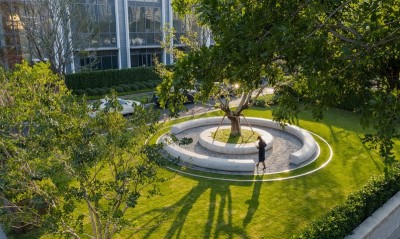
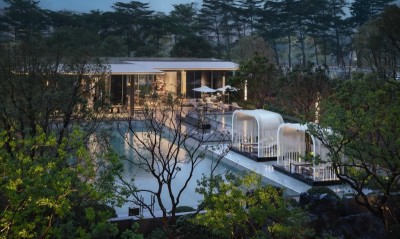
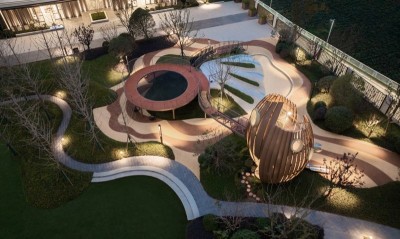
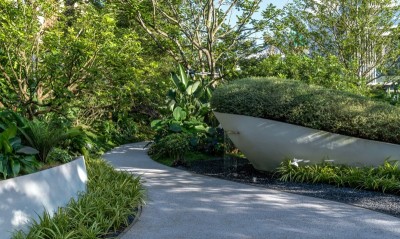
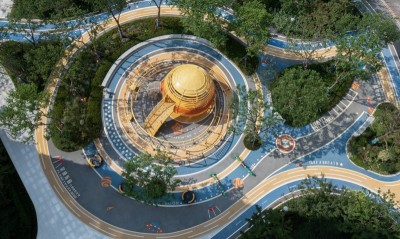
The landscape for Dajia Lishui Wanghu, developed by Dajia Real Estate and completed in 2022 on 5,200 square metres in Liandu District, Lishui, Zhejiang, applies deconstructivist philosophy to break unitary order and recompose hidden freedom in search of nature's subtext. Lishui is known as the green valley of Zhejiang, its hills, water systems and primary landscape forming the last secret realm of Jiangnan. The site backs onto Lishui Baiyun National Forest Park and faces Dongxiyan Scenic Area, surrounded by mountains with 80.4 percent forest cover. The principal design challenge is a 5,400-square-metre demonstration garden that must accommodate an existing municipal flood-diversion channel. The strategy is first suppress then release: a low-key, inward-opening approach that sutures the project into the urban fabric while respecting the site's original natural poetry. Drawing on Jacques Derrida's deconstruction, the design sets dams and aquatic plants to soften the relationship between the channel and the garden, retains the existing maple grove and reinforces the banks, hiding the built intervention within an abstract deep forest. The entrance features rows of Photinia fraseri columns combined with shaped landforms and cascading water, forming a natural, processional arrival. The forecourt is symmetrically open, layered with perforated feature walls and a central water feature, the walls drawing on the building's rectangular language and rendering it in material texture. A silver water sculpture takes its form from the twin lake watercourses and the inlet channel, its flowing silhouette contrasting with the architecture's geometry. Around the corner lies the existing red maple grove, a seasonal destination that turns in autumn into a layered orange-and-green paradise where Miscanthus grasses sway among the trees. Every detail, from the totem logo and perforated wall craftsmanship to water-feature materials and structural wall construction, was refined over months under strict engineering standards. The project treats deconstruction not as an end in itself but as a fusion, a quiet and poetic promise of restrained, native nature.




 Editor's Pick