Text description provided by the architects
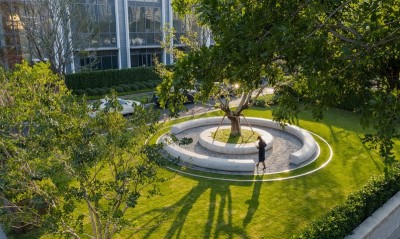
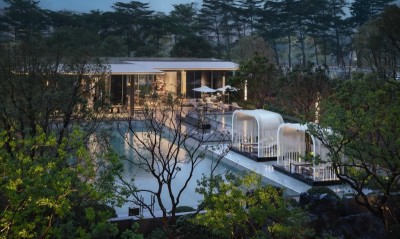
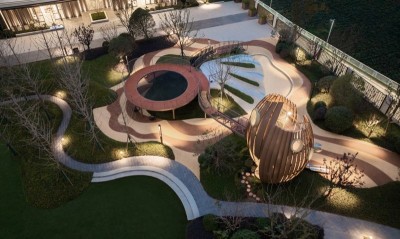
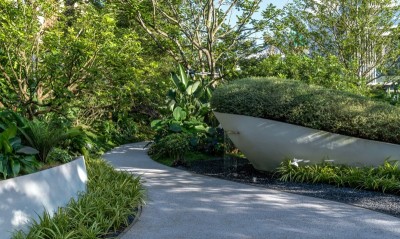
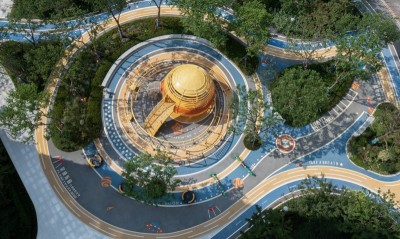
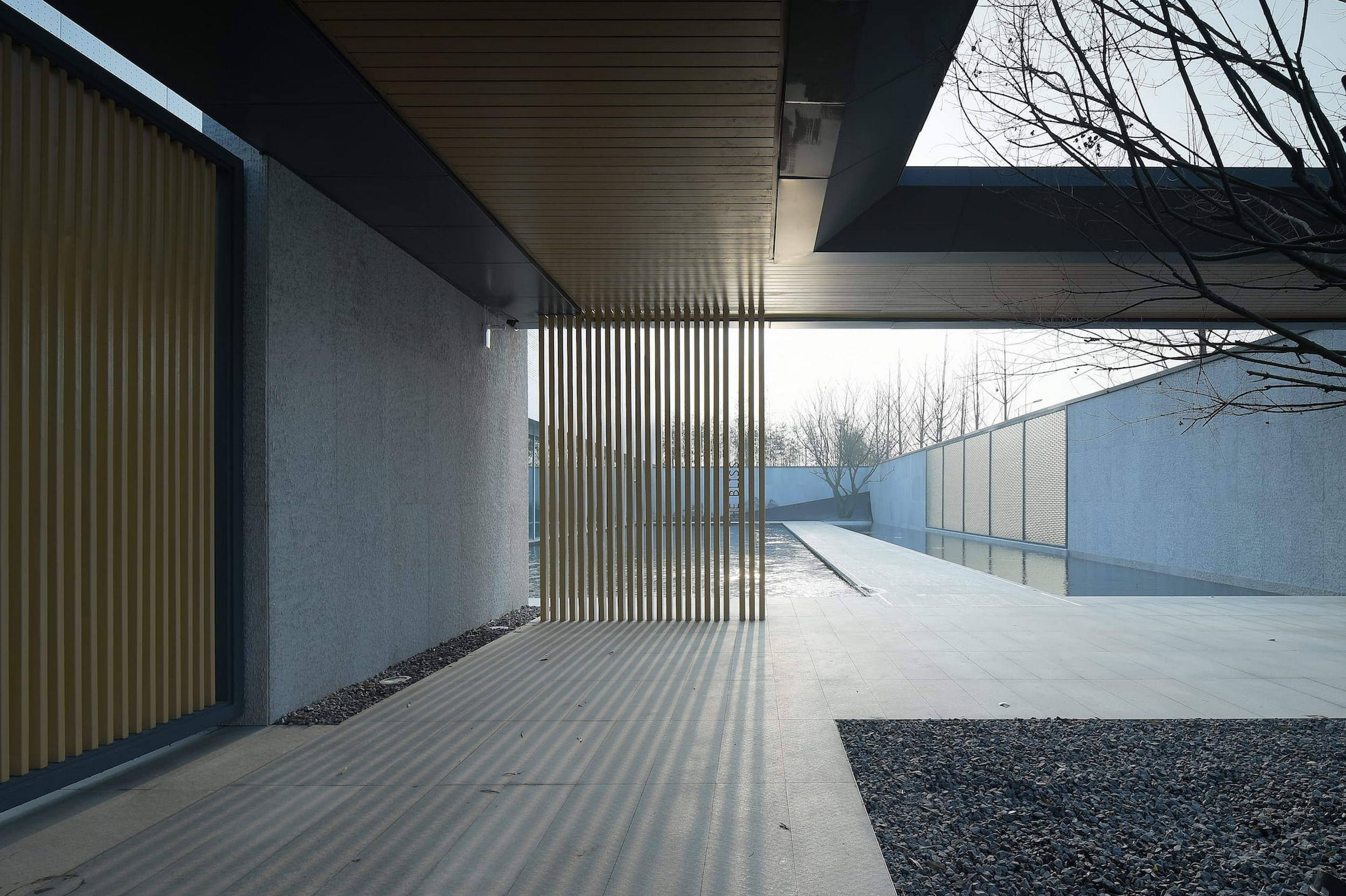
Rongyue Dongfang by Yango and Dafa is located in Jurong, the southeastern gateway to Nanjing, a place whose name is recorded as a small marsh east of the Yangtze and to the left of Jinling. The design draws on the aesthetics of the Song dynasty, when Chinese taste turned from the grandeur and ornament of the Tang toward restrained minimalism and demanded absolute simplicity in circle, square, plainness and matter. The prose of Su Xun, the natural plainness of Zeng Gong, the calligraphy of Emperor Huizong and the rounded, flowing forms of Ru and Guan kilns all share that same standard of and. The site is long and narrow with a long street frontage and an initially singular, constrained spatial character; the design attempts to move from an empty, spiritual place to one charged with lived scenes, and to fuse traditional atmosphere with contemporary lifestyle by distilling the essence of classical aesthetics. Three realms structure the experience. The first realm, leaves falling on an empty mountain, where can one find the traces of fragrance, defines the entry as a search for the mountain, with stone as the protagonist: the plainness of black stone is set against the pale elegance of white walls, and trees and flowing water soften the stone's hardness. The second realm, the empty mountain with no one, water flows and flowers open, stages a completely different mood at the front court, airy and clear; through changes in material texture, contrast of colour, and the combination of leaping fountains and still water, the visitor walks through light into a view of mountains where water flows and flowers open. The third realm, an eternity of sky, a single night of moon, forms the return path to the show flats and proposes that everything in life return to its most essential being, using light and dust as the design concept and three atmospheres named plain, unvarnished and to build stone landscapes that enrich the homecoming route.






 Editor's Pick