Text description provided by the architects
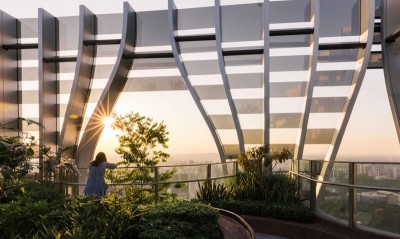
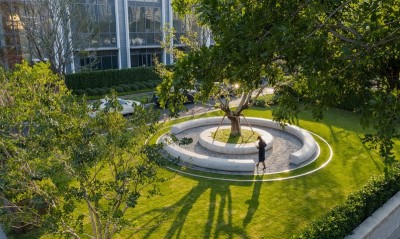
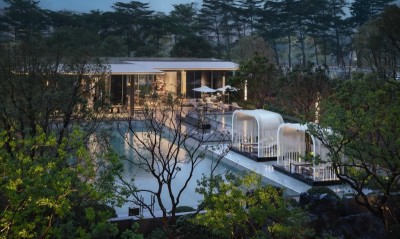
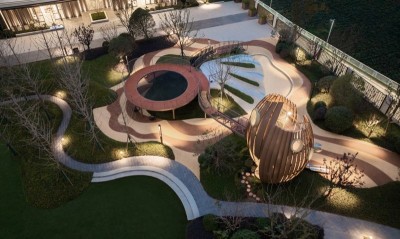
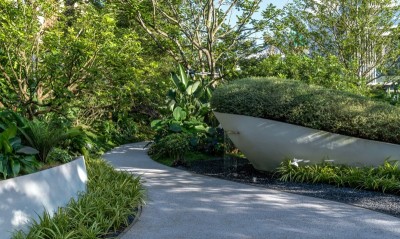
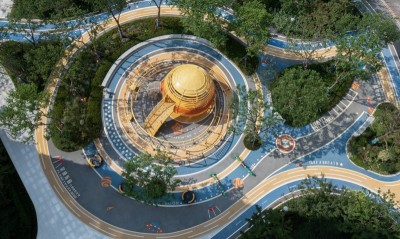
Nestled in the tallest skyscraper cluster of Yunda Central Plaza in Changsha HSR New Town, known as the New Pudong of Central China, The St. Regis Changsha occupies the core of the Wuguang business district with a prime urban location, bustling surroundings, and excellent transport connectivity. The architecture follows St. Regis Hotels' consistently composed and understatedly luxurious positioning, while integrating Changsha's regional character. The design responds to the cultural depth of Eastern aesthetics, advocating closeness to nature and contemplating the relationship between humanity and the natural world through the philosophy of unity of heaven and humanity. Drawing inspiration from nature, the team extracted basic landscape design elements—mountain, water, cloud, and tree—using stone as mountains and trees as peaks. Combined with the hotel's soaring tower form, the design concept of a cloud-top stream valley was proposed. To block out the noise of surrounding busy streets and heavy pedestrian flow, the designers used mountain, water, and stone elements to create flowing water feature walls and layered rockery waterfall landscapes. Externally this presents a continuous and cohesive landscape presentation face, while internally it forms a multi-layered water system landscape that transitions from built to natural. Within the stream valley, it screens sightlines and noise while making the hotel forecourt arrival area more vivid and rich. This corresponds to the concept of the 59th-floor cloud garden, symbolizing the stream valley. The sixth-floor rooftop garden is a shared leisure space for both The St. Regis Changsha and the W Hotel. The team adhered to natural ecology principles in layout, using landscape design to enhance the ecological performance of the building roof. Elevation changes add interest, while three-dimensional greening creates enclosed vertical spaces that increase overall green ratio and environmental comfort. Sponge city principles are introduced: elevated rainwater planters and vertical planting intercept and collect rainwater, filtered through plant root systems and soil layers, and an automated timed irrigation system reuses the harvested water, reducing the heat island effect. As the city's tallest hotel, The St. Regis occupies floors 48 through 63, offering cloud-level panoramic views of Changsha's mountain-water-islet-city character. The 59th floor features a new Chinese-style interior landscape, providing guests with the most refined high-rise landscape experience. Starting from the cloud-top stream valley concept, the team used curved and straight lines in a more designed manner, combining Chinese elements with contemporary materials to create a highly designed interior landscape.




 Editor's Pick