Text description provided by the architects
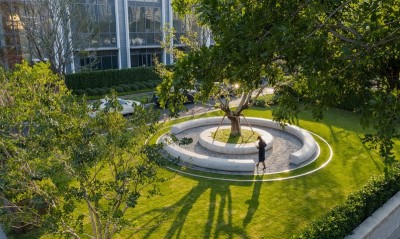
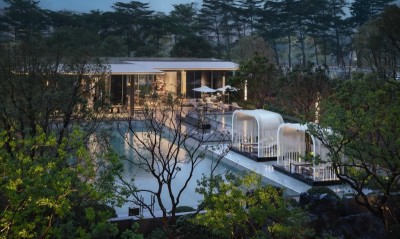
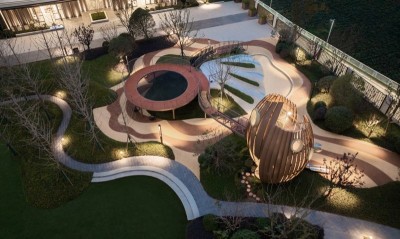
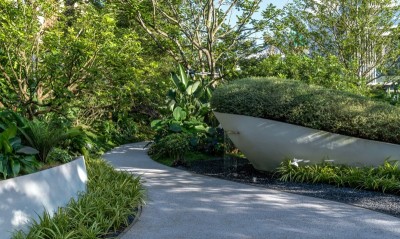
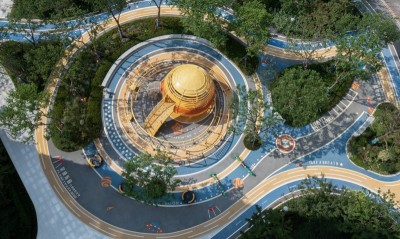
Poly Tianhui in Shenyang is located on East Second Ring Road near the city center, with convenient transport and strong future prospects. As one of Poly's high-end Tianhui series, it aims to deliver a distinguished residential experience. The designers start from reshaping natural space, grounding themselves in traditional Chinese art and aesthetics and using modern techniques to reconstruct a Chinese living experience, presenting a Peach-Blossom-Spring realm where residents converse with nature and witness the fusion of space and time. The landscape is organized around five motifs: distant mountains, gorge path, water courtyard, green field and rear garden, using spatial opening and closing to vary mood, with scenery shifting step by step and heart following the view, merging object, emotion and imagery. Two gate layers mediate between the noisy road and an urban forest, presenting dignity outside while concealing treasures within. The entrance distant-mountain frame uses Hermes-gray marble for massing, with star-like perforations on sloped surfaces that abstract mountain forms and alternate solid-void and light-shadow. Crossing into the gorge path, space turns like a theatrical scene, evoking a mountain trail. Perforated dark-brown brushed stainless steel combines Poly's VI with tree shadows to produce shifting light patterns. Beyond the gorge lies a small courtyard walled by blade walls, centered on a 330-square-meter zen water courtyard that extends from the gray space beneath a long gallery, with art planters and flower borders floating on its mirror surface. Cascading water sounds isolate the city. Beyond the water court opens a broad green lawn dotted with bright-silver spirit-stone sculptures that seem to have fallen from daylight onto the field, set against an irregular upward-angled building. The 16,555-square-meter demonstration project, designed in September 2019 and completed in June 2020, fuses object, emotion and imagery through Eastern aesthetics, presenting an urban forest that hides dwelling in mountains and water.




 Editor's Pick
 Latest Design