Text description provided by the architects
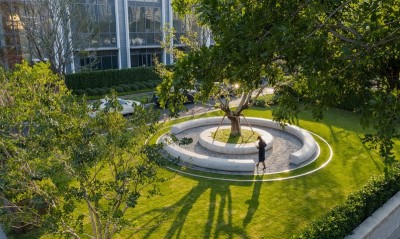
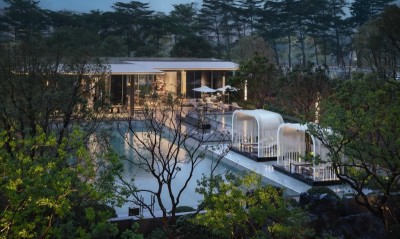
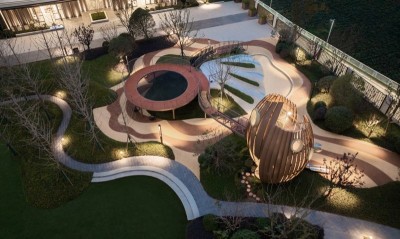
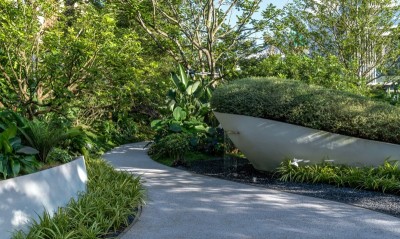
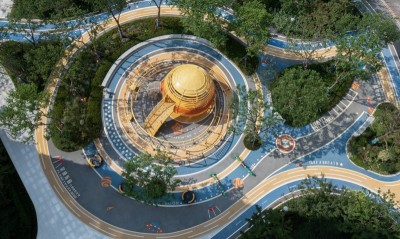
Jinlin Tianxu by Longfor and New Hope in Kunming sits in the West Mountain Twin Towers district, beside the city's tallest skyscrapers and at the heart of a fast-growing southern extension. Surrounded by towers, the designers sought to recover a lost sense of place by creating a slow courtyard in the Chinese classical garden tradition, evoking the Liuli Guang Temple of Kyoto through step-changing scenery and shifting light. The project fuses the deep Chinese garden complex with poetic living, positioning itself as a distinctively Chinese cultural residence in a distinguished new urban district. The entrance takes the form of a refined new-Chinese gate derived from Kunming's traditional Yikeyin dwellings and the four-waters-returning-to-hall ritual. Outside are towers and urban noise; inside is a quiet courtyard. Local stone tells the story of the earth; peacock-pattern light screens evoke presence; overflowing planting brings spring indoors. The winding path borrows from the Nine-Bend Bridge of Green Lake Park, unfolding a landscape painting through mountain-water screens. Red maples accent the greenery, and water cascading from eaves breaks the stillness. Through a water-screen wall, city traffic glimmers beyond; above rises the Kunming Twin Towers, producing a dialogue across time. A reflective tea pavilion inspired by Kyoto's Liuli Guang Temple uses lattice frames to compose pictures that change with time, layered with near, middle and far views. Snow-wave stones serve as both tables and sculptures, lending composure. The courtyard reads as a painting through four seasons: spring vitality, summer warmth, autumn ease and winter stillness. The design synthesizes urban cultural texture with freehand elevation of tradition, delivering a natural, elegant and romantic courtyard that gives the district a spiritual calling card grounded in local culture.




 Editor's Pick
 Latest Design