Text description provided by the architects
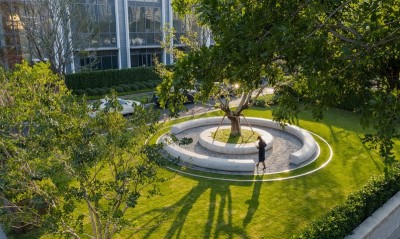
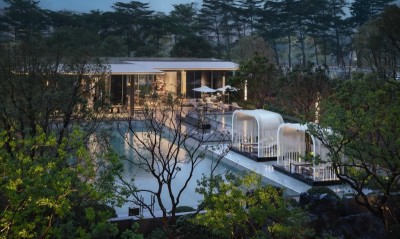
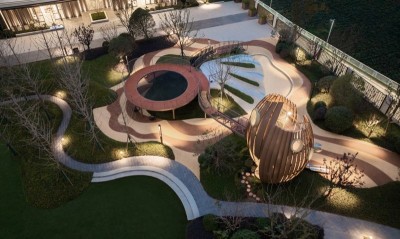
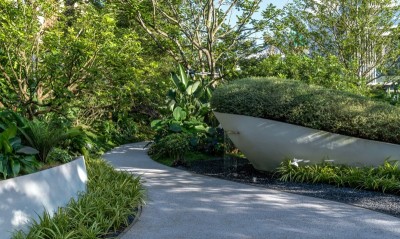
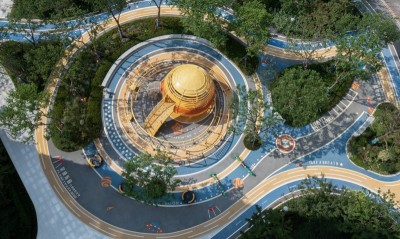
Longfor Meilin Meiyuan is set on Huangjueping, the most vividly artistic street in Chongqing, where 1.25 kilometres of graffiti by students from the adjacent Sichuan Fine Arts Institute cover the facades and give the mountain city an open-air, romantic street-art exhibition. Surrounded by that dense cultural atmosphere, the landscape designers asked what would happen if the scenes inside great paintings were brought into lived space. The site itself is highly legible: on either side of the building entry sit two enclosed, symmetrical rectangular courtyards, and a vertical lift rises to a second-floor landscape deck that is an open, regular, blank sheet awaiting composition. Looking to French Impressionism for that composition, the team noted that Impressionism depicted modern life and that the modern cities, suburbs and daily routines of the paintings are essentially the same world the inhabitants now occupy. The Impressionist obsession with the seven spectral colours, with the instantaneous impression of nature, and with light and colour pushed to their extreme, aligns directly with the spatial effect the project pursues. The landscape is therefore grounded in the Impressionists' pastoral life, translating pictorial motifs into landscape language and symbols and repainting them as a new chapter. Three paintings anchor the scheme: Monet's Water Lilies, Van Gogh's The Starry Night and Rysselberghe's Summer Garden, each lending its theme and palette to a zone; their motifs run through the entire landscape spine so that walking into the space is like entering a painting. The result is a residential landscape that treats art not as applied decoration but as the organisational logic of the garden, allowing residents to move through the atmosphere of modern masterworks without leaving home.




 Editor's Pick
 Latest Design