Text description provided by the architects
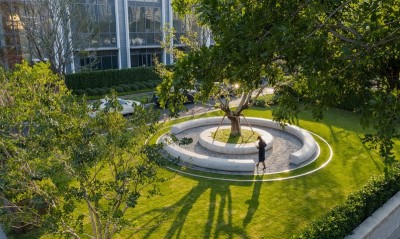
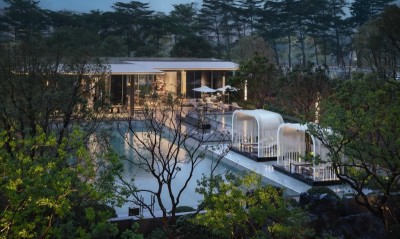
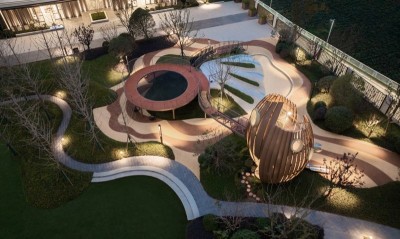
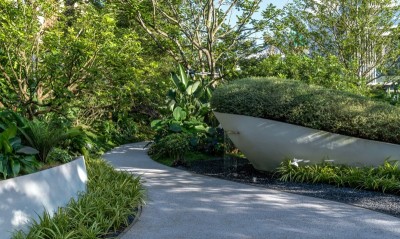
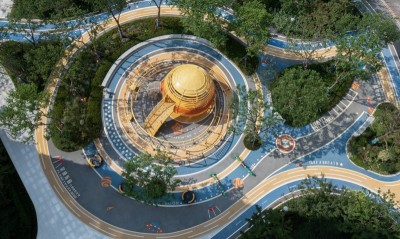
China Resources Land's Tianfu Jiuli in Chengdu takes its cue from the poetic landscape tradition of the Shu region, where poets since the Tang dynasty have inscribed the Jin River, Qingyang Palace, Wangjiang Tower, Wuhou Shrine, and Du Fu Thatched Cottage into the fabric of the city. Shu gardens, exemplified by Du Fu's cottage, pair symmetrical, restrained architecture with natural rockwork, planting, and water, allowing human and natural imagery to interpenetrate in the classical ideal of poetry and painting born together. The design for Tianfu Jiuli pursues that ideal by hiding the main building within a garden and letting visitors wander as if strolling through a traditional literati estate. Borrowing the compositional logic of Chinese gardens, the landscape progresses through layered entries, freely linked covered walkways, and enclosed courtyard rooms, with the architecture pulled to the deepest point so that landscape wraps it on all sides. The site is divided into an entry zone, a core courtyard, and the show flat; the core is organized as a two-court sequence, the second court dropped roughly six metres below the first. Within this limited footprint, winding paths and turning galleries guide the eye, using the site's micro-topography to build a rhythm of tension and release. The entry approach climbs two three-per-cent ramps to resolve a 2.5-metre change of level, passing from a bamboo corridor into an open clearing that marks an emotional threshold. The courtyards themselves deploy the classical devices of framing, opposing view, borrowed scenery, and pinched vista, unfolding like scroll paintings. The plant palette was unusually demanding: designers and clients scouted eight provinces and inspected over a thousand trees to select only thirteen Chinese tallow trees, eight sculpted hollies, plus Jiangsu tallow, Zhejiang maple, Guangdong holly, araucaria, and Hunan citron, so that each specimen holds its own posture. A flying bridge spans the sunken second court, carrying visitors directly to the sales centre and doubling as a viewing platform. Modern materials such as metal grilles and glass are woven into the traditional vocabulary of sloped roofs, dougong brackets, and cascading water, and five sculptural vignettes representing painting, meditation, shadow, sound, and spring are hidden within the garden, producing an immersive, layered sequence that fuses Shu poetic tradition with contemporary landscape practice.




 Editor's Pick
 Latest Design
 Best Idea