Text description provided by the architects
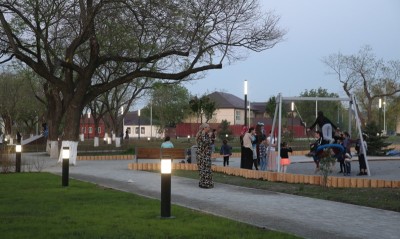
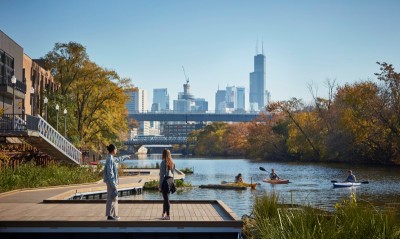
Qijiang Park occupies a 10.3-hectare site in downtown Zhongshan, Guangdong, on the grounds of the former Yuezhong Shipyard, of which 3.6 hectares is open water connected to the Qijiang River. Because the river is tidal, water levels in the park can swing by up to 1.1 metres twice a day, and the lakebed is lined with deep, unstable silt. The project is a canonical demonstration of how an industrial brownfield can be recycled into an open public leisure landscape that reflects the culture of the industrial age; its guiding design philosophy emphasises the culture underfoot and the beauty of untamed weeds rather than a generic ornamental park. Among its defining features are the ecological and water-friendly shoreline strategies developed to cope with the extreme tidal range. The central design challenge was that, at high tide, the water sits close to the bank and vegetation meets the waterline in a pleasing visual band, but the high-water period is brief; as the tide drops, mudflats are exposed and the shore becomes unapproachable. At the same time the soft silt made conventional hard revetments unreliable. The response developed for Qijiang Park is a piled, boardwalk-style ecological waterfront that couples plant ecology, hydraulics and engineering with an understanding of human behaviour and the subtle relationships between people, water and living things. The built result matches the design intent: even under large tidal fluctuations the shore remains approachable, ecologically structured and visually graceful. The design retains the shipyard's existing vegetation as the baseline of the park, allowing native weeds and industrial relics to coexist with new programme, and in doing so establishes a model of adaptive reuse in which the waterside edge is not a fixed wall but a graded, living interface that moves with the river.




 Editor's Pick
 Latest Design