Text description provided by the architects
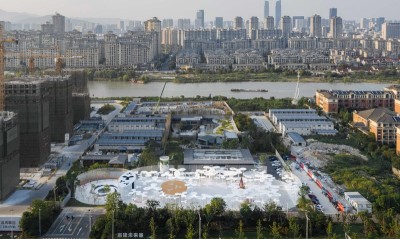
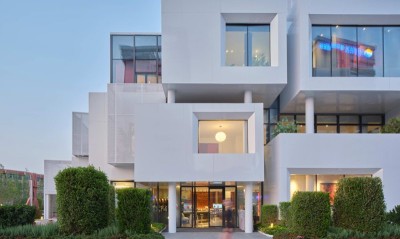
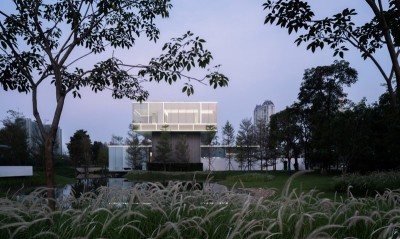
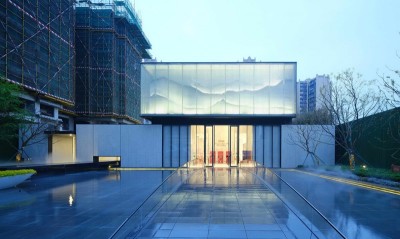
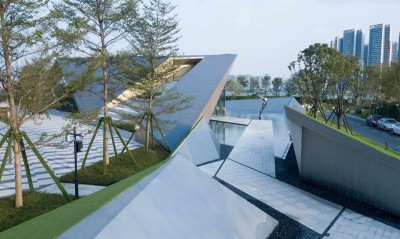
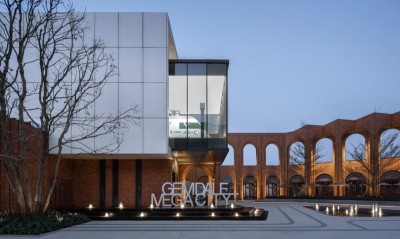
In Daliang, Shunde—the ancient Fengcheng or Phoenix City, named for its western hill—history is felt architecture, and the Wanjing Shore sales gallery by TTD Guangzhou Bendi Design Studio sets out to inherit the thousand-year Lingnan cultural depth that produced xiangyunsha, the gambiered Canton silk known as soft gold through its national-intangible-herbal process of three steaming, nine boiling and eighteen sunnings. Designed in 2022 at 1,170 square meters under design director Zhang Haiman, the space layers light, color and sequence into fluid, rhythmic order, compressing shifting time into a single court. A smooth loop movement from the sand-table area opens through translucent composite materials and hovering water-like light fixtures, releasing the space's energy in an ordered, infinite extension. In the reception area, asymmetric composition directs attention to a floating veil installation whose rippling silhouette evokes both swimming fish and xiangyunsha drying in the wind; water-ripple-pattern stone floors and desk echo Daliang's thousand-year rivers. The sand-table area opens like a Peach Blossom Spring, its double-height views linking inside and outside, soft-film ceiling lights evolved from the Lingnan skylight courtyard. A sand-wrapped installation above evokes a dragon coiling through the air, and droplet-shaped lights, kui-dragon motifs and the soft moving surface of silk combine into a ballad of cloud and water. In the bar and negotiation areas, perforated screens derived from traditional kui patterns divide without dividing, layering and interweaving to extend space, while high sloping roofs derived from Lingnan vernacular and glass curtain walls flood the interior with light. Metal grilles throughout decompose and recompose Lingnan floral-window motifs in arrayed repetition, projecting regular shadows that, together with daylight from the entrance, illuminate the interior. By redeveloping familiar cultural vocabulary with contemporary confidence, the design argues that true creation lies not only in novelty but in returning the known to the unknown.




 Editor's Pick
 Latest Design