Text description provided by the architects
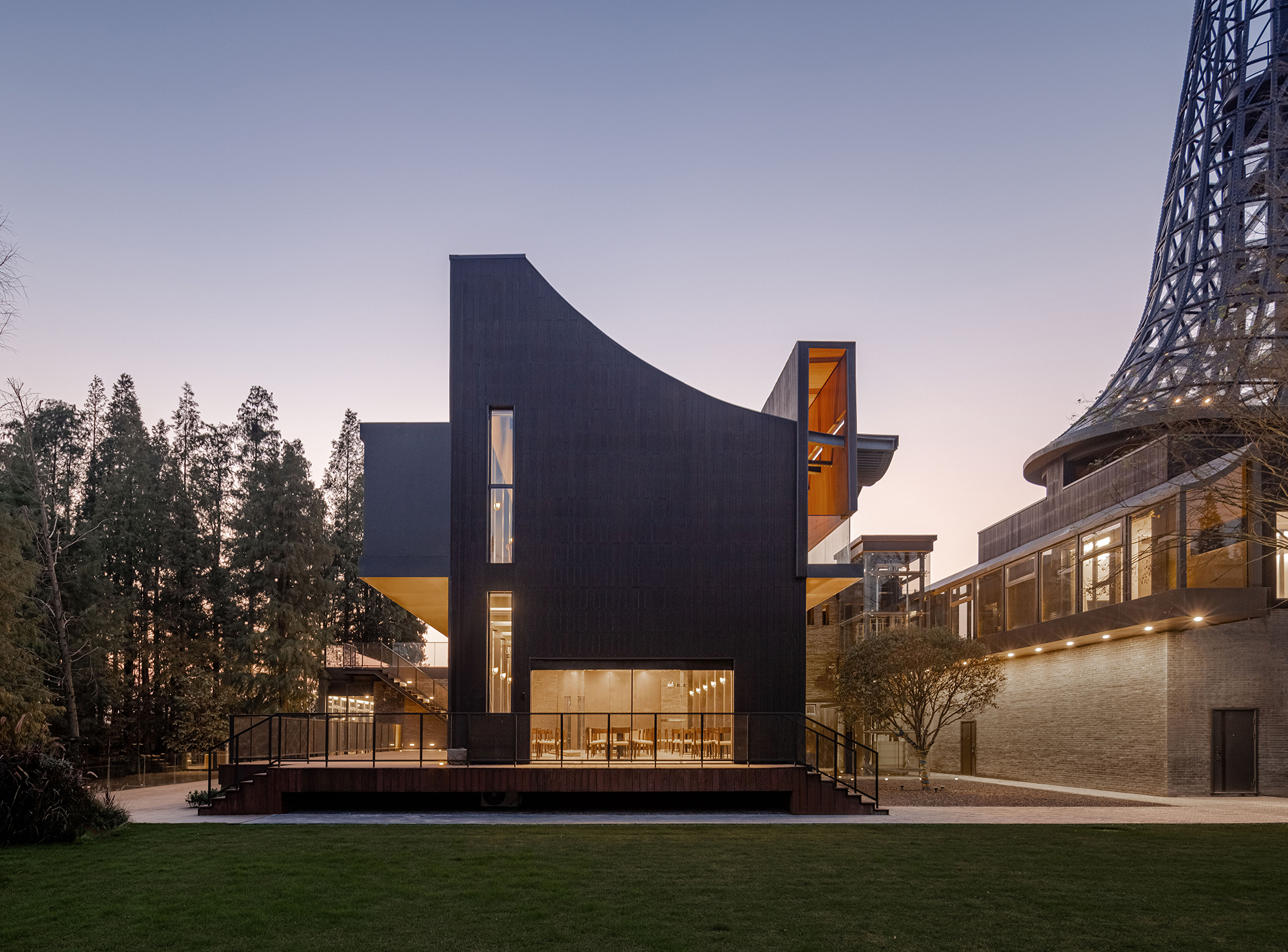
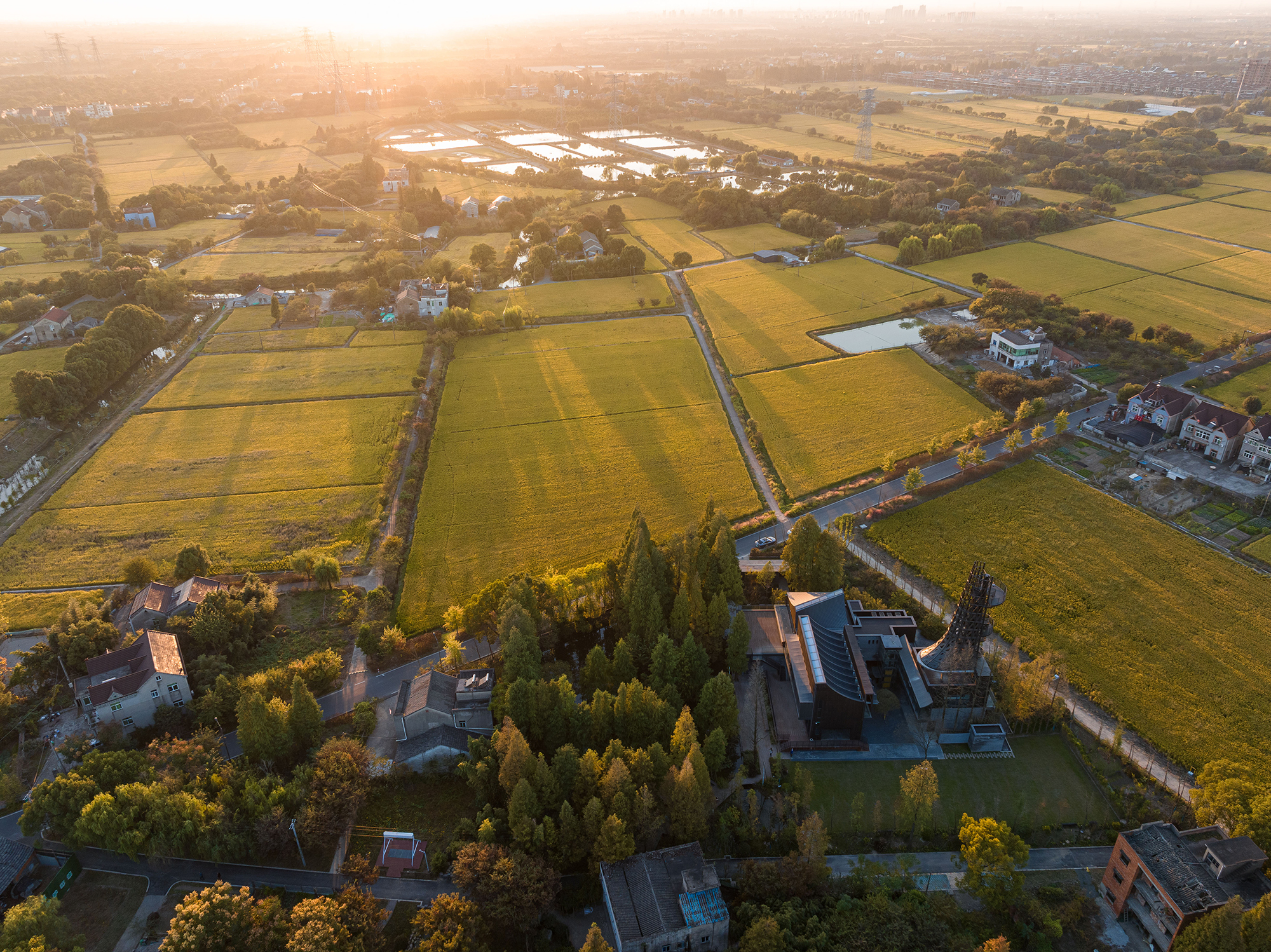
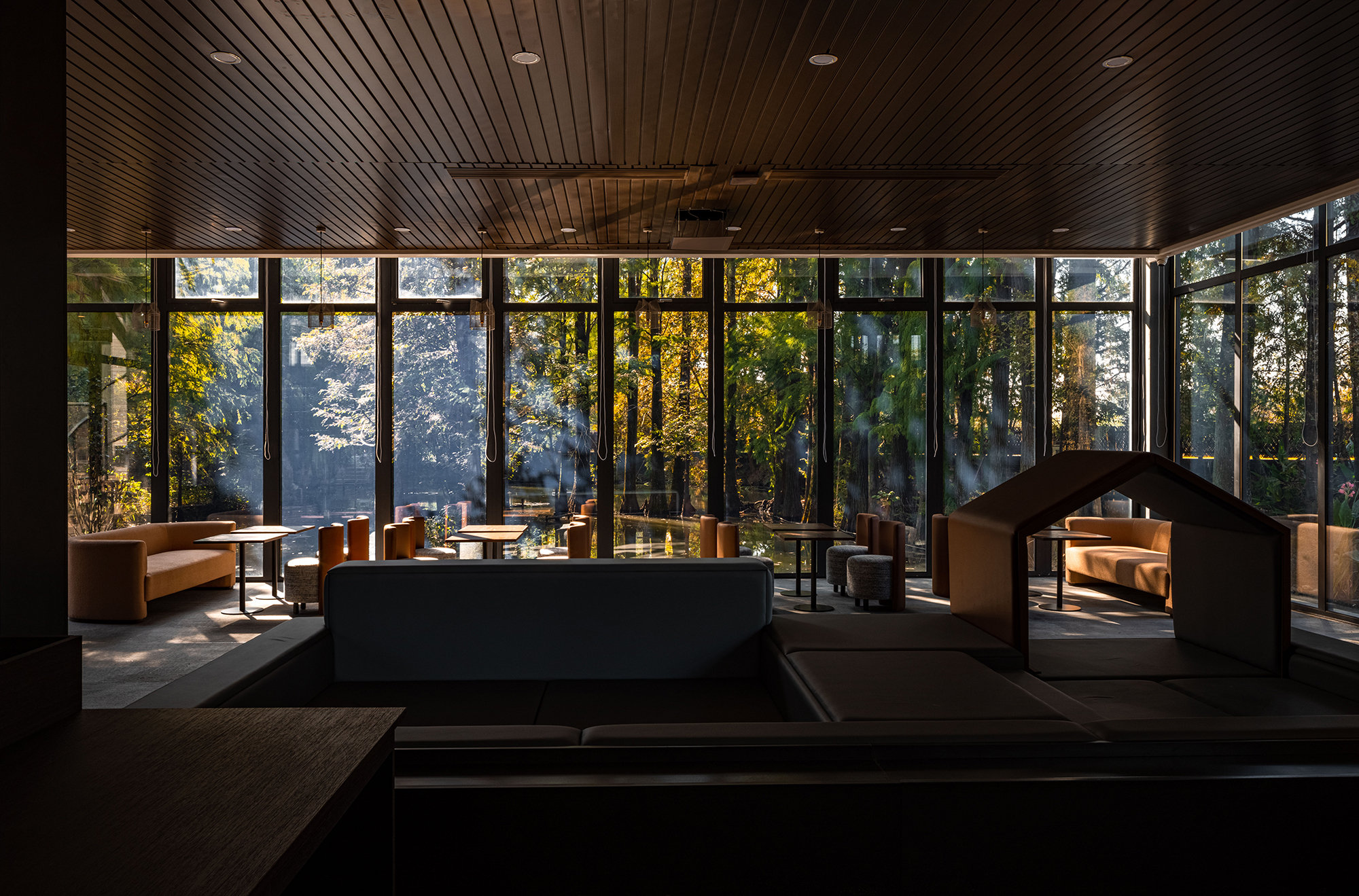
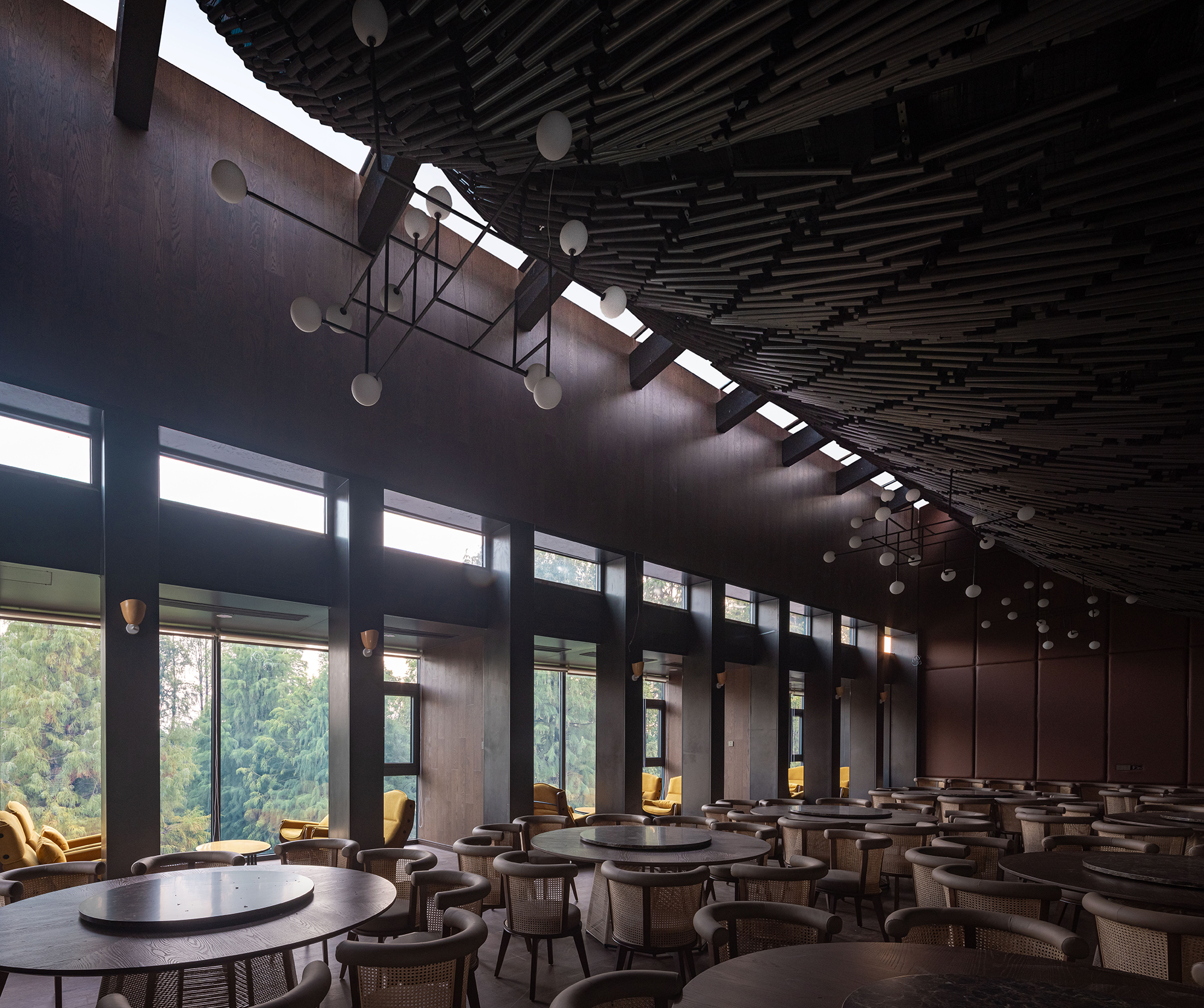
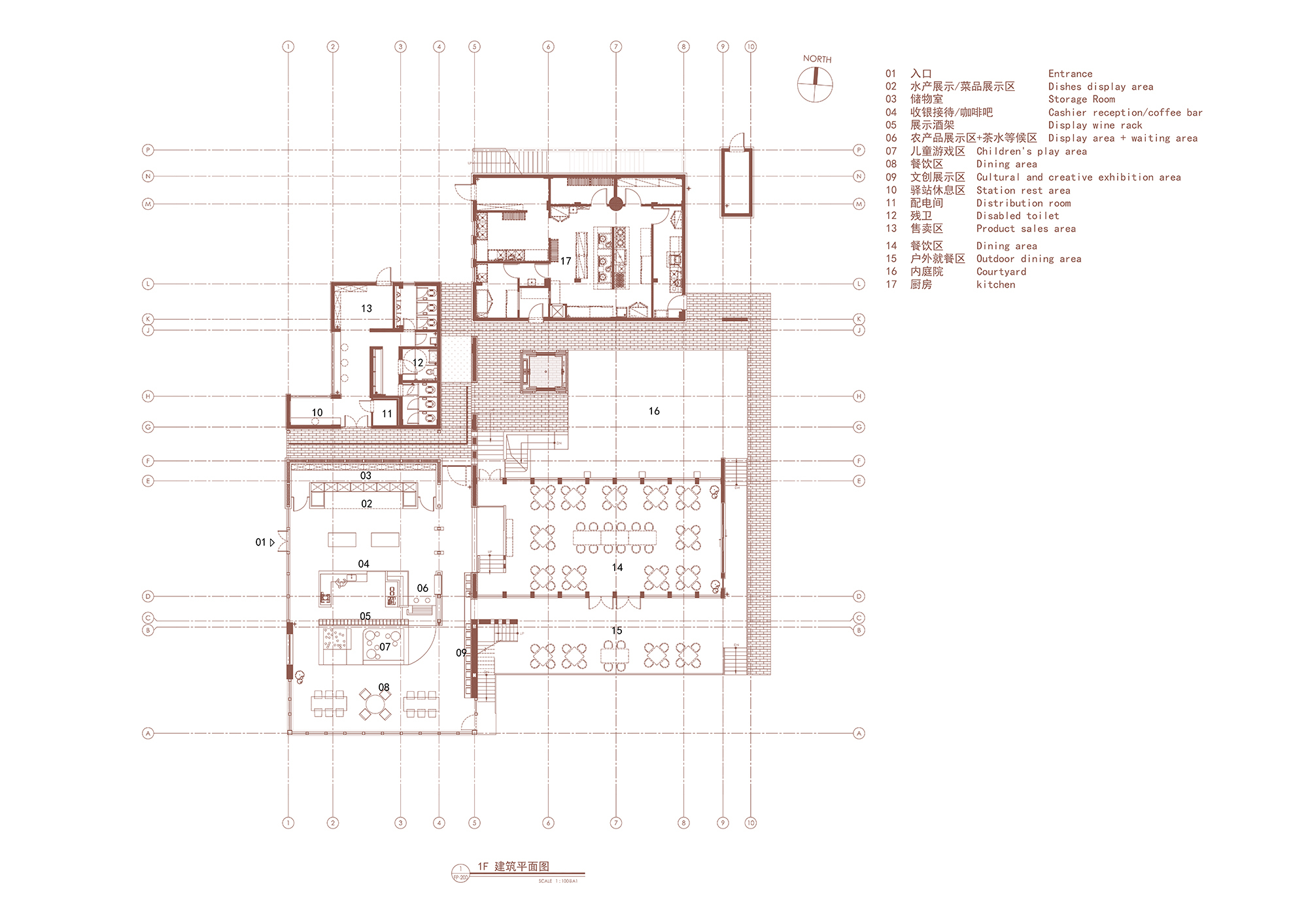
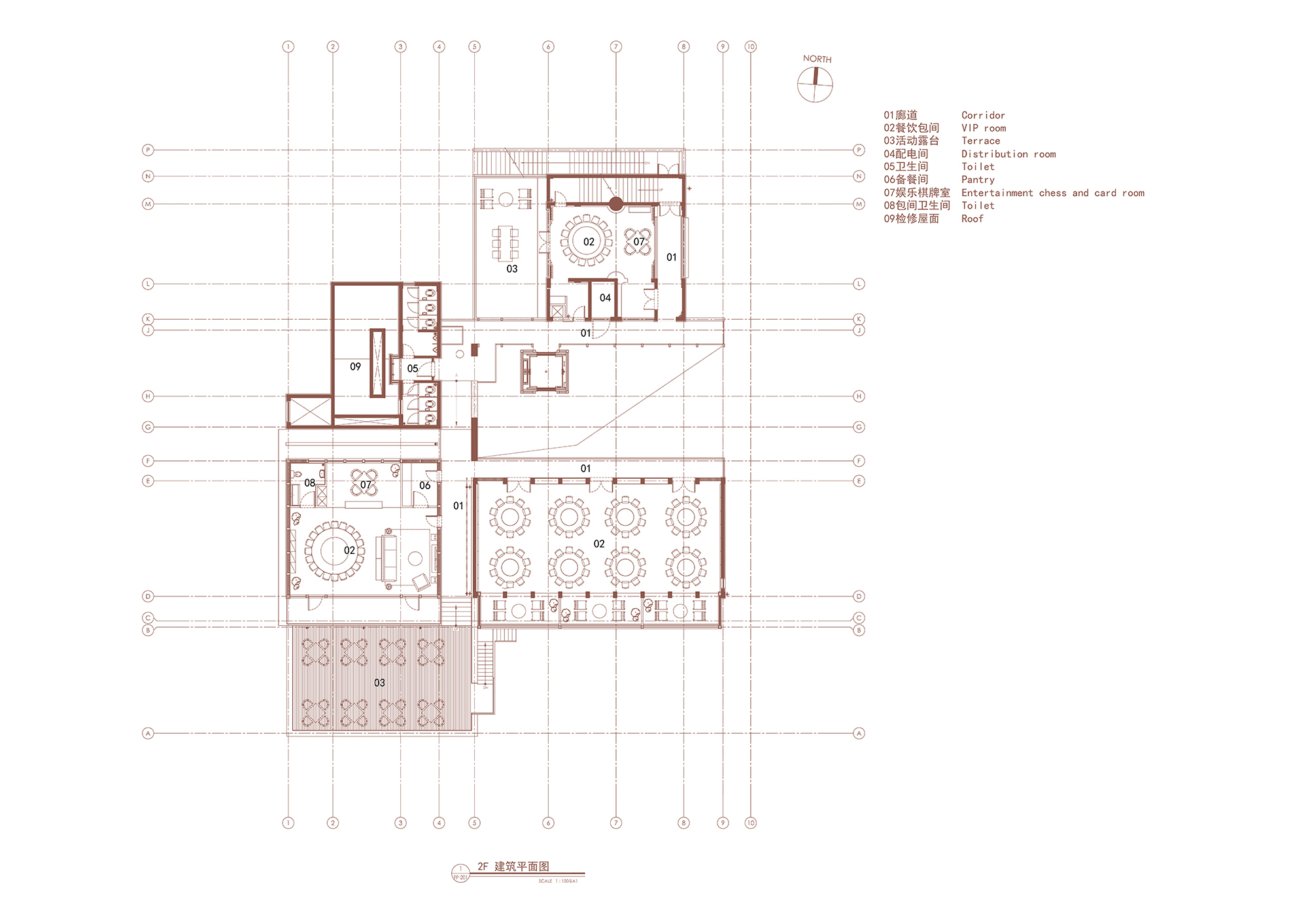
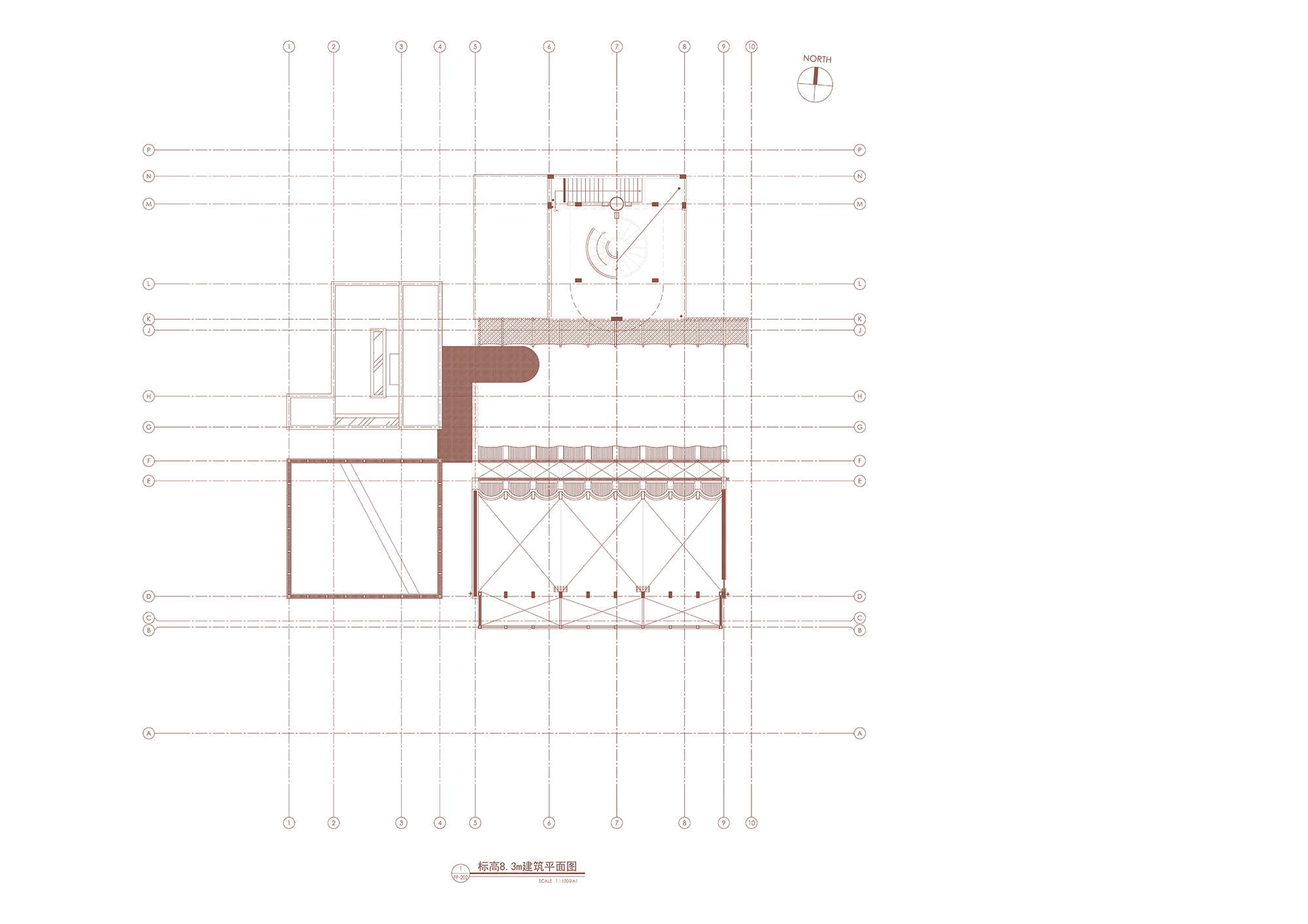
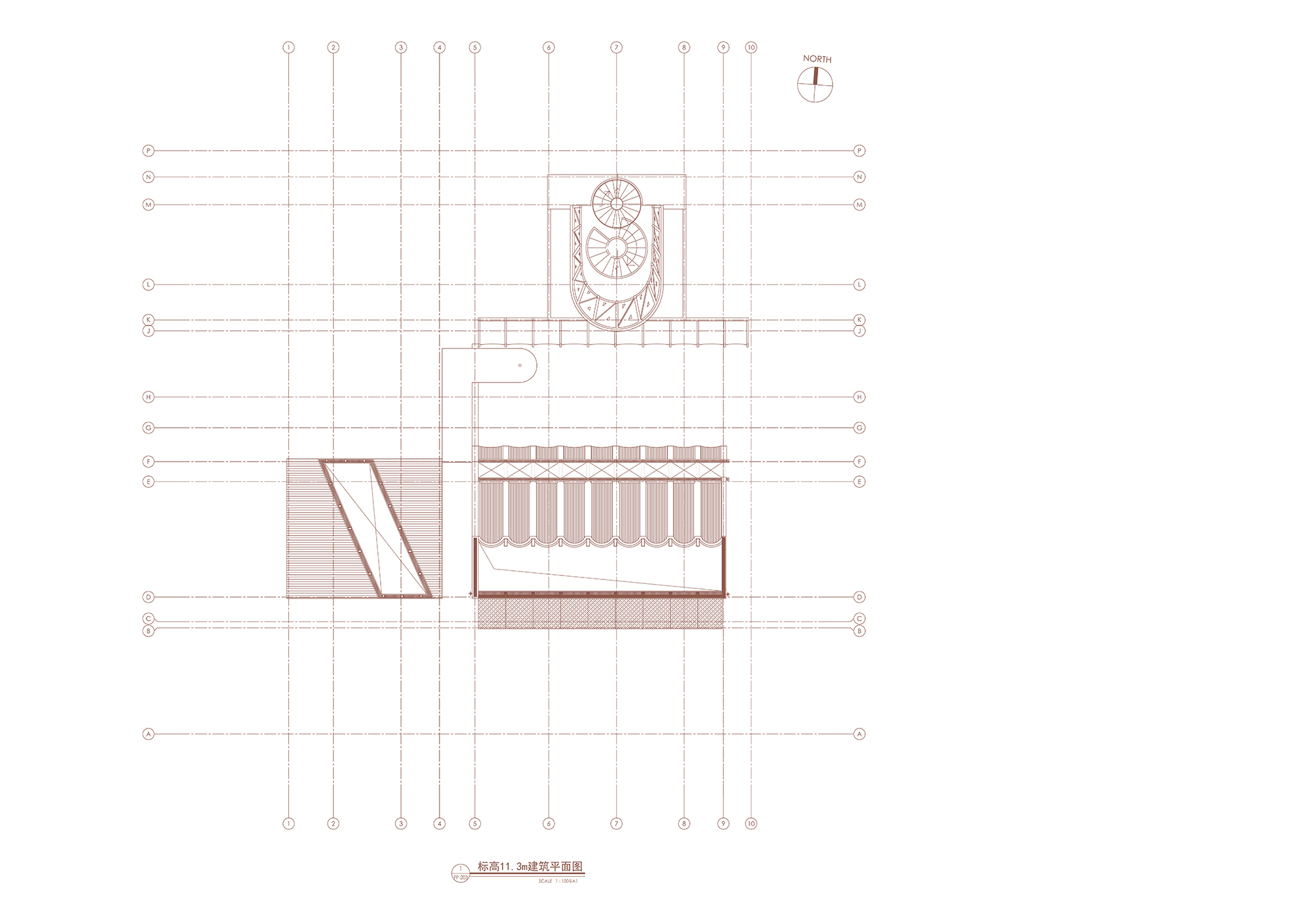
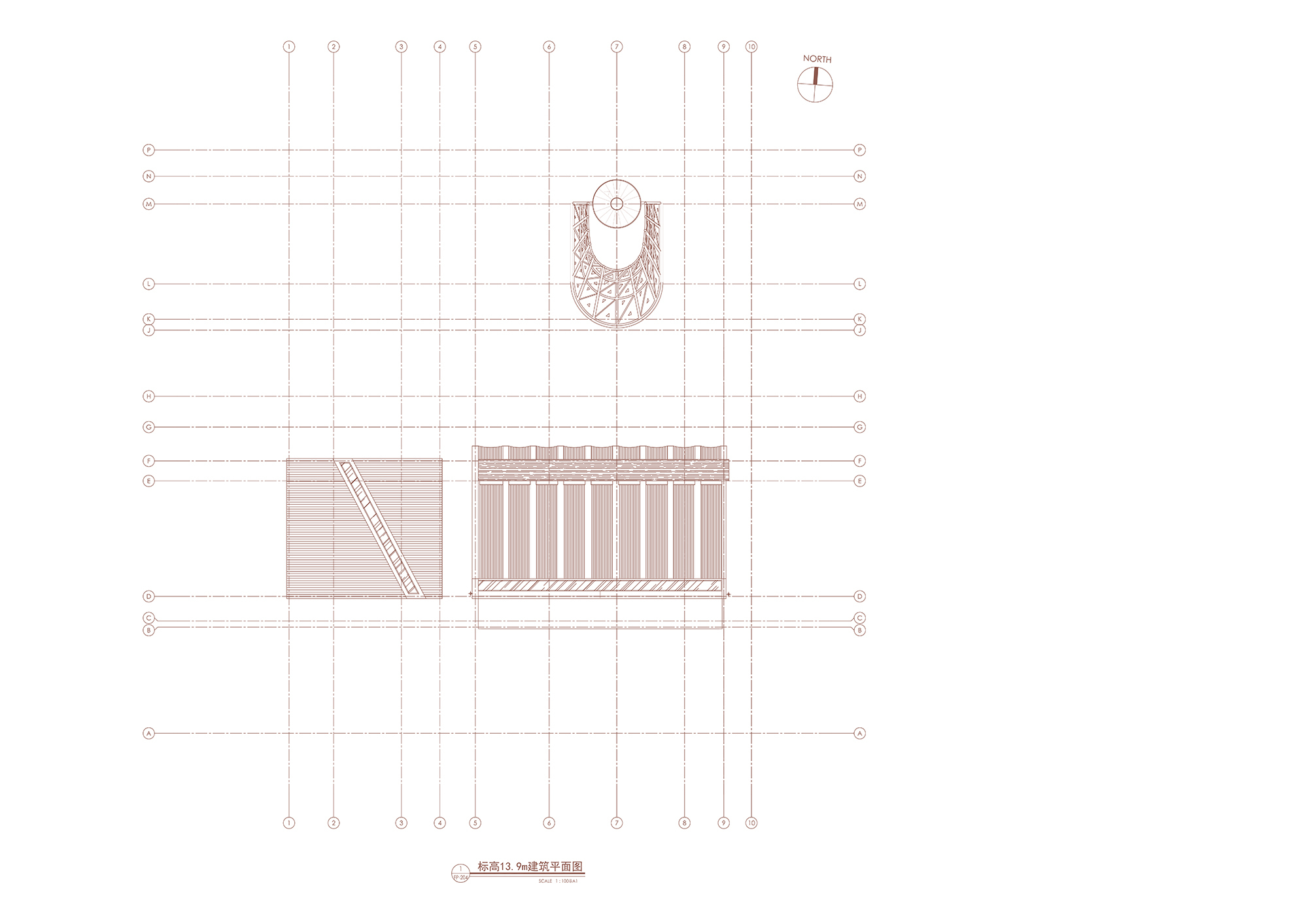
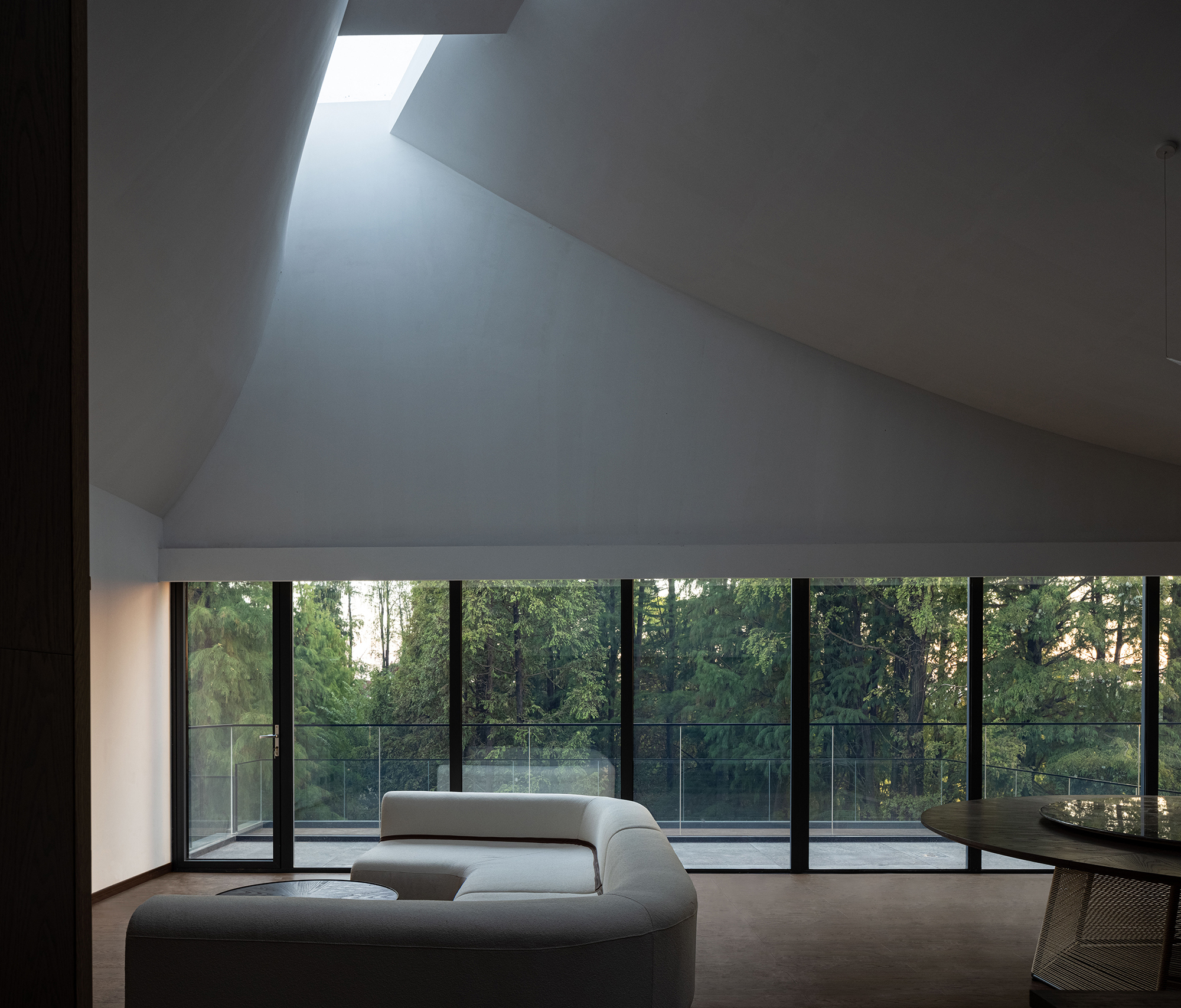
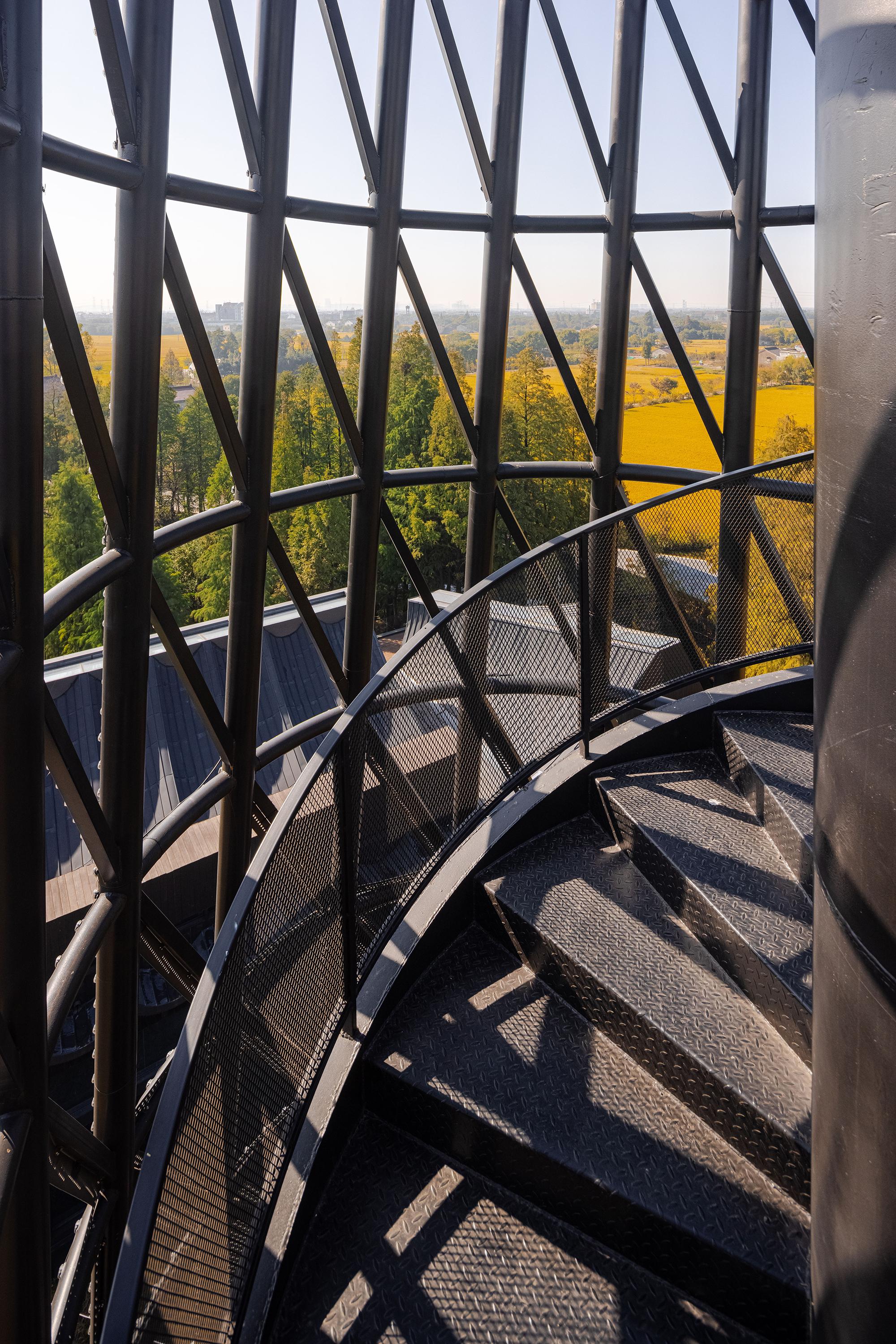
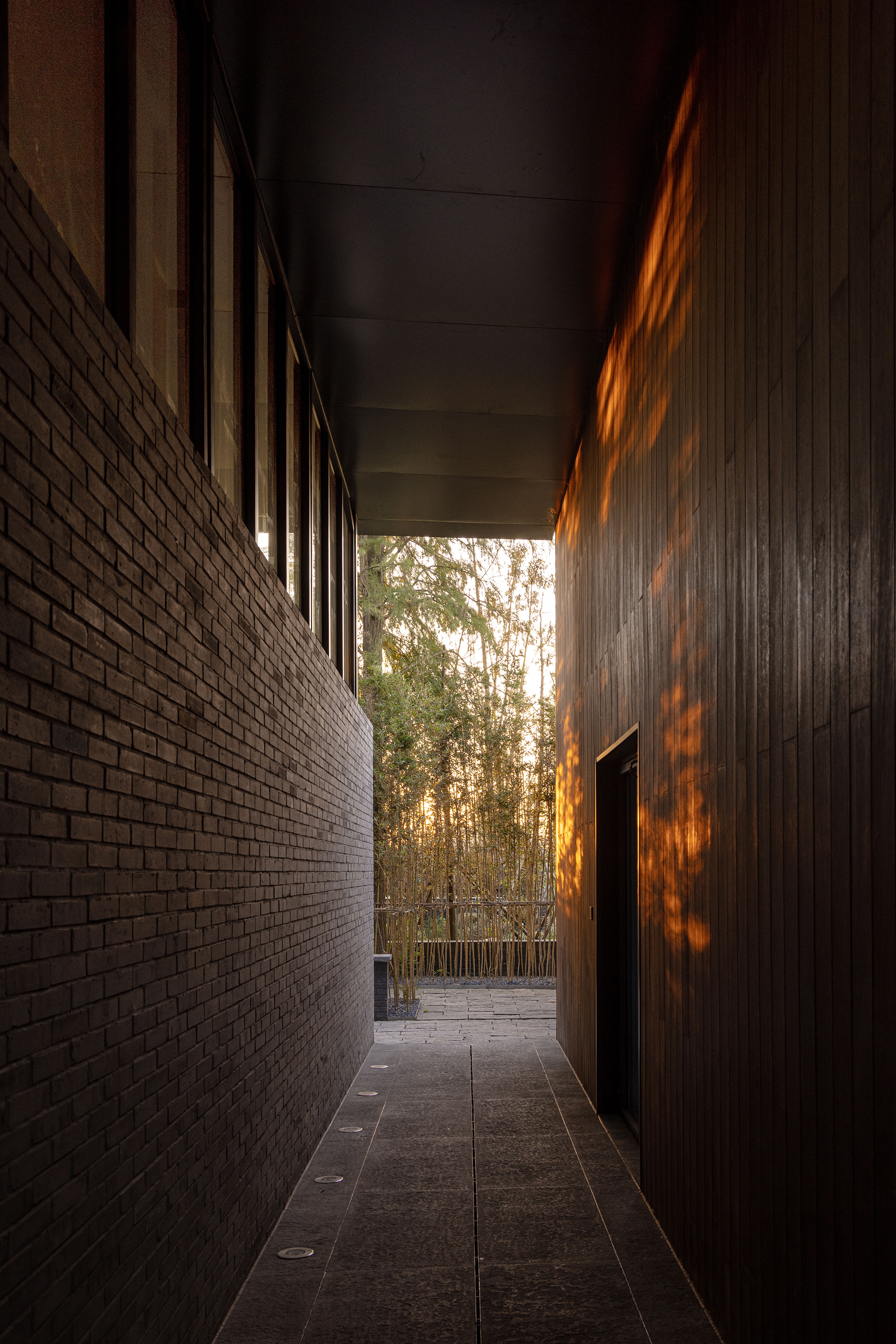
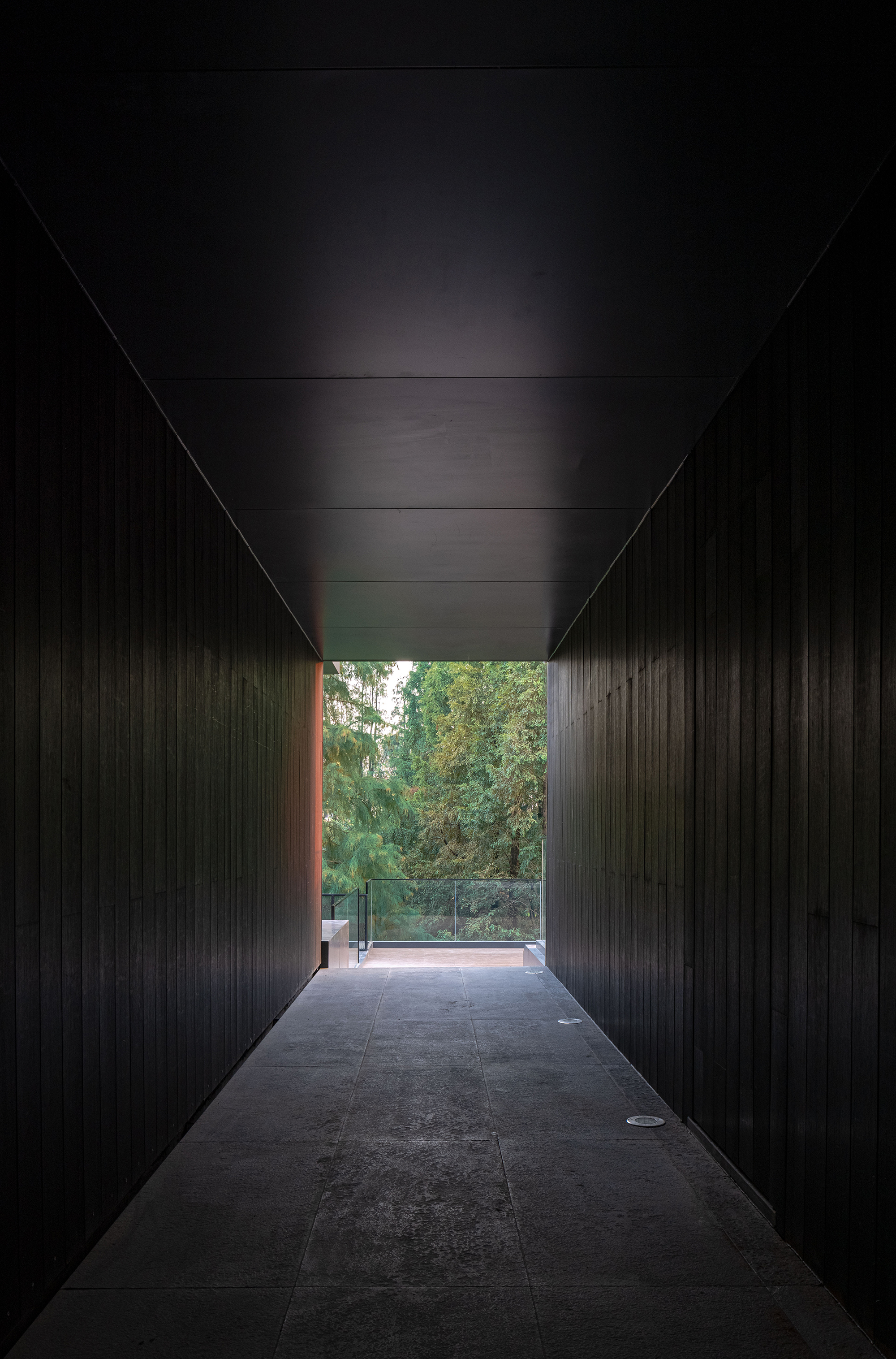
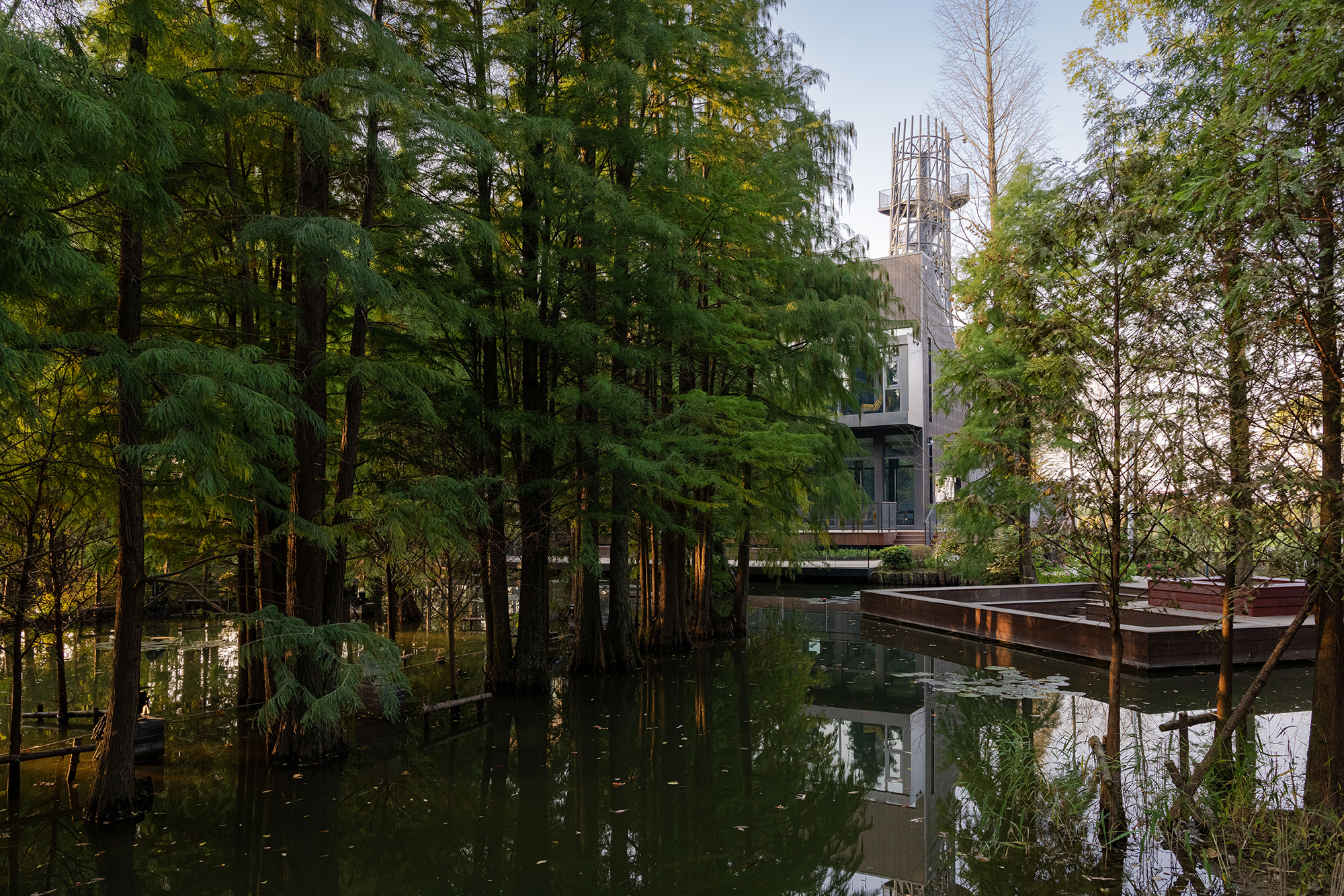
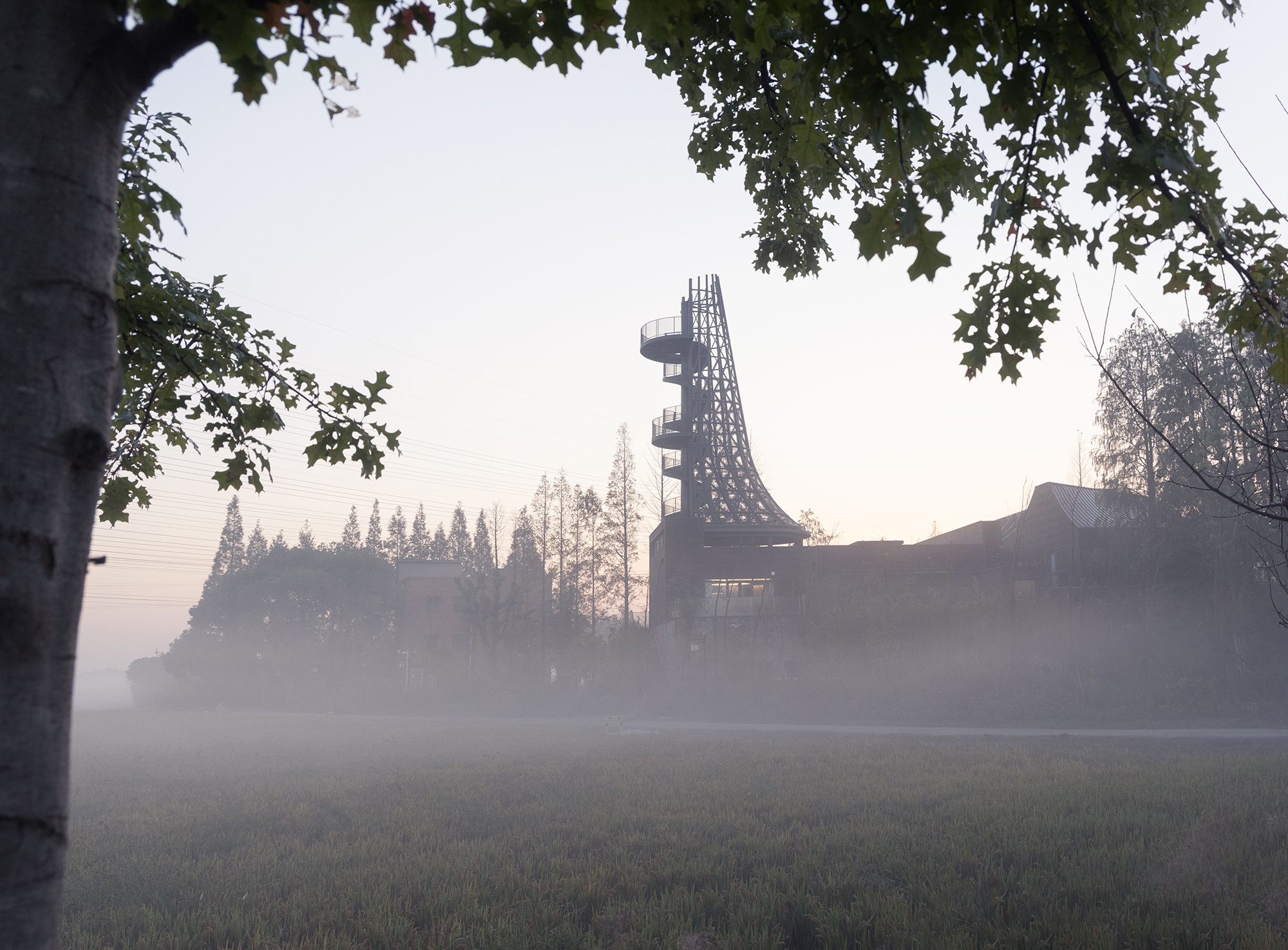
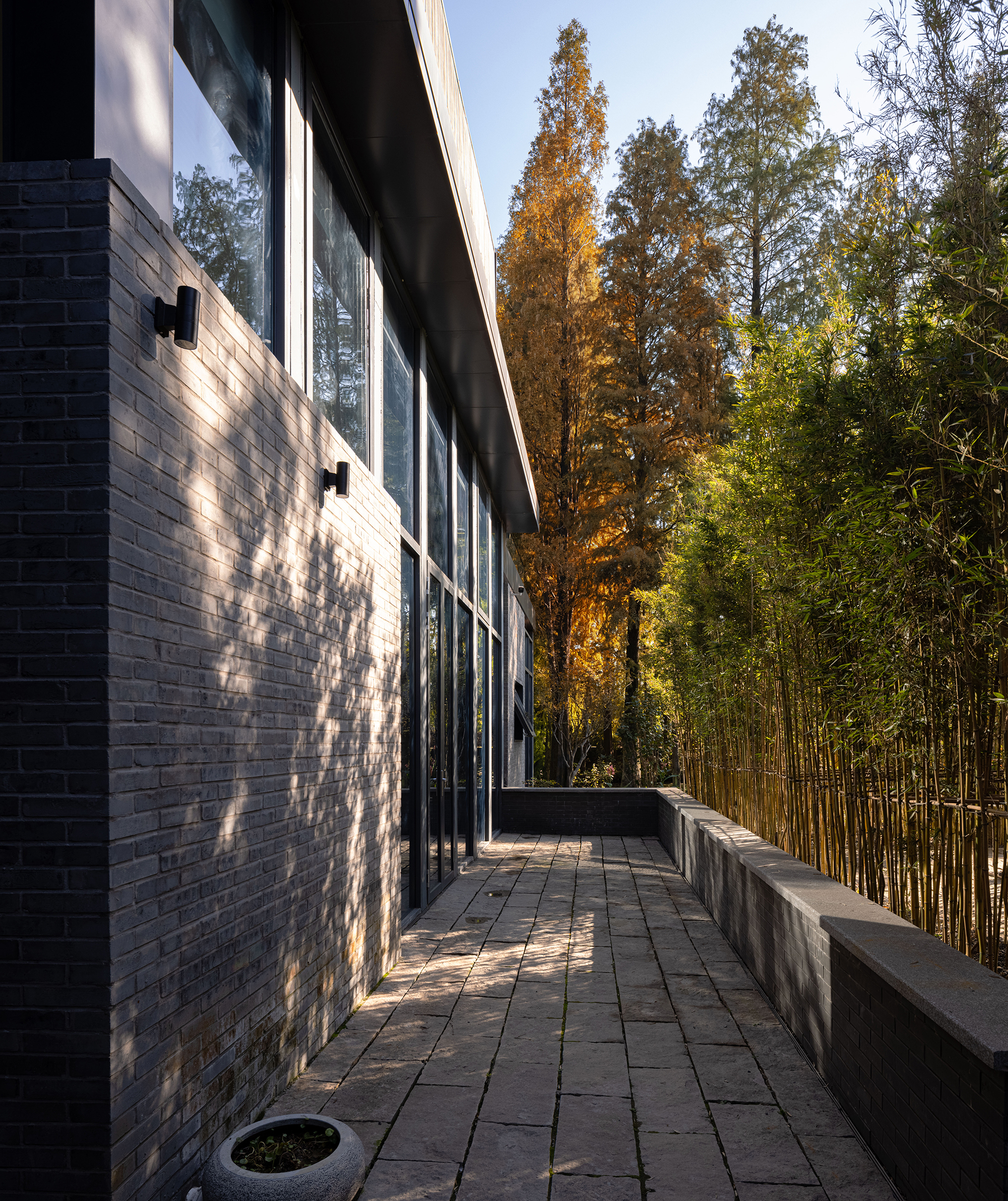
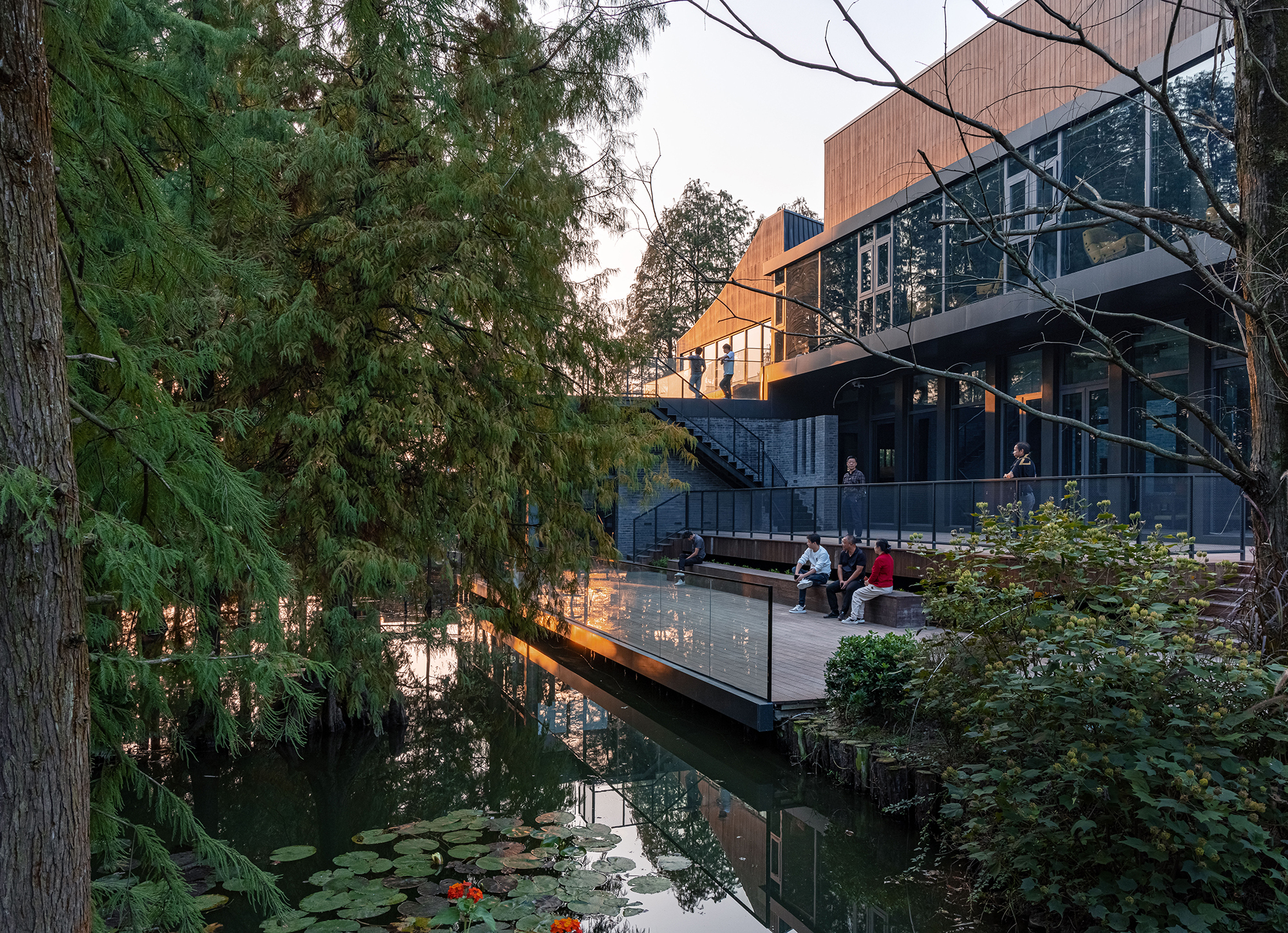
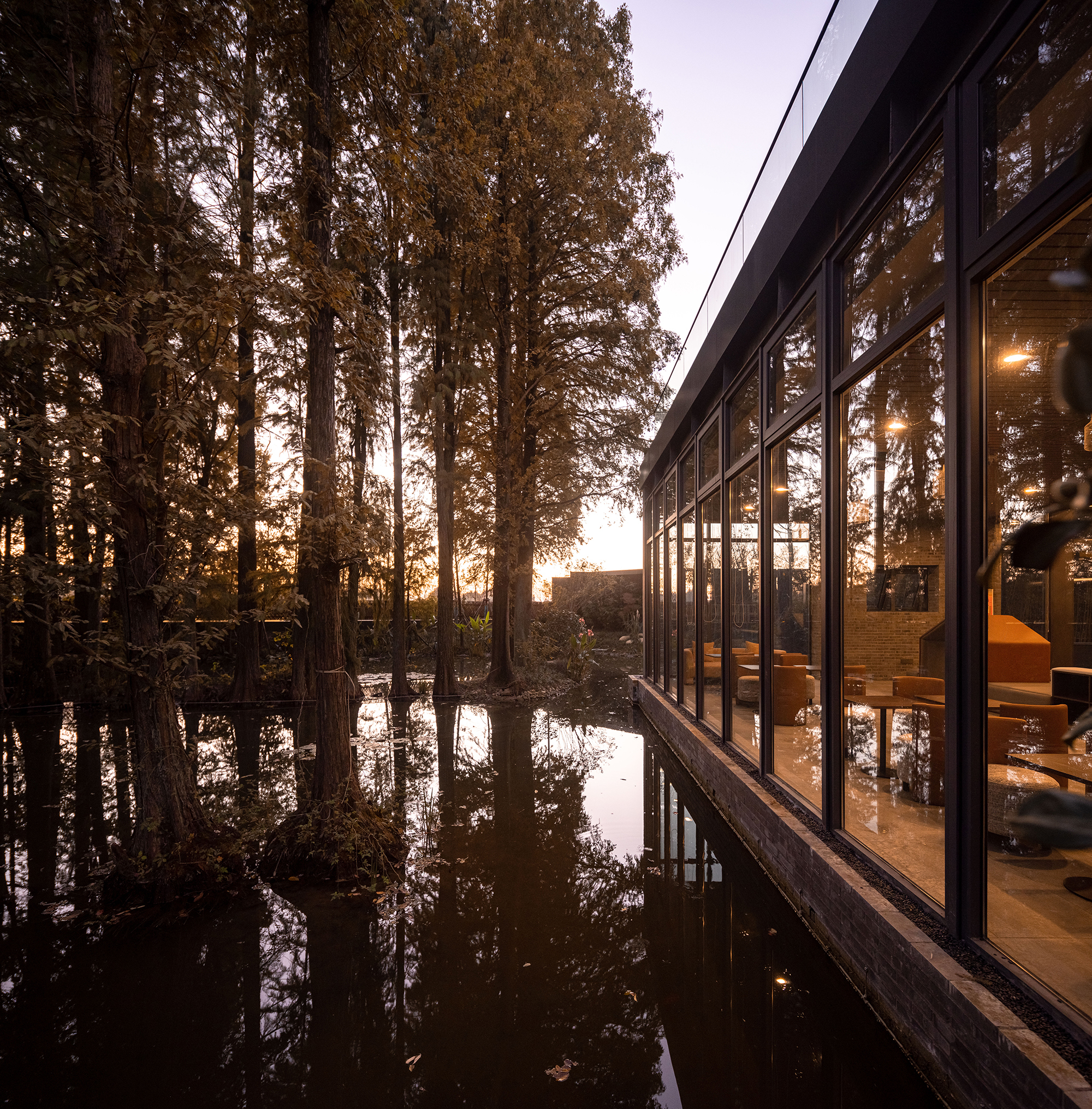
The Shared Restaurant at the Shanlin Tribe in Hongqi Yang Village, Wuzhen, Tongxiang, Zhejiang, occupies the site of former residential houses, with broad rice fields to the north and a grove of dawn redwoods growing in a pond to the south; autumn turns the trees red and draws visitors. The architects' first visit, after leaves had fallen, still revealed the site's beauty, and the priority became fusing building with the untouched environment. The programme is primarily a restaurant, combined with a public rest stop and observation tower. After fixing the main entrance and service circulation, the architects distributed functions into four independent blocks that enclose an inward courtyard; the blocks are linked by covered corridors and vertical stairs in both parallel and vertical sequences. Dining spaces are placed closest to the pond and dawn redwoods, with locally raised floor levels so that layered terraces give better views and water proximity. Beyond the buildings, the site is re-enclosed and fitted with porches, winding paths, boardwalks, and activity lawns, so that circulation, building, people, pond, and forest interact more tightly. Views from the building, deliberate light and atmosphere, and the designed walking experience are all means by which people connect to nature. To suit Jiangnan climate and architectural character, pitched roofs are retained; the observation tower rises like a tree crown among the tall redwoods, its curved roof echoing the surrounding lines. Rather than a monotone single pitch, the roof is twisted into a hyperbolic curved surface, and the ridgeline openings admit natural light that pours down the curved surfaces, so interior mood shifts with weather and daylight. Bamboo-steel timber, the main facade material, is dark enough to blend with surrounding planting, receding rather than competing and producing a serene, nature-connected feeling. The observation tower is finished in black, so that when visitors climb it they look over fields and forest as if standing above the canopy, deepening their connection to the landscape.














 Editor's Pick