Text description provided by the architects
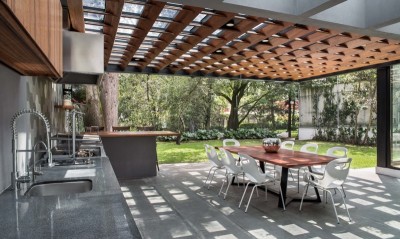
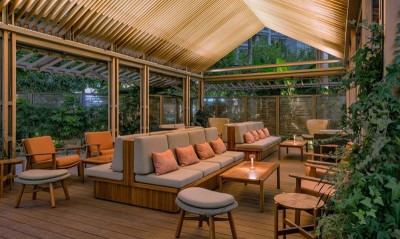
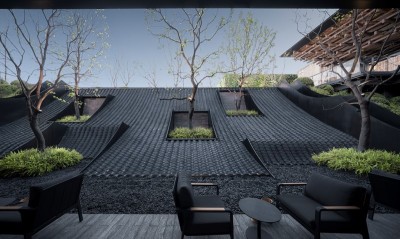
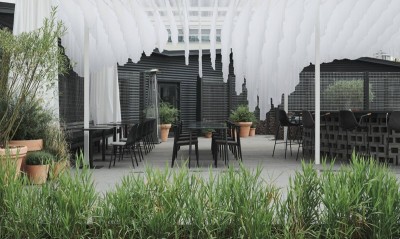
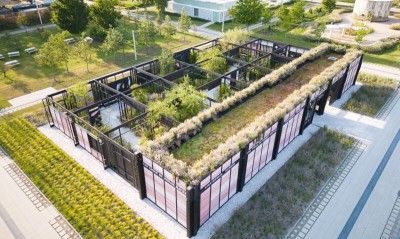
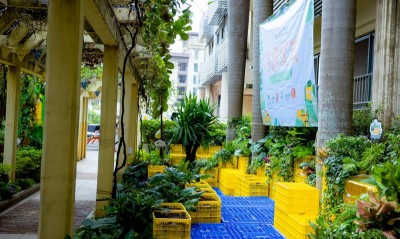
Landform shaping is a familiar landscape tool, but in contemporary Chinese practice it has remained a black box beyond discussions of sculpture or poetry. The Valley, located in the Luhu Ecological City along Tianfu Avenue in Chengdu, is Atelier Scale's creative exploration of landform in daily Chinese landscape. The enclosed architecture creates a relatively closed courtyard with large elevation differences, hinting at a lifestyle different from other waterfront communities at Luhu. The team developed a design method based on vertical spatial relations that unlocks a new lifestyle. The landscape comprises a ground-floor commercial street and a second-floor community courtyard reached by a long, narrow ramp with a 3.5-meter rise. Rather than simply accept this, the team created a series of inward-gathering valley landforms that squeeze out a staggered central stream, producing inner, middle, and outer landscape layers that satisfy different uses. The outer hard paving for fire access is converted into a homecoming loop softened by movable furniture and planters, and each tower's elevated ground floor hosts themed neighborhood gardens. Rolling green valleys and the winding water corridor resolve direct sight lines between entrances, while gentle slopes face the lobbies and streamlined walkways form a three-dimensional route into the valley. Plants follow the topography: canopy trees provide shade, lawn slopes invite play, and lush flowering beds soften activity nodes, with lightweight soil to reduce roof load. The 700-plus households span all ages, and each hill is programmed: a parent-child hill with a through-tunnel, climbing, mirror walls, and sunken terraces for toddlers; a social hill with light trellises and forest living rooms; and a shelter hill where elevator cores are lowered 1.6 meters and wrapped in green hills as caves, reached by accessible ramps. The central stream is defined by inward hills and flowing low walls that create sitting edges, with restrained water features at key points. Topological relations between valleys are developed simultaneously from third-person functional views and first-person experiential views, and the result is less a picturesque scene than a landscape strategy that treats landform as a charming social space.




 Editor's Pick
 Latest Design
 Best Idea